
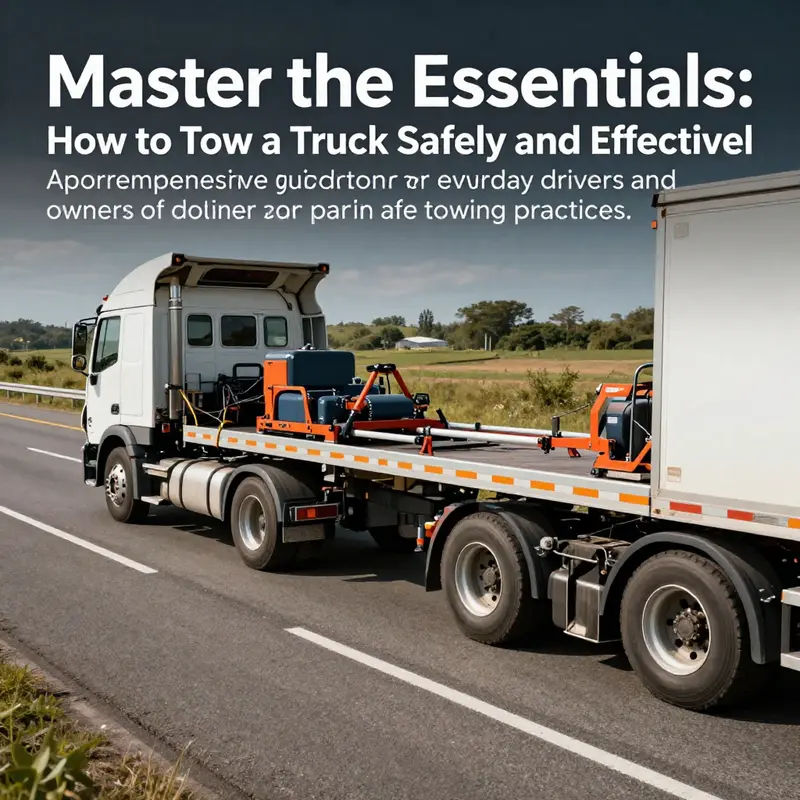
Towing a truck involves more than just connecting a vehicle to another; it requires a deep understanding of the necessary preparations, equipment, and driving techniques. For everyday drivers, truck owners, and property managers, proper towing protocols are vital not only for safety but also for compliance with local legal standards. This guide walks you through the integral steps of towing a truck—from thorough vehicle checks to selecting the appropriate equipment and ensuring effective communication during the process. Each chapter will equip you with the knowledge needed to tow successfully and safely.
Before the Hook: Thorough Preparation and Vehicle Checks for Safe Truck Towing
Towing a truck is rarely dramatic in the moment of connection, yet it rests on a meticulous, almost ceremonial routine that begins long before the tow line leaves the ground. The quiet discipline of preparation—checking, verifying, and aligning every component—acts as the invisible guardrail that keeps a complex maneuver from becoming a catastrophe. Safety is not a single action but a disciplined posture that public roadways demand, especially when the vehicle being moved is a heavy truck with its own mechanical demands and safety systems. To tow a truck well is to honor the intricate balance between engineering limits and human judgment, a balance that starts with clear, patient checks and ends with deliberate, controlled movement along the pavement.
The first obligation is to conduct a thorough inspection of both vehicles involved in the operation. On the towing vehicle, the puller, the braking system sits at the core of safe operation. Brakes must respond with confidence: the pads should be within safe thickness limits, brake fluid at the proper level, and the pedal feel firm rather than spongy. A braking system that falters here can translate a cautious recovery into a dangerous situation once the loaded line is in play. Tires on the puller deserve equal attention: tread depth must meet legal minimums, inflation should align with the manufacturer’s recommendations, and wear indicators or cuts should not reveal compromised structures. Lights are another vital, often overlooked, safety element. A tow is a long, conspicuously abnormal use of a vehicle’s lighting system, and any failings in headlights, brake lights, turn signals, or hazard lights can miscommunicate intent to following traffic, inviting collisions.
Equally important is the readiness of the towing equipment itself. The hitch, ball mount, pin, and the overall hitch receiver must present no cracks, corrosion, or deformation, and the receiver should be rated for the weight of the towed vehicle. A secure connection is only as strong as its weakest link, so this inspection should be methodical and unambiguous. The towed vehicle, or the trailed unit, demands a parallel, equally careful audit. The parking brake must be fully released; if the vehicle cannot be started and the mechanical release procedure is necessary, technicians should consult the owner’s manual to disengage the brake without damage. Transmission state is critical: for automatics, neutrality and, where possible, the disabling of electronic stability or traction control systems according to the manufacturer’s guidance help prevent unintended interactions with the vehicle’s safety networks. Manual transmissions should likewise be in neutral and free of any binding or resistance in the clutch and linkage.
Beyond these primary systems, steering and suspension must move freely and without binding. If the steering wheel resists or the wheels do not turn smoothly, there is a higher likelihood that the towed vehicle will not track correctly behind the tow car, particularly on uneven surfaces or during cornering. Electrical systems deserve attention too. Some modern trucks have ABS, traction control, or other electronic helpers that can complicate towing if left engaged or misconfigured. Routine deactivation, when specified by the manufacturer, reduces the risk of unintended interactions during movement.
A simple, emphatic rule anchors these checks: never tow a vehicle with the parking brake engaged or with a transmission engaged. This action can cause catastrophic damage to the transmission and drivetrain, especially under the dynamic loads encountered in towing. The pre-tow phase thus becomes a critical moment to confirm that every system is ready, predictable, and aligned with the operation’s modest demands in speed and distance.
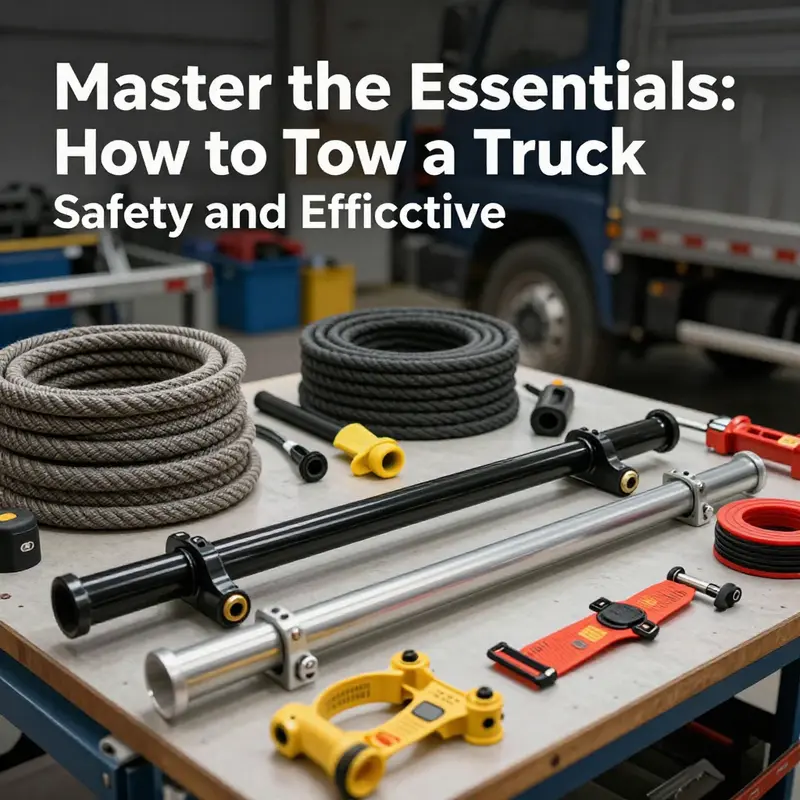
With the vehicles cleared for operation, attention shifts to selecting the proper towing equipment, a decision that blends vehicle specifications with the realities of the road you expect to travel. For short, light-duty tasks, a tow rope—properly rated and used correctly—can be sufficient. The minimum breaking strength should be at least 5 tons, and the preferred length is typically between four and six meters. The rope should be constructed of robust nylon or polyester, ideally with reflective elements to improve visibility in low light. It is essential to avoid less suitable options such as improvised cords or damaged lines, which may fail under load and lead to dangerous snap-backs.
For heavier vehicles or longer tows, a rigid tow bar offers superior stability and control. The bar must match the tow points and hitch specifications of both vehicles. Installation should follow the manufacturer’s torque values precisely, and some models require removing certain trim panels to gain proper access to mounting points. After installation, a quick check for lateral or longitudinal play is the difference between a secure setup and a gnawing sense of uncertainty on the road. The choice between a rope and a bar comes down to the vehicle’s weight, the distance to be covered, and the level of control needed for the journey ahead. In either case, the lines of communication between the drivers become as important as the mechanical connections, because human coordination will guide the operation long after the initial hookup.
The moment of connection carries its own set of disciplined steps. When using a tow rope, pass the line through the designated attachment points on both front and rear bumpers, ensuring the rope cannot slip under load by tying a double knot or employing locking hardware designed for towing. If a tow bar is in use, insert the connecting arm into the hitch socket, lock it firmly, and secure with the safety pin and locking tab, repeating the process on the opposite end. A deliberate, cautious final check—then a manual tug in opposite directions on each end of the bar—confirms there is no hidden play before any movement begins. The responsibility for this moment rests with both operators, who should establish a simple, pre-agreed communication protocol, whether via radio, cellular, or even a pair of hand signals. The goal is not clever signaling but the assurance that both drivers will respond to a common cue in real time if conditions change.
Driving and communication during towing require a further layer of restraint and planning. Speed must be deliberately kept low, commonly capped at around 30 kilometers per hour. This limit limits the magnitudes of sudden forces on the drivetrain and reduces the risk of sway, loss of lateral control, or tipping if one vehicle reacts differently to a lane change or braking event. Acceleration should be gradual, and it is wise to allow the tow line or bar to become taut before applying any power. Sudden acceleration, abrupt braking, or sharp turns must be avoided to preserve alignment and minimize stress on both vehicles. Turning is particularly delicate; the tow car should slow early and take curves with a larger radius, allowing the towed vehicle to track in the same arc with small, controlled adjustments. The tow car acts as the guide, and the towed vehicle should shadow the lead with minimal deviation, maintaining a steady pace that keeps the coupling under consistent, manageable load.
Stopping demands as much care as starting. The lead vehicle should communicate intentions clearly well in advance, signaling a planned stop and ensuring the towed vehicle has reached a complete halt before any braking action is taken. Inertia can surprise drivers on the trailing end, and a late brake can translate into a jolt that damages the drivetrain or destabilizes the setup. Continuous communication is essential: both drivers should keep in touch via the chosen method, with agreed signals for slowing, stopping, or emergency disengagement. This routine of calm, predictable actions reduces the risk of sudden surprises and keeps the two vehicles moving as a single, cohesive unit rather than as two separate machines sharing a line.
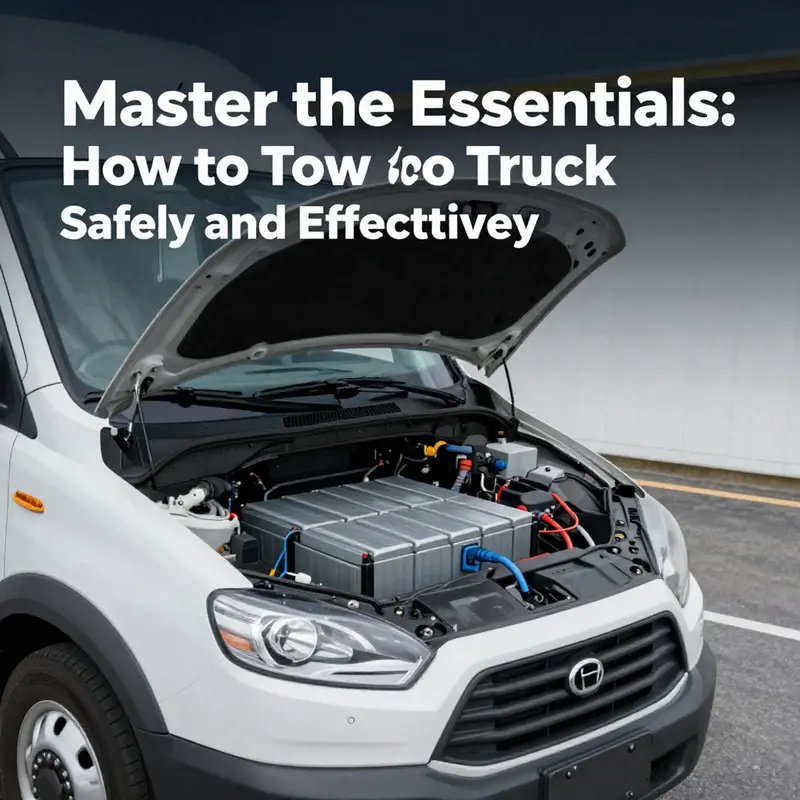
Certain vehicle categories deserve special attention within this framework. Automatic transmissions, for instance, often discourage long-distance towing and typically require limits on the tow distance, with cooling periods if the journey is excessive. Four-wheel-drive or all-wheel-drive systems complicate towing further, as many configurations are not designed for ground-contact towing of the drive wheels. In those cases, a flatbed transport is usually a safer alternative. Electric and hybrid vehicles add another layer of caution, with high-voltage systems and battery cooling requirements that influence both the speed and the setup. In all such cases, the manufacturer’s guidance remains the most reliable compass, but a thorough pre-tow check remains the base discipline that still applies across powertrains and drive configurations.
Beyond vehicle-specific cautions, legal and weather considerations define the outer boundaries of any tow. Local laws shape what equipment is permitted, what speeds are allowed, and whether you need certified operators for certain tasks. Hazard lights should remain on to alert other road users, and towing in adverse weather—heavy rain, snow, fog, or gusty winds—should be avoided whenever possible. The safest choice in uncertain conditions is to pause and seek professional assistance if there is any sign that the tow cannot be conducted within established safety margins. This emphasis on legality and environment is not about bureaucratic formality; it is about recognizing the limits of one’s own ability to manage risk and ensuring that these limits are respected for the sake of everyone on the road.
If this chapter feels exhaustive, that is because it intends to be exhaustive. Preparation is the unsung genesis of safe towing, and the checks described here connect the dots between a routine maintenance mindset and a high-stakes operation on public highways. The aim is not to create fear but to create predictability. When both the puller and the towed vehicle emerge from a well-executed pre-tow phase with every system checked, every line secured, and every driver aligned on a shared method of communication, the road becomes a place where a controlled, deliberate pace prevails over urgency. The quiet confidence born of thorough preparation transforms towing from a gambit of chance into a disciplined, collaborative act that respects the limitations of machines and the safety of everyone nearby. For operators who want to deepen their understanding of the evolving safety landscape, resources such as the referenced guide on tow-truck technology and safety offer a deeper dive into the best practices and the rationale behind them. tow-truck technology and safety.
In practice, the sequence is straightforward but demands unwavering attention: begin with a comprehensive inspection, confirm the suitability and installation of towing gear, execute a secure connection, and then maintain low speed, steady control, and clear communication throughout the journey. A final reminder to respect local laws and environmental conditions anchors the operational discipline in reality. When followed together, these steps offer a dependable path through the complexities of moving a heavy truck. For those seeking external validation and broader guidelines, official safety resources provide corroborated standards that support the practical approach outlined here. As you prepare, you can consult the National Highway Traffic Safety Administration’s towing safety guidelines for additional context and authoritative recommendations on best practices and legal considerations on the road ahead. https://www.nhtsa.gov/vehicle-safety/towing-and-trailer-safety
Matching Gear to the Job: Choosing the Right Towing Equipment to Tow a Truck Safely
Selecting the correct towing equipment is the single most important decision in any truck towing operation. The right gear prevents damage to vehicles, protects operators, and reduces risk on the road. Begin by matching the equipment to the truck’s weight, axle layout, running condition, and the environment where the tow will happen. A disabled tractor in a highway lane, a light-duty pickup in a gravel yard, and a non-running four-wheel-drive require very different setups. Treat these differences as part of one continuum of risk and capability rather than separate problems.
A simple checklist helps focus decisions. Know the truck’s Gross Vehicle Weight Rating (GVWR) and actual loaded weight. Note whether the drive wheels are locked. Confirm whether the steering works and whether the brakes are functional. Consider road surface, weather, and the distance to the destination. For each factor, choose equipment rated above the expected load. As a rule of thumb, select gear with a safety margin of at least 1.5 times the load you plan to move. This margin absorbs dynamic forces that occur during starts, stops, and turns.
For many light and medium trucks, a flatbed transporter offers the safest, least invasive option. A flatbed removes the towed truck from the road entirely. It eliminates wear to driveline components and prevents damage to tires, transmission, and electronic systems. Use a flatbed when the truck has complex drivetrains, locked wheels, or when long-distance transport is required. For recovery or short-distance moves where a flatbed is impractical, consider rigid tow bars or wheel lifts. Rigid tow bars provide stable connection and predictable handling. They are best for longer hauls where control and alignment matter. Confirm that the tow bar and both vehicles’ hitch points are compatible and rated for the load. Install all pins, clips, and safety locks, and tug test the assembly before travel.
Wheel-lift devices are common for urban and roadside work. They lift the towed vehicle by the axle or wheels, leaving the other wheels on the road. This method reduces interaction with the towed vehicle’s frame and can be faster to deploy. However, wheel lifts can stress suspension and driveline components when used improperly. Use wheel lifts only if the vehicle’s axle and suspension are in good condition and when the tow distance is short. For trucks with heavy front or rear assemblies, ensure the lift’s capacity comfortably exceeds axle weight.
Integrated heavy wreckers or high-capacity towing units come into play for large trucks and commercial vehicles. These machines combine lifting, winching, and towing capabilities on a single chassis. Their hydraulic systems and reinforced frames provide control during recovery in tight or hazardous situations. For any heavy recovery, use equipment designed for the class of vehicle being moved. If you are unsure whether a unit is suitable, err on the side of heavier capacity and professional assistance.
When selecting soft connection gear, prefer modern high-strength webbing over plain rope for most on-road tows. Synthetic aramid or high-tenacity polyester straps deliver high tensile strength with controlled stretch. They are lighter than chain and reduce the chance of damaging chassis or tires. Pay attention to rated breaking strength and working load limit. Use straps with built-in protective sleeves and reflective markers for visibility. Keep strap length moderate; a 4 to 6 meter span usually balances shock absorption and control. Too short a strap transfers forces abruptly; too long a strap invites lateral sway on turns.
Steel chains and clevis hooks still have a place, particularly in heavy off-road recovery where abrasion and heat build-up are concerns. But chains transfer shock loads directly and have a higher risk of recoil if a hook or link fails. When you must use chain, select grade-rated chain and heavy-duty hooks with safety latches. Attach chains only to manufacturer-specified tow points. Never secure a chain to suspension components or steering parts that could fail under load.
Tow bars and rigid connectors require careful attention to attachment geometry and fastener torque. Ensure hitches are the correct class for the load and that mounting hardware is torqued to specification. If the towing process requires removing bumper trim or panels, do so cleanly and use the recommended fasteners. After installation, conduct a hands-on check for lateral and longitudinal play. Any perceptible movement at connection points must be corrected before leaving the scene.
Supplemental braking systems and lighting are essential safety components. Many jurisdictions require the towed vehicle to have working tail, brake, and turn signals. Use a compatible lighting harness or a wireless signal transmitter if permitted. For heavier tows, a supplemental braking system in the towed vehicle helps manage stopping distances and reduces strain on the tow vehicle’s brakes. If the towed truck has an automatic transmission or complex electronic systems, consult the manufacturer’s guidance on whether a supplemental braking system is advisable.
Special vehicle types need special equipment. For four-wheel-drive trucks with permanent all-wheel-drive systems or locking differentials, avoid towing with only two wheels on the ground unless the manufacturer allows it. These drivetrains can be severely damaged by improper towing. A flatbed or full-wheel lift that frees the drivetrain is the safe choice. Similarly, vehicles with automatic transmissions often tolerate only limited distances when towed with their drive wheels in contact with the road. For these trucks, plan shorter moves and frequent stops, or use a flatbed.
Environmental factors influence gear selection. Muddy, icy, or uneven surfaces increase dynamic loads during recovery. In such conditions, choose equipment rated well above the expected load and use winches with controlled-speed drum systems. Winches should be matched to the task and include remote controls that permit operators to stand clear of the cable line. Always use rated snatch blocks or pulleys when changing pull direction, and employ rated anchor points. If an anchor must be improvised, use vehicle recovery points specifically designed for that purpose. Never anchor to suspension parts or steering linkages.
Training and competence are part of the equipment ecosystem. Even the best gear will fail in unskilled hands. Make sure operators know safe rigging practices, correct hitch classes, and the principles of load distribution and braking. Maintain a kit that includes rated straps, shackles, safety chains, a lighting harness, gloves, and a load chart for quick reference. Inspect all equipment before each use for frayed webbing, bent hooks, cracked welds, or worn pins. Retire any item that shows signs of damage.
Budget pressures often tempt operators to compromise. Resist that urge. The cost of inadequate equipment is vehicle damage, injury, and liability. If you need guidance on what a properly configured towing unit should cost or what capabilities it should offer, consult trusted industry resources or local professionals who specialize in towing and recovery. For an overview of acquisition costs and operating considerations, see the guide on how much is a tow truck.
For authoritative specifications on heavy towing and recovery equipment, and to review manufacturer details for integrated towing units, consult the vehicle manufacturer or the authoritative resources available online: https://www.integraltruck.com/.
Fail‑Safe Connections: Securely Hooking and Protecting a Truck for Tow
Connection checklist and procedure
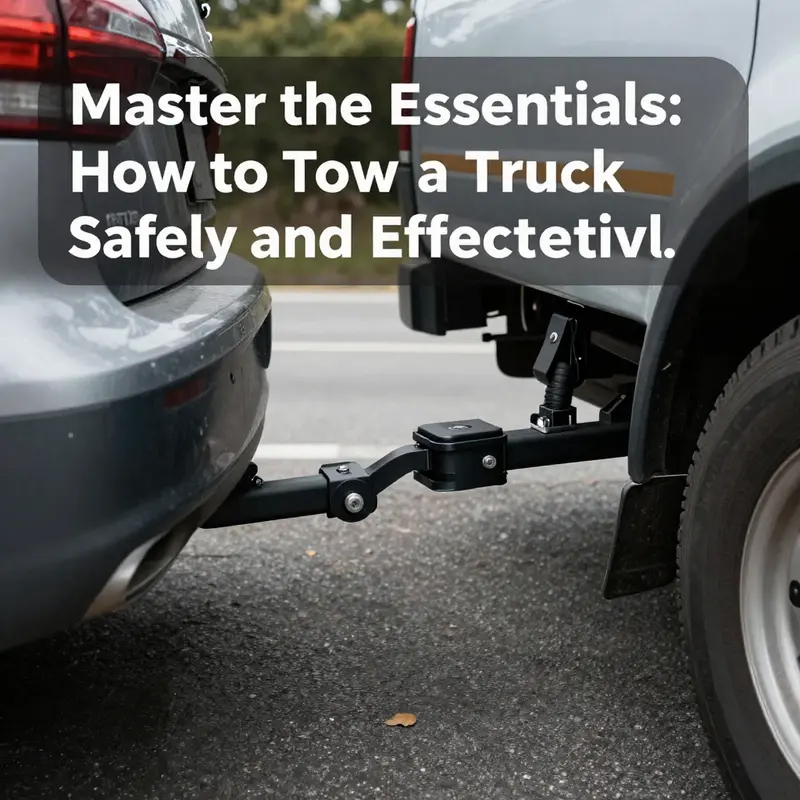
A dependable connection is the foundation of every safe tow. Whether you are recovering a disabled pickup or transporting a light commercial truck, the link between the tow vehicle and the towed vehicle must be engineered for load, redundancy, and stability. Start by treating the connection as a system, not a single piece of hardware. That system should include the primary coupling (bar, hitch or underlift), a redundant safety element (chains or secondary straps), and a means to prevent dragging, chafing, or accidental release.
Begin the task by matching equipment to the truck’s weight and the tow setup. Use rated straps for underlift forks and certified safety chains for the secondary attachment. Never improvise with unmarked or unknown-strength components. Identify the truck’s secure attachment points—factory tow eyes, recovery hooks, or reinforced frame mounts. Avoid suspension, bumper brackets, or any part that can deform under tension. Attach straps to the underlift forks following the manufacturer’s recommended routing so they cradle the fork, rather than cutting across a sharp corner.
When you fit the straps, keep tension management in mind. Straps should be applied without twists and routed so the load is taken along the strap’s broad, reinforced webbing. Use tensioning devices or ratchets when specified, but avoid over-tightening. Excessive tension can lift or distort mounting points and can shift the vehicle during transport. After the strap is set, visually inspect the webbing for cuts, abrasion, or UV damage. Replace any strap that shows visible wear.
Safety chains provide the redundancy every professional operator insists on. Use chains with a working load limit appropriate to the truck’s gross weight. Avoid chains that have been welded, repaired, or are visibly stretched. Attach chains using clevis or grab hooks to the tow vehicle’s designated chain anchors. On the towed vehicle, loop chains through designated frame-mounted hooks or plates. Lay the chains so they form a shallow “V” shape when the vehicles are aligned. This orientation helps keep the towed vehicle centered and reduces lateral sway.
Critical: prevent chains from dragging on the ground. Dragging chains wear quickly and create sparks that endanger road users. Use slack take-up methods or chain shorteners. If the chain length is excessive, use a rated link or shackle to shorten it instead of wrapping the chain around a small anchor, which can concentrate stress and damage the chain.
Before moving, test the entire connection with a controlled tug. From a couple of meters away, pull the tow vehicle forward gently until the straps take the load. Confirm the straps sit properly and the chains bear load without unexpected tension points. Check that shackles, pins, and locking devices are fully engaged. Wiggle the connection by hand to detect any lateral or longitudinal play. If anything moves more than a few millimetres, stop and resecure.
Consider electronic aids where available. Remote control systems on heavy-lift tow vehicles improve operator positioning and reduce time spent between vehicles. Use them to extend reach and to control winch operation from a safer vantage point. However, recognize limits. Basic or older remote units may lack modern encryption and could be vulnerable to interference. Always verify signal reliability and have a local manual override ready. Ensure the remote system’s battery is charged and synchronized. If the unit supports feedback, watch for fault codes during the initial tug test.
Mind the angle of lift and tow. The underlift forks should contact the vehicle at the manufacturer-recommended lift points. An incorrect lift point can stress the vehicle’s crossmembers or body mounts, causing damage en route. When a tow bar is used, maintain alignment so the towed truck tracks directly behind the tow vehicle. Misalignment increases stress on the couplings and promotes sway in turns. If using a rigid tow bar, torque the mounting bolts to the vehicle manufacturer’s specified values.
Wire connections are often overlooked, yet they are vital for safety. Where tow lights are needed, secure a proper electrical connection between vehicles so brake lights, indicators, and hazard lights operate in sync. Route wiring away from pinch points and hot exhaust sections. Use weatherproof connectors and test the light functions before departure.
Communication between operators must be established and tested before leaving the site. Agree on simple, unmistakable signals for “start,” “slow,” and “stop.” If both vehicles are manned, one driver should act as the convoy leader and give clear commands. Use radios or mobile phones with hands-free mounts to maintain contact, and never rely solely on horn blasts in noisy environments.
During the initial transit phase, drive slowly and watch the connection carefully. Keep speed low and steady while allowing the straps and chains to settle under load. Re-check the connection at the first safe stop and again after a brief run. Bolts can settle, straps can shift, and chains can work slightly under initial movement. Inspect for movement, frayed webbing, or squeezed shackles and correct immediately.
When towing in populated or complex environments, add visual warnings. Mount a clearly visible hazard sign on the towed vehicle when required. Use reflective strips on straps and chains to improve conspicuity at night. Keep both vehicle hazard lights on to alert other road users.
Never ignore the manufacturer’s and industry safety standards. A properly documented safe work procedure reduces risk and provides a checklist during busy operations. For commercial or heavy-lift towing, adopt the principles from recognized safe work procedure documents and align your practice with them. Training is essential—operators must be capable of identifying correct attachment points and signs of equipment fatigue.
If anything about the connection feels wrong, stop and reassess. Common failure modes include improperly seated shackles, twisted or pinched webbing, and improperly rated chains. These issues can escalate quickly at speed. When in doubt about vehicle-specific lifting points or drivetrain concerns, choose a flatbed or call a professional recovery service.
Further reading and formal guidance can help refine technique and ensure compliance with heavy-lift standards. Refer to industry procedures for detailed checklists and load-rating tables. For a thorough, authoritative reference on securing connections and trailer towing work procedures, consult the Heavy Lift Tow Vehicle Safe Work Procedure document provided by an industry authority: https://www.safetysolutions.org.au/wp-content/uploads/2025/10/Heavy-Lift-Tow-Vehicle-Safe-Work-Procedure-Trailer-Towing.pdf
For insight into how evolving systems and training affect towing safety, see this practical discussion on tow truck technology and safety: https://winchestertowtruck.com/tow-truck-technology-and-safety/
A strong connection is more than hardware. It is the application of correct hardware, careful routing, redundancy, and repeated checks. When you combine attention to detail with industry-standard procedures, you drastically reduce the risk of detachment, damage, or incident during transport.
Clear Roads, Clear Signals: Mastering Driving and Communication When Towing a Truck
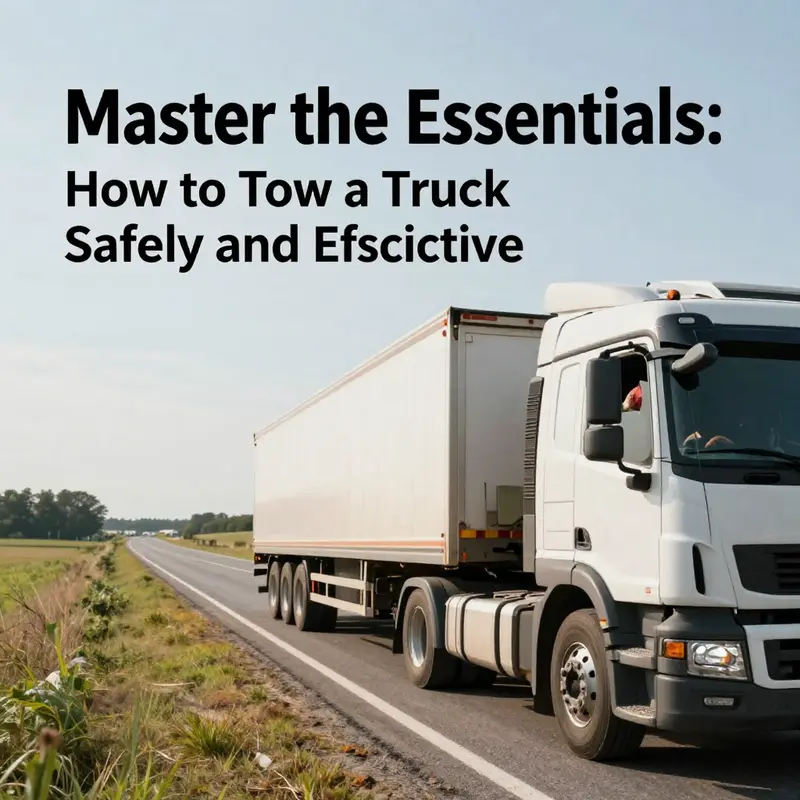
Towing a truck places you in a position where every action you take, and every message you exchange with the other driver, can influence safety as surely as weight and momentum. The road becomes a shared space, and success hinges on a quiet discipline: steady speed, deliberate planning, and communication that is precise and universal. When you roll out, you are not simply moving a second vehicle behind you; you are staging a coordinated maneuver that requires trust, a clear plan, and the ability to adapt in real time to how the tow setup behaves under load. The fundamentals rest on preparation and connection, but the moment you leave the curb, the chapter truly begins with the two essentials of any towing operation: communication and controlled driving.
Clear communication is more than polite conversation or a casual agreement on directions. It is a protocol that reduces ambiguity and aligns expectations between the driver of the tow vehicle and the driver of the towed truck. In practice, this means establishing a reliable method of contact before you start moving: confirm that the towed vehicle’s driver is ready, that the tow connection is secure, and that both parties understand the plan for acceleration, speed, and stopping. In many towing scenarios, verbal talk alone is insufficient, especially in traffic or noisy environments. That is why standardized hand signals, when feasible, remain a robust nonverbal option. A pointed finger can indicate the direction you intend to take next, while a raised hand can halt momentum and signal a pause. When conditions require more immediate and precise coordination, two‑way radios offer real-time feedback over distances that stretch the limits of simple line-of-sight signals, and mobile phones can serve as a backup for longer messages or for coordinating after a temporary communication break. The overarching goal is to establish a simple, repeatable language that both drivers can rely on, even in moments of stress.
With the mechanics of communication in place, attention turns to the driving discipline that keeps a tow consistent and predictable. Speed must be moderated from the moment you begin moving. The commonly advised limit of around 30 kilometers per hour (about 19 miles per hour) is not a suggestion for minimal compliance; it is a safety threshold that minimizes the inertial forces transferred through the tow line or hitch. Those forces can surprise an unprepared driver, especially when the towed vehicle weighs significantly more than the towing vehicle or when the left-right dynamics of the trailer are influenced by road camber or wind gusts. A slower pace doesn’t just protect mechanical components; it also affords greater margin for error in steering input and in path correction. Smoothness in acceleration matters as well. The tow car should press into motion with a gradual, even increase in throttle, letting the tow rope or bar come taut before the pace is raised. Abrupt throttle input creates jerk loads that can stress the hitch, the connection hardware, and the towing vehicle’s drivetrain. The same principle governs braking: anticipate the need to slow well ahead of time and apply gentle, progressive braking rather than sudden, localized stops. The towed vehicle’s driver, guided by the same rhythm, follows the tow car’s lead, maintaining alignment with the tow path and making micro-adjustments to track that path without veering wide.
Every maneuver, including turning, invites a careful choreography. When navigating curves, the tow car should decelerate early so the towed vehicle remains in sync and does not chase the tow car’s rear bumper. A practical rule from seasoned operators is to begin the turn with a wider radius and allow the tow rope or bar to stay taut as the vehicles arc through the bend. The degree of widening depends on the weight, the hitch geometry, and the available road width, but the principle remains constant: the tow car takes the lead, and the towed vehicle follows that lead with gentle, deliberate adjustments. The path the towed vehicle takes is not a guess; it mirrors the tow car’s trajectory, constrained by the length of the connection and the turning arc. This shared path reduces the risk of unintended pedal-to-face contact with the road or with roadside obstacles.
When it comes time to stop, the sequence reinforces the confidence of both drivers and the safety of bystanders. The tow car should issue a clear signal well in advance of the stop—often a practiced horn pattern or a spoken warning—allowing the towed vehicle to decelerate in a controlled manner. The operator in the towed vehicle should respond by bringing the vehicle to a complete stop smoothly, then ensuring that the engine is in neutral, the parking brake is disengaged if appropriate, and the brake lights are functioning so following traffic receives the correct cues. This preplanned brake sequence helps avoid that dreaded moment when inertia pushes the towed unit forward after the tow car has stopped, risking a collision with the vehicle behind. Throughout all of this, communication remains the quiet backbone: agree on a post‑stop confirmation and a go-ahead signal if you must re‑start motion in response to a hazard or a change in traffic conditions.
A well-executed tow is as much about visibility as it is about control. Keeping lighting connections intact and ensuring the towed vehicle’s lights are active is a nonnegotiable safety discipline. On rural or dimly lit roads, reflective clothing, illuminated signals, and conspicuous markers help other drivers understand the extent of the tow and anticipate the line of travel. In adverse weather, the hazards multiply; the same slow speed plus heightened following distance is multiplied again, and communications must be more explicit. If visibility deteriorates, consider pulling over to reassess the setup, verify the connection, and confirm that both drivers still share the same plan before resuming. The aim is not to push through uncertainty but to pause and realign. The simplest, most reliable guardrail is a shared mental model of the operation: what you can see, what you cannot, what you expect to happen next, and what you will do if conditions shift abruptly.
To anchor these practices in a broader safety framework, many experienced operators study the evolving landscape of towing technology and safety. The field is moving toward more standardized, reliable methods of coupling and signaling, which makes the use of robust communication protocols more practical and safer in everyday operations. This approach aligns with established safety literature that emphasizes systematic checks, clear signaling, and conservative driving as the core of any towing task. For readers seeking a consolidated resource on the technical and safety aspects of towing technology, a comprehensive overview is available under the topic Tow Truck Technology and Safety. This resource brings together the principles of secure connections, stable load sharing, and the human factors that influence how safely a tow progresses on open roads. Tow Truck Technology and Safety
The practical routine you build around driving and communication should also account for the practical realities of vehicles involved in towing. Before you depart, you verify that the tow bar or rope is appropriate for the weight and dynamics of the truck you are moving, and you confirm that the hitch and any safety pins are locked and free of play. You test lighting connections again, ensuring brake lights, turn signals, and hazards on both vehicles cooperate with the traffic around you. You rehearse the turning and stopping sequence in a controlled environment when possible, especially if you are new to towing a heavier load. In all these preparations, the objective remains constant: maintain a predictable, transparent operation that other road users can anticipate and rely on. The road is not a private lane for two vessels to collide with one another; it is a shared environment where time, space, and intention must be harmonized.
As you progress through the towing task, you also carry with you the responsibility to stay within legal and safety boundaries. Local regulations often specify maximum towing speeds, lighting requirements, and the kinds of equipment that may be used for different weights and road types. Hazard lights should remain on in many jurisdictions to improve visibility, and drivers should avoid towing in conditions that significantly reduce visibility or extended stopping distances. These rules are not merely bureaucratic; they reflect years of practice and analysis about how to reduce risk during complex on‑road maneuvers. If you are unsure about a particular scenario—whether a given road can accommodate a tow, or how far you can legally travel with a rope or bar attached—pause and consult the vehicle manual, or seek professional guidance. In the long run, the investment in patience, planning, and respecting safety standards pays off in fewer incidents, less wear on your equipment, and a smoother, more predictable operation for everyone who shares the road.
For those who want to explore further the safety and ethical dimensions of tow operations, consider consulting additional resources and guidelines that discuss technology, training, and best practices in the field. External perspectives emphasize how a disciplined approach to towing reduces the likelihood of crashes and injuries, and how ongoing education helps drivers stay current on evolving standards. For a broader sense of safety standards and official guidance, see the National Highway Traffic Safety Administration’s resources at https://www.nhtsa.gov. This external reference complements the practical, experience-based guidance presented here and reinforces the core message: towing a truck is a craft built on careful preparation, steady technique, and clear, continuous communication between drivers.
null
null
Final thoughts
Successfully towing a truck requires careful planning, the right equipment, and precise execution of operational procedures. By understanding each step outlined in this guide—from preparing and checking vehicles to choosing the appropriate towing equipment and maintaining communication on the road—you ensure both safety and efficiency while towing. Always prioritize vehicle inspections and adhere to the specific towing guidelines for different vehicle types to avoid accidents or damage. Whether you are a regular commuter or a truck owner, being well-informed is your best asset on the road.