
Understanding how to communicate effectively in different languages is essential, especially in everyday situations like vehicle breakdowns. Whether you’re a driver needing assistance or a property manager dealing with impounded cars, knowing how to say ‘tow truck’ in Spanish is crucial. This guide will equip you with the necessary vocabulary related to towing services, explore related terms to enhance your communication, and provide practical scenarios for real-world application. Each chapter will build upon the last, ensuring you’re well-prepared to handle any situation involving a grúa.
From Grúa to the Roadside Sign: Understanding How to Say Tow Truck in Spanish
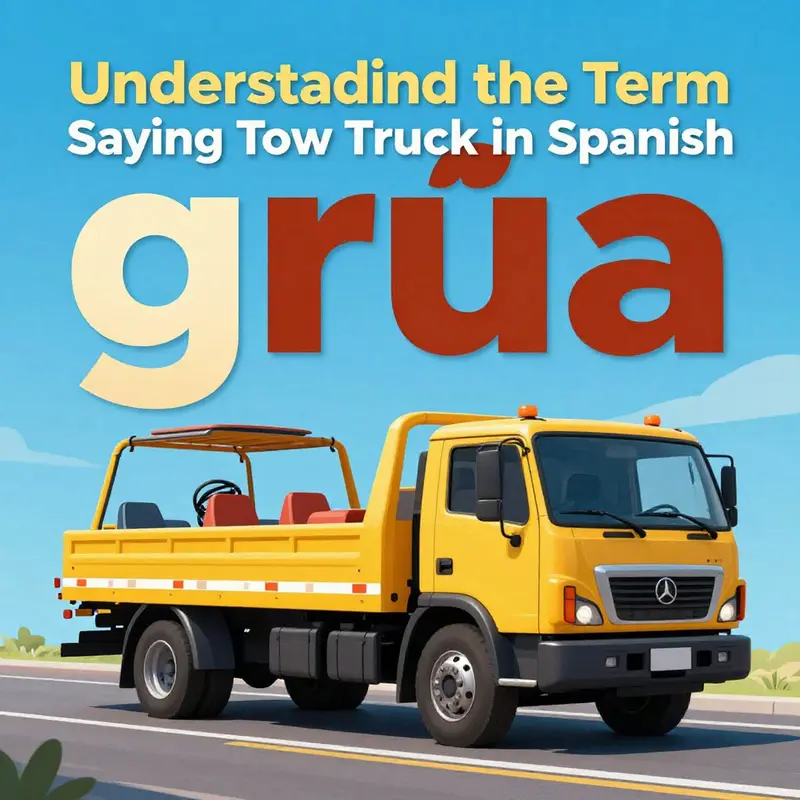
Language unfolds on the street, in repair shops, and at the moment of a roadside emergency. When the engine coughs, or a windshield blurs with rain, the word that comes to mind across most Spanish-speaking communities is the simple, powerful noun grúa. It is a compact term, yet it carries a world of meaning: a vehicle designed to recover, lift, and transport a car that is disabled, wrecked, or temporarily stuck on the side of a road. In many conversations, that one word unlocks a flood of practical understanding. To a driver in distress, hearing “grúa” signals help is on the way; to a dispatcher, it signals what kind of unit must be deployed; to a mechanic, it frames the kind of trip that vehicle will take from curb to shop. These moments reveal how a single Spanish word can coordinate a complex sequence of actions across languages, cultures, and roadside realities. The term’s universality comes not from fancy nuance but from clarity and immediacy, and it is precisely why translators, drivers, and service providers gravitate to grúa as the default name for a tow truck in everyday Spanish.
Yet language is never static, and the practical need to specify the kind of tow vehicle has driven a set of common, widely understood alternatives. Among the most frequent is the compound camión grúa—literally a “truck crane.” This form is especially common in contexts where it is important to emphasize the vehicle’s size and purpose, such as in repair bays, insurance communications, or roadside company signage. The hyphenated variant camión-grúa also surfaces in everyday signage and advertisements, a compact fusion that mirrors similar patterns in other languages where compound nouns convey a specific mechanical identity. In formal or technical contexts, you may encounter grúa remolcadora, literally a “towing crane,” which prioritizes the mechanical action of pulling a vehicle rather than simply naming the vehicle. This precise label often appears in manuals, official documents, or when a police report or tow-truck dispatch record requires exact terminology about the unit used in the recovery operation.
There is another term that can appear in some Latin American countries, reboque, which historically has referred to a trailer in some regions but can surface informally in certain communities as a referential shorthand for a tow vehicle. While this usage can be understood in some localities, it risks confusion in mixed-language encounters or when crossing borders, because reboque more directly points to the trailer or the act of towing rather than to the tow truck itself. In short, the core, most reliable term remains grúa, with its direct, accessible sense of a dedicated tow vehicle and its derived forms that provide regional nuance or technical clarity.
For learners aiming at practical fluency, the simplest guideline is to default to grúa in most encounters. When you need to be specific about the kind of unit, or when you are drafting an invoice, dispatch note, or official report, adopt camión grúa or grúa remolcadora as the context dictates. It helps to keep in mind that grúa can also refer to the service itself in some colloquial usages, much like a shorthand for “tow service” or “tow-truck company” in English. The context—spoken dialogue on the roadside, a formal dispatch sheet, or a customer-facing sign—will typically steer your choice. In signage, for instance, the brevity of grúa often works best because it can be read quickly by motorists who need help. In professional settings where legibility and precision are paramount, camión grúa or grúa remolcadora communicates the vehicle type cleanly to a diverse audience, including police officers, insurance adjusters, and repair technicians who may be coordinating the recovery operation across multiple jurisdictions.
To illustrate these usages in real life, consider a roadside scene: a driver has pulled over after a flat tire and calls for assistance. The dispatcher, understanding the situation, might respond with, “Una grúa irá en tu dirección.” The driver then knows a tow truck will arrive to recover the car and transport it to a repair shop or dealer. If the call comes from a large fleet or a municipal service, you might hear a more formal notification such as, “El camión grúa ha sido asignado para la remoción.” Here the emphasis shifts to the vehicle’s role in the eventual removal of the automobile from the scene. In another setting, an insurance technician may refer to a vehicle as being picked up by a grúa remolcadora to highlight the unit’s lifting mechanism and its suitability for handling a damaged vehicle safely. These phrases illuminate how a language can bend, stretch, and nod toward precision without losing its core meaning—the ability to summon help when the road turns unexpectedly unkind.
A practical learner’s mindset invites a handful of key sentences that crystallize understanding and enable effective communication in Spanish-speaking contexts. When a car breaks down, you might say, “Mi coche se descompuso; necesito una grúa para remolcarlo.” When you want to describe the type of service needed, you could use, “Llevaré el coche a un taller en una camión grúa,” which more explicitly conveys the action of transport rather than immediate roadside repair. In signage or formal notices, you might encounter, “Servicio de grúa disponible 24 horas,” a succinct reminder that the service is available around the clock. If you are addressing a bilingual audience or drafting bilingual materials, you can pair terms to avoid ambiguity: “grúa (tow truck), o también camión grúa,” followed by a clarifying sentence that differentiates it from a simple remolque, which points to a trailer rather than the towing unit itself. These micro-choices—whether you lean on grúa, camión grúa, or grúa remolcadora—shape how your message travels across a landscape of drivers, responders, and customers who may not share the same dialect, the same regional vocabulary, or the same level of formal language.
The conversation about how to say tow truck in Spanish also invites a moment of reflection on how language travels between professional and lay communities. In a workshop or training context, instructors often emphasize the versatility of grúa as a key term that can anchor a broader lexical map of roadside assistance. Trainees learn to narrate a sequence of events clearly: identify the problem, request the appropriate vehicle, coordinate the transport to a repair facility, and document the operation for records and safety compliance. In this light, the word becomes more than a label. It becomes a Hop-On, Hop-Off card that unlocks safe, efficient collaboration among drivers, dispatchers, insurers, and service providers who operate in high-stakes, time-sensitive environments. That is why the simple term grúa persists as the bedrock of communication on the road, trusted for its clarity, its universality, and its ability to bridge linguistic and cultural distances when moments count.
For readers who want to tie this linguistic exploration to a broader sense of how language supports practical action, consider a small but telling exercise. Write a short scene in which a driver experiences a breakdown and the exchange that follows with the dispatcher and the tow operator. Use at least three variants: a direct, everyday use of grúa; a more formal dispatch note employing camión grúa; and a precise description using grúa remolcadora in a report-style sentence. Notice how the tone shifts with each variant, while the essential idea—the arrival of a towing unit to move the vehicle to safety or repair—remains intact. This practice mirrors what language does in the wild: shape, refine, and adapt a core concept to fit the moment, audience, and purpose without losing its core meaning.
In the end, the question of how to say tow truck in Spanish resolves not to a single word in isolation but to a living toolkit. At its heart lies grúa—the compact vessel of meaning that travels easily across regions and registers. Add its variants when specificity is required, and you gain a flexible, robust vocabulary that can communicate across the many lanes of the Spanish-speaking world. It is a reminder that language, like the tow truck itself, is a practical instrument designed to move people and their concerns from danger to safety, from confusion to clarity, and from problem to resolution. And in that light, the choice between grúa, camión grúa, or grúa remolcadora becomes less of a debate over terminology and more of a choice about how best to serve the person seeking help and the professional delivering it.
If you’re curious about practical costs linked to operating such vehicles in real-world contexts, you can explore additional considerations here: how much is a tow truck.
For a concise, external reference that reinforces standard usage and provides additional examples, consult a reputable dictionary resource: Cambridge Dictionary—tow truck.
Choosing the Right Word: How ‘Grúa’ and Related Terms Explain Tow Trucks in Spanish
When you need to describe a tow truck in Spanish, the single most reliable word is grúa. Short, widely recognized, and used across formal and informal settings, grúa conveys the idea of a vehicle equipped to lift, pull, or carry disabled automobiles. The term works whether you are asking for help on the roadside, reading a municipal sign, or filling out a police report. Saying “Necesito una grúa” is clear almost everywhere Spanish is spoken.
Because language reflects function and context, Spanish also offers variants that add technical detail. These related terms help you be precise when the situation calls for it. For heavy rescues or technical descriptions, people often say camión grúa or camión-grúa. Both forms stress that the vehicle is a truck with a lifting mechanism, rather than a simple trailer or dolly. A traffic report might say: “El camión grúa llegó para retirar el vehículo accidentado.” That phrasing signals to listeners that heavy equipment and trained operators are involved.
Regional habits influence which variant you hear. In everyday roadside conversations across Latin America and Spain, grúa alone is the default. In formal contexts—legal notices, police reports, or technical documentation—camión grúa appears more often. Hyphenation (writing camión-grúa) is a stylistic choice and does not change meaning. The hyphen simply links the words visually and emphasizes the compound nature of the machine.
Beyond these basic choices, Spanish has specialized descriptors that pinpoint the type of tow operation. Knowing these will help you both request the right service and understand what professionals mean. A grúa de plataforma refers to a flatbed tow truck. This is the vehicle that carries a car entirely on its bed. Drivers and garages prefer platform towing for long distance moves or when the vehicle cannot roll. The phrase grúa con cabrestante or grúa con winche indicates a truck equipped with a winch. Such vehicles can pull damaged cars from ditches or tow cars that cannot be driven onto a bed.
Different terms may highlight the unit being towed rather than the towing vehicle. For example, remolque primarily means a trailer or the act of towing, and is not a precise way to say “tow truck.” Saying “remolque” without context might confuse listeners, because the word more often refers to what is pulled. On the other hand, the verb remolcar means “to tow.” If you want to say that a tow truck towed your car, you can say: “La grúa remolcó mi coche al taller.” That sentence makes the role of the tow truck clear while using remolcar correctly.
Legal and municipal contexts use concise, standardized vocabulary. A parking sign might read: “Zona de grúa. Los vehículos mal estacionados serán remolcados.” The layout and tone are familiar across Spanish-speaking countries. Readers immediately understand two things: parking restrictions exist and illegally parked cars will be removed by a tow truck. For official notices, grúa remains preferred because of its clarity and brevity.
In everyday emergency language, related phrases are common and useful. Asistencia en carretera and auxilio vial refer to roadside assistance services. If you call your insurer or an assistance hotline, you might say: “Solicito asistencia en carretera. Necesito una grúa.” That phrasing signals both the need for help and the specific equipment required. When speaking directly to a tow operator, phrases such as “¿Puede enviarme una grúa?” and “Mi coche está averiado, necesito remolque” are practical and polite.
The operator of a tow truck also has names in Spanish. The neutral, descriptive term is operador de grúa. In conversational speech you will often hear gruísta, a colloquial label for the person who drives and operates the lift equipment. Saying “El gruísta llegó en diez minutos” communicates the human element. When you want to emphasize professional certification, choose operador alongside mention of registration or company credentials.
Differentiating among types of tow trucks helps when you need a specific service. A grúa ligera typically handles passenger cars and smaller vehicles. A grúa pesada or grúa de gran tonelaje is designed for large trucks and buses. Tow companies advertise these distinctions because each vehicle requires different anchoring systems, winches, and operator expertise. If your vehicle needs a particular method, express it clearly: “Necesito una grúa de plataforma” or “Se requiere una grúa pesada para retirar el camión”.
Colloquial or regionally specific variants occasionally surface. In some areas, people might say remolcador but that word often refers to vessels that tow boats. To avoid confusion, stick with grúa for land vehicles. In slang contexts you might hear llevar al corralón in Mexico, which refers to impoundment rather than towing equipment. The phrase corralón means vehicle impound yard. Municipal enforcement notices often combine these ideas: “Los vehículos serán remolcados al corralón.” That sentence pairs the action of towing with the destination.
Understanding verbs and verb forms produces clearer sentences. Use remolcar to describe towing actions. For passive constructions, say “fue remolcado” or “será remolcado”. If you want to say the tow truck hooked up your car, use enganchar: “La grúa enganchó mi coche y lo retiró.” When someone helps you on the spot without moving the car far, you might say “auxiliaron mi coche” or “brindaron auxilio vial”. Those phrases emphasize assistance rather than long-distance transport.
Pronunciation and stress matter. Grúa has an accent on the u: grúa. Stress falls on the first syllable and the u sound is pronounced distinctly. In rapid speech, the vowel separation sometimes sounds compressed, but speakers still understand what you mean. For learners, practicing the two-syllable pronunciation helps avoid misunderstandings with similar-looking words.
Sometimes context calls for more formal or technical language. In accident reports, mechanical articles, or specialized services, you may see grúa hidráulica, grúa autopropulsada, or grúa portacoches. These terms describe hydraulic lifts, self-propelled cranes, and car carriers. If you need a vehicle transported long distances or loaded onto a carrier, ask for transporte en grúa portacoches or remolque en plataforma. Technical vocabulary allows professionals to match equipment capabilities to your vehicle.
When seeking service, add practical details. Mention your vehicle type, location, and condition. Phrases like “Mi coche no arranca”, “Estoy en el kilómetro 12 de la autopista”, and “Está volcado/accidentado” shape the operator’s response. If you need a police-assisted tow, say so: “Necesito presencia de la policía y una grúa para retirar un vehículo accidentado.” That signals both legal and logistical needs.
Understanding the distinctions between words prevents common errors. Do not use remolque to mean a tow truck. Reserve remolque for trailers or the act of towing. Likewise, avoid using remolcador for land vehicles. Use camión grúa when you want to underline the truck chassis plus crane mechanism. Use grúa for most everyday needs. These small choices keep your Spanish precise and natural.
Language influences expectations. Saying “La grúa llegó” implies both a vehicle and trained personnel. Saying “Llamé al remolque” may cause confusion. When giving instructions, be direct and use standard vocabulary: “Llame a una grúa de plataforma” is clearer than vague alternatives. People who work in roadside assistance respond faster when you use industry-friendly terms.
For readers interested in the practical side of towing services, comparing costs and equipment helps. If you want a quick overview of how tow truck pricing and ownership are discussed, this article on how much a tow truck costs offers useful context about the vehicles and services behind the vocabulary. You can read more at: https://winchestertowtruck.com/how-much-is-a-tow-truck/.
Finally, consider cultural conventions. In many Spanish-speaking places, tow trucks are called promptly for obvious reasons. Drivers place warning triangles, alert authorities, or wait in safe spots. The language around towing is utilitarian and straightforward for a reason: clarity saves time and prevents accidents. Using the correct term—grúa—ensures people hear you and act accordingly.
For many learners and travelers, the takeaway is simple: use grúa for a tow truck, and add specificity when needed with camión grúa, grúa de plataforma, or descriptions like con cabrestante. Use the verb remolcar for the action, and operador de grúa or gruísta for the person. Those choices will make your Spanish sound natural and precise when dealing with vehicle breakdowns, accidents, or municipal towing operations.
External reference: For a concise dictionary confirmation of grúa as the standard translation, see Bab.la: https://www.bab.la/es-en/tow-truck/.
Grúa on the Go: Everyday Spanish for Tow Trucks and Roadside Help
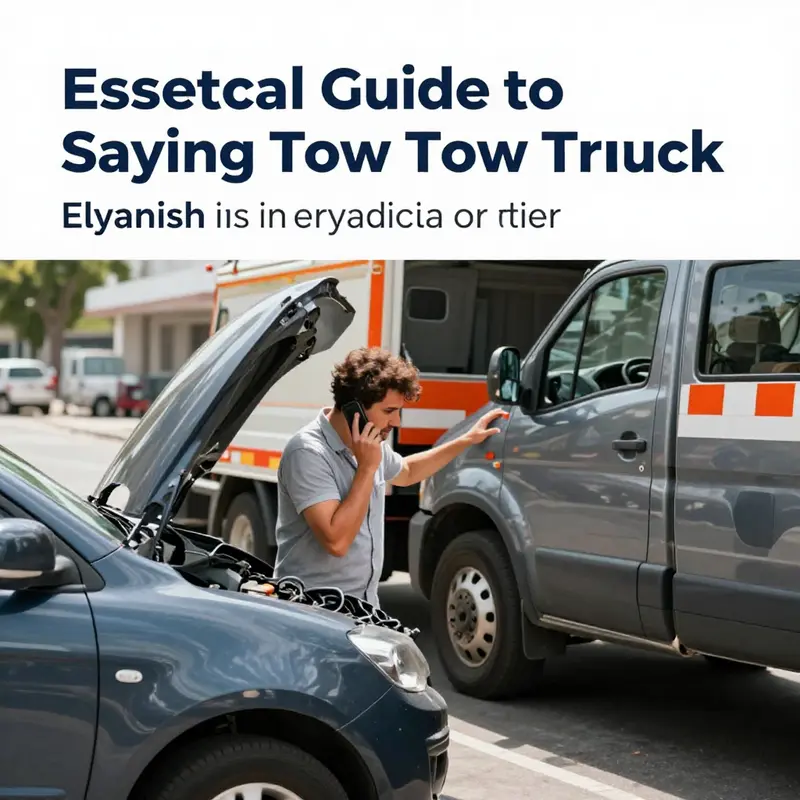
On the open road, the moment of need often condenses into a single word that travelers rely on across languages: grúa. In Spanish, this word names the tow truck and signals help is on the way. Its broad recognition across Spain, Latin America, and bilingual regions makes it the go-to term for dispatchers, drivers, and roadside responders.
For learners and travelers, the simplest usage is una grúa, the feminine indefinite article agreeing with grúa. Common phrases include, “Necesito una grúa,” or, “¿Dónde está la grúa más cercana?” The pronunciation centers the stress on the first syllable: GRÚ-a, with the accented ú guiding pronunciation.
There are related terms you may hear, such as camión grúa for a heavy-duty tow truck, or coche de remolque, which is more descriptive and less natural in everyday speech. When calling for help, “Necesito una grúa, por favor” is clear and respectful, while adding a time estimate—“¿Cuánto tardará la grúa?”—provides practical information.
In practical conversations, grúa works in formal reports and casual chats alike. Its simplicity reduces ambiguity in emergencies, helping responders coordinate quickly and safely. Across contexts, grúa remains a reliable linguistic anchor for roadside assistance.
Final thoughts
Familiarity with how to say ‘tow truck’ in Spanish is not just about knowing the word ‘grúa’; it encompasses understanding the context and applications in everyday life. As we’ve explored, related terminology and practical situations highlight the importance of effective communication in automotive challenges. Being linguistically prepared can ease the stress of vehicle troubles and ensure smooth interactions with service providers. With the insights gained, you can confidently navigate encounters that involve towing services in Spanish-speaking environments.