

The Tesla Cybertruck has arrived on the scene, redefining what electric vehicles can achieve, particularly when it comes to towing capacity. With powerful specifications that allow it to tow up to 11,000 pounds, this electric marvel is aimed at every driver, from everyday commuters to heavy-duty truck owners. In this article, we will break down the impressive towing capabilities of the Cybertruck across its different models, delve into how each variant performs in real-world scenarios, and highlight the cutting-edge innovations that empower its towing capacity. Understanding these facets will equip readers with valuable insights into how the Cybertruck can enhance their everyday driving and towing experiences.
Tow Power on the Electric Frontier: Understanding How Much a Cybertruck Can Tow
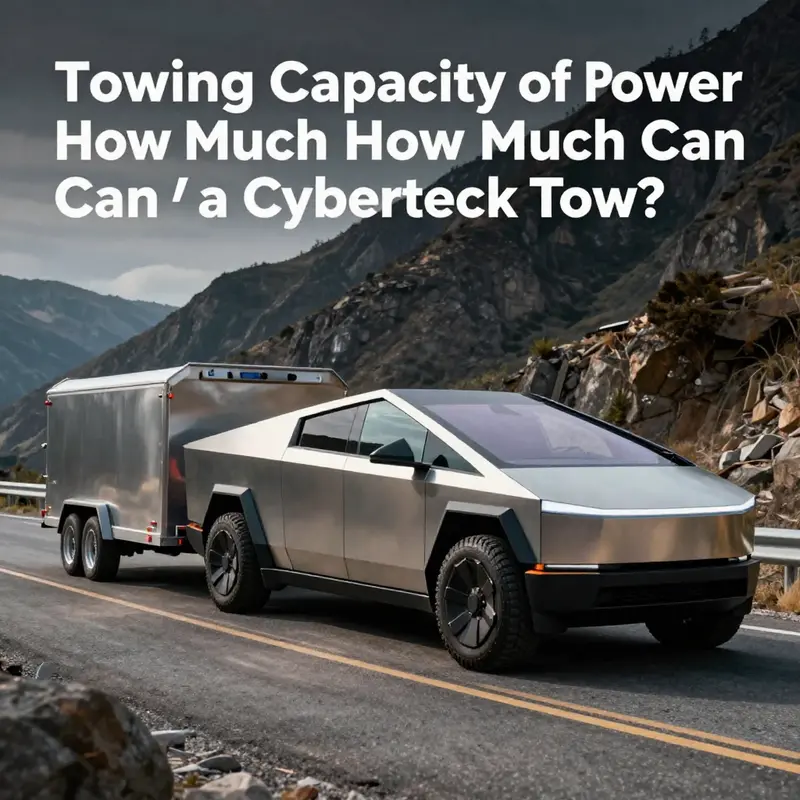
Tow power has always stood as a practical measure of a vehicle’s usefulness, especially for owners who regularly move heavy trailers, boats, or campers. In the evolving landscape of electric pickups, the Cybertruck has emerged as a case study in how to balance raw pulling ability with efficiency, safety, and everyday practicality. The core figure that anchors most discussions is straightforward enough: the Cybertruck can tow up to 11,000 pounds, or about 4,990 kilograms. This is more than a number on a spec sheet; it is an indicator of how the vehicle is engineered to handle substantial, real-world tasks that previously demanded either large gasoline-powered trucks or purpose-built heavy-duty equipment. What makes this capability credible—and potentially transformative for users who need serious towing power—are the design choices that accompany the rating. The towing capacity is not an abstract limit but a consequence of a robust, torsion-resistant frame, a high-torque electric drivetrain, and control systems tuned to keep the vehicle stable under load. The principle is simple: if you can pull it, you can pull it with a level of precision and control that reflects careful engineering as well as the advantages of electric torque delivery. The official specification is consistent across the entire lineup—Tri-Motor AWD, Dual-Motor AWD, and Single-Motor RWD—though the experience behind the wheel, including acceleration, handling, and range, varies with the chosen variant. The line between capability and everyday usability matters here. A tow rating is not a mandate for reckless hauling; it is a ceiling that informs decisions about weight distribution, braking, and travel planning. The structural integrity that supports such a rating begins with the vehicle’s frame and skin. The Cybertruck’s ultra-hard 30X cold-rolled stainless steel and its armored glass are more than showpieces; they are part of a system designed to manage the added stress of towing, particularly when the trailer imposes significant lateral and vertical forces at highway speeds or on uneven surfaces. In practice, the combination of a strong frame, a specialized suspension system, and a torque-rich electric drivetrain creates a platform where the tow rating translates into predictable, repeatable performance rather than a best-case spectacle. The numbers become meaningful when you consider how they apply to common heavy-haul scenarios. A large trailer loaded with materials, a sizable boat on a trailer, or a substantial recreational vehicle cross a spectrum of sizes and profiles. The ability to move such loads with a single vehicle changes the calculus for how a consumer plans trips, sets up a job site, or prepares for a weekend away. It is not just the raw pulling capacity that matters; it is how that capacity interacts with the rest of the vehicle’s capabilities—its braking, steering, stability control, and even its adaptive air suspension. The Cybertruck integrates its suspension, including an adaptive air system that can adjust ride height and stiffness, to maintain control when a heavy load is in tow. The system can lift or lower to optimize ground clearance and weight distribution depending on the terrain. This feature helps when towing off-road or across rough pavement where the risk of trailer sway or chassis pitching increases. With up to 406 millimeters of ground clearance available in certain conditions, the vehicle can tackle obstacles without compromising trim or the alignment of the tow hitch. The combination of high ground clearance and adaptive suspension supports stability, reduces the likelihood of bottoming out on uneven surfaces, and helps preserve steering feel when the trailer adds degrees of load-induced yaw. Speaking to the practical experience, the tow rating is not a blind invitation to haul the heaviest possible load across every road. The reality of towing is shaped by a number of dynamic factors: the trailer’s weight, its tongue weight, wind conditions, road grade, tire condition, and the overall aerodynamics of the setup. The stance of the vehicle while towing—how the weight is distributed between hitch, axle, and frame—has a direct impact on steering, acceleration, and braking. In electric trucks, where energy delivery is immediate and torque is available from zero RPM, this setup produces a different feel than traditional internal combustion counterparts. The Cybertruck’s torque vectoring and all-wheel-drive architecture help keep the vehicle balanced when the traction environment changes. If the trailer starts to push the rear of the vehicle laterally, the control system can nudge power to the appropriate axle to re-center the vehicle’s heading. This is not just about speed but about maintaining directional stability through turns and on uneven pavement. The theoretical ceiling of 11,000 pounds is anchored in engineering limits, including the capacity of the braking system to stop the combined mass efficiently and safely, the strength of the hitch and mounting points, and the truck’s ability to maintain control under dynamic loads. Real-world testing on road and off-road surfaces is essential because the maximum towing figure is a constraint under idealized conditions. The towing rating assumes careful weight distribution, correct hitching, and adherence to guidelines about payload and tongue weight. The tongue weight itself—typically a portion of the trailer’s gross weight—plays a critical role in how the vehicle handles sway, braking effectiveness, and steering response. A trailer that is too heavy at the tongue can create a nose-heavy load that reduces rear-wheel traction and makes the vehicle feel less planted at speed. The rule of thumb used in the broader towing world often points to a tongue weight of roughly 10 to 15 percent of the trailer’s gross weight, depending on the trailer type and the design of the hitch. This is a practical guideline that helps ensure stability, braking performance, and overall control. When the Cybertruck is asked to perform at its rated maximum, the interplay of weight distribution, aerodynamic drag, and rolling resistance becomes a complex equation that the vehicle’s control software and hardware must solve in real time. The effect on range cannot be ignored. Towing imposes a pronounced energy penalty, particularly at highway speeds or when climbing grades. The more weight behind the hitch, the more power is required to maintain speed, which translates into higher energy consumption per mile and a shorter mission distance between charges. The exact impact on range depends on factors such as speed, grade, wind, and driving style, but the general trend is clear: towing reduces range, and that reduction grows with heavier trailers and steeper grades. Nevertheless, the vehicle’s instant torque can aid in maintaining speed on grades without needing to downshift or surge power, a characteristic that helps keep towing performance predictable and smooth. The three conventional configurations—the Tri-Motor AWD, the Dual-Motor AWD, and the Single-Motor RWD—share the same stated towing capacity, yet they diverge in how they deliver that performance. The Tri-Motor variant brings the most available torque and the most robust control when heavy loads are involved, which translates into strong hill-climb ability and confident acceleration away from stops with a towed load. The Dual-Motor configuration offers a balance between power and efficiency, providing substantial low-end torque while aiming to preserve range for everyday driving. The Single-Motor setup emphasizes efficiency and cost-effectiveness, still enabling the full 11,000-pound rating for the heaviest trailers, though the overall performance envelope—acceleration, braking, and cornering under load—will be more conservative than the all-wheel-drive configurations. In practical terms, this means you can use any of the three configurations for legitimate, frequent towing tasks, but the choice will influence how quickly you reach highway speeds, how quickly you can stop, and how you experience steering input when a trailer is attached. For many buyers, the decision will come down to a mix of daily drivability and the occasional heavy-haul assignment. The vehicle’s adaptive systems, including an air-sprung suspension that can adjust ride height and stiffness, help maintain a stable platform under load. This is particularly valuable when the drive involves rough surfaces or uneven ramps that could otherwise unsettles a trailer’s tongue or the truck’s back end. It is also worth noting that the 11,000-pound rating is supported by a robust frame, high-strength materials, and a design philosophy that prioritizes durable, predictable performance under load. This is not simply about hauling capability; it is about reliability when you need to move heavy items in unpredictable conditions. As with any towing scenario, prospective owners should consider the practicalities of the setup beyond the ceiling number. Real-world towing involves planning around weight distribution, the trailer’s braking system, and the road environment. For instance, if you are towing a heavy trailer through mountain passes, the combination of steep grade and gusty winds can test the traction and braking limits. The vehicle’s stability control, brake-based regeneration, and the ability to modulate torque across wheels help to maintain control. This is the kind of performance character that towing enthusiasts value: a sense that the vehicle is not just pulling a mass but managing it with a coherent, integrated system rather than relying on brute force alone. For readers seeking a broader context on how to approach towing decisions across vehicle classes, there is value in exploring general guidelines for towing limits and how they relate to a specific truck’s capacity. A practical reference point is available through a dedicated resource that discusses typical towing limits for trucks and how to interpret those numbers in real life. How much can my truck tow offers a grounded look at common towing expectations and the relationship between trailer weight, tongue weight, and the vehicle’s balance on the road. This kind of guidance can be instrumental when translating a formal rating into the everyday discipline of hitching, loading, and driving. In the end, the Cybertruck’s 11,000-pound rating signals a capability that aligns with the needs of many users who require true tow power in an electric vehicle. It stands as a benchmark for what can be achieved when a truck is built with a combination of high-torque propulsion, robust structural integrity, and responsive control systems that together deliver not just raw mass-pulling ability but a coherent, manageable towing experience. The practical takeaway is not simply the maximum weight, but the confidence that comes with knowing the vehicle can handle heavy loads with stability, consistency, and a measured approach to range planning, braking, and driver input. For those who plan to tow regularly, the underlying message is about preparation and smart usage. Ensure you have properly rated hitch hardware, appropriate wiring, and a trailer with functioning brakes that align with the vehicle’s own braking capacity. Respect tongue weight guidelines, and don’t exceed the recommended load to avoid compromising steering feel and stability. Consider practicing a few tow runs in low-traffic conditions to understand how the vehicle responds to acceleration, stopping, and lane changes with a heavy payload. The learning curve for towing with a high-capacity electric truck is less about discovering a new trick and more about understanding how the vehicle’s electronic interfaces and mechanical realities interact under load. The openness of the system—the ability to deliver torque instantly, the way the suspension adapts to shifting mass, and the way the vehicle communicates with the driver through steering, braking, and vibration feedback—becomes a practical playground for testing limits, refining technique, and ensuring safety for everyone on the road. For readers who want to explore the nuances of towing beyond maximum numbers, veterinary-grade caution applies. The safe, responsible use of this kind of power means staying within rated capacities, monitoring trailer integrity, and adjusting expectations based on road conditions and weather. The ultimate value of a vehicle with this level of towing capability lies not only in what it can haul but in how it integrates into a broad spectrum of day-to-day needs—from professional moves and construction tasks to weekend adventures that require moving large gear without renting specialized equipment. The dialogue between capacity, efficiency, and control is what elevates the conversation from a single statistic to a practical philosophy about owning an electric pickup with genuine towing credentials. External references can provide additional context on how manufacturers balance strength, control, and efficiency in real-world towing scenarios. For those who wish to verify the official capabilities and to see how these figures translate into design choices, the primary resource from the manufacturer remains the go-to baseline. You can explore the official pages that detail the electric utility truck’s capabilities and see how the stated capacity is framed within the broader capabilities of the vehicle family. External reference: https://www.tesla.com/cybertruck
Choosing the Right Cybertruck for Towing: How Model Differences Affect Real-World Hauling
How towing capacity changes across Cybertruck variants
The Cybertruck’s headline towing figure — up to 11,000 pounds — is attention-grabbing. That number, however, belongs to the top-tier model and represents the upper limit of what the platform can handle. Buyers need a practical view of how each drivetrain and specification translates to daily towing tasks. Understanding the differences between the single-motor rear-wheel drive, the dual-motor all-wheel drive, and the tri-motor all-wheel drive clarifies what you can realistically hitch, haul, and tow under varied conditions.
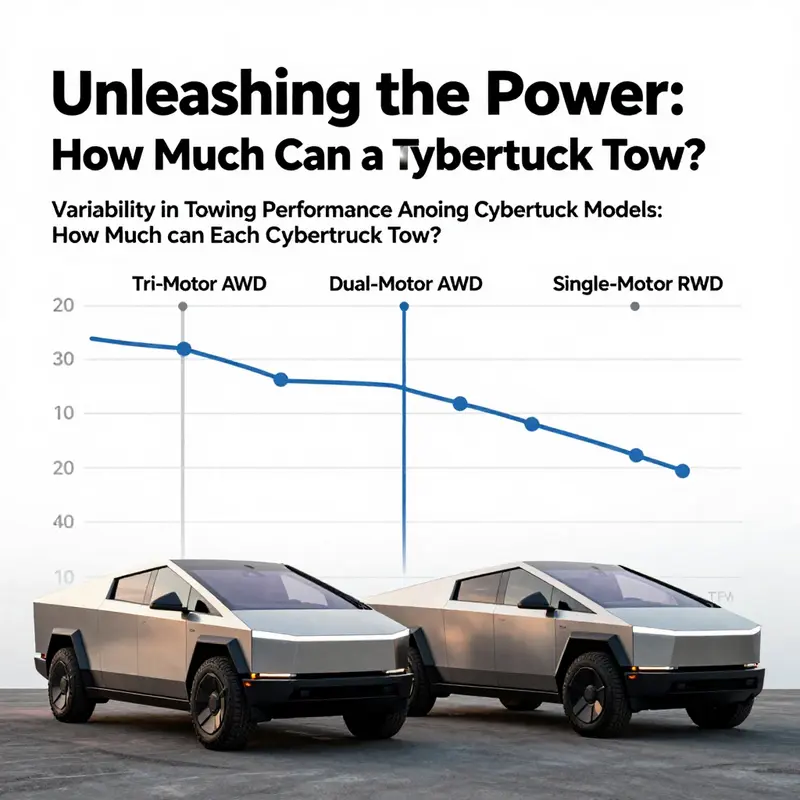
Across the lineup, towing capacity forms a clear ladder. The single-motor rear-wheel drive is rated at roughly 7,500 pounds. The dual-motor all-wheel drive increases that capacity to about 8,500 pounds. The tri-motor all-wheel drive is the heavy-hauling variant, rated at approximately 11,000 pounds. Those numbers reflect more than raw motor count. They represent changes in torque delivery, thermal management, suspension tuning, and electrical system provisions. The AWD configurations add traction and torque distribution options that power real-world towing performance.
A towing figure tells only part of the story. For practical decisions, consider how towing capacity interacts with payload, hitch rating, and trailer braking requirements. The truck’s payload rating dictates how much weight you can place in the bed and cabin while still staying within the vehicle’s gross combined weight rating. That matters when you load gear, passengers, and a trailer tongue weight together. Hitch receivers and ball mounts also have maximum ratings. Even if your truck can tow 11,000 pounds, the hitch, the trailer itself, or local regulations might limit what you can legally and safely haul.
All-wheel drive brings a measurable advantage when towing heavy loads over varied terrain. Dual-motor and tri-motor examples use independent motor control to push torque to the wheels with traction. This torque vectoring reduces wheel slip and stabilizes the rig during acceleration. On steep grades or unpaved roads, that capability changes the difference between struggling and making steady progress. It also helps when launching from a stop with a trailer attached and when regaining control during adverse weather.
Electric motors deliver instant torque, which looks impressive on paper and in short tests. In towing use, that instant torque can be both a boon and a challenge. Positive: quick response gets a heavy trailer moving without lugging the drivetrain. Negative: abrupt torque can upset trailer stability if not managed. The truck’s control systems typically modulate torque and use regenerative braking to maintain smoother behavior. Tri-motor configurations often have more advanced tuning and a wider torque band to handle larger loads with less stress on any single motor.
Range and battery management are core considerations with electric towing. Towing cuts range because the system must deliver substantially more energy to move mass and overcome drag. The heavier the trailer, the greater the energy draw. Expect significant range reductions when towing near the vehicle’s maximum capacity. The single-motor model will generally preserve more range at low towing weights due to lower baseline energy consumption. The dual-motor strikes a balance, while the tri-motor delivers peak towing performance at the cost of higher energy use under load.
Thermal management matters more when you tow often. Motors and inverters heat under sustained load. The tri-motor system typically includes more robust cooling hardware and software to protect components during long climbs and repeated heavy-use scenarios. That makes the tri-motor better suited for repeated heavy trailer duty, such as regularly hauling large boats or heavy equipment over long distances. Without adequate cooling, the powertrain may derate to protect itself, reducing towing performance until temperatures normalize.
Suspension and chassis strength also shape towing behavior. Stiffer springs, adaptive dampers, and reinforced attachment points keep the truck level under load. Heavier trailers push on the rear suspension and can alter steering geometry and brake bias. The truck’s design uses a rugged body structure and high-strength materials to resist flex under heavy loads. Still, attaching weight near the tailgate or above the rear axle affects handling. Correct trailer setup and weight distribution are essential to maintain predictable steering and braking.
Trailer braking systems are a legal and safety requirement for heavier loads. As trailer mass increases, electrically integrated trailer brakes become critical. These systems distribute braking effort between the truck and trailer, reduce stopping distances, and improve directional stability. Many modern electric trucks include integrated trailer brake controllers that work with regenerative braking to smooth deceleration. When towing close to the model’s upper limit, ensure the trailer has a functioning brake system rated for your load.
Hitch class and tongue weight constraints often control practical towing more than the vehicle’s maximum rating. A heavy-duty hitch receiver and ball mount must match or exceed the intended load. Tongue weight — the downforce the trailer places on the hitch — typically falls between 10 and 15 percent of total trailer weight. Exceeding recommended tongue weight changes the truck’s pitch and braking behavior. Use weight-distribution hitches for heavier trailers to transfer some tongue force to the truck’s front axle. That restores steering feel and helps maintain safe stopping performance.
Driver technique and speed management play key roles. High speeds amplify the forces on the trailer and the tow vehicle. Side winds, passing maneuvers, and steep grades become riskier at highway speeds. Maintain moderate speeds while towing, especially near the vehicle’s capacity limit. Smooth throttle inputs reduce the chance of trailer sway. Use engine braking or regenerative braking to help maintain control on long descents. A well-tuned stability control system will intervene when needed, but anticipating conditions prevents many critical events.
Real-world testing often produces results different from manufacturer claims. Lab-based ratings assume ideal conditions: new tires, level roads, and controlled climates. In real towing scenarios, payload, altitude, temperature, and road grade affect performance. Hot climates increase battery temperatures and can reduce both range and continuous power delivery. High-altitude conditions change air density and can slightly alter rolling resistance and cooling efficiency. Factor these variables into trip planning when towing close to the vehicle’s stated capacity.
If you plan to tow at or near the top towing specification, plan for redundancy and safety margins. Use a trailer with brakes and safety chains. Verify tire condition and pressure for both truck and trailer. Consider upgrading to a higher-capacity hitch and stronger sway control mechanisms. Carrying emergency gear and knowing local towing limits can spare you costly interruptions. For new owners unfamiliar with heavy towing, practice in a safe area before embarking on long tows.
Maintenance frequency increases with heavy towing. Brake wear accelerates, as both the truck and trailer decelerate more energy repeatedly. Tires on all axles see greater wear and heat generation. Regular inspections of suspension bushings, wheel bearings, and electrical connectors prevent failures. Check torque on wheel fasteners and hitch components after the first few hundred miles of a heavy tow. Proactively replacing consumables keeps the towing setup reliable and safer under high loads.
For owners interested in aftermarket enhancements, options exist to tailor a truck for heavy towing. Upgraded cooling systems, reinforced hitch assemblies, and specialized trailer control modules can expand the practical durability of repeated heavy-duty use. However, work with professionals to ensure modifications do not compromise warranties or vehicle systems. Some upgrades may alter vehicle dynamics, so validation and careful installation are crucial.
Legal compliance should not be underestimated. Gross combined vehicle weight rating and trailer registration requirements vary by jurisdiction. Towing beyond regulated limits can result in fines and liabilities. Hitch and trailer lighting must meet local codes. Ensure your insurance covers towing use cases you anticipate. When in doubt, consult state or regional transport authorities on allowable limits and necessary accommodations.
Choosing between the three main variants depends on how often and how far you plan to tow, what you intend to haul, and where you’ll use the vehicle. If towing is an occasional need for mid-size trailers or boats, the single-motor model often delivers adequate capability with better baseline range for non-towing use. If you tow larger trailers regularly but prioritize a balance between range and performance, the dual-motor AWD fits many use cases. For heavy, frequent towing over long distances and across varied terrain, the tri-motor AWD is the clear choice thanks to its top-rated capacity and superior thermal and traction systems.
Operational planning helps maximize efficiency regardless of model. Pre-plan route charging stops, especially if towing long distances. Allow extra time for lower speeds on grades and for charging sessions that account for reduced energy efficiency. Keep an eye on instrument cluster warnings and trip planning tools that estimate energy use while towing. These systems help avoid surprises and ensure arrival with sufficient charge.
Finally, any towing platform benefits from good trailer setup practices. Balance loads fore to aft. Secure cargo to prevent shifting. Inspect connections before each departure. Train drivers on towing dynamics and emergency procedures. The truck’s rated capacity matters, but how you use it defines the real-world outcome. Those who respect the interplay of capacity, payload, thermal limits, and driving technique will get the safest, most reliable towing performance from their Cybertruck.
For practical guidance on assessing what your truck can tow and how to match vehicle capability to trailer needs, consult resources like the tow capacity primer at “how much can my truck tow?” which offers useful checklists and planning tips. For official specifications and the latest product details, see the manufacturer’s Cybertruck product page: https://www.tesla.com/cybertruck
Tow-Driven Power: The Engineering Behind How Much an Electric Pickup Can Tow

The question of how much an electric pickup can tow is not just a matter of raw numbers. It is a window into a carefully choreographed set of engineering decisions that balance power, stability, durability, and safety. At the core, towing capacity is a measure of what the vehicle can pull behind it without compromising control, braking, or structural integrity. The numbers that matter for an audience weighing a serious practical commitment are not simply the maximum weight on a scale; they are a portrait of how torque, traction, chassis rigidity, and software cooperate to keep a heavy load moving in a manner that feels predictable to the driver. In this sense, the towing capability of this electric pickup is not a single feature but the product of multiple subsystems working in concert. The result is a towing figure that, in real-world terms, translates into the ability to move trailers, boats, and other large cargo with a degree of poise that electric propulsion brings to the table.
Among the talking points engineers emphasize is the distinction between towing capacity and payload. Towing capacity refers to the total weight the vehicle can pull behind it, including the trailer’s tongue weight and the dynamic forces generated during motion. Payload capacity, by contrast, is the weight the truck can carry inside its bed or cabin. This separation matters because it affects how the vehicle behaves when it is loaded differently. In practical terms, a higher towing capacity does not automatically imply a higher payload, and a high payload does not guarantee stable towing. Real-world towing is a dynamic exercise in weight distribution, trailer geometry, and momentum. The vehicle’s hitch, its wheels, and even its aerodynamics play roles in how smoothly the load is conveyed along the road. The calculations behind these numbers are complex but can be understood through the lens of three primary pillars: power delivery, chassis rigidity, and motion control—the trifecta that makes heavy towing feasible while maintaining safety margins.
First, power delivery in electric drivetrains is renowned for its instant torque. Unlike internal combustion engines, electric motors deliver peak torque from zero RPM, which means a heavy trailer can be set into motion with immediate, controllable response. This is not merely about raw acceleration; it is about how quickly the vehicle can overcome the inertia of a heavy towed load and how the propulsion system can modulate that force to avoid sudden surges or sway. In the most capable configuration—the Tri-Motor AWD variant—the vehicle is rated to tow up to 11,000 pounds. This figure is a ceiling that reflects the combination of three high-torque motors and a drivetrain calibrated to deliver power smoothly and predictably under load. The Dual-Motor AWD model, while slightly more modest in its maximum tow figure, still sits high in the spectrum at 8,500 pounds, signaling substantial capability that can address a broad spectrum of practical towing tasks. The Single-Motor RWD version, though the lightest in the lineup, still offers a respectable 7,500-pound tow rating. These distinctions are not mere marketing; they are the result of deliberate engineering choices about motor placement, torque curves, and thermal management that ensure the vehicle remains stable even as trailer mass increases.
Second, the role of the chassis and body structure cannot be overstated. The design employs ultra-hard 30X cold-rolled stainless steel that contributes to a robust, torsionally stiff platform. The exoskeletal architecture, rather than a conventional body-on-frame approach, provides consistent rigidity that reduces flex under load. This rigidity is crucial when towing, where every additional weight compounds the forces acting on the frame. The aim is to minimize flex, not merely for performance, but for predictable weight transfer and steering response. In a towed regime, stability depends on how well the body resists bending and twisting, which in turn stabilizes the hitch and the trailer. Advanced torque vectoring complements this by distributing power across wheels in a way that preserves directional control. The result is a combination of traction, yaw stability, and steering precision that helps the vehicle manage the combined mass of itself and its trailer without surrendering feel or control to the load.
A third pillar of capability lies in the software-enabled motion control and safety features. Among the most notable innovations is the smart towing feature, a dynamic system that actively monitors hitch stability and adjusts power delivery to prevent sway and enhance handling during towing operations. This technology reads the live conditions at the hitch, assesses the trailer’s motion, and makes small, real-time corrections to the torque delivered to each wheel. The logic behind smart towing is not simply about preventing wheel slip; it is about maintaining a balanced, responsive platform as the vehicle negotiates hills, curves, and crosswinds with a heavy towed load behind it. When a sway tendency is detected, the system can modulate torque or apply controlled braking to specific wheels to dampen oscillations before they grow into a dangerous sway pattern. In a sense, this is a software-based stability layer that works in tandem with mechanical components to keep a future-proof towing setup behave more like a steady drumbeat than a swinging pendulum.
The conversation around tow ratings should also enshrine a clear line between what the vehicle can tow and how much payload it can carry. The 11,000-pound ceiling reflects not only the gross weight the hitch can pull but also the dynamic demands of that load over typical road conditions. It represents a conservative, safety-conscious ceiling that assumes the driver and trailer meet standard compatibility criteria, including tongue weight, ballast, brake controller compatibility, and trailer brakes. The payload figure—about 2,500 pounds—speaks to the bed’s load-bearing capability. It is essential not to conflate these two figures; they are two separate constraints that shape how the vehicle can be used. For example, a heavy payload in the bed might reduce the available headroom for towing or alter the vehicle’s weight distribution to the point where the towing rating would require recalibration of braking and stability allowances. Understanding this distinction helps prospective buyers plan their tasks with clarity and avoids overestimating what the vehicle can accomplish with the trailer attached.
The practical implications of these numbers become clearer when one considers typical towing scenarios. For instance, pulling a large camping trailer along a highway demands consistent braking force, stable steering in a crosswind, and predictable throttle response on grades. The Tri-Motor variant’s 11,000-pound capacity is not intended to be tested repeatedly at the limit in hilly terrain, but it does indicate a high ceiling that empowers owners to plan long trips with confidence. The powertrain’s instant torque translates into the ability to accelerate from a standstill with a fully loaded trailer in tow, which is a meaningful advantage when merging onto busy freeways or cruising up long grades. Likewise, the vehicle’s dynamic stability controls, combined with its stiff, robust body, help ensure that even when the trailer’s momentum shifts with gusts of wind or changing road conditions, the driver is provided with a coherent, manageable driving experience rather than a reactive, unpredictable one.
A close look at the engineering philosophy behind towing numbers reveals that the system thrives on integration. The motors provide the raw capability, but that capability is harnessed through intelligent software and a structurally sound platform. The wheels, tires, and brakes are tuned to sustain the additional load while maintaining predictable braking distances and steering feedback. The braking system itself must contend with trailer mass, which can double the stopping load compared to solo vehicle operation. In many scenarios, the tow-ready configuration includes braking solutions at the trailer, which interact with the vehicle’s electronic braking distribution to ensure consistent deceleration. Compliance with safety standards is another important facet; rated capacities are calibrated to reflect adherence to industry norms for stability, control, and brake performance under typical conditions.
As owners and enthusiasts weigh the numbers, it is helpful to think in terms of what the vehicle can do within a broad range of realistic tasks rather than a single maximum figure. A Tri-Motor AWD model can confidently pull a substantial trailer for a weekend campsite or relocate heavy gear when needed. A Dual-Motor configuration remains highly capable for mid-sized caravans or boats on trailers, offering a balance of power and efficiency. The Single-Motor version, while lighter, still provides meaningful capacity for smaller trailers and utility tasks where payloads are within its towing envelope. Each variant demonstrates that the core advantage lies not solely in the power figures but in the way the platform supports handling across a spectrum of towed masses.
For those who want to explore the topic further and connect towing stability with other aspects of vehicle safety and performance, one can explore resources focused on the broader field of tow-truck technology and safety. This internal reference emphasizes how modern towing operations integrate powertrain control, braking, suspension, and trailer dynamics to deliver reliable performance in demanding conditions. It provides a framework for understanding the kind of cross-disciplinary engineering that makes high tow ratings not just possible but dependable over the long haul. Tow Truck Technology and Safety. This reference helps place the towing numbers in a broader context of heavy-duty vehicle design and field practice, showing how the same principles that govern a pickup’s highway performance also underpin professional towing operations.
The broader takeaway is that the numbers tell a story about precision engineering rather than pure brute force. The instant torque of electric motors, the stiffness of the chassis, the efficiency of torque vectoring, and the sophistication of real-time stability controls together enable a towing experience that emphasizes predictability and safety. The payload figure remains an important constraint, but it does not diminish the significance of the towing capacity. For the practical user, this combination translates into a credible ability to move heavy trailers with confidence, maintain stable handling through various phases of the trip, and enjoy a towing experience that leverages the strengths of modern electric propulsion.
In the end, the value of these capabilities goes beyond the numbers. It is about how a vehicle can keep pace with real-world needs—whether that means moving a boat to the water, relocating a large equipment trailer for work, or supporting a family road trip with a sizeable camper in tow. The engineering choices embedded in the three motor configurations, the exoskeletal chassis, and the smart towing feature collectively define a towing proposition that feels reliable and controllable rather than daunting. It is a reminder that the evolution of electric powertrains is not just about speed or efficiency; it is about extending practical capabilities that previously required more heavy, less efficient solutions. This convergence of power, stability, and intelligent control is the core reason the figures resonate with both enthusiasts and professionals who demand performance without compromising safety.
External reference: For a deeper dive into the smart towing feature and how these systems operate in real-world conditions, see the official exterior resource provided by the manufacturer’s communications channel. https://www.tesla.com/blog/cybertruck-smart-towing
Final thoughts
With a remarkable towing capacity of up to 11,000 pounds, the Tesla Cybertruck stands out in the electric truck market, redefining what vehicles can achieve without compromising environmental goals. Each model offers unique performance characteristics that cater to various needs, making it an excellent choice for everyday drivers, truck enthusiasts, and commercial tasks alike. Supported by cutting-edge technology and designed for durability, the Cybertruck promises to be a reliable partner for towing adventures, whether commuting to work or handling heavy-duty loads. The future of electric trucks is here, and it’s powerful.