
Understanding the towing capabilities of a 2500kg light truck is essential for everyday drivers, truck owners, and property managers alike. These trucks are not just built for transporting goods; they serve a crucial role in various commercial and personal applications. From hauling equipment for work to towing recreational vehicles for weekend getaways, knowing how much a 2500 truck can tow impacts your purchasing decisions and operational efficiency. Throughout this guide, we’ll explore towing capacity specifications, the factors that can affect towing performance, the most common models in this category, and the safety regulations that come into play when towing. With this comprehensive outlook, you’ll be equipped to make informed decisions regarding your towing needs.
Real Towing Numbers: What 2500 Trucks Can Actually Haul and Why It Varies
Understanding how much a 2500 truck can tow means studying ratings, hardware, and conditions as a single system. The phrase “2500” is used in two different ways: it can describe a light truck with a gross vehicle weight rating near 2,500 kilograms, or it can name a heavy-duty 2500-series chassis used by manufacturers for serious towing. Both carry the 2500 label, but their towing abilities differ dramatically. This chapter explains what those numbers mean, what controls them, and how to read and apply towing specifications so you can match load, trailer, and hitch to the right vehicle.
Most light trucks labeled around 2,500 kg GVWR are intended for mild to medium-duty work. Their towing capacity typically sits in the 1,500–2,500 kg range. That is enough for small trailers, modest boats, or compact camper trailers. These vehicles have lower frame strength, smaller cooling systems, and limited axle and hitch options compared with full-size 2500-series trucks. In contrast, heavy-duty 2500-series trucks—built on stronger frames, with larger engines, heavier axles, and reinforced suspensions—are engineered to tow many times that. Depending on configuration, they can pull from roughly 19,000 to well over 35,000 pounds when properly equipped. The wide gap between the two classes is why understanding the label alone is insufficient.
Towing capacity is not a single number stamped on a truck that applies in every situation. Instead, several labeled values exist, and each serves a purpose. The most important are GVWR, curb weight, payload, GCWR, and the manufacturer’s published towing capacity for specific configurations. GVWR is the maximum weight of the vehicle, including passengers, cargo, and tongue weight. Payload is the difference between GVWR and curb weight; it limits how much weight you can place in the truck before hitching a trailer. GCWR, or gross combination weight rating, is the combined maximum for truck plus trailer. The manufacturer’s towing capacity is derived from these numbers and from component limits such as axle ratings, transmission cooling limits, and frame strength.
A practical way to think about these numbers is to start with payload. If your truck’s payload is 1,200 pounds, you may only be able to add limited cargo and passengers while still staying within safe tongue weight and hitch limits. Even a heavy-duty truck with a high towing rating can be limited by a low payload if you’ve already filled the cab and bed. That’s why the manufacturer’s specification for towing will often specify the exact cab, bed, axle ratio, and hitch configuration used to achieve a quoted maximum. To reach top towing numbers, trucks typically need heavy-duty axle ratios, trailer brake controllers, upgraded suspensions, and sometimes specific cooling packages.
Engine and drivetrain choices matter. Higher-displacement engines with strong torque curves at low RPM provide the force needed to accelerate a heavy load and hold speed on grades. Diesel engines, especially those tuned for torque, are common in heavy-towing setups because they deliver high torque at low engine speeds. Transmission gearing and cooling systems also play a role. Heavy towing generates heat; without adequate cooling for the engine, transmission, and differential, components can overheat and fail. Vehicles intended to tow near their upper limits often include auxiliary coolers and transmission grades tuned for heavy loads.
Axle ratios and suspension determine how efficiently that engine power is translated into pulling force. A higher numeric axle ratio multiplies torque at the wheels, improving low-speed pulling and grade performance but often reducing top speed and fuel economy. Stronger axles and reinforced suspensions control axle wrap under load and preserve alignment and tire life. Many trucks that achieve the uppermost towing numbers are factory-fitted with heavy-duty axles and leaf or air-suspensions that resist sag under heavy tongue loads.
Hitch type and tongue weight are small details that matter a great deal. There are different hitch classes and rated capacity ranges. A conventional receiver hitch and ball setup has limits set by the hitch, the receiver attachment, and the truck’s frame. Fifth-wheel or gooseneck hitches transfer much of the trailer’s weight directly over the truck bed and frame, allowing safe towing of heavier trailers while keeping tongue weight within limits. Wherever possible, weigh the trailer on a certified scale to verify actual trailer weight and tongue weight against the truck’s payload and hitch ratings. Typical recommended tongue weight is about 10–15% of trailer gross weight for conventional trailers, and higher percentages are managed with fifth-wheel setups.
Braking systems are another critical constraint. A truck may be capable of pulling a heavy trailer, but safe stopping requires compatible trailer brakes and often an integrated trailer brake controller. Many high-capacity trucks have factory-installed trailer brake controllers, advanced stability control systems, and camera systems to monitor the trailer. Legal requirements also mandate trailer brakes above certain trailer weights in many jurisdictions. That regulatory threshold can effectively limit practical towing capacity for road travel.
Real-world towing capability also depends on how you intend to tow. Long, loaded trips at highway speeds demand cooling, braking, and stability systems tuned for sustained stress. Short moves on level ground emphasize raw pulling power and tongue distribution. Heavy-duty ratings often assume ideal factory configurations and do not account for altitude, heat, or continuous mountain grades, which can reduce safe towing capacity. Manufacturers publish different ratings for conventional towing versus fifth-wheel/gooseneck towing because of the change in load distribution.
When you consult manufacturer specifications, the listed maximum towing number is the upper limit under specific factory conditions. Many operators choose to stay below that number to preserve reliability and reduce wear. A reasonable safety margin of 10–20% below the published maximum provides buffer for headwinds, grade, payload miscalculations, and unexpected conditions. For example, if a truck is rated to tow 20,000 pounds, planning loads around 16,000–18,000 pounds is more conservative and often advisable for frequent towing.
Understanding how to apply the specs requires practical steps. First, read the owner’s manual and the towing section provided by the manufacturer for your exact configuration. Determine your truck’s curb weight, GVWR, and payload. Use a scale to measure your truck’s loaded weight and your trailer’s gross vehicle weight and tongue weight. Add the truck and trailer weights and compare to GCWR. Confirm that tongue weight plus any cargo in the truck bed and cab does not exceed payload. Ensure the hitch, receiver, and ball are rated above the trailer’s gross and tongue weights. Verify that trailer brakes and a controller exist and are functioning. If you plan frequent heavy towing, consider upgrades such as transmission coolers, heavy-duty suspension upgrades, or an upgraded hitch. Keep in mind that modifications may change towing numbers and could affect warranty coverage.
What do these numbers mean in everyday terms? Light 2,500 kg GVWR trucks will comfortably pull small boat trailers, compact utility trailers, and lightweight campers. Heavy-duty 2500-series trucks can tow large, multi-ton RVs, horse trailers, car carriers, and construction equipment, provided the trailer and hitch type match the truck’s equipped configuration. The heavy-duty trucks reach much higher capacities by combining higher GVWR, beefier axles, reinforced frames, and towing-specific options. But even within the 2500-series group, specs vary with axle ratios, cab and bed layout, and factory towing packages.
Finally, keep safety and legality at the top of the list. Overloading strains braking distance, accelerates wear, and increases the probability of mechanical failure. Insurance and warranty issues can arise when a vehicle is used beyond its certified capacity. For guidance specific to your truck and trailer pairing, consult the owner’s manual and a certified scale. For additional practical help with assessing your truck’s safe towing range, you can read a focused guide on towing capacity at this internal resource: how much can my truck tow.
For technical reference on manufacturer specifications that illustrate how manufacturers derive towing numbers and list configuration-dependent ratings, consult the official specification documentation provided by major manufacturers.
https://www.ford.com/trucks/f-250-super-duty/
What Really Determines a 2500‑Class Truck’s Tow Limit: Engineering, Loading, and Real‑World Conditions
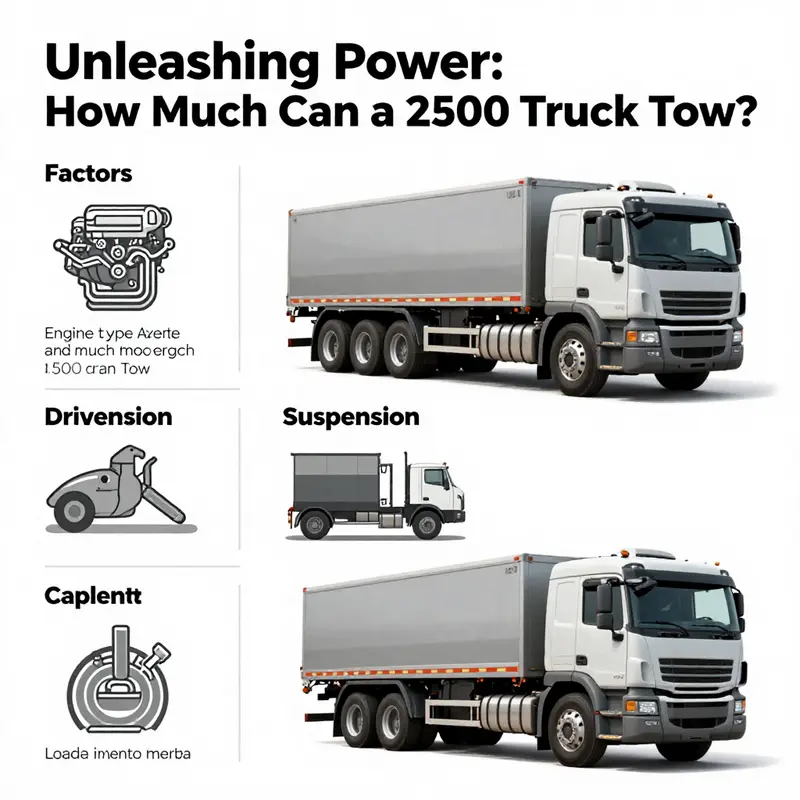
A single number stamped in the owner’s manual does not tell the whole story. For a truck with a 2500 kilogram gross vehicle weight rating (GVWR), the published towing capacity is a guideline. That guideline reflects engineering limits, but the safe, practical tow limit depends on how the vehicle is loaded and the conditions it will face. This chapter explains the variables that shape a 2500‑class truck’s real-world towing capability, and it shows how to turn the manufacturer’s figures into safe decisions you can use at the roadside.
Start with the basics: GVWR, GCWR and how towing capacity is calculated. GVWR is the maximum allowable weight of the truck itself. It includes the curb weight, passengers, cargo, and any aftermarket equipment. Gross combined weight rating (GCWR) is the maximum allowed combined mass of the truck plus trailer and all cargo. Manufacturers derive towing capacity by subtracting a fully loaded vehicle weight from the GCWR. In practice, that means the towing figure is only accurate if you know how much your truck weighs when you climb in. Without that number, the printed towing capacity can be misleading.
Payload matters because it reduces what you can tow. Every kilogram of cargo in the truck reduces trailer allowance by the same amount. Add heavy tools, a full fuel tank, or multiple passengers, and the truck’s residual towing allowance shrinks. Weigh the vehicle on a certified scale with everything aboard to know your starting point. If weighing isn’t possible, estimate conservatively to keep a safety margin.
Tongue weight and load distribution control stability. The ideal trailer load places about sixty percent of the mass over the trailer axles and the rest on the hitch. That produces a tongue weight equal to roughly ten to fifteen percent of the trailer weight for many setups. Too little tongue weight invites sway. Too much places excess load on the truck’s suspension and rear axle, altering handling and braking distances. A weight‑distributing hitch can help by shifting some load back onto the truck axles, but it does not increase the truck’s rated capacity. It only improves balance and control.
Hitches, couplers and attachment points are rated components. Using a hitch or ball rated below the trailer weight is a common and dangerous mistake. Hitch classes are assigned to fixed ratings. Make sure the hitch and mount are rated at or above the trailer’s fully loaded mass, and that the installation meets manufacturer torque and fastener requirements. Aftermarket modifications can weaken attachment points. Always use components specified for the load.
Tires and wheel assemblies are often overlooked. Tires have load ratings printed on the sidewall. Those ratings must cover the static and dynamic loads placed on both the truck and the trailer. Underinflated tires heat up quickly under heavy loads, which shortens their lifespan and increases failure risk. Trailer tires can sit unused for long periods, and dry rot or uneven wear will reduce their safe capacity. Check tire pressure with a gauge and replace tires that show age or significant wear.
Braking capacity governs safe stopping distances. Manufacturers often require trailers above a certain weight to have their own brakes. That threshold varies by jurisdiction. Even when trailer brakes are not mandated, they reduce stress on the truck’s brakes and improve control. An electric or hydraulic trailer braking system must be adjusted to match trailer weight and to avoid lockup. A brake controller and regular maintenance are essential when towing near the upper end of a truck’s rating.
Powertrain and cooling systems define sustained performance. A robust engine will accelerate and climb inclines without excessive strain. Transmission gearing and cooling systems matter because heavy towing increases heat in the transmission fluid. An underrated transmission can overheat quickly and fail. Many trucks intended for towing include upgraded cooling, heavier duty transmissions, and specific axle ratios. If towing is a frequent task, verify whether the vehicle’s configuration includes these features.
Axle ratio and drivetrain influence towing more than peak horsepower numbers do. A higher numerical axle ratio improves low‑end torque at the wheels. That helps when starting from a stop, towing steep grades, or carrying heavy trailers. Four‑wheel drive improves traction in slippery conditions, but it may add weight and reduce fuel economy. Rear‑wheel drive trucks can often handle heavier tow loads on dry pavement, provided braking and suspension are sufficient.
Suspension stiffness and axle load ratings affect how the truck handles a trailer. Heavy loads compress springs and change ride height. Excessive sag can reduce steering geometry effectiveness and compromise headlight aim and braking bias. Upgraded springs or helper air springs can restore ride height and improve control. Like other aftermarket solutions, these do not increase the factory‑rated towing capacity. They do, however, improve safety and drivability when used within rated limits.
Sway and stability control systems improve towing safety. Modern trucks may include electronic stability programs that help damp trailer oscillation. These systems work only within their design limits. Mechanical sway control devices and proper hitch geometry remain important. Cargo placement and trailer shape also influence aerodynamic drag and crosswind susceptibility, which both affect how easily a truck can tow a load.
Environmental and road conditions change what a truck can safely tow. A flat, paved highway in dry weather is the easiest environment. Adding steep grades, high altitude, or hot ambient temperatures reduces engine and transmission performance. When climbing long grades, a truck may need less load to prevent overheating or transmission abuse. As a rule of thumb, reduce towing loads on steep or sustained climbs by a significant margin, and tow lighter in hot climates where cooling capacity is already taxed.
Legal and regulatory limits matter. Some jurisdictions enforce trailer weight limits, braking requirements, or require special endorsements on a driver’s license for heavy towing. Insurance policies may also have restrictions on towing weights or require additional coverage. Check local regulations to confirm what is legal and what additional equipment or licensing you may need.
Safety margins and practical rules of thumb keep you on the right side of risk. Even when your calculations show you are within limits, operating at the rated maximum leaves little room for error. Many experienced operators keep a ten to twenty percent buffer between their planned loaded weight and the published rating. That margin helps account for unknowns, such as additional cargo or slight weighing errors.
How to calculate an operational towing allowance step by step. First, find the GVWR and GCWR for your specific vehicle. Second, weigh the truck fully loaded with passengers and cargo. Third, subtract the loaded truck weight from the GCWR. The remainder is the maximum trailer weight the manufacturer allows. Fourth, confirm hitch, axle, tire, and brake ratings. Fifth, apply a safety margin and make adjustments for severe conditions. If you cannot find GCWR, use the published towing capacity in the manual and treat it as an upper bound, not a target.
Practical maintenance and pre‑trip checks will keep towing safer. Inspect tires and brakes on both vehicles. Verify hitch tightness and electrical connections. Check that trailer lights and brake controllers work. Confirm tongue weight and test trailer sway recovery methods in a safe area. Review the route for steep grades and tight sections. Carry basic tools, spare tire, and emergency supplies.
Finally, when in doubt, consult the vehicle’s official guidance. Manufacturer figures, placards, and the owner’s manual are the authoritative sources for ratings and recommended equipment. If you need help interpreting those figures, a dealer or qualified technician can explain how your vehicle’s configuration affects towing capacity. For deeper reading on manufacturer towing guides, consult the maker’s official site: https://www.ford.co.uk
If you want a quick internal reference about assessing your own vehicle’s limits, see this guide on how much a truck can tow for practical checks and calculations: how much can my truck tow.
Respect the numbers, but respect circumstances more. A safe towing plan balances the manufacturer’s limits with real loads, road conditions, and personal comfort. Knowing the interplay of GVWR, GCWR, payload, tongue weight, braking, tires, and cooling systems turns a single towing figure into dependable, predictable performance on every trip.
Real-World Towing: What Common 2500-Series Trucks Actually Pull
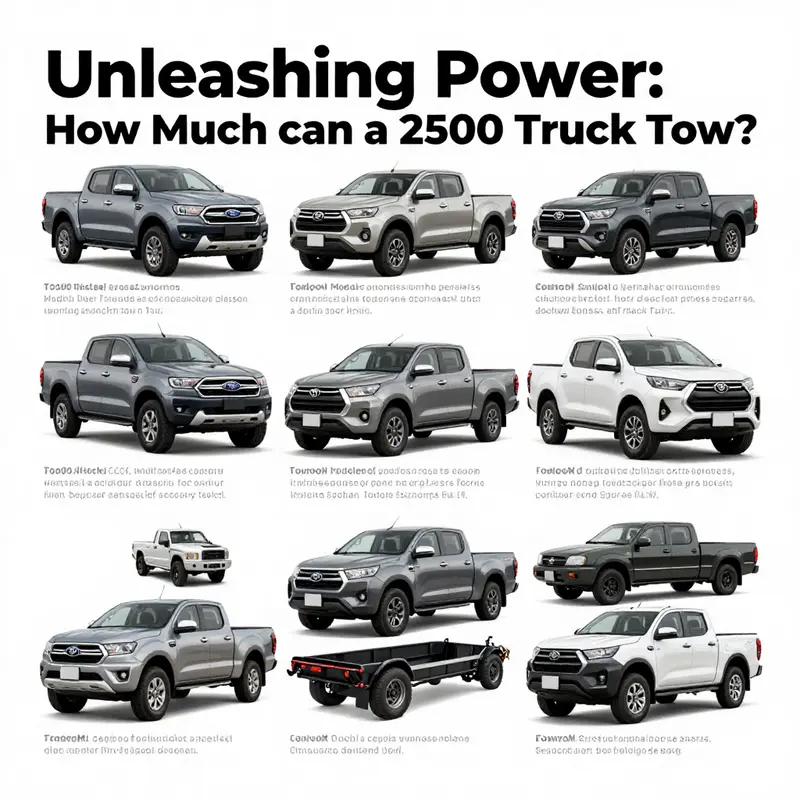
Understanding what a “2500” truck can tow requires context. The designation can mean different things in different markets. Some regions use a numeric class tied to gross vehicle weight, while others use the model number as a shorthand for a heavy-duty chassis. That distinction explains why a figure for towing capacity can range from a modest few thousand kilograms to well over twenty thousand pounds. This chapter walks through representative 2500-series trucks, explains why their capacities differ so much, and highlights the vehicle features and configurations that determine what you can safely tow.
A few representative models show the spread of capability. One flagship heavy-duty model in recent lineups advertises a maximum towing capacity above thirty-six thousand pounds. Another common heavy-duty pickup is capable of up to around twenty thousand pounds when specified with the right engine, axle ratio, and tow package. At the same time, market-specific variants of a third model are rated closer to four and a half thousand kilograms in some regions. Those three data points demonstrate the range: certain 2500-badged trucks operate in true heavy-duty territory. Others — especially 2500kg-class light trucks — sit nearer to the lower end of the scale.
Why such a wide gap? The answer lies in the engineering behind towing numbers. Towing capacity is not an inherent trait tied solely to a nameplate. It depends on the vehicle’s gross vehicle weight rating (GVWR), engine torque and power, transmission cooling and gearing, rear axle ratio, chassis and suspension strength, braking capability, and the presence of factory-installed towing equipment like hitch receivers, trailer brake controllers, and transmission coolers. The same model can have widely different ratings after you choose a heavier-duty engine, add a factory towing package, or specify a cab-chassis configuration.
Consider engine and transmission choices. Diesel engines with high torque output deliver strong low-end pulling power. When paired with heavy-duty transmissions and integrated cooling systems, they enable the highest towing ratings. Gasoline engines can still tow well, but may be rated lower unless the truck includes upgrades to cooling and drivetrain components. Transmission type matters too. Heavy-duty transmissions with additional gearing and cooling preserve shift quality and prevent overheating under load. Manufacturers often list the top towing number for a very specific configuration: a particular engine, transmission, axle ratio, cab and bed or chassis layout, and installed towing package.
Axle ratio and final drive further influence towing capability. A numerically higher axle ratio increases the mechanical advantage available for towing. Trucks intended for heavy towing frequently offer axle options that favor pulling force over top speed and fuel economy. Suspension and frame strength also play a role. A reinforced frame, heavier springs, and larger rear leaf springs or auxiliary airbags help manage the load and maintain stability. Dual rear wheel (DRW) setups are another example: by increasing rear tire contact and load distribution, DRW models can safely carry and tow heavier loads.
Brake systems and trailer controls are safety-critical. For higher towing ratings, manufacturers require or recommend trailer brake controllers and supplemental braking systems on the vehicle. Trailer brakes reduce the stopping demand on the tow vehicle. A truck’s own braking hardware — larger rotors, heavy-duty calipers, and more robust brake cooling — supports higher towing figures by managing heat build-up during repeated braking events.
Factory tow packages are more than a simple hitch. They typically include a hitch receiver rated for high tongue weight, upgraded cooling for the transmission and engine, wiring harnesses for trailer lights and brakes, and often a dedicated transmission cooler. These options raise the safe towing capability because they address the common failure points when towing heavy trailers: overheating and inadequate braking. Without the proper package, a theoretically strong truck may be limited to a lower published rating.
What do the representative numbers mean in everyday use? A truck rated for the lower end of the 2500-class range — roughly 1,500 to 2,500 kilograms — is well-suited to small to medium trailers, camper vans, or light plant equipment. It will handle many recreational boats and modest box trailers with ease. Trucks at the upper end of heavy-duty 2500-series ratings, measured in the tens of thousands of pounds, can tow livestock rigs, full-size travel trailers, large horse trailers, and heavy commercial equipment. The highest-rated models move into territory traditionally occupied by three-quarter ton and one-ton chassis, so they’re used for demanding commercial and agricultural tasks.
Real-world towing requires attention to numbers beyond gross towing capacity. Gross Combined Weight Rating (GCWR) is crucial; it governs the total weight of the truck plus trailer and cargo. Payload capacity — how much the truck can carry in the cab and bed — affects tongue weight. Exceeding tongue weight recommendations can upset handling and cause failure of suspension components. Tongue weight is typically 10–15 percent of the trailer’s loaded weight for conventional trailers, and specialized trailers may require different distribution. Always verify payload and tongue weight against the trailer’s loaded mass.
Regional ratings can differ for the same model. Manufacturers publish ratings to meet local regulatory and testing standards. A truck sold in one country may have a different maximum towing sticker than the identical chassis in another market, because of differences in measured criteria, available configurations, or legal requirements. That’s why the same model may be quoted with a 4,500-kilogram rating in one place and a much higher number in another.
How should owners use the published towing figures? Treat them as the ceiling for safe operation under the specific configuration described by the manufacturer. Do not assume a casual accessory will let you reach the maximum. Aftermarket changes can reduce capacity or shift stresses in unsafe ways. When planning a tow, add safety margins for hills, high ambient temperatures, and long-duration towing. Consider the effects of altitude on cooling and engine output, and remember that repeated heavy towing is more demanding than occasional pulls.
Practical equipment choices make a big difference in confidence and safety on the road. Install a properly rated hitch and use the manufacturer’s recommended wiring and brake-control components. Choose weight-distribution systems when towing trailers with significant tongue weight. Ensure mirrors provide adequate visibility of the trailer. Check tire ratings on both truck and trailer. Maintain tire pressures to specification, and inspect wheel bearings and suspension components regularly.
Maintenance and monitoring are essential. Keep the cooling system, transmission fluid, and engine oil up to date. Use the recommended fluids and follow service intervals. Consider a transmission temperature gauge if you frequently tow near the truck’s maximum capacity. If your truck has integrated towing aids — exhaust brakes, engine brake systems, or adaptive cruise towing modes — learn how to use them properly.
Finally, verify everything with official documentation. Manufacturers publish towing guides that specify capacities for each configuration, including axle ratios, engine options, and towing equipment. Owner’s manuals and manufacturer websites contain the definitive numbers for your vehicle. For a quick reference on your own truck’s capability and safe practices, the guide at “how much can my truck tow” is a practical internal resource that complements the manufacturer’s data (see how much can my truck tow).
When selecting a 2500-series truck for specific towing needs, focus on the configuration rather than the badge. A 2500 designation can mean a light duty vehicle with around a two-ton gross weight rating. It can also mark a heavy-duty chassis capable of towing upwards of twenty thousand pounds once properly specified. Match engine and transmission choices, axle ratio, and factory tow packages to your intended loads. Factor in payload and tongue weight so your rig remains within GCWR limits.
By approaching towing with a clear understanding of how manufacturers derive their numbers, and by choosing the right configuration and equipment, owners can match a 2500-series truck to virtually any towing requirement. Always cross-check the published rating for your exact vehicle, keep safety systems and maintenance up to date, and plan conservative margins for challenging conditions. For direct reference to manufacturer guidance, consult the vehicle maker’s specifications and towing documentation at Ford UK: https://www.ford.co.uk
Towing Within Your 2500-Class Truck’s Limits: Safety Rules, Legal Musts, and Practical Steps
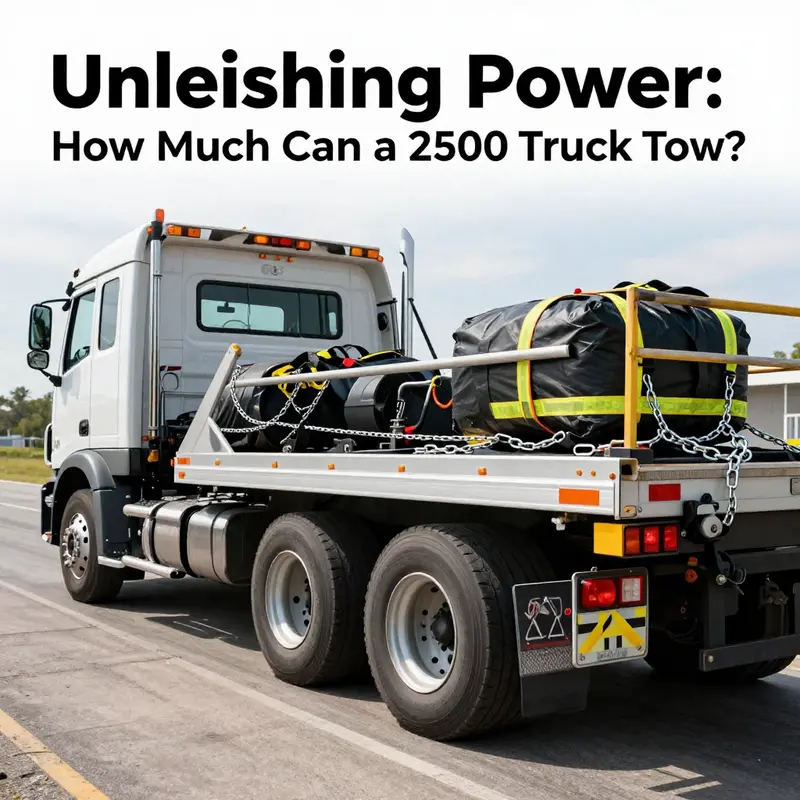
Towing within your 2500-class truck’s limits requires more than knowing a single number. It demands a clear grasp of ratings, an honest assessment of the load, consistent maintenance, and awareness of the legal landscape. The truck’s rated towing capacity is a starting point, not an invitation to push limits. That rated capacity ties into two critical, related figures: the vehicle’s Gross Vehicle Weight Rating (GVWR) and its Gross Combined Weight Rating (GCWR). GVWR defines what the truck itself can legally carry, including passengers and cargo. GCWR sets the safe combined weight for the truck and the trailer it tows. Respect those numbers and your risk of brake failure, tire blowouts, or steering instability drops sharply. Exceed them, and the road can turn dangerous in moments.
Safety begins with accurate calculations. Add the truck’s curb weight, any passengers, onboard cargo, and the trailer’s loaded weight. The sum must remain under the GCWR. Many drivers forget tongue weight, a small but vital number. Tongue weight is the downward force the trailer exerts on the hitch. Too little tongue weight makes the trailer prone to sway. Too much overloads the truck’s rear suspension and reduces steering control. A good rule of thumb is to aim for tongue weight equal to 10–15% of the trailer’s total loaded weight. Use a reliable scale to measure it when in doubt. Never estimate by feel alone.
Trailer brakes and hitch choice are legal and safety essentials. Most jurisdictions require auxiliary brakes on trailers above a specified weight. Even when local law does not strictly demand them, trailers near the truck’s towing limit should have independent braking. Properly matched brakes reduce stopping distances and protect the towing vehicle’s systems. Hitch selection matters just as much. Class III and IV hitches are designed for heavier towing tasks and provide better load distribution and coupling reliability. A hitch rated below the trailer’s potential tongue or gross weight is a liability. Inspect mounting points and fasteners whenever you attach a hitch, and torque bolts to manufacturer specifications.
Tire condition and inflation are commonly overlooked yet frequently decisive. Tires support the vehicle and trailer under dynamic loading. Inflation pressures must reflect gross vehicle weight when towing. Overloaded tires run hot and risk blowouts. Check tire sidewalls for the load range and recommended pressures. Replace tires that show age-related cracking, irregular wear, or damage. Remember the trailer’s tires too. Mismatched tire ratings between truck and trailer can create weak links in the system.
Vehicle handling changes dramatically with a trailer. Steering inputs require gentler, earlier corrections. Braking distances increase, and momentum on grades can overwhelm cooling systems. Use lower gears on both uphill and downhill stretches to control speed without excessive braking. Maintain larger following distances to allow room for a controlled stop. When merging, accelerate smoothly and avoid abrupt lane changes. Crosswinds and passing heavy vehicles amplify sway tendencies, so be prepared to reduce speed steadily rather than overcorrect.
Regulations vary across regions, and compliance is nonnegotiable. Federal rules set broad standards for commercial operations, but state and local laws fill in many details. Some states mandate sway control devices or safety chains of a specified strength. Others require specific lighting and reflector arrangements. If the trailer’s braking system must be connected to the truck’s electrical system, ensure the correct plug type and wiring are in place. Keep documentation such as the owner’s manual and any required permits accessible. If the truck is used commercially or to haul loads for hire, different thresholds may trigger commercial vehicle rules and licensing requirements.
Insurance and warranty considerations also shape safe towing practice. Exceeding manufacturer limits can void warranties on drivetrain components and void coverage on insurance claims tied to overloaded operations. Before towing a heavy load, verify what the warranty covers and whether additional insurance is needed for high-value cargo or long hauls. Commercial usage often requires separate insurance products and carrier filings. Ignoring these details leaves drivers financially exposed in the event of an accident.
Routine inspections are indispensable. Create a pre-trip checklist that includes hitch coupling, safety chains, electrical connections, lights, tire pressures, and trailer brakes. Confirm trailer load securement with rated straps, chains, or binders. Check lights for visibility, because brake lights and turn signals are primary communication between drivers. Re-inspect at intervals during long trips to catch shifting cargo, loose fasteners, or tire heat buildup early. A five-minute check every couple of hours can prevent catastrophic failures.
Training and experience reduce risk. Handling a fully loaded trailer differs from unladen driving. New drivers should practice backing, turning, and emergency stops in a controlled space before hitting open roads. Learn how to feel and correct trailer sway without oversteering. Understand how to use a weight-distributing hitch when needed. Many local training programs and private instructors specialize in towing skills and can cut months off a learning curve. Formal training also helps drivers recognize when trailers approach weights that require auxiliary braking or professional inspection.
Special equipment can improve control and safety. A weight-distributing hitch shifts some tongue weight forward to the truck’s front axle, improving steering and braking balance. Sway control devices can stabilize a trailer that begins to oscillate. Extended towing mirrors increase visibility around wider loads. A transmission cooler and an upgraded radiator can help manage heat during long tows or climbs. Consider installing a trailer brake controller for precise braking coordination. Each device should be rated for the intended load and professionally installed when complexity warrants.
Weather and terrain influence safe towing choices. Rain, snow, ice, and high winds demand conservative speed reductions and increased following distance. Steep grades place sustained stress on brakes and transmission. On long descents, shift to a lower gear and rely on engine braking to preserve the braking system. Avoid towing during severe weather alerts unless unavoidable. Route planning that avoids steep passes and heavy congestion reduces stress on both vehicle and driver.
Legal thresholds determine whether a regular driver’s license is sufficient. Most 2500-class trucks used for private purposes fall below commercial thresholds. However, if combined vehicle and trailer weights exceed defined limits, or if the vehicle is used in commerce, commercial licensing and safety requirements can apply. Check local licensing rules before towing heavy loads, especially across state lines. Failing to comply can result in fines and civil liability after an incident.
Documentation is a quiet safety tool. Carry the truck’s owner manual, trailer registration, proof of insurance, and any permits required for oversize or overweight loads. Keep maintenance records current. These documents help roadside inspectors and can support insurance claims if something goes wrong. They also clarify legal responsibilities when operating near the edge of rated capacities.
A final but essential note is to treat towing as a system, not a single number. Payload, tongue weight, hitch rating, braking capacity, tire condition, driver skill, and road conditions all interact. Optimizing one area while ignoring others produces weak links. Apply conservative margins when uncertain. If a load approaches the upper limit of what the truck or hitch can safely handle, consider a different rig, a lighter trailer, or professional hauling services. For guidance specific to your truck’s configuration, consult the vehicle manufacturer’s manual and relevant safety authorities.
For a practical review of how much your particular truck can tow, including steps to verify its limits and apply them safely, see this detailed guide on how much can my truck tow. For authoritative regulatory guidance and safety standards, refer to the National Highway Traffic Safety Administration: https://www.nhtsa.gov
Final thoughts
In conclusion, the towing capacity of 2500 trucks plays a pivotal role in their functionality and versatility. Understanding the specifications, the influencing factors, the common models with their respective capacities, and the crucial safety regulations ensures that you can maximize the use of your truck while minimizing risks. Whether you’re an everyday driver, a truck owner, or involved in property management, this knowledge empowers you to make educated choices, enhancing both the utility and safety of your towing experiences.