
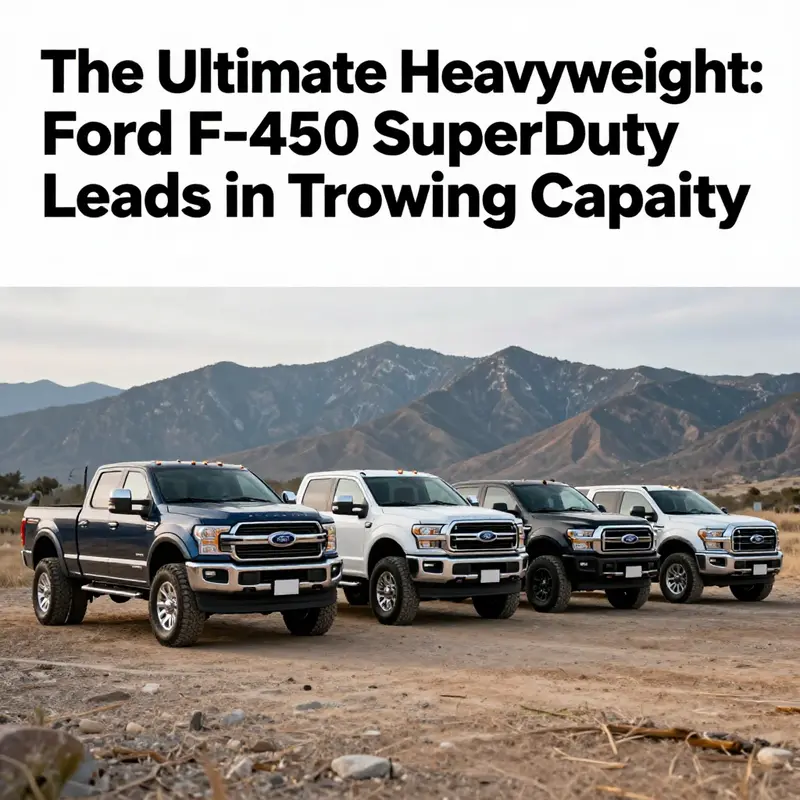
Choosing the right truck can hinge significantly on its towing capacity, especially for those who regularly haul heavy loads or navigate challenging terrains. For everyday drivers, truck owners, and professionals involved in property management or automotive dealerships, understanding which truck excels in towing can enhance functionality and safety. This discussion will focus on the standout Ford F-450 Super Duty, a true champion with a staggering maximum towing capacity. Following this, a comparative analysis of formidable competitors, including the Ram 3500 HD and GMC Sierra 2500 HD, will unveil the strengths and limitations of each. The final section will delve into the technological aspects that impact towing ratings, equipping readers with the knowledge to make informed decisions when selecting a towing vehicle.
Tow Power at the Top: Understanding Maximum Towing in Heavy-Duty Pickups
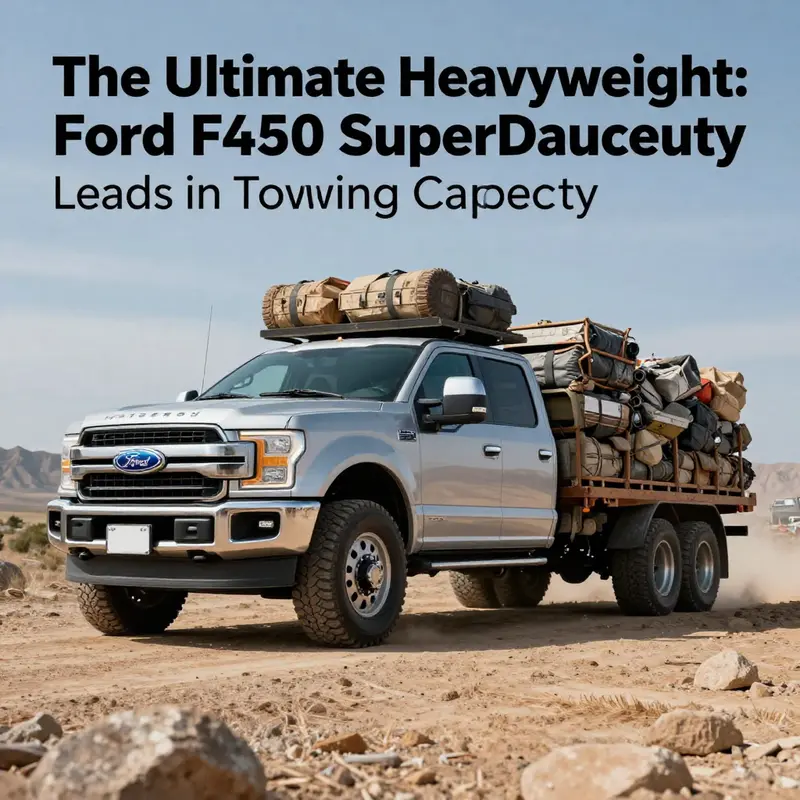
Towing capacity is more than a single figure on a spec sheet. It is the result of layers of engineering that blend strength, control, and practicality into a single, work-ready package. In the realm of pickups designed for serious hauling, the top tier stands out not only for the number it can pull but for how consistently it can do so across real-world conditions. When considering which truck has the best towing capacity, the conversation quickly moves beyond the headline figure and into the ecosystem that makes that figure usable: the hitch system, the drivetrain, the frame and suspension, the cooling and braking systems, and the tires that keep an enormous load from turning into a controlled catastrophe. A well-built heavy-duty pickup can tow on the order of tens of thousands of pounds, but the value of that capability is realized only when the vehicle remains controllable, safe, and reliable through long hauls and varied terrain. The most capable machines in this class can tow up to an extraordinary scale when properly equipped with the right hitching system and the appropriate drivetrain configuration. In one of the most common configurations for maximum towing, a gooseneck hitch is employed. When paired with the right chassis and powertrain, this setup can push the practical limit of production pickups toward forty thousand pounds, equivalent to about twenty tons. That barrier—forty thousand pounds with a gooseneck—represents a ceiling that several heavy-duty contenders approach, yet the exact outcome depends on how the vehicle is configured and how the load is distributed. In the context of this discussion, it is helpful to think in terms of the total system rather than a single component. The capacity to tow is shared among the engine, transmission, cooling system, frame, suspension, and hitch interface. If any one of these elements is misaligned with the others, the overall towing performance will degrade, sometimes dramatically. The mathematics of towing is not just about raw pulling power; it is about how that power is delivered, how heat is managed, and how the vehicle remains stable as the load moves down the road.
A practical way to frame the landscape is to consider a few representative figures, which, while not naming specific models, anchor the conversation in real capabilities. A top-tier heavy-duty pickup can tow up to forty thousand pounds when equipped with a gooseneck trailer hitch. This capability is a clear lead in the field, placing it above most standard pickup configurations. The second tier often lands in the mid-thirties of thousands, with a maximum towing capacity around thirty-six thousand six hundred pounds under optimal conditions. This proximity to the forty-thousand-pound mark illustrates how close the engineering teams push the envelope in the heavy-duty segment, always with the caveat that the exact number depends on the hitch, drivetrain, wheelbase, and trailer geometry. In another important, more modestly scaled tier, a diesel-powered heavyweight delivers a robust thirty-two thousand pounds of towing capacity in typical configurations, and when a gooseneck hitch is used, that capability can climb to roughly thirty-six thousand pounds. These figures reflect a combination of high torque, strong gearing, and a reinforced frame designed to bear substantial trailer loads while still providing acceptable ride quality and braking response.
The narrative around these numbers is not just about raw pulling power. It is also about the engine and its torque delivery. In the heavy-duty class, the powertrain architecture leans heavily on torque to move heavy trailers from a standstill and maintain momentum as grades rise and road conditions change. A turbocharged diesel V8 with a displacement engineered for heavy work can produce substantial torque—often in the neighborhood of one thousand pound-feet. This torque, paired with a well-mroved transmission and a properly tuned cooling system, sustains pulling power without the kind of heat-induced derating that can sap performance on long pulls. The typical configuration that achieves these numbers is built around a six-speed automatic transmission that optimizes gear selection for both towing and economy. This pairing—high torque plus a transmission that holds gears under load—helps keep engine speed in a range where torque is most effective, while the cooling system keeps the engine from overheating under the sustained stress of heavy hauling.
Beyond the powertrain, the frame and suspension play a critical supporting role. A heavy-duty frame is built with reinforced rails and specialized crossmembers that resist bending or fatigue under heavy trailer weight. The suspension must dampen the bounce and sway that can accompany long-distance towing with heavy loads, yet it cannot be so stiff as to destroy ride quality or cause drivetrain shock. This balance often means thicker springs, heavier-duty shock absorbers, and precise tuning of suspension geometry. The combination yields a chassis that can keep the towed load stable on a variety of road surfaces, from smooth highways to uneven rural lanes, while still delivering predictable steering and braking responses. The gross vehicle weight rating, or GVWR, is a practical shorthand for the vehicle’s maximum allowable weight, including its own weight and the payload. In top-tier models, the GVWR hovers around five point nine tons (roughly eleven thousand eight hundred pounds). This generous rating translates to a payload capacity of about two point seven tons (roughly five thousand four hundred pounds), meaning the truck can carry substantial cargo in the bed even as it tows a large trailer. The payload capability matters because it determines how much weight the truck can bear in addition to the trailer tongue weight. For an optimum towing experience, the distribution of weight between the truck and the trailer is critical. Weight distribution affects steering, braking, and stability, especially at highway speeds and on grades.
Another factor that often goes underappreciated is fuel capacity. Heavy-haul tasks demand fewer fuel stops and more time hauling, and a tank capacity that can cover long distances without frequent refills is a meaningful practical advantage. In the most capable configurations, a very large fuel tank—pulling well into the double-digit tens of liters, sometimes around one hundred forty-two liters—helps minimize downtime on long hauls. This feature, while not a direct contributor to the towing rating, supports the reliability and efficiency of long-distance work by reducing the need for frequent refueling. When a vehicle is used in commercial fleets that must meet tight deadlines, this capability translates into more predictable operation windows and less risk of schedule slips.
Gooseneck hitch systems—where the ball is mounted in the center of the truck bed—are widely favored for heavy towing. The load path in a gooseneck arrangement is closer to the truck’s axle, distributing weight more evenly and reducing leverage on the hitch. This setup typically yields higher maximum trailer weights and more stable handling than typical bumper-pull configurations. As a result, the 40,000-pound ceiling discussed earlier is commonly associated with gooseneck-enabled towing in the heavy-duty category. However, not all gooseneck configurations are created equal. The trailer’s design, the hitch’s mounting points, and the truck’s suspension tuning can all influence how far the system can be pushed without compromising safety or component longevity. It is also true that a limit exists in the braking, cooling, and tire systems. The best heavy-duty packages integrate enhanced air and coolant flows, larger-diameter brakes, and traction control systems that help the vehicle maintain control as the load increases. In other words, the maximum towing figure is a system-wide achievement, not a single component’s capability.
The practical takeaway is that the maximum towing rating is not a fixed number carved in stone. It is a rating that reflects a configured system tuned for reliability and long-term durability. The marketing demonstrations with electric variants, including attempts to pull heavy loads that dwarf typical road requirements, catch attention and illustrate potential torque capabilities. Yet the demonstrations do not redefine the production rating that fleets will depend on for daily operations. For buyers and operators, the focus should be on how the entire towing package behaves under realistic loads, over extended distance, and in the conditions in which it will operate most of the time. This means considering the vehicle’s ability to maintain traction, brake control, steering precision, engine heat management, and the stability of the trailer under crosswinds and uneven pavement.
From a fleet perspective, the appeal of a high-towing-capacity pickup lies not only in the ceiling but in the reliability with which that ceiling can be reached again and again. Commercial users look for repeatability: the same performance in a summer highway run as in a winter mountain pass, the same stopping distance, and the same level of predictability when a heavy load is coupled to a long trailer. This consistency is delivered through rigorous engineering, quality components, and careful maintenance practices. It also depends on how the truck is configured, including the choice of drivetrain, axle ratio, and hitching system, as well as how well the operator follows best practices for loading and towing. The most capable machines are not simply about raw power; they are about balance, control, and the confidence that comes with knowing the system will behave as expected under pressure.
For anyone contemplating a purchase aimed at max towing, the lesson is simple: study the entire package. Look beyond the top-line number to the details that determine whether that figure translates to safe, reliable performance in your typical workload. Check the hitching option and your trailer type. Confirm the weight distribution and how the vehicle manages heat during long pulls. Evaluate the braking system’s ability to bring both the truck and the trailer to a safe stop. Consider the availability of features that improve stability, such as trailer sway control and integrated brake assist. Finally, remember that weight comes with consequences: higher GVWR and payload capacity demand a corresponding respect for maintenance, tire selection, and chassis wear over time. The most effective way to approach this is through a holistic assessment that treats maximum towing capacity as a capability you can depend on, not just a stat you admire.
The narrative of the strongest heavy-duty pickup is one of integration. The engine’s torque supports the heavy load, the transmission keeps the engine in its efficient zone, the frame resists bending under stress, the suspension dampens movement to keep the trailer under control, and the hitch interface handles the draw without undue slop or wear. Roofs, tires, and brakes all contribute to model longevity under constant load. The result is a vehicle that can carry substantial payload in the bed while towing a large trailer, all while preserving ride quality, steering sensitivity, and braking effectiveness. In fleets that demand long hours and heavy work, this combination translates into lower downtime, fewer maintenance surprises, and more predictable scheduling. It also translates into a more forgiving operating window for drivers who must manage safety and efficiency across challenging routes and heavy loads.
If you want to see how the other side lives—how these capabilities translate into real-world performance, and how operators manage heavy towing in demanding environments—consider resources that examine emergency-response and heavy-vehicle operations. For example, a comprehensive reference on airport emergency-rescue operations provides a window into how specialized equipment is deployed to handle extremely heavy loads in time-critical scenarios. This kind of context highlights the scale at which capable towing systems are designed to function and the degree of reliability that professionals expect from advanced heavy-duty hardware. You can explore this practical angle here: airport emergency rescue operations resource.
In summary, the best-towing-capacity pickup in production today is defined by a system that can push toward the forty-thousand-pound mark when equipped with a gooseneck hitch, while remaining controllable, safe, and durable through repeated use. The next tier includes vehicles capable of roughly thirty-six thousand six hundred pounds under ideal conditions, followed by diesel-powered options in the lower thirties that rise toward the mid-thirties with a gooseneck configuration. The actual selection for any buyer depends not only on the top end of the rating but on how the entire package fits the intended use: the nature of the loads, the routes, the climate, and the tolerance for long, arduous duty cycles. The quest for maximum towing capacity, then, is a search for the most coherent, dependable system that ensures the trailer and the truck perform as a unified unit.
External reference: official specifications for a leading heavy-duty pickup
Tow Limits and Real-World Power: How the Ram 3500 HD Outshines the GMC Sierra 2500 HD—and What That Means for Your Towing Plans
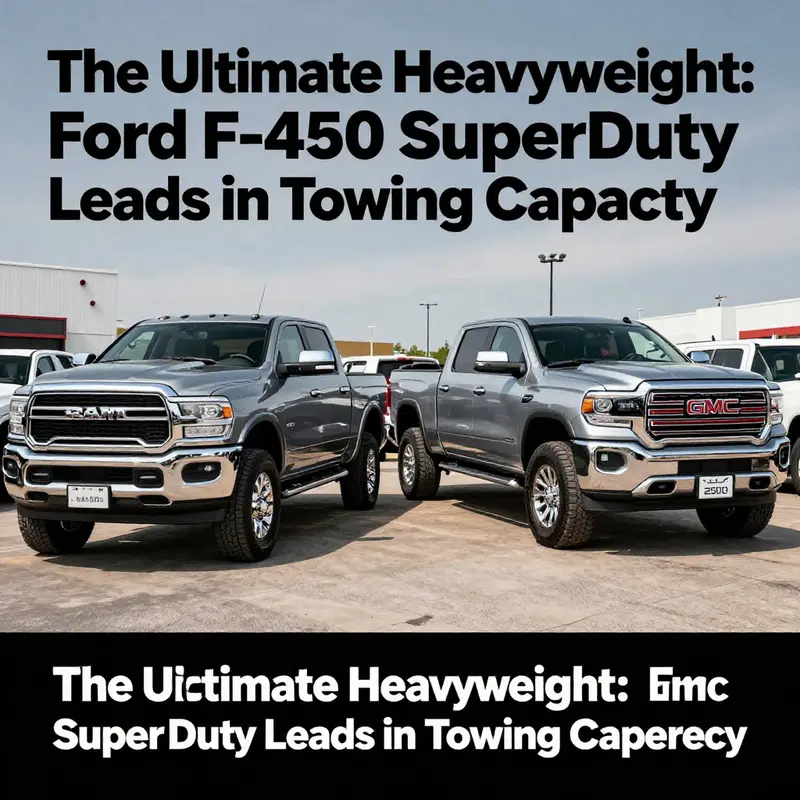
When a reader asks which truck has the best towing capacity, the first instinct is to scan a chart and pick the largest number. Yet towing capacity is not a single number; it is a function of configuration, drivetrain, hitch type, and the kind of trailer being pulled. The comparison between the Ram 3500 HD and the GMC Sierra 2500 HD illuminates this reality in a focused, real-world way. In the dataset that anchors this chapter, the Ram 3500 HD presents a commanding maximum towing figure, while the GMC Sierra 2500 HD sits well behind in pure rating. The Ram’s edge is not merely a higher kilobyte value on a spec sheet; it represents a torque-rich, heavy-duty platform designed to move heavy loads with a degree of confidence that matters once the gooseneck hitch is engaged and the trailer weight climbs into the multi-ton range. The Sierra, by contrast, remains a strong and reliable workhorse, favored for daily durability, comfort, and solid engineering, but it does not reach the Ram’s peak towing capability in the given comparison. The nuance matters to anyone who plans to pull large equipment, a sizable RV, or a heavy trailer through hilly terrain and long stretches of highway alike.
To understand why the Ram 3500 HD can out-tow the GMC Sierra 2500 HD in this analysis, it helps to unpack the numbers and the physics behind them. The Ram 3500 HD’s maximum towing capacity in the referenced results is 37,100 pounds, roughly 16.8 metric tons. That power figure sits on the strength of a high-torque engine and a drivetrain engineered for heavy-duty work. The torque specification, highlighted at up to 1,456 N·m, is not just a row on a spec sheet; it translates into the ability to load heavy trailers from rest, maintain momentum on grades, and control a long, unwieldy combination at lower speeds where brakes and engine braking must work in concert. When you consider the kind of pulling tasks people actually do—hauling heavy machinery, larger horse trailers, or commercial equipment—the Ram’s torque reserve tends to yield smoother, steadier performance, particularly when the gooseneck hitch is used.
The GMC Sierra 2500 HD, on the other hand, is a sturdy, well-rounded performer. Its stated maximum towing capacity in the same dataset sits at about 21,000 pounds. That number places the Sierra firmly in the reliable-to-tow-with-for-many-purposes category, especially for owners who value ride quality, interior comfort, and a confidence-inspiring chassis for daily work duties. But the delta between the Ram’s 37,100 pounds and the Sierra’s 21,000 pounds is not merely about raw weight-bearing capability; it reflects divergent design priorities within the heavy-duty market. The Ram focuses its engineering on raw pulling power and high-torque delivery, while the Sierra emphasizes a balanced blend of capability and everyday usability. The comparison, therefore, is not a simple contest of which truck can pull more weight; it is a case study in how manufacturers tune engines, transmissions, axles, and frames to meet a spectrum of professional and personal towing needs.
A second layer of nuance lies in the hitch configuration. The figures cited come with the assumption of a gooseneck trailer hitch, a setup that dramatically alters the practical towing ceiling. With gooseneck towing, both brands push the payload further into the realm of long-haul stability, where weight distribution and trailer geometry reduce dynamic sway and increase control, especially during acceleration and braking on grades. This is why the gooseneck option is often the critical factor when buyers compare long-distance towing capability. It is not simply about a higher number; it is about the real-world experience of towing a large trailer under variable conditions. For many buyers, the gooseneck configuration defines the ceiling of what their truck can safely and predictably pull, and in this particular head-to-head, the Ram’s configuration aligns with higher capacity ratings than the Sierra.
This is precisely why the broader market leader in sheer production-pickup towing in the latest round of data remains the heavy-duty flagship that sits above these two trucks in the lineup. The Ford F-450 Super Duty, configured with a gooseneck hitch, can tow up to 40,000 pounds (20 tons) in production-spec terms. That figure is not a direct competitor to every user’s needs; it represents a specific class and configuration designed for the upper end of towing demands. The Ram 3500 HD’s 37,100-pound rating, though substantial, sits below that Ford benchmark, illustrating how the category is segmented by capability rather than a single universal standard. The GMC Sierra 2500 HD’s 21,000-pound ceiling, even when interpreted with a hypothetical gooseneck increase, remains well behind the Ram in practical, high-end towing scenarios. This divergence helps explain why buyers need to align their towing goals with the appropriate platform and hitch setup rather than chasing the highest number alone.
If you imagine a scenario in which a contractor, fleet operator, or enthusiast regularly tows heavy trailers, the Ram 3500 HD offers an appreciable advantage. The torque figure—1,456 N·m—plays a pivotal role here. Torque is the engine’s ability to do work at low speeds, which matters when you are starting a heavy trailer from a standstill, negotiating steep grades, or maintaining highway speeds while hauling a load that tests braking and acceleration. The Ram’s high torque, coupled with a robust chassis and a drivetrain designed for heavy towing, translates into smoother starts and steadier climbs. For those whose work involves a constant cadence of pulls—think agricultural equipment, construction gear, or large campers—the Ram’s combination of high torque and weight-handling architecture reduces stress on the powertrain and helps maintain better control over the tow. The Sierra, while capable, yields its response profile more to balanced performance across various tasks rather than a laser focus on peak towing straight out of the gate.
The distinction between these two trucks also speaks to how buyers weigh payload capacity against towing capacity. Towing capacity is inseparable from the vehicle’s payload, braking, suspension, and the overall drivetrain equation. A higher tow rating typically implies a well-mamped frame, a transmission tuned for heavy loads, and a suspension calibrated to keep trailer weight from compromising the vehicle’s steering and control. A higher payload capacity supports both towing and on-the-road usability by resisting axle wrap, managing rear-end squat, and maintaining stable ballasting as weight shifts during acceleration and deceleration. In many real-world tasks, then, the Ram’s advantage in towing capacity stems from a design emphasis on sustaining heavy pull forces while maintaining control through the drive system and frame geometry. The GMC Sierra 2500 HD, valued for its reliability, still operates within a different balance sheet of capabilities, where comfort and daily practicality share the stage with heavy-duty performance, but without eclipsing the Ram in peak towing figures.
The nuanced picture emerging from these data points is further enriched by recognizing how marketing demonstrations fit into the broader narrative. The F-150 Lightning, for instance, demonstrated an extraordinary feat by pulling a train weighing over a million pounds. While impressive as a spectacle, that demonstration does not translate into practical towing capacity for production pickups. It is a showcase of battery torque delivery, traction management, and the extraordinary peak output of an electric powertrain under a constrained scenario. It is a reminder that towing capacity in real-world work hinges on more than a single record-setting moment; it depends on sustained performance across diverse trailer types, road conditions, and safety margins that protect both equipment and drivers.
Given this context, the question “which truck has the best towing capacity?” cannot be answered by a single label without acknowledging the underlying configuration, intended use, and safety considerations. In the narrow frame of the Ram 3500 HD versus the GMC Sierra 2500 HD, the Ram holds a clear edge in maximum towing rating as documented. That edge translates into practical advantages for those whose work or recreational plans call for moving very heavy trailers on a regular basis. Yet the broader landscape reminds us that the “best” towing solution for a given buyer will depend on how heavy the towed load is, how often the truck will tow, and what other duties the vehicle must perform on a daily basis. The Ram’s higher ceiling is a compelling argument for buyers who need reliable extra headroom at the upper end of towing tasks. The Sierra’s strengths remain valuable to those who prioritize ride comfort, cabin refinement, and a balanced set of capabilities suitable for mixed-use days.
For readers who want to translate these numbers into a practical decision, it helps to consult official specifications and to look at how the manufacturer frames the tow numbers for the exact configuration you intend to buy. The Ram official spec pages provide detailed breakdowns of the trailer configurations, hitch options, and torque figures that underpin the 37,100-pound maximum. The Sierra’s official data likewise outlines its capabilities, with the understanding that the practical towing ceiling can vary with trailer type, ball, hitch, and road conditions. It is also worth noting that the max numbers are often achieved with gooseneck configurations or specific trailer geometries. If a buyer intends to tow with a bumper-pull setup, the numbers typically shift downward, and the difference between the Ram and Sierra may be less dramatic, though the Ram still tends to maintain an advantage in high-end towing scenarios.
From a buyer’s perspective, the most meaningful takeaway is not just the raw figure but the entire towing system when the trailer is hitched up and ready to roll. How well the truck accelerates with a heavy load, how braking feels on grade descents, how steering stability behaves at highway speeds, and how predictable the vehicle remains when negotiating curves—all of these factors define practical towing capability. The Ram’s higher torque and its heavy-duty chassis are assets in these moments, particularly when the trailer weight is pushed toward the upper limits. The GMC Sierra, while not matching the Ram in peak rating, can still excel in day-to-day towing routines, offering a more comfortable ride and simpler manageability for users who do not regularly push the outer bounds of the tow spectrum.
For readers seeking additional context and longer-term planning, consider exploring more detailed technical specs and guidance on towing strategies. A practical resource to extend your understanding of towing numbers and how they translate to real-world performance is available here: how much can my truck tow. This helps ground technical figures in everyday decision-making, such as selecting hitch configurations, assessing tongue weight, and planning safe loading practices. The chapter’s data also points toward the broader industry landscape, where manufacturers continuously refine powertrains, gearing, and chassis components to balance capability with efficiency and safety.
Looking ahead, the chapter’s comparison of the Ram 3500 HD and the GMC Sierra 2500 HD underscores a larger truth about modern trucks: the best towing solution depends on the job at hand. If you must move exceptionally heavy loads on a frequent basis, the Ram’s higher ceiling makes it a strong candidate within its class. If your priorities emphasize daily drivability, comfort, cabin technology, and steady performance across a wide set of tasks, the Sierra remains a compelling choice that pairs reliability with practical capability. And for those who demand the utmost ceiling in production-truck towing, the broader market presents the Ford F-450 as a formidable, purpose-built outlier, capable of gooseneck towing in the 40,000-pound range when configured appropriately. These distinctions matter because they shift the conversation from “which number is the highest?” to “which truck best fits the way you plan to tow, over how many miles, and under what conditions?”
In this light, the Ram 3500 HD’s edge over the GMC Sierra 2500 HD in the specified maximum towing rating becomes part of a broader narrative about heavy-duty capability. It signals that, for a segment defined by raw pulling power and the confidence that comes with a torque-rich drivetrain, the Ram is positioned to handle the most demanding pulls more often and with greater ease. Yet the Sierra’s steadiness should not be underestimated, and many buyers will find that it offers a more versatile package for a wide range of daily tasks beyond towing. The real question, therefore, is not merely which truck has the highest number, but which configuration—and which combination of engine, transmission, axle ratio, and hitch setup—delivers the kind of towing performance you can trust in the places where you actually drive.
External reference for official specifications and broader context can be found on the Ram Trucks site, which provides detailed breakdowns of trailer configurations, engine options, and gooseneck capabilities that underpin the 37,100-pound rating. For a broader industry reference, you can also consult the official pages and comparative data from the manufacturers’ outlets to understand how these figures were derived and how they translate into real-world towing practice. In the end, the best towing capacity is the capacity you can safely depend on, day after day, trailer after trailer, across the terrain you actually traverse.
External resource: https://www.ramtrucks.com/trucks/ram-3500-hd.html
null
null
Final thoughts
In the brave world of heavy-duty trucks, the Ford F-450 Super Duty continues to shine as the foremost option for those whose hauling requirements demand peak towing capacities. With its top-rated capability of up to 40,000 pounds, it outstrips competition like the Ram 3500 HD and GMC Sierra 2500 HD, which, while powerful, do not reach the same heights. Aside from raw power, an understanding of the technologies behind towing ratings translates into smarter purchasing decisions for everyday drivers, property managers, and automotive professionals. Selecting a truck is about finding the right balance of power, technology, and practicality for your specific needs, ensuring your towing tasks are accomplished with confidence.