
Tipping has long been a common practice in service industries, yet its relevance in specific fields is often overlooked. One essential service that many drivers eventually require is towing. Tow truck drivers face numerous challenges in their daily work, from responding to emergencies in adverse weather conditions to dealing with difficult situations on the road. This article delves into the significance of tipping tow truck drivers, examining the reasons behind this practice, its financial implications, recommended tipping practices, and the role it plays in the professional lives of these workers. Understanding the importance of tipping helps to ensure that drivers receive fair compensation and recognition for their hard work and dedication.
Gratitude on the Road: Why a Tip to Tow Truck Drivers Really Matters
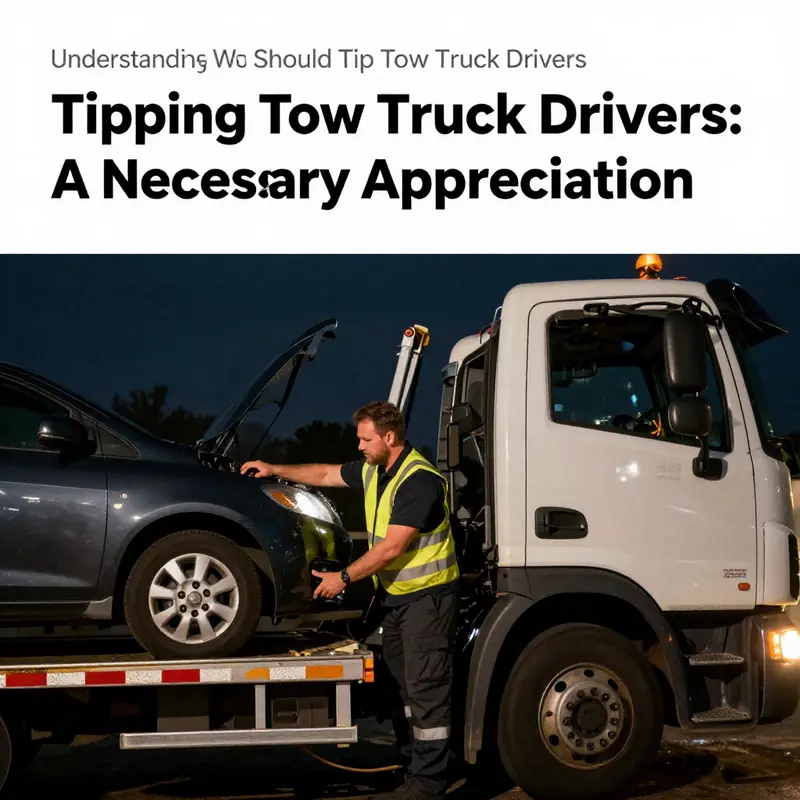
When the road suddenly narrows into a pinch point of panic, and a vehicle sits stranded or broken in a dangerous shoulder, a tow truck may be the only thing that stands between a postponed plans and a return to normalcy. In those moments, what you do with your wallet can feel almost as consequential as the act of recovery itself. Tipping tow truck drivers is more than a gesture of courtesy; it is a practical acknowledgment of the difficult, demanding, and often risky work they perform under pressure. The job combines physical exertion with precise technical skill, and the context in which it is done—bad weather, tight spaces, post-accident scenes, or the need to relocate a vehicle without causing further harm—brings a degree of complexity that many people don’t see from the passenger seat. Understanding why tipping matters, and how to do it in a way that feels fair and respectful, helps the entire service chain work better for everyone involved. It also situates tipping within a broader culture of appreciation for essential workers who keep everyday life moving when disruption hits hard.
The baseline truth is simple: tow truck drivers often receive pay that does not fully reflect the value of their labor, the risk they may assume, or the hours they invest. Some are paid hourly, others receive a fixed payment per job, but the math of a single tow does not always capture the effort and expertise poured into a safe and efficient recovery. When a driver arrives promptly, communicates clearly, and handles a delicate recover with care—especially if the scene is chaotic or the weather uncooperative—the impact on your situation can be immediate and tangible. A tip, in these moments, is a direct and practical way to recognize that impact. It signals that you value the driver’s time and skill, and it has a tangible effect on their day-to-day earnings.
Consider the range of variables a tow operator contends with during a shift. The road is unpredictable, and so are the contingencies of a tow: a vehicle may have to be moved in a tight lane with barely enough space, or secured on a flatbed when there is risk of shifting, or handled using a wheel-lift system designed for lighter cars but requiring careful balance to protect the vehicle and surrounding traffic. Each component of that work—assessing the scene, choosing the right equipment, rigging the vehicle safely, and coordinating with traffic or other responders—demands focus and patience. When a driver navigates these demands with professionalism, the service goes beyond merely removing a car from the roadside. It reduces the risk of injury, minimizes further damage to the vehicle, and shortens the disruption to your day. A tip is a visible, practical way to acknowledge that specialized, often underappreciated skill set.
The common rule of thumb—tip roughly 10% to 20% of the tow fee—provides a useful compass, but the real tipping decision is guided by the quality of service you experience. If the tow costs $150, a tip of $15 to $30 is appropriate. If the service is more complex or the driver goes above and beyond, it is reasonable to tilt toward the upper end of that range. In February 2026, industry data points to a representative scenario where a tow might cost around $185; in that case, tipping $28 to $37 would be a thoughtful and fair acknowledgment of the driver’s effort and handling of the job under potentially stressful circumstances. These numbers are not rigid mandates but flexible guidelines that reflect the reality that the value of timely, safe service can extend beyond the visible task of moving a vehicle from point A to point B.
For many drivers, tips form a meaningful portion of their income, especially in a job market where base pay for skilled tow operators may not fully reflect the physical labor and risk involved. The work often occurs outside standard hours, in adverse weather, or under the watchful eyes of impatient or anxious motorists. In those moments, the tip becomes not just a reward but a signal of respect for the driver’s expertise and safety-conscious approach. It acts as an incentive to uphold high standards across the board—from the choice of equipment to the way the driver communicates about what they are doing and why. When a driver feels appreciated, it can translate into a smoother, more cooperative interaction with the person waiting for aid. This isn’t about buying goodwill; it’s about acknowledging the real-world costs of performing a highly technical, physically demanding service where safety and discretion matter as much as speed.
Crucially, tipping also cultivates trust in the relationship between driver and customer at a moment when emotions can run high. A roadside breakdown can be stressful—an interruption in plans and a exposure to risk. A courteous gesture in the form of a tip can soften the tension, create a moment of mutual respect, and encourage the driver to approach the situation with calm authority. In practice, that dynamic often translates into better communication, a clearer explanation of what is happening, and a safer, more efficient resolution. The driver who senses your appreciation may feel more empowered to explain the process step by step, to confirm the limits of what will be moved, and to consider options that minimize further damage or expense. In this sense, a tip becomes part of a broader, humane approach to interacting with essential workers—an approach that recognizes that the service economy relies on mutual respect as much as on any specific mechanic or protocol.
Some drivers are supported by tipping prompts that appear at payment screens or on digital interfaces, a trend increasingly common in customer-service spaces. This practice mirrors broader changes in how service industries accommodate tipping and how consumers initiate that voluntary transfer. When a prompt is present, it offers a transparent, effortless option for tipping and can help ensure the driver receives recognition for good service, even if cash changes hands later or in a different context. However the tipping takes place, the underlying principle remains the same: compensation for work carried out with skill and care. If you are unsure how to approach the moment, a simple, direct acknowledgment is often best. A short “thank you” paired with a reasonable tip aligns with the norms of professional courtesy in service roles and can leave both parties feeling respected and satisfied with the exchange.
From a practical standpoint, tipping is also an investment in safety and reliability. A driver who knows that prompt, fair tipping is part of the expected workflow may be more inclined to stay engaged with the task, coordinate with you and any other responders, and apply a careful, safety-first mindset to the recovery. The equipment they choose—whether a wheel-lift for compact vehicles or a secure transfer on a flatbed when needed—carries its own set of risks and responsibilities. A well-timed tip acts as an affirmation of the driver’s commitment to these safety standards, encouraging adherence to best practices and a cautious approach in potentially hazardous settings. When you’re watching a vehicle be moved in traffic or near a roadside hazard, that sense of reassurance matters more than you might expect.
This conversation about tipping cannot ignore the broader standards and norms that shape how we treat essential workers. The National Association of Automobile Clubs, among other professional bodies, offers guidelines that emphasize fair compensation and consideration of customer expectations. While individual practices vary by company and region, the general consensus around respectful tipping sits at the intersection of fairness and recognition. The idea is not to impose an obligation but to acknowledge the real, on-the-ground value created by a driver who performs under pressure, with skill, and with attention to safety. For readers who want to explore more formalized standards, external resources like NAAC guidelines extend the conversation beyond personal judgment and into industry-wide expectations that help frame tipping as part of a responsible, humane approach to roadside assistance.
In the spirit of practical guidance, consider how you might approach tipping in different scenarios. If the service is timely, courteous, and technically competent, lean toward the higher end of the 10%–20% range or more if the job was unusually demanding due to weather, traffic, or a complicated maneuver. If the driver offered additional assistance—such as helping you contact a vehicle storage facility, coordinating with insurance, or providing guidance about next steps—these adds-on services can justifiably factor into the tip amount. If, however, service was late, poorly communicated, or negligent, it is reasonable to adjust your tipping decision accordingly. Tipping is not a moral mandate that erases subpar performance; it is a measure of how you respond to excellent service and how you encourage standard-setting behavior for the future.
An important aspect of the tipping decision to keep in mind is how you pay. Handing a driver a cash tip on scene is timeless and direct, and it ensures the driver receives the full amount without processing fees or delays associated with digital payments. Yet, if cash is not readily available, consider whether a tip via a card reader, app, or other digital method is offered and appropriate. The key is to ensure that the method you choose aligns with the driver’s preferences and the system you are using. If a prompt exists on the payment screen, responding promptly and selecting a tip that reflects your assessment of the service can be a smooth, efficient option that respects the driver’s time during a demanding shift. In some cases, especially in rural or high-volume dispatch environments, the ability to earmark a tip to a specific driver or to allocate additional funds to a team member who assisted can also be a meaningful way to recognize collaborative effort on the scene.
Beyond the mechanics of tipping, there is a more enduring message about culture and gratitude. Tipping a tow truck driver is part of a broader social contract that recognizes those who facilitate mobility and safety in moments when individuals are most vulnerable. It is a practical expression of gratitude that reinforces a cycle of positive behavior. When drivers feel seen and valued, their professional conduct—careful rigging, careful driving, transparent explanations—often embodies the best of the service industry. That reciprocity matters: it fosters a climate where drivers feel obligated to maintain high standards, and customers feel empowered to treat others with dignity in moments of stress. In this sense, tipping becomes not just a personal choice but a contribution to a safer, more courteous roadside culture.
If you seek a concise thread on etiquette, you can explore the tipping etiquette discussion tied to tow-truck drivers: tip-tow-truck-drivers-etiquette. The resource outlines practical, relatable expectations and helps frame tipping as a straightforward component of professional courtesy rather than a complicated moral dilemma. While the specifics can vary by region and company, the core idea remains stable: acknowledge the driver’s skill, the effort involved, and the safety-conscious approach that makes a tow possible and less stressful for you as a customer. As you reflect on your own experience, you may find that your tipping choice becomes a reflection of how you value practical expertise—in the moment—and how you want to show respect for those who keep the wheels turning when plans derail.
In sum, tipping tow truck drivers is not a universal obligation, but it is a widely accepted practice that aligns with broader norms of fair compensation and professional courtesy. It recognizes the physical labor, the technical skill, and the emotional labor of managing a roadside disruption with competence and calm. It also supports a culture in which essential workers feel valued for the specialized work they perform under sometimes difficult conditions. The decision about how much to tip should be guided by the quality of service, the complexity of the job, and your own financial ability in the moment. When you combine clear communication, a respectful demeanor, and a thoughtful tip, you participate in a practice that benefits drivers, customers, and the roadside ecosystem as a whole. And if you want to see more practical guidance on tipping etiquette in this context, the dedicated resource linked above can serve as a useful reference point for even the busiest stretches of road and the most stressful moments of breakdown.
External resource: https://www.naac.org/towing-guidelines
Tow Talk: Understanding Tips, Tariffs, and the Roadside Ethic
When a tow truck arrives at the scene, relief and risk collide in real time. The driver has faced busy streets, adverse weather, and the pressure of moving a vehicle safely to its destination. In that moment, many customers ask: should I tip? The answer isn’t a simple yes or no; it rests on industry economics, the quality of service, and the legitimate expectations that guides roadside assistance.
Tow work is funded primarily through fixed rates or per-job fees set by companies or regulatory frameworks. Those numbers are designed to cover vehicle maintenance, licensing, insurance, fuel, and the specialized equipment that makes towing possible. A driver’s take‑home pay often comes from that negotiated fee rather than discretionary gratuities. A tip, when offered, sits on top of the baseline as a gesture of appreciation for extra effort during a stressful call.
In practice, tipping matters most when the service is prompt, careful, and professional. A driver who arrives quickly, explains the steps clearly, handles the vehicle with care, and offers additional help—such as guidance after the tow or assistance with accessories—deserves consideration. Common guidance puts tipping in the range of roughly 10% to 20% of the total tow fee, with adjustments up or down based on circumstances like nighttime calls, poor road conditions, or the complexity of the recovery. Some customers encounter tipping prompts at the payment screen, reflecting a broader shift toward digital gratuities across service industries.
Beyond personal generosity, tipping reflects a broader truth about essential services: wages are typically set by contracts and regulations, not by tips alone. Tipping can boost morale and acknowledge standout effort, but it is not a substitute for a fair, predictable income. The most prudent approach is to tip thoughtfully, aligned with service quality and the situation, while recognizing that the core price of the tow covers the business’s ongoing costs and obligations.
If you’re unsure how to tip in a given moment, consider cash for immediacy and direct transfer, or a card tip if cash isn’t convenient. The decision should honor the driver’s performance and the circumstances, and, when possible, pair the gratuity with feedback to the company about what went well or what could be improved. The spirit of tipping, in roadside contexts, is less about ceremony and more about respectful acknowledgment of skilled, safety‑minded work under pressure.
How Much to Tip a Tow Truck Driver: Clear Guidelines and Practical Examples
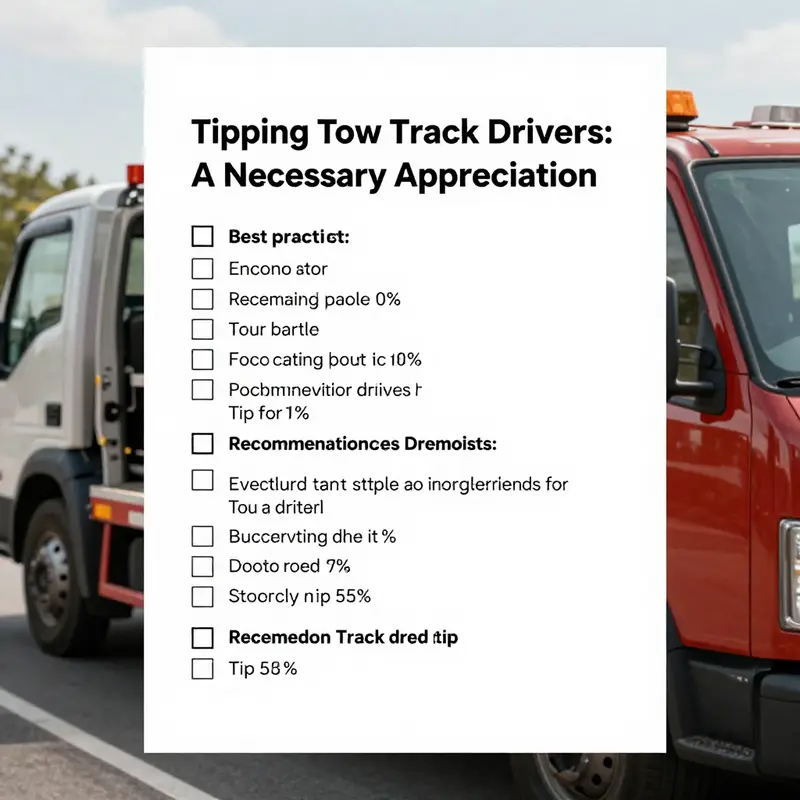
Recommended tipping practices for tow truck drivers
Tipping a tow truck driver is less about obligation and more about recognition. Drivers often work in uncomfortable or hazardous conditions to help stranded motorists. Their pay may not fully reflect the physical demands or time sensitivity of the job. A thoughtful tip rewards promptness, skill, and the extra care that turns a stressful situation into a manageable one.
Start with a simple rule of thumb: match the tip to effort, risk, and convenience provided. For a routine, short-distance tow where the driver arrives on time, secures your vehicle safely, and leaves without fuss, a modest tip is appropriate. Many people give between $5 and $20 for such standard service. If the call involves extra work—longer distances, complex recoveries, or assistance in bad weather—raise the tip accordingly. For service that clearly goes above and beyond, $20 to $100 is reasonable depending on the complexity and time involved.
Another widely used guideline frames the tip as a percentage of the tow fee. Tipping 10% to 20% of the total charge aligns with other service industries and scales the reward to the job size. For example, a $150 tow taken care of quickly and professionally would warrant a $15 to $30 tip. If the tow involved specialized equipment, a difficult recovery, or an extended wait, a percentage at the higher end shows appreciation for the effort.
Situations that merit higher tips are easy to spot. If a driver recovers your car from a ditch, navigates a steep shoulder, or manages a vehicle stuck in mud or snow, those maneuvers carry added risk and require skill. Similarly, a tow late at night, during a storm, or on a busy highway increases danger and stress. When the driver stabilizes a vehicle in such conditions, a more generous tip recognizes both bravery and competence.
Extra services also justify larger tips. Many drivers offer small, practical services beyond hooking up the vehicle. These can include jump-starting a dead battery, providing a spare tire, pushing a car into a safer spot, or helping transfer belongings from a vehicle. If a driver goes out of their way to coordinate with family members, follow special delivery instructions, or park your vehicle in a requested location, consider tipping toward the higher end of the range.
Company policies differ, and you should be aware of them. Some employers discourage or forbid drivers from accepting tips. Others encourage tipping and even include a prompt on the payment screen similar to retail and food-service terminals. If a company policy expressly bans tips, respect that rule. If the company allows tips and the driver accepts, cash is often preferred but card or digital tips are acceptable when offered. When paying by card, watch the payment screen; some systems allow an added tip line. If that option is missing, handing a cash tip directly remains the simplest choice.
When insurance or a roadside assistance membership pays the bill, tipping still applies in many cases. The insurer or service may cover the monetary cost but not the personal effort. Drivers are typically paid for the job, but tips help make up for small earnings on lengthy or complex calls. If a driver handled your claim professionally and expedited the process, a tip of $10 to $25 is a common courtesy when the nominal fee came from insurance.
There are situations where tipping feels inappropriate. If the driver is rude, sloppy, or fails to perform basic duties, do not feel compelled to tip. Tipping is recognition of good service, not a mandatory surcharge. Also, if you witnessed dangerous or illegal conduct, report the incident to the company or the relevant authorities instead of tipping. Similarly, when a company explicitly prohibits tips, follow that policy to avoid putting the driver in a difficult position.
Safety and timing matter. Don’t tip until your vehicle is secure and the situation is safe. If the driver is working on traffic-side repairs or extricating a vehicle from a hazardous spot, wait until you and the driver are clear of danger. A quick handshake and a verbal thank-you go a long way while you both remain safe. If you plan to tip in cash, have small bills ready. That saves time and prevents the driver from needing to make change at a busy scene.
How you present a tip matters as much as the amount. A direct, polite handoff accompanied by a short “thank you” is ideal. If tipping by card through the company terminal, confirm that the tip reaches the driver rather than the company. Some businesses pool tips or deduct processing fees from card transactions. If you prefer to ensure the driver receives the full amount, cash is the clearest method.
Consider how tipping affects driver morale and local standards. Tow truck drivers often rely on repeat customers and positive interactions. Regularly tipping fair amounts builds goodwill. It encourages drivers to prioritize responsive, careful service in your area. That local norm can be particularly helpful if you live in a smaller community where the same drivers serve multiple neighborhoods. Over time, consistent appreciation can influence company policies and compensation practices.
Regional customs differ. In some cities, tipping service workers is expected and integrated into the price of personal service. In others, customers rarely tip and base compensation expectations on hourly or flat wages. If you travel often, check local norms when you need a tow. When unsure, default to a modest tip that reflects your satisfaction and the conditions under which the driver worked.
Practical examples make the rules easier to apply. For a simple roadside assistance call involving a short tow under fair weather, tip $5 to $15. If the tow is a straightforward meter-based charge, tip 10% of the bill. When the job is time-consuming, involves heavy equipment, or occurs in a dangerous setting, tip $25 to $75 or more depending on the complexity. For a long-distance tow requiring several hours or unusual care, consider tipping a flat $50 to $100.
Some people prefer rounding up the final bill to a convenient number. Rounding saves transaction time and is a discreet way to reward service. For example, if the final charge is $137, rounding to $150 or handing a $15 cash tip signals appreciation without fuss. If you plan to tip for exceptional service, choose an amount that feels commensurate with the difficulty and time invested.
If you have questions about tipping, ask the dispatcher or review the company’s payment policy before the driver arrives. The dispatcher can tell you whether the company accepts tips and how drivers handle them. That knowledge helps avoid awkward moments at the scene and ensures your intent to reward the driver aligns with company rules.
When you receive outstanding service, a short follow-up can further show appreciation. A positive online review or a call to the company describing the driver’s professionalism benefits the driver indirectly. Many companies recognize standout employees when customers share praise. Combine that feedback with a tip to make the appreciation both immediate and long-lasting.
Tipping should align with your values and budget. It is a voluntary act of gratitude, not a mandatory tax. Still, remember that drivers work in unpredictable conditions and often earn modest wages. A tip can bridge the gap between base pay and fair compensation for physically demanding, time-sensitive work. If you can spare it, tip generously when service exceeds expectations.
For a concise guide and more practical examples on tipping etiquette, see this resource on tipping tow truck drivers. It outlines common scenarios and suggested amounts, helping you decide when and how much to tip in real situations.
More detailed guidance: The Balance – Tipping Tow Truck Drivers
For quick reference on local norms and etiquette, consult this helpful internal resource on tow truck tipping etiquette.
null
null
Final thoughts
Tipping tow truck drivers is more than just a generous act; it’s an acknowledgment of the commitment and hard work they invest in their service. By understanding the reasons behind tipping, the financial impact it has, and the best practices for showing appreciation, we can ensure that these essential workers receive the recognition they deserve. The profession’s challenges deserve acknowledgment, and tipping is one way to express gratitude effectively. Making this practice standard not only supports drivers but also reinforces the value of high-quality service in our communities.