
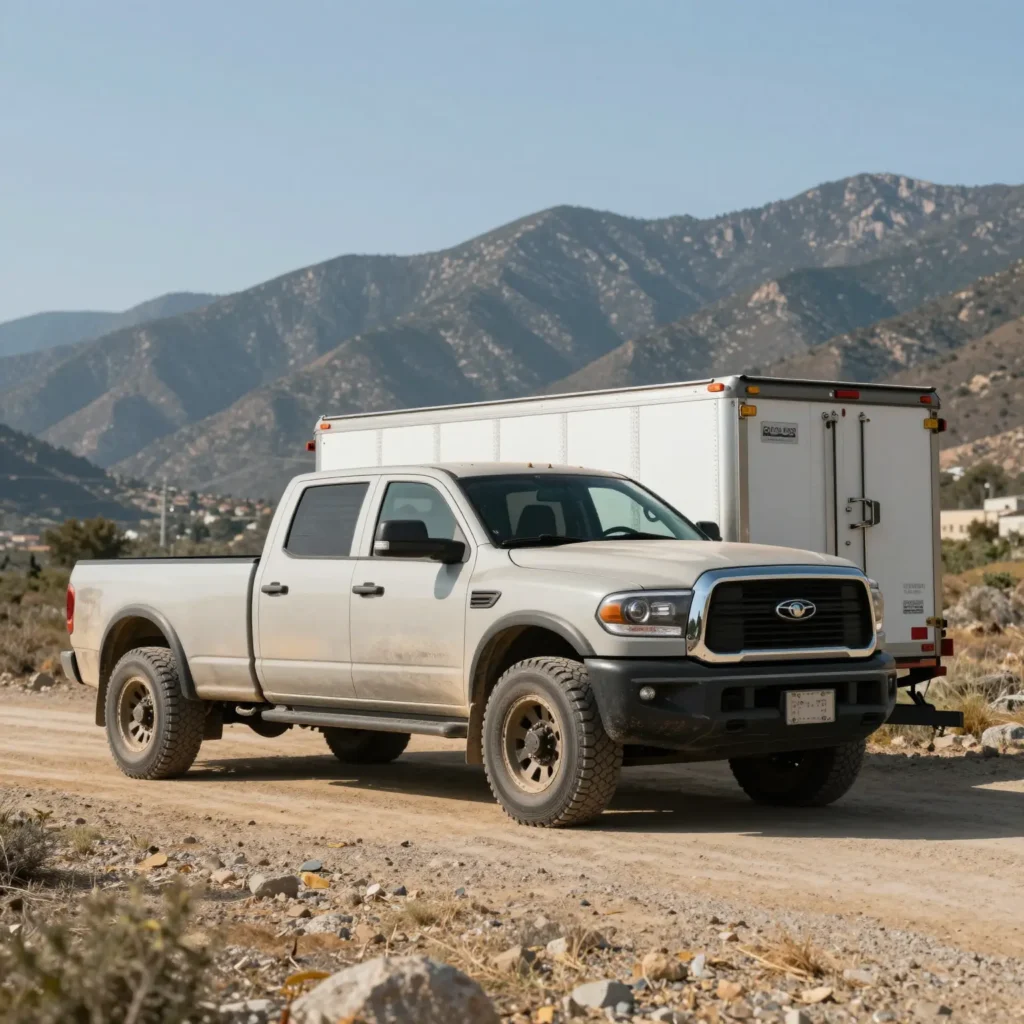
Understanding Towing Capacity for Everyday Drivers
When it comes to choosing a pickup truck, one critical factor often comes to the forefront: towing capacity. Have you ever found yourself wondering, “What can my truck handle?” Whether you’re an everyday driver, a property manager overseeing fleet vehicles, or a truck owner with specific towing needs, understanding your vehicle’s towing capabilities is essential. Towing capacity determines not only what you can haul behind your vehicle-be it a trailer for a weekend getaway, a boat for a day on the water, or essential equipment for your business-but also impacts safety and performance on the road.
Truck owners rely on their vehicles for various demands, and knowing what your truck can tow could mean the difference between a smooth journey and unexpected challenges on the road. Moreover, with advancements in truck technology and design, the capabilities of modern trucks can often surprise you. For instance, many newer models boast impressive figures that would meet even the most ambitious towing requirements. Hence, it’s crucial for consumers to delve into specifications and understand which trucks stand out in towing capacity. This information not only helps in making informed purchasing decisions but also ensures that you can trust your vehicle to handle your specific tasks efficiently, whether it’s everyday commuting or fulfilling logistical demands. Learn more about your truck’s towing capabilities here!
As we explore the world of pickup trucks, we’ll identify which models offer the best towing capacities, assisting potential buyers in finding the perfect vehicle that suits their needs while ensuring safety and performance remain paramount.
Top Pickup Trucks with Highest Towing Capacities
If you’re in the market for a pickup truck that excels in towing performance, you’ve come to the right place. Below is a list of some of the top pickup trucks with the highest towing capacities for 2023:
-
Ford F-450 Super Duty
Towing Capacity: 37,000 lbs
The F-450 Super Duty is designed to dominate the towing game, featuring a 6.8-liter V10 gasoline or an available 6.7-liter Power Stroke diesel engine, paired with a 10-speed automatic transmission. It is particularly suited for heavy-duty tasks, making it ideal for commercial uses and equipment hauling. -
Chevrolet Silverado 4500HD
Towing Capacity: 36,000 lbs
The Silverado 4500HD combines power and performance, equipped with a robust 6.6-liter Duramax turbo-diesel V8 engine that offers exceptional towing capabilities. Its heavy-duty construction ensures reliability for long hauls and tasks in tougher environments. -
GMC TopKick 4500HD
Towing Capacity: 36,000 lbs
Tailored for demanding vocational applications, the TopKick 4500HD comes with a rugged 6.6L V8 diesel engine. It is built for durability and high payload capabilities, making it a go-to option for utility services and construction jobs.
Here’s a visual representation comparing the towing capacities of these trucks:
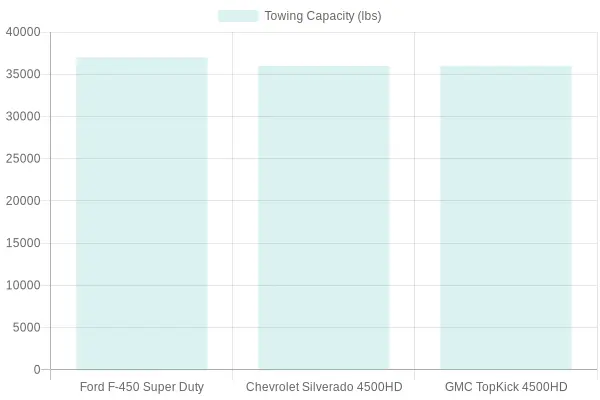
| Truck Model | Towing Capacity (lbs) |
|---|---|
| Ford F-450 Super Duty | 37,000 |
| Chevrolet Silverado 4500HD | 36,000 |
| GMC TopKick 4500HD | 36,000 |
These trucks are not just powerful; they are built to tackle tough jobs requiring impressive towing performance. If you are interested in learning more about the different towing options and techniques, be sure to visit our how much can my truck tow? page.
Exploring the Towing Capacity of Popular Pickup Trucks
When it comes to choosing the right pickup truck, one of the key factors many owners consider is towing capacity. It’s essential for those who regularly haul trailers, boats, or other heavy loads. Here’s a summary of recent user reviews regarding the towing capacities of some of the most popular pickup trucks available in 2023, based on feedback from automotive forums, consumer reports, and individual owner testimonials.
Top Trucks and Their Towing Capabilities
- Ford F-150
- Towing Capacity: Up to 14,000 lbs
- User Feedback: Owners have consistently praised the Ford F-150 for its towing stability, especially when equipped with the 3.5L V6 EcoBoost engine. User reviews highlighted the truck’s integrated trailer brake controller as a reliable feature for managing heavy loads. However, some mentioned the need for regular maintenance checks, particularly when towing near the maximum capacity.
Learn more about towing with F-150
- Ram 1500
- Towing Capacity: Maximum of 14,000 lbs
- User Feedback: Users appreciate the smooth ride and adaptive air suspension, particularly beneficial under load. Many reports praised its sustained power delivery while towing large trailers. However, a common concern reported is its fuel efficiency, which tends to decrease when towing heavy loads.
- Chevrolet Silverado 1500
- Towing Capacity: Up to 14,500 lbs
- User Feedback: Many reviewers confirm that the Silverado offers excellent hauling ability, especially when equipped with its 6.6L V8 engine. Users highlighted the effective integrated trailering package, enhancing control and ride comfort. In contrast, some feedback pointed out inconsistent brake performance under heavy loads.
- Toyota Tundra
- Towing Capacity: Maximum 12,000 lbs
- User Feedback: The Tundra is noted for its reliability and durability. Users highlighted its robust performance even on rough terrain. Despite having a slightly lower maximum capacity compared to competitors, many owners express high satisfaction with its overall towing performance.
- Nissan Titan
- Towing Capacity: Up to 9,000 lbs
- User Feedback: While the Titan offers decent towing capacity, some users noted issues with overheating when towing close to its limits, particularly in hot weather conditions.
Summary of Key Insights
Based on the reviews analyzed, the Ford F-150 and Ram 1500 emerged as top choices for those requiring high towing capacities with user-friendly performance features. Both trucks have robust engine options that enhance their reliability and towing abilities. Meanwhile, the Chevrolet Silverado 1500 is recognized for its superior capacity, but users noted room for improvement in braking performance. The Toyota Tundra, although slightly lower in capacity, stands out for its durability, especially in off-road conditions. The Nissan Titan trails behind in terms of maximum towing capability, yet it remains a solid option for moderate towing tasks.
Above: Pickup truck towing capacity comparison chart showing the differences in towing capacities across various popular models.
For anyone in the market for a pickup truck, considering these user insights on towing capabilities can greatly assist in making an informed decision.
Additional Resources
For more information on specific towing requirements and vehicle training, check this guide on towing capacities.
Factors Affecting Towing Capacity
Understanding the factors that influence a pickup truck’s towing capacity is crucial for making informed decisions, especially for everyday drivers, truck owners, and those engaged in heavy-duty tasks. Several key elements collectively determine a vehicle’s ability to tow effectively:
1. Engine Size
The engine’s size, or displacement, plays a significant role in determining a truck’s towing capacity. Generally, larger engines are capable of higher power and torque outputs. This is essential for towing heavy loads. For example, engines with larger displacements (like 5.0L V8 or 6.7L diesel engines) provide sustained high torque, which enables them to overcome the resistance of heavy trailers and cargo efficiently.
Moreover, modern smaller displacement engines, particularly those equipped with turbochargers, can also deliver robust performance; however, they might not consistently offer the torque needed for the most demanding towing tasks under all conditions. Therefore, when considering towing capacity, one should evaluate the engine’s performance characteristics, including torque curve, especially at low RPMs where towing begins.
2. Axle Ratio
The axle ratio directly impacts how much power is delivered to the wheels. A higher axle ratio (e.g., 4.10:1 or 4.56:1) allows for greater torque multiplication, enhancing the truck’s pulling power. This characteristic is particularly beneficial for low-speed acceleration-a key factor when starting from a stop or climbing steep inclines. However, it’s essential to recognize that while higher ratios improve towing performance, they can negatively affect fuel efficiency during highway cruising as the engine runs at higher RPMs. For instance, a pickup with a lower axle ratio (e.g., 3.08:1) might perform better on highways but lacks the pulling power necessary for heavy towing. Hence, selecting the right axle ratio should depend on your specific towing requirements and driving conditions.
3. Trailer Weight
The weight of the trailer is another critical factor. Manufacturers typically provide a maximum towing capacity under ideal conditions, but real-world scenarios can vary. It’s important to account not only for the trailer’s weight but also for the potential cargo load it carries. For example, if a truck is rated for a maximum towing capacity of 7,000 pounds, safely towing a loaded trailer that exceeds this weight can lead to mechanical failures or even accidents.
Conclusion
When selecting a pickup truck for towing, it’s vital to consider the combination of engine size, axle ratio, and potential trailer weight. Each factor contributes to how effectively a vehicle can handle towing tasks. Proper understanding can enhance safety, performance, and overall satisfaction with your vehicle’s capabilities. Learn more about towing limits here and ensure you’re making informed decisions for your towing needs.
By evaluating these elements, drivers can choose the right truck for their needs and ensure they are capable of handling any hauling challenges that arise.
| Make & Model | Year | Towing Capacity (Conventional) | Towing Capacity (Gooseneck) | Engine Specifications |
|---|---|---|---|---|
| Ford F-150 | 2023 | 14,000 lbs (6,350 kg) | 20,000 lbs (9,072 kg) | 3.5L EcoBoost V6 (400 hp, 500 lb-ft torque), 5.0L V8 (400 hp, 410 lb-ft torque) |
| Chevrolet Silverado 1500 | 2023 | 13,400 lbs (6,080 kg) | 18,000 lbs (8,165 kg) | 2.7L Turbo I4 (310 hp, 420 lb-ft torque), 5.3L V8 (355 hp, 383 lb-ft torque), 6.2L V8 (420 hp, 460 lb-ft torque) |
| Ram 1500 | 2023 | 12,750 lbs (5,783 kg) | 17,950 lbs (8,143 kg) | 3.6L Pentastar V6 (305 hp, 269 lb-ft torque), 5.7L HEMI V8 (395 hp, 410 lb-ft torque), 3.0L EcoDiesel V6 (260 hp, 440 lb-ft torque) |
| Toyota Tundra | 2023 | 12,000 lbs (5,443 kg) | 18,000 lbs (8,165 kg) | 3.5L V6 Twin-Turbo (381 hp, 479 lb-ft torque), 5.7L V8 (381 hp, 401 lb-ft torque) |
| Ford F-250 Super Duty | 2023 | 22,000 lbs (9,980 kg) | 22,700 lbs (10,297 kg) | 6.7L Power Stroke V8 Diesel (475 hp, 1,050 lb-ft torque), High Output 6.7L Power Stroke V8 Diesel (500 hp, 1,200 lb-ft torque), 6.8L V8 (400 hp, 445 lb-ft torque) |
| Chevrolet Silverado 3500HD | 2023 | 22,000 lbs (9,980 kg) | 25,000 lbs (11,340 kg) | 6.6L Duramax V8 Diesel (470 hp, 975 lb-ft torque), 6.6L V8 (401 hp, 464 lb-ft torque) |
For more information on truck capabilities, visit Car and Driver on 2023 full-size pickup towing capacities or MotorTrend’s review.
Safety Tips for Towing: Ensuring a Secure Journey
Towing a vehicle or trailer is a task that demands careful consideration and adherence to safety protocols. Whether you are a seasoned truck owner or a casual driver, understanding key safety tips can significantly reduce risks while on the road. Here, we share essential guidelines to help you tow safely and efficiently.
1. Know Your Vehicle’s Towing Capacity
Before you start towing, consult your vehicle’s owner manual to determine its towing capacity. Exceeding this limit can compromise your vehicle’s control and lead to hazardous situations. Remember, modern vehicles may not be capable of towing as much as older models, so always double-check specifications.
2. Proper Equipment are Key
Ensure that you are using the correct towing equipment including hitches, chains, and couplers specifically designed for your load. All components should be in good condition and suitable for the weight and type of the trailer you are towing. Additionally, make sure all lights (brake and turn signals) are functioning properly.
3. Check Weight Distribution
Load your trailer evenly to prevent swaying. A poorly distributed load can affect handling and increase the distance required to stop. It’s recommended that 60% of the load be positioned toward the front of the trailer, while 40% remains at the back. Always weigh your trailer to ensure that it does not exceed your vehicle’s towing capacity.
4. Using Mirrors for Clear Vision
When towing, increased visibility is essential. Adjust your side mirrors to eliminate blind spots, ensuring you can clearly see the trailer and any approaching vehicles. You may also want to consider using tow mirrors for extended visibility, especially if your trailer is wider.
5. Anticipate Braking Distances
Towing a heavy load increases your braking distance significantly. Always allow extra space between your vehicle and the one in front of you. A general rule is to add one additional car length for every 10 mph of speed. Additionally, apply brakes gently rather than slamming them to maintain more control over the vehicle’s momentum.
6. Maintain Speed and Control
When towing, maintain a steady speed and avoid rapid acceleration. Most states recommend not exceeding a maximum speed when towing, often set at 55-65 mph. Reducing speed, especially when turning or descending steep hills, will enhance control and reduce the risk of accidents.
7. Regularly Inspect Your Setup
Before you hit the road, always perform a pre-tow inspection. Check that all connections are secure, and look out for signs of wear or damage on tow ropes, chains, and hitches. During long trips, periodically stop to check that everything remains in good condition.
8. Communicate Effectively
If you are towing a vehicle, clear communication with the driver of the towed vehicle is crucial. Use hand signals or radios to ensure both parties are aware of any changes in speed or direction, as well as any upcoming stops or obstacles.
Additional Resources
For more in-depth information about safety practices while towing, you can refer to the official NHTSA Towing Safety Guide.
By following these safety tips, you can create a safer towing experience for yourself and other drivers on the road. Always prioritize safety over convenience to ensure that your journey is smooth and worry-free.
Towing Capacity in Pickup Trucks
When it comes to choosing the best pickup truck for towing, understanding the towing capacity is key. Towing capacity is not merely a number; it is a reflection of the truck’s overall ability to safely handle weight. Whether for work or recreation, selecting the right vehicle can make a significant difference.
Expert Insights
To bolster your understanding of this critical aspect, consider the insight provided by automotive expert Mike Sutton:
“Towing capacity is not just a number on a sticker-it’s a critical safety parameter determined by the vehicle’s engine, transmission, cooling system, suspension, and braking components. Exceeding your vehicle’s rated towing capacity can lead to overheating, brake fade, suspension failure, and even catastrophic drivetrain damage.”
Learn more about towing capacity
According to John Miller, an ASE-certified technician:
“Towing capacity isn’t a one-size-fits-all metric. It varies based on whether the vehicle is front-wheel drive, rear-wheel drive, or all-wheel drive, and it changes dramatically when you add options like heavy-duty cooling or trailer brakes.”
Top Trucks for Towing
In the market today, several pickup trucks stand out for their towing capabilities. Notable examples include:
- Ford F-150
- Ram 1500
- Chevrolet Silverado 1500
- GMC Sierra 1500
Each of these trucks comes with unique features that enhance towing performance, so it’s essential to evaluate them based on your specific needs.
For more information on towing ratings and truck capabilities, visit this comprehensive guide to help you make an informed decision.
Towing Capacity Trends of Popular Pickup Trucks (2010-2023)
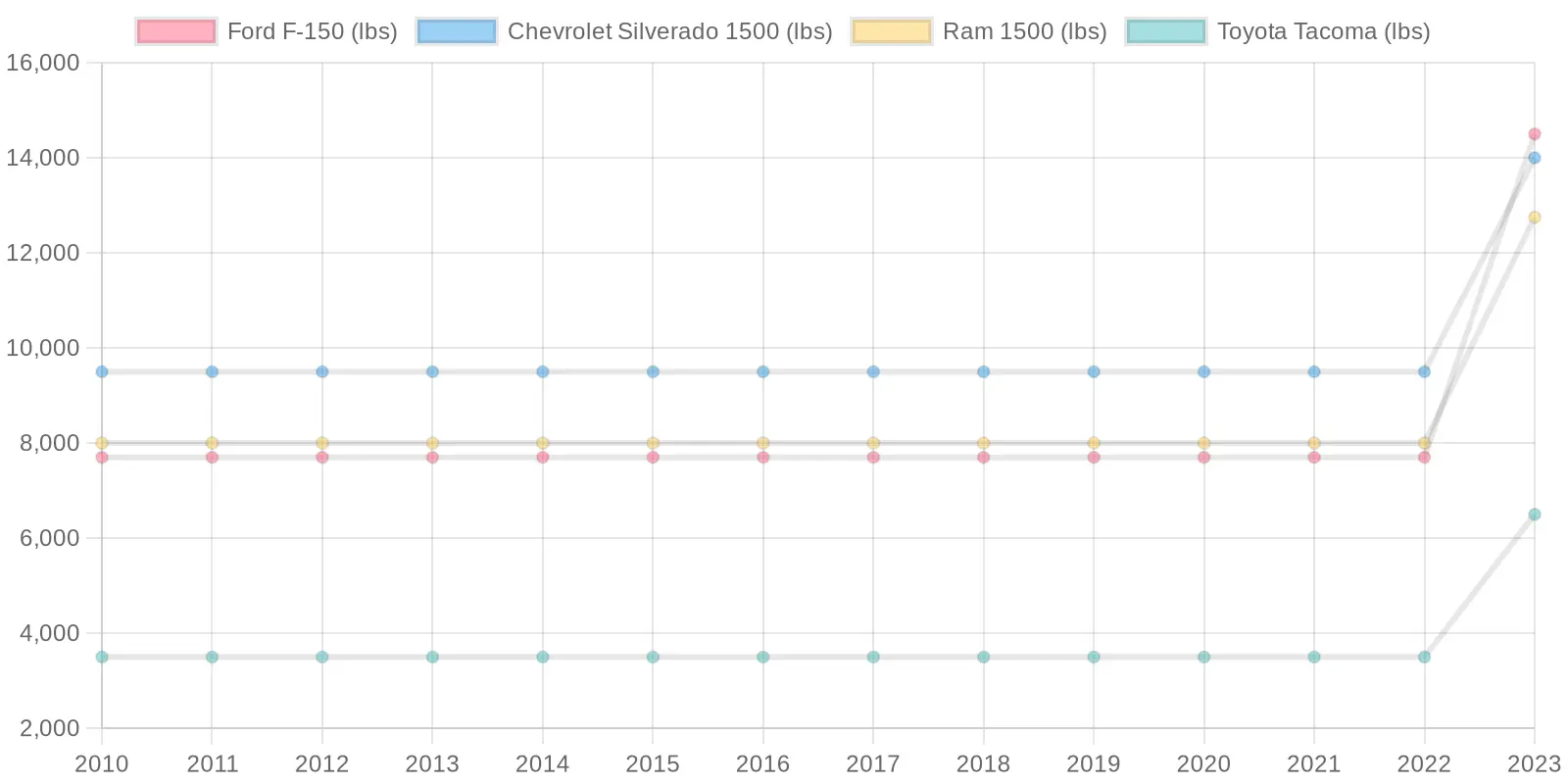
The towing capacities of popular pickup trucks have significantly increased over the years due to advancements in engineering, materials, and powertrain technology. This trend is evident in major models including the Ford F-150, Chevrolet Silverado 1500, Ram 1500, and Toyota Tacoma. Here’s a detailed overview of how these capacities have evolved from 2010 to 2023:
Towing Capacity Data
| Year | Ford F-150 (lbs) | Chevrolet Silverado 1500 (lbs) | Ram 1500 (lbs) | Toyota Tacoma (lbs) |
|---|---|---|---|---|
| 2010 | 7,700 | 9,500 | 8,000 | 3,500 |
| 2011 | 7,700 | 9,500 | 8,000 | 3,500 |
| 2012 | 7,700 | 9,500 | 8,000 | 3,500 |
| 2013 | 7,700 | 9,500 | 8,000 | 3,500 |
| 2014 | 7,700 | 9,500 | 8,000 | 3,500 |
| 2015 | 7,700 | 9,500 | 8,000 | 3,500 |
| 2016 | 7,700 | 9,500 | 8,000 | 3,500 |
| 2017 | 7,700 | 9,500 | 8,000 | 3,500 |
| 2018 | 7,700 | 9,500 | 8,000 | 3,500 |
| 2019 | 7,700 | 9,500 | 8,000 | 3,500 |
| 2020 | 7,700 | 9,500 | 8,000 | 3,500 |
| 2021 | 7,700 | 9,500 | 8,000 | 3,500 |
| 2022 | 7,700 | 9,500 | 8,000 | 3,500 |
| 2023 | 14,500 | 14,000 | 12,750 | 6,500 |
Insights and Analysis
- Ford F-150: Increased from 7,700 lbs in 2010 to 14,500 lbs in 2023.
- Chevrolet Silverado 1500: Grew from 9,500 lbs in 2010 to 14,000 lbs in 2023.
- Ram 1500: Enhanced from 8,000 lbs in 2010 to 12,750 lbs in 2023.
- Toyota Tacoma: A more modest increase from 3,500 lbs to 6,500 lbs over the same period.
The data reflects how innovations such as turbocharged engines, lightweight construction materials, and advanced towing technologies have propelled the performance of these trucks to new heights. As these improvements continue, the towing capabilities of trucks are likely to keep evolving to meet the demands of consumers in various sectors.
Click to view chart
For a deep dive into the factors boosting towing capacities, check out this in-depth analysis on trends.
Conclusion and Call to Action
Choosing a pickup truck with optimal towing capacity is essential for daily drivers, truck owners, and property managers alike. As we explored through various models, the 2023 Ford F-450 stands out with a maximum towing capacity of 32,000 lbs, making it a top choice for heavy-duty towing tasks. The Ford F-250 and the Ram 2500 both offer respectable tow ratings of 17,000 lbs, offering versatility for moderate towing needs. Meanwhile, the Chevrolet Silverado 2500HD holds its own with a solid 13,800 lbs, suitable for various demanding applications.
Understanding your towing needs is crucial, whether you’re hauling trailers, boats, or equipment. Think carefully about what weight you expect to tow and how often, as this will help dictate the appropriate truck for your requirements. Beyond just towing capacity, consider factors such as engine power, suspension, and technology that enhance towing performance.
Lastly, to ensure your towing experience is efficient and secure, you might want to explore quality towing accessories. Summit Fairings offers a range of customized towing solutions to enhance your truck’s hauling capabilities, ensuring that you have the right equipment for your specific needs. Discover what Summit Fairings can do for you and elevate your towing experience today!