
Understanding the cost of a flatbed tow truck is essential for various stakeholders including everyday drivers, truck owners, auto repair shops, and property managers. This comprehensive guide unpacks the intricate factors influencing pricing, offers a breakdown of costs across different capacities, and highlights supplier recommendations with market trends. Each chapter is designed to give you a holistic view, enabling informed decisions whether you’re looking to purchase your first truck or expand your existing fleet.
Price on the Road: Navigating Flatbed Tow Truck Costs in 2026
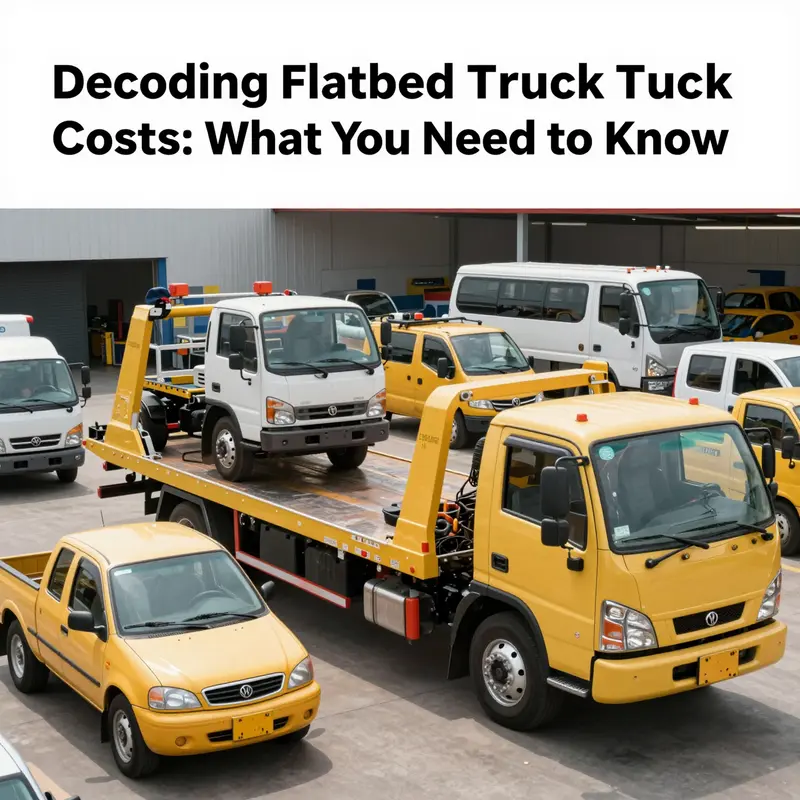
When a shop manager asks, how much for a flatbed tow truck, there is no single answer. Price depends on capacity, configuration, build quality, and the region where the truck operates. A practical spectrum runs from compact, light-duty flatbeds to heavy-duty units with cranes and advanced safety packages. New versus used, basic versus highly customized equipment, all affect the price. A starting reference is to consider capacity bands and total cost of ownership, including maintenance and after-sales support. In most markets, capacity is the loudest signal in the price orchestra. A flatbed designed to haul light service vehicles sits at the lower end, while a unit that can lift, tilt, and cradle larger vehicles moves toward the middle or upper ranges. More weight, longer booms, and stronger hydraulics require more steel and more complex control systems, raising the sticker price and ongoing operating costs.
In the mid-range, 3- to 10-ton configurations commonly fall in the roughly $15,500 to $52,900 range for new units. Simpler configurations with basic winches and no crane tend toward the lower end; adding a crane, faster winches, or upgraded transmission pushes price higher. For heavy-duty work (10 tons and above), new units typically run from about $35,000 up to $70,000 or more, with higher prices if you install hydraulic cranes, extended booms, or advanced recovery packages.
Used flatbeds offer meaningful savings but require careful due diligence. A two-car carrier with a wheel-lift might appear around $15,500 to $29,000 depending on condition and configuration. Crane-equipped four-ton units often occupy the mid-$20k to low-$40k range, while eight-ton models with integrated cranes can land in the mid-$30k to mid-$40k area depending on crane reach and bed length. Beyond the bed, freight, taxes, registration, and financing costs must be folded into the decision.
Ultimately, buyers should map fleet needs to a tiered price strategy and weigh total cost of ownership, including maintenance, spare parts availability, and after-sales support. When possible, request formal quotes based on your exact bed length, crane reach, and any customization. Local market dynamics, freight terms, and regional taxes can shift the delivered price, so compare multiple suppliers and seek volume discounts when planning an expanding fleet.
Pricing the Flatbed: Capacity as the Main Driver of Tow Truck Costs
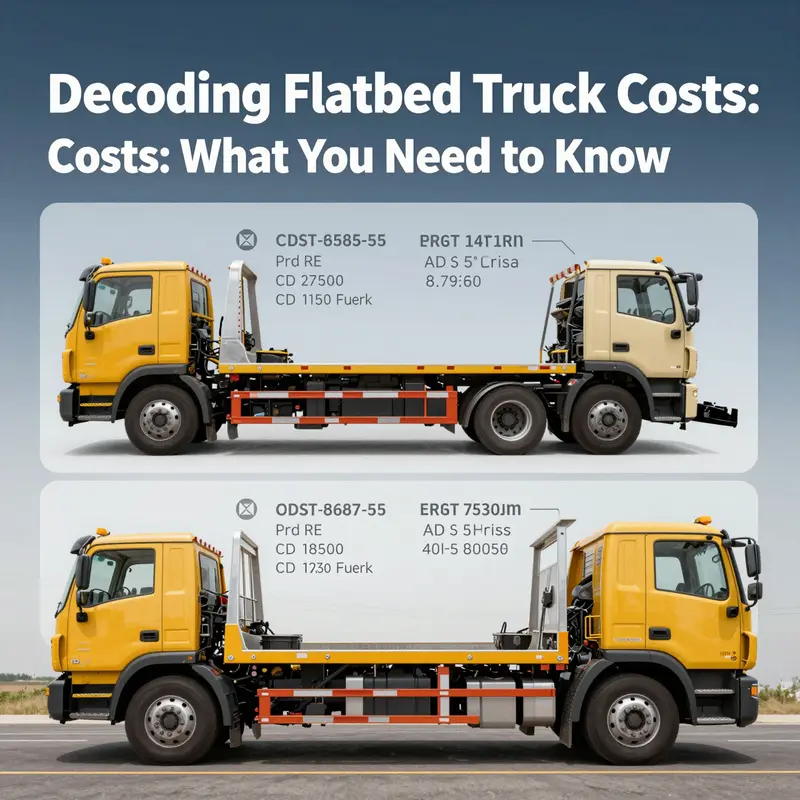
Prices for flatbed tow trucks cluster along a clear axis: how much they can lift and haul, and how robust the working systems are. Capacity shapes not only what the vehicle can handle, but also how it’s built, the level of engineering that goes into the hydraulics and chassis, and the kind of resale value a buyer might expect. As of March 2026, market data across brands, regions, and configurations show a spectrum that can feel wide, yet it is highly organized around the weight classes these machines are designed to move. For someone evaluating a flatbed tow truck, the first question is almost always about capacity. The heavier the loads you intend to recover or transport, the more this machine must do to stay reliable, efficient, and compliant with local regulations. And in that straightforward premise lies a wealth of practical considerations that color the overall cost beyond the sticker price at the factory gate.
On the lower end of the capacity spectrum, 2-ton to 3-ton flatbed models exist as entry points for smaller fleets or occasional towing work. These lighter versions are typically simpler in design, with fewer heavy-duty reinforcements and fewer high-end options. In the market, diesel-powered 2-ton and 3-ton flatbeds appear, though exact pricing is not always published in every listing. When numbers are available in listings, they tend to reflect the basic configuration—a baseline platform intended for light routine towing and urban recovery. These units are attractive for start-up operators or solo operators who need dependable daily-use capability without the higher upfront capital required for heavier payloads. Still, even at this end of the spectrum, the price anchors are moving targets; buyers must factor the total cost of ownership, including maintenance, fuel efficiency, and the cost of any required compliance updates.
Stepping up to the 4-ton class is where the market begins to see a marked shift in both capability and price. A 4-ton flatbed is a standard benchmark for professional towing services operating in urban environments where vehicle recovery often involves mid-weight cars, light trucks, or small fleet vehicles. The 4-ton category commands a higher price than the 2-3 ton range, not only because of the higher load capacity but also due to the corresponding upgrades in frame fabrication, wheel and suspension designs, and the hydraulic system that powers the tilt bed and winching function. While exact prices vary by region, configuration, and the amount of customization, the 4-ton class is consistently identified in market data as a louder signal of serious capability. It is the baseline that many fleets use to justify a wider set of service offerings, including some heavier recoveries and fleet transport tasks that require a more stable, durable platform.
Beyond 4 tons, the landscape becomes more nuanced. The market’s upper tier includes models in the 4.2-ton range—a slightly strengthened iteration of the standard 4-ton platform. The 4.2-ton class is often described as a more capable workhorse for fleet maintenance and heavier recovery assignments. It tends to command a higher initial investment, reflecting not just the marginal increase in lift and bed capacity, but also enhanced structural components, more robust hydraulics, and possibly beefier axles and transmission considerations. In practical terms, customers weighing this option are often balancing the need for additional performance against the marginal cost of incremental gains in capability. This is where the decision to upgrade is driven by real-world load profiles, regional road conditions, and the speed at which recovery jobs must be completed. The incremental jump from 4 tons to 4.2 tons, while not enormous in every case, carries psychological and operational weight: it signals a commitment to heavier everyday workloads and longer service life under strenuous conditions.
If capacity is the primary driver of price, it is not the sole determinant. The market also shows a bracket of much larger machines that can handle serious heavy-duty work, far beyond the everyday needs of a standard tow service. For those operators who routinely deal with fleets, industrial clients, or the transportation of heavy vehicles, eight, ten, or even fifteen-ton flatbeds exist as dedicated assets. These larger models bring a distinctly different pricing tier. In practical terms, the price range for these larger capacity units tends to be wider and higher, reflecting the more substantial engineering behind the bed, hydraulic power, and structural strength required to lift and stabilize heavier weights. The pricing data for these sizes generally places them from the mid-to-high end of the spectrum, with a broader set of customization options and stronger warranties to match. This tier is where buyers often negotiate the most, as bulk purchases, regional incentives, and longer-term maintenance packages can meaningfully affect the all-in cost per unit.
The price picture becomes even more intricate once one considers the total cost of ownership. Several variables tend to move the final numbers up or down, sometimes in predictable patterns, sometimes in regional quirks. First, customization plays a critical role. Buyers frequently request specific bed lengths, loading mechanisms, winch ratings, and auxiliary equipment—tools for load restraint, stabilizers, wheel-lift systems, and diagnostic interfaces. Each customization adds to the initial price and extends the lead time before delivery. Second, the terms of sale matter. Free On Board (FOB) pricing is common in this market, but FOB still requires the buyer to manage shipping, insurance, and customs clearance. In cross-border purchases, shipping costs can be sizable and vary with distance, method, and the weight of the truck itself. Local taxes, import duties, and compliance costs in the buyer’s country further shape the final landed cost. These are not cosmetic line items; they are essential parts of the total financial picture, especially for operators contemplating a fleet and recurring orders.
Volume and negotiation also color the math. Suppliers often offer bulk-order discounts that can significantly reduce the per-unit price when several units are purchased at once or when a business agreement locks in a set number of trucks over a specified time horizon. In some market data, bulk arrangements can bring the per-unit cost down notably, with the bulk pricing typically tied to four or more units and accompanied by favorable shipping terms. This is a practical lever for operators who are expanding a fleet, entering a new market, or consolidating service agreements with clients that require standardized equipment across multiple locations.
The market data also reveals some striking price anchors that help buyers frame expectations. A range of 4-ton to 4.5-ton configurations tends to cluster in the mid-range of the spectrum, while more specialized heavy-duty models with enhanced lift capacities and longer bed lengths sit higher, sometimes pushing into the upper tens of thousands per unit, depending on options and regional factors. For example, in direct market listings, a 4-ton flatbed may appear with a price tag that reflects a balance of capability and features, while a 4.2-ton or larger setup tends to command a premium grounded in the marginal gains in strength and operational resilience. At the top end, the heavier multi-ton models, built to handle fleet-scale recovery and transport tasks, carry price points that signal a more industrial application and longer-term investment, backed by engineering and service commitments designed to sustain heavy daily workloads.
A key point for buyers to keep in view is that the price is not a fixed ceiling. The market often presents a spread rather than a single number, with quotes varying by supplier, by whether the unit is new or refurbished, and by the extent of included after-sales support. Some listings show clear price ranges, while others require a direct quote after a preliminary technical discussion. In this sense, price becomes a starting point for a negotiation—an anchor from which buyers and sellers work toward a mutually agreed bundle that includes delivery, warranties, spare parts, and ongoing maintenance. The price you finally pay for a flatbed tow truck is thus a function of capacity, build quality, and the ecosystem around the sale, including service networks and parts availability.
For readers seeking a practical baseline, market ecosystem data point to several concrete numbers that illuminate the spectrum. In entry-level reports, a 4-ton class is commonly referenced as the standard professional option, with price considerations tied to the basic configuration and regional market conditions. When the chassis and bed are paired with a robust hydraulic system and standard recovery equipment, buyers see a meaningful step up in cost compared with lighter variants. Heavier-duty configurations—such as those in the 8 to 15-ton range—are priced higher still, reflecting not only greater load capacity but also more advanced engineering and tougher materials designed for fleet-scale operations. The spread can range from moderate increases to substantial leaps, depending on whether a buyer prioritizes raw lifting power, speed of operation, bed length, stabilizer design, and integration with fleet management or telematics systems.
As a practical rule of thumb, almost any buyer can identify a price anchor that aligns with their intended use. If your workload demands frequent lifting of mid-weight vehicles and reliable urban recovery, a 4-ton class with careful option selection can deliver strong productivity without overwhelming upfront costs. If your service footprint includes heavier fleet vehicle recovery or cross-region transport, investing in a 6-ton to 8-ton class—or even larger—may yield lower long-term costs per job due to higher throughput and reduced service calls. And if you anticipate a high volume of multiple-truck deployments, the economics of bulk ordering can tilt the decision toward a slightly larger platform that standardizes maintenance and parts supply across the fleet.
For readers who want to ground their understanding even further, a simple reference point exists in well-documented price ranges that reflect common market configurations. In representative global listings, an entry-level 4-ton flatbed sits at a higher price bracket than the smallest diesel-powered 2-ton or 3-ton models, while the more capable 4.2-ton variant often sits above the 4-ton baseline. For those considering the heavier end, multiple models in the eight to fifteen-ton category typically appear in the $15,500 to $29,000 range per set, depending on whether the unit is sold with basic or expanded configurations and whether bulk terms apply. Add to that the possibility of bulk discounts, and the total cost picture can shift meaningfully.
A buyer should also factor in the total landing cost, including the supplier’s quoted FOB price, anticipated shipping, handling, and insurance, plus any regional taxes and duties. Customizations, warranties, and after-sales support are not optional luxuries in professional service markets; they directly influence the unit price and the speed at which a new fleet can become fully operational. In other words, capacity is the north star of pricing, but the journey from quotation to cash-in-hand moves through a landscape of options and charges that deserve careful navigation. If you want a quick sanity check on the baseline, you can explore a straightforward reference that discusses general pricing concepts for tow trucks, which helps translate capacity needs into a more concrete financial picture. How much is a tow truck.
Adjusting expectations for a specific business requires gathering quotes that reflect local conditions, transport distances, and the exact combination of features you want. Talk to multiple suppliers, ask for a bill of materials that itemizes the bed, winch, hydraulic power pack, and any stabilizing equipment, and request quotes that include shipping and taxes. If you are planning to purchase more than one unit, negotiate about bulk pricing and delivery schedules. This approach helps ensure you are comparing apples to apples across different suppliers and configurations. It also makes it easier to identify the most cost-effective path to expand your fleet without compromising on reliability or service levels. In the end, capacity is the practical lever; the cost reflects the entire package—the machine, the build, and the ecosystem that supports its operation day after day.
For readers who want to extend their understanding beyond the numbers and into the broader context, an external resource provides a grounded overview of tow trucks and their role in road-service logistics. It helps frame how a flatbed fits into the larger picture of vehicle recovery, fleet maintenance planning, and emergency response readiness. This external reference is useful for aligning procurement strategy with industry realities, ensuring that your investment supports both current needs and future growth. Tow trucks – Wikipedia .
In sum, the cost of a flatbed tow truck scales with capacity, but the final price reflects a matrix of decisions—engineered strength, bed geometry, hydraulic power, and the suite of ancillary systems and services that accompany new purchases. The market presents a structured spectrum: light-duty options priced at the lower end, common 4-ton configurations positioned in the mid-range, stronger 4.2-ton and other mid-to-heavy classes priced higher still, and the heaviest-duty units carrying a premium that mirrors their role in fleet recovery and large-vehicle transport. Buyers who approach procurement with a clear view of their typical job mix, geographic considerations, and anticipated maintenance needs will be best positioned to select a configuration that balances upfront investment with long-run productivity and reliability. The numbers still matter, but so do the conversations with suppliers, the terms of sale, and the strategic planning that translates a single purchase into a durable capability for a towing operation. The capacity-driven math is not just about lifting power; it’s about building a service that can respond quickly, recover safely, and sustain a business over the long haul.
Reading the Price Tide: How Much a Flatbed Tow Truck Costs Today, and What Buyers Should Know
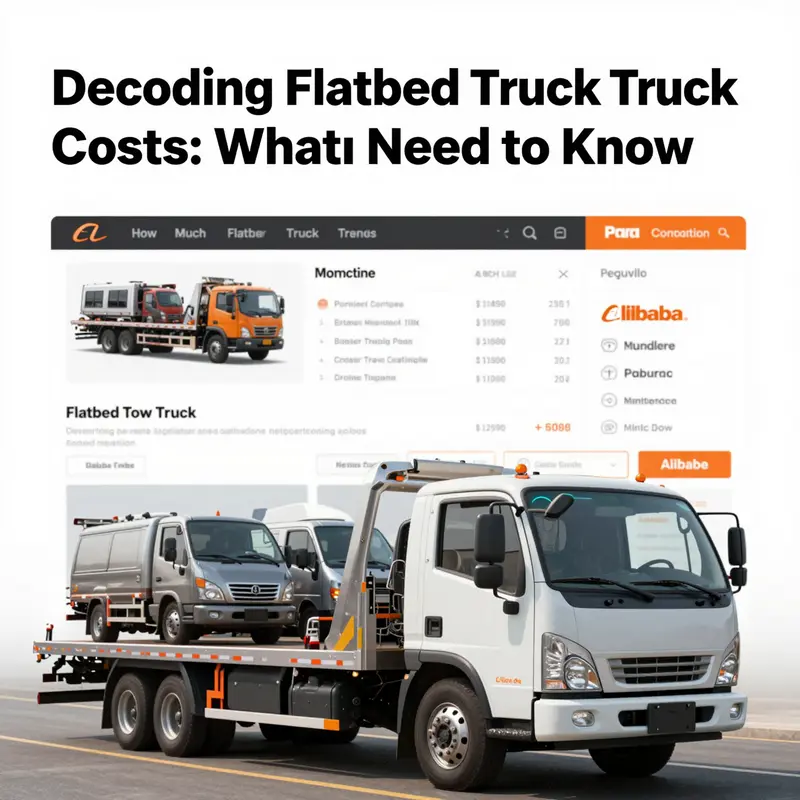
A flatbed tow truck is the backbone of any fleet that handles recovery, roadside assistance, or vehicle transport. Its price tag encapsulates more than a number on a sticker; it reflects the truck’s size, build quality, drivetrain, hydraulic sophistication, and the intended workload. When you plot the pricing landscape for flatbeds, you quickly see a broad spectrum: from lean, compact units built for two-car carriers to expansive, multi-ton platforms with integrated recovery gear. The variation isn’t a quirk of the market. It’s a function of capacity, features, and the realities of global supply chains that shape shipping costs and taxes. Above all, the story is about choosing a platform not only for today’s needs but for the next several years of service, maintenance cycles, and potential expansion. In practical terms, the cost of ownership for a flatbed tow truck starts with the base price, but careful buyers will also weigh add-ons, warranties, and the longer-term expenses that accompany any heavy-duty vehicle used in demanding environments.
As of early 2026, the market presents a layered hierarchy of options. At the lower end, new, compact flatbeds that function as two-car carriers with wheel-lift and rollback capabilities can start around fifteen thousand five hundred dollars. These units are appealing for small fleets or independent operators who intend to use them primarily in local recovery, light-duty towing, or transport between yards. They usually emphasize essential reliability and a straightforward hydraulic system, with a focus on delivering value for upfront cost rather than the bells and whistles that define higher-end platforms. For many operators, this category represents a workable balance between purchase price and practical utility, especially when there’s a steady cadence of calls that doesn’t push the equipment into heavy-duty daily use.
Move up the ladder, and the price ladder widens, reflecting added capability and a broader feature set. A standard new flatbed with higher capacity—enabling larger vehicles or more demanding recovery tasks—can cost in the range of seventy-five thousand to one hundred and fifty thousand dollars. This spread captures the differences in chassis design, hydraulic power, bed length, and safety systems. It’s not unusual for the most advanced units to command even higher figures, particularly when specialized features are included, such as fully integrated booms, advanced rotator capability, or multi-axle configurations. In other words, you’re paying not just for a bed that tilts; you’re paying for the flexibility to recover vehicles in more challenging scenarios, and to do so with a level of precision that reduces the risk of damage during operation.
The used market introduces a different set of dynamics. A well-maintained pre-owned platform can offer compelling value, and buyers often find exemplars with substantial service life left. A mid-spec, well-kept used truck from a reputable model year might appear on the market around six-figure territory, with prices varying by mileage, condition, maintenance history, and the extent of installed recovery gear. For operators who prioritize scale and predictability in total cost, a carefully sourced used unit can shorten the time to revenue while still delivering dependable performance. The allure here is not merely the price tag but the prospect of significant depreciation already absorbed by the prior owner, allowing a new owner to punch above their weight without a commensurate leap in up-front investment.
Between brand lineage, condition, and market demand, there is a robust mid-range segment that often appeals to municipal departments, mid-sized fleets, and service contractors expanding their capabilities. Prices for mid-range units usually reflect a combination of core flatbed function with added recovery aids—stability features, more robust wheel-lift systems, longer beds, and higher-rated winches. In this band, buyers frequently encounter factory-direct pricing for bulk purchases, which can unlock meaningful per-unit savings when fleets commit to several units at once. The economics of bulk ordering is a familiar lever in commercial vehicle purchasing, and it remains a smart approach for operators planning a phased fleet upgrade or expansion.
Lurking in the background of any price conversation is the technical profile of the machine. Hydraulically operated, tilting flatbeds have become a standard because they deliver safer and more versatile vehicle loading, especially for all-wheel-drive, low-clearance, or damaged vehicles where contact with the ground must be minimized. The push toward multi-functional recovery vehicles—units that integrate wheel lifts, winches, and occasionally cranes—reflects a broader strategic aim: reduce the number of separate tools an operator must deploy at a scene, cut response times, and improve on-scene safety. Buyers should pay attention to the quality of construction materials, corrosion resistance, and overall durability, because rust-proofing and long-term resilience matter when a machine spends years in varied climates and high-stress recovery assignments.
When it comes to sourcing, the landscape includes a mix of global suppliers, each with its own strengths and caveats. A verified supplier with a track record of customization and post-purchase support can be a reassuring partner, especially for buyers who anticipate needing after-sales service or tailored configurations. For fleet buyers, the option to customize a platform to meet local regulations, road rules, or specific recovery needs is a practical asset. The ability to tailor wheel-lift dimensions, bed lengths, winch capacities, and hydraulic controls can determine how well a truck performs in real-world conditions, beyond the standard factory spec.
Marketplace dynamics also shape the buying decision. The market has a long-standing practice of offering basic, price-conscious units alongside premium platforms that emphasize safety, performance, and after-sales service. In regions where freight, shipping, and local taxes add to the landed cost, purchasers often weigh the relative value of a unit delivered with minimal add-ons versus a higher-ticket platform that already includes a suite of features and warranty protections. The “landed cost” concept becomes especially important for buyers who include import duties, local compliance upgrades, and service packages as part of the overall investment.
For buyers who want a broad frame of reference, it helps to understand typical price bands in both new and used categories, and how these bands shift with capacity. A compact two-car carrier with essential rollback can hover around the mid-teens, while mid-range, fully equipped units with enhanced durability and a longer bed may move toward six figures. Larger, higher-capacity platforms—capable of handling heavier loads and more complex recoveries—will generally sit well into the six-figure range and may exceed a quarter of a million dollars when the most advanced configurations with rotator capabilities are involved. The exact price hinges on four core dimensions: capacity, bed length, hydraulic sophistication, and the breadth of auxiliary systems.
Beyond the sticker price, buyers should account for total cost of ownership. Maintenance costs, fuel efficiency, and insurance premiums tend to rise with heavier, more technologically complex platforms. Spare parts availability and technician familiarity also influence long-term expenses. In many markets, the cost of ownership skews higher for specialized units used in high-demand environments, where downtime directly correlates with revenue loss. Conversely, for operators with stable deployment patterns and a well-planned maintenance schedule, a larger up-front investment can yield predictable operating costs, lower downtime, and higher resale value later on.
In navigating these choices, buyers should look for clear guarantees and warranties, which vary by supplier and region. Some suppliers offer one-year warranties on certain components and promise customization options tailored to the customer’s needs. The trend toward customization and after-sales support has become a significant selling point, because a durable, well-supported platform reduces the risk that a high-cost asset becomes a burden after the first year of operation. A credible supplier will also provide documentation about material quality, corrosion resistance, and the tested performance of the hydraulic system under typical loads. These assurances matter when a fleet depends on predictable functionality in roadside emergencies and planned recoveries alike.
Several pathways exist to secure a flatbed that aligns with budget and operational goals. One approach is to engage a verified supplier known for customization and post-sale support, which can deliver a tailored unit with a warranty. This route is particularly appealing for fleets seeking a turn-key solution where the bed length, wheel-lift reach, and winch capacity are matched to anticipated tasks. Another route is to work with a manufacturer that offers factory-direct pricing for bulk orders, which can unlock substantial unit-level savings when purchasing multiple units at once. For buyers prioritizing reliability and a robust used market, seeking a well-maintained pre-owned platform from a reputable source can shorten the lead time to operation while delivering strong performance in demanding conditions.
Independent buyers and fleet managers should also incorporate a verification step with suppliers, especially when navigating international markets. Platforms that host verified listings and supplier histories can help buyers assess credibility and service history. It’s prudent to request documentation that covers maintenance records, accident history (if applicable), and a detailed breakdown of installed equipment. This due diligence reduces the risk of surprise repair costs after delivery and helps establish a sustainable long-term relationship with the chosen supplier.
As literature and market data from 2026 show, transparency and assurance are increasingly prioritized by buyers. Platforms and marketplace ecosystems that provide buyer protection, detailed product listings, and third-party verifications are especially valued by fleets that need to align procurement with compliance requirements and budget planning. The principle holds whether you’re shopping for a compact two-car carrier or a full-scale, multi-ton recovery platform. The underlying message is consistent: to make a sound investment, understand both the price and the potential for value over the life of the vehicle.
When considering suppliers and quotes, one practical step is to compare a few well-defined configurations side by side. Consider a basic two-car carrier with wheel lift versus a mid-range unit with a longer bed and a more powerful winch. Then contrast both against a high-end, rotator-equipped platform designed for complex recovery work. For each option, compute the landed cost, including shipping, handling, and local taxes, and factor in the expected maintenance requirements over a five- to seven-year horizon. If the plan includes multiple vehicles, perform a total-cost-of-ownership simulation to identify the point at which higher upfront investment yields the most favorable long-term return.
For buyers who want to explore the topic further through direct supplier discussions, there are credible routes to obtain quotes and verify capabilities. A range of Asian and North American manufacturers and distributors offer configurations, warranties, and customization. Choosing a partner who can deliver the necessary support—whether through on-site service, remote diagnostics, or readily available replacement parts—can be as important as the base price. In addition to direct supplier conversations, broader marketplaces provide access to detailed product listings and buyer reviews, which can illuminate how a given platform performs in real-world settings, beyond what the brochure promises. When this due diligence is complete, the decision becomes less about chasing the lowest price and more about securing a platform with predictable performance, durable build quality, and a service ecosystem that minimizes downtime during peak demand.
For readers seeking a concise snapshot of market realities, the numbers do not lie: there is substantial price dispersion, driven by capacity, features, and the country of origin. The spectrum begins with affordable, entry-level units and extends to premium platforms with the most advanced recovery capabilities. Buyers must score the options not only on upfront cost but also on the robust, long-range value they bring to an operation. The decision is about balance: matching the truck to the expected workload while reserving some margin for maintenance and eventual scale. In practice, the best purchase strategy often hinges on a well-structured fleet plan, clear requirements for bed length and lifting power, a reliable supply chain for parts, and a warranty posture that reflects how hard these machines will actually work day to day.
If you want a direct sense of the price ranges and the kind of units that exist within different segments, you can explore a representative market overview that discusses general cost bands and buying considerations. For broader context and ongoing updates, many buyers benefit from consulting supplier catalogs and price quotes specific to their region, and from reading verified listings on major marketplace platforms. For those who want a quick, practical touchpoint on total costs and best-value paths, a dedicated guide that surveys the full spectrum of tow-truck costs is worth a visit: how-much-do-tow-trucks-cost.
In wrapping this picture, the core insight remains consistent: the market offers a continuum of flatbed tow trucks, each priced to reflect its intended role, durability, and support network. The best fit is not the cheapest option, but the choice that aligns with workload reality, maintenance readiness, and sound resale value. For buyers who want to balance upfront cost with long-term reliability, the prudent path is to compare configurations, verify warranties, and place emphasis on post-purchase support and customization capacity. As the recovery industry evolves, the ability to tailor a platform to local conditions—whether through bed length, wheel-lift reach, or integrated safety features—will continue to shape decisions just as profoundly as the sticker price. The conversation about price is really a conversation about what a fleet intends to do, how often it will do it, and how smoothly it can operate under pressure. That is the heart of understanding how much a flatbed tow truck costs—and what it costs to own one well.
External resources can illuminate the landscape further, offering both listings and buyer protection insights. For growers of market listings and verified supplier behavior, you may consult listings on major marketplaces that host supplier information and product detail. See an external catalog and supplier profiles at this Alibaba listing to understand the scale and variability of options available to buyers exploring bulk purchases and customization opportunities: https://www.alibaba.com/product-detail/2-Car-Car-Carriers-Wheel-Lift-Rollback_1600425513619.html?spm=a2700.1.x.d1&ns=1&abbucket=12. The price bands and conditions described here are a reflection of the market as of early 2026, and real quotes will reflect your location, the exact configuration you require, and current shipping and tax considerations.
For readers who want ongoing updates, practical tips, or deeper dives into related equipment categories, a useful starting point is to review the broader discussions around tow-truck costs and pricing. These sources help connect the dots between machine capability, procurement timing, and the evolving expectations of fleets that rely on rapid, reliable vehicle recovery and transport. As you proceed, keep the focus on how the platform will perform under the most demanding conditions you anticipate, and let that performance profile guide your negotiation and selection process. In the end, a well-chosen flatbed is more than a purchase; it’s a strategic asset that shapes how you respond to incidents, manage costs, and grow your business over time.
Reading the Price: How Capacity, Brand, and Options Shape Flatbed Tow Truck Costs
When you start shopping for a flatbed tow truck, the sticker price can feel like a moving target. A single fleet is not built from a single blueprint; it’s a carefully balanced equation where capacity, design choices, and after-sales commitments all pull the final figure in different directions. The numbers you see in market listings are not random; they reflect the interplay of what the truck can do, how it is built, and where it travels to work. In practical terms, price is less about a single value and more about a spectrum along which you position your operation. The most significant driver is capacity and size: the core sense of what the vehicle is expected to haul and the kind of jobs it will face every day. Light-duty flatbeds, typically built to transport 3 to 5 tons, enter the market at levels around the mid-teens in thousands of dollars. They are nimble for urban work, easy to maneuver, and cheaper to maintain on a per-mile basis, but their reach is inherently limited when the job calls for larger or heavier vehicles on the back of the bed. As you move toward mid-range capacities—roughly 8 to 15 tons—the price range widens. These units are designed to handle a broader mix of cars, light trucks, and small construction equipment, and they often command higher price tags because they incorporate stronger hydraulics, larger stabilizers, and beefier winches. The cost band at this level can span a wide swath, typically from the mid-twenties up to the upper twenties of thousands of dollars, depending on configuration. At the heavier end, with 20 to 30 tons of capacity, the typical price tier rises further, and it is not unusual to see ranges from the mid-thirties to the upper-sixties of thousands, depending on the exact setup and the intended duty cycle. Some specialized or purpose-built flatbeds, capable of handling exceptionally heavy machinery or operating in challenging environments, can exceed these ranges. In short, your first map of price must be drawn from capacity and size; everything else flows from that anchor point. The second major determinant is the brand or manufacturer, not in the sense of a glossy badge but in terms of the durability, precision engineering, and the breadth of after-sales support that come with that choice. A well-regarded maker will stand behind its product with robust warranties, readily available replacement parts, and a dealer network that can service the truck across multiple regions. Those advantages are priced into the initial quote because they translate into lower downtime and more predictable maintenance costs over the life of the vehicle. It is not just about the bed and the winch; it is about confidence when the road is long, the clock is ticking, and a recovery is underway. While exact brand names aren’t the focus here, the general rule holds: more established engineering tends to command higher upfront pricing, but it can yield lower life-cycle costs and steadier performance. The third levers in the price curve are the features and equipment loaded onto the bed. The simplest configurations often include a hydraulically tilting bed and a winch, which is enough to perform standard recoveries and routine towing. But once a truck adds wheels to a lift system, an integrated crane, or a rotator boom with higher lifting capacities, the price climbs accordingly. Each feature solves a different problem on the road and adds a layer of complexity that affects maintenance, reliability, and resale value. A basic system may suffice for daily urban work, yet a shop that regularly deals with heavy recovery, awkward loads, or multi-vehicle incidents may justify a more feature-rich setup. Beyond the core systems, extended ramps, lengthier beds, rust-proofing, and specialized coatings can push the price higher still, especially if the vehicle is expected to spend its life in corrosive environments or extreme weather. The bed geometry itself matters; a longer ramp or a more robust mounting system translates into better usability but also adds cost. It is easy to overlook such design decisions when comparing otherwise similar trucks, but those choices accumulate into meaningful differences in both performance and price. The equipment choices are not merely about convenience. They shape the operator’s ability to complete jobs more quickly, reduce the risk of damage to vehicles, and extend the service life of the tow truck. The consequences ripple through the total cost of ownership, particularly when you consider the frequency and variety of calls that the fleet will handle. The next axis of variation arises from the market context in which a purchase is made: new versus used, and the logistics of obtaining a truck from overseas or domestic sources. New trucks carry the certainty of warranty coverage and a higher degree of long-term reliability. They come with that peace of mind, a fixed maintenance baseline, and the reassurance that the hydraulics, tires, and drivetrain are current with the latest safety and efficiency improvements. But the initial price tag for a new flatbed can be substantial, and the price gap between new and nearly new can shrink as the used market evolves—particularly if the used unit has seen light duty cycles, transparent maintenance history, and a recent major service. On the other hand, buying used is a strategy that emphasizes total cost of ownership over sticker price. A lower upfront figure can be compelling, but it often comes with a higher probability of unexpected maintenance costs, more frequent downtime, and a shorter warranty window. Fleet managers weigh these risks against budget cycles and risk tolerance, balancing the desire for immediate cash flow relief with the long-term reliability that underpins service levels and customer satisfaction. The origin of the truck also matters. Some buyers are drawn to units produced for export or assembled in regions with lower material costs and shorter lead times. In those cases, the base price may be attractive, but buyers should account for shipping, import duties, and local adaptation costs. A FOB price, which is common in many listings, means the buyer still shoulders the costs of transport to the port of shipment and the arrangements of export clearance. From there, freight and insurance to the destination add further layers to the final invoice. The geographic footprint of the operation matters, too. A flatbed designed for a metropolitan environment with tight alleys and frequent on-scene recoveries will benefit from compact dimensions and a drivetrain tuned for urban stop-and-go. In contrast, a unit intended for rural or industrial settings may prioritize longer reach, higher traction, and more robust stabilization. Those design priorities influence the price, because each adaptation alters the bill of materials and the engineering complexity behind the unit. Your freight, duties, and taxes then complete the external cost picture. The immediate price tag does not stand alone; it represents a bundle of future expenses and savings that materialize over months and years. A higher upfront investment can translate into lower maintenance bills, reduced downtime, and faster job completion, all of which improve the return on investment. Conversely, a leaner initial outlay may require a longer horizon to break even if it means more frequent service interruptions or earlier replacement cycles. When evaluating quotes, it helps to consider the total cost of ownership as a thread that runs through the entire lifecycle of the truck: purchase price, financing terms, insurance premiums, fuel efficiency, maintenance intervals, tire wear, hydraulic system resilience, and the cost of replacement parts. Financing, too, can tilt the price equation. Some buyers prefer affordable monthly payments over a large one-time expenditure, while others want to own the asset outright to optimize depreciation and financial statements. The right financing mix will depend on the fleet’s cash flow, credit terms, and tax considerations, but it is another lever that shapes the apparent cost of a flatbed tow truck. For buyers who want a broader sense of the basic price landscape, a general reference point exists in broad market surveys and price guides. If you want a quick baseline before delving into quotes, you can explore a general overview of tow-truck pricing here: How much is a tow truck?. Remember, though, that this baseline can only point you toward the right direction; the precise figure for any given unit will depend on the exact mix of capacity, features, brand alignment, and regional cost factors. Another practical aspect relates to the distribution and availability of these trucks. In markets where demand is high and supply chains are stressed, prices can shift because of lead times, currency fluctuations, and the cost of bringing a unit into service-ready condition. If a fleet needs multiple units, volume pricing and multi-unit discounts may apply. The data from recent market activity suggests discounts can emerge when a buyer orders several flatbeds at once, or when a manufacturer guarantees a specific service package for a year or more. These adjustments are typically offered in the form of a bundled package that includes the bed conversion, a maintenance plan, and perhaps a certain number of on-site service visits. The upshot is that price is not a single number to memorize; it is the outcome of a negotiation between functionality, durability, logistics, and risk management. The most effective procurement approach treats price as a conversation starter rather than a verdict. Start with capacity and required use, then layer in the intended equipment and the service expectations. Ask for a clear breakdown of what is included in the base price and what costs would be added for each optional feature. Request a maintenance schedule and warranty terms so you can forecast the long tail of expenses. If your operation spans multiple regions or needs a fleet solution, seek quotes that reflect a standardized configuration to simplify maintenance and parts stocking. In practice, the chapter on pricing is really a chapter about planning: how to align operational needs with budget reality, and how to choose a configuration that yields reliable performance across the job profile you actually encounter. It is tempting to chase the lowest upfront price, but the wise buyer considers how the truck will perform on the first service call, the second, and the hundredth. That foresight—considering uptime, serviceability, and the compatibility of parts and technicians—often pays off in the form of reduced downtime, steadier revenue, and a more predictable operating margin. The price is never the only measure of value. The most cost-effective choice is the one that remains dependable under pressure, adapts to evolving needs, and sustains the business through fluctuations in demand and the wear of daily service life. As you refine your specifications, keep that strategic lens in view. The goal is not to find the cheapest unit, but to invest in a configuration that delivers the best balance of capability, reliability, and total cost of ownership for the particular work your fleet performs. In the end, pricing is a reflection of design priorities—the bed geometry, the lifting capacity, the quality of the hydraulic system, the sophistication of the electronic controls, and the level of after-sales support that accompanies the machine. These factors together define what you pay and what you gain once the truck hits the road. The chapter on pricing, with its emphasis on capacity, brand heritage, features, and lifecycle costs, gives you a practical framework for comparison. It invites you to look beyond the initial line item and imagine the unit in daily operation, where uptime and efficiency forge the real value you receive from the investment.
Final thoughts
The cost of a flatbed tow truck varies widely based on a multitude of factors, including brand, capacity, customization options, and regional pricing differences. As explored through pricing overviews, capacity variations, supplier insights, and influencing factors, understanding these elements allows potential buyers to make well-informed purchasing decisions. By leveraging this knowledge, from individual owners to business operators, you can effectively navigate the market landscape and assess the right flatbed tow truck for your specific needs.