
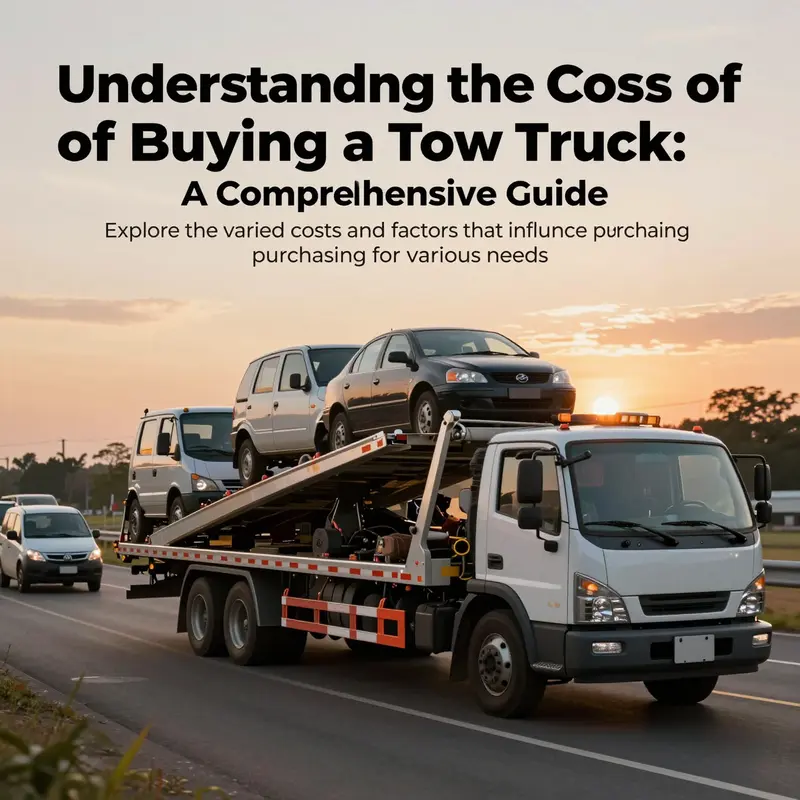
The cost of purchasing a tow truck can significantly impact everyday drivers, residents, commuters, truck owners, auto repair shops, dealerships, and property managers alike. Whether you’re investing in a light-duty truck for personal use or looking to enhance your business fleet with heavy-duty options, understanding the financial landscape is crucial. This article will guide readers through the cost overview for light and medium-duty tow trucks, the dynamics around heavy-duty models, the financial considerations between new and used vehicles, and the current market trends shaping tow truck pricing. Each chapter will delve into specific aspects associated with the acquisition of tow trucks, providing valuable insights for individuals and businesses alike.
Investing in Light- and Medium-Duty Tow Trucks: Decoding Price, Value, and Real-World Costs
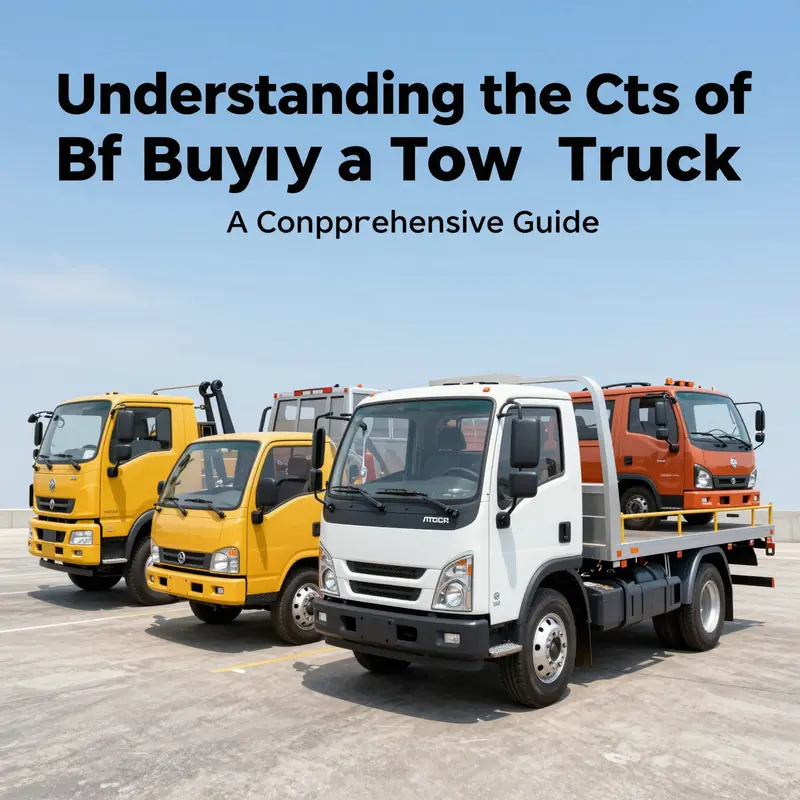
Purchasing a tow truck is more than picking a price tag. It is choosing a tool that defines the pace and reliability of a whole operation. For fleet managers, independent contractors, or shop owners weighing a first purchase or a strategic upgrade, the sticker price is only the tip of the iceberg. Size and capacity matter, but so do the design philosophy, the type of hydraulics, and the frictionless integration of safety features. The market makes this especially clear: light to medium duty tow trucks, typically in the five- to eight-ton range, sit at a price ladder that reflects both brand positioning and the maturity of the platform. You can find basic configurations in the upper twenties to the low forties when considering the entry models, while more complete wheel-lift or newer flatbed variants commonly anchor in the range of fifty thousand to sixty thousand dollars or more. The numbers are a guide, not a verdict, because the exact price hinges on choices around transmission, engine type, and the sophistication of the wheel-lift, bed, or cradle system you select. This variability is not incidental. It mirrors the fact that a tow truck is, in many respects, a mobile capitalization of the company’s service model—an investment that must balance daily use, maintenance cycles, and the risk posture the business is willing to assume.
Two broad families shape most light to medium duty purchases: wheel-lift and flatbed. Wheel-lift tow trucks, the workhorse for urban setups and roadside assistance, bring a relatively favorable price point. In practical terms, the wheel-lift architecture features hydraulic Y-forks or wheel cradles that can lift one axle off the ground, enabling quick recoveries with a smaller footprint. The result is a cost range that typically sits between thirty thousand and sixty thousand dollars, depending on the manufacturer, the quality of the hydraulics, and whether the unit includes ergonomic controls, dual-function winches, or additional options like a wheel-lift adapter kit for non-standard tires. The appeal is straightforward: the mid-range wheel-lift provides nimble mobility in congested streets, can handle a broad set of common vehicles, and keeps ongoing maintenance more manageable than larger platforms. Yet, it has limits. The nominal capacity often tops out around ten thousand pounds, which means all-wheel or four-wheel-drive vehicles and some performance variants stretch that envelope. It is not unusual for fleets to encounter tire wear or drivetrain stress when towing over long distances, and the mismatch between a vehicle’s curb weight and a lift system’s design can create operational friction in certain scenarios.
Flatbeds, by contrast, are increasingly favored when the priority is vehicle safety and universal compatibility. A properly equipped hydraulically tilting bed keeps the towed vehicle off the ground entirely, eliminating contact with tires, axles, or sensitive undercarriage components. That advantage translates into a higher upfront investment, with price ranges commonly seen from about fifty thousand up to one hundred twenty thousand dollars for light- to medium-duty configurations. The extra cost reflects the bed’s engineering—stiffer chassis integration, stronger winches, robust tilt mechanisms, and the general expectation of longer service life with fewer ground-contact wear concerns. For operators who handle high-value, luxury, or low-clearance vehicles, or who regularly perform repairs that involve transporting loaded vehicles, the flatbed approach can be the market’s most durable choice. The trade-off is not merely the sticker price; it includes greater initial investment, potential maintenance of the bed mechanism, and, in some cases, higher insurance premiums tied to the vehicle’s higher replacement value. Even so, the flatbed’s damage-minimizing profile often produces a lower total cost of ownership over time when used in a way that respects vehicle safety as a core business value.
Beyond these two prevalent configurations, a third option—the hooked-and-chain approach—appears in local or small-shop contexts where budget constraints are acute. Hook and chain tow trucks, priced in a lower band—typically twenty thousand to forty thousand dollars—offer a simple, economical solution for short-distance towing in controlled environments. They are rarely the best choice for modern, sensitive, or high-value vehicles, as their methods carry a higher risk of paint damage and chassis stress, and they require careful handling to avoid collateral damage during operations. This option can be attractive for initial investments where the fleet’s workload is predictable and the risk from long-distance or high-value tows is limited. The practical reality is that the hook-and-chain platform is still a valid entry point in the broader spectrum, but it often becomes a phased transition tool rather than a long-term staple for a diverse fleet.
A smaller but meaningful segment within the light-to-medium category is the subset of rotator or recovery-variant units. These machines, designed for complex or emergency recoveries, command a premium that starts around one hundred fifty thousand dollars and can exceed three hundred thousand for high-end or specialized configurations. They are not routine purchases for most urban fleets; instead, they appear in operations that require overturns, challenging terrain, or immediate incident-response capabilities where rapid, sophisticated stabilization and lifting are critical. The presence of rotators in the cost landscape helps explain why some operators prefer prioritizing the most common, cost-effective platforms for day-to-day work, while reserving larger capital investments for peak demand periods or strategic service niches.
In addition to the base prices, new models with integrated systems—even within light- to medium-duty brackets—often push the price into a higher range. Modern rigs can integrate powerful hydraulic booms, wheel-lift or dollies, advanced electronic controls, and safety-informing features that reduce downtime and improve client outcomes. In the market, newer configurations with these enhancements generally range from roughly sixty-five thousand to ninety thousand dollars, again depending on length, capacity, and the exact mix of systems aboard. The pricing dynamics here reflect the broader trend in service-automation: operators seek to minimize the risk of damage to towed vehicles and to shorten response times, and manufacturers respond with increasing levels of sophistication. The result is a tiered market in which a standard light-duty wheel-lift or basic flatbed can be purchased at a relatively accessible price, while adding integrated safety features and higher-end hydraulics advances the price to levels once reserved for heavier, specialized units.
The decision framework for a buyer then becomes a blend of usage profile and risk management. If the volume of tows is modest and the average weight of the recovered vehicles sits well within a wheel-lift’s ten-thousand-pound ceiling, the budget-conscious path often starts with a well-equipped wheel-lift that can be upgraded over time. For fleets that anticipate precious cargo, daily long-distance tows, or frequent duty in environments where damage to the towed vehicle would be unacceptable, a flatbed within the mid-to-upper price band represents a more durable, long-term investment. It is not simply about choosing the cheaper option; it is about matching the vehicle’s design to the actual operational demands—the difference between a truck that sits idle too much and one that earns its keep through consistent, safe, repeatable service. In this framing, the sticker price becomes a currency for risk mitigation and service quality as much as for capability.
Another factor shaping the final price is the procurement approach. Buyers who pursue used or certified-pre-owned gear can sometimes secure a flatbed in the lower half of the new-market range, though they must factor in potential maintenance backlogs and the risk of hidden wear in booms and winches. Conversely, new units often come with warranties, modern electronics, and the guarantee of known maintenance histories, which some operators value highly as a way to stabilize long-term budgeting. Financing, insurance, and extended service plans also contribute to the total cost of ownership and should be included in a careful business case. In short, the price you see on a listing is not the entire story. The value you derive from a given configuration depends on how well it aligns with your daily workflow, your risk tolerance, and the length of time you expect to keep the asset before upgrading or replacing it.
For readers seeking a baseline sense of market price across the spectrum, a useful rule of thumb emerges. Light- to medium-duty wheel-lift setups are commonly found in the thirty- to sixty-thousand-dollar zone, with flatbeds edging higher as the bed technology and safety features accrue. If your operations demand the best possible protection for every vehicle you recover, and you run a business where downtime has a direct impact on customer satisfaction or liability risk, investing toward a higher-end flatbed or integrated system can translate into meaningful advantages over the life of the asset. Yet for many operators, the combination of initial cost, reliability, and serviceability makes the wheel-lift option an effective compromise, especially when paired with careful route planning, routine maintenance schedules, and a prudent approach to parts inventory. The market rewards the thoughtful buyer who can balance upfront expenditure with the expected workload and maintenance requirements, rather than chasing the latest tech for its own sake.
If you want a quick baseline on the overall scope of tow-truck costs, you can explore a broader discussion of pricing and features on related pages. For a quick reference, see how much is a tow truck. This reference point can help you frame a negotiation with dealers, lenders, or refurbishers as you translate general pricing into exact figures that reflect your fleet’s needs. It is equally important to compare similar configurations across brands and to account for the after-purchase ecosystem—the availability of spare parts, service centers, and the ease of finding qualified technicians to keep the unit on the road. A well-chosen light- to medium-duty truck, properly matched to your operations, routinely proves its value through faster response times, reduced vehicle-damage risk during towing, and greater reliability under high-demand conditions.
Ultimately, the chapter on cost must be read as a practical guide to making an informed choice rather than a negotiation script. The range of options—from thirty thousand-dollar wheel-lifts to more robust flatbeds around the sixty- to eighty-thousand-dollar mark, up to the higher-end integrated or rotator configurations—mirrors the spectrum of business needs. The best approach is to articulate a clear set of requirements: expected weight-to-tow scenarios, typical distances, climate and road conditions, the level of vehicle protection required, and the capacity to scale with growth. Then, map those requirements onto the price bands described, accepting that today’s market rewards durability, safety, and serviceability as much as it rewards raw lift capacity. As you move from planning to procurement, keep in view the hidden costs that accompany every purchase—the ongoing maintenance, the training for operators, and the long-term support that will determine whether the investment becomes a reliable, revenue-generating asset or a costly reminder of a choice poorly aligned with daily operations.
For readers seeking a broader view of the market beyond the immediate price bands, consult external pricing overviews that summarize current features and categories across the industry. This kind of resource can help you triangulate your own estimates against a wider market reality and develop a timeline for when a purchase decision makes the most sense for your business. External pricing overview.
Price, Power, and Perspective: How Heavy-Duty Tow Trucks Are Priced
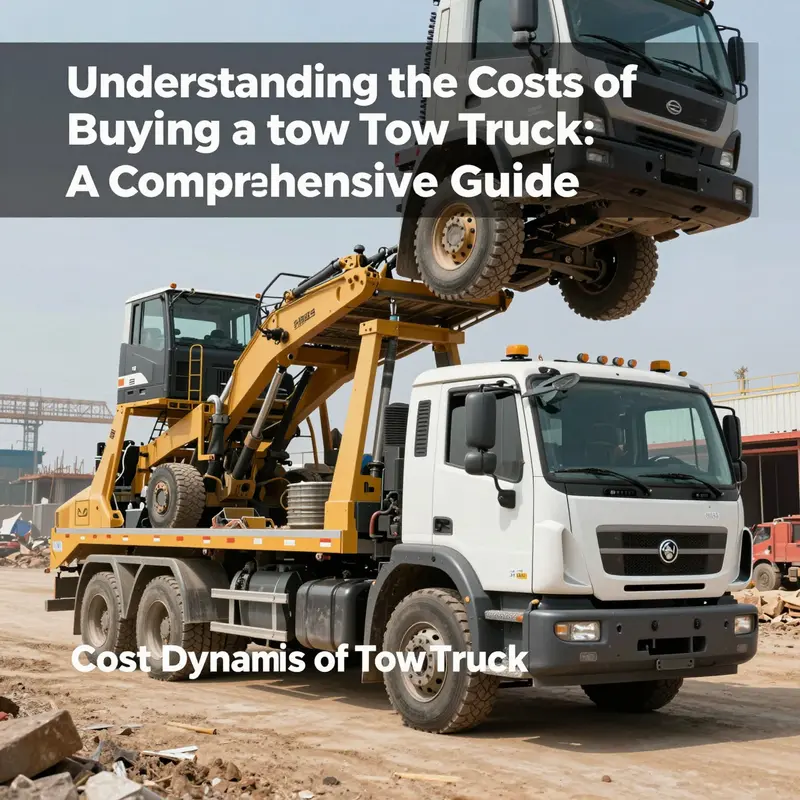
When a fleet owner compares heavy-duty tow trucks, the price tag on a listing is just the opening note in a longer cost melody. The loudest chord comes from the total cost of ownership, not the sticker price alone. Performance, reliability, and the service network that keeps a machine running over years of use shape the true economics of a purchase.
At the heart of the cost conversation is capacity. A 50-ton class wrecker typically lands in a price range that reflects frame strength, boom length, hydraulic power, and basic mechanics for hoisting and stabilizing vehicles. The lower end may start around forty thousand dollars, while more capable setups push toward seventy thousand or more depending on configuration and vendor add-ons. This category is not a single specimen; it includes lightweight variants for simple recoveries and more robust builds for challenging scenes.
Another major determinant is the level of technology embedded in the machine. Integrated hydraulic booms, wheel-lift systems, faster cycles, improved controls, and safety interlocks add to the upfront cost but can reduce field time and labor costs, improving total efficiency over the life of the asset.
Rotators add a new dimension. A rotator-equipped unit can price from roughly one hundred fifty thousand dollars up to three hundred thousand dollars or more, driven by the precision of the rotating boom and the complexity of the mounting system. For fleets serving municipalities, accident scenes, or challenging recoveries, the extra capability can translate into more jobs and faster incident resolution.
Flatbeds with tilt features sit in a separate price segment. New tilt-bed models are frequently found in the seventy-five thousand to one hundred fifty thousand dollar range, reflecting the value of safe loading, versatility for a wide range of vehicles, and reduced risk of damage during handling.
Geography and supply chains also shape the price. Proximity to steel, hydraulic components, and chassis production centers can affect material costs, lead times, and the ability to customize quickly. Lead times for complex configurations commonly span thirty to sixty days, depending on options and demand.
In practice, buyers should connect price considerations to mission profiles and service expectations. A lean setup may suffice for routine recoveries, while higher-end configurations may unlock new contracts or improve margins on specialized work. The overarching message is that price is a threshold, not a verdict, and the most economical choice over the asset life is often the one that balances upfront cost with maintenance, fuel, training, and the strength of the service network.
Priced for Recovery: Navigating New vs Used Tow Trucks and the Real Cost of Ownership
The decision to purchase a tow truck sits at the intersection of capability, reliability, and long term financial strategy. Buyers quickly discover that the sticker price is only the first line in a longer financial story. A basic light to mid duty model with a flatbed or simple winch can start in the mid twenty thousands, while more capable 5 to 8 ton machines with enhanced lifting features can push toward the upper twenty thousands. The real spread widens dramatically as capacity grows. Heavy duty work, 50 tons or more, can open into a broader price corridor, with entry level heavy wreckers often listed in the tens of thousands but more substantial configurations with advanced hydraulics and wheel lifts climbing into the high tens of thousands and sometimes beyond. When you move into integrated systems, such as robust hydraulic booms or multi function wheel lifts designed for complex recoveries, the price can climb to a range that reaches into the low to mid six figures, and in some cases beyond that for specialized setups. With that broader picture in mind, it is clear why many operators approach the market with a question that feels almost philosophical: should a business buy new or buy used, and how do those choices shape the total cost of ownership over time? New trucks carry the allure of cutting edge design, stronger warranties, and a cleaner compliance slate. A standard integrated wrecking unit might typically fall in the range of roughly seventy five thousand to one hundred fifty thousand dollars, depending on the exact configuration and the length of the chassis. For rotator units, which offer 360 degree booms and advanced stabilization systems, the ticket price often stretches from about one hundred fifty thousand dollars to three hundred thousand dollars or more. These higher upfront costs reflect several tangible benefits: reinforced hydraulic systems with greater lifting capacity, safer and faster operations, and equipment designed to meet the latest safety and emissions standards. The tradeoff is cash outflow that can affect immediate liquidity and borrowing capacity, especially for smaller operators or new entrants to the market. On the flip side, used tow trucks present a different calculus. The upfront price tag can be a fraction of new, sometimes offering a reliable platform for basic towing, local recovery tasks, or pilot operations while a company builds cash flow and market presence. The exact savings depend on age, usage history, and overall condition. However, there is no free lunch in buying used. Older vehicles can harbor hidden costs that accumulate quickly: more frequent repairs, higher fuel consumption, and the loss of newer safety features and regulatory compliance that may be required for certain contracts or public sector work. In some jurisdictions, environmental or safety standards have evolved, and older trucks may need costly retrofits to stay compliant. While used can deliver a compelling return on investment when the utilization is moderate and growth projections are cautious, it can also usher in more downtime and service interruptions if maintenance is not well managed or if critical components begin to fail. The spectrum of price, capability, and risk means a careful framework is essential. For an operation that handles high mileages, frequent multi vehicle recoveries, or complex scenes with weight and stability challenges, the economics can tilt in favor of new rotators or advanced wreckers. A newer vehicle often delivers lower maintenance expenses in the initial years, better fuel efficiency due to modern engine technology, and a reduced probability of urgent unscheduled downtime. New trucks frequently come with manufacturer warranties, which can cover major repairs and certain parts for a defined period. These warranties can translate into lower spare parts costs and less disruption to scheduled work—factors that matter significantly once a fleet is relied upon for continuous service. They can also ease insurance negotiations when contracts demand a high standard of reliability and risk management. For an operator who foresees a tighter budget but needs a dependable service vehicle, a well chosen used truck can be an attractive option. The key is a rigorous due diligence process: comprehensive inspections, verifiable service histories, and a clear plan for any necessary refurbishments. A used platform may require upgrades to meet current emissions standards or safety regulations, especially for fleets seeking to secure government or municipal contracts. Fuel consumption is another practical concern; older engines can be markedly less economical, effectively eroding the initial savings through higher operating costs over time. Yet, when a used unit is carefully selected and properly maintained, it can offer a solid return on investment, enabling a business to scale its fleet more quickly or allocate capital toward core growth needs without sacrificing service levels. Beyond the sticker price, maintenance and reliability, and depreciation and resale value matter. Maintenance costs tend to cluster around predictable life cycle milestones. A newer unit typically experiences lower maintenance in the first few years, as mechanical wear is lighter and parts are under warranty. As the vehicle ages, maintenance expenses begin to rise, but they may still be more predictable than with a high mileage used truck. Reliability directly impacts uptime, a practical driver of revenue. Downtime during peak periods can erode margins, so many operators calculate a maintenance buffer into their annual budgets. For some buyers, the bottom line is not just the purchase price but the expected availability of the truck during the year. A well maintained new truck often translates into fewer missed shifts, faster response times, and better customer satisfaction, all of which feed into longer term profitability. Depreciation and resale value are the other halves of the ownership equation. New trucks drop in value quickly in the first years, a factor that can influence financing terms and tax planning. On the resale side, a well kept unit with current safety equipment and updated emissions technology tends to hold value better. The higher upfront cost of new vehicles may be partially offset by slower depreciation and greater demand for compliant, low emissions fleets. Conversely, used trucks that have been refurbished to meet current standards can present attractive resale opportunities—especially if they have proven service records and have avoided major component failures. The decision to buy new or used then becomes a balance between the certainty and efficiency of a new unit and the affordability and flexibility of a well maintained used truck, all weighed against the company’s scale, growth trajectory, and risk tolerance. Financing options add another layer to the calculus. Cash purchases minimize financing costs and simplify ownership rights but tie up capital that could otherwise fuel growth in other areas of the business. Leases and loans can spread the cost over several years, preserving liquidity and potentially offering favorable tax treatment through depreciation and interest deductions. Leases, in particular, can provide predictable payment plans and the ability to upgrade at the end of a term, a compelling option for fleets that want to stay current with evolving recovery technology without bearing the risk of owning aging equipment. When evaluating financing, operators should consider the total cost of credit, including interest over the term, any balloon payments, and maintenance reserves that lenders sometimes require. A careful TCO analysis will compare the long term cash outlays of a cash purchase against the financing structure, factoring in maintenance, insurance, and potential downtime costs that are not always visible at the moment of sale. Another practical dimension concerns the operational footprint of the vehicle. The choice between a flatbed, a boom or a rotator, and the presence of wheel lift capabilities all shape not only the purchase price but also the daily efficiency of work. Integrated systems with robust booms and wheel lifts typically command higher upfront prices, yet their capabilities can dramatically reduce recovery time and the risk of vehicle damage during an operation. In addition, newer models may include advanced safety features, more precise hydraulics, better stabilizers, and improved ergonomics for operators. These improvements, while not always quantifiable in immediate revenue terms, contribute to a smoother workflow, fewer injuries on scene, and greater overall reliability for a growing fleet. For a small operator starting out, a carefully chosen mid range unit with essential safety features and adequate lifting capacity can meet early demand while keeping maintenance manageable. For a large fleet with diverse service zones, the higher end of the spectrum—while expensive—can deliver measurable advantages that compound across dozens or hundreds of annual recoveries. The market realities also shape the decision in a more practical sense. Price ranges observed in current listings illustrate a tiered market: light and mid duty trucks cluster around the lower end, with 5 to 8 ton units often priced in the mid twenty thousand range; heavier 50 ton class trucks sit in a higher band, where even basic configurations push into the forty to seventy thousand range. New models with robust integrated systems extend the price ladder significantly, and specialized rotators can reach well into the six figure territory. For reference, a straightforward comparison shows that new wreckers can be priced roughly from seventy five thousand to one hundred fifty thousand, while rotators with advanced capabilities frequently range from one hundred fifty thousand up to three hundred thousand or more. For buyers whose operations hinge on rapid response and minimal downtime, this premium can be a justifiable investment tied to insurance requirements, government contracts, or comparable performance obligations. For others, especially startups or limited service providers, a careful assessment of actual usage and maintenance capacity may justify pursuing a well kept used unit instead, with a plan to upgrade as the business scales. To ground this discussion in practical decision making, it helps to anchor the analysis in a concrete workflow. Start with a forecast of annual recoveries, typical scene types, and average response time targets. Then estimate fuel costs, anticipated maintenance, and the potential need for on scene safety equipment upgrades. Create two parallel models: one that assumes a new purchase with a standard warranty and another that assumes a well maintained used truck with an explicit refurbishment plan. Compare the two across a five year horizon, including resale assumptions and potential downtime. In many cases, the new option reduces downtime and repair risk sufficiently to improve service levels and client satisfaction, which can translate into higher revenue and easier access to favorable contracts. In other cases, a disciplined used purchase paired with a tight maintenance schedule and a buffer for unexpected repairs can deliver solid returns without overextending capital. The best path will align with the operator’s scale, coverage area, and strategic priorities. For a concise overview of current market pricing and to ground these numbers in real listings, see How Much Is a Tow Truck? External market signals further complicate the landscape but also illuminate potential opportunities. Real time pricing and listings across independent marketplaces reveal a vibrant secondary market, especially for well maintained units with documented service histories. For readers who want to monitor Pricing Trends, the broader market feeds provide useful guidance on when to pursue upgrades or trade in older assets. In the end, the purpose of the cost analysis is not merely to pick the cheapest option but to choose a configuration that delivers reliable performance, predictable maintenance, and acceptable levels of risk for the business plan at hand. That means weighing upfront cash outlays against ongoing costs, and recognizing that each fleet is a unique system whose optimal configuration reflects its operational tempo, service areas, and customer commitments. The result is a strategically chosen asset that harmonizes with a company’s broader objectives, enabling steady growth without compromising the core ability to respond when every second counts on a recovery scene. For operators who want to connect the dots between price data and practical buy decisions, a careful synthesis of market observations, maintenance planning, and financing options remains the most reliable compass in this evolving market. To support ongoing research and market awareness, industry observers increasingly rely on publicly accessible listings and price benchmarks. For those seeking external perspectives beyond the guide, real time market insights can be consulted at a broad marketplace resource: https://www.craigslist.org.
Tow Truck Pricing in Motion: Market Trends, Variability, and Real Costs for Fleet Buyers
Tow trucks sit at a dynamic crossroads of capability and cost. They are more than vehicles; they are critical assets for uptime and safety. Pricing is rarely a single-number story, and that variability is what makes every quote unique. The global market for tow trucks has shown notable growth, with price bands widening as new technologies, safety features, and service models enter the field. This context helps explain why a 5- to 8-ton flatbed may sit near a certain baseline while a fully equipped heavy-duty wrecker or rotating unit commands a higher premium.
The broad pricing landscape is often described in bands by capacity and configuration. Light- to medium-duty tow trucks, typically in the 5- to 8-ton range, anchor the market for routine recovery. Basic flatbeds can surface around USD 23,990, while a 5- to 8-ton winch model might fall in the USD 27,500–28,500 range. As capacity and sophistication rise, so too can the price, driven by drive trains, hydraulics, control systems, and the complexity of the chassis. Newer models with advanced booms, wheel-lift systems, and integrated fleet-management features can stretch toward USD 65,000–90,000 or more, depending on options and brand. Taken together, the entry-to-advanced spectrum for a tow truck can span roughly USD 24,000 to USD 90,000 and beyond.
Total cost of ownership overlays the sticker price with maintenance, insurance, uptime, and regional serviceability. Larger vehicles require more robust maintenance, heavier components, and sometimes higher insurance limits, all of which affect ongoing costs. Fleet managers also weigh downtime risk, fuel efficiency, and the availability of parts across their service footprint. These considerations convert a single purchase into a lifecycle decision rather than a one-time expense.
Regional and logistical factors add further nuance. Distance, access, seasonal demand, and regional labor costs can tilt pricing in meaningful ways. For example, cross-country routes and high-traffic corridors often exhibit price dispersion, while longer, more challenging routes can push quotes higher due to time, fuel, and specialty equipment needs. The literature on pricing notes that last-mile or door-to-door service can introduce additional charges for restricted access or complex staging, sometimes several hundred dollars above the base rate.
For buyers seeking clarity, the takeaway is that price is a moving target shaped by asset attributes, operational context, and regional realities. A structured approach—combining a roadmap of typical capacity bands with real-time quotes and transparent service terms—helps fleets budget more accurately and compare offers on a like-for-like basis. Tools such as price guides and live quoting platforms can compress the uncertainty that often accompanies large-ticket fleet purchases.
Final thoughts
Understanding the costs associated with purchasing a tow truck is essential for anyone considering this significant investment. From light to heavy-duty models, the range of prices reflects various features and capabilities needed by different users. By considering new versus used options and staying informed about market trends, prospective buyers can make educated decisions that align with their needs and budgets. Careful financial planning and research will ensure that your investment in a tow truck brings value, performance, and reliability to your operations.