
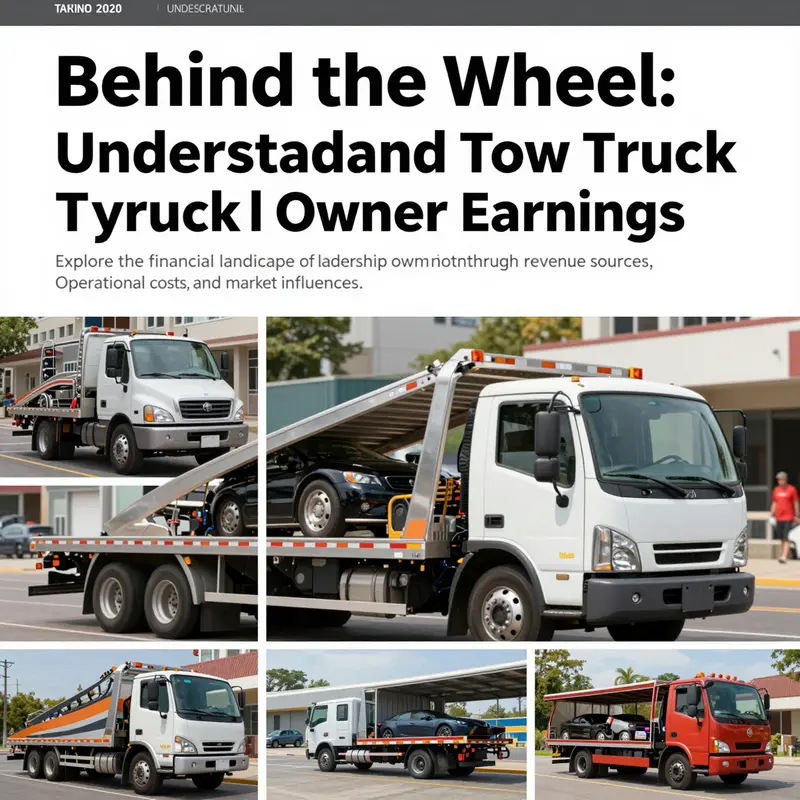
The world of towing goes beyond merely providing roadside assistance; it is a nuanced business model where profits can fluctuate significantly. For everyday drivers, residents, and property managers, understanding how much tow truck owners make reveals insights into the towing landscape, shedding light on the costs associated with their services and the financial dynamics at play in this industry. This article explores the various revenue sources for tow truck owners, delves into the operational expenses that can impact their bottom line, and examines how market conditions play a pivotal role in shaping their earnings. Together, these chapters will provide a comprehensive overview of the potential profitability and challenges faced by tow truck owners.
Chapter 1: Mapping Tow Truck Profits Through Revenue Streams and Costs
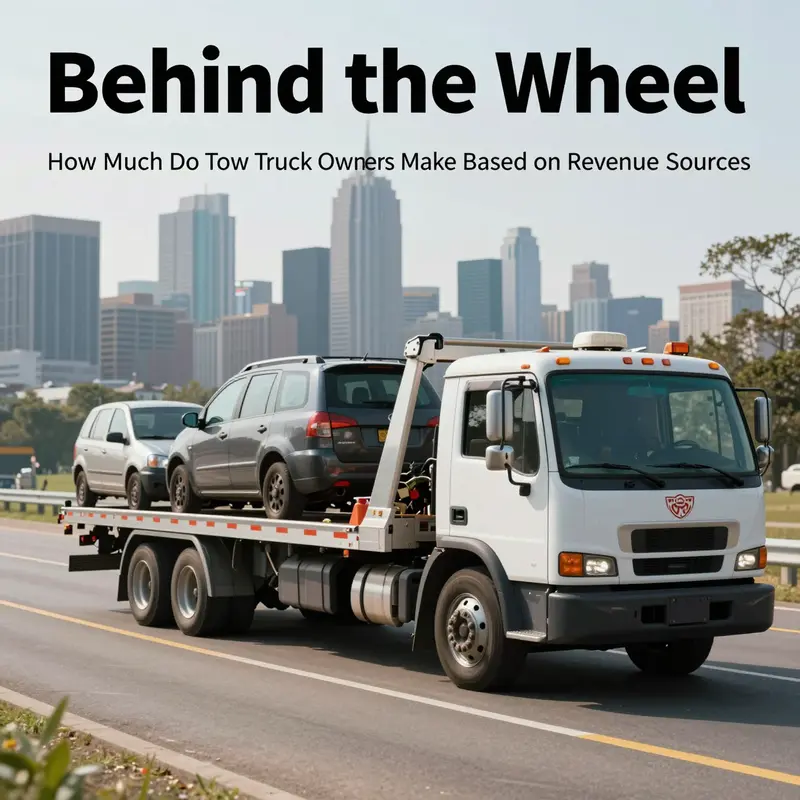
Tow truck ownership sits at the intersection of demand for service, fleet management, and financial discipline. It is a business whose profits come from multiple revenue streams, each shaped by location, market needs, and the operator’s choices about services, contracts, and fleet mix. The chapter outlines the main revenue sources, how pricing and costs interact, and the practical realities that determine what an owner can realistically take home.
The core revenue stream is the towing fee. Pricing covers basic roadside assistance, heavy recoveries, and commercial fleet support, and varies by geography, distance, vehicle type, and service complexity. Busy urban areas may support higher rates and faster dispatch, while rural markets may have lower base prices but longer engagements and fewer competitors. The revenue impact multiplies when a reliable dispatch network is paired with a reputation for safe, timely service.
Add-on services—lockouts, jump-starts, fuel delivery, tire changes—often carry high margins and can be delivered with or without a tow. In dense markets, customers value a single-call solution, and bundling services can raise effective revenue per call and improve fleet utilization.
Contracts with insurers, auto clubs, rental agencies, and municipalities provide predictable work and cash flow, reducing marketing spend while potentially charging lower margins. The trade-off is stricter performance and reporting requirements, but the predictability can improve planning for maintenance and staffing.
Internal routing and fleet efficiency multiply income, especially for operations with multiple trucks. Efficient dispatch, careful routing, and proactive maintenance reduce downtime and increase billable miles. The owner’s focus often shifts to scheduling, compliance, and favorable contract terms. Revenue is the numerator, but true profitability comes from controlling the cost side.
From a personal-earnings view, ownership income depends on market density, fleet utilization, and cost management. In many markets, a five-driver operation with several years of experience can achieve a wide range of net profit after expenses. The owner’s take-home is what remains after vehicle payments, maintenance, fuel, insurance, driver salaries, and overhead are paid.
Geographic context matters. Urban centers can command higher pricing and higher utilization, while rural markets demand tighter cost control and more aggressive utilization to preserve margins. Costs include vehicle maintenance, fuel, insurance, depreciation or financing, and manpower. Larger operations may leverage scale to reduce per-unit costs, while independent operators must manage every expense with discipline.
Practical steps for readers include building a plan that itemizes revenue streams and cost drivers, forecasting seasonality and demand, investing in reliable equipment with a financing plan that preserves cash flow, and developing a contract strategy that balances pricing, reliability, and compliance. Finally, track metrics such as utilization rate, revenue per call, maintenance cost per mile, and net income after operating costs to guide decisions. The broader takeaway is that tow truck ownership profitability emerges from the right mix of revenue, pricing, capacity, and disciplined execution.
Chapter 2: The Profit Puzzle: Tow Truck Owners Navigating Revenue, Operational Expenses, and Sustainable Earnings
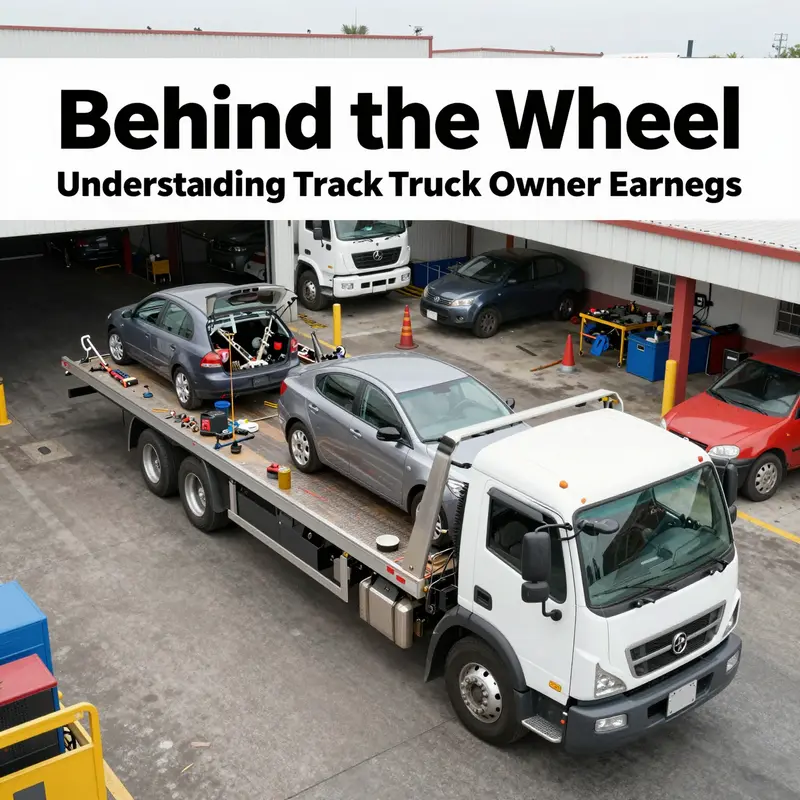
Tow truck ownership sits at the junction of service demand and disciplined business practice. Unlike drivers who earn a fixed wage, owners build a bottom line from gross revenue after subtracting a spectrum of operating costs. The income picture is not a single number but a landscape shaped by market density, service mix, risk, and how well the business is managed. In dense urban cores, the call volume can be steady and diverse, which can push top-line potential higher, yet that same density often drives higher insurance, labor, and regulatory costs. In rural or secondary markets, demand may be more episodic, and fixed costs can loom larger relative to revenue. The net result for owners hinges on a careful balance between revenue streams and the costs that keep the wheels turning.
Revenue in tow-truck ownership is rarely limited to a single line item. The core is towing services—short hops and long hauls, along with the occasional commercial contract that guarantees a steady stream of work. But the revenue mix extends far beyond the stock tow call. Storage and impound fees can become a meaningful contributor when vehicles linger in a lot after an incident or a failed transport arrangement. Vehicle recovery and accident-scene management can command premium pricing in the right conditions, especially when specialized equipment, trained personnel, and rapid response are involved. Some operators also win contracts with local fleets, dealerships, body shops, or municipalities, which can stabilize cash flow during seasonal lulls. In high-demand urban environments, these diversified revenue streams can combine to push annual gross figures well into the six-figure range and beyond, provided the operation scales appropriately and maintains service levels that keep customers returning.
In explaining the economics, it helps to separate gross revenue from net profit. Gross revenue is the top line—the total money that flows into the business from all services. Net profit, by contrast, is what remains after all expenses are paid. This distinction matters because it highlights where the money actually comes from and where it goes. The same market can produce two vastly different outcomes depending on cost discipline, workforce structure, and equipment efficiency. In the literature and industry benchmarks from 2026, experienced tow-truck owners working in competitive markets can report net profits in the range of approximately $80,000 to $150,000 annually or more, after accounting for overhead, labor, and operating costs. These figures are not guarantees, and they reflect a combination of volume, pricing discipline, and effective cost management rather than a single formula. They underscore a broader truth: the profitability of ownership is a function of both revenue opportunities and the efficiency with which those opportunities are converted into sustained earnings.
To understand how those earnings are generated, it helps to look at the practical levers a tow-truck business pulls on a daily basis. First, there is the obvious revenue from towing calls, but there are ancillary revenue channels that, when managed well, compound the income stream. Storage fees, when vehicles are held for recovery or insurance processing, can add a dependable layer of revenue. Additional services—such as on-site vehicle recovery after an accident, winching in challenging terrain, or providing incident-command support for complex scenes—can command premium rates and improve the overall utilization of the fleet. In larger markets, a single operator might leverage a small, reliable crew to handle multiple simultaneous calls, increasing capacity and reducing wait times for customers. The ability to absorb peak demand without sacrificing service quality is a competitive edge that translates into higher revenue with disciplined cost control.
On the cost side, the annual arithmetic is more complex than it seems at a glance. Vehicle maintenance and repairs are a recurring expense that can explode if preventive care is neglected. A breakdown in the middle of a critical job not only reduces productivity but can also drive customer dissatisfaction and loss of future business. Regular maintenance is a hedge against unexpected downtime and the reputational cost of missed commitments. Fuel costs are another volatile factor. Fuel efficiency and idle time become strategic decisions that can significantly swing the bottom line, especially when service area coverage spans large urban plus suburban zones. Insurance premiums are typically substantial for tow operators because of the exposure inherent in roadside and recovery work. The cost of coverage varies with location, fleet size, risk profile, and the specific types of services offered, such as heavy recovery or hazardous-material-related tasks.
Licensing and permitting, though sometimes a fixed annual line item, can fluctuate with regulatory changes and municipal requirements. Each jurisdiction may demand different operator licenses, vehicle registrations, and compliance checks. For owners who choose to lease or purchase multiple pieces of equipment, depreciation and financing costs add another layer of ongoing discipline. The essential towing equipment itself—winches, straps, wheel lifts, dollies, axle pads, and safety gear—represents a significant capital investment. Then there are communication systems, dispatch software, and a fleet management toolkit that streamline operations but add monthly or annual expenses. Light bars, sirens, and other visibility assets, while necessary for certain modes of operation, contribute to the ongoing cost of doing business.
All of these recurring and capital expenses interact with the service mix to determine profitability. A guide published in 2026 highlights that while gross revenue can swing widely by location, demand, and service type, the net profit margin often remains tight after overhead. The practical takeaway is clear: controlling costs while maintaining or expanding revenue streams is the fulcrum of sustainable profitability. Operators who invest in routing software, proactive vehicle maintenance, and insurance shopping can improve their bottom line even when market conditions are uneven.
Operational strategies naturally become the levers most owners pull to shape profitability. Routine maintenance is not a cosmetic measure; it is a core risk-management practice that reduces the probability of expensive, unscheduled downtime during urgent jobs. A well-maintained tow truck is less likely to stall during a critical recovery, enabling faster service, higher utilization, and improved customer satisfaction. This feeds into a virtuous cycle: reliable service attracts more calls, which boosts throughput without forcing an equivalent increase in fixed costs. Strategic equipment choices also matter. Investing in durable, multi-functional winches and versatile towing gear can lower replacement costs over time and expand the range of services an operator can offer. While upfront capital may be higher, the long-term payback manifests as lower maintenance and replacement expenses per job.
Labor costs reflect another major pressure point, particularly for owners who run crews rather than working solo. A larger team increases capacity and geographic reach but also adds payroll, benefits, and training obligations. Isolating staffing to meet peak demand can optimize costs, yet many operators benefit from outsourcing or flexible staffing arrangements during off-peak periods. In any case, labor costs must be weighed against service levels and the expected call volume. A small, highly efficient team may deliver high margins in a market with robust demand, while a larger operation bears more fixed labor costs but can capture larger contracts and maintain faster response times across a broader territory.
The variability in revenue is not merely a function of city size; it also hinges on the service mix and the quality of business development efforts. High-demand urban areas can support higher revenue per job, but the competition is fierce and pricing pressure can be intense. In rural or low-traffic regions, revenue opportunities may be fewer yet more predictable, with longer-term contracts and stable relationships with local businesses. The calculus of profitability therefore involves not just the volume of calls but the rate at which those calls are converted into profitable work and the efficiency with which those jobs are executed.
From a financial planning perspective, the key is to forecast with discipline. A practical approach starts with a realistic revenue map based on market research, current contracts, and historical call volume. Next, owners build a detailed expense ledger that captures fixed costs (lease payments, insurance, licenses) and variable costs (fuel, maintenance, overtime). The goal is to understand the contribution margin of each service line—how much money remains after direct costs are assigned to that line. For many operators, this means actively managing overages in fuel and maintenance, negotiating favorable insurance terms, and aligning labor to the actual demand patterns rather than the most optimistic projections.
Strategic decisions often revolve around three core levers: service diversification, capacity management, and pricing discipline. Diversifying services can stabilize revenue by reducing reliance on a single income stream. For example, offering commercial towing and fleet maintenance contracts alongside accident-response services can smooth out seasonal fluctuations. Capacity management is the art of aligning staff, equipment, and dispatch capabilities with anticipated demand. A fleet that is too large for the market wastes money on idle assets and higher insurance costs; a fleet that is too small risks losing business and eroding customer trust. Pricing discipline is a subtle but critical discipline. In strong markets, there is room to adjust pricing to reflect urgency, distance, and complexity, but it must be done with fairness and transparency to preserve long-term customer relationships.
The literature and practitioner reports emphasize that the recorded earnings for tow truck owners are highly location-dependent. In urban centers where call volume remains abundant, the opportunity exists to command higher margins, especially when combined with storage and recovery services. In other markets, the margins can be thinner, requiring more precise cost control or a broader service mix to keep the enterprise financially healthy. In all cases, owners are advised to invest in competitive insurance rates, prudent financing, and disciplined asset management. The takeaway echoed across sources is that profitability is not a given; it is earned through financial literacy, market understanding, and a constant willingness to optimize.
For those exploring the owner’s path, a practical signpost is to study the driver-earnings landscape as a reference point for market strength and potential caps on labor costs. A related analysis of driver wages can illuminate the broader ecosystem. For readers curious about driver compensation, see Tow Truck Driver Earnings for a comparative lens on how wages intersect with ownership economics. This comparison helps owners calibrate how much of the revenue should realistically flow to compensation, given the larger risk and investment profile that ownership entails. The goal is a sustainable spread where owners can fund growth, cover risk, and still enjoy a reasonable return on effort over the course of a business cycle.
In the end, the profitability of tow-truck ownership is a function of disciplined cost management, diversified revenue, and market-savvy operations. The 2026 cost guide underscores that the margin is often slim after the predictable overheads. But it also notes that improvements in routing efficiency, proactive maintenance, and strategic insurance procurement can meaningfully lift the bottom line. Operators who blend cautious budgeting with opportunistic growth—by expanding service lines, optimizing dispatch, and controlling equipment costs—can navigate the inevitable price volatility and demand cycles with greater resilience. The chapter on costs and margins thus points toward a practical philosophy: treat profitability as a dynamic target that evolves with market conditions, not as a static afterthought.
As you map your own path, consider how the pieces fit together in your locality. A high-demand urban market may justify a slightly leaner model of fixed costs if you can maintain a high utilization rate and solid average revenue per call. Conversely, a smaller market might reward a tighter, more focused service portfolio and tighter control over every expense, even if it means smaller call volumes. The core message remains consistent: profitability in tow-truck ownership does not hinge on a single lever but on a holistic approach to revenue diversification, cost control, and high-quality service delivery. Those who invest in the systems, practices, and partnerships that support consistent, reliable performance are the ones most likely to translate gross revenue into meaningful net earnings year after year.
Further reading and benchmarking guidance can help anchor expectations to real-world data. For a related comparison of driver earnings and how wage benchmarks relate to your ownership model, you can explore more about driver compensation here: Tow Truck Driver Earnings. The broader takeaway is to anchor planning in a clear understanding of both the top line and the expense envelope, then pursue disciplined optimization. External industry benchmarks and cost guides remind us that the pathway to sustainable profitability is forward-looking and data-driven, not reliant on a single lucky period or headline success. While the earnings landscape is diverse and locale-specific, the structural truths—diversified revenue, tight cost control, and disciplined asset management—remain consistent across markets.
External reference: https://www.towtruckowners.com/operational-costs-guide-2026
Profit in Motion: Navigating Tow Truck Ownership Across Markets and Seasons
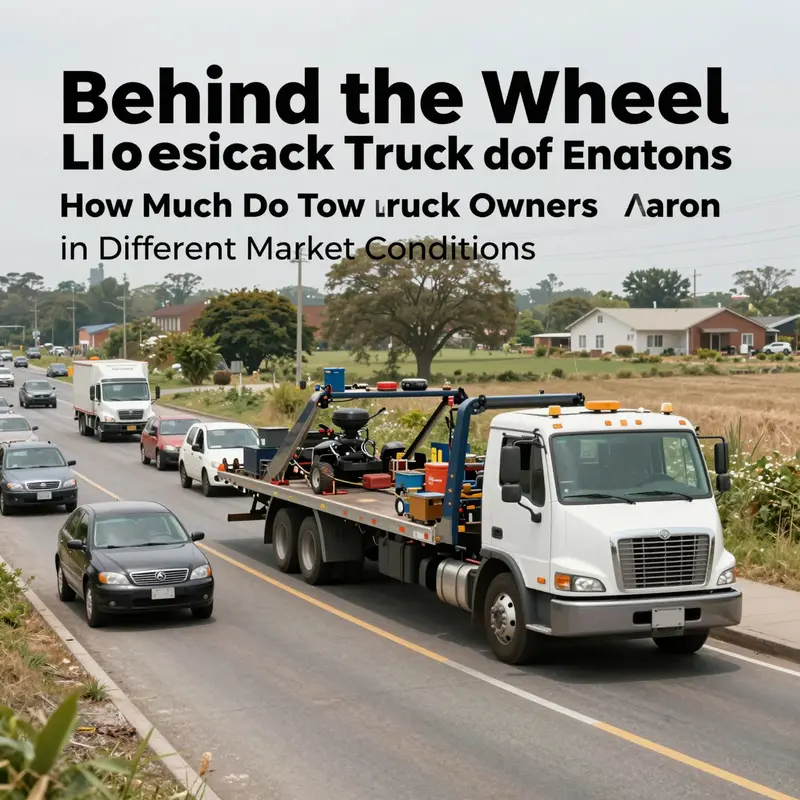
Owners know that the road to profitability for a tow truck business is shaped as much by market conditions as by the mechanics of the business itself. The same fleet that can roar into a bustling urban corridor at rush hour may struggle to stay steady a few miles outside a growing suburb or in a sparsely populated rural landscape. The logic behind tow-truck ownership rests on a simple, practical frame: revenue comes from a mix of services that can be scaled or diversified, while costs press in from many directions, from the vehicle that hauls the cargo to the insurance that guards against risk. What owners make, at the end of the day, is the net of revenues minus expenses, and that net is a function of both external demand and internal discipline. In markets where calls arrive with regular cadence—where traffic is dense, incidents frequent, and insurers and fleets keep a steady stream of contracts—the earning potential can be substantial. In quieter markets, or during economic downturns when fewer vehicles are involved in accidents, the same business must lean more on efficiency, niche offerings, and smart price tactics to sustain profits. This chapter traces how those forces interact, what owners can do to tilt the balance in their favor, and how earnings differ in ways that are predictable enough to plan for, yet flexible enough to adapt to shifting conditions.
Revenue for tow-truck owners clusters around several core streams. The most obvious is the fee charged for towing services themselves—sometimes a flat rate, sometimes a per-mile charge, and often augmented by aftercare charges such as storage, impound fees, or release fees. A well-run operation doesn’t rely on a single revenue line; it also monetizes ancillary services that fit naturally with towing work. Vehicle recovery after accidents, winching from tricky locations, roadside assistance for jump-starts or fuel delivery, and even event-based services like on-site vehicle recovery for dealerships or fleet customers—these add layers of income that smooth out the rhythms of the market. In places with high demand for rapid response, such as central business districts or zones with high vehicle ownership, the ability to deliver quick, reliable service creates a premium for speed and safety. In other markets, service breadth—offering storage for repossessed vehicles, management of repo auctions, or recovery services after storms—can become a critical differentiator that keeps revenue steady when pure towing demand wanes.
Yet every revenue stream is tethered to a structure of costs that eats into gross receipts. Overhead is the daily reality that can determine whether a business owner takes home a strong profit or a modest margin. Fixed costs include loan payments on trucks and equipment, insurance premiums, licensing and permits, and rent for any shop or lot. Variable costs ride along with every job: fuel, maintenance, tires, wear-and-tear on winches and tow equipment, and, if the business employs drivers, wages and payroll taxes. The more efficient the operation—fewer breakdowns, quicker turnarounds, better dispatching—the more favorable the math becomes. But efficiency itself has a cost. Upgrading to higher-capability tow trucks, adopting better diagnostic and dispatch software, or investing in specialized gear such as flatbeds can raise upfront and ongoing expenses, even as they can unlock higher-value contracts and safer, more versatile service.
This is where the market context matters most. In large urban centers, the volume of calls tends to stay high, even as competition increases. There is a premium for rapid response, trust, and consistent service quality, and this premium translates into higher average charges for certain services. In these environments, experienced operators often enjoy profit levels that reflect the scale and reliability of their operations. The same market realities can yield impressive earnings even after accounting for high fixed costs, because the revenue base is broad and the demand cycle is relatively predictable. In contrast, rural or economically mixed regions may experience sporadic demand, making it essential to broaden the service menu. An owner who pairs traditional towing with roadside assistance, short- and long-term storage, or post-accident management can create a more resilient cash flow. It’s a matter of aligning what the market needs with what the fleet can deliver, and then pricing that package in a way that reflects value while staying competitive.
The evidence across markets suggests that ownership income is not standardized. In some competitive markets, operators who manage to secure durable contracts with insurers, fleets, and local authorities can build a sustainable profit stream that, after all expenses, lands in a comfortable six-figure range. The precise figures depend on the region, the size of the operation, and the mix of services offered. It is not unusual for experienced owners to report annual profits in the range of eighty thousand to one hundred fifty thousand dollars or more in favorable markets, especially where demand is steady and the business leverages multiple revenue channels. This level of profitability typically comes from a combination of strong call volume, efficient scheduling, disciplined cost control, and strategic investments that expand service offerings without driving costs too far upward.
At the same time, the structure of compensation in the towing industry means there is a clear difference between earnings as an employee and earnings as a business owner. Job postings for tow-truck operators in several provinces highlight high hourly wages for skilled drivers, underscoring the value of expertise in this field. However, those figures reflect wages earned by workers, not profits retained by owners. The owner’s income is the residual after paying drivers, purchasing equipment, covering insurance, and servicing debt. That distinction matters because a strategy that maximizes driver pay does not automatically maximize owner profit. A business owner must balance competitive compensation with sustainable margins, choosing whether to hire additional staff, invest in newer equipment, or outsource certain functions to keep overhead in line with revenue.
The type of tow truck itself influences earning potential, though not in a purely linear way. Flatbed tow trucks, for instance, are more expensive to acquire and operate but offer greater versatility. They are often preferred for transporting luxury or high-value vehicles and for securing contracts with dealerships, insurers, and certain fleets. In markets where these contracts are common, the higher rates commanded by flatbeds can translate into higher profitability, provided the owner can sustain the higher maintenance costs and keep utilization high. Smaller, simpler trucks may lower the barrier to entry and keep ongoing costs modest, but they can limit the scope of jobs the business can perform. This can depress revenue potential if the market rewards specialized capabilities. A prudent owner weighs the upfront and ongoing costs of equipment against the job mix they expect to win in their market, then models pricing and capacity accordingly.
Adaptation is the throughline that connects success across diverse market conditions. The capable tow-truck owner recognizes that earnings are as much about relationships and process as they are about the trucks themselves. Building steady relationships with auto clubs, insurers, and law enforcement agencies can yield recurring work and predictable revenue streams. It also helps to think beyond pure towing. A diversified portfolio—comprising rapid-response towing, accident-scene management, vehicle recovery, storage, and even light repair or locksmith services in certain jurisdictions—can turn macro market shifts into manageable micro opportunities. The owner who learns to price contracts with an eye toward long-term value rather than one-off profit can weather downturns more effectively. This approach requires disciplined financial management: precise budgeting, regular cash-flow analysis, and frequent reforecasting in response to changing call volumes and pricing pressures.
An essential practical element of planning is understanding monthly overhead in real terms. Recurring costs like loan payments, insurance, and permits will eat into revenue, even when call volume looks healthy. The remaining margin, then, is a function of how efficiently the operation converts revenue into profit. A narrative common among established operators is that overhead can become a constraint when revenue stalls. If the monthly fixed costs consume a large share of revenue, even a high volume of jobs may not yield substantial take-home pay. This insight points to the importance of cost discipline and the willingness to adjust the business model in response to market signals. It also reinforces the value of forecasting—what do bills look like for the next quarter if demand rises or falls? What if a permit renewal costs more than expected or insurance premiums spike? The owner who asks those questions ahead of time is more likely to protect profits when the market swings.
The literature on ownership costs emphasizes a careful, data-informed approach to capital decisions. Prospective owners are urged to study ongoing costs, understand depreciation, and build a buffer for lean months. In this sense, the decision to acquire a new flatbed or to expand the fleet is not merely a price decision but a strategic choice about capacity, response time, and contract eligibility. Those choices shape the revenue potential they can unlock in markets with different demand patterns. A well-structured business plan also considers the cost of capital and the expected rate of return on investment. If a new asset promises a faster response time or access to higher-value contracts, the trade-off may be worth it—but only if the anticipated incremental profit covers the cost and the risk associated with capital expenditure.
An operator’s path to profitability is rarely linear. There are ebbs and flows, influenced by weather, seasonality, and broader economic cycles. For example, winter storms may trigger a surge in demand for emergency towing and recovery, while post-holiday periods might see a lull. A mature business keeps cash reserves, uses flexible staffing models, and maintains a diversified service mix to ride these cycles. Insurance requirements may tighten during downturns, increasing fixed costs at a time when revenue is under pressure. In such moments, a prudent owner might temporarily adjust pricing, streamline dispatch, or emphasize higher-margin services to protect profitability. The reverse is also true: in periods of strong demand, there is a temptation to scale rapidly, which can backfire if it outpaces the ability to manage costs or maintain quality. The most resilient owners balance growth with discipline, investing in capabilities that deliver enduring value rather than chasing short-term gains.
To translate these observations into practical guidance, consider a hypothetical owner in a mid-sized city who manages a small fleet of two to three tow trucks. The operator focuses on three revenue streams: core towing, storage and impound-related services, and professional accident-scene management for local insurers and fleets. They also cultivate a relationship with a regional auto club to maintain a steady flow of callouts. The business plan includes a moderate level of debt for a newer flatbed and a policy of keeping overhead under a defined percentage of projected revenue. They price services to reflect time and fuel costs, while applying a premium for rapid-response capabilities. They track utilization rates, average revenue per job, and average job duration, then adjust staffing and scheduling to optimize margins. They reserve funds for seasonal slowdowns and potential capital expenditures. In this scenario, when market conditions are favorable—urban density, consistent call volume, and insured demand—the owner can achieve a robust net profit after expenses. When conditions become more challenging, the same owner can lean on service diversification, disciplined cost control, and scalable operations to preserve profitability. The protagonist of this chapter is not a hero who beats the market with luck but a strategist who adapts to the terrain, uses data to guide decisions, and preserves the core promise of reliability that customers value.
For readers who want to frame their own clean path to profitability, a practical starting point is to examine the intersection of demand, capacity, and cost in their local market. The goal is not just to estimate potential earnings but to build a dependable, repeatable model for revenue and expense that can withstand market volatility. A solid model will include scenarios that reflect best-case, typical, and worst-case conditions. How many jobs must be completed each week to cover fixed costs? What level of utilization yields a target profit after paying drivers and maintaining equipment? How do changes in insurance costs alter the tipping point between profitability and loss? These questions are not abstract—they anchor planning in reality and guide decisions about equipment acquisitions, staffing levels, and service offerings.
Anchoring this discussion in published guidance helps ground expectations. In this vein, prospective owners should study comprehensive resources that unpack ownership costs and capital planning. They offer a structured way to think about the financial architecture of a tow-truck business, including the balance between debt service, operating expenses, and revenue growth. While the numbers vary by market, the framework is universal: map costs, forecast demand, run sensitivity analyses, and adjust the business plan as the market evolves. If you want a detailed, accessible breakdown of ownership costs and planning considerations, a well-regarded external resource provides a structured walk-through of these topics. It lays out the components you’ll face when turning a tow-truck operation into a sustainable business, from vehicle depreciation to insurance to labor costs and beyond. Understanding Tow Truck Ownership Costs: A Complete Guide for Prospective Owners offers a rigorous starting point for building a financially sound plan.
For those who want to explore how the business begins and scales, a related internal reference exists that helps outline the mechanics of ownership and growth. The idea is to connect practical financial planning with actionable steps you can take to structure a tow-truck company that is capable of thriving in diverse market conditions. A helpful route is to consider the process of forming the business, securing capital, and laying the groundwork for contracts with insurers and fleets. When you’re ready to take that step, an in-depth guide on owning and operating a tow-truck company can provide the critical road map. How to Own a Tow Truck Company can be a valuable resource as you translate the concepts in this chapter into a concrete, executable plan. How to Own a Tow Truck Company provides a focused perspective on the structural decisions that support profitability, from fleet composition to pricing strategy to regulatory compliance.
In sum, tow-truck ownership profitability is not a fixed destination but a moving target shaped by where you operate, how you structure your services, and how effectively you control costs. Urban markets with dense call volume and premium pricing offer higher income potential, but they come with higher fixed costs and more complex competitive dynamics. Rural or less dense markets demand broader service offerings and tighter cost control to keep profit margins viable. The best owners will blend market insight with disciplined financial planning, deploy a diversified service mix, and maintain the flexibility to adjust as conditions change. They will also build strong client relationships and invest in capabilities that create durable value. In the end, earnings depend less on luck and more on the quality of the business model, the efficiency of operations, and the willingness to adapt to the market’s tempo. The roadmap is clear: understand costs, diversify services, price carefully, manage cash flow, and nurture the contracts that provide steadiness in the long haul.
External resource note: For a detailed breakdown of ownership costs and planning considerations, consult the resource linked above. This external guidance complements the strategic insights offered here and can help you calibrate expectations to your local market realities.
Final thoughts
The financial journey of a tow truck owner is shaped by various factors, including revenue sources, operational expenses, and market dynamics. Understanding these elements helps clarify the earning potential within the towing industry. While some owners can see profits ranging from $80,000 to over $150,000 annually, others may face challenges that impact their ability to achieve similar success. For those looking to enter this business, it is essential to conduct thorough market research and financial planning to navigate the complexities of the industry effectively.