
Understanding towing capacity is crucial for truck owners and drivers, especially those relying on one-ton trucks for heavy-duty tasks. The distinction between payload and towing capacity can significantly impact how efficiently these vehicles perform in real-world scenarios. This comprehensive guide examines what defines a one-ton truck’s abilities, delving into factors that influence towing capacity, comparing well-known models, and emphasizing safety precautions. Whether you’re a commuter, property manager, or someone looking to maximize the capabilities of your truck, you’ll find valuable insights in each chapter.
From Payload to Tow Power: Demystifying What a One-Ton Truck Can Tow
When someone asks how much a one-ton truck can tow, it’s easy to picture a single number on a placard or a door sticker. In reality, the answer hinges on two capacities: payload and towing capacity. They share a chassis but serve different jobs, and understanding both helps you plan loads and trailers safely.
Payload is the maximum weight the truck can carry inside the cabin and bed, including people and gear. In many one-ton configurations, payload typically lands around 3,000 to 4,000 pounds, depending on model and options. Towing capacity, by contrast, is the weight the truck can pull behind a trailer. This depends on engine, transmission, axles, brakes, and cooling, and is typically higher than payload. For modern full-size one-tons, towing capacity often ranges from the mid-teens to the mid- to high-20,000 pounds range when properly equipped.
Two key cautions: you don’t add payload and trailer weight together to get a total. You must account for curb weight, passengers, cargo, and tongue weight, and ensure the combined load stays within the GCWR (Gross Combined Weight Rating). Respecting GCWR helps maintain safe braking, steering, and acceleration. Always consult the exact model’s specs for precise numbers and consider the trailer’s own weight and tongue weight when planning a haul.
Untangling the Load: The Real Factors That Determine One-Ton Tow Capacity
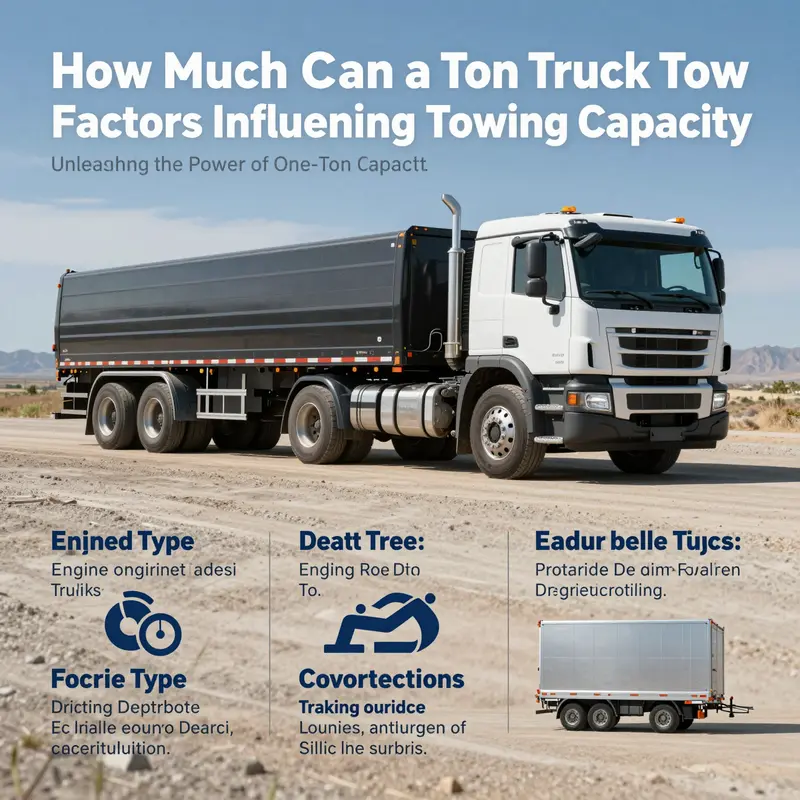
The phrase one-ton truck often conjures an image of a vehicle built to haul big payloads and pull heavy trailers, yet the truth about towing capacity is less intuitive than the name suggests. Many drivers assume that the weight a truck can haul inside its bed equals how much it can pull behind it, but towing power sits on a different axis of capability. Payload—the weight you can carry in the cargo bed—usually sits around a thousand pounds for many one-ton configurations. Towing capacity, however, climbs to a far higher figure, but the exact number depends on a web of interdependent components that must work in concert. To understand why a single model can tow anywhere from a modest load to a truly substantial one, consider the essential players: the engine’s torque, the drivetrain layout, the transmission and gearing, the axle setup, and the braking and cooling systems. In practice, these elements form a chain whose weakest link governs the true towing limit. When you read a specification that lists a maximum towing capacity, it is not a blanket invitation to tow that weight in every situation. It is a rating that reflects the lowest-rated element in the drivetrain under test conditions, and it presumes proper configuration, compliant trailers, and a safe operating environment. With those caveats in mind, the towing figure becomes less of a single number and more of a dashboard of capabilities, each component calibrated to handle different aspects of the task.
Engine design sets the stage for what a one-ton truck can pull, but it does not act alone. A diesel engine, with its characteristic high torque at low RPM, often delivers the kind of pulling power that a gasoline engine can only approach at higher engine speeds. The result is a trailer pull that feels robust at highway speeds and steady on grades. Yet the torque curve alone does not determine the final number. The way torque is delivered—whether it comes on early via a turbocharged setup or peaks later because of a different turbo or compression strategy—matters for how easily the truck maintains speed and control when facing long grades or rough terrain. The same principle applies to power output: a high peak horsepower can help accelerate a heavy load, but sustained towing—especially over long climbs—leans on torque consistency and cooling capacity more than outright peak numbers.
Drivetrain configuration is another decisive factor. A 4×4 system adds capability, not just through added traction but through the complexity of additional mechanical components that can influence efficiency and heat. In towing scenarios, four-wheel drive can provide safer, steadier control in slick or uneven conditions, but it can also add parasitic losses that reduce peak towing numbers by a modest margin. A two-wheel-drive setup might edge out in some ratings due to lower drivetrain losses, but it can struggle on grades where traction and cooling become critical constraints. The combined effect of engine output and drivetrain layout is what yields a usable, real-world towing experience. The transmission plays a supporting but indispensable role in this equation. A heavy‑duty or transmissions-optimized configuration keeps engine revs within a favorable range as the trailer weight increases, smoothing shifts and preventing overheating that can sap power mid-tight climb or long downhill stretches. In modern heavy-duty pickups, transmission design is tailored to manage the heat and stress of sustained towing. Cooling capacity—radiators, intercoolers, and transmission coolers—serves as the quiet guardian in the background, allowing a heavy trailer to be pulled for longer distances without triggering protective power reductions. Without adequate cooling, the same torque and gearing that help you pull could overheat and force a reduction in towing capacity over time. The axle ratio integrates with gearing choices to shape how quickly the engine can deliver the necessary torque at the wheels. A taller ratio can improve fuel economy and increase pulling power at the start of a pull, but it may also limit top speed and place higher thermal demands on the drivetrain at highway speeds. Conversely, a shorter axle ratio can boost takeoff performance and hill-climbing ability but at the cost of higher RPMs and more engine heat at cruising speed. The resulting towing performance emerges from the balance among engine torque, transmission strategy, and axle gearing.
When you add traction control, suspension stiffness, and braking capacity into the mix, the picture becomes even more nuanced. Heavy towing demands a resilient brake system capable of sustained performance, not just a quick stop. Likewise, the suspension must be tuned to handle the sway and weight transfer that occur when towing a large trailer, especially at higher speeds or on uneven surfaces. A robust hitch system and a trailer’s own weight distribution are also pivotal, shaping how weight is transferred to the tow vehicle and how predictable the handling remains when braking or cornering under load. In this context, the manufacturer’s ratings come from a careful assessment of the entire chain under standardized conditions. If any link—the transmission, the axles, or the cooling system—appears at its limit, the overall towing capacity is reduced to that safer, lower value. This is why two trucks that share a class name can exhibit noticeably different towing numbers when configured for different applications or when tested with different trailer types and weights.
The practical upshot of all this is straightforward: most modern one-ton trucks, even when labeled with similar class designations, typically offer a towing range that sits between roughly 12,000 and 16,000 pounds. Some models tailored for heavier duty or with specialized equipment can push beyond this band, but the margin comes with tradeoffs in payload, fuel economy, and the wear patterns of components that bear heavy loads for extended periods. To avoid surprises, it is essential to consult the exact specifications for the specific configuration you’re considering. The stated towing capacity is a ceiling, not a blanket permission, and it assumes a properly matched trailer, correct hitch setup, and adherence to recommended towing practices. It also presumes that the trailer’s weight distribution is properly managed so that the load on the hitch remains within safe limits. When evaluating a truck’s towing ability, do not confuse the bed payload with the trailer tongue weight—both matter, but they affect the vehicle in different ways, and exceeding either can compromise steering, braking, and overall stability. A thousand pounds in the bed is a far cry from a trailer that weighs the same while applying a substantial hitch weight that shifts the truck’s weight balance.
For anyone planning a real-world haul, the takeaway is clear: the maximum towing capacity you see on a spec sheet is the product of a carefully engineered balance among engines, drivetrains, transmissions, axles, and cooling systems, all designed to work together under tested conditions. The numbers exist to guide safe operation and to help you plan your load with a margin for reliability and safety. In the end, the exact number for your truck will depend on how it is built and configured, which is why the manufacturer’s guidelines and the official specification sheet remain your most reliable compass. When you’re weighing a particular trailer, consider not just the total weight, but how that weight is distributed and how your truck’s setup will handle the combined load in motion. For a practical sense of your own truck’s limits, see this guide how-much-can-my-truck-tow.
If the math still feels abstract, remember that the towing capacity is a ceiling shaped by the weakest link in the drivetrain, not a universal permit to haul every heavy load. A trailer that weighs less than the limit but is poorly balanced or incorrectly connected can still overwhelm the system, leading to unsafe handling or accelerated wear. The same trailer, with proper weight distribution and an appropriate hitch, is far more likely to ride smoothly within the rated capacity. This is why high-quality towing practice emphasizes pre-trip planning, including trailer weight checks, hitch and brake controller verification, and a deliberate approach to speed, acceleration, and braking. The practical influence of these factors is not just about meeting a number; it’s about maintaining control and ensuring the tow remains within the vehicle’s cooling, braking, and chassis tolerances over the course of a trip.
Ultimately, the specifics you need will be found in the official specification sheets for the exact model and configuration you’re considering. This ensures you aren’t relying on anecdotal impressions or broad class averages when deciding how much to tow on a given outing. The broad range of 12,000 to 16,000 pounds captures the typical envelope for many modern one-ton trucks, but it does not capture the full diversity of configurations that exist in the market. If your plan involves consistently towing toward the upper end of any spectrum, it is prudent to verify with the manufacturer’s data for your exact build and, where possible, to obtain a load test or on-road evaluation under controlled conditions. The aim is to match the vehicle’s capabilities with the realities of your trailer’s weight, distribution, and intended routes, ensuring a safe, efficient, and dependable towing experience.
As you prepare for future hauling decisions, keep in mind that the most reliable source of exact numbers remains the official specification sheet for the exact truck you own or plan to acquire. The numbers you see in brochures or online catalogs are baselines, not guarantees for every possible scenario. Informed planning, proper configuration, and attentive maintenance together shape a one-ton truck’s true towing potential and, more importantly, the safety and reliability of every journey you undertake with a heavy trailer in tow. For broader context on the performance envelope and to explore related considerations in heavy-duty towing, you can consult external references that summarize standard guidelines and practical best practices. External resource: https://www.ford.com/trucks/
Tow Power in Context: How Much Can a One-Ton Truck Really Tow, and How Different Setups Change the Answer
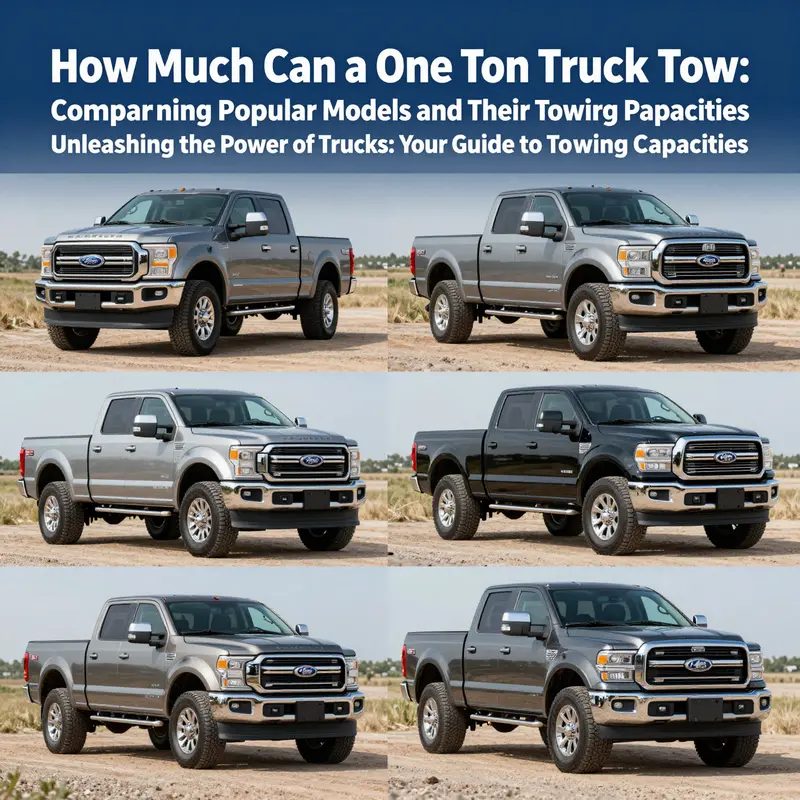
A one-ton truck sits at a curious crossroads in the world of hauling. On the surface, its name suggests a straightforward limit: a ton of payload to carry in the bed. In truth, that payload figure—usually around 1,000 pounds—tells only part of the story. When people talk about how much a one-ton can tow, they’re not simply adding up ballast in the cargo box. They are navigating a larger, more nuanced calculation that weighs the truck’s engine torque, drivetrain, suspension, hitch, and how the weight is distributed between the vehicle and the trailer behind it. The distinction between payload and towing capacity matters because it shapes decisions about safety, braking, and stability. In practical terms, one-ton class pickups are built to haul heavy trailers, and their towing capacities stretch far beyond their bed payload, but exact numbers depend on configuration and setup.
If you chart the landscape of towing with a one-ton, you’ll see a broad range rather than a single fixed point. A typical one-ton can tow substantially more than its payload suggests, with common upper bounds ranging from the mid-teens of thousands of pounds to well past thirty thousand pounds, given the right equipment. Those upper limits exist only under ideal conditions: the correct engine, transmission, chassis tuning, and hitch system designed to pull without bias or sway. The raw horsepower and torque are only part of the equation; hitch type, suspension, and the weight the trailer adds all matter relative to the truck’s curb weight, passengers, and cargo.
A core concept that anchors every towing calculation is the Gross Combined Weight Rating, or GCWR. This rating encapsulates the total weight of the fully loaded truck plus the weight of the trailer and its cargo. The formula is straightforward in form: Towing Capacity = GCWR − Curb Weight. Curb weight includes fluids, fuel, standard equipment, and any passengers. The higher the curb weight, the lower the available towing capacity for a given GCWR. Conversely, a lighter configuration can push the figure higher, all else equal. This is not a license to ignore payload, since the trailer’s tongue weight and gross trailer weight also affect handling, braking, and stability.
The one-ton category is especially relevant for its flexibility: these trucks can be configured with two- or four-wheel drive, different cab and bed options, and engines tuned for torque and reliability. The engine choice—turbocharged gasoline or diesel—impacts torque delivery and sustained pulling power. A diesel tends to provide high torque at low speeds, advantageous for moving heavy trailers from a standstill and climbing grades. Yet the final towing number on a spec sheet also depends on transmission, axle ratio, suspension, and towing aids such as upgraded brakes or reinforced hitch systems. The hitch choice matters: bumper hitches, goosenecks, or fifth-wheel hitches distribute load differently and affect towing capabilities and stability. In practice, the published upper ends depend heavily on trailer type and how well the hitch is matched to the truck’s chassis.
Real-world numbers emphasize ranges rather than fixed figures. In ideal setups with proper suspension, tuning, and hitch, upper ends can approach fifteen to thirty thousand pounds, or more, depending on configuration and trailer type. Fifth-wheel setups can push capacity higher, while gooseneck configurations in four-wheel drive can also yield substantial figures. These numbers illustrate potential, not daily reality. The exact towing capacity shifts with gear choices and the truck’s own weight. The more you know about your build, the better you can plan a safe, efficient towing plan. Always consult the manufacturer’s specifications for your exact configuration, including axle ratios, engine options, and hitch configurations, before towing.
For those seeking a practical path, start with the GCWR and the truck’s curb weight, then subtract to estimate a ceiling. Weigh the vehicle with a full tank and passengers to get an accurate baseline. Remember to keep a margin for safety to account for wind, hills, trailer sway, braking efficiency, and tire load ratings. Regular inspections of hitch connections, wiring, and braking systems are essential. The goal is a balance of power, stability, and predictable braking, not simply the heaviest possible load.
If you want more precise figures tied to your build, consult resources that translate specifications into real-world scenarios. The combinations of engine, transmission, axle, and hitch you choose will determine where your rig sits on the spectrum between safe operation and maximum capability. A final note: the numbers aren’t the same across all trailers; trailer type and tongue weight can significantly alter handling and stability, so plan for safety and controllability above all else.
Tow Boundaries: Decoding What a One-Ton Truck Can Safely Tow
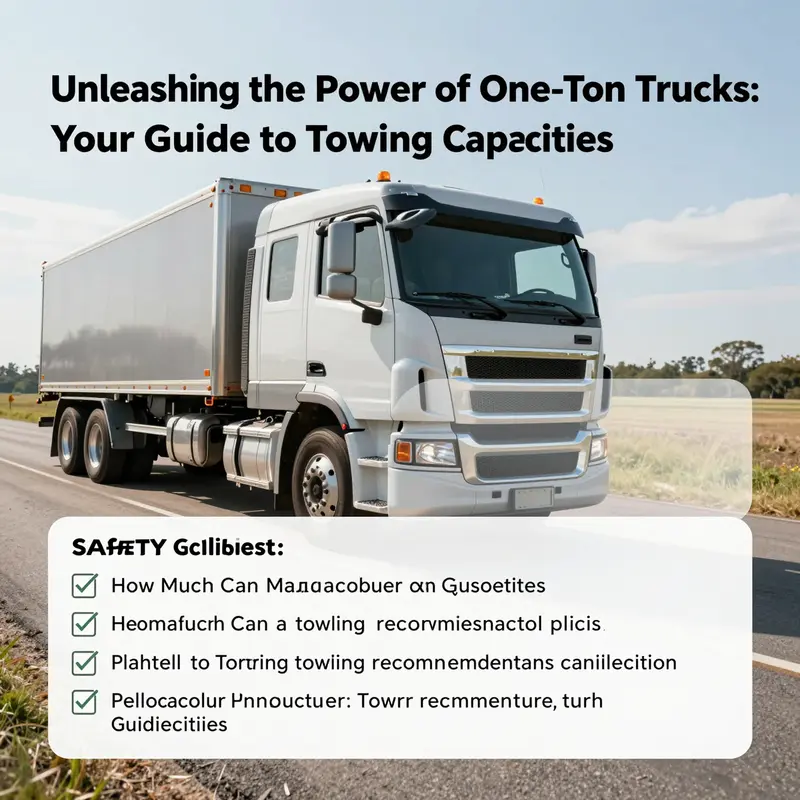
When people ask how much a one-ton truck can tow, they are usually chasing a straightforward number. But the truth is subtler. A one-ton pickup is defined by its payload capacity—roughly what it can carry in the bed. That payload sits in front of the driver as a constant reminder that the same chassis must also haul a heavier load behind it when towing a trailer. The distinction matters because a truck’s ability to pull a trailer is governed by a different set of limits than what it can carry inside its cargo box. In practical terms, the towing capacity is a negotiated result among the engine, the transmission, the drivetrain, the hitch, and the vehicle’s overall design. The same truck that can lug a heavy payload might meet different constraints when it attempts to pull a trailer, especially as weight shifts with hills, wind, and road grade. This is why owners manuals and manufacturer towing guides exist: they translate complex engineering into guardrails you can follow on the road.
For most one-ton pickups, industry data and manufacturer guidance converge on a general range for towing that is widely understood by technicians and drivers alike. A typical one-ton, depending on its exact configuration, is engineered to tow somewhere in the neighborhood of 12,000 to 18,000 pounds. That range reflects the fact that a single model can be tuned with different engines, transmissions, axles, and towing packages. When equipment is added—a heavy-duty transmission cooler, an upgraded differential, or a more capable hitch—the towing ceiling can rise, sometimes pushing into the low 20,000s for highly equipped setups. Yet those higher figures are not universal; they depend on the precise build, the trailer’s braking system, and how the tongue weight and hitch rating interact with the truck’s rear axle and frame. The safest approach is to treat the 12,000–18,000 pound band as the starting point, then verify the exact number for the specific truck in use. The manufacturer’s maximum towing rating, as listed in the owner’s manual or on the certified specification placard, should always govern any towing plan. If a reader wants model-specific clarity, they can consult the official towing resources or the vehicle’s manufacturer documentation to confirm a precise rating for the exact configuration.
The mechanics behind these numbers hinge on a few core constraints. First, the engine and transmission must deliver not only raw power but sustainable performance under load. Pushing a trailer up a hill demands sustained torque, adequate cooling, and a transmission able to handle heat without shifting erratically or slipping into limp mode. Second, the braking system must be capable of bringing the combined mass to a stop safely. The presence of a trailer adds inertia, which compounds stopping distance and can overwork the truck’s own brakes if the setup is misaligned or under-specified. Finally, the rear suspension and chassis must remain stable under load; without proper weight distribution and hitch setup, the vehicle can pitch and yaw, making control difficult and increasing the risk of tire or axle damage when negotiating curves or rough surfaces. These safety margins are not negotiable; they are baked into the way manufacturers design these trucks and then tested under strict standards.
Understanding the numbers requires a moment of synthesis. Tow ratings are not a single data point to memorize; they are a cross-check among several overlapping measurements. The figure you see for “towing capacity” often assumes a fully fueled truck, a standard driver, and a trailer with brakes on both axles. It also presumes a certain hitch class and a properly distributed tongue weight. Tongue weight—the downward force that the trailer exerts on the hitch—typically should be about 10% to 15% of the total trailer weight. This is not just a math exercise; it is a practical rule of thumb that keeps the trailer stable, reduces the risk of trailer sway, and helps ensure that the truck’s rear axle bears an appropriate share of the load. If the tongue weight is too light, the trailer can fish-tail; if it is too heavy, the rear suspension can saturate, reducing steering control and braking efficiency. For a 15,000-pound trailer, for example, the tongue weight should be between 1,500 and 2,250 pounds. Those numbers must be matched to the hitch’s rating and to the truck’s rear axle capacity to prevent exceeding the vehicle’s design limits.
To translate these principles into practice, the safest path is to start with the manufacturer’s stated limits. The owner’s manual is the most reliable source of these limits, followed closely by the vehicle’s specification placard and the official manufacturer website. The language can be specific: terms like GCWR (gross combined weight rating), which combines the weight of the vehicle, fuel, passengers, cargo, and trailer, are essential to understanding how much total mass the truck can pull down the road without compromising safety margins. A misinterpretation here is easy but costly; towing a trailer that pushes the GCWR can lead to performance problems that surface as overheating, delayed braking, or reduced steering response. The chain from rating to reality is only as strong as the weakest link in the setup. That means a yardstick approach: if any component—hitch, ball, wiring, or braking system—limits the safe maximum, then that limit should dictate the practical towing plan, not the theoretical maximum printed in a brochure.
In the real world, the variations among configurations matter more than a single headline figure. A one-ton truck with a robust towing package, a heavy-duty rear axle, and a high-capacity hitch may perform closer to the upper end of the range when the trailer is equipped with dependable electric or hydraulic brakes and a properly distributed weight profile. Conversely, a more modest configuration without upgraded cooling or a heavy-duty hitch will come in lower, even if the vehicle’s chassis appears capable on paper. The variability underscores why a careful, methodical approach to planning is essential. It also explains why the literature cautions drivers to account for not just the label on the hitch or the bumper sticker in the window, but the total system in which the tow occurs: the engine, the transmission, the braking system, the tires, the hitch, and the trailer’s own braking, lighting, and structural integrity.
For model-specific guidance, readers can turn to official resources that translate these overarching rules into actionable numbers. The precise towing capacity for a given truck is always tied to the specific configuration installed at the factory, as well as any additional equipment chosen afterward. When planning a tow, it is prudent to start with a conservative figure within the stated range and then adjust upward only after confirming that the trailer, hitch, and weight distribution system are all compatible with the intended mass. This approach minimizes the risk of overheating the transmission or overtiring the brakes, and it helps preserve steering response under load. If you want a quick, model-agnostic resource to cross-check figures while you read your manual, you can consult a general guide that discusses how to interpret towing ratings and how to translate those numbers into a safe, practical plan for your own truck and trailer combination.
To connect the guidance with practical steps you can take today, consider how the load will be distributed and how you will manage the dynamics of a loaded trailer. The tongue weight must stay within the 10%–15% range, which often means adjusting the trailer’s payload or reloading the cargo inside the trailer to shift weight forward toward the hitch. Keep the trailer’s brakes in good condition, verify the electrical connections, and ensure that the brake controller is properly calibrated. The tires on both the truck and the trailer should be rated for the combined weight, and tire pressures should reflect the load and driving conditions. Braking performance, steering stability, and suspension behavior all depend on these details aligning. When this alignment is achieved, towing a trailer within the rated limit becomes not just possible but safer and more predictable.
For readers seeking a more concrete, model-validated resource, a concise reference is handy. You can explore a model-agnostic overview of how much a one-ton truck can tow, with emphasis on weight distribution, hitch setup, and safety margins. A quick pointer to a general guide can help you interpret specific ratings and translate them into a plan that aligns with your needs while remaining within safe parameters. For further reading and a broad discussion of the topic, see the linked resource: How Much Can My Truck Tow.
As you map a towing plan, remember that the numbers exist to serve safety, not to enable risk. The towing capacity is a ceiling, not a target, and the tongue weight is an important bridge between the trailer and the truck. By reading the owner’s manual, respecting the GCWR, and applying practical weight distribution principles, you can approach towing with confidence. The process is not about squeezing the maximum mass behind the bumper; it is about ensuring that every component in the system works in harmony under real-world conditions. When you do that, a one-ton truck can perform impressive feats without compromising control, stopping power, or long-term reliability.
External resource: Ford Truck Towing Guide – Official Ford Website. https://www.ford.com/trucks/towing/
Final thoughts
Understanding the towing capacity of one-ton trucks is essential for maximizing their potential while ensuring safety. By recognizing the difference between payload and towing capacities, drivers can make informed decisions about their vehicles and the loads they carry. As you navigate this landscape, always consider the specific factors that influence towing capability and adhere to manufacturer guidelines to maintain safety and efficiency on the road.