
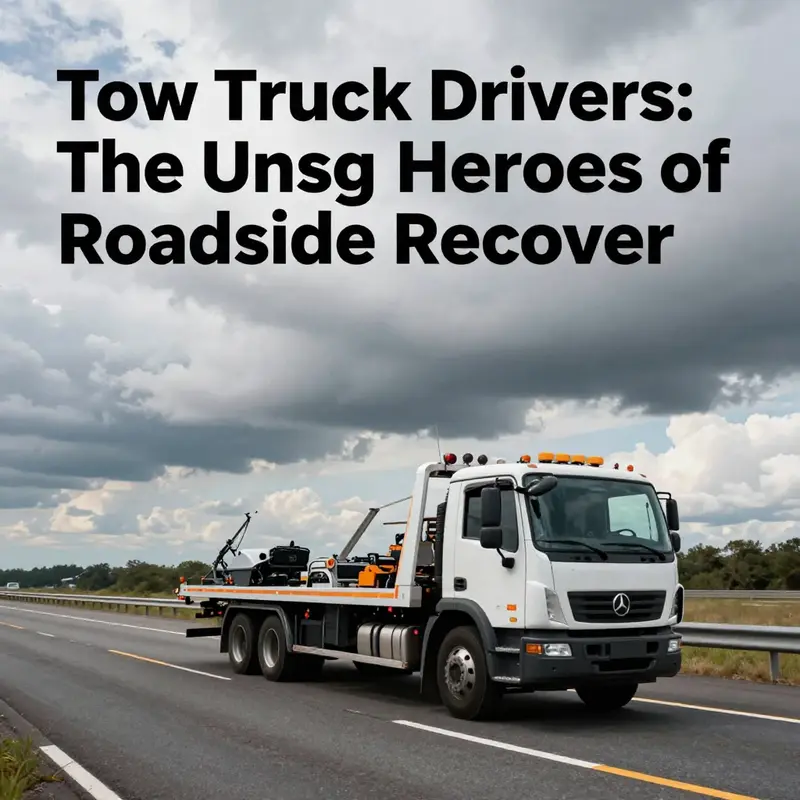
Tow truck drivers occupy a vital niche in roadside assistance and post-incident recovery, often raising the question: Are they first responders? While these professionals are indispensable for ensuring vehicle safety and traffic management, their role differs from that of formally recognized first responders like paramedics and firefighters. This article aims to unravel the distinctions and overlapping responsibilities between tow truck drivers and first responders. In the first chapter, we’ll explore what constitutes a first responder and the criteria that differentiate them from tow truck drivers. Next, we’ll delve into the critical functions performed by tow truck drivers in post-incident scenarios while contrasting their roles with those of emergency service professionals. Lastly, we will examine the legal and operational frameworks guiding both groups, highlighting the training and responsibilities that set them apart. Through this comprehensive exploration of their roles, the article will present a clear understanding of where tow truck drivers fit into the broader emergency response ecosystem.
Beyond the Tow: How Tow Truck Drivers Support Emergency Response Without Being ‘First Responders’
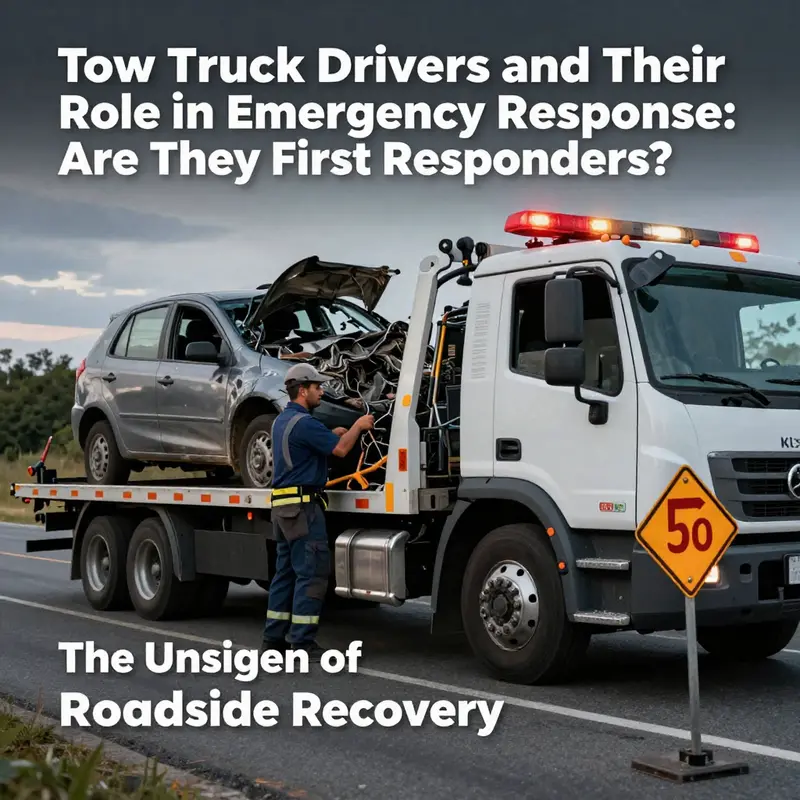
Tow truck drivers are often the unsung professionals at roadway incidents. They arrive quickly, work in tight spaces, and restore safe traffic flow. Yet, by formal definition, they are not classified as first responders. That distinction matters. It affects training standards, legal protections, dispatch priorities, and public expectations. This chapter explains how tow operators function at the edge of the emergency response system, why they rarely hold the official first responder label, and how their practical contribution often makes them indispensable partners to policing, firefighting, and medical teams.
At an accident scene, roles unfold in a predictable order. Emergency services respond to threats to life and limb. Police secure the scene and investigate cause. Fire crews handle extrication and fire risks. Paramedics deliver medical care. Tow operators arrive to remove disabled vehicles and clear hazards. This sequence does not diminish the importance of tow operators. Clearing wreckage quickly reduces the chance of secondary collisions. It shortens traffic delays and limits exposure for all responders. Rapid vehicle removal also preserves evidence and helps investigators document the scene efficiently.
The formal label of “first responder” carries specific connotations. It implies specialized training in life-saving interventions and legal status within public safety frameworks. Police, firefighters, and emergency medical personnel train for immediate medical care, hazardous material response, and fire suppression. They operate within well-defined chains of command. Tow drivers, by contrast, specialize in vehicle recovery. Their training centers on winching, vehicle stabilization, and safe rigging. These skills are vital to safety, but they do not substitute for emergency medical or firefighting certification. Simply put, tow drivers address hazards related to vehicles, not the broader spectrum of human medical emergencies.
Despite this clear distinction, practical reality blurs the lines. Tow operators are often among the first licensed, trained professionals at a crash site. Their arrival can be crucial in stabilizing vehicles that threaten traffic or bystanders. They deploy cones, lighting, and signage. They use tools to secure vehicles on steep grades. They coordinate with police to protect work zones. In many jurisdictions, tow providers operate under contracts with state transportation agencies. Those contracts can require specialized certifications, response windows, and safety compliance. When local authorities include tow operators in incident management plans, those drivers become integral to the overall emergency response strategy.
Safety is central to the tow operator’s role. Working roadside exposes drivers to high risk. Passing vehicles create a constant hazard. Low visibility and poor weather increase danger. For that reason, tow companies invest in lighting arrays, reflective gear, and vehicle-mounted safety features. Drivers follow strict protocols to maximize visibility and minimize exposure. Guidelines emphasize working from the berm when possible, using warning lights strategically, and communicating clearly with other responders on scene. These measures reduce injury risk and allow other emergency personnel to operate more safely and effectively.
Legal and insurance frameworks further create separation. Emergency responders typically enjoy certain legal protections while performing their duties. They may have priority access to crash scenes and benefit from worker protections tied to public service roles. Tow drivers, depending on the jurisdiction, may not receive the same presumptions. Their liability exposure can be higher. This legal distinction influences training, required certifications, and the contractual language used by municipalities. It also shapes expectations for how a tow operator should perform at the scene and interact with law enforcement.
Training breadth varies significantly among tow operators. A small company might provide basic rigging and vehicle handling instruction. Larger fleets, or those working under government contracts, often require more extensive training. Some drivers complete courses on traffic incident management, scene safety, and basic first aid. Others receive specialized instruction for high-speed highway recovery, heavy vehicle towing, or hazardous material awareness. When tow drivers receive advanced training, they bridge operational gaps. They support traffic control, scene preservation, and safe victim access for medical teams. Still, the additional training rarely elevates them to the status of official first responder unless formal authorities redesignate that role.
Technology is changing the dynamic between tow services and emergency agencies. Telematics, automated crash detection, and integrated dispatch systems speed communication. When a collision triggers an automated alert, emergency services and towing companies can be notified simultaneously. That coordination reduces response time. It also helps dispatchers send the right resources. Modern tow trucks carry scene lighting, remote cameras, and winches capable of stabilizing large vehicles. These tools allow operators to perform complex recoveries faster and safer. The result is a more efficient overall response and faster scene clearance.
Community perception often assigns a quasi-first responder status to tow drivers. Many drivers are viewed as helpers who arrive in crisis. This view shapes on-scene interactions. Bystanders may expect tow drivers to provide guidance, help remove personal items, or assist with non-medical tasks. Drivers frequently act as de facto scene managers, directing traffic when police are delayed. Their actions have tangible public safety benefits. They blunt risk and move incidents toward resolution. Still, public perception does not alter legal classifications. Policymakers and agencies must balance recognition with clear role definitions.
Recognition efforts are growing. Transportation agencies and safety advocates propose designating tow operators as essential incident responders. Proposals often recommend formal training standards, standardized safety equipment, and integration into incident command systems. Such changes aim to reduce fatalities among roadside workers and improve interagency coordination. Some regions already treat tow providers as critical partners. Those areas formalize training requirements, grant limited scene access, and fund safety equipment. Broader adoption of these models would acknowledge tow operators’ frontline role without conflating their responsibilities with medical or firefighting duties.
Coordination is the practical path forward. When tow drivers, law enforcement, and EMS operate from shared protocols, outcomes improve. Clear radio channels and dispatch priorities reduce duplication and unsafe delays. Pre-planned agreements spell out who controls the scene, who moves vehicles, and how evidence preservation is managed. When a tow driver understands the priorities of medical teams, they can act to preserve life and avoid interfering with care. When emergency crews accept that tow operators will quickly remove hazards, they can focus on urgent threats.
There are real consequences for failing to integrate towing into incident management. Delays in clearing vehicles extend exposure for everyone at the scene. Secondary collisions become more likely. Congestion increases driving frustration and can lead to risky maneuvers. Emergency crews waste time controlling traffic when they could address medical needs or secure hazards. Conversely, when towing is streamlined and formally recognized as part of the response chain, response times shorten and roadway risk drops.
Policy solutions are practical and achievable. First, set uniform training standards for tow operators who respond to public roadway incidents. Training should cover scene safety, vehicle stabilization, basic trauma awareness, and communication with first responders. Second, require standardized safety equipment on tow vehicles. High-output lighting, conspicuous markings, and robust stabilization tools save lives. Third, integrate towing services into dispatch systems. Shared situational awareness tools and clear response windows improve coordination. Fourth, create legal protections for tow workers operating under contract with public agencies. Liability safeguards and worker protections reduce risk and encourage best practices.
These reforms also benefit emergency services. Police and paramedics gain predictable, professional partners. They can rely on trained operators to remove hazards and preserve evidence. Tow operators, given the proper training and protections, reduce the burden on busy emergency crews. This partnership speeds incident resolution and returns roads to normal quicker. It also honors a simple truth: public safety is a system. Each role must be defined, supported, and connected.
For tow drivers, the daily reality remains challenging. They must respond fast, work safely, and coordinate with multiple agencies. They must do so under unpredictable conditions. The work demands physical skill, technical knowledge, and situational judgment. Recognizing tow drivers as essential incident responders acknowledges this complexity. It does not mislabel their role. Instead, it aligns policy with practice and adjusts expectations accordingly.
For communities, the takeaway is straightforward. Tow truck drivers are not traditional first responders. Yet they are critical responders in the roadway safety ecosystem. Treating them as partners, not mere contractors, improves outcomes. It reduces risk for everyone. It shortens delays and preserves evidence. It makes emergency response more resilient.
Policymakers and agencies already have a strong foundation to build upon. Federal guidance on operations and safety offers best practices that local programs can adopt and adapt. Reference: https://www.fhwa.dot.gov/operations/ops2015/ . Embedding tow operators into those frameworks, while preserving the distinct medical and firefighting roles of true first responders, is a pragmatic way to strengthen public safety on the roads.
If you want to explore how technology and training intersect with tow operations, read this overview on tow truck technology and safety.
First Responders Defined: The Boundary Between True Emergency Responders and Tow-Truck Operators
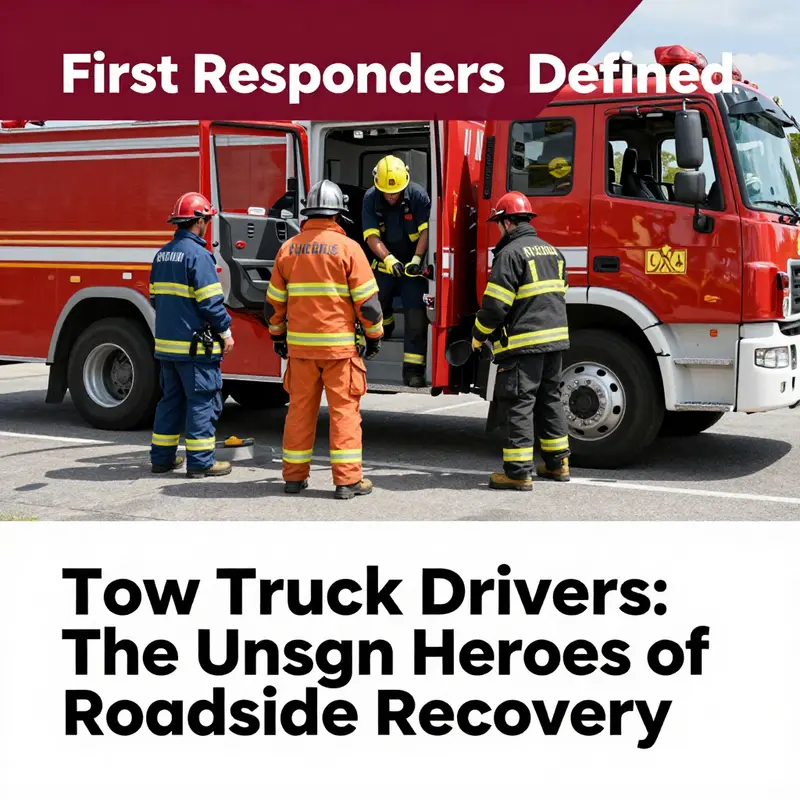
In debates about who qualifies as a first responder, the line often hinges on training, authority, and the immediate scope of action at an incident. First responders are the people who are expected to step into the breach right at the moment a crisis unfolds. They assess, triage, and begin life-saving interventions, sometimes before hospital doors open or a fire engine arrives. The term isn’t merely a label; it’s a credential that carries the weight of professional certification, standardized protocols, and integrated communication with broader emergency response systems. In many countries, this group includes EMTs, paramedics, firefighters, police officers, and the people who coordinate their arrival from dispatch centers. They work within formal emergency response frameworks, with legally defined duties and accountability. This is not a mere cultural distinction; it anchors how services are mobilized, how resources are prioritized, and how communities measure readiness to protect life and reduce harm in the earliest moments of danger.
Tow truck drivers are often among the first to arrive on the scene after a crash. Their primary objective is to restore traffic flow and remove hazards by recovering disabled or damaged vehicles. They do this with skill and efficiency, using specialized equipment and careful risk assessment to prevent further damage and to keep other road users safe. But their focus is logistics and mechanical recovery, not the delivery of medical interventions or life support. Even when a tow operator is extremely capable, and even when they have undergone additional training in scene safety or basic stabilization, that training does not automatically elevate them to first-responder status. They are part of the aftercare chain, not the initial care chain. In practical terms, they help clear the way for emergency services, assist with hazard control, and sometimes provide temporary lighting or traffic management so that responders can work more effectively. Yet, these tasks are functions that support the responders, rather than replace them or supersede their authority.
This distinction is reinforced by public safety frameworks that define the roles of responders in explicit terms. The NHS Emergency Services page outlines the scope of what these professionals do — rapid assessment, stabilization, and emergency care, followed by coordination with hospitals and other services. The language of such guidance illustrates why a tow truck driver, even one on a contract to support incident response, remains outside the core category of first responders. The specific jurisdictional definitions matter, but the core logic remains consistent: medical care at pace requires trained physicians, paramedics, and emergency nursing teams operating under established protocols, not routine vehicle recovery tasks.
However and this is important: the presence of tow trucks at an accident scene is not incidental. There is a long tradition of rapid dispatch of recovery teams to scenes to secure hazards, assist with extrication, and ensure that vehicles do not obstruct critical ingress routes while ambulances and fire units operate. The interplay between response and recovery can be delicate. In the best systems, tow operators are integrated into incident command structures through clear protocols and communications channels. They understand basic scene safety, traffic control, and the identification of hazards such as fuel spills or downed power lines. This knowledge reduces risk not only for the people on scene but also for the responders who must operate under time pressure in dynamic environments. When uptake of training occurs, it is framed as a support function — a way to expedite access for responders, protect the public, and preserve the integrity of the incident scene. For those seeking a practical compass, guidance like Emergency Response Training Best Practices offers clear expectations about how different roles should interact on scene. Emergency Response Training Best Practices.
But that integration has limits. A foundational difference remains: first responders are trained and certified to deliver medical care, to stabilize life-threatening conditions, and to coordinate rapid transport to appropriate facilities. They deal with triage, airway management, bleeding control, and triage under chaotic conditions. Their decisions can mean the difference between life and death within minutes. Tow truck operators, no matter how skilled, lack the authority and the formal certification to perform those interventions. They do not carry the same equipment or pharmacological supplies, and their insurance and licensing frameworks reflect different responsibilities and liabilities. In most jurisdictions, the protocols governing emergency medical care are distinct from those governing vehicle recovery. The consequences of a misstep in medical care are far more severe and complex than a misstep in removal or traffic management. The public safety system recognizes this, and the chain of accountability follows the same logic: responders who are trained for medical care operate under protocols that are designed for medical decision-making, not vehicle recovery decisions.
That separation, however, does not imply a rigid stratification that denies any overlap between roles. Scene safety, for instance, is a shared responsibility. A tow operator who can quickly reduce the risk of a fuel spill or who can create a safe zone to protect paramedics demonstrates a critical, albeit supporting, capability. The best outcomes commonly arise from clear boundaries and robust coordination. In practical terms, emergency response plans often specify which tasks are allocated to responders, which tasks are delegated to trained support staff, and which tasks fall to incident management teams coordinating traffic, crowd control, and scene safety. This is not about hierarchy alone; it is about ensuring that the right expertise is applied at the right moment, so that the most life-saving actions are not delayed by misaligned expectations. When a scene flows smoothly, paramedics can treat injuries with minimal delay, firefighters can manage hazards, police can secure the area, and tow operators can remove the obstructive vehicle without compromising safety. The emphasis is on alignment, not amplification of authority.
That framework is reinforced by practical guides that emphasize how roles should converge without overstepping boundaries. The best outcomes in complex scenes come from teams that know their own limits and trust the others on the ground. Tow operators who understand how to secure a site, how to protect a patient’s surroundings, and how to communicate with the incident commander contribute to a safer, faster, and more predictable operation. Their contributions are essential because delays in vehicle clearance can prolong exposure to hazards for everyone involved and can hinder access for medical teams. Yet even with heightened training, the justification for keeping them outside the medical response is consistent: life-saving medical interventions, rapid triage decision-making, and the logistics of patient transport remain the sole province of trained medical professionals and sworn responders. The nuance of this arrangement is often missed by casual observers, leading to confusion about professional status on scene. A robust, well-communicated protocol helps to prevent such confusion by clarifying who does what, when, and under whose authority.
Public perception, too, shapes the expectations surrounding a crash scene. It is common to see flashing lights that belong to multiple services and to assume that any operator with a light bar is a primary responder. In truth, the scene is a choreography of many actors, each with a defined role. When the public understands that first responders deliver medical care, while recovery professionals clear the way and stabilize the environment, the scene becomes more intelligible and less chaotic. The result is greater public confidence, less misinterpretation, and more reliable cooperation between agencies and private operators. Importantly, this clarity can reduce tensions at the scene, when families or bystanders might otherwise misread the actions of those present or the timing of certain interventions.
From a policy perspective, the distinction matters for training priorities and for the design of incident protocols. It guides how agencies contract with private operators, how insurers assess risk, and how municipal authorities plan for coverage during peak traffic periods or major events. When tow operators participate in early stabilization or scene safety work under supervision or contract, it is a deliberate, policy-informed choice that recognizes the value of speed and expertise in reducing harm while preserving the integrity of the medical response. This evolution reflects pragmatic partnerships rather than a redefinition of professional boundaries. The focus remains on ensuring that each actor performs the right task at the right time, with the right safeguards, so that the entire response is coherent and effective.
For readers seeking authoritative definitions or deeper context on how responders are categorized across systems, it helps to consult public safety guidance that crystallizes the difference between medical-first response and recovery operations. The NHS page remains a foundational reference for many jurisdictions, illustrating how public systems frame these roles and coordinate across agencies. The essential point for industry professionals, municipal planners, and safety-conscious drivers is straightforward: first responders are trained to treat and stabilize people; tow and recovery professionals are trained to move, secure, and restore the scene in a manner that supports medical and structural safety. When these lines are respected, the result is a more reliable, safer, and faster incident response that minimizes harm and maximizes the chance of positive outcomes for everyone involved. See the NHS resource for broader definitions and context: NHS Emergency Services.
Ultimately, understanding where tow truck drivers fit within the emergency response ecosystem matters beyond semantics. It shapes training priorities, informs policy, and influences how communities experience an incident. It also frames the expectations families carry when a collision happens: they want medical care available without delay, they want responders to control the scene, and they want the road to reopen with the least disruption possible. Tow operators contribute to that final objective by removing hazards, guiding traffic away from the collapse of a lane, and enabling responders to do their jobs with less interference. This triage of tasks—medical care, scene safety, vehicle removal—reflects a well-balanced system that recognizes the strengths and limits of each participant. It is a reminder that a crisis is rarely resolved by any single actor; it is resolved through coordination, training, and a shared commitment to safety.
On that note, the conversation about first responders versus tow operators should be anchored in practical realities rather than labels. The terms themselves should not become a barrier to collaboration. Instead, they should inform the design of training curricula, the development of operational protocols, and the expectations set for public communication during emergencies. When we articulate these roles with precision, we contribute to higher levels of preparedness and resilience in our communities. The road to safer incident management runs through a landscape where responders, drivers, and recovery teams each perform their assigned tasks with competence and trust—knowing that the ultimate goal is to save lives, protect property, and restore normalcy as quickly and safely as possible.
Between Response and Recovery: Tow Truck Drivers’ Critical Role After Crashes
Between Response and Recovery: Tow Truck Drivers’ Critical Role After Crashes
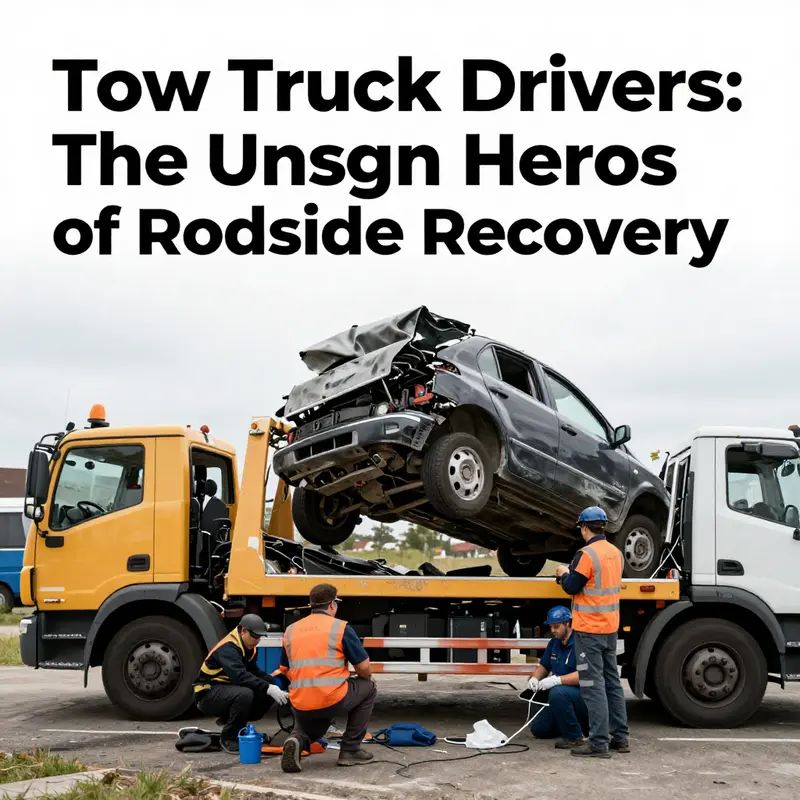
Tow truck drivers are rarely the focus of headline stories about accidents. Yet they are central to restoring safety and mobility after a crash. They do not replace police, firefighters, or paramedics. Those professionals handle immediate threats to life and property. Still, tow operators fill the next, indispensable phase: clearing hazards, reopening lanes, and preventing secondary incidents. Their work moves an incident from acute emergency to managed recovery.
When an emergency call goes out, dispatch systems prioritize life-saving resources. Officers arrive to secure the scene. Firefighters extinguish fires and stabilize wreckage. Paramedics triage and treat the injured. That initial window matters most for survival. But once patients are cared for and the scene is controlled, a different problem appears: disabled vehicles, fluid spills, and debris remain on travel lanes. Without prompt removal, congestion builds. Drivers slow, rubberneck, and risk additional collisions. Tow truck drivers step into that gap, equipped to remove vehicles safely and efficiently.
The distinction between first responders and tow operators is clear in training and legal definitions. First responders receive formal emergency response instruction focused on medical, fire suppression, and law enforcement tactics. They follow defined protocols for scene command and patient care. Tow operators, by contrast, are trained in vehicle recovery, rigging, and traffic management. Their certifications center on lifting, securing, and transporting vehicles without causing further damage or injury. This specialization does not make them less critical. It makes their role different and complementary.
Tow truck drivers operate specialized equipment that first responders generally do not carry. Hydraulic lifts, flatbeds, wheel-lift systems, and heavy-duty winches allow them to extract disabled cars and trucks from ditches, medians, and crash sites. These tools require skill and judgment. A wrong angle, improper rigging, or failure to account for a vehicle’s weight distribution can create hazards. Their training often includes load calculations, vehicle stabilization, and safe winching techniques. They also work with traffic control devices, reflective signage, and flares to protect the scene from oncoming traffic.
Environmental hazards are another key reason towing matters. Fuel, oil, and coolant spills pose fire and slipping risks. Removing vehicles reduces the chance that these substances will be further spread by passing traffic. Tow operators frequently coordinate with road maintenance crews or hazmat units to ensure spills are contained. By doing so, they limit ecological damage and long-term roadway closures. In many jurisdictions, tow companies are contracted to respond to high-priority incidents and to clear major routes quickly. Their response time affects not only safety but also economic activity tied to freight and commuting.
The scene is often dynamic. Weather can reduce visibility. Nighttime conditions complicate rigging. Traffic may still be moving around the incident. Tow drivers make rapid decisions under such stress. They must balance speed with safety. Quick removal is vital, but rush and error can cause further harm. Their judgment often requires coordination with law enforcement. Officers may direct traffic and secure evidence, while tow operators focus on vehicle recovery. This collaborative choreography reduces time on scene and the risk to everyone involved.
Tow drivers also play a role in preventing secondary collisions. Secondary crashes happen when drivers slow to look at an incident, abruptly change lanes, or fail to notice stopped traffic. Clearing the roadway reduces the window for those events. Data from roadway management research shows that long-duration incidents exponentially increase the risk of subsequent collisions. Each additional minute a lane remains blocked raises exposure for approaching vehicles. In congested corridors, a prompt towing response can mean the difference between a single incident and a multi-vehicle pileup.
There are also situations where tow operators act beyond vehicle removal. They often provide immediate, practical aid: helping trapped drivers exit vehicles when first responders are not yet clear to reach them, securing loose loads that could fall onto the roadway, or stabilizing vehicles that are in precarious positions. While they do not provide medical care, they can offer crucial support until emergency medical professionals are able to intervene. In some regions, tow operators receive additional scene safety training and participate in coordinated incident management programs. These arrangements strengthen the overall emergency response ecosystem.
Technology and communication tools increasingly blur operational boundaries. Platforms that automatically notify emergency services after severe crashes, using embedded vehicle data, now ensure that appropriate resources are dispatched more quickly. This improves outcomes for both immediate care and clearance operations. Tow operators benefit when they are included in integrated dispatch systems, receiving clear information about incident severity and location. Better data leads to better preparedness: the correct equipment en route, crews who know what to expect, and reduced on-scene surprises. For more on technological safety measures in towing, see this piece on tow truck technology and safety.
Legal and contractual factors shape how towing is deployed. Some jurisdictions maintain rotation lists of approved tow companies for incident response. Others rely on private calls from vehicle owners or insurers. When municipal contracts exist, they often specify response times and equipment standards. These requirements aim to ensure consistent service and rapid clearance. Where systems are less organized, response time can lag, and the resulting delay increases risk to other road users. Investment in standardized contracts and training can reduce variability and improve safety across the network.
Recognition matters, too. Tow truck drivers frequently work without the public gratitude reserved for visible lifesavers. They face physical danger at roadside locations, exposure to weather, and the emotional toll of frequent encounters with crash scenes. Enhancing their safety should be a priority. This includes improved high-visibility gear, better lighting on equipment, and designated pullouts for safe operations. It also includes policies that prioritize their placement within incident command structures, so they receive accurate situational briefings and appropriate protections while working.
Economic impact is an underappreciated element of towing’s value. Traffic delays from cleared lanes have ripple effects on commerce and productivity. Freight delays cost businesses, and longer commutes impose costs on individuals. Rapid clearance supports economic resilience by minimizing these losses. The American Trucking Associations and other transportation bodies emphasize towing’s contribution to network resilience. Their research connects efficient recovery services to faster restoration of supply chains and reduced travel time costs.
Training and standards are the foundation of consistent towing performance. While initial certification focuses on vehicle handling, advanced programs teach incident scene safety, hazard recognition, and coordination with emergency agencies. When tow operators participate in joint training exercises with police and fire crews, communication improves. Shared drills reveal gaps in procedures and strengthen mutual expectations. Such training also raises professional standards and public confidence.
Public expectations can be misaligned. Many people assume that any emergency at the roadside automatically includes towing in the first wave. That is not always feasible or necessary in the immediate life-saving phase. Educating the public about the distinct roles of first responders and tow operators helps manage expectations and clarifies why responses unfold in stages. It also encourages safe behavior at scenes: slowing drivers should allow safe space for both rescuers and tow crews, and motorists should avoid stopping or gathering at crash sites.
Policy changes can enhance coordination. Recommendations include standardizing incident response contracts, expanding integrated dispatch systems to include towing providers, and funding joint training initiatives. Municipalities can reduce risk by mandating minimum equipment and response times for companies on official rotation lists. Insurance practices can also support better outcomes by streamlining approvals for prompt removal, rather than delaying clearance with administrative hurdles.
Ultimately, tow truck drivers are not first responders by the usual professional or legal definition. They occupy the critical space that follows initial emergency care. Their expertise in vehicle recovery, scene stabilization, and traffic safety makes them essential partners in the incident lifecycle. When systems recognize and support that role, the whole response chain becomes faster, safer, and more resilient. Investing in their training, equipment, and integration with emergency services yields tangible public safety and economic benefits.
For guidelines on formal roadway incident management practices and to learn more about how clearing operations fit into broader emergency response frameworks, refer to the National Highway Traffic Safety Administration’s roadway incident management resources: https://www.nhtsa.gov/road-safety/roadway-incident-management
The Boundary of Help: Legal, Training, and Operational Realities Defining Tow Truck Operators Versus First Responders
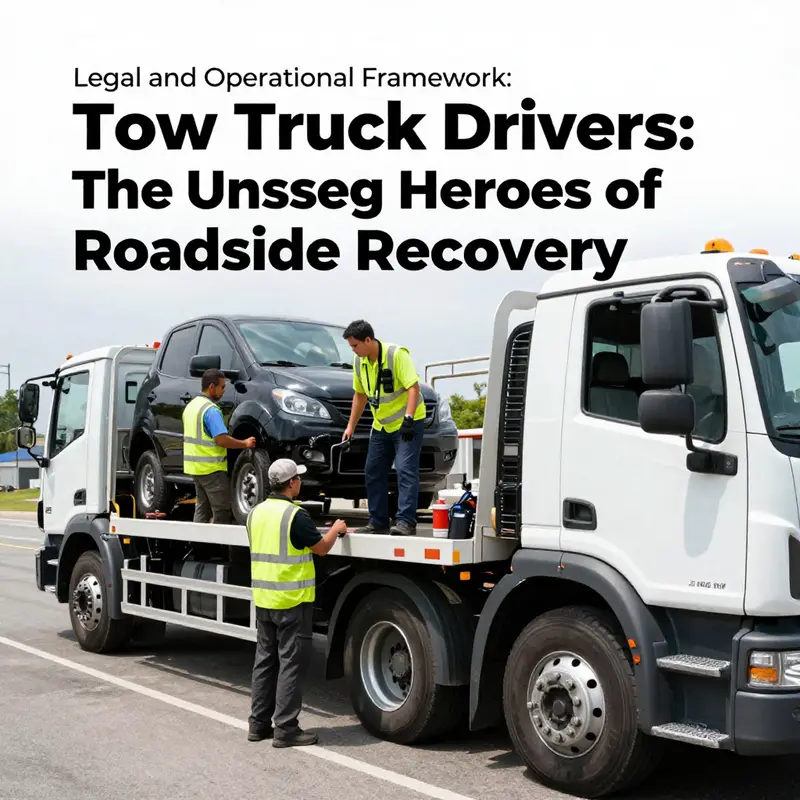
When you glide past a scene on a highway, the first image that often comes to mind is the flashing lights and the people you recognize as the emergency services—the police, the firefighters, the paramedics. Yet the road also hosts a quieter, tireless cohort whose work anchors the aftermath of crashes and breakdowns: tow truck drivers. Their presence at the scene is not merely a logistical necessity for removing a disabled vehicle; it is a crucial form of roadway stewardship that interacts with every agency and every motorist who depends on a rapid, orderly return to normal traffic flow. This reality sits at a complex intersection of legality, training, and operational judgment. Tow truck operators operate within a framework that seeks to balance safety, efficiency, and legal compliance. They are not first responders in the strict, conventional sense used by public safety agencies, yet their actions at the scene can influence the immediate outcomes for victims, bystanders, and other drivers. The question of whether they qualify as first responders is not simply a label to be granted or denied. It is a lens through which we view the responsibilities assigned to different roles, how those roles are coordinated, and how the public relies on a cohesive chain of care when a roadway emergency unfolds. The distinction matters because it shapes expectations, training investments, and the degree to which tow truck crews can proactively contribute to scene safety without overstepping their legal authority. At its core, the difference rests on what they are empowered to do by law, what they are trained to handle, and how they interact with the formal emergency response system that activates during critical incidents. In many jurisdictions, tow truck drivers are required to meet a baseline set of qualifications before they can operate on public roads in a professional capacity. The prerequisites span age, licensing, and background checks, but the emphasis is on safety and reliability rather than on chapter-and-verse medical intervention or rescue mandates. The typical pathway begins with a commercial driver’s license and appropriate endorsements, followed by a clean driving record and a background check. Drug screening is also common, reflecting the safety-first culture that governs any activity conducted on or near busy highways. These prerequisites are not incidental; they are designed to ensure that individuals entrusted with high-risk environments possess the judgment and discipline necessary to manage fast-moving traffic, shifting hazards, and the emotional pressures that accompany crash scenes. Beyond licensing, many states and municipalities require specialized training that broadens a driver’s competence beyond simply operating a tow rig. This training often covers vehicle stabilization and safe rigging procedures, which are not mere technicalities but pivotal competencies. When a vehicle is damaged or overturned, improper handling can precipitate a secondary incident, injure responders, or contaminate hazardous materials. The ability to stabilize a vehicle, secure a scene, and move equipment with minimal risk to bystanders is a discipline that borrows from engineering intuition as well as fieldcraft. In addition, there is explicit instruction on accident scene management. Tow truck operators learn how to convey clear instructions to other drivers, workers, and agencies, how to position light sources and warning devices for maximum visibility, and how to create buffer zones that reduce the likelihood of further collisions. Handling hazardous materials, though not a universal requirement, is another area where advanced training makes a critical difference. A driver who can recognize a payload that might pose a danger and knows the immediate steps to shield people and property while awaiting specialized responders demonstrates a level of preparedness that goes beyond routine towing. Some regions also require certification from professional bodies, signaling a recognized standard of competency that extends beyond state mandates. Even where formal certification schemes exist, the practical value lies in the operator’s ongoing commitment to best practices. This is why many fleets invest in continuing education and periodic requalification to keep pace with evolving equipment, evolving traffic patterns, and emerging safety guidelines. The result is a body of knowledge that, while it does not transform tow truck drivers into first responders, equips them to be effective, reliable partners in the post-crash process. It is also worth noting that the operational reality of tow truck work frequently places drivers at the scene alongside first responders. They may be among the first non-emergency personnel to arrive, and their actions can significantly affect the safety and efficiency of subsequent operations. They secure lanes, guide traffic away from the incident, and help prevent secondary crashes caused by rubbernecking or congestion. They prepare damaged vehicles for removal, which, if done properly, minimizes further harm and provides a clearer space for responders to gain access to victims and hazards. In this sense, tow truck operators function as an immediate support layer within the larger incident command structure. This is not a contradiction to the legal definition of first responders but rather a practical reflection of how emergency scenes unfold in the real world. The legal and operational boundary is not a fixed wall; it is a dynamic perimeter shaped by jurisdictional law, agency procedures, and the specific demands of the incident. Where the line lies can be influenced by whether a tow company has a formal emergency response contract or operates under a deputation arrangement with a public safety agency. In such circumstances, operators may be authorized to perform certain stabilization tasks, assist with scene protection, or implement short-term measures that ensure safety while awaiting the arrival of police, firefighters, or EMS. Even then, however, these tasks do not convert tow truck drivers into official first responders in the eyes of the law. Rather, they reflect a cooperative ecosystem in which multiple participants contribute to a safer, faster resolution of incidents. This nuanced understanding is essential when we consider how technology and data sharing shape modern response strategies. Platforms that automatically alert emergency services after a serious collision—using artificial intelligence and real-time data to connect with rapid-response networks—highlight a central truth: the best outcomes are achieved when the right actors are deployed at the right times. First responders, such as paramedics and firefighters, remain the core life-saving teams in the immediate medical sense. Tow truck drivers, by contrast, are integral to the support architecture that preserves access to those responders and maintains order on the roadway. Their role is complementary rather than substitutive. This distinction is not merely semantic. It has real implications for training curricula, licensing structures, and accountability frameworks. A well-articulated framework for tow truck drivers identifies not only what they are permitted to do but also what they should do and, crucially, what they should refrain from doing. The emphasis on restraint is important because it protects both the public and the drivers themselves. It prevents unsafe improvisation that could create new emergencies, and it ensures that drivers do not overstep their legal authority in pursuit of efficiency. It also places a premium on communication and coordination. The driver must be able to relay pertinent information to responders, understand where to stage equipment, and align with the incident command’s priorities. To facilitate this, interoperability becomes a central objective. Standardized communication protocols, shared radio channels, and joint training exercises help reduce friction at the moment when time is of the essence. The value of interoperability was underscored in discussions around post-crash operations where data-sharing platforms and rapid notification systems were introduced to ensure that the closest and most appropriate responders reach the scene promptly. This is especially relevant in urban areas with dense traffic and complex hazards, where the difference between a well-managed scene and a chaotic one can hinge on how smoothly disparate teams coordinate. The distinction between first responders and tow operators is thus not a barrier to collaboration but a guide to professional boundaries and mutual respect. It is a reminder that public safety is a system, not a collection of isolated duties. As the public expects, the aftermath of a crash should be orderly, predictable, and swift in restoring mobility. Tow truck drivers contribute to that outcome by applying rigorous safety practices, maintaining situational awareness, and delivering the essential service of removing damaged vehicles from active lanes. They do so with a discipline that often reflects years of experience, steady training, and a commitment to the welfare of motorists who face the stress of breakdowns or injuries. The best practice in this environment is to recognize both the limits and the strengths of each role. Public safety agencies can benefit from clear guidelines that define the scope of tow operators’ authority while preserving the integrity of medical and rescue interventions. Tow operators, on their side, can maximize their value by seeking ongoing education, cultivating reliable lines of communication with responding agencies, and advocating for safety-oriented policies that prioritize scene stabilization and traffic control without compromising professional boundaries. This balanced approach supports not only the immediate safety of the scene but also the longer-term recovery that follows a crash. It also aligns with the broader objective of building trust between the driving public and the professionals who keep roads safe. When a motorist sees a tow operator take measured, competent steps to secure a scene, it reinforces the sense that every actor at the incident is part of a coordinated, credible response. The result is a more predictable experience for bystanders and a clearer pathway for responders to deliver medical care, determine fault, and clear the roadway. As we consider the future of roadway safety, the question of whether tow truck drivers are first responders invites a careful examination of definitions, responsibilities, and expectations. It is not a debate about prestige or labels; it is a practical inquiry into how to optimize safety, efficiency, and accountability. The landscape will likely continue to evolve as technology, data sharing, and standardization shape how scenes are managed. Tow truck operators may not be first responders in name, but their training and execution profoundly influence the safety and speed with which the road returns to normal. They stand at a pivotal point where the urgency of a scene meets the precision of engineering and the discipline of law. In this space, a well-defined legal and operational framework ensures that tow truck drivers contribute where they can, within boundaries that protect everyone involved. For readers who want to explore how these training standards are implemented in practice, a practical resource for understanding the architecture of emergency response training can be found here: emergency-response-training-framework. This kind of framework helps explain why tow operators carry out certain tasks with methodical care and why others must be left to the specialists who are authorized and equipped to perform them. The broader takeaway is that the road to safety after a crash is a shared journey. Tow truck drivers are indispensable in the chain of responsibility that keeps traffic moving and emergencies contained. They are not the initial lifeline in the classic sense, but their role is vital, and their professional development through robust training and clear protocols ensures that they contribute to outcomes as effectively as any other citizen in the emergency ecosystem. In this light, the question shifts from a binary verdict to a more nuanced appreciation of how public safety operates in real life. It invites policymakers, fleet managers, and frontline workers to continue refining training standards, clarifying legal authorities, and strengthening the ties that bind responders, tow operators, and the driving public into a cohesive and capable system. For those who want to verify the paths toward qualification and continued education, resources such as the widely cited industry guidance on becoming a tow truck driver offer a practical map of the steps involved. This chapter has outlined the essential characteristics of tow operator training and the realities of their responsibilities in relation to first responders. The aim is not to blur boundaries but to illuminate how those boundaries function in practice, ensuring safety, accountability, and efficient incident management on busy roadways. As the system evolves, the balance between autonomy and interoperability will likely shape the next generation of on-scene response, confirming that every actor—whether first responder, tow operator, or support personnel—plays a distinct and indispensable role in protecting life and restoring order after incidents. External perspectives and empirical studies will continue to inform this balance, guiding legislative updates and professional development programs so that the roadway remains a safer place for all who share it. In sum, tow truck drivers occupy a unique and essential niche. They are not traditionally categorized as first responders, yet their work at the scene embodies the practical spirit of emergency service: to prevent harm, preserve safety, and accelerate the path to normalcy. The more fully we recognize and cultivate their role within a well-coordinated system, the better prepared we will be to meet the growing demands of modern traffic, incident response, and public safety. For readers seeking a grounded description of the career path and the licensing realities that shape tow operators, the following resource details the essential steps involved in entering the profession and the ongoing considerations that accompany a career on the frontline of road safety: https://www.indeed.com/career-advice/finding-a-job/become-tow-truck-driver
Final thoughts
In summary, tow truck drivers play a crucial part in managing incidents and restoring traffic flow after emergencies, but they do not fit the conventional definition of first responders. The distinction mainly lies in the training and immediate emergency intervention skills of first responders, who are certified to handle life-threatening situations. Tow truck drivers complement this emergency response by ensuring safe vehicle removal and assisting in the stabilization of the accident scene post-incident. Recognizing the unique contributions of both parties enhances our understanding of their significance in the emergency response framework, fostering greater respect for the intricate roles involved.