
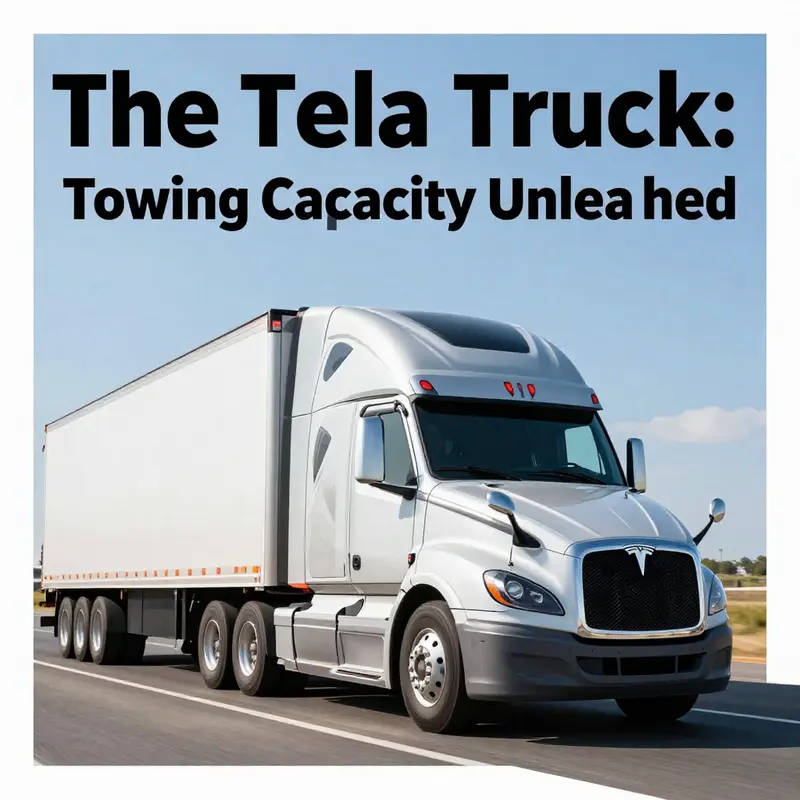
The Tesla Semi truck is revolutionizing the heavy-duty trucking sector with its impressive specifications, especially its towing capacity. As transportation demands grow, knowing how much a Tesla truck can tow is crucial for everyday drivers, truck owners, and fleet managers alike. This article will explore the Tesla Semi’s towing capabilities, performance metrics from real-world testing, and how it compares to traditional heavy-duty trucks. We’ll also delve into the payload capacity and how these metrics affect long-haul transportation. With Tesla leading the charge in electrification, understanding these parameters is critical for stakeholders in the transportation industry and beyond.
Tow Capacity in the Electric Era: Understanding How Much an Electric Heavy-Duty Truck Can Haul
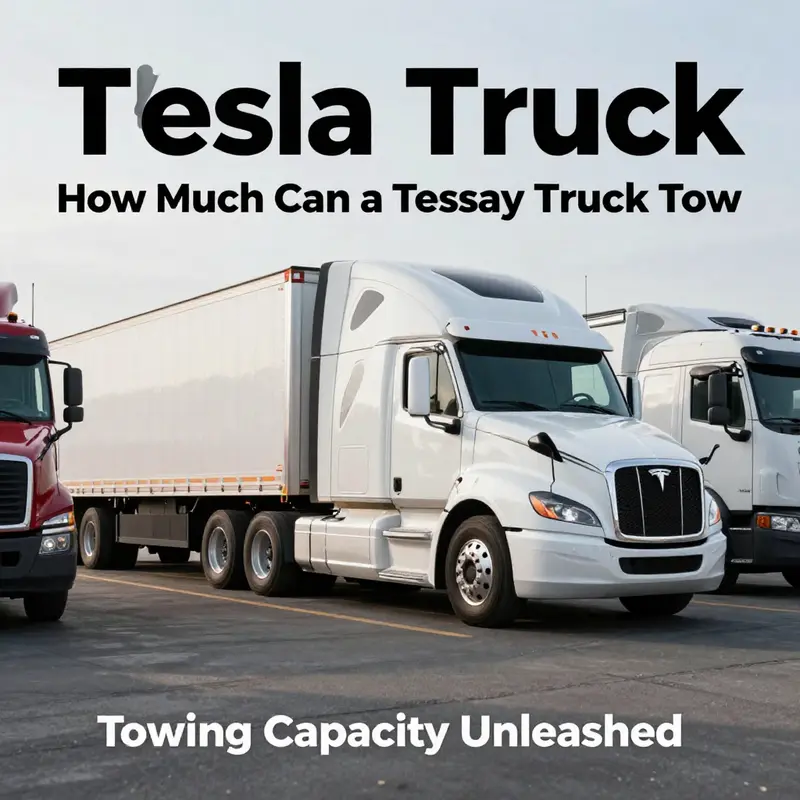
Electric propulsion is reshaping the frontier of heavy freight, and with it comes a clearer picture of what it means to tow at scale with an electric drivetrain. The electric heavy-haul tractor-trailer, as discussed in real-world testing and spec sheets, can operate with a total weight nearing 80,000 pounds on highway routes. This figure is not just a marketing number; it represents the maximum combined weight the vehicle can legally manage when you account for the truck’s own mass plus the cargo it carries. In practical terms, that upper boundary marks the ceiling for heavy freight movements across long distances, where every mile of range and every ounce of payload matters. When a full 80,000 pounds includes the truck’s curb mass, the payload potential remains substantial, and the distribution of that mass across the tractor and any towed trailer becomes a central design and safety consideration. On long hauls, the promise of electric propulsion—lower operating costs, reduced local pollution, and the potential for regenerative braking to reclaim energy on descents—meets the realities of physics in a way that demands careful planning around weight and balance.
To understand what the 80,000-pound limit means, it helps to unpack the key weights involved. The published ceiling describes the maximum total weight the vehicle can operate under, including its own weight and the load it carries. In the numbers widely cited for this class of electric tractor-trailers, the unladen or curb weight sits around 23,000 pounds. Subtracting that from the 80,000-pound cap yields a payload capacity of roughly 57,000 pounds. This payload is the freight you’re carrying inside the tractor itself, but when a trailer is involved, the trailer’s weight also adds to the total system load. The critical constraint is the Gross Vehicle Weight Rating (GVWR), which caps the entire combination: vehicle, passengers, cargo, and trailer. In other words, the maximum towing context is a balance problem rather than a single number you can independently apply to trailer weight.
For long-haul planning, that balance matters. The trailer you attach is a separate load that must be reconciled with the GVWR, and the towing configuration must stay within the allowed limits not only at the start of a journey but throughout the trip as the weight distribution shifts. The practical takeaway is that the 80,000-pound figure signals a ceiling for total system weight, not a limitless allowance for arbitrary trailer weights. In the same breath, it is important to recognize that this class of electric truck is designed to sustain impressive mass while maintaining highway speeds and acceptable range across hundreds of miles. In real-world trials with a full payload, highway-range figures can approach about 500 miles, a benchmark that speaks to the efficiency of electric propulsion when the truck is moving with substantial mass. Conversely, despite a strong baseline performance, the mass still imposes energy penalties; the heavier the train, the more energy is required from the battery pack to maintain speed and cadence on the road.
The performance side of the equation—how quickly the truck can move with this mass—also tells a telling story. Under a heavy load, acceleration from zero to 60 mph has been observed in approximately 20 seconds. That pace is markedly different from the sprint of lighter, conventional trucks, yet it is a credible performance target for a vehicle of this class when it must haul tens of thousands of pounds. What this implies for operators is not a sensation of sport but a reminder that power is there, albeit within the bounds of efficiency, protection of the drivetrain, and the safety margins required for stable long-haul operation. The powertrain’s torque curve, the battery’s state of charge, and the thermal management system all contribute to sustaining that performance as weight shifts occur during acceleration, braking, and cornering. The broader takeaway is a picture of capability: electric heavy haulers can move enormous masses with competitive efficiency, but the weight is never neutral; it defines how far you can go and how safely you can operate.
If you shift the lens from the heavy-haul tractor to another electric pickup in the same family, a different limit comes into view. In this lighter class, the maximum tow rating is commonly around 14,000 pounds. This figure represents the upper bound of what the vehicle can tow under engineering and safety standards, not a recommendation for daily use. The ratio between the towing rating and the vehicle’s own weight, along with how the tongue weight distributes across the hitch, matters deeply for handling and stability. Tongue weight—defined as the portion of the trailer’s weight that sits on the hitch—plays a central role in steering response, braking efficiency, and overall road feel. Ideally, tongue weight should land in roughly the 10 to 15 percent range of the trailer’s total weight. Exceeding this window can dull steering, reduce braking efficiency, and create a risk of trailer sway. If tongue weight falls into a negative range, where the trailer’s tongue actually exerts an upward pull on the hitch, stability can deteriorate rapidly. These are not abstract concerns; they are the practical consequences of how mass is distributed behind the towing vehicle and how that mass responds to acceleration, deceleration, and gusting winds.
The trailer’s weight itself matters, but so does the vehicle’s GVWR and how all components interact. It’s not enough to view the 14,000-pound figure as a practical daily limit; instead, it sits within a framework that includes payload, passenger load, and cargo inside the cab. The combined weight must never exceed the GVWR. In that sense, the towing equation is a holistic one: the trailer’s weight, the cargo in the truck, the passengers, and the payload on the trailer all contribute to the total, and the sum must stay within the vehicle’s regulatory and design thresholds. This is not a caveat meant to dampen enthusiasm; it is a reminder that safe towing rests on disciplined adherence to weight distributions and the vehicle’s rated capacities.
The contextual reality, then, is that different segments of the electric-truck family are built for different kinds of hauling tasks. The heavy-haul tractor-trailer case demonstrates that a vehicle designed for long-range freight can accommodate substantial mass without sacrificing the core efficiency and range needed for regional and national routes. The electric pickup, meanwhile, remains a more versatile option for lighter-to-midweight towing, with strong performance and a margin for everyday use that many owners will encounter at typical trailer weights. Across both cases, the thread that ties them together is weight management. The upper limits exist precisely to guide safe operation, and the safe operation lies in the everyday practice of staying within the specs while planning routes that account for terrain, wind, and road grade. When planning any towing task, the weight distribution strategy matters as much as the raw numbers. That means choosing the right hitch, confirming tongue weight within the recommended range, and ensuring the trailer is aligned and loaded to maintain stability at speeds and during lane changes. It also means recognizing that long-haul economics—payload efficiency, charging infrastructure, and the reliability of power delivery—are part of the overall calculus of what a given electric truck can do on any given day.
For readers who want a broader view of towing limits across vehicle classes, a useful point of reference exists in the general guidance that frames how much a truck can pull. Explore the broader concepts through How Much Can My Truck Tow, which offers a practical lens on weight limits, distribution, and the practicalities of towing with different vehicle types. How Much Can My Truck Tow provides a grounded way to compare how weight and trailer configuration shape towing expectations across the spectrum of light, medium, and heavy-duty work.
As this discussion moves forward, readers will see how these weight considerations intersect with real-world operations, including the role of charging infrastructure, regenerative braking, and battery sizing in sustaining long runs with heavy payloads. The next chapters will expand on how charging availability and energy management influence the practical limits of towing range, and how operators can optimize routes to maximize efficiency without compromising safety. In the meantime, the core takeaway remains clear: the concept of towing capacity in electric trucks is not a single number but a lattice of weights, speeds, and safety margins that must be understood and respected if electric hauling is to fulfill its promise of moving freight efficiently, reliably, and safely.
External resource: https://www.fhwa.dot.gov
Tow Limits and Traction: Understanding How Much a Leading Electric Hauler Can Tow
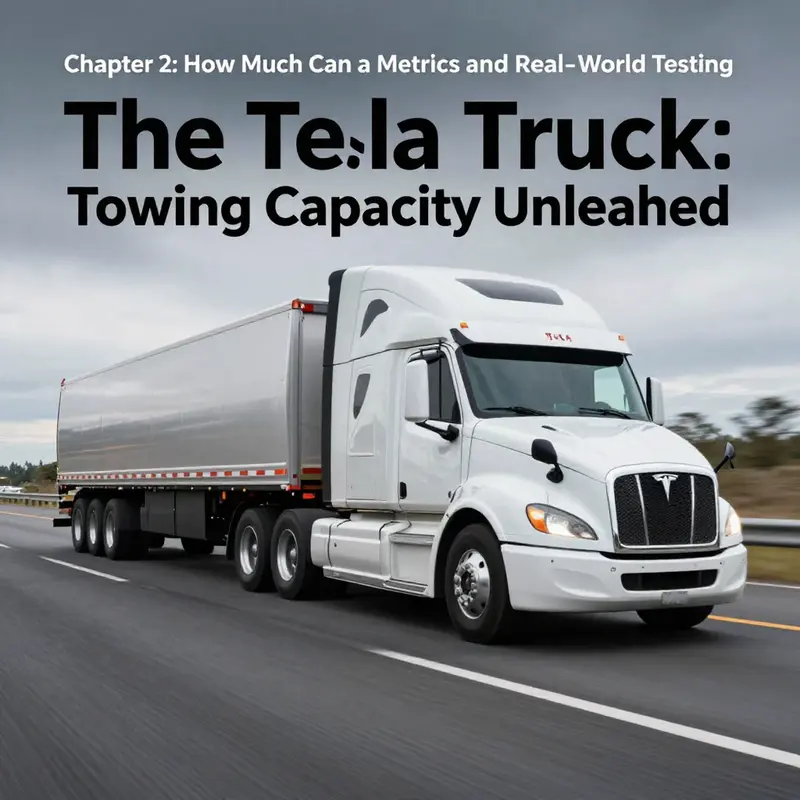
Towing capacity for an electric hauler is more than a single number on a spec sheet. It depends on how weight is distributed, hitch setup, and road conditions. A practical guideline is to keep tongue weight around 10 to 15 percent of the total trailer weight; too light or too heavy can compromise stability and braking. The official rating is a ceiling, not a target, and real world use should consider weather, grades, and load distribution. For safe operation, verify proper hitch installation, use the towing package, and follow the manufacturer’s guidelines.
Tow Capacity in Perspective: Unpacking Payload, Tongue Weight, and Real-World Limits for an Electric Heavy-Duty Truck
Tow capacity is more than a single number on a spec sheet. It sits at the crossroads of engineering limits, safety practices, and the realities of road conditions. In the context of an electric heavy‑duty truck, the conversation shades in nuance because the same forces that deliver quiet, instant torque and long-range efficiency also define how much you can carry, how you distribute it, and what happens when the road tilts, the wind shifts, or a gust of rain adds resistance. When people ask how much a Tesla truck can tow, the instinctive reply is often a simple weight figure. Yet the more complete answer looks at three interconnected layers: the vehicle’s weight accounting (GVWR and payload), the trailer’s influence (tongue weight and hitch dynamics), and the conditions under which towing takes place (terrain, wind, grade, and equipment). All three layers must align for safe, legal, and efficient operation, especially in long-haul or multi‑leg fleets where precision payload planning translates directly into range, fuel (or battery) efficiency, and uptime.
To begin, the language around heavy electric transport is anchored in weight ratings that are familiar to anyone who has hauled a trailer or pulled a camper. The gross vehicle weight rating, or GVWR, is the maximum permissible weight of the vehicle when fully loaded with passengers, cargo, and its own chassis and drivetrain. When a truck is designed around a destabilizing maximum, you can appreciate why the maximum towing value is not simply the weight of the trailer but the total weight the system can safely sustain while in motion. In real-world terms for a heavy electric tractor-trailer, the GVWR is set to an upper bound around 80,000 pounds. If you unpack that, and you know the unladen curb weight sits near 23,000 pounds, you arrive at a rough payload capacity of about 57,000 pounds. That payload is the difference between the loaded weight of the truck and the allowable limit, and it represents how much cargo, equipment, and personnel the vehicle can legally carry inside its own frame, chassis, and hitch without breaching the rating. The powertrain, battery pack, and thermal management are engineered with that weight in mind, so the system can deliver reliable performance across long routes even with heavy freight.
In parallel, the act of towing with such a vehicle introduces the trailer into the weight equation. The maximum you see published for the towing capability, when the vehicle is properly equipped with the necessary towing package and settings, reflects the Gross Combined Vehicle Weight Rating, or GCVWR. This is the total weight of the vehicle, the payload, the trailer, and the trailer’s load that can be safely managed as a single, connected system. For an electric pickup variant, the official towing figure is typically much lower than a big tractor-trailer’s gross rating. It is compiled under ideal conditions, with appropriate hitching, properly distributed load, and compliant trailer mass. The practical takeaway is that the towing number represents what the entire system can handle at peak efficiency and control—not a one-size-fits-all target for every trailer or every road. The key constraint remains the combination of the vehicle’s own mass, the payload it carries, and the trailer’s mass, all of which must stay within the GCVWR to maintain stability and control.
Alongside these numerical boundaries, there is a set of functional rules that govern safe towing. The tongue weight, which is the downward force the trailer hitch exerts on the truck hitch, is a pivotal factor for stability. The general guideline is that the tongue weight should be about 10 to 15 percent of the total trailer weight. This range is not arbitrary—it reflects a balance between nose-heaviness that keeps the trailer tracking straight and a weight that doesn’t overwhelm the truck’s rear axle, suspension, and braking system. Exceeding the recommended tongue weight can push the front wheels light, reduce steering precision, and increase the risk of trailer sway, particularly in gusty conditions or at highway speeds. On the flip side, a trailer with a tongue weight below this range introduces its own set of problems, including sway tendencies and uneven braking dynamics that tax the vehicle’s stability control systems.
Payload management inside the truck is another non‑trivial constraint. The payload capacity is not simply the extra space behind the seats or in the cargo bed. It is the weight of passengers, cargo, and any accessories that the vehicle can carry without exceeding the GVWR. When towing, the combined weight of the truck, its occupants, its cargo, and the trailer must stay within the GCVWR. If you push beyond this boundary, you risk reducing braking effectiveness, altering acceleration behavior, and accelerating wear on drivetrain components. The practical implication for fleet managers and drivers is that the published maximum tow rating is a ceiling under tightly controlled conditions. Real-world towing often means staying well below that ceiling to preserve handling margins, especially when hills, headwinds, or heavy temperatures compound the load. This careful planning becomes a matter of performance, safety, and cost of operation, since heavier tows demand more energy and can shorten range—an important consideration for any electric truck aiming to maximize miles per charge.
The landscape shifts again when we scale the discussion from the heavy tractor‑trailer configuration to the electric pickup class, where the numbers look modest by comparison but the physics remain rigorously the same. In this category, the official towing capacity—when the vehicle is fully equipped and used within its design envelope—tends to be around fourteen thousand pounds. That figure escorts a suite of caveats: it presumes a trailer with appropriate weight distribution and a tongue load within the 10 to 15 percent range, the absence of a trailer that imposes unusual dynamics, and a towing package that ensures the powertrain and chassis are tuned for that load. Here, the concept of GVWR and GCVWR remains central, but the scale tilts toward shorter routes, lighter freight, and more frequent stops. The driver must still respect payload limits, because the payload carried by the truck reduces how much “headroom” remains for the trailer within the combined rating. In other words, the more people and gear inside the cab, the more you squeeze the available margin for the trailer weight and the tongue load—especially when you add wind, slope, and road surface into the equation.
These relationships are not simply a matter of plugging numbers into a calculator. They are about the way a system behaves when weight concentrates at the hitch, when momentum changes on a grade, and when energy is drawn from a battery pack designed to sustain long hauls. The practical takeaway for operators is that a high nominal number on the label does not guarantee that every trailer pairing, every road grade, and every climate situation will yield a comfortable margin of safety and performance. A conservative approach—planning fewer payload pounds per trip, staggering the trailer’s load to optimize tongue weight, and adhering strictly to the owner’s manual and published tow guidelines—will deliver more consistent results across a fleet than chasing maximum numbers. The dynamics of heavy towing demand a disciplined view of weight distribution, braking capability, and steering response, all calibrated to the specific vehicle platform and its electrical architecture.
For readers who want to connect these density-rich ideas to the broader field of towing technology and safety, the underlying concepts are explored in depth within industry resources that discuss tow-truck technology and safety. This broader lens helps translate the numbers into practical considerations for incident response planning, heavy‑duty hauling, and fleet operations. tow-truck technology and safety reflects how weight ratings, hitch design, and braking strategies come together to support reliable performance when towed loads challenge the limits of what a vehicle can handle. As important as the numbers are, the real story is how those numbers translate into predictable handling, controlled braking, and safe maneuvering on real roads.
In the end, the conversation about how much a modern electric heavy‑duty truck can tow sits on a spectrum rather than a single limit. The top end—80,000 pounds of gross vehicle weight on a heavy tractor‑trailer, with a payload that may approach that difference after accounting for curb weight—illustrates the engineering ambition to move enormous freight with high efficiency and reliability. The smaller but still formidable towing capacity for the electric pickup—around 14,000 pounds under ideal conditions—highlights the parallel demand for precise load distribution, trailer confidence, and driver awareness. Across both ends of the spectrum, the common thread is clear: the numbers are useful references, but safe, effective towing is the result of combining the right load, the right equipment, and the right actions on the road. That means always respecting tongue weight targets, staying within GVWR and GCVWR limits, and acknowledging that real-world conditions will modulate the performance you can rely on from the truck and trailer as a connected system.
For those who want a compact takeaway, remember this: the max towing rating is a ceiling under controlled conditions; the actual usable payload is the vehicle’s GVWR minus its curb weight, and the trailer’s weight must be coordinated with the tongue weight to preserve stability. In practice, when choosing a tow setup for an electric heavy‑duty truck—whether for long-haul freight or local heavy-duty tasks—the plan should center on safety margins, efficient load distribution, and compliance with the vehicle’s manuals and ratings. That disciplined approach, more than any single number, defines the true towing capability of modern electric heavy machinery and the confidence of the teams who rely on it day after day.
External resource for further reading on towing dynamics and tongue weight: https://www.fueleconomy.gov/feg/tips/Tow.shtml
Tow Limits in the Electric Hauler Era: Unpacking How Much the Modern Electric Heavy-Duty Truck Can Tow
When readers ask how much a modern electric heavy‑duty truck can tow, the answer begins with a careful distinction between payload, gross vehicle weight, and the act of towing a trailer. In this class of vehicle, capacity figures are not simply a single number printed on the bumper sticker. They are a map of how much the machine can carry in its own frame, how much it can haul behind it, and how those demands shape performance over long distances. For a vehicle built to move vast amounts of freight across continents, the line between what is carried and what is pulled forward is sharpened by weight, balance, and energy management. In practical terms, the core specification people tend to quote is the gross vehicle weight rating, or GVWR, which defines the maximum combined weight of the truck itself plus its payload. In the latest generation in this category, the GVWR sits at about 80,000 pounds, which translates to roughly 36.29 metric tons. That number is not a limit on the trailer and its cargo in the conventional sense; instead, it frames the total mass the powertrain and chassis are designed to move with safety and reliability in mind when the vehicle is fully loaded for long hauls. To understand what that means for real-world towing capacity, it helps to separate the concepts of payload and trailer mass. The payload is simply the portion of that 80,000 pounds that the vehicle can carry inside its cabin and cargo area. Subtract the truck’s own empty or curb weight from the GVWR, and you arrive at payload capacity. In this class of electric haulers, the unladen weight runs around 23,000 pounds, or roughly 10.4 metric tons. If you do the math, the payload capacity—the actual cargo the vehicle can carry—boils down to about 57,000 pounds, or around 25.9 metric tons. This arithmetic matters because it anchors what the truck can deliver in a single trip, and it sets expectations for fleets that plan routes requiring heavy freight loads with minimal downtime. The numbers, scaled for long-haul work, reveal a vehicle designed not merely to move itself, but to move large quantities of goods across long distances with a steady, predictable cadence. The range figures under heavy load reinforce that picture. When the truck is pulling its maximum allowable total weight, real-world testing has shown endurance that rivals traditional diesel long-haul rigs in the same weight class, with a highway range approaching about 500 miles, or roughly 805 kilometers, depending on terrain and wind. That range envelope is a practical boundary, not a guarantee for every route under every weather condition, but it demonstrates that the electric system, battery capacity, and drivetrain are engineered to sustain extended runs even when the payload is substantial. The dynamic performance characteristics are equally revealing. Acceleration from a standstill to highway speed—0 to 60 mph, or 97 km/h—can still occur in about 20 seconds even when the vehicle carries a heavy load. That kind of torque delivery matters because it supports maintaining speed on grades and overtaking on multi-lane highways, not just in a straight line but with a trailer in tow. It is a reminder that the electric powertrain’s torque characteristics, combined with sophisticated traction control and braking systems, can sustain a rhythm in which the vehicle remains productive on long routes rather than simply loaded and grinding forward at a slow, methodical pace. To grasp how these figures translate into everyday operations, consider the practicalities fleets weigh when planning a route, a fleet mix, and a maintenance window. The payload capacity defines how much freight can be accumulated in a single trip. The GVWR, by contrast, signals the maximum weight the chassis is certified to handle, including the load in a controlled, balanced arrangement. Real-world constraints—road grade, headwinds, tire condition, and even the age and condition of the trailer—shape final outcomes. A driver with a well‑managed payload tends to keep the tongue weight positive and within the manufacturer’s recommended range, ensuring that the trailer remains stable behind the vehicle rather than fighting the motion of the load. This principle—positive tongue weight, consistent weight distribution, and disciplined adherence to the recommended hitch configuration—appears across the spectrum of heavy-haul operations. It is an area where the guidance provided to operators becomes as critical as the raw specifications themselves. The way weight interacts with aerodynamics also matters. In the weighty end of the spectrum, drag becomes a nontrivial factor. A design with relatively low aerodynamic resistance contributes to efficiency, allowing the truck to carry heavy freight farther before the battery’s energy stores are exhausted. In analyses from mid-2024, attention was drawn to the notable efficiency gains in electric heavy-duty offerings that combine modest drag with high torque and robust braking systems. The takeaway is not that the payload is somehow punishment for the sake of efficiency, but that careful design choices in aerodynamics, power electronics, and thermal management enable longer legs on a fully loaded route. For fleets evaluating whether these machines fit a given operation, the conversation often returns to a balance of three pillars: payload capacity, range under load, and safety margins during towing maneuvers. The last pillar—safety—receives emphasis because the act of towing introduces more moving mass into the equation, which changes acceleration, braking distance, and stability. This is not mere theory: safety guidelines from the manufacturer emphasize a few practical rules that echo across all heavy-haul operations. Do not attach a trailer in a manner that creates negative tongue weight, where the trailer would lift at the hitch. Negative tongue weight undermines stability and increases the risk of trailer sway. Tongue weight must be managed to keep the trailer firmly connected and predictable in its reactions to wind gusts or road irregularities. Also crucial is avoiding overloading either the tractor or the trailer, as excessive mass can stress braking systems, axles, and the drivetrain, particularly in dynamic driving conditions. These cautions are not obscured by the numbers. They are practical guardrails that protect the vehicle, the cargo, and the operator from the consequences of overreaching the limits implied by a GVWR. In this context, the landscape of heavy electric trucks is changing not just through raw capability, but through a broader ecosystem of safety standards, highway rules, and best practices that govern how much weight can be moved safely on a given route. The numbers themselves are meaningful, but they gain value when they are interpreted through the lens of practice—how weight is distributed, how long a route is, and how a fleet manages charging on the road. The demand for heavy freight movement is unrelenting, and the industry has increasingly embraced electrification as a way to reduce emissions while maintaining reliability. In this shift, the ability to carry substantial payloads and sustain substantial range becomes a form of competitive advantage, particularly for long-haul operators who require consistent throughput. It is here that the comparison with other heavy‑duty electric offerings becomes a point of reference rather than a simple tally of numbers. A recent analysis comparing electric heavy-duty pickup options notes that aerodynamic efficiency, coupled with a disciplined approach to payload, can yield towing performance that approaches or matches traditional diesel rivals in certain operating envelopes. In that sense, the conversation shifts from “how much can it tow” to “how effectively can it tow given the full system—weight, drag, battery, and thermals.” The practical implication for fleets is clear: to maximize uptime and minimize total cost of ownership, operators must tailor routes to the vehicle’s strength, plan charging around peak loads, and maintain a careful eye on weight distribution. The infrastructure surrounding the vehicle—charging networks, maintenance support, and driver training—also matters. It is not enough to have a high GVWR or a robust torque curve; the operator must manage the entire lifecycle of the vehicle, from loading discipline to tire maintenance and regenerative energy strategies during braking. In this light, the chapter’s core question—how much can a modern electric heavy‑duty truck tow? becomes a question of how weight, performance, and safety harmonize in the day‑to‑day realities of fleet operation. The numbers tell part of the story, but the story itself unfolds through the decisions operators make on the ground: how to distribute payload, how to secure the load to the hitch, how to plan for the energy needs of a long stretch, and how to train drivers to respond to the dynamic forces generated when a loaded tractor‑trailer negotiates grades and wind. It is a picture of a technology that is not just about raw mass moved, but about the orchestration of weight, speed, balance, and endurance over thousands of miles. For readers who want to explore the broader context of towing safety and technology, the topic invites a look at the evolving standards inside the towing industry itself, where the objective is to preserve control and stability even as the mass on the road grows. In this sense, the story of how much a modern electric heavy‑duty truck can tow is also a story about how weight is managed—through chassis design, battery capacity, aerodynamics, and the disciplined practice of safe towing. This integrated perspective helps frame the numbers not as a simple brag sheet, but as a practical tool fleets can use to plan routes, allocate equipment, and train personnel for the realities of long-haul electric freight transport. For deeper insights into related areas of heavy‑duty towing technology and safety, you can explore resources such as Tow Truck Technology and Safety. As the landscape of electric heavy‑duty transportation continues to evolve, the chapter’s message remains consistent: the true measure of towing capability lies in how well the machine, the cargo, and the route work together under real-world conditions. This is the practical goal fleets pursue as they expand their electric fleets, balancing payload, range, and safety to deliver reliable service across long distances. External reference: https://www.tesla.com/cybertruck/specs
Tow Limits and Long-Haul Reality: Decoding the Tesla Truck’s Freight Power
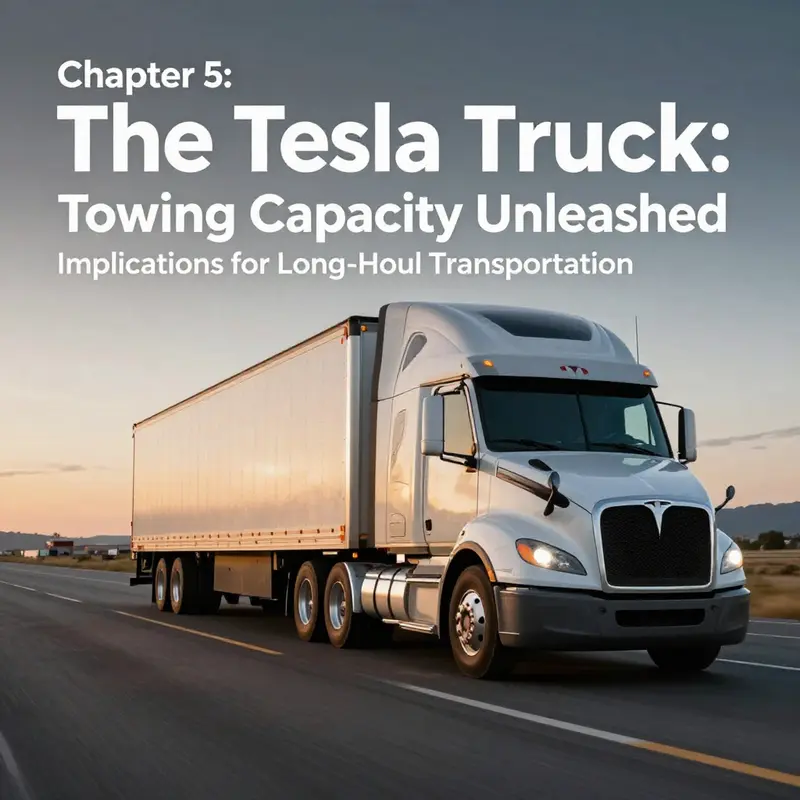
Heavy towing with an electric tractor hinges on three realities: payload, mass distribution, and energy management. The maximum gross vehicle weight (GVW) allowed for a Tesla heavy-haul tractor sets the ceiling for combined truck weight and payload, which is about 80,000 pounds. That limit is not a speed cap, but a constraint that shapes range, acceleration, braking, and stability on long corridors. In practice, a fully loaded tractor-trailer would approach that 80,000-pound boundary, making weight the dominant factor in planning and efficiency.
The unladen curb weight of the tractor is roughly 23,000 pounds, so the practical maximum payload sits around 57,000 pounds if you stay at or below 80,000 pounds total. This scale of payload changes everything: it increases energy draw, reduces range, and intensifies the importance of route planning, charging opportunities, and trailer configurations that preserve handling and braking performance.
Real-world tests indicate highway range on such a heavy configuration can be around 500 miles under optimal conditions, but this figure is sensitive to weather, road grade, wind, and payload. The key takeaway for operators is to map charging stops and build margins into schedules, rather than rely on a fixed range number. Towing also alters the vehicle’s energy calculus, so trip planning tools should inform decisions about speed, elevations, and charging windows rather than define them with precision.
Safety and compliance remain central: never exceed GVWR or GAWR, ensure certified towing equipment and electrical connections, and design loads with weight distribution and axle limits in mind. With disciplined loading, certified attachments, and a robust charging strategy, a heavy electric tractor can deliver meaningful payloads across transcontinental routes while maintaining the reliability demanded by modern freight networks.
Final thoughts
The Tesla Semi’s ability to tow up to 80,000 pounds offers tremendous potential for modern trucking, prioritizing both efficiency and sustainability. Its performance metrics, including a range of 500 miles and impressive acceleration, further cement its place as a formidable contender in the heavy-duty market. As the trucking industry continues to evolve towards electrification, understanding how much a Tesla truck can tow—not just in figures but in practical implications—helps fleet owners and everyday drivers make informed decisions about their transportation needs.