

Tow trucks are more than roadside helpers; they are specialized, capable machines that bridge the gap between a disabled vehicle and a safe, restored journey. From urban streets to highway corridors, these workhorses rely on a blend of configurations, hydraulics, control systems, and driver expertise to recover, transport, and safeguard vehicles after breakdowns or crashes. Everyday drivers encounter tow trucks less as background machinery and more as critical links in mobility, safety, and congestion management. This article unpacks the technology inside towing trucks, the practical and economic realities of operating them, and the regulatory and safety frameworks that shape how they work. Each chapter builds on the previous one to present a holistic view: from the hardware and configurations that enable different recoveries, to the economics and fleet operations that scale those capabilities, to the rules and market dynamics that keep them safe, reliable, and responsive for communities.
Tow Lines and Tech: How Modern Tow Trucks Balance Power, Precision, and Safety
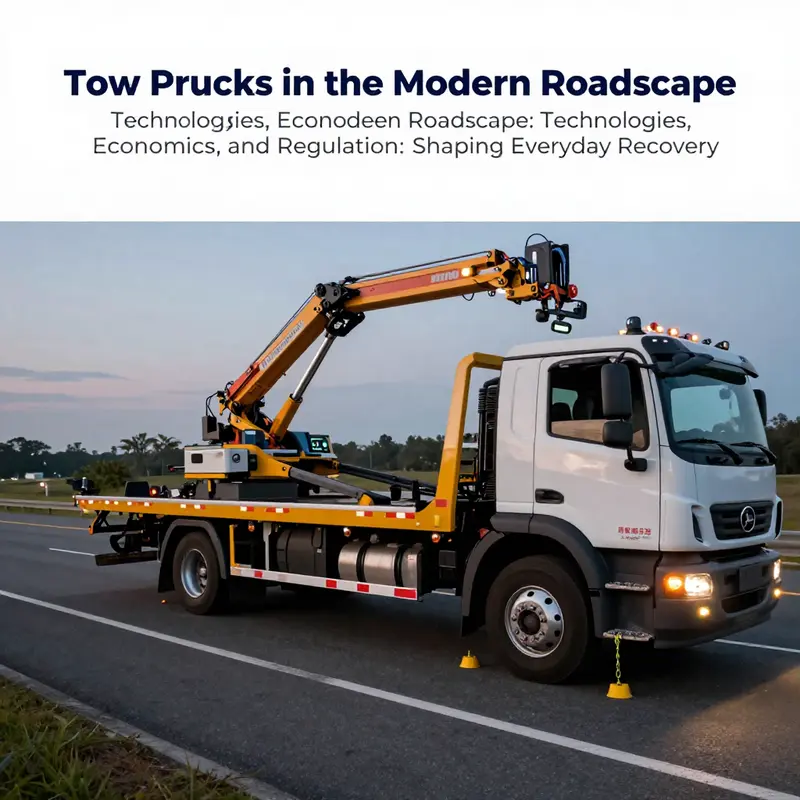
On busy arteries and quiet shoulders alike, tow trucks perform under pressure that would rattle a less purpose-built machine. They are not merely vehicles that haul other vehicles; they are carefully engineered systems designed to recover, protect, and restore order after breakdowns, crashes, or illegal parking. The chapter ahead follows a single thread through a landscape of configurations, components, and capabilities, showing how each choice—down to the smallest hydraulic control—affects outcomes on the road. The flatbed, the wrecker, and the heavy-duty retooled frameworks are not just different shapes of moving metal. They are different responses to the same problem: how to move a vehicle safely from a potentially hazardous location to a repair bay without exacerbating damage or risk. In many ways, the modern tow truck is a mobile workshop whose efficiency depends on a seamless blend of physics, hydraulics, and operator judgment. A flatbed, for example, uses a hydraulically inclined platform that allows the entire vehicle to be loaded and transported with the axles kept parallel to the bed. This design minimizes contact with the towed vehicle’s undercarriage, preserving crucial components for vehicles that have suffered an accident or sustained significant mechanical issues. It also reduces the chance that a disabled car will strike the ground, a factor that can create secondary hazards for passing traffic or bystanders. Loading is not a casual maneuver; it hinges on precise alignment, steady control of the platform’s tilt, and a careful check of the vehicle’s parking brakes and transmissions. In calm conditions, a flatbed can glide a car onto its bed with the operator guiding the vehicle along an invisible line of sight. In more demanding environments, the operator may need to engage wheel-lift or other ancillary methods to secure the vehicle before it can be moved, especially if one or more wheels are immobilized or if the vehicle is resting in mud, snow, or uneven terrain. What makes the flatbed distinctive is the emphasis on preserving the towed vehicle’s integrity. When a customer asks for a transport that keeps tires and frame intact, the roll-back approach is often the first choice. But even a flatbed requires a clear space to operate; a long bed needs room to swing into position, and the process of securing the load demands constant attention to every strap, chain, and point of contact. The operator’s role is as much about judgment as it is about reflex. A trained professional will scan the scene for hazards, consider the road geometry, and anticipate the load’s center of gravity. In many urban environments, where streets narrow and roadside parking is limited, the manual dexterity of the operator becomes a critical asset. The flatbed’s success relies not only on the vehicle and its hydraulic lift but also on how smoothly the operator can thread a path through traffic, pedestrians, and parked cars. The second major configuration, the wrecker or boom truck, introduces a different geometry. Instead of sliding a vehicle entirely onto a platform, boom trucks use a hydraulic arm to reach, lift, and pull vehicles from awkward positions—out of ditches, up embankments, or from the edge of a shoulder where a flatbed would struggle. The boom provides vertical and diagonal reach, enabling controlled lifting even when access is constricted. This capability makes wreckers an invaluable tool for emergency response teams that must recover vehicles in challenging locations or during incidents that require rapid extraction to clear roadways. Yet the complexity of the boom system demands careful maintenance and operator training. The boom’s movements hinge on a precise balance between hydraulic pressure, cable tension, and the stability of the truck itself. Operators must master not only the mechanics but also the etiquette of the operation: coordinating with traffic control, communicating with the vehicle’s owner, and aligning a recovery plan with the scene’s dynamic risk profile. In practice, the wrecker’s versatility shines when the situation calls for delicate, targeted intervention rather than broad, brute force. The third configuration class, the heavy-duty tow truck, expands capacity dramatically to handle large vehicles such as buses, delivery trucks, or even oversized trailers. These machines push the envelope of what is towable with stability and safety, often incorporating reinforced frames, high-torque drivetrains, and robust winch systems. They operate in environments that demand long reach, significant winching power, and reliable control over the alignment of a heavy load. The tradeoffs here are clear: increased capacity often means a larger footprint, more complex maintenance, and heightened requirements for operator skill. The overarching lesson is that the choice of configuration is never a mere technical preference; it is a strategic decision that determines how safeguarding happens in the heat of a roadside recovery. Across these configurations, transmission technology plays a pivotal, sometimes understated role. Automatic transmissions are now the norm in most modern tow trucks because they reduce the cognitive load on operators who must focus on a high-stakes sequence of movements. When a driver is coordinating a winch, a tilt, or a boom under the glare of oncoming headlights, a smooth automatic shift can help preserve balance and speed outcomes. Manual transmissions still appear in some fleets, often for reasons of preference, cost, or specific mission requirements. But the trend is toward automation, with electronics providing protective control layers that help prevent over-revving, abrupt shifts, or unintended movements. These automated systems contribute to longer equipment life and improved fuel efficiency, which translates into more time available for critical recoveries rather than routine maintenance. Emissions standards also shape the modern tow truck’s design. Many fleets seek engines that comply with current regulations while still delivering the necessary torque and reliability. In some regions, meeting stricter emission criteria means investments in cleaner powertrains or in auxiliary systems designed to minimize idle time and optimize engine performance. The result is a vehicle that can do more with less fuel, a quality that matters not only for cost control but also for the environment and the community’s perception of roadside responders as responsible, professional stewards of public safety. The incremental gains in safety are not limited to propulsion or hydraulics. Tow trucks are equipped with a suite of safety features that extend from the moment the vehicle is dispatched to the moment it returns to service. Outriggers, stabilizers, and wheel chocks anchor the unit and prevent unintended movement during loading and winching. Tie-downs and cargo restraints are selected for the specific vehicle and environmental conditions, with attention paid to the weight distribution, road surface, and the likelihood of shifting once the vehicle is in motion. Lighting and signage play a critical role as well. Rotating beacons, amber warning lights, and illuminated load-securing indicators help deter other drivers while guiding them through the recovery zone. In high-traffic or low-visibility settings, the operator’s visibility is amplified by cameras, mirrors, and sensors that provide a real-time picture of the load’s behavior. Even with all protective gear, the risk of injury or damage remains; the operator must be prepared for contingencies, including sudden traffic movements, secondary collisions, or changing weather. As a result, ongoing training is essential. Tow operators participate in hands-on practice, simulated scenarios, and formal safety programs that cover scene assessment, vehicle handling, load security, and communication protocols with other responders. Training emphasizes not only technical proficiency but also risk management, crew coordination, and decision-making under pressure. It is a discipline as much about discipline as about finesse. The role of technology continues to evolve beyond the basic mechanics of the platform, winch, and boom. Remote control systems, once a convenience feature, have grown into crucial tools that extend an operator’s reach and precision. Remote controls can position heavy loads with remarkable accuracy, particularly in tight spaces or dangerous scenes where direct control from the cab would expose the operator to risk. These systems, typically operating on established radio frequencies, must be designed with security in mind to avoid interference or unauthorized access. The push toward smarter recovery also means integrating software and telematics into daily practice. Fleet managers can track usage, plan maintenance, and analyze recovery patterns to optimize service delivery. For the operator, this translates into better support, more consistent performance, and clearer feedback on how to refine techniques. The industry is moving toward a future where the tow truck does not stand alone as a mechanical response but rather acts as node in a network of safety, information, and coordination. Yet the essential choreography remains practical and tactile. A careful assessment of the scene precedes any physical action. The operator reads the terrain, the slope, and the traffic dynamics, then chooses the most appropriate configuration and loading sequence. The aim is to minimize movement and vibration, to protect bystanders, and to preserve the vehicle’s structural integrity. In any case, the operator must be ready to adapt. If ground conditions deteriorate mid-recovery, if a bystander enters the area, or if the vehicle’s weight distribution shifts unexpectedly, the plan changes. Flexibility is part of the toolkit, not a separate skill. The modern tow truck thus embodies a philosophy as much as a machine: recovery with care, efficiency without haste, and a commitment to public safety that underpins every decision on the roadside. The chapter’s portrait would be incomplete without acknowledging the broader ecosystem in which towing operates. Tow trucks belong to fleets that coordinate with police, fire, and emergency medical services. They respond to traffic incidents that can block lanes, create hazards, or delay critical responses to other emergencies. In those contexts, the speed and reliability of a towing operation contribute to the overall effectiveness of the incident management effort. The operator may also need to communicate with the incident command system, relay the status of a recovery, and adjust the approach as the scene evolves. In this sense, the technology inside a tow truck is inseparable from the human practices that govern its use. It is not only about the hardware but also about the procedures and the discipline that ensure every recovery is executed with foresight and accountability. The literature and industry insights converge on a common theme: the evolution of tow trucks is a story of progress built on a steady foundation of safety, training, and thoughtful design. No one part of the system works in isolation. The hydraulic platform, the winch and boom, the transmission, the emissions-compliant engine, and the operator’s training all reinforce one another. When this harmony holds, the result is a safer scene, quicker clearance of roadways, and a vehicle that can return to service with minimal additional risk to the owners, other road users, and the operator. For readers who wish to deepen their understanding of the interplay between technology and practice, the field is rich with practical guides and technical analyses that examine load dynamics, braking considerations, and the interplay of chassis stability with heavy loads. The overarching narrative remains consistent: modern tow trucks are continually refined tools designed to respond to the unpredictable, high-stakes realities of roadside recovery, while upholding a standard of professional care that protects lives and livelihoods. As the chapter closes, consider the everyday scenes you may have encountered in traffic: a tow truck arriving at a stalled vehicle, the careful choreography of securing a load, the steady rise and fall of a platform, the quiet confidence of an operator guiding a heavy, unwieldy object to safety. These scenes reveal a craft that blends mechanical engineering with human judgment. They show how, in emergencies, precision is not a luxury but a necessity. And they remind us that behind every successful recovery lies a system that respects the limits of force, the value of a protected vehicle, and the obligation to keep the public moving safely forward. For readers seeking a deeper dive into the core technologies and safety considerations shaping today’s tow trucks, a detailed overview is available in an external resource that surveys the technology landscape and the practical implications for operators and fleets. Tow-truck technology and safety. For additional technical context on the evolving capabilities and design considerations of tow trucks, see the broader discussion in the industry reference. External reading: https://www.heavyequipmentguide.com/tow-truck-technology-overview
Tow Lines that Drive an Economy: The Economic and Operational Landscape of Modern Tow Trucks
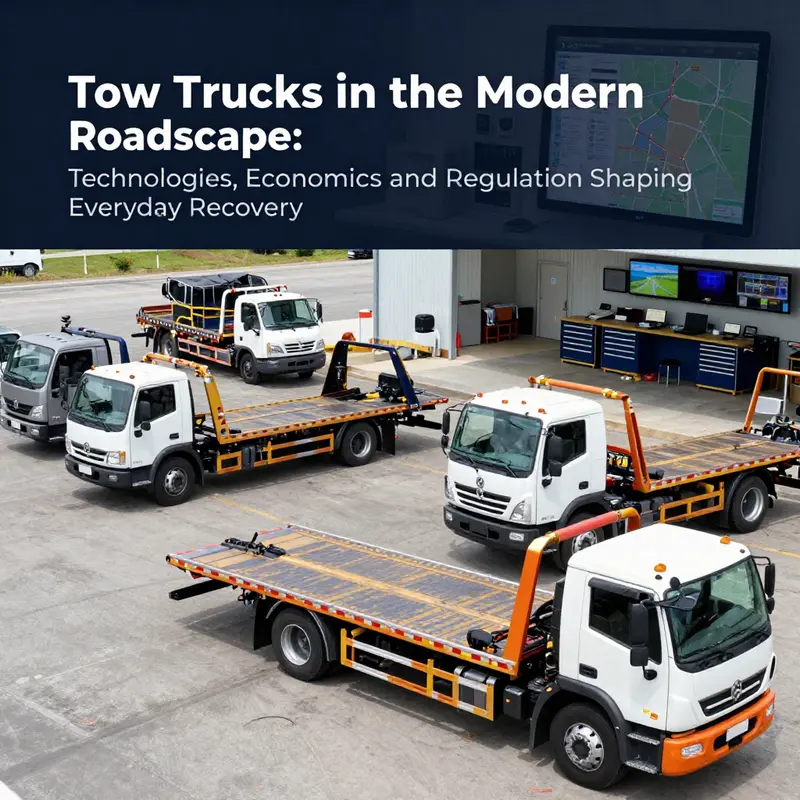
Across the lanes and exit ramps of modern commerce, tow trucks perform more than a roadside service. They are a resilient, high-stakes link in the chain that keeps goods moving, people safeguarded, and fleets protected from costly downtime. In this chapter, we explore how tow trucks function as both practical tools and strategic assets. Their value emerges not just from their mechanical lift or winch, but from how they integrate into a broader system of road safety, fleet management, and rapid response. The economic and operational logic behind these vehicles rests on a simple truth: time is money on the road. A minor breakdown or a vehicle accident can stall a corridor of commerce, ripple into supply chains, and force delays that compound with every minute of idled equipment and missing drivers. Towing services, therefore, are not mere last-mile responders; they are proactive enablers of efficiency, reliability, and fiscal stability for fleets that depend on predictable uptime. The market signals around these assets reflect that reality. In the United States, for example, market analyses point to a market on the order of several billion dollars by the end of the decade, driven by a steady longstanding pace of demand that tracks with overall vehicle activity, urban growth, and the expanding need for quick, safe traffic incident clearance. That economic frame is reinforced by the functional diversity within the towing fleet itself. Rollback or flatbed models provide a broad, adaptable platform for transporting vehicles with minimal risk of further damage, especially in cases involving undercarriage injuries or cosmetic concerns that require gentle handling. Wreckers, with hydraulic booms and winches, are designed for the core recoveries that involve lifting, pivoting, or pulling objects from precarious positions. Heavy-duty tow trucks, built for high-capacity tasks, enable recovery operations that involve large commercial vehicles, buses, or heavy industrial equipment. Each configuration speaks to a different operational niche, and together they form a spectrum that allows a single service provider to respond to a wide array of incidents with competence and speed. This spectrum matters for the bottom line because it directly influences dispatch efficiency, maintenance scheduling, and the ability to offer prompt service without overstretching resources. The economic value of a tow truck thus multiplies through improved uptime for the customer and reduced risk exposure for the operator. When fleets experience shorter downtime, they experience fewer missed opportunities, fewer late deliveries, and less exposure to penalties tied to service levels. In a broader sense, tow trucks help preserve the value of other assets: drivers who must be back on the road, insurance costs that reflect lower risk of secondary incidents, and road systems that can maintain flow rather than devolve into congestion. The financial calculus extends beyond immediate recovery. Operators must consider maintenance cycles, fuel efficiency, and the durability of their equipment under varied operating conditions. Advances in hydraulic systems and chassis materials—designed for longevity and resilience—convert higher upfront investment into longer intervals between major overhauls. The result is a more predictable cost of ownership, a key metric for any fleet manager who must balance cash flow against service commitments. As the market for towing equipment evolves, so too do the expectations of customers. Roadside assistance, rental fleets, municipal agencies, and private fleets all seek rapid, reliable solutions that minimize disruption and protect vehicle integrity. The capacity to deliver on those expectations hinges on a few core capabilities. First, load handling must be precise and controlled. Flatbed or rollback configurations are engineered to tilt, slide, and lower to ground level, enabling vehicles to be loaded horizontally with minimum impact on their structure. That design reduces the likelihood of collateral damage during loading and transport, a factor that matters not only for the vehicle owner but also for insurers and fleet operators who manage risk exposure. Second, recovery operations demand stability and control. Wreckers rely on booms and winches to lift and reposition disabled units. The geometry of a successful lift—whether the recovery is vertical, diagonal, or horizontal—depends on careful weight distribution, secure attachment points, and calibrated tension. In all cases, the safety of the operator and bystanders remains a paramount consideration. The third critical capability lies in the power to reach the scene quickly and to execute a complex maneuver in a constrained space. Urban environments, with narrow lanes, parked cars, and unpredictable traffic, require nimble handling and robust on-board safety systems. Outriggers and stabilizing legs, when deployed, widen the base of support and enable stable loading operations even on uneven pavement. These features are not luxuries; they are essential for preventing secondary incidents, protecting vulnerable parts of a vehicle, and ensuring that the driver can complete the job with minimal exposure to risk. The economics of these choices unfold in a familiar pattern: upfront investment in a versatile platform can yield longer service life, reduced maintenance costs per mile, and greater revenue opportunities through a broader service envelope. A 20-ton heavy-duty wrecking capability, for example, opens the door to roadside rescues that involve larger commercial units and freight equipment, sectors that represent a substantial portion of fleet turnover and maintenance budgets. For many operators, the ability to handle heavy-duty recoveries translates into a more complete service catalog, which in turn justifies a more robust dispatch network, higher utilization rates, and better bargaining power with insurance providers and municipal agencies. The interplay between capability and cost is further shaped by technology. Hydraulic circuits that are more efficient and more reliable reduce hydraulic fluid losses, improve speed, and lower maintenance downtime. Durable materials, engineered to resist corrosion and wear in harsh weather, extend the service life of chassis components and lifting mechanisms. Digital tools, including fleet management software and telematics, enable more precise scheduling, predictive maintenance, and real-time visibility for customers awaiting service. In practical terms, these technologies mean a tow operator can anticipate when a winch line is nearing the end of its life, predict the optimal time for a service interval, and dispatch the right combination of trucks and personnel to minimize time on scene. The result is a business model that not only meets the immediate need of a breakdown but also preserves the long-term viability of the service provider by reducing downtime and optimizing resource use. This is where the operational landscape becomes truly dynamic. The market is increasingly driven by the need for rapid response in congested corridors, on busy interchanges, and in expanding urban centers. Roadside incidents that once elicited long, uncertain wait times are now met with a coordinated fleet response, often guided by intelligent dispatch systems that account for traffic patterns, predicted road conditions, and the availability of appropriate equipment. The consequence is a service ecosystem in which the right equipment arrives not only quickly but in a configuration that matches the unique constraints of the scene. A rollback truck with a flatbed can address a severe undercarriage issue after a collision, while a heavy-duty wrecker can secure and relocate a toppled tractor-trailer that blocks multiple lanes. In some cases, the operation requires a combination of approaches; matching the best tool to the job minimizes damage to the vehicle, reduces scene time, and lowers the risk of injury to workers. This capacity hinges on training, teamwork, and the ability to read a scene with accuracy. Operators must assess hazards, consider vehicle dynamics, and coordinate with police or traffic management authorities to secure lanes and manage bystander risk. In regions with frequent severe weather, the ability to adapt to changing conditions—whether by deploying additional stabilizing outriggers, employing all-terrain or off-road capabilities, or switching to a heavier-duty configuration—becomes a critical determinant of success. The economic implication here is resilience. Fleets that invest in adaptable platforms and robust maintenance regimes are better positioned to withstand seasonal fluctuations in demand and the variability of road conditions. They experience smoother cash flows, more predictable revenue, and improved insurer relationships because their risk profiles are lower. Beyond the mechanics of loading and lifting, the integration of tow trucks into broader safety and emergency response systems is notable. Professional fleets often work in concert with roadside services, police departments, and municipal authorities to clear obstructed roadways efficiently. The timeliness of a tow operation can influence incident duration, traffic queue lengths, and the overall safety of a corridor. In such settings, the value of a well-equipped, well-trained crew extends beyond the immediate scene. It supports public safety goals, reduces the probability of secondary crashes, and reinforces the reliability of the entire transportation network. The economic and operational narrative of tow trucks culminates in a practical recognition: the most effective fleets are those that blend physical capability with strategic management. The right mix of flatbeds, wreckers, and heavy-duty units, paired with disciplined maintenance and advanced dispatch, yields greater uptime and demonstrates a clear return on investment. This is not merely about moving a car from point A to point B; it is about preserving the momentum of commerce, reducing the risk of downstream failures, and sustaining the confidence of drivers and fleet operators alike. For a deeper technical discussion of how flatbed design, material selection, and hydraulic architecture translate into on-road performance, see the external resource at https://www.madisonhill.com/science-behind-international-flatbed-tow-truck. In addition, for a broader look at how technology and safety are shaping tow-truck operations, explore more on the topic of tow-truck technology and safety: tow-truck technology and safety. These sources complement the narrative by tying the practical demands of roadside recovery to the engineering and safety considerations that underlie modern tow fleets. The chapters ahead will circle back to how these capabilities feed into policy, insurance, and the evolving regulatory landscape, while keeping the focus on the core mission: keeping roads open, people safe, and goods moving with reliability and efficiency.
Tow Lines at the Edge of Safety: Regulation, Risk, and the Market Pulse of Modern Tow Trucks
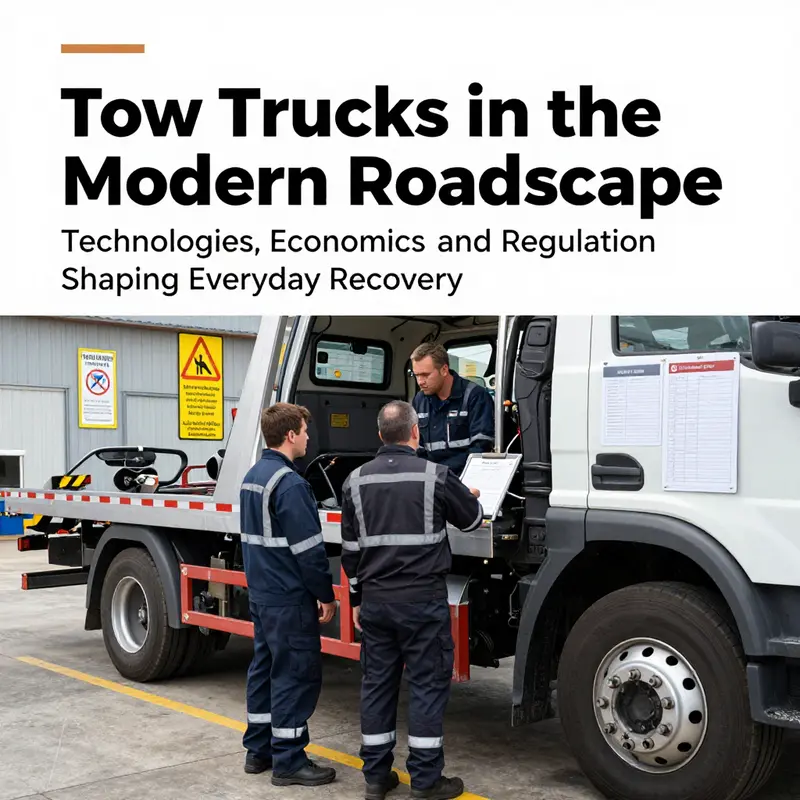
Across the long, lived history of road transport, tow trucks have evolved from simple winch-and-pallet arrangements into purpose-built systems that must perform reliably under stress, in all weather, and within a highly regulated legal framework. This chapter examines how rules, safety culture, and market demand intertwine to shape the design, operation, and everyday realities of modern towing operations. The regulatory backbone is not merely bureaucratic ballast; it is a dynamic scaffold that defines what counts as a roadworthy recovery vehicle, how it must be powered, how it communicates with other road users, and what kind of training the crew must have to ensure that every intervention minimizes risk to the public, the operator, and the vehicles involved. In a landscape where fleets move critical cargo and people, the ability to tow safely is as important as the speed with which a tow can be deployed. The result is a disciplined industry that balances technical capability with the responsibilities that come with operating heavy machinery on public streets. When a fleet manager evaluates a vehicle for licensing, the decision is not only about payload and reach. It is about whether the platform, the hydraulics, the braking systems, the lighting, and the securement hardware align with the authorities’ standards and with the fleet’s obligation to protect onlookers in traffic, repair crews on shoulders, and drivers whose cars have failed in vulnerable places. A formal document such as the Authority to Tow embodies this alignment. It functions as a certification that a tow truck meets the necessary technical criteria for its intended use, ensuring it can perform recovery operations without posing undue risk on the road. This process reinforces a principle at the heart of the industry: safety and legality must travel together, not in parallel lanes. The intricacies of classification—how a vehicle is categorized for road use and what equipment is mandatory for each class—are never merely administrative. They are practical guardrails that guide the manufacturer’s design choices and the operator’s maintenance routines. In the field, differences between lightweight recovery tasks and heavy-duty highway rescues translate into concrete, observable requirements: the presence of fire extinguishers, the appropriate harnessing of loads, and the structural integrity of mounts, winches, and booms. For operators, this means a continuous, vigilant attention to compliance, even when schedules are tight and incidents are unfolding. The emphasis on heavy vehicle standards reflects a recognition that a tow truck handling a ruined semi-trailer on a crowded interstate imposes risks far beyond a routine roadside stop. It is precisely because the scale of potential harm grows with weight and velocity that regulatory systems insist on rigorous standards, comprehensive testing, and documented verification before a new vehicle is brought into service. The dialogue between regulation and market needs is ongoing. As urbanized regions expand, the density of heavy fleets increases the demand for high-capacity wreckers. A 50-ton configuration, for instance, becomes a practical necessity in areas with substantial logistics networks or in stretches of highway where large tractor-trailers traverse at high speed. Such demand does not simply push manufacturers to stretch mechanical capacity. It drives a broader conversation about safety features, redundancy, and monitoring. Modern wreckers increasingly incorporate advanced monitoring systems, fail-safes, and diagnostics designed to detect issues before they become operational failures. These technological enhancements are not cosmetic improvements; they are essential components of compliance with contemporary heavy-vehicle standards and with the expectations of risk-averse fleets that operate in complex urban corridors and long-haul routes alike. The market dynamics described here are inseparable from regulatory evolution. When authorities update standards to reflect new materials, new fatigue testing methods, or new approaches to driver workload management, manufacturers respond with redesigned components, updated maintenance schedules, and enhanced training programs for operators. In turn, fleets that adopt these innovations often experience a measurable reduction in downtime and in the likelihood of on-road incidents, creating a positive feedback loop that reinforces investment in compliant, capable equipment. The cycle is not purely technical; it is deeply practical. Operators must learn to navigate the legal landscape just as they navigate traffic. The familiar rules about following distance become even more critical when a tow vehicle is hauling a disabled or damaged automobile on a trailer or a platform. On the highway, the required following distance roughly doubles in some jurisdictions when cargo is being towed, particularly if the load includes a trailer or a combination of high-center freight. This precaution helps avert abrupt braking, wheel lockup, or skidding, which can cascade into a more serious crash in dense traffic. In city streets, where streetscape geometry often forces tighter maneuvers, the long, sweeping arcs required to negotiate turns with a loaded trailer demand a heightened awareness of surrounding obstacles—curbs, signs, trees, urban fixtures—that could otherwise be brushed or struck. Such considerations are not anecdotal; they are embedded in training curricula and in the daily rituals of drivers who must plan movements well in advance, map alternate routes when capacity is constrained, and communicate clearly with traffic control when they need to position a vehicle for recovery work. The insistence on careful operation is mirrored in best-practice checks that accompany every tow. Regular testing of trailer lights, turn signals, and braking systems is essential because a tow payload depends on visible cues to other road users and on the precise coordination between motor vehicle brakes and trailer brakes. The explicit reminder that a touchscreen or dashboard indicator can display encouraging progress while the actual trailer bulbs have burned out is a blunt but necessary caution; it underscores the need for physical verification in a system that relies on multiple subsystems working in tandem. The crew’s vigilance extends to securing cargo, verifying hitch integrity, and confirming that chains, straps, and winches are properly engaged and not subject to wear that could compromise load security. Parking on an incline while towing is avoided not merely out of tradition but as a practical risk-control measure. Gravity and inertia can transform a well-secured load into a destabilizing force if a vehicle moves unexpectedly, and this risk is magnified when the operator must perform complex maneuvers on an inclined surface. The human element remains central in this calculus. Training programs and certification regimes ensure that operators are not only technically proficient but also attuned to the ethical dimensions of their work—protecting the public, respecting other road users, and maintaining reliability for customers who depend on rapid, safe recovery. The market narrative is inseparable from this human dimension. The growing complexity of freight networks, the expansion of urban infrastructure, and the necessity to move vehicles out of obstructing or dangerous positions all contribute to demand for capable, compliant tow trucks. The push toward higher capacity is not simply about lifting heavier weights; it is about expanding the range of recoveries a fleet can perform with a single, well-maintained platform that remains within the bounds of safety standards. In this sense, regulation, safety, and market dynamics are not three separate strands but a braid that binds the industry’s future. Operators who stay informed about regulatory updates, who invest in reliable equipment, and who cultivate disciplined driving practices become the backbone of resilient road networks. They are the ones who translate policy into practice—turning legal language into safer roadways, cooler heads in emergencies, and steadier service for every motorist who depends on towing support during a breakdown, a collision, or a sudden hazard. For readers seeking a window into how safety technology has evolved within tow trucks, a deeper look at the progression of tow-truck technology and safety can be illuminating, as it traces the shifting emphasis from brute strength to integrated systems that monitor load, stabilize dynamics, and assist drivers in making safer, quicker, and more predictable recoveries. Additionally, the human factors—training, fatigue management, and professional etiquette—play a decisive role in shaping outcomes, reminding us that the best equipment only performs when it is matched with competent, disciplined operators. The conversation about tow trucks thus moves beyond horsepower and lifting capacity to embrace a holistic view: a vehicle that can legally operate with confidence, a crew that can execute complex recoveries with precision, and a regulatory ecosystem that evolves in step with technology and market needs. In this light, the chapter you are reading sits at a crucial hinge between what is commanded by law and what is achieved through practice. It links the panel of standards that determine eligibility for use with the on-ground realities of deployment, route selection, and incident command. This perspective helps explain why a seemingly straightforward piece of equipment—an emergency recovery vehicle—demands a robust framework that can adapt as cities grow, fleets modernize, and the risks encountered on the road become more intricate. The interplay between regulation and market forces will continue to shape not only what is built but how it is used, how drivers are trained, and how recovery operations are conducted in a world of increasing mobility and interconnected transport networks. To situate these ideas within a broader knowledge base, see the resources that discuss evolving safety protocols and technology adoption in tow operations, and consider how the standards described here translate into everyday practice on the ground. For a concise introduction to the practical aspects of modern tow truck safety and technology, you can explore the dedicated discussion on tow-truck technology and safety. External standards and safety guidelines continue to be refined, and staying current is essential for anyone involved in towing operations. The overarching takeaway is clear: the road to safer, more reliable towing is paved with well-designed machines, informed operators, and regulatory vigilance that keeps pace with innovation. External resource: https://www.nhtsa.gov
Final thoughts
Across the spectrum of everyday mobility, towing trucks fuse heavy-duty hardware with precise operational discipline to deliver reliable recovery and transport services. The chaptered journey—from the hardware configurations that power different recovery tasks, through the fleet-level economics that scale these services for communities, to the safety and regulatory frameworks that govern responsible operation—offers a holistic view of why tow trucks matter beyond the roadside. For drivers, fleet managers, and property stewards, understanding these layers helps in evaluating needs, planning responses, and engaging with reputable responders who can move people and vehicles forward safely and efficiently.