
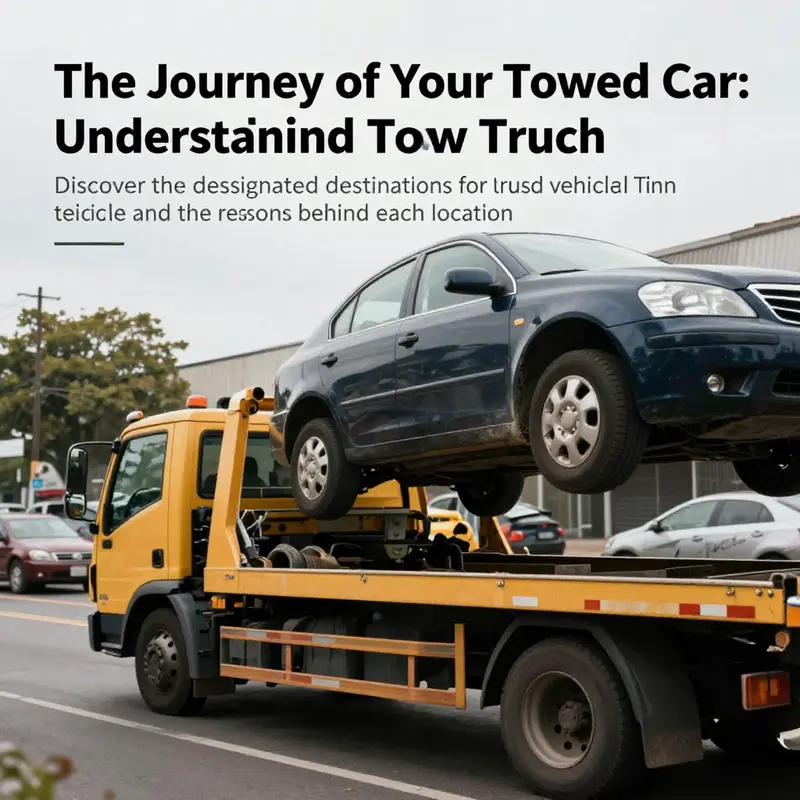
When your vehicle is towed, its destination can vary widely based on the circumstances surrounding the tow. These destinations are not arbitrary; they are determined by local laws, regulations, and the specific reasons for towing. For everyday drivers, residents, commuters, truck owners, auto repair shops, dealerships, and property managers alike, understanding where tow trucks take cars can help demystify the process and prepare you for potential scenarios. In this exploration, we’ll dive into three key destinations: impound lots for parking violations, repair shops after vehicle breakdowns, and storage facilities following accidents. Each chapter will elucidate why these locations are chosen and what it means for vehicle owners.
When Parking Turns Costly: How Impound Lots Handle Towed Cars
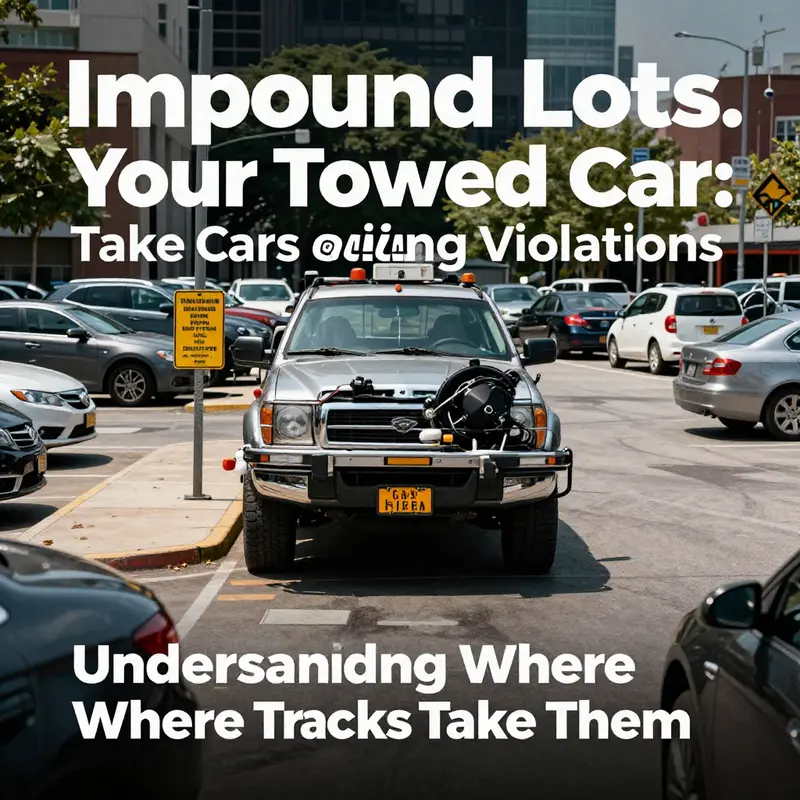
Tow trucks rarely take a vehicle somewhere random. When a car is removed for a parking violation, it usually ends up at an impound lot. These facilities are not all the same. Some are city-run yards a few blocks from downtown. Others are private storage facilities located in industrial zones. Regardless of who runs them, impound lots serve a single purpose: secure storage until the vehicle’s legal and financial issues are resolved. The path from curb to lot involves several actors — parking enforcement, contracted towing companies, and municipal or private lot operators — and each plays a role that affects where a car is taken and how quickly it can be recovered.
Why a car goes to an impound lot is straightforward. Parking enforcement officers or police identify a violation that triggers towing. That can be blocking a driveway, parking in a clearly marked no-parking zone, or violating local ordinances such as street sweeping or emergency route rules. Once an officer determines towing is necessary, they call the contract tow company or radio the dispatch unit. Tow operators then remove the vehicle and transport it to the designated impound facility assigned by the city or agency responsible for towing. In many municipalities, towing contracts specify which lots to use. This reduces confusion and ensures vehicles are processed consistently.
Impound lots vary widely in layout and operations. Some large cities maintain multiple impound facilities to handle high volumes of towed vehicles. These lots are often near police stations or municipal processing centers. In smaller jurisdictions, one contracted private tow yard may handle all tows for a wide area. The distance between the original parking location and the impound lot depends on local arrangements, available space, and zoning rules. Municipalities avoid placing impound lots in residential neighborhoods, so many are located in industrial corridors or on the outskirts of downtown. Drivers unfamiliar with a city quickly discover that their car could be much farther from where it was parked than they expected.
When a vehicle arrives at an impound lot it is processed. That procedure is routine but important. Staff record the vehicle’s make, model, color, license plate, and vehicle identification number (VIN). They note the time and place of arrival and log the towing authorization. Photographs may be taken to document vehicle condition. The lot will then place a temporary hold or tag on the car, and the owner’s contact information — if known — will be recorded. These records matter. They support legal compliance, protect the towing company, and establish the baseline for any later disputes about damage or condition.
Retrieving a vehicle from an impound lot is rarely instantaneous. Owners must usually follow a set process to prove ownership, pay required fees, and sign release documents. The paperwork typically includes a government-issued photo ID and proof of ownership, such as a vehicle title or current registration. If the owner lacks the title, a current registration and matching photo ID sometimes suffice. When the car has outstanding citations, such as unpaid parking tickets or fines, those must often be cleared before release. In some jurisdictions, vehicle owners must also show proof of insurance before a car is returned.
Fees are central to impound lot operations. A towing fee covers the physical hook-and-haul service. Storage fees accrue by the hour or the day. Administrative or processing fees may also be charged for paperwork and staff time. The combination of these fees can become substantial after only a few days. The longer a vehicle remains unclaimed, the higher the bill climbs. Many cities impose escalating daily storage charges once a threshold day count is reached, which creates strong incentive for prompt retrieval. In extreme cases where a vehicle remains unclaimed for a statutory period, the city or lot operator may initiate a lien sale or auction to recoup past-due fees. If a vehicle is sold at auction, the proceeds first cover towing, storage, and administrative costs. Any remaining balance may be remitted to the former owner, subject to local procedures.
Knowing how to find your towed car reduces stress. The first step is to check the parking citation or notice left on the windshield. That notice normally lists the towing company and a phone number. If there is no notice, contact the non-emergency number for the local police or parking enforcement agency. Many cities maintain an online database where you can enter a license plate or citation number to find the car’s location. Some municipal websites also show photos and the specific lot where the vehicle is stored. Calling ahead is wise. It confirms the lot’s hours and the exact documentation required to release the vehicle.
Impound lot hours vary. Some lots are open late on weekdays and on weekends, while others operate only during business hours. Knowing the lot’s hours prevents wasted trips. Many lots accept multiple forms of payment, but some will only accept cash, certified checks, or certain electronic payments. If you plan to retrieve a vehicle after hours, ask whether the lot provides after-hours release and whether additional charges apply. Tow companies and municipal lots often post their hours and payment rules on public websites or provide them over the phone.
Legal rights and avenues to dispute a tow are important to understand. If you believe your vehicle was wrongfully towed, document everything at retrieval. Take photographs of the vehicle and the area where it was parked if possible. Request copies of the towing authorization and any records the lot maintains. Many jurisdictions offer an administrative appeal process where the owner can challenge the tow before a neutral hearing officer. The appeal window is usually short, often within a few days of the tow. Winning an appeal may return part or all of the fees or prevent a later auction. Legal counsel can help when the stakes are high, especially if damage occurred during towing or storage, or if a city’s procedures were not followed.
Impound lots do not only hold illegally parked cars. They also store abandoned vehicles, cars removed for evidence in active investigations, and vehicles immobilized under certain civil processes. Abandoned vehicles often follow a different legal track. Cities generally give notice and a statutory waiting period before disposing of an abandoned vehicle. The owner receives notice by mail to the address on the registration. If the owner does not respond or claim the car, the lot operator may obtain title and dispose of the vehicle. That disposal can involve selling the car at auction, recycling it, or sending it to a salvage yard.
Contract towing adds another layer. Many cities use private towing companies under contract to handle enforcement tows. Contracts typically specify response times, pricing caps, and designated impound lot locations. The contract might also require the tow company to maintain specific insurance levels and to follow reporting protocols. Contracted companies can face penalties if they violate rules. For motorists, contract towing can be both good and bad. It ensures a regulated process but also concentrates power with a limited set of companies, which sometimes leads to disputes over pricing or practices.
Private property tows operate differently but still often end at impound lots. A property owner or manager can authorize a tow for vehicles that block access or violate posted rules. The towing company will remove the vehicle and notify the local authorities as required by law. State and local laws commonly require signage on private property informing drivers that unauthorized vehicles will be towed, and the sign must list the tow company’s phone number. If a car is towed from private property, the owner must follow similar steps to retrieve it, including fees and proof of ownership.
Safety and security are key functions of impound lots. These facilities secure vehicles to protect them from theft and vandalism and to preserve evidence in legal matters. Many lots are fenced, gated, and under video surveillance. Staff control access and maintain logs of entry and exit. When a vehicle contains personal items, lot operators typically log those items, and many states regulate how long personal effects must be held if a vehicle is sold or disposed of. If valuables are missing when a car is returned, document the loss immediately and report it to the lot operator and local law enforcement.
The condition of a vehicle after towing matters. Owners sometimes claim damage occurred during the tow or while the vehicle was stored. Proper documentation at intake — such as photographs and written condition reports — helps resolve such disputes. When damage is suspected, ask to see the lot’s intake paperwork, which should include notes on preexisting damage. If the lot lacks adequate documentation or if the tow operator was negligent, legal options may be available. Insurance may cover towing-related damage, but policy language varies. For serious disputes, an attorney or consumer protection office can advise on next steps.
Costs of towing and storage differ by region. Urban centers with high demand and limited space often have higher charges. Cities sometimes establish maximum allowable towing and storage fees through ordinances. These caps aim to prevent predatory pricing. In other places, private companies set their own rates with less municipal oversight. For context on towing economics and how rates are structured, see this guide to towing costs and pricing for a deeper look into the factors that influence fees and how operators set charges.
When a car is declared a total loss or abandoned, the path from impound lot often leads to salvage facilities. Insurance companies may instruct the lot to release a vehicle to a designated damage assessment center or salvage yard for evaluation. The assessment determines whether repairs are economical. If the insurer totals the vehicle, it is typically transferred to a salvage auction or to a recycler. The legal owner, insurer, or lienholder handles the title transfer processes required for such moves.
Auctions are the final stage for many unclaimed vehicles. Municipalities and private lots regularly auction unredeemed cars. Auctions follow legal notice requirements. They may be held online or on-site. Buyers often acquire cars sold at auction “as-is,” and titles may be branded depending on the vehicle’s condition and history. Owners sometimes recover some funds after an auction, but only after towing and storage costs have been covered and after legally prescribed procedures are completed.
Preventing a tow begins with clear signage and awareness of local rules. Read parking signs, respect posted restrictions, and heed temporary notices for street cleaning or construction. If you receive a parking citation, address it promptly. Some cities allow electronic payment or online scheduling to contest a citation. Timely action often avoids the escalation to towing. For property owners, clear, visible signage and calm, consistent enforcement reduce disputes and confusion.
Communication matters when a vehicle is towed. Lot staff and municipal agencies are the primary points of contact. Keep records of calls, the names of representatives, and confirmation numbers. If you send someone else to pick up the car, confirm that the lot accepts third-party releases, and provide a written authorization along with copies of the required documents. Many lots will not release a vehicle to someone without signed authorization and matching identification.
Finally, understand the emotional and financial toll of an impound. The process can feel punitive, especially when fees mount quickly. Yet behind the notice and the fenced yard lies a regulated system designed to enforce parking rules, clear public ways, and secure vehicles. Knowing how impound lots operate makes the system easier to navigate. It improves your chances of a prompt, fair outcome if your car is towed. If you find yourself facing an impound, act quickly: confirm the location, gather documentation, clear any legal holds, and pay the release charges. Doing so minimizes cost and time away from your vehicle.
For official resources on towing rules and vehicle storage regulations, consult the U.S. Department of Transportation’s guidance on towing and related regulations at https://www.transportation.gov.
From Roadside to Repair Bay: How Tow Trucks Deliver Broken Cars to the Right Shop
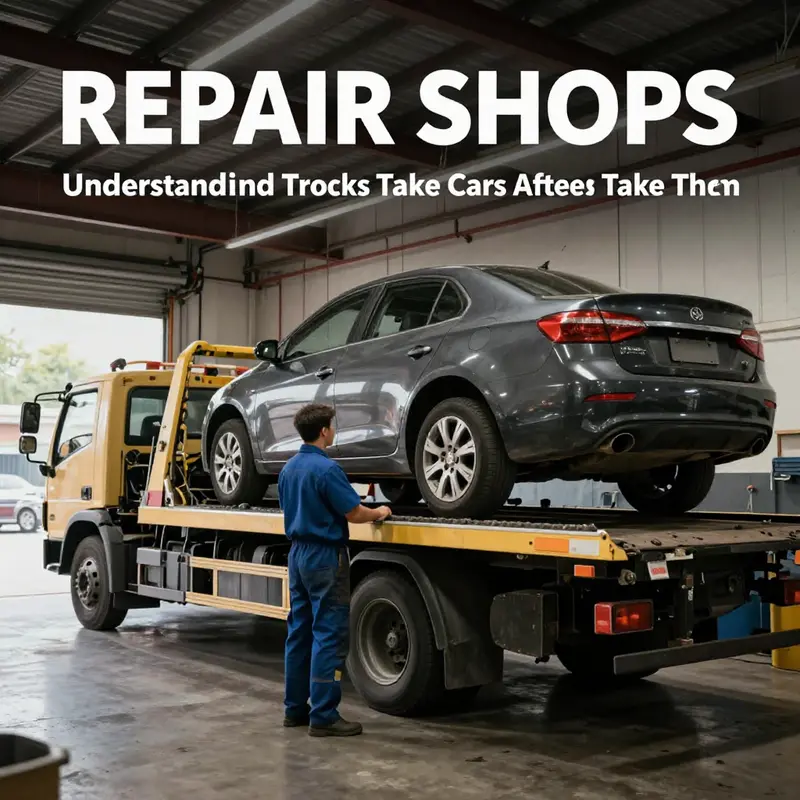
Where a towed car ends up matters as much as who tows it. When a vehicle fails on the roadside, the tow truck does more than move metal. It delivers the problem to the place best equipped to fix it. That place is usually a repair shop. Yet “repair shop” covers a wide array of facilities. The choice of destination depends on the fault, the vehicle, the agreement with the vehicle owner, and the party that ordered the tow. Understanding the decisions that guide where a tow truck takes a broken car helps owners act quickly. It also helps them avoid surprises when they retrieve their vehicle.
A broken car taken by a tow truck rarely sits idle at a random garage. Towing drivers aim for nearby facilities that match the vehicle’s needs. For simple mechanical failures, a local independent shop can diagnose and repair the issue the same day. For problems involving a guarantee or manufacturer-specific systems, an authorized service center or dealership is often the destination. For heavy recovery or structural damage, a shop with specialized equipment will receive the vehicle. Each destination has its role. Each choice reflects cost, convenience, and the technical demands of the repair.
Most roadside breakdowns are straightforward. The engine stalls. The battery dies. Tires fail. In these cases, the nearest reputable independent shop is practical. These shops offer general mechanical services. They keep common parts in stock and perform diagnostics efficiently. A tow truck driver will usually call ahead. They confirm the shop can handle the repair. That call prevents multiple moves. It also shortens the wait time for the vehicle owner. If the problem is fuel exhaustion, many shops will simply top off the tank. If the battery is dead, they may test and replace it. If the alternator or starter is faulty, the shop will run diagnostics and advise the owner on next steps.
Manufacturer-specific systems change the equation. Modern vehicles use complex modules for safety, emissions, and advanced driver assistance. When these systems fail, authorized service centers or dealer shops are often better equipped. They have manufacturer-grade diagnostic tools. They also have access to factory parts and recall information. Insurance companies and roadside assistance providers frequently specify these destinations. They do so to preserve warranty coverage and ensure repairs meet manufacturer standards. A tow driver acting under the direction of a service plan will follow these instructions. The result is that the car arrives where the correct diagnostic software and parts are available.
Not all breakdowns are repairable at a single facility. Some faults reveal themselves only after inspection. A minor collision might look superficial at first. Underneath, there may be frame damage or fluid leaks. When the tow truck delivers the vehicle, the receiving shop performs a triage. This initial assessment identifies immediate safety issues. It also clarifies whether the shop can complete the full repair. If the vehicle needs specialized welding, alignments, or structural work, the shop may coordinate a transfer. The tow truck may move the car again to a body shop or collision center. This second move is common when a vehicle is first rendered immobile by a roadside event, then later found to need heavy repairs.
Heavy-duty towing is another consideration. Large vehicles and heavy-duty trucks require specialized equipment and shops. When a service truck or a large SUV breaks down, the tow must match the weight and complexity. Tow companies with heavy-duty rigs will deliver these vehicles to shops with reinforced lifts and capacity for large components. These facilities can handle transmissions, heavy axles, and specialized drivetrains. They also have staff trained for large-vehicle service. A standard passenger car cannot be safely repaired at a heavy-truck facility in most cases. Likewise, a large truck does not belong at a small independent shop.
Insurance and roadside assistance frequently influence destination choice. When an owner calls a membership service, the provider may have preferred partners. Those partners know the service’s billing practices. They may offer electronic estimates and direct billing. That simplifies the process for the vehicle owner. When an insurer requests a tow, it might specify a facility for damage evaluation. Insurers often prefer to inspect vehicles at a certified repair center. They do this before authorizing larger repairs. If the car is a total loss, the insurer may have the vehicle towed to a salvage yard instead. The tow includes documentation of the vehicle’s condition for the claims process.
The tow driver’s role extends beyond driving. The driver documents condition at pickup. They note existing dents, scratches, fluid stains, and other visual damage. Drivers also record mileage and fuel level when required. This documentation protects both the vehicle owner and the repair facility. It creates a clear chain of custody. When the vehicle arrives at the repair shop, the receiving technician checks this documentation. They confirm the condition and sign off. This step reduces disputes about new damage. It also allows repairs to proceed without unnecessary friction.
Storage logistics matter. Repair shops keep limited space, and a sudden arrival can strain capacity. When a tow truck delivers a vehicle outside business hours, shops will sometimes place the car in a designated yard. Many independent shops and dealers maintain short-term storage for newly towed vehicles. If the repair requires parts, the vehicle might stay in storage while parts arrive. Shops communicate expected timelines to the owner. They also estimate storage fees, if any. This transparency avoids surprise bills later.
Parts availability drives timelines. Independent shops often stock common parts. Dealerships may need to order manufacturer-specific components. If a part is rare, the vehicle may sit until the component ships. In some situations, shops coordinate with salvage yards to source used parts. This approach can lower cost and speed a repair. In other scenarios, waiting for a new, manufacturer-supplied part is necessary to maintain warranty integrity. The tow truck’s original destination decision can influence how quickly parts arrive. A dealership’s direct parts channel is a clear advantage for make-specific repairs.
Safety checks begin as the vehicle crosses the lot. Shops perform a visual inspection, then pull diagnostic codes. They test brake integrity and fluid levels. They look for leaks and test emissions systems when relevant. For severe mechanical issues, shops may perform a full engine diagnostic. Diagnostic tools read the vehicle’s computer and guide the technician toward the failing component. The tow truck has essentially delivered a patient for diagnosis. The repair shop acts as the clinic where symptoms become confirmed causes.
Communication between the tow company and the repair shop is essential. Clear notes about how the vehicle was recovered help the shop plan. If a car was towed from a ditch, the shop needs to know if undercarriage damage occurred. If the vehicle was flat towed, shops may pay attention to potential transmission problems. When drivers add photos and notes, the receiving technicians can prepare the correct parts and tools. In many modern operations, digital photos and electronic intake forms speed this exchange.
Costs and billing follow different paths. When an owner arranges the tow independently, they usually control the destination. They can ask for their preferred shop. If roadside assistance arranged the tow, billing may go through the membership plan or the shop might bill the owner directly. When police or parking authorities order a tow, they may take the vehicle to an impound lot first. In breakdown scenarios, however, police usually allow a tow to a repair shop or to the owner’s choice of facility. The clarity of who ordered the tow, and who will pay, prevents costly surprises.
Legal and warranty concerns shape some transfers. Manufacturers often require that warranty repairs go through authorized service centers. Owners who want to keep warranty coverage should ask the tow driver to deliver the vehicle to such a center. If the tow was arranged by a service that offers only independent partners, owners might prefer to call their dealer. Similarly, evidence collection for accident claims may require an inspector’s presence before repairs begin. If a claim is pending, insurers sometimes ask for the vehicle to be stored at an assessor-approved facility. The tow destination thus serves both mechanical and administrative functions.
When a vehicle is severely damaged or deemed unsafe to repair, it may be sent to a salvage yard or scrap facility. That decision typically follows an insurer’s assessment. If the damage exceeds the vehicle’s market value, the car becomes a salvage title candidate. The tow driver will deliver it to a salvage auction site or a recycler. These facilities strip usable parts, recycle metals, and prepare the vehicle for final disposition. Owners are notified when this route is taken. In many cases, salvage movement follows a specific protocol dictated by the insurer.
Abandoned vehicles add another layer. If a car is left on private property or violates local parking rules, it might be towed to an impound lot. Impound lots are different from repair shops. They safeguard the vehicle until the owner pays release fees. Tow companies often partner with local storage facilities for these cases. A breakdown on private property sometimes becomes a dispute between the property owner and the vehicle owner. If so, the tow driver follows municipal guidelines and takes the car to the designated impound location.
Owners can influence destination choices before a breakdown occurs. Membership in roadside assistance programs often includes the ability to pre-select a preferred repair shop. Keeping contact details for a trusted mechanic in a phone can speed decisions when a tow is needed. Clear instructions to the tow operator upon arrival are also helpful. If an owner wants a specific shop, they should state the preference immediately. If warranty work is a concern, owners need to request authorized service centers.
Practical preparation helps smooth the handoff. Owners should remove personal items and secure important documents before a tow. They should also record the vehicle’s condition with photos. If a vehicle contains custom or aftermarket parts, owners can warn the tow company so the receiving shop knows to preserve those elements. Clear communication before the tow reduces the chance of lost items or misunderstood repair scope.
When the shop receives the vehicle, the repair process follows established steps. Shops produce an initial estimate. They explain required repairs and optional work. For major repairs, they may need owner approval. For warranty or insurer-driven work, the shop waits for authorization. During repairs, shops often provide regular updates. They may offer a loaner vehicle, rental assistance, or shuttle service depending on their facilities and policies. For owners, these services turn a stressful breakdown into a managed inconvenience.
Quality control matters. Reputable shops test repaired systems before releasing the vehicle. They perform road tests and final diagnostics. They also provide receipts and explanations for the parts replaced and services performed. If the vehicle fails soon after repair, warranties on workmanship and parts come into play. The initial tow destination can affect how easily warranty claims are processed. Repairs performed at manufacturer-authorized centers align with factory warranty rules, simplifying future claims.
Tow trucks do more than transport. They connect the stranded vehicle to a repair ecosystem. That ecosystem ranges from a local independent shop to a dealer’s service center, a heavy-repair facility, or a salvage yard. The choice is pragmatic. It balances technical needs, cost considerations, and administrative requirements. A well-informed vehicle owner can influence the decision. They can also reduce stress by understanding how shops handle intake, diagnostics, and repair.
Finally, modern tools and technology improve the entire process. Many towing operations and repair shops use digital systems. Those systems share vehicle photos, intake forms, and diagnostic codes. They speed approvals and parts ordering. If you want to read more about how tow truck tools and safeguards reduce risk, check this overview of tow truck technology and safety. https://winchestertowtruck.com/tow-truck-technology-and-safety/
For further reading on heavy towing practices and when specialized recovery is required, see the heavy-towing service guide. https://madisonhill.com/heavy-towing-service-explained
After the Crash: Where Tow Trucks Take Damaged Cars and What Happens in Storage
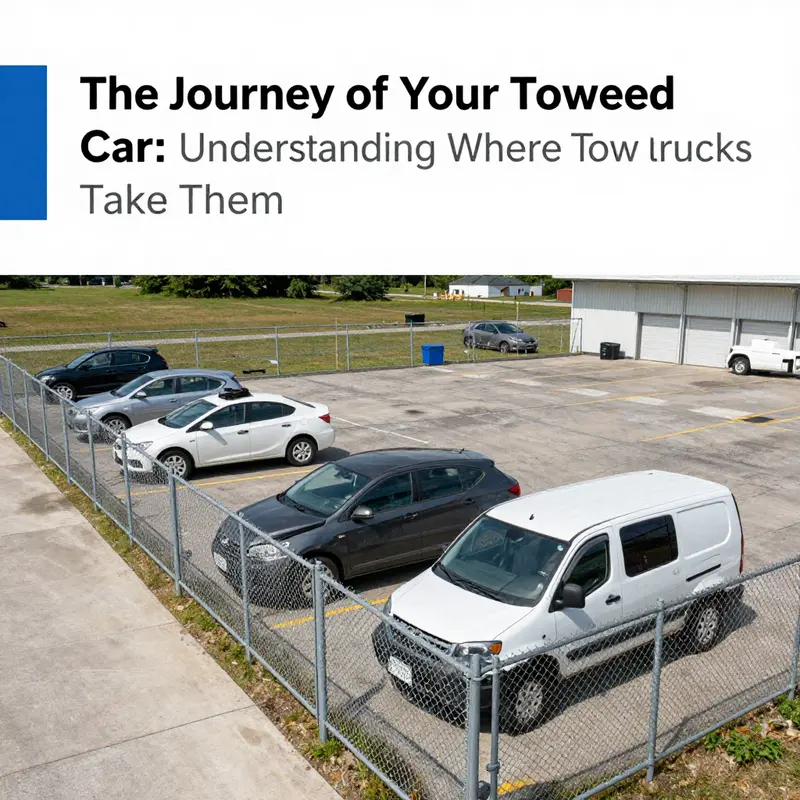
Where damaged cars go and what happens in storage
When a vehicle cannot be driven after an accident, a tow truck rarely delivers it to a single, generic destination. Instead, drivers, law enforcement, insurance adjusters, and tow operators coordinate a series of possible endpoints, each serving a clear purpose. Understanding where a tow truck is likely to take a car after a crash helps vehicle owners navigate fees, timelines, paperwork, and the decisions that follow. This chapter walks through the destinations a damaged vehicle may be taken to, explains why those places matter, and describes what happens to a car while it sits in storage.
A tow operator at the scene will usually follow instructions from the party that called them. If police requested the tow, the vehicle will often go to a municipal impound lot. If the call came from a roadside assistance provider or a private party, the car will more likely go to a repair shop, an independent storage facility, or the towing company’s own lot. Insurance companies sometimes direct cars to specific assessment centers or shops under their network. When a vehicle appears abandoned, poses a traffic hazard, or contains evidence linked to a crime, authorities will choose a secure impound designed to preserve chain of custody.
Impound lots are the most familiar outcome for many drivers. Cities or private companies operate these lots under contract with local government. Their goals are to remove hazards, clear roadways, and hold vehicles until owners or investigators claim them. Impound yards are designed with security in mind: gated perimeters, surveillance cameras, patrols, and logbooks that record arrivals and releases. When police determine that a vehicle must remain for evidence, it may be held longer and access will be tightly controlled. If the reason for towing was a parking violation rather than an accident, the same impound process often applies.
Private storage facilities and towing company lots serve a slightly different role. These spaces are often closer to the accident scene, reducing transit time and additional damage. They operate as temporary holding areas where cars await owner instructions, insurance inspections, or transport to a repair facility. Tow operators sometimes use these lots to consolidate vehicles until a more permanent destination is chosen. Unlike municipal impounds, private lots tend to be more flexible about release procedures when owners or insurers arrange pickup quickly.
Repair shops are a common next stop when damage seems repairable at the scene. A tow truck can take a car directly to an independent mechanic, a chain service center, or a collision shop contracted by the insurer. In these cases, the shop usually performs a preliminary damage assessment and documents the vehicle’s condition with photos. That documentation matters when insurers determine coverages, and it helps shops produce accurate repair estimates. Cars taken to repair shops remain in storage stalls or fenced areas until parts arrive or until the insurer approves work.
Dealerships and manufacturer-affiliated body shops are frequent destinations when the vehicle is still under warranty or the owner prefers manufacturer-certified repairs. Insurance companies sometimes insist on sending cars to an approved vendor for accurate estimates and guaranteed parts. These facilities often function as both assessment centers and repair shops. Vehicles can sit there for several days while adjusters review damage and approve repairs.
For cars deemed total losses, the process diverges again. When an insurance company determines repair costs exceed the vehicle’s value, it may direct the tow to a salvage auction, a junkyard, or a licensed dismantler. At those facilities, cars are evaluated for parts, recycled materials, or complete disposal. Salvage yards manage the title transfer and related paperwork, and they prepare vehicles for auction or dismantling. In many jurisdictions, a salvage title is issued before the vehicle changes hands, and the tow destination is part of that administrative chain.
Storage duration varies widely. Some vehicles get retrieved the same day if the owner arranges immediate pickup. Others remain for weeks because insurers need time for inspections or because legal holds are in place. Municipal impounds often follow strict notification rules; authorities must make reasonable attempts to inform vehicle owners before fees accrue or before the vehicle is disposed of. Private lots typically bill owners or insurers daily, and those fees can grow quickly. Many jurisdictions regulate maximum holding times and require notification, but enforcement and caps differ.
Fees are an unavoidable part of post-accident storage. Tow fees cover the immediate service, while storage fees are charged by the hour or the day. Daily storage can vary from modest to substantial, depending on location and facility type. Municipal lots may have published rate schedules; private lots often provide a written invoice when the vehicle is claimed. In practice, the vehicle owner, their insurer, or a lienholder pays these fees. If a vehicle is not retrieved, the facility may place a lien on the title and eventually sell the car at auction to recover unpaid charges.
Chain of custody and documentation are especially important when a crash leads to legal action or an insurance dispute. Police impounds maintain detailed logs that include the reason for towing, who authorized it, and the officers involved. Tow companies document times, locations, odometer readings, and visible damage. Facilities typically take photo records on intake; photos help verify pre-retrieval condition and protect both the owner and the storage operator from later disputes. Owners should ask for written receipts, document the vehicle’s condition themselves, and note any pre-existing damage.
Environment and safety are considerations when a vehicle is stored for any length of time. Facilities that accept accident-damaged cars must manage leaking fluids, battery hazards, and sharp debris. Reputable lots segregate vehicles that pose contamination risks and handle hazardous waste according to local regulations. When a tow delivers a car with fuel or coolant leaks, staff often place drip pans and absorbents under the vehicle and log the condition. For owners, this means the facility chosen affects how quickly safety measures are taken and how environmental issues are addressed.
Salvage and recycling play a role if the vehicle cannot be economically repaired. Salvage yards, recyclers, and dismantlers assess whether airbags, electronics, engines, and chassis parts retain value. If the car is valuable for parts, it may be stored at a dismantler to be stripped methodically. If it is suited for scrap, the facility recycles metals and disposes of non-recyclable material following environmental rules. Titles are transferred to reflect the salvage status, and those changes affect future registration and resale.
One practical question owners ask is how to locate their car after the tow. Local police departments usually maintain records of towed vehicles and can tell you the impound lot used when they requested the tow. Tow companies maintain dispatch logs and can provide the storage location if they handled the retrieval. Some regions use online databases that list impounded cars by license plate or VIN. Tow operators increasingly use GPS tracking and digital inventories, enabling quick identification of a vehicle’s current location. For more on how technology is improving towing accuracy and safety, see this primer on tow truck technology and safety.
Retrieval procedures depend on who holds the title and who paid the towing bill. If insurance is involved, the insurer may coordinate pickup after investigation. Owners normally need to present identification, proof of ownership, and payment for fees. When a vehicle is financed, the lienholder’s authorization may be required before release. Municipal impounds commonly require a copy of the police report, identification, and payment. Shops and private lots may accept credit cards but often prefer bank check or electronic transfer for larger balances.
Legal holds complicate retrieval. If a vehicle is evidence in a criminal matter, a court order may be necessary to release it. When insurance disputes arise—such as contested liability or suspected fraud—companies may request holds while they investigate. In those scenarios, the vehicle will remain in storage until the hold is lifted. Owners should be prepared for delays and ask for written explanations about outstanding requirements.
Understanding who pays helps prevent surprises. If another driver causes the crash and their liability is clear, their insurer may cover towing and storage costs. When liability is unclear, the vehicle owner’s insurer might advance the charges and pursue reimbursement later. If a vehicle is uninsured or the owner is at fault, the owner will be billed directly. Some credit card or roadside assistance memberships cover towing or storage up to a limit; owners should check benefits promptly.
When a vehicle is likely to be totaled, buyers and owners should be aware of salvage title processes. After a total-loss determination, the insurer arranges title transfer and salvage handling. Sometimes the owner can buy back their salvage vehicle from the insurer, but the car will then carry a salvage title. Salvage vehicles often require inspection and re-certification before they can be driven again, and the storage facility or salvage yard usually assists with the title paperwork.
Practical steps for owners can reduce storage pain. First, contact the tow company or police as soon as possible to identify the vehicle’s location. Second, document the vehicle condition with photos and notes before accepting releases. Third, check with your insurer to learn who will pay and whether they have preferred shops. Fourth, gather necessary paperwork—ID, registration, loan documents, or a letter of authorization—before visiting the lot. Finally, arrange payment methods and ask about the facility’s fee schedule so you can estimate total charges.
If you disagree with fees or the decisions made, there are remedies. Municipal oversight agencies handle complaints about city impounds. Consumer protection offices or state departments of motor vehicles often set rules for private facilities. Document all interactions and request written explanations for charges. Small claims court can resolve disputes over storage fees, release denials, or damage claims if negotiations fail.
Security and liability deserve attention. While facilities take steps to protect stored vehicles, damage or theft can occur. Contracts and intake forms should clarify liability limits, insurance coverage, and the facility’s responsibilities. Owners should note pre-existing damage on intake forms and keep copies. If the car sustains additional damage while in storage, document it immediately and report it to the facility and your insurer.
In some cases, owners may prefer to arrange a private tow to a chosen repair shop to avoid impound fees. Tow operators can often transport a car to a shop selected by the owner, but the decision depends on who has legal authority at the scene. If police require an impound, the owner cannot direct the vehicle elsewhere. When permitted, arranging a private tow and scheduling a repair shop ahead of arrival can reduce storage time and vendor confusion.
Communication reduces friction at every step. Tow companies and facilities that provide clear intake receipts, photographs, and line-item billing reduce errors and speed up releases. Insurers that communicate promptly with owners and tow vendors minimize storage accruals. When an owner knows where the car is, who is paying, and what documentation is needed, the process moves faster.
Finally, be aware that rules vary by jurisdiction. Local laws dictate notification requirements, fee caps, lien procedures, and environmental handling. Facilities must comply with local statutes about how long they can hold vehicles and what notice they must give before disposal. Owners should consult municipal resources if they believe their vehicle was improperly stored or sold.
The destination a tow truck chooses is not random. It reflects legal authority, safety concerns, repair needs, and insurer instructions. Whether a vehicle heads to an impound lot, a repair shop, an insurer’s assessment center, or a salvage yard, the storage location shapes costs, timelines, and the administrative steps that follow. Owners who act quickly, document carefully, and communicate with all parties can reduce storage fees, speed retrieval, and protect their interests. For guidance on vehicle recovery best practices and safety standards, public resources such as the National Highway Traffic Safety Administration provide helpful information: https://www.nhtsa.gov
Final thoughts
Understanding where tow trucks take cars after incidents helps vehicle owners navigate the towing process more effectively. Knowing the potential destinations, whether for parking violations, breakdowns, or accidents, prepares you for the next steps should your vehicle ever be towed. By familiarizing yourself with these locations, you can be more proactive in protecting your vehicle and managing its recovery, ensuring a smoother experience in the face of an inconvenient situation.