
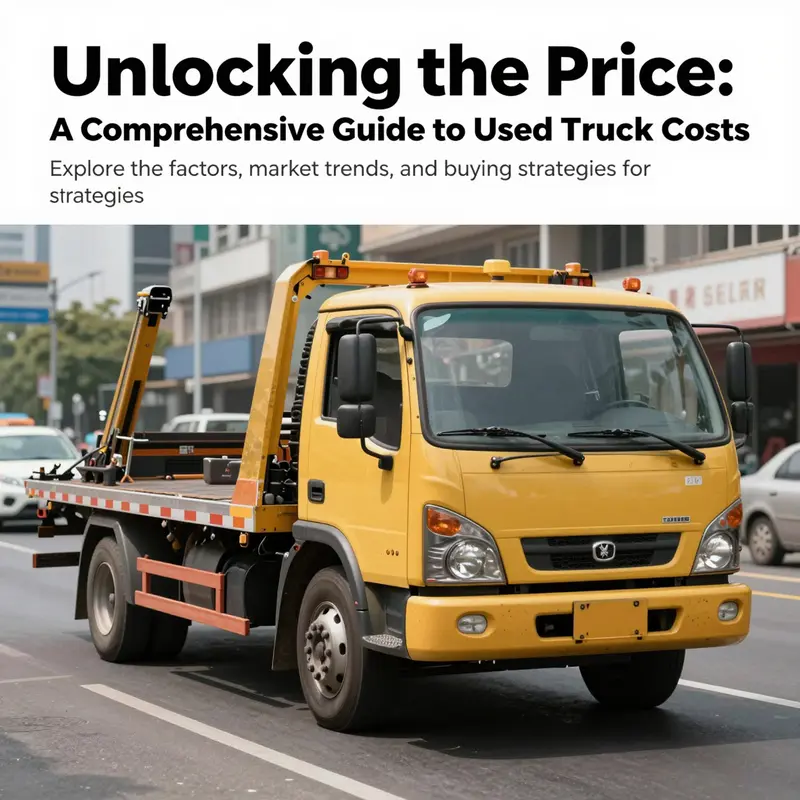
Understanding the cost of a used tow truck is crucial for various stakeholders, including everyday drivers, property managers, and auto repair shops. Tow trucks serve essential roles in vehicle recovery and transportation, making it vital to invest wisely. In this guide, we delve into current market trends, the factors influencing pricing, a comparative analysis of different truck categories, and best practices for purchasing effectively. Whether you’re a truck owner or managing a fleet, this article equips you with the insights needed to navigate the used tow truck market confidently.
Shifting Valuations: Navigating Current Market Trends in Used Tow Truck Prices
The used tow truck market today is a landscape of wide price dispersion, where two machines that look similar on paper can sit on opposite ends of the cost spectrum. Buyers walk into listings with a general sense of possibility, only to encounter a broad spread that depends on a tangle of factors: age, hours on the engine, overall wear, frame integrity, and whether the rig is configured as a traditional flatbed or an integrated wrecker with hydraulics, stabilizers, and a wheel-lift or heavy-duty winch. In recent market observations, price bands illustrate this variance. A heavy duty tractor with a 6×4 configuration can be priced at modest levels in the low-to-mid five figures, while compact wreckers designed for light to medium tasks tend to land in the mid-teens or higher. Older, high-mileage units may drift toward the lower end of the spectrum, yet even those prices reflect the premium on a functional bed, reliable hydraulics, and a drive train that can handle steady service work. Flatbed tow trucks, widely used for safe, high-capacity towing including AWD and luxury vehicles, are often the more expensive entry points for buyers who prioritize safety features, heavier hydraulics, and longer service life. Those machines typically start around the five-figure mark and can climb well beyond, depending on spec and condition. All of these nuances matter because the decision to buy a used tow truck is rarely about a single metric; it’s about the interplay between capability, reliability, and total cost of ownership.
The pricing picture becomes clearer when you translate it into concrete categories rather than brands. A practical way to think about it is to segment by function and capacity. For example, older, high-hour heavy-duty tractors in the 6×4 class—machines built to haul sizable trailers and perform demanding work—have shown price ranges that hover around the $6,000 to $13,000 mark in many markets. This band captures units that still run but may need attention in areas like engine hours, transmission wear, or chassis rust. On the other end of the spectrum, lighter, compact wreckers designed for municipal or roadside assistance tasks commonly fetch between about $15,000 and $25,000, reflecting the value of a more compact hydraulic system, a smaller footprint, and easier maneuverability in tight spaces. Those figures align with what buyers report in late-year listings, where the appeal is efficiency and lower operating costs for routine to moderate recovery work.
In between these extremes, the used market also shows a broader mix. A typical mid-range category includes older but well-maintained units with 40, 60, or even 80-ton capacity potential, priced in a wider band that can stretch from roughly $6,000 up to $13,000, depending again on the bed condition and how the hydraulics and winching systems have aged. There are listings that hint at even greater value when a unit comes with a robust spare parts ecosystem and a history of minimal downtime, but buyers should approach such numbers with scrutiny, verifying service records and measurement of actual load-carrying capability. And then there are the truly heavy-duty or specialty configurations that, depending on the market, can command prices higher than typical mid-range units, especially when a unit has been refurbished, upgraded with modern safety features, or converted to meet a specific towing niche. While some listings show a surprisingly low price in certain segments, those cases are often mispriced or reflect incomplete disclosures, and they underscore why due diligence is essential.
One striking observation in the broader market, however, is the implied cost of entry and the relative affordability of certain categories if a buyer is willing to consider less-than-perfect condition with a plan for refurbishment. For example, a flatbed configuration, favored for its stability and safety in high-capacity towing, tends to anchor the higher end of the used price spectrum. The starting point for these is commonly around the mid-teens, with well-maintained units or those with advanced safety hydraulics and longer service life potentially exceeding $50,000 in mature markets. The divergence between a basic, functional flatbed and a highly equipped unit reveals how much the market values hydraulic power, bed length, load capacity, and the presence of integrated winch or stabilizers when the buyer’s operations demand peak reliability and long-term serviceability.
With those practical baselines in mind, the data presents a useful snapshot of how a buyer should budget. A compact wreckers’ price range of roughly $15,000 to $25,000 makes sense when the unit is relatively modern, has reasonable mileage, and comes with a solid maintenance record. For buyers seeking heavy-duty performance, the 6×4 tractors and similar configurations can be attractive around the $6,000 to $13,000 zone if the engine and transmission have reasonable life left and if the frame shows no serious corrosion. There are listings that momentarily push above or below these bands, but the underlying message remains consistent: age, condition, and capability drive price more than any glossy brochure image.
As a buyer studies the numbers, it’s helpful to consider the context of broader market dynamics. The market for new specialty trailers, which underpin a lot of the towing ecosystem, is growing. Projections place global specialty trailer market growth from about $16.93 billion in 2026 to $25.12 billion by 2034, a compound annual growth rate (CAGR) of around 5.06%. That trend signals robust demand for new towing and transportation equipment, which often influences the pace and price of used gear as part of a broader asset cycle. Similarly, the global market for new heavy-duty trucks—especially eight-ton class vehicles—shows a projection of expansion from roughly $35.38 billion in 2026 to $53.93 billion by 2034, with a CAGR near 5.4%. These forces can affect both supply and demand in the used market, nudging price expectations higher over time as new equipment becomes more costly and operators look to protect capital with reliable, pre-owned options. In parallel, general transportation costs are rising due to stricter compliance measures, evolving safety and emissions standards, and the adoption of advanced scheduling technologies and IoT-enabled tracking. Those costs propagate throughout the industry and can influence the attractiveness of buying used versus brand-new, and the depreciation curve of pre-owned tow trucks.
The takeaway from these trajectories is that the used tow truck market does not exist in a vacuum. It is closely tethered to the health of the broader trucking and transport sector. Growth in the new-equipment segment can tighten supply in the used market, especially for high-demand configurations like robust wreckers and flatbeds with generous bed lengths and heavy hydraulics. Conversely, when fleets refresh their yards, pricing pressure may ease on certain used units as older stock becomes available. For buyers, this means timing matters almost as much as the unit itself. A unit might be a compelling value one season and fall into a higher range the next as demand mirrors shifts in the broader vehicle transport economy. The result is a market that rewards careful, data-informed shopping and a willingness to invest in a detailed pre-purchase inspection and a realistic assessment of refurbishment needs.
In terms of practical buying considerations, the price is only a starting point. The total cost of ownership for a used tow truck includes maintenance history, parts availability, and anticipated service life. Buyers should scrutinize engine hours, fuel efficiency, and the condition of the hydraulic system, winches, and bed itself. Structural integrity—especially around the chassis, mounting points, and bed supports—matters as much as the cosmetic condition. A unit that looks good but has a temperamental engine or a brittle hydraulic circuit can end up costing more in downtime and repair than the savings from a lower sticker price. Financing considerations, insurance premiums, and potential retrofitting for local regulations or safety standards can also shift the effective price of ownership. In markets where import or shipping costs apply, or where sellers quote prices without including freight, the headline number can quickly become misleading if not properly reconciled with the full landed cost.
For readers who are newer to the process or who are comparing multiple listings, a simple rule of thumb helps keep expectations grounded: start with a baseline that reflects the broad bands observed in the market, then adjust for the specific unit’s condition and your operational needs. A compact wrecker or light-duty routine-service unit might price out in the mid-teens, while a robust 6×4 tractor with a long service life behind it could hover in the $6,000 to $13,000 range if it has history of reliable performance and little structural defect. A top-tier flatbed with heavy hydraulics and modern safety features can push well into the six-figure territory when fully equipped and well maintained, but even here, careful negotiation and a thorough inspection can reveal a fairer price that aligns with the unit’s actual capability and lifecycle stage.
Maintenance history and parts availability deserve special emphasis in any price discussion. When evaluating a used tow truck, buyers should verify service records, confirm the tractability of the engine and transmission, and request a test run to evaluate braking, steering, and hydraulic function. An inspector or mechanic with experience in heavy-duty retrieval equipment can assess bed integrity, hydraulic pressure, winch performance, and the reliability of safety devices. The buying decision also hinges on the unit’s suitability for the intended tasks. A unit with a strong hydraulic pack and a capable bed may deliver superior value to a buyer focused on municipal towing or roadside assistance, whereas a unit designed for heavy off-road recovery would be more appropriate for fleets engaged in accident response or remote operations.
This is where the practical knowledge of price ranges becomes a guide, not a verdict. The market’s volatility means that prices can swing with just a few hours of engine use, a single season of maintenance, or a change in local demand. Buyers should approach the process with patience and a plan for assessing the unit’s long-term viability. A thoughtful approach also includes a realistic forecast of maintenance and retrofit costs. For example, if a unit requires a hydraulic component upgrade or a bed refurbishment to meet safety standards, those costs should be factored into the purchase price rather than treated as an afterthought. In many cases, the smartest purchases balance a modest upfront outlay with a set of known refurbishments that are priced and scheduled in advance, producing a predictable path to operation and service.
If you are new to estimating what a tow truck costs, start with a practical baseline that considers these variables, and you can refine your expectation as you gather more data from listings and inspections. For a concise primer on cost expectations, see How much is a tow truck?.
Beyond the numbers, the market narrative is about timing, condition, and capability. Buyers who align their purchases with a disciplined due-diligence process—checking mechanical history, confirming the reliability of the hydraulics, and validating the unit’s safety features—will be better positioned to avoid overpaying in a market where price signals can be influenced by external factors like regulatory changes, shifts in new equipment pricing, and evolving service models in the recovery and transport industries. As the market continues to evolve with new equipment offerings, the appeal of a well-maintained used unit remains strong for those who balance cost, performance, and longevity. The chapter of the market’s story is not just about the sticker price; it’s about understanding how that price fits into a broader plan for reliable, cost-effective service that can withstand the rigors of daily towing work. External market forces matter, but the practical, on-the-ground assessment of a unit’s condition and fit for your operation ultimately decides value.
External resource: https://www.made-in-china.com
Price, Parts, and Practice: Reading the Real Cost of a Used Tow Truck
Choosing a used tow truck is rarely a straightforward bargain. The sticker price you see on a listing is only the first clue about what you’ll actually spend to own and operate the vehicle. The larger story unfolds in a pattern of interlocking factors that together shape value: how sound the core mechanics are, what kind of towing capability the unit offers, what equipment comes with it, and how much work it will require after you bring it into service. When you step back from the specific prices you’ve seen in various listings, a clearer map emerges. The cost of a used tow truck rests on a triangle of mechanical condition, configuration, and history, with market timing nudging prices up or down depending on regional demand and economic mood. Understanding each vertex helps buyers avoid two traps: overpaying for a vehicle that will bleed money in repairs, and buying a unit that cannot meet the job you intend to tackle.
Mechanics sit at the heart of any price discussion. Old Cars Weekly’s long-standing guidance on evaluating used trucks holds true here: the health of the engine, transmission, and hydraulic systems will largely determine not only performance but also long-term operating costs. A unit with a documented maintenance record, fewer miles for its age, and a clean bill of health will carry a higher asking price simply because it promises lower risk and more predictable costs down the line. Conversely, a tow truck with spotty service history or undocumented repairs carries the latent load of future breakdowns, unexpected downtime, and expensive component replacements. When a seller can show regular service intervals, recent hydraulic pump work, and seals that hold pressure, buyers gain confidence that the price is a fair share of a predictable future.
Beyond raw mechanical condition, the type and configuration of the tow truck heavily sway price. The industry distinguishes several core categories that map to different tasks and operating costs. Flatbed models, also called rollback or hydraulic lift tow trucks, are widely valued for their versatility and gentler treatment of vehicle finishes, especially for AWD or low-clearance cars. They tend to command higher upfront prices than wheel-lift counterparts because of their broader safety envelope and ability to cradle a wider range of vehicles. Yet the broader field of tow equipment includes specialty configurations that carry substantial price premia. Rotator trucks, with a 360-degree rotating boom capable of recovering overturned or severely damaged vehicles, sit at the top of the price spectrum. Their upfront cost can jump into six figures and beyond, and the training required to operate them safely adds to the overall investment.
The regional and market timing piece is the wildcard that can tilt prices in minor or dramatic ways. In areas with high traffic volume, frequent accidents, or dense fleets that regularly swap out equipment, demand supports steadier pricing and quicker turnovers. In slower markets or during economic downturns, sellers may be more willing to negotiate to clear inventory, which can pull prices downward even for relatively solid platforms. The seasonal cadence also matters: fleets often refresh hardware after peak seasons, and well-maintained units may appear as bargain propositions when surplus supply hits the market. The confluence of these forces—availability, urgency, perceived reliability, and the willingness of sellers to entertain offers—creates a price band that looks unusually wide when you first scan listings online.
Another fundamental lever is the vehicle history and the breadth of equipment included with the sale. A tow truck is not just a chassis with a winch; the full kit of tools, winches, hooks, restraint gear, and recovery accessories can add considerable value. Units that include upgraded hydraulics, robust mounting brackets, high-capacity winches, and additional safety features tend to fetch higher prices because they shorten the path to productive use and reduce the need for immediate capex. Conversely, a basic unit with limited recovery gear and older hydraulics may be priced attractively but carries ongoing maintenance costs that can erode the initial savings. Prospective buyers should treat the listing price as the starting point of a broader due diligence exercise, one that weighs the likelihood of future repairs against the benefits of the immediate availability and the ease of deployment into a real-work environment.
The numbers in recent market signals illustrate the breadth of possible outcomes without telling a single, universal story. A compact, light- to mid-range wrecker can appear in listings around the low tens of thousands, reflecting age, miles, and the simplification of the hydraulic system. Heavier-duty tractor-trailer combinations arranged for recovery work can slide into a wider spectrum, where older but well-maintained units may hover in the mid-to-high five-figure range, while newer, more capable configurations that include robust recovery gear and multiple winches push higher. Flatbed configurations with strong safety records and hydraulics optimized for a broad vehicle mix often sit at a premium compared with wheel-lift models because they reduce the risk of damage to the vehicles in tow and simplify loading in varied conditions. And then there are the outliers—the rotators and other specialized return-to-service systems—that live in a class by themselves: the price is not simply a reflection of age or mileage, but an investment in capabilities and the specialized expertise required to use them effectively and safely.
If a buyer sketches the cost of ownership rather than just the purchase price, the argument for price flexibility becomes even clearer. The initial outlay is only part of the total cost of ownership which, in towing operations, includes fuel efficiency, tire wear, routine maintenance cycles, and the long tail of hydraulic system servicing. Older engines may drink more fuel, wear parts sooner, and demand more frequent oil changes or filter replacements. Transmission wear can escalate repair costs, particularly in heavy-duty models that see long hours and load-bearing work. For those who intend to run a tow-truck operation with a predictable schedule and clear revenue targets, it makes sense to pencil in a conservative maintenance reserve and a contingency for potential hydraulic upgrades or winch replacements. This approach protects cash flow and supports more sustainable growth, rather than chasing a price-only decision that could saddle a business with recurring trouble and downtime.
In the broader landscape of used tow trucks, price anchors are less about one model’s relative merit and more about a buyer’s alignment with job requirements. Consider the job mix you expect: light-duty towing of compact cars, mid-range recovery for small to mid-size vehicles, or heavy-duty operations including larger trucks and equipment. Each category favors a different configuration, different safety features, and a different balance of upfront cost versus ongoing maintenance. A practical way to navigate this complexity is to approach the market with a clear set of operational needs and a candid assessment of the maintenance path you’re prepared to support. For example, a flatbed with a strong safety track record and a modern hydraulic system will likely command a higher price but reduce downtime and minimize vehicle damage during transport, a crucial factor when your business depends on delivering vehicles in pristine condition. On the other hand, a wheel-lift unit with essential recovery gear might present a cost-friendly gateway for a start-up fleet, provided you are prepared for more proactive upkeep and a potentially tighter margin on vehicle handling.
To connect this framework with real-world decision making, consider how you’ll verify the condition of a prospective purchase. A careful inspection begins with the engine and transmission—listen for irregular noises, check for fluid leaks, and confirm that the cooling system remains stable under load. The hydraulic system should hold pressure and operate smoothly through the full range of motion; sluggish or inconsistent behavior can be a sign of looming repairs. Review the maintenance log with the same scrutiny you would apply to a business record: are service intervals consistent, are major components updated, and are safety devices and winch controllers up to date? The goal is to separate claims of “low mileage” or “well maintained” from verifiable evidence that the unit can perform reliably when you need it most.
As you evaluate listings, keep in mind the approach recommended in industry guidance: treat price as one dimension of a broader portfolio of risks and returns. Use the listed price as a starting point, then build a conservative estimate of the repair and maintenance spend likely to accompany the unit over the first two to three years of operation. The most successful buyers strike a balance that preserves cash flow while ensuring the equipment can enter service quickly and safely. This balance often means prioritizing units with transparent service histories and robust safety features, even if it requires paying a modest premium for the reassurance those factors provide. Conversely, the temptation to chase a deeply discounted unit without a clear maintenance record can end up inflating costs through unplanned downtime, emergency repairs, and the need for immediate capital outlays to retrofit or upgrade critical components.
For readers who want a quick sense of current market pricing, it helps to consult widely circulated listings and price guides. While those sources vary by region and age, they consistently reflect a core truth: used tow trucks exist across a broad spectrum of condition and capability, and the right choice depends on how well the buyer’s operational needs align with the vehicle’s reliability, load capacity, and the ancillary gear included with the sale. When you pair thoughtful due diligence with a realistic plan for ongoing maintenance, the price you pay becomes a reasonable reflection of the value you receive—the capacity to respond to incidents, move vehicles efficiently, and support a successful towing operation over time. See how this alignment translates into numbers by exploring current listings and talking through specific purchase scenarios, for example by checking a widely cited source such as how-much-is-a-tow-truck to gather a baseline for your market—the goal being to anchor expectations without letting a single price dictate your entire procurement strategy.
In sum, the cost of buying a used tow truck is not a single figure but a dynamic signpost that points to what you can expect to achieve in service reliability, efficiency, and safety. The most valuable purchases are not necessarily the cheapest ones; they are the options that deliver a predictable operating profile and a viable recovery capability for the kind of demand you face. By weighting mechanical condition, configuration, and history against market timing and regional demand, buyers can navigate a broad pricing landscape with greater confidence. They can distinguish between a unit that merely appears affordable and a vehicle that will steadily perform its role, minimize downtime, and protect the business from unplanned costs over the long run. And when the time comes to assess a specific listing, remember that the right extra gear and a documented service history can turn a modest price into a solid, sustainable investment in the business you’re building.
External resource for broader market trends and listings: https://www.heavyequipmenttrader.com/used-tow-trucks-for-sale.
The Price Mosaic: How Used Tow Trucks Cost Across Categories and Capacities
Prices for used tow trucks do more than reflect a single number. They reveal a complex mosaic shaped by capacity, configuration, condition, and the market dynamics of a region. When buyers ask how much a used tow truck costs, they are really asking how much value a specific tool will deliver for a given job, how long that tool will remain reliable, and how well it will age in a fleet’s operational cycle. This chapter threads together a coherent narrative from the data available in recent listings and the practical realities of owning, operating, and maintaining these specialized vehicles. It helps translate abstract price bands into actionable expectations, while remaining mindful of the diversity that defines the used-truck market. The result is not a single price tag but a spectrum that guides buyers toward the right balance of upfront cost, reliability, and long-term total cost of ownership.
First, consider the broad category framework. Compact tow trucks, typically in the 3-5 ton range, are the nimble workhorses for light-duty recoveries and rapid roadside assistance. In the market, these units commonly fetch prices in a band from roughly ten thousand to twenty-five thousand dollars, depending on year, mileage, and the presence or absence of modern hydraulics or flatbed configurations. The price reflects not just the lifting capacity but the versatility embedded in the machine—whether it has a wheel-lift system, a short wheelbase for tighter spaces, or a compact hydraulic system that minimizes gas consumption during repeated recoveries. The more robust the hydraulic stack, the more capable the truck is in challenging conditions, and the higher the price. Yet even within compact categories, the variability is notable. A late-model unit with detailed maintenance records and a clean accident history can sit toward the upper end, while older workhorses with higher mileage and wear might drift downward toward the lower end of that same range.
Medium-duty tow trucks, which bridge urban roadside service and active recovery on busier corridors, inhabit a higher-priced zone. These machines, typically in the 6-10 ton bracket, usually command between twenty-five thousand and fifty thousand dollars. The increase from compact to medium reflects several converging factors. There is greater lift capacity, a longer service life under heavy daily use, and often more sophisticated control systems, including automatic transmissions, more advanced winching arrangements, and the possibility of a flatbed configuration. A flatbed, in particular, adds a premium because it reduces drivetrain wear on towed vehicles and facilitates safer, more controlled loading and unloading. For fleets focused on minimizing damage to customer vehicles or servicing a broader range of vehicle types, the upgrade to a medium-duty, flatbed-equipped unit can be a sound investment even if the upfront price is higher.
Heavy-duty tow trucks—destined for large commercial vehicle recovery and major incident work—sit in a higher, more varied price spectrum. These machines, generally 10 tons and up, can range from around fifty thousand dollars to well over one hundred thousand, especially when they include dual-winch setups, reinforced chassis, and top-tier hydraulics. The premium here is not merely about lifting power, but about resilience, redundancy, and the ability to perform under demanding conditions with minimal downtime. The most capable heavy-duty units also carry the strongest resale value in fleets that regularly handle high-volume, high-stakes operations. It’s a reminder that in heavy-duty work, the cost of ownership is not only influenced by the initial purchase but also by the expected lifecycle maintenance and the risk profile of the work performed.
Flatbed tow trucks deserve a distinct focus because they occupy a specialized niche with its own pricing logic. Used flatbeds are often priced above conventional wreckers due to the structural demands and the protective benefits they offer for transmissions and drivetrains during transport. The typical used-flatbed price starts around thirty-five thousand dollars and can climb into the seventy-thousand to one-hundred-twenty-thousand-dollar range for premium configurations, brands, or trucks with comprehensive maintenance histories and low mileage. The flatbed’s value proposition is clear to any operator who wants to minimize vehicle wear on the towed asset and maximize loading efficiency in variable terrains, such as steep ramps, uneven surfaces, or multi-vehicle recoveries. In many markets, a flatbed’s higher upfront cost is recaptured over time through reduced drivetrain wear, lower potential for secondary damage, and faster service times.
Beyond these core categories lie specialized tow trucks designed for unique recovery tasks. Wreckers with integrated cranes, extendable booms, or modular platforms can push prices beyond sixty thousand dollars, and in some cases well past one hundred fifty thousand for top-tier, mission-critical configurations. The specialized end of the market reflects a combination of mechanical complexity and the operational need for versatility in industrial environments. For a fleet that performs heavy-lift recoveries, hydraulic precision, and multi-task operations, those upfront investments are weighed against the certainty of uptime and the breadth of services that can be delivered.
The data from recent market listings underscores the breadth of this spectrum while also spotlighting the cautions buyers should keep in mind. A glance at overseas listings reveals a wide range of heavy-duty equipment offered at prices that can seem surprisingly low or uncertain. One listing described a heavy-duty tractor unit priced around ten thousand dollars, a figure that raises questions about condition, history, and maintenance readiness. Other listings show compact light-tow options priced between fifteen and twenty-five thousand dollars, and medium-duty models in the twenty-five to fifty-thousand-dollar range. Flatbed configurations, widely recognized for their safety and versatility, commonly appear in the thirty-five-thousand-dollar space and may reach into the higher end depending on options, mileage, and refurbishment history. It’s important to interpret these numbers with caution; the market can present bargains that carry hidden maintenance costs or undisclosed mechanical issues. Where the price seems unexpectedly low, due diligence becomes essential.
In practice, buyers should also consider the regional market dynamics that shape pricing. Location matters because demand intensity, freight costs, and the availability of skilled technicians influence not only the purchase price but the ongoing operating costs. Urban markets with high demand for roadside assistance and heavy recovery tend to see higher price points, reflecting the premium on near-immediate responsiveness and reliability. Conversely, rural or developing-market availability can tilt prices lower but may entail longer lead times, parts access challenges, and potentially longer downtimes between service calls. The interplay between regional demand and the truck’s intended use is a critical factor in deciding whether a bargain move is worth the risk or if a higher upfront cost in a well-supported market is the wiser long-term choice.
The decision process also hinges on the truck’s condition and its documented maintenance history. A well-maintained unit with regular service records, a clean frame, and evidence of careful ownership history can justify a higher price because it translates into lower risk of unexpected failures. Conversely, a unit with gaps in service, unclear mileage, or signs of hard-use wear may present a tempting discount but could demand a larger reserve for immediate repairs. Buyers should inspect critical components—hydraulic systems, winches, the integrity of the flatbed or wheel-lift, brake systems, tires, engine and transmission health, and the electrical network that controls safety features. In a field where safety matters as much as torque, the operational reliability of recovery equipment is not negotiable.
A practical way to anchor expectations is to connect the category-based ranges with the broader reality of total cost of ownership. The upfront price is only part of the story. Ongoing maintenance, spare parts compatibility, and the availability of qualified technicians are constant considerations. Fuel efficiency and the potential for downtime due to repairs also weigh in. Training for operators, safety gear, cones and flares, insurance, and licensing costs all contribute to the bottom line. For buyers seeking to optimize long-term value, the calculations should emphasize not just the sticker price but the expected maintenance cadence and the time that the truck would spend in service versus in the shop. In that sense, the best value often emerges from a balance: a slightly higher upfront cost for a model with robust support in parts and service, paired with a documented maintenance history and a configuration that aligns with the fleet’s typical workload.
Navigating this landscape becomes smoother with careful sourcing. Buyers should leverage reputable platforms and verify listings through multiple channels. The data in the current market shows that real-time listings can surface a broad spectrum of prices, and cross-checking with several sources is prudent. When evaluating a potential purchase, buyers can benefit from reviewing the vehicle’s history report, if available, along with any past incidents or heavy-use scenarios. It is also wise to request a recent diagnostic or a technician’s pre-purchase inspection report. A transparent seller who can provide photos of hydraulic cylinders, a log of maintenance, and proof of recent service is often a reliable signal in this market. A practical anchor in approaching pricing is to engage with a pricing guide or resource that consolidates market tendencies and the latest listings, such as a dedicated pricing overview or a reputable marketplace. For further explorations of current market dynamics and live pricing, see the broader price references in real-time listings and comparison tools available in the industry.
To connect with a broader audience and realize comparable pricing insights, buyers may also explore general resources that discuss tow-truck costs and ownership considerations. For those who want to drill into a focused pricing perspective, a detailed overview of how much different categories typically cost can be found in dedicated pricing discussions, including a concise guide that mirrors the category logic described here. how-much-is-a-tow-truck provides a useful lens for understanding how the price bands align with capacity and configuration. It’s not a substitute for a hands-on inspection, but it offers a sensible framework for negotiations and expectations before a physical evaluation.
In sum, the price mosaic of used tow trucks is not a single, static figure but a dynamic arrangement shaped by capacity, configuration, condition, and market forces. Buyers who navigate with a clear sense of category expectations, careful due diligence, and an eye on total cost of ownership tend to secure units that balance upfront affordability with reliable service life. The market data from late 2025 through early 2026 confirms that there is a broad spectrum of options—from compact, economical units to high-end heavy-duty and flatbed configurations. Each choice carries its own advantages and risks, and the best pick will hinge on the fleet’s typical workload, service standards, and geographic operating realities. For operators expanding a fleet or upgrading a capability, this nuanced understanding of price categories helps ensure that every purchase supports safer responses, faster recoveries, and more predictable maintenance outcomes. As always, the path to informed purchasing is to couple market awareness with rigorous inspection, reliable maintenance documentation, and a clear line of sight to the total cost of ownership over the vehicle’s lifetime. Finally, for those who want to compare live listings and price movements, a widely used resource for real-time pricing and listings remains available online at https://www.usedtrucks.com.
null
null
Final thoughts
Navigating the used tow truck market requires familiarity with pricing trends, influential factors, and best buying practices. By understanding market dynamics and performing thorough research, you can secure a tow truck that meets your needs and budget. This knowledge not only supports effective investment but also enhances operational efficiency in vehicle towing and transport. Armed with these insights, you’re now prepared to make informed purchasing decisions that align with your specific requirements.