
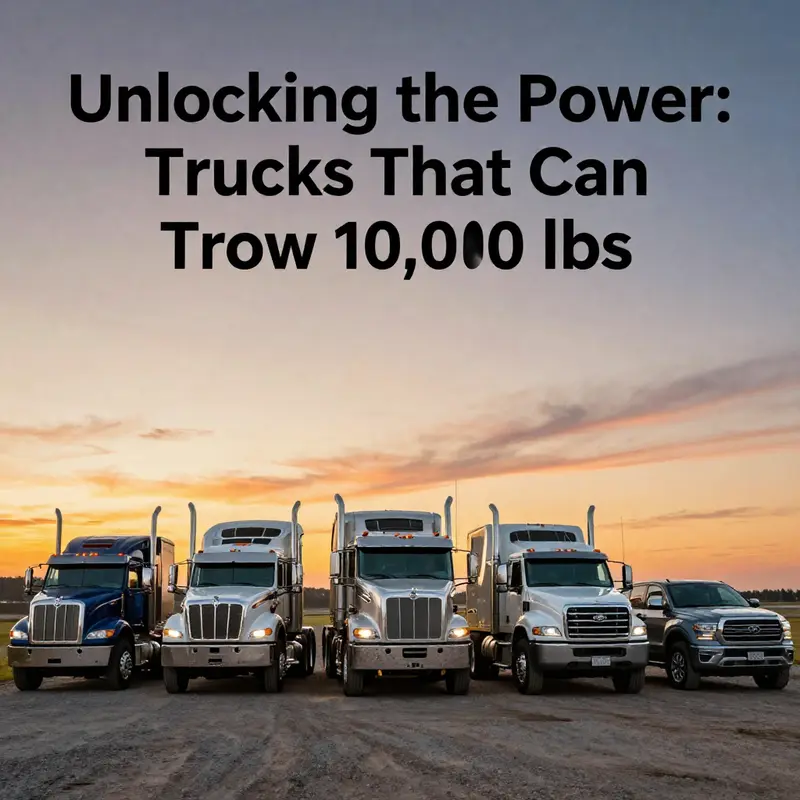
Towing capabilities are a crucial consideration for many drivers, particularly those who utilize trucks for work, recreation, or transportation of heavy loads. Whether you are a truck owner, a commuter needing a reliable vehicle, or a property manager managing logistics, understanding what trucks can tow 10,000 lbs is vital. From heavy-duty models to specialized tractor-trailers, medium-duty trucks, and large pickups, this article outlines the various options available to meet this towing requirement. Each chapter delves into the specific category of trucks suited for towing, providing insights that cater to everyday drivers and industry professionals alike.
Built to Pull: Heavy-Duty Trucks That Confidently Tow 10,000 Pounds
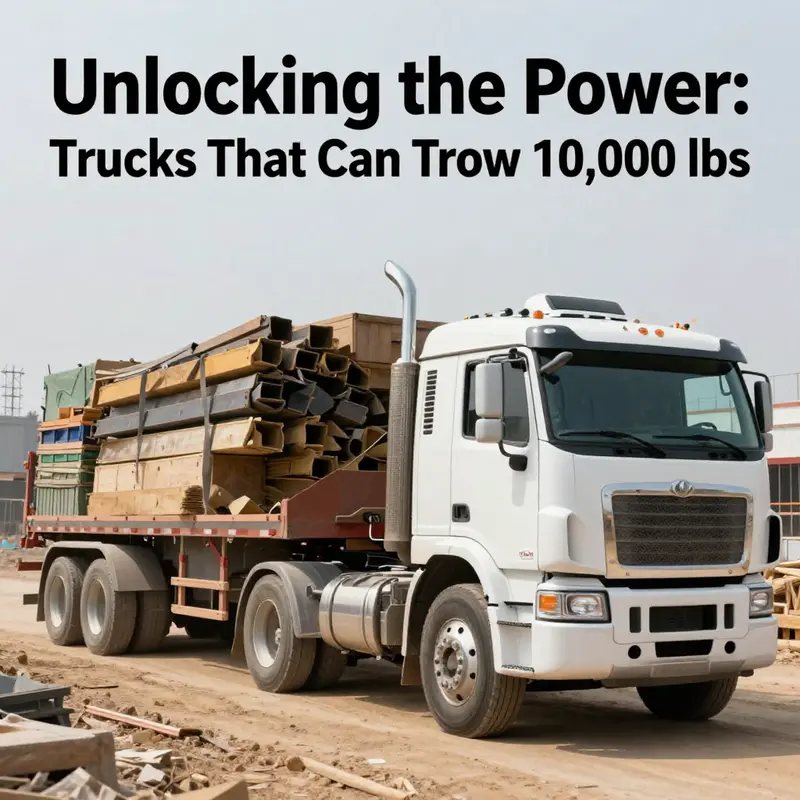
Heavy-duty trucks are purpose-built to move serious weight, and when your job or recreational plans demand towing around 10,000 pounds, the right chassis, drivetrain, and accessories make the difference between manageable work and mechanical strain. This chapter unpacks what to look for in a heavy-duty truck rated to tow ten thousand pounds or more, explains the critical systems that enable safe towing, and guides choices that balance capability, comfort, and long-term reliability.
At the core of any tow-capable heavy truck are fundamentals: a powerful engine, a robust transmission, a stiff frame, heavy-duty axles, and an effective cooling system. These elements work together to deliver the torque, durability, and thermal control needed for sustained towing. High-output engines provide the low-end torque necessary to accelerate a heavy trailer from a stop and hold steady speeds on grades. Transmissions pair specific gear ratios with sturdy internals to transfer that torque without overheating. Frames and suspensions are beefed up to resist flex under load, maintaining alignment and braking geometry when a trailer adds mass. Heavy-duty axles and driveline components prevent premature wear. Finally, upgraded radiators and transmission coolers remove excess heat generated during towing, protecting the engine and transmission during long runs.
Manufacturers package these components into dedicated towing packages that include practical hardware and electronic aids. A trailer brake controller, either integrated or factory-ready, gives precise trailer braking that mirrors the truck’s input. Heavy-duty hitches and reinforced receiver mounts are rated to handle maximum pin and tongue weights. Integrated trailer wiring simplifies hook-ups and prevents loose or corroded connections. Backup cameras optimized for towing provide a wide, centered view of the hitch, trailer, and surroundings, making maneuvers far safer.
Beyond the baseline, several optional systems transform towing from a trial into a smooth operation. Air suspension, when selected, can level the truck under load, improving handling and braking. Rear locking differentials help maintain traction when a heavy trailer shifts weight or when surfaces become slippery. Tow/haul transmission modes alter shift points to reduce hunting and keep the powerband in its most effective range. Some trucks offer remote engine braking or exhaust brakes that reduce reliance on service brakes during descents, cutting fade and wear.
Understanding published towing capacity is essential, but buyers must also interpret accompanying ratings to use a truck safely. Gross Vehicle Weight Rating (GVWR) represents the maximum combined weight of truck, cargo, passengers, and tongue load. Gross Combined Weight Rating (GCWR) states the combined maximum of truck and trailer. Curb weight is the truck’s weight without passengers or cargo. To determine realistic towing capability, subtract the truck’s curb weight and expected payload from the GCWR. The remaining allowance is the maximum trailer weight that can be towed within rated limits. Ignoring these relationships invites overloading, which compromises brakes, steering, and structural components.
Payload and tongue weight deserve equal attention. Payload is the weight a truck can carry in its bed and cabin. Tongue weight is the portion of trailer weight pressing down on the hitch. Typical tongue weight falls between 10% and 15% of trailer gross weight for conventional trailers, and up to 25% for some heavy, front-loaded equipment. If tongue weight exceeds the payload capacity, the truck will sit low in the rear, reducing front wheel traction and steering effectiveness. Conversely, insufficient tongue weight can cause trailer sway. Proper load distribution, weight-distributing hitches, and sway control devices are tools to manage these forces.
Axle ratios are another key specification. A lower numeric axle ratio increases towing torque at the wheels but lowers top speed and fuel economy. A higher numeric ratio helps a heavy truck move large loads from stops and climb grades without lugging the engine. Transmission choices interact with axle ratios, so opting for a heavy-duty transmission alongside a towing-oriented axle ratio can produce the best balance between performance and durability. Towing-oriented gearing often pairs with heavy-duty cooling, ensuring the powertrain survives extended towing cycles.
Braking systems scale with towing needs. Trucks designed to haul 10,000 pounds or more often include larger brake rotors, heavy-duty calipers, and more aggressive friction materials. Trailer brakes are mandatory for heavier loads, and an integrated or factory-calibrated controller will synchronize trailer and truck braking. Some systems include electronic trailer sway mitigation that applies selective braking and adjusts engine torque when the trailer begins to oscillate. While electronic aids are useful, they are no substitute for correct loading, hitch adjustment, and cautious driving.
Chassis and suspension choices influence ride quality under load. Leaf springs remain common because they handle high static loads and resist sag. Multi-leaf packs in heavy trucks support large payloads but can transmit more vibration to the cabin. Add-on options like helper springs and airbag kits can be installed or factory-selected to lift sagging rear ends and fine-tune ride height. For fleets or owners who need frequent, heavy towing, factory air suspension provides automatic leveling and a controlled ride for both unloaded and loaded conditions.
Off-road or uneven-terrain towing adds layers of complexity. Trucks with reinforced frames, skid plates, and heavy-duty differentials better survive repeated exposure to rough surfaces. Locking differentials, traction control, and low-range gearing (when available) help maintain momentum when traction is poor. When towing off-road, consider the approach, departure, and breakover angles of the truck plus trailer. Long wheelbases can improve stability but worsen these angles, increasing the risk of grounding on steep terrain.
Maintenance and pre-trip checks matter more with heavy loads. Inspect brakes, fluids, tires, and lights before each trip. Maintain proper tire pressures for both truck and trailer; underinflated tires overheat and wear faster. Periodic inspections of suspension components, steering linkages, and driveline U-joints or CV joints prevent failures. Cooling system flushes and transmission service intervals should be respected. For high-mileage towing or commercial use, more frequent maintenance is prudent. Keeping a simple checklist and performing a walk-around can prevent many common towing issues.
Driving technique adapts when towing heavy trailers. Accelerate gradually and allow more stopping distance. Anticipate hills and downshifts; use the correct gear to prevent overheating and transmission stress. Brake early and in short, controlled applications to avoid brake fade. When turning, account for the trailer’s swept path. Wind and passing trucks create lateral forces; reduce speed to lessen their effect. When hitching, confirm coupler security, safety chains are crossed correctly, and electric brakes are operational.
Choosing the right hitch and wiring package is not a trivial detail. Gooseneck and fifth-wheel setups move the hitch point over the truck’s rear axle, improving stability and increasing payload capacity compared to conventional receiver hitches. Weight-distributing hitches help even out the load across axles when using conventional ball hitches. For trailers with heavy electrical demands, ensure the truck’s alternator and wiring harness can handle the load. Upgraded charging and wiring minimize voltage drop and keep trailer lights and accessories operating reliably.
A responsible purchase decision considers real-world scenarios, not just headline towing numbers. Factory towing ratings assume proper configuration and sometimes require specific axle ratios, wheelbases, or packages. Choose a configuration that aligns with typical trailers you will tow. If you plan to tow near the top end of a truck’s rating often, select a model with comfortable margin above your expected trailer weight. This preserves durability and reduces stress on components.
Safety features designed specifically for towing add measurable value. Integrated trailer brake controllers, rearview camera systems tuned for hitching, and multi-mode stability control systems improve confidence. Some trucks include factory-installed trailer guidance systems that overlay trajectory lines in the camera view, aiding in hitch alignment and reversing.
Finally, long-term ownership factors shape the decision. Consider fuel economy under load, service network access, and the availability of heavy-duty parts. Warranty coverage for powertrain and towing-related systems varies; review terms to understand what components are protected under heavy-use conditions. Fleet buyers should factor in upfit options, resale value, and total cost of ownership when comparing models.
For a practical starting point, review manufacturer towing and GCWR specifications for the exact build you intend to buy. These official specifications show how engine choice, axle ratio, and cab configuration affect towing ratings. For calculators and quick reference tools, consult detailed guides that explain payload, tongue weight, and real-world towing limits, such as the helpful article “how much can my truck tow?” on the Winchester Tow Truck blog. For official, model-specific towing numbers and configuration options, see the manufacturer’s published towing specifications here: https://www.ford.com/trucks/f-250-super-duty/.
Choosing a heavy-duty truck capable of towing 10,000 pounds starts with understanding how ratings interact with real loads. Match configuration to need, invest in quality towing hardware, maintain systems diligently, and drive with predictable, controlled habits. Those steps will keep both truck and trailer performing safely and reliably, trip after trip.
The 10,000-Pound Benchmark: How Tractor-Trailers Ready Themselves for Everyday Heavy Hauls
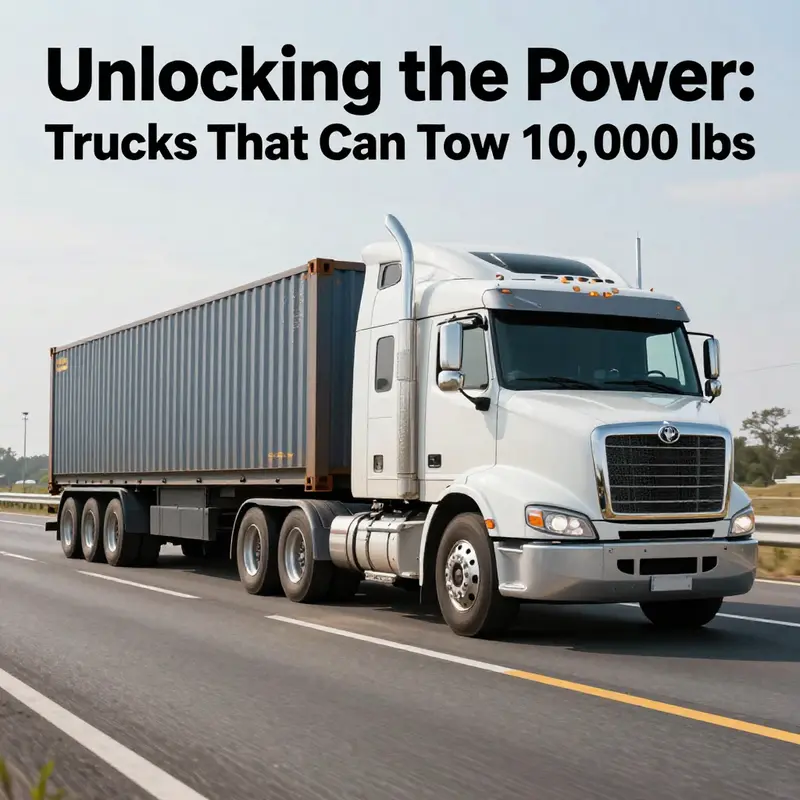
Across the freight landscape, the 10,000-pound figure is a practical line drawn between manageable loads and the realm of heavy hauling. When we talk about tractor-trailers, that line is easily crossed, because these rigs are built to move far more than a single pallet or a dozen cubic yards of material. Yet the 10,000-pound threshold remains a useful baseline for fleet planners, shippers, and operators alike. It frames decisions about whether a given combination of tractor and trailer can safely and efficiently handle a load that is substantial but not extreme. The chapter that follows treats this threshold not as a hard limit, but as a lens through which the core design choices of tractor-trailers can be understood. It is a story about how the right mix of components, from heavy-duty axles to sophisticated suspension, translates into predictable performance when pulling a payload that sits near the middle of the everyday heavy-haul spectrum.
At the core of a tractor-trailer’s capability is its physical structure. The trailer portion is not simply a hollow frame that carries weight; it is a precision platform that has to distribute, absorb, and transfer forces in a controlled way. Heavy-duty axles are among the most critical elements in that system. They provide the backbone that supports the load and maintain alignment through miles of highway and varying road surfaces. A typical implementation usefully described in technical resources includes components like robust axles paired with securing hardware that is designed to resist fatigue and corrosion under sustained use. The U-bolt kit and tube dimensions referenced in detailed equipment specifications illustrate how manufacturers tailor a trailer to tolerate repeated tension and compression while maintaining a stable spring rate. This is not merely about raw strength; it is about predictable behavior under load, so a 10,000-pound payload doesn’t become a destabilizing force that changes steering feel, braking response, or cornering stability. When a trailer rides on a suspension that is tuned for this scale, the result is a chassis that can carry weight with less sway, less pitching, and more confidence on long hauls.
Suspension systems in heavy trailers further reinforce that reliability. The choice between leaf springs and air suspension, for example, is more than a matter of comfort. It is a decision about how the trailer and its load respond to road irregularities and braking events. A well-chosen suspension helps isolate the payload from road shocks and minimizes dynamic loads on the axles. It also supports better load leveling, which is essential when the trailer experiences varying weight distribution across the deck. For a payload in the 10,000-pound range, the aim is not to cushion every bump but to maintain stable contact with the road, preserving tire footprint, brake effectiveness, and steering control. The interplay between axle stiffness, suspension travel, and tire characteristics becomes a quiet engine of safety and efficiency that fleet operators rely on every day.
The concept of stability extends beyond the trailer’s own design to how it is paired with a tractor unit. Articulated tractors, which are the common workhorses in large-scale logistics, bring a different set of considerations than rigid trucks. Their design prioritizes maneuverability and mechanical efficiency when pulling long or varying trailers. In port logistics and intermodal freight hubs, articulated tractors are repeatedly tasked with linking to trailers that deliver payloads into staging yards or onto distant conveyance networks. Although these machines can be configured to haul far heavier loads, the same robust engineering that enables a 40-ton plus capacity also supports more modest loads around the 10,000-pound mark. The result is a system that remains versatile and resilient; it can handle lighter loads with the same mechanical discipline that it brings to heavier tasks. The efficiency of this arrangement shows up in fuel use, tire wear, maintenance intervals, and the ability to maintain consistent timing in a loading corridor that demands steady throughput.
Beyond the mechanical and structural aspects, the interaction between weight distribution, braking, and traction is central to towing a 10,000-pound payload with a tractor-trailer. Weight distribution across the trailer and cab must be managed to preserve steering response and braking performance. A balanced load reduces the risk of rear-end squat in the tractor or trailer instability during braking maneuvers. The braking system, which in heavy trailers is typically designed around air brakes with proportional control, is calibrated to deliver reliable stopping power even when the trailer carries a significant percentage of the total load. This is particularly important on grades or in highway conditions where sudden deceleration is necessary. Trailers and tractors thus operate as a coordinated whole; even a moderate payload like 10,000 pounds becomes a test of synchronization between the vehicle’s braking, steering, and suspension systems. The more cohesive that coordination, the more predictable and safer the operation becomes, which in turn reduces wear on tires, brakes, and driveline components.
In practice, the range of tractor-trailers capable of handling 10,000 pounds demonstrates a spectrum rather than a single benchmark. Articulated tractors are versatile enough to pull a broad set of trailer configurations, from dry vans to flatbeds to refrigerated units, each presenting its own loading geometry and regulatory considerations. The applications extend across port environments, intermodal facilities, and export-import corridors where standardized payloads must be moved quickly and reliably. The capability to tow 10,000 pounds is one marker among many that fleet operators use to gauge suitability for a given assignment. It intersects with other critical factors, including available payload on the trailer, gross vehicle weight rating, and the legal limits for road use in a given jurisdiction. In other words, the 10k line helps clarify feasibility, but it sits within a broader framework of measurements that decide whether a specific job can be completed within a safe and compliant envelope.
This broader framework also includes the reality that consumer-grade alternatives can, in some configurations, approach the same numeric threshold. A subset of large pickup trucks, when equipped with specific packages and configurations, can be rated up to 10,000 pounds gross vehicle weight rating or closer to the limits of their own structure. The difference, however, is in the scale and reliability of the solution. Pickup trucks are excellent for many kinds of work, yet when tasked with a steady regime of heavier-duty moving or frequent, high-volume payloads, the specialized mechanical endurance and modularity of a tractor-trailer system becomes apparent. The long-term cost of ownership, maintenance, and downtime tends to favor the purpose-built configurations for tasks that repeatedly press the 10,000-pound boundary and above. The trajectory from a system designed for extreme loads to something used for steady, predictable, day-to-day transport is a story about tailoring, not merely buying a larger engine.
For context, it is instructive to compare these heavy systems with smaller, lighter-capacity vehicles. A typical 26-foot box truck represents a commonly encountered loading envelope in urban and regional commerce. Its maximum load capacity marks the practical limit of the vehicle’s own structure and chassis, reinforcing the sense that certain loads near 10,000 pounds are already significant for mid-size delivery platforms. When fleets consider moving heavier items, the engineering solution is often a more robust trailer-tractor pairing rather than pushing a box truck toward its structural edge. In this sense, the 10,000-pound threshold serves as a bridge between everyday distribution vehicles and true heavy-haul capability. It is a reminder that while a broad class of trucks can meet or exceed this weight in various configurations, the most enduring performance comes from systems whose design begins with heavy-duty intent and then scales toward reliability through consistent maintenance, inspection, and adherence to operating limits.
The narrative of the tractor-trailer and its capacity to tow 10,000 pounds is not just a tale of raw strength. It is a story about how strategic choices in components, alignment, and operating practices come together to yield a practical, repeatable performance. It is about the engine of safety that runs through every link in the chain: from axle build and suspension tuning to the precision of how weight is distributed on the deck, and from the reliability of braking to the predictability of steering under load. It is also a reminder that the threshold we talk about—whether for planning purposes, for safety margins, or for regulatory compliance—exists within a complex, interconnected system designed to deliver efficiency without sacrificing control. The 10,000-pound mark thus becomes less an upper bound and more a reference point around which engineers, fleet managers, and operators organize their approach to heavy transport.
For readers who want to explore the bigger picture of how towing systems are designed and regulated, a broader resource on truck and trailer technology provides a valuable reference. In addition to the high-level considerations discussed here, the field relies on technical standards and practical know-how that govern the lifecycle of these heavy-haul assemblies. Tow-truck and recovery technology also shares some core engineering principles with tractor-trailer systems, especially in terms of safety, load management, and control under dynamic conditions. For a broader view of these topics, see Tow Truck Technology and Safety. And for those seeking a deeper dive into the technical anatomy of tractor-trailer systems, a detailed technical resource on trailer technology and load handling is available at Engineering Toolbox.
Internal link for further context: Tow Truck Technology and Safety
External resource: https://www.engineeringtoolbox.com/truck-tractor-trailer-d_1267.html
When Medium-Duty Means Mighty: Class 4 Trucks That Tow 10,000 lbs
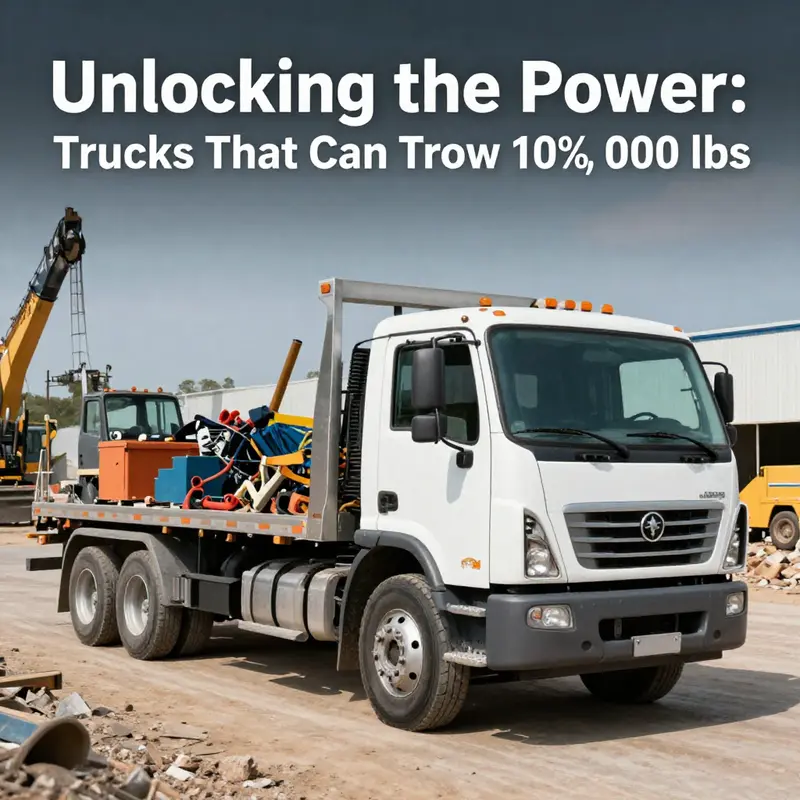
Understanding Class 4 Medium-Duty Trucks and Their Real-World Towing Capability
Class 4 medium-duty trucks bridge the gap between consumer pickups and heavy commercial rigs. They are built on a sturdier frame than light-duty pickups, with stronger axles, heavier-duty suspensions, and higher Gross Vehicle Weight Ratings (GVWR). By design, class 4 trucks support a GVWR range that often translates into towing capacities between 12,001 and 14,000 pounds. That clears the 10,000-pound target with room to spare. Yet raw numbers only tell part of the story. Real-world towing depends on how that capacity is achieved and applied. Understanding the components that create towing capability makes it possible to pick the right truck and tow safely.
A class 4 truck’s towing capability starts with its GVWR. GVWR is the manufacturer-rated maximum loaded weight of the truck. It includes the vehicle itself, passengers, cargo, fuel, and any tongue weight from a trailer. A GVWR in the class 4 band signals the chassis, axles, brakes, and cooling systems were specified for heavier duty. That equipment supports a higher Gross Combined Weight Rating (GCWR), which is the maximum combined weight of the truck and trailer. Manufacturers calculate GCWR with powertrain limits in mind. If you aim to tow 10,000 pounds, you need a GCWR that leaves adequate allowance for passengers, payload, and cargo. Otherwise the truck can reach its safe limit before the trailer does.
Beyond GVWR and GCWR, the suspension and axle ratings define how the truck behaves under load. Heavier axles and firmer springs reduce sag and improve stability. Leaf springs or reinforced coil systems resist bottoming out on heavy loads. Tandem rear axles appear on some medium-duty designs and offer better load distribution. Rear axle ratio choices affect towing performance too. Higher numerical ratios increase low-end torque at the wheels, helping with launches and hill climbs. Lower numerical ratios favor highway fuel economy but may strain the drivetrain when towing heavy masses. Choosing the right axle ratio is a critical step when configuring a class 4 truck for consistent 10,000-pound towing.
Powertrain and cooling systems are equally important. Medium-duty trucks commonly pair robust diesel or gasoline engines with transmissions built for repeated heavy-load duty. Torque output matters more than peak horsepower when moving heavy trailers. Equally critical is the cooling package. Heavy towing generates sustained heat in the engine, transmission, and differentials. A factory or dealer-installed heavy-duty cooling package prevents overheating during long climbs. Tow-focused transmission coolers and oil coolers keep temperatures safe. Without those components, a truck may meet a published towing rating on paper but struggle under real loads. Effective cooling extends component life and maintains consistent performance.
Braking systems on class 4 trucks are designed with larger rotors, stronger calipers, and often integrated trailer brake controllers. The truck must be able to stop both itself and the trailer safely. Electric or air-actuated trailer brakes are standard for medium-duty configurations. Properly matched braking reduces stopping distances and prevents trailer sway episodes from becoming dangerous. Many medium-duty trucks also include advanced stability control or load-sensing valves that modulate braking force across axles for improved control. When towing 10,000 pounds, ensuring the trailer’s brakes are compatible and adjusted correctly is non-negotiable.
Hitching hardware and weight distribution play a silent role in safe towing. The correct hitch class and a properly rated gooseneck or fifth-wheel setup will influence handling far more than the headline towing number. A bumper-mounted hitch may be rated lower than a frame-mounted or fifth-wheel hitch. Trailer tongue weight should sit in the manufacturer’s recommended window, typically 10–15 percent of trailer gross weight for conventional trailers. Uneven weight distribution leads to sway, reduced steering control, and uneven tire wear. Load-equalizing devices or weight-distributing hitches help maintain balance when the cargo sits toward the rear of the trailer.
Tires and wheels are often overlooked until a problem appears. Tires rated for higher load capacities and correct inflation are essential. Underinflated tires overheat and risk failure. Overinflated tires compromise traction and ride quality. Medium-duty trucks frequently use heavier load-range tires and stronger wheel assemblies. Matching tire load ratings to axle loads keeps the system working within design limits. Tire selection also affects braking and cornering performance. For consistent 10,000-pound towing, inspect tires before each trip and replace aging tires proactively.
Driver ergonomics and visibility contribute to safer towing too. Medium-duty trucks are commonly equipped with larger mirrors, blind-spot monitoring, and camera systems aimed at trailer oversight. Those features reduce the cognitive load on drivers during lane changes and reversing. A truck that provides good outward visibility and clear instrumentation helps the driver maintain safe speeds and make better judgment calls on passing or maneuvering. Training and experience remain vital. Even the most capable class 4 truck will not compensate for inexperienced towing technique.
Regulatory and licensing considerations are practical concerns that influence whether a medium-duty truck is the right tool. Most class 4 trucks can be operated with a standard driver’s license in many jurisdictions. However, state or regional rules can vary. Commercial registrations or specialized endorsements may be required if the truck is used in paid transport. Weight limits at bridges, local ordinances about axle loads, and special permits for oversized combinations are situational variables to research before the first trip.
Maintenance schedules for medium-duty trucks are often more rigorous than for light-duty pickups. The increased loads accelerate wear on brakes, drivetrain components, and suspension parts. Following manufacturer-recommended service intervals and monitoring fluid condition is essential. Fleet operators commonly adopt predictive maintenance strategies, tracking hours, miles, and load history to replace parts before failure. For a truck routinely towing 10,000 pounds, proactive attention to cooling systems, transmission fluid, and differential oil pays dividends in uptime and reliability.
One practical advantage of class 4 trucks is operational flexibility. They support heavier towing while offering better maneuverability than larger commercial rigs. That makes them well suited to urban deliveries, mobile workshops, and specialty towing operations where access, turning radius, and curbside presence matter. Their higher payload limits also allow operators to carry necessary on-board tools and equipment alongside the towed load without compromising safety margins. This versatility is why many businesses choose medium-duty trucks when loads exceed what consumer pickups can safely handle.
Choosing the right medium-duty truck for regular 10,000-pound towing requires a holistic approach. Start with the published GVWR and GCWR figures. Confirm the axle ratings and suspension setup. Evaluate the powertrain’s torque curve and the presence of heavy-duty cooling packages. Verify braking compatibility and hitch rating. Check tires, wheels, and steering geometry. Consider regulatory requirements and maintenance plans. Finally, match the truck’s hardware to the trailer’s characteristics, including tongue weight and brake type. Running through this checklist avoids surprises and keeps operations within safe parameters.
If you are unsure where your current truck stands, consult a towing guide that outlines how to calculate safe tow weight for your vehicle. A practical resource that explains the process and highlights steps to verify a truck’s capability can be found here: How much can my truck tow?. Use such material to cross-check your truck’s GVWR, GCWR, and payload limits before committing to a heavy tow.
Class 4 medium-duty trucks are a strong, practical choice for those who need to tow 10,000 pounds consistently. They provide a built-in safety margin and a chassis designed for heavier use. Yet the rating alone is not sufficient. Matching equipment, hitching strategy, cooling, and maintenance practices determine whether that rating serves you reliably. By focusing on the integrated system rather than a single number, operators can harness the power of class 4 trucks while managing risk. For further context and specification references related to class 4 tow capacities, consult industry resources and technical searches like this summary on class 4 medium-duty towing capacity: https://www.google.com/search?q=class+4+medium+duty+tow+truck+12000+lbs+capacity
Tow Power Unlocked: How Real Trucks Meet the 10,000-Pound Benchmark
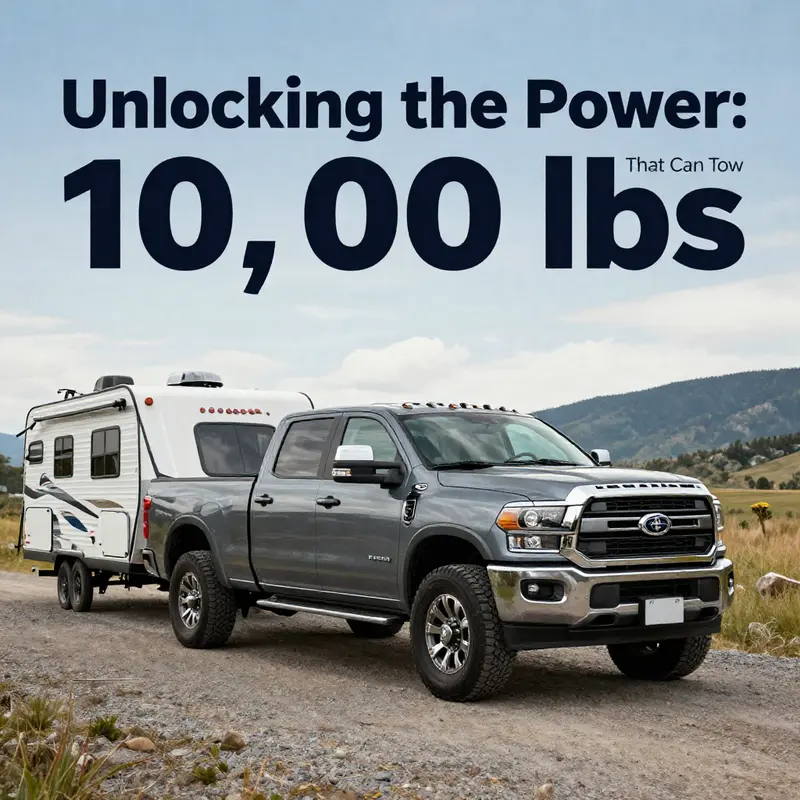
Towing a load of ten thousand pounds is a marker of serious capability, yet it sits at the intersection of engineering, weight management, and real-world usage. The numbers matter, but they don’t tell the whole story. When a vehicle is said to tow 10,000 pounds, that figure reflects how the drivetrain, chassis, brakes, suspension, and cooling work together under controlled conditions. In everyday settings, those conditions vary with how the trailer is loaded, how far you travel, and what kind of roads you face. To understand what trucks can reliably shoulder that kind of weight, it helps to move beyond slogans and look at the way the categories are built, how towing capacity is measured, and what implications those numbers have for ownership and operation. The threshold is not a single, universal line; it is a spectrum shaped by design choices and safety margins that manufacturers bake into the GCWR, payload ratings, and hitch specifications. As the industry has evolved, so too has the way drivers evaluate whether a given truck truly meets a 10,000-pound towing demand in their daily work, weekend adventures, or professional projects. The practical takeaway is that 10,000 pounds is a meaningful target, but one that deserves a careful check of ratings, configurations, and the real load profile you expect to move.
In the broad landscape of vehicle classifications, heavy‑duty pickups are the most common route to the 10,000-pound mark. These are purpose-built for strength and durability, with frames and suspensions reinforced to handle sustained high loads. They typically offer payload capacities that push well past 6,000 pounds and cruise with a towing capacity that cleanly exceeds 10,000 pounds in many configurations. That combination of high payload and strong tow performance makes them versatile allies for contractors, construction crews, and outdoors enthusiasts who routinely haul large trailers, equipment, or industrial gear. Yet even within this category, not every trim level or drivetrain option reaches the same peak; the towing number you actually rely on depends on the configuration, the engine torque curve, the transmission setup, the cooling system, and the quality of the hitch and braking system. It is not unusual to see a heavy‑duty pickup designed to tow 12,000 pounds or more in certain packages, while other configurations near the 10,000-pound threshold may require more careful management of weight distribution and cooling.
Beyond pickups, the landscape also includes medium‑duty trucks and, of course, larger commercial configurations that operate well above the 10,000-pound line. Medium‑duty offerings bridge the gap between consumer‑grade pickups and the heavy‑haul machines used in fleets. They can carry substantial payloads and pull sizable trailers, yet they still rely on a fundamentally different chassis philosophy and a different set of regulatory and practical constraints. These trucks are often selected when the job demands significant payload with a manageable size, a balance of maneuverability, and a lower overall operating cost compared with the heavier industrial options. They illustrate how the 10,000-pound threshold is not a one‑size‑fits‑all standard but a practical ceiling for many legitimate workhorse configurations. A further dimension shows up in the box truck segment: standard 26‑foot box models, common in commercial fleets and moving operations, frequently cap their payload near the 10,000‑pound mark. This reflects a design envelope that prioritizes interior space, structural integrity, and the ability to keep the chassis within a predictable weight class while still delivering a robust towing and hauling performance when needed.
Of course, the largest trailer configurations—tractor‑trailer combinations and other semi‑trailer rigs—operate on an entirely different scale. These systems routinely manage loads measured in tens of thousands of pounds, with a gross combination weight that dwarfs the 10,000-pound threshold. In practical terms, these machines aren’t measured by the same rules as a pickup or a traditional box truck. They belong to a different category of capability, one defined by a combination of a powerful prime mover, a purpose‑built trailer, and a braking and acceleration profile calibrated for highway deployment under heavy load. For the many people who require a 10,000‑pound tow, however, the reality remains that a well‑spec’d heavy‑duty pickup or a capable medium‑duty truck often provides the most cost‑effective, versatile, and accessible solution. This is where the distinction between payload and towing capacity becomes most important. The payload rating tells you how much weight sits on the truck itself, including passengers, fuel, and any cargo loaded in the bed. The towing capacity, in turn, tells you how much you can pull behind the vehicle, based on how the tongue weight and trailer mass interact with the truck’s chassis. To Tow 10,000 pounds safely, you typically need a vehicle with ample torque and a drivetrain engineered to sustain high draw forces without overheating, paired with a braking system that can manage the trailer’s kinetic energy and a suspension tuned to preserve stability as the load changes during acceleration, deceleration, and cornering.
The numbers sit on a foundation of engineering choices that affect both capability and reliability. Torque is central; it is the immediate response to a request for acceleration and a critical factor when starting a heavy trailer and maintaining speed on grades. Transmission design matters, too. A transmission with a strong torque converter or a shift strategy that preserves engine speed under load helps prevent frequent downshifts and overheating. Cooling systems are another essential element. When towing heavy loads over long distances, the cooling system must dissipate heat from the engine, transmission, and the differential to avoid power loss or mechanical stress. Chassis stiffness, spring rates, and axle geometry all play their roles in how a truck handles the dynamic weight of a trailer. The brakes must be commensurate with the combined mass of vehicle and trailer, with trailer brakes and appropriate electrical controls contributing to a balanced stopping performance. Tires, of course, bear the burden of grip and heat, and the load rating on the tires should match or exceed the demand of the combined mass. In practice, the right configuration balances all these elements so that the 10,000-pound load feels manageable rather than punitive, preserving maneuverability, safety, and control.
When considering a specific vehicle for a 10,000‑pound tow, it helps to translate those numbers into real use cases. A truck that can pull 10,000 pounds in a controlled test environment may behave differently on a long highway climb with a fully loaded trailer and a hot day. This is where drivers benefit from planning ahead: knowing the trailer’s gross weight and tongue weight, understanding how ballast shifts as you drive, and recognizing that the actual towing experience will involve subtle but meaningful differences from the peak rating. For instance, if your trailer’s weight is close to the upper end of the rating, you may need to be mindful of how much your payload adds to the overall stress on the drivetrain. If you operate near the limit frequently, you’ll want a configuration with substantial margin, robust cooling, and a proven track record for reliability under heavy loads. The practical takeaway is to treat the 10,000-pound benchmark as a target that helps guide decisions about which class of vehicle to own, how to configure that vehicle, and how to manage the physics of towed mass on the road.
In this context, the practical path to a 10,000-pound tow often lies with the heavy‑duty category, where the combination of a reinforced frame, high‑torque engines, and tuned drivetrains meets the demands of large trailers and equipment. This is not a reckless benchmark; it is a meaningful threshold that aligns with many construction, landscaping, and industrial tasks. But the path is not a straight road. The same class of vehicle may offer multiple versions with different tow ratings based on drive system, axle ratio, cab configuration, and bed length. A buyer who eyes a 10,000-pound tow must weigh these variables, along with maintenance costs, fuel efficiency, and long‑term reliability. In parallel, some within the medium‑duty range provide a compact yet capable option for those who need heavy hauling without stepping up to the largest trucks. These machines blend versatility with a strength profile that suits mid‑size fleets and ambitious hobby projects alike.
The topic also invites a broader reflection on how modern fleets and individual owners approach towing. It is not enough to chase a number; the real value lies in how that number translates to daily operations, safety margins, and total cost of ownership. A vehicle that can tow 10,000 pounds with a comfortable payload margin and a resilient braking system can be a dependable partner for a wide array of tasks. It can handle large recreational loads, deliver heavy equipment to work sites, or carry sizable cargo where vehicle restraint and trailer stability are at stake. The calculus combines engineering design with user experience: how easy is it to hook up the trailer, how predictable is the handling at different speeds and on varied grades, and how much maintenance will a heavy‑duty setup require to maintain peak performance year after year? These questions are as important as the raw numbers because they shape confidence, safety, and efficiency over the life of the vehicle.
For readers who want a deeper dive into the math behind these ratings and the practical implications of different configurations, there is a resource that walks through the underlying calculations and real‑world considerations behind towing capacities. This material helps bridge the gap between theoretical numbers and how a truck behaves when the trailer is hitched and the miles start clicking. For an additional perspective on the broader topic of towing, the external resource linked below offers a comprehensive view of how heavy‑duty towing considerations are addressed in modern practice. In parallel, those who wish to explore the exact range of 10,000‑pound towing options within a specific platform can consult the internal discussion that explains how much a given vehicle can tow in typical use. See How Much Can My Truck Tow for the math behind these numbers. External reference: https://www.ford.com/trucks/f-250-super-duty/
Final thoughts
Understanding the options available for towing 10,000 lbs is essential for anyone needing a reliable truck for work or personal use. From robust heavy-duty trucks engineered for tough jobs to medium-duty options perfect for daily transportation needs, as well as luxurious large pickups capable of hitting the open road with ease, there’s a truck for every requirement. Being informed about these types helps in making the right choice tailored to your specific needs, ultimately enhancing your driving experience and operational efficiency.