
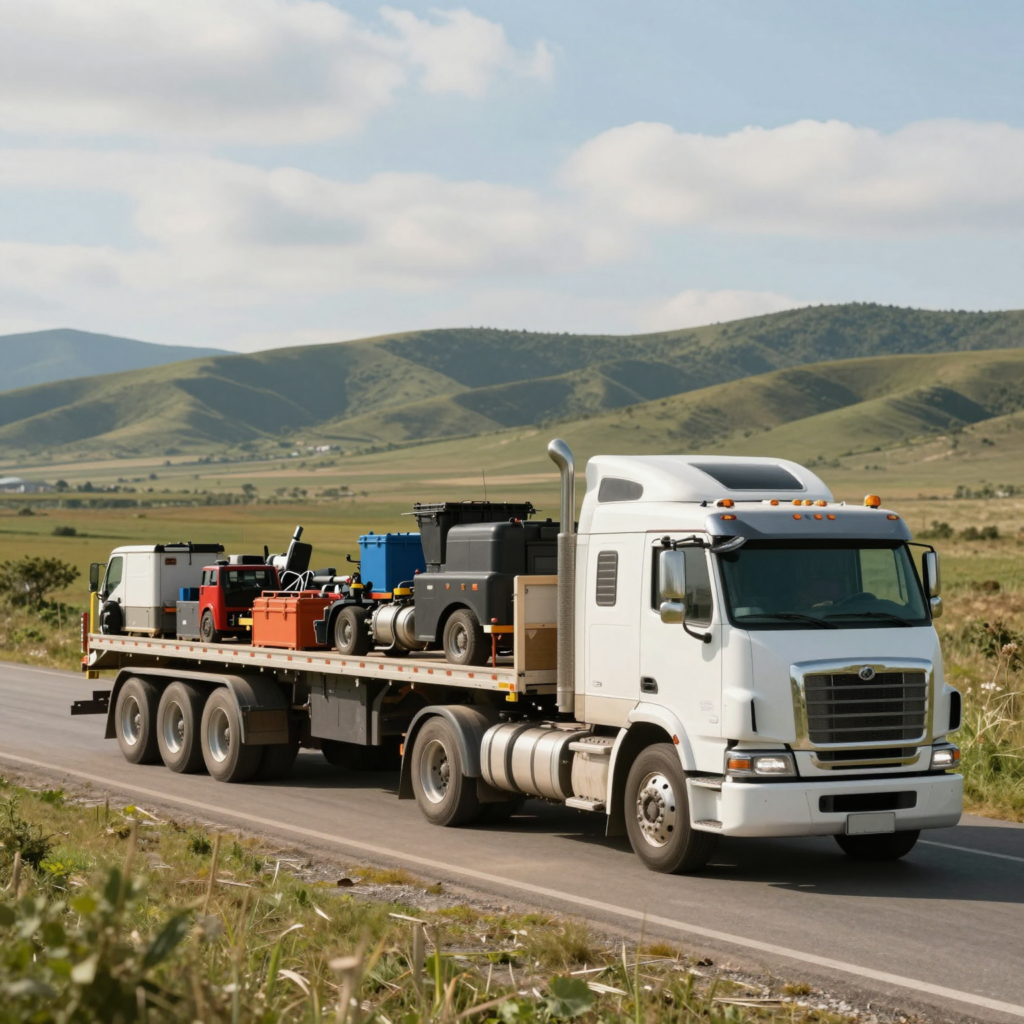
When it comes to truck ownership, understanding towing capacity is not just about knowing how much weight you can haul; it’s crucial for ensuring safety and maintaining efficiency on the road. Exceeding a truck’s towing limits can lead to dangerous situations, including brake failure and loss of control during emergency maneuvers. Properly matching your vehicle’s towing capabilities to your hauling needs ensures stability, effective fuel consumption, and prolongs the life of your truck. This article explores the towing limits for various truck models, providing essential insights to help you make informed decisions-whether you’re hauling a trailer, moving equipment, or transporting goods. Learn more about the importance of towing capacity and discover what your truck can handle safely.
Key Towing Terms Explained
Understanding the terminology associated with towing is crucial for any truck owner. Here, we break down some essential terms related to towing.
Gross Vehicle Weight Rating (GVWR)
GVWR (Gross Vehicle Weight Rating) is the maximum weight that a vehicle can safely handle, established by the manufacturer. This rating includes the vehicle’s curb weight (the empty weight of the vehicle), passengers, cargo, and any fluids, such as fuel. For example, if your truck’s GVWR is 8,000 lbs, you should ensure that the total load doesn’t exceed this weight to maintain safety and vehicle integrity. Exceeding the GVWR can lead to handling issues, brake failure, and increased risk of accidents. Learn more
Towing Capacity
Towing Capacity refers to the maximum weight a vehicle can safely tow. This number is influenced by various factors, including engine strength, transmission, suspension, and braking systems. For instance, if a truck has a towing capacity of 7,500 lbs, that is the maximum weight it can pull without risking damage to the vehicle or compromising safety. Understanding Payload, Towing Capacity, and Trailer Weight
Payload
Payload is the total weight that a vehicle can carry beyond its curb weight. This includes the combined weight of passengers, cargo, and any accessories inside the vehicle. To calculate payload, subtract the curb weight from the GVWR. For example, if your truck has a GVWR of 10,000 lbs and a curb weight of 6,500 lbs, your payload capacity is 3,500 lbs.
Trailer Weight
Trailer Weight is the actual weight of the trailer being towed, including any cargo contained within it. It is crucial to ensure that this weight is within the limits set by both the vehicle’s towing capacity and the trailer’s GVWR to ensure safe towing conditions.
Summary
Understanding these terms helps truck owners make informed decisions regarding towing and loading, thus ensuring safety and compliance with local regulations.
| Make | Model | Year | Towing Capacity |
|---|---|---|---|
| Ford | F-150 | 2023 | Up to 14,000 lbs |
| Ford | F-250 Super Duty | 2023 | Up to 22,000 lbs |
| Ford | F-350 Super Duty | 2023 | Up to 37,000 lbs |
| Chevrolet | Silverado 1500 | 2023 | Up to 13,300 lbs |
| Chevrolet | Silverado 2500HD | 2023 | Up to 32,000 lbs |
| Ram | 1500 | 2023 | Up to 12,750 lbs |
| Ram | 2500HD | 2023 | Up to 37,000 lbs |
| Toyota | Tundra | 2023 | Up to 12,200 lbs |
| Toyota | Tacoma | 2023 | Up to 6,500 lbs |
| GMC | Sierra 1500 | 2023 | Up to 13,000 lbs |
| GMC | Sierra 2500HD | 2023 | Up to 18,500 lbs |
Understanding Towing Capacities: What You Need to Know
When it comes to towing, understanding your truck’s capabilities is crucial for safe and efficient driving. Each truck model comes with its own towing specifications, influenced by factors such as engine power, rear axle ratio, and weight distribution. Whether you’re moving a boat, a camper, or a work trailer, knowing how much your truck can tow helps prevent accidents and mechanical failures.
Key Factors to Consider:
- Towing Capacity: This is the maximum weight your vehicle is rated to safely tow. Always refer to the owner’s manual or manufacturer’s specifications for the exact numbers.
- Gross Vehicle Weight Rating (GVWR): This includes the weight of your truck plus the maximum weight of any trailer it can tow.
- Payload Capacity: This denotes how much cargo you can carry within your truck, which impacts overall towing capability.
It’s advisable to undergo towing training or review towing guidelines before hitting the road, especially for heavier trailers. For a more robust understanding of emergency towing operations, you can learn more about specific scenarios.

Factors Influencing Towing Capacity
Understanding what affects a truck’s towing capacity is essential for safe and efficient hauling. Several key factors determine how much weight your truck can tow:
Engine Size
- Torque and Power: A larger engine generally provides more torque and horsepower, crucial for moving heavy loads. For example, a truck with a powerful V8 engine typically has a higher towing capacity than a smaller V6 engine.
- Turbocharging: Turbocharged engines can produce more power without significantly increasing engine size, enhancing towing performance.
Axle Ratio
- Power Delivery: The axle ratio represents how many times the driveshaft turns for every turn of the wheels. A higher numerical ratio (e.g., 4.10 or higher) increases low-end torque, which is beneficial for towing heavy loads. However, this can reduce fuel efficiency.
- Performance: Trucks with optimized axle ratios can accelerate better while pulling heavy trailers, which is essential when navigating inclines or freeway merges.
Transmission Type
- Automatic vs. Manual: Automatic transmissions often provide smoother power delivery and have adaptive algorithms that shift gears based on load. On the other hand, manual transmissions give drivers more control over gear selection, which can be advantageous in specific towing scenarios.
- Gear Count: Higher gear-count transmissions, such as those with 10 speeds, can optimize power use, thus enhancing fuel efficiency while towing and improving overall responsiveness.
Vehicle Design
- Chassis and Framework: A truck’s chassis must be robust enough to handle the stresses of towing. Heavy-duty trucks are designed with reinforced frames and axles to prevent damage when towing at or near capacity.
- Braking Systems: Effective braking systems are crucial for safe towing. Trucks designed for heavy towing often come with upgraded brakes that can handle the added weight without overheating.
- Suspension Systems: An adequately designed suspension can better manage the additional weight and reduce the risk of wear and tear on the vehicle components.
Conclusion
Ensuring that your truck is up to the task of towing involves considering all these factors. Exceeding the recommended towing capacity given by the manufacturer can lead to safety hazards and expensive repairs. Always consult your vehicle’s specifications and follow guidelines for safe hauling to get the most from your towing experience. By understanding these elements, truck owners can make informed choices about their towing capabilities.
Truck owners frequently share their insights and experiences regarding towing, often highlighting specific challenges they encounter.
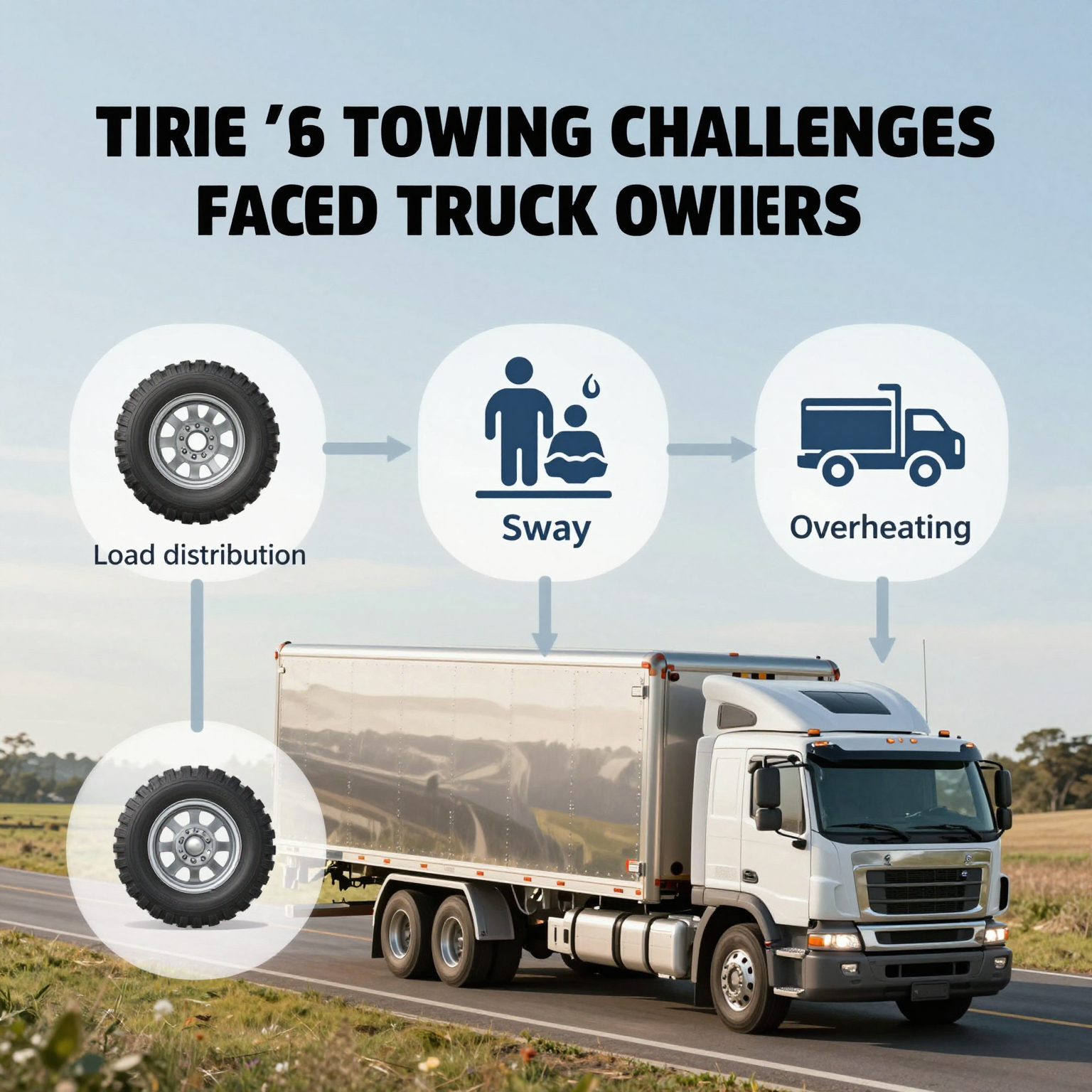
A survey conducted by Car and Driver revealed that 78% of truck owners found that choosing the right tires, particularly dual-axle types, significantly enhanced their towing experience. One owner noted, “The difference in vibration and stability with the right tires is night and day.” Common challenges include uneven load distribution, reported by 42% of respondents, and excessive tire heat (35%). Many emphasized the importance of properly matching tire specifications to vehicle and trailer loads.
Professional truckers also weighed in, identifying issues like trailer sway and brake fade as significant concerns. A seasoned driver stated, “My fuel economy improved by nearly 12% and my towing feels much more controlled after switching my tires.” Moreover, a Reddit discussion highlighted the frustration with stock tires, with one user remarking, “My truck felt like it was fighting me every time I towed.”
When it comes to towing, understanding your vehicle’s limits is not just a matter of performance-it’s crucial for your safety and the safety of those around you. A leading expert from the National Highway Traffic Safety Administration (NHTSA) emphasizes:
“Exceeding a vehicle’s towing capacity is a leading cause of trailer jackknifing, brake failure, and loss of control. Over 10% of fatal crashes involving towing vehicles in 2023 were linked to improper load distribution or exceeding weight limits.”
This highlights the vital importance of adhering to your vehicle’s Gross Combined Weight Rating (GCWR) and hitch weight specifications.
Failure to do so can not only lead to dangerous situations on the road but can also cause severe mechanical failures. For instance, an article from Motorist Magazine reveals the severe implications of over-towing, stating:
“I’ve seen transmissions fail after just 15,000 miles due to over-towing-this isn’t just about safety; it’s about protecting your investment.”
It’s imperative to consult the owner’s manual and ensure you know your limits before towing. For more detailed insights about towing capacities, check out how much can my truck tow.
Understanding the Link Between Engine Size and Towing Capacity
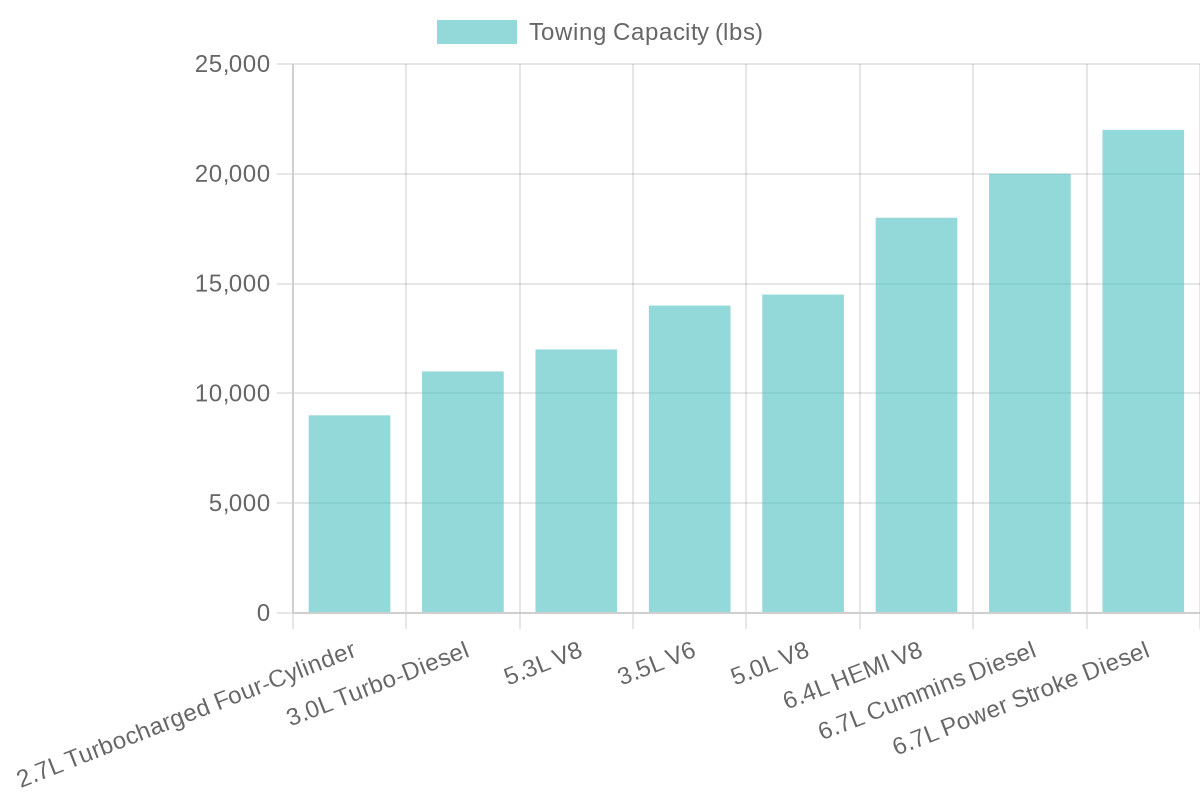
When it comes to towing, the engine size of a truck plays a pivotal role in determining how much weight it can handle. The more powerful the engine, the greater the towing capacity, allowing for the transport of heavy loads, such as trailers, boats, and equipment. This is especially relevant for individuals and businesses needing reliable towing solutions.
The following chart illustrates the relationship between various engine sizes and their respective towing capacities:
Key Data Points:
| Engine Size | Towing Capacity (lbs) |
|---|---|
| 2.7L Turbocharged Four-Cylinder | 9,000 |
| 3.0L Turbo-Diesel | 11,000 |
| 5.3L V8 | 12,000 |
| 3.5L V6 | 14,000 |
| 5.0L V8 | 14,500 |
| 6.4L HEMI V8 | 18,000 |
| 6.7L Cummins Diesel | 20,000 |
| 6.7L Power Stroke Diesel | 22,000 |
This data clarifies how the engine size directly influences towing capacity, which is crucial for everyday drivers, truck owners, and businesses that rely on towing capabilities. For further insights into tow truck specifications and capacities, learn more about how much your truck can tow.
Conclusion
Understanding the towing capacities of your truck is crucial for both safety and performance. On average, full-size pickups can tow between 10,000 to 14,000 pounds, while heavy-duty trucks like the Ford F-250 may handle upwards of 18,000 to 22,000 pounds. However, these figures vary based on several factors, including engine type, drivetrain, and axle ratio. Notably, compliance with the manufacturer’s specified limits is essential to avoid mechanical failures and safety hazards. Exceeding your truck’s towing capacity can lead to serious consequences, such as overheating, brake failure, and increased stopping distances, all of which can endanger drivers, passengers, and other road users. Furthermore, guidelines from authoritative sources recommend that drivers keep the trailer weight below 80% of the truck’s maximum towing capacity for optimal safety and handling. For further insights, you can explore official towing safety guidelines.
In addition, enhancing your towing capabilities can be achieved by investing in premium fairings. Summit Fairings offers robust solutions designed to maximize aerodynamics, thus improving fuel efficiency while towing. When properly utilized, these fairings can significantly reduce drag and optimize your vehicle’s performance, providing a smoother towing experience. As you prepare for your next towing task, consider how the right equipment can make all the difference in your truck’s efficiency and safety. For more on the benefits of premium fairings, check out Summit Fairings’ offerings.
Elevate Your Truck with Summit Fairings!
If you’re a truck owner looking for the perfect blend of style, functionality, and savings, look no further than Summit Fairings. Our premium, custom-fit fairings are designed to enhance your vehicle’s aerodynamics, improve fuel efficiency, and elevate its aesthetics-all without the hefty price tag found with other brands.
Why Choose Summit Fairings?
- Quality Materials: Made from durable ABS and polycarbonate, ensuring longevity against impact and weather extremes.
- Tailored Fit: Our fairings require no modifications for installation. Enjoy improved wind protection and safety.
- Cost-Effective: A direct-to-consumer model means superior quality products at 20-30% lower prices compared to competitors.
Upgrade your truck with precision-engineered fairings that not only look great but also enhance performance. Learn more about our products today!