
Understanding the cost to tow a truck is essential for everyday drivers, truck owners, and property managers alike. Accidents, breakdowns, or parking violations can lead to unexpected towing fees, which can vary widely based on several key factors. From the distance of the tow to the size and weight of the vehicle, knowing how these variables interact can help minimize costs. In this exploration of towing expenses, each section will guide you through the primary influences—distance, vehicle type, additional fees—and offer practical insights to help in estimating towing costs effectively.
What Drives the Price to Tow a Truck: Distance, Weight, Time and Hidden Fees
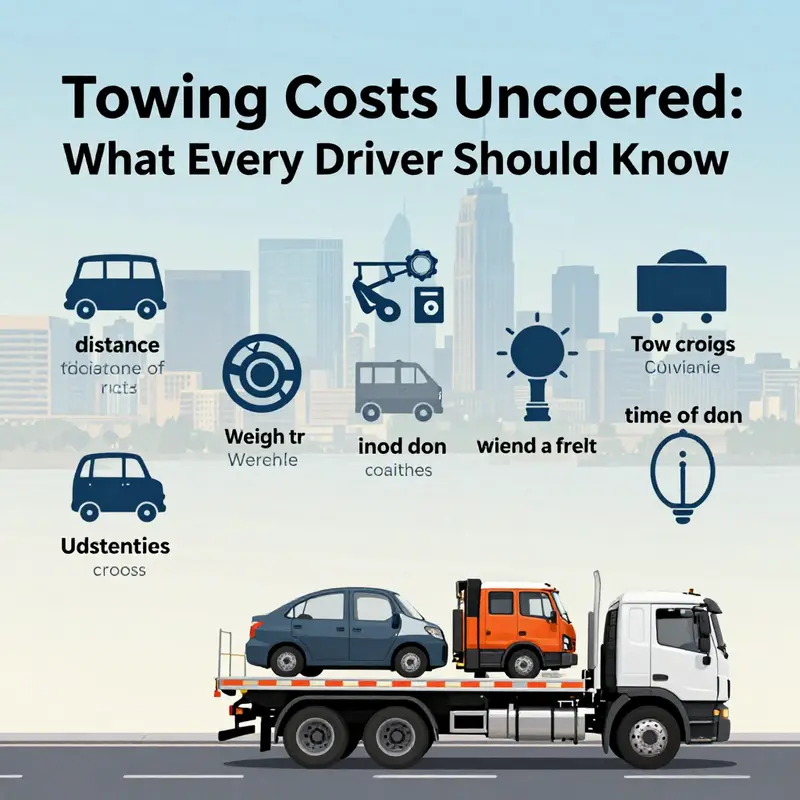
Towing a truck is rarely a single number. The final bill reflects a mix of visible charges and behind-the-scenes costs. Distance usually dominates the total, but weight, equipment needs, timing, and location all push the price in different directions. Understanding how those pieces fit together helps you predict a realistic figure and avoid surprise charges.
Most towing companies use one of two common pricing models: a base hookup fee plus a per-mile rate, or tiered brackets based on distance. A short move nearby will be priced very differently from a long haul to a rural repair shop. For example, a quick five-mile tow often falls in the lower range, while a 50- or 100-mile job can escalate quickly. In rural areas the distance to the nearest service center is often the primary driver of cost. In dense urban zones, distances may shrink but hourly delays and traffic increase labor time and operational expense.
The truck itself matters. A compact sedan is simple to lift and secure. A full-size pickup, SUV, or commercial van is heavier, larger, and often needs special handling. Heavy-duty wreckers and platform trucks consume more fuel. They also demand stronger straps, winches, and sometimes hydraulic systems. The greater the vehicle weight, the more likely the tow will require an upgraded unit and extra manpower. That machinery and manpower add to the bill through higher per-mile charges and sometimes an elevated hookup fee.
Operational reality shapes pricing too. A loaded tow truck often gets six to ten miles per gallon, which increases fuel expense on long jobs. Maintenance on heavier equipment is more frequent and costlier. Keep in mind the company must cover driver wages, insurance, licensing, and communications gear. All of those overhead costs get distributed across jobs and reflected in rates. New owners of tow trucks factor in depreciation and financing when they set prices. Those business realities explain why rates differ between companies and regions.
Timing can change a quote fast. Off-hours service, holiday work, evenings, and weekend calls often carry higher rates. Emergency recoveries, where a truck must be winched out of an embankment or a ditch, usually require more time and extra tools. That raises both labor and equipment usage. If a tow takes place during peak traffic hours, the driver may bill more for the additional time. In some markets “rush hour” rates are explicit. In others they show up as higher hourly or per-mile charges.
Beyond the headline numbers, additional fees are common. A hookup or ‘‘hook and roll’’ fee can be a fixed charge just to secure and move the vehicle. Winching, recovery from difficult positions, and use of specialized attachments may each carry extra fees. If an accident involves multiple vehicles, expect a more complex invoice. Storage, impound release, or extra mileage to reach a preferred repair shop may appear as line items. Always ask whether the quoted price includes release and storage fees when applicable.
A few practical examples make the range clear. A short five-mile move might be quoted from a lower-range fee to a moderate one. A forty-mile move pushes into a different tier, and a hundred-mile haul can top several hundred dollars. Exact numbers vary by market, but the relationship is consistent: longer distances and heavier trucks yield higher totals. When your situation is not straightforward, ask for a bracketed estimate. Many companies can give low, medium, and high estimates based on likely scenarios.
Estimating and Avoiding Surprise Charges
Begin any tow by asking for a detailed breakdown. Request the base fee, per-mile charge, and any known extras. Ask whether time spent in traffic counts toward labor, and whether off-hours triggers a premium. If your truck needs winching, ask what that specific service costs. If the tow crosses municipal lines, confirm whether permits or escort vehicles are required. For heavy loads, confirm whether the company will need to call a heavier wrecker or arrange an escort. Those needs are common with commercial vehicles and can add substantially to cost.
If you have roadside assistance through a membership or insurance, check coverage limits. Some plans cover only certain distances, or they allow a set number of tows per year. If the membership covers local towing but not long hauls, you may still face a bill for the remaining miles. If your insurer offers towing reimbursement, understand the claims process and whether pre-authorization is required.
Document the quote. Take a photo or ask the dispatcher to send an estimate text. Confirm whether the estimate is binding or approximate. If the situation changes on site, such as discovering additional damage or an inaccessible location, request a revised estimate before work begins. A clear record reduces disputes later.
For owners and prospective operators, understanding equipment and lifecycle costs is essential. Heavy-duty wreckers cost more to buy and to maintain. A 5-ton or larger unit requires special components. Those capital and maintenance costs end up in hourly and per-mile rates. Fuel, gearing for heavy loads, frequent brake and tire work, and specialized training for operators all increase the cost per job. When a company invests in modern communications and route-planning systems, those systems can lower response time and reduce fuel expense. In turn, efficient operations can keep customer rates more competitive.
There are smart ways to limit what you pay. Wherever possible, choose a nearby authorized repair shop. Ask whether the company has a preferred tow radius that is cheaper. If the tow is not an emergency, schedule it for normal business hours. If you belong to a roadside plan, use a sanctioned provider to avoid extra fees. If multiple quotes are available, compare both the price and the services included. Cheaper is not always better; inexperienced operators may cause more damage, leading to greater costs in the long run.
Transparency benefits everyone. Tow companies that give itemized quotes and explain charges build trust. As a customer, you are entitled to know whether the price covers hookup, mileage, winch work, and storage. As an owner, you must recognize how fixed and variable costs influence rate-setting. That perspective brings clarity to why two similar tows can show different totals in different places.
When a heavy recovery is needed, local regulations can affect the operation. Some jurisdictions require permits or highway escorts for oversized or overweight tows. Those requirements add direct fees and may cause delays. If you suspect such issues, ask the dispatcher whether permits or escorts will be necessary. Their presence on the job increases both time and cost.
Finally, record keeping and insurance matter. If a tow results from an accident, you may have coverage options through insurance. Keep receipts, keep contact information for the tower, and photograph the scene if safe. If junk removal or salvage is involved, a different fee structure may apply. Clarify those possibilities in advance.
For a concise primer on common cost factors and typical ranges, see this useful external resource: https://www.allstate.com/insurance/auto/towing-costs. For deeper practical information about industry pricing and ownership considerations, consult guidance on how much towing a truck costs from a reputable local towing resource, such as how much does towing truck cost.
Miles That Matter: Unraveling How Distance Drives Truck Towing Costs
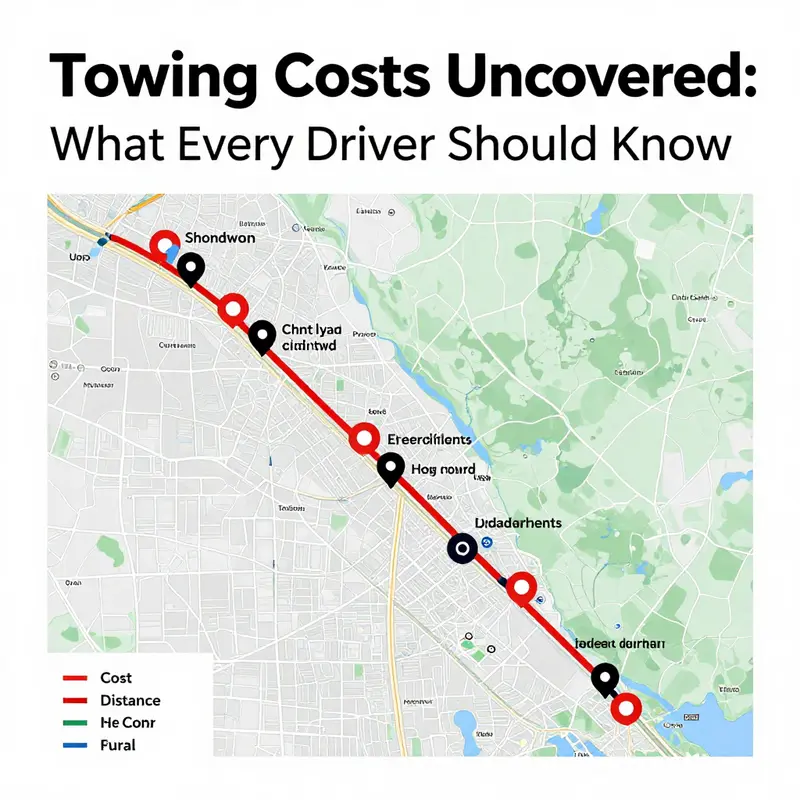
Distance is the loudest voice in the price conversation when a truck needs help. It sets the tempo for everything that follows, because the miles the tow truck must cover are a direct proxy for fuel use, driver hours, equipment wear, and the time a crew spends on the road. In practical terms, distance often explains why two tow jobs that look similar on the surface can end up with very different price tags. The calculus is simple in outline but complex in reality: a base fee covers the initial response and the first leg of the journey, then a per-mile charge adds on as the destination drifts farther away. The farther the distance, the more the bill grows. Some markets illustrate this with rough benchmarks. A short tow of roughly five miles might hover around seventy-five dollars when the base fee blends with a modest mileage rate. A substantially longer drive, say fifty miles, commonly pushes the sum beyond the three-hundred-dollar mark, and in some cases well past it. Those figures are not universal, but they capture a core truth: distance is the singular factor that most reliably explains the spread in towing costs across different jobs and regions.
Distance, however, never travels alone. It travels alongside the vehicle’s weight and configuration, the terrain, and the time of day, all of which interact with the distance to shape the final price. Heavier vehicles—full-size pickups, sport utility trucks, or commercial vans—demand more robust equipment, larger crews, and longer hook-up periods. The same mile traveled with a compact sedan would burn less fuel and wear less gear than a mile dragged for a heavy-duty truck. In a cost structure that blends base fees with mileage, the increased labor and equipment required for heavier payloads still scale with distance. In other words, the distance multiplies not only fuel use but also the intangible costs of service continuity—getting a tow truck to the scene, hooking up safely, and delivering the vehicle to its destination without compromising safety or compliance.
Pricing models across markets reflect this reality in slightly different flavors. In many places, the model is straightforward: a fixed base fee intended to cover the initial response and the first segment of the trip, followed by a per-mile or per-kilometer rate that kicks in once the base threshold is surpassed. The per-mile rate can be the same regardless of vehicle type, or it can vary by service level, time of day, or road class. The logic is disciplined but not blind. It recognizes that the miles accumulate not only on the odometer but also in the crew’s hours behind the wheel. That is why urban settings frequently present a paradox: shorter typical distances, yet higher effective rates due to congestion, higher insurance costs, and the premium placed on rapid response in dense areas. Rural routes, conversely, may feature longer drives but sometimes lower per-mile competition, which can influence the total cost in favor of the customer who is far from the nearest shop. The distance thus becomes a dial that operators tune to regional realities, balancing competitive pricing with the costs of time-on-task and risk.
The chapter’s central claim remains intact across these variations: distance is the primary driver because it captures the bulk of the tangible expenses and the majority of time spent on the job. Fuel is not the only expense, though it is the most obvious one. A tow that travels farther demands more fuel, yes, but it also requires the driver to be on the road longer. That longer period translates into higher wages for the driver’s time, greater depreciation on the tow rig and its winches, more frequent wear on tires and brakes, and an increased likelihood of additional crew callouts or safety checks. The relationship is nearly proportional: double the distance often means a line item that doubles or nearly doubles, depending on the exact mix of base fees, surcharges, and regional cost of living. Yet, because base fees are designed to cover the immediate mobilization and the initial miles, the marginal effect of distance may flatten a bit as the journey lengthens. In practice, this means a five-mile tow might be distinctly cheaper than a twenty- or fifty-mile tow, even when the vehicle type remains constant.
Within this framework, other factors subtly modulate the distance-driven cost. Time of day and urgency are prime examples. Nighttime tows frequently incur surcharges that can range from a modest premium to a sizable one, depending on local labor laws, demand, and risk. A tow carried out during a holiday or a weekend may also carry a premium, even when the distance is fixed. The terrain and road class further complicate the math: highway miles, urban streets, and rural backroads all impose different degrees of risk and difficulty, which in turn influence the rate per mile and the overall base charge. For instance, highway sections demand longer-distance planning, safer equipment handling at speed, and often more sophisticated trailer setups to secure the load for higher-speed travel. All of this adds cost that travels with the miles, shaping the final bill as surely as the actual distance does.
From a customer’s standpoint, the distance-driven cost can be anticipated with a disciplined approach. Start with the base fee, which is the gateway to any estimate. Then add the per-mile charge for the mileage between pick-up and drop-off. A cautious estimate should factor in possible regional surcharges, such as night-time premiums or emergency responses, which frequently accompany longer or more urgent requests. If the tow involves an oversized or heavy-duty vehicle, expect additional fees tied to equipment wear and specialized rigging. The challenge—and opportunity—for customers lies in asking for a clear, itemized breakdown before service begins. A transparent quote helps separate the influence of distance from ancillary fees that could otherwise blur the true cost. In a well-structured quote, you should see the base fee, the mileage rate, potential vehicle-weight adjustments, and any surcharges spelled out in dollars rather than left implicit in the total. This clarity makes it easier to compare competing offers without chasing hidden costs.
For those who want a mental model to plan ahead, consider a simple framework that translates distance into a preliminary total. Imagine a short urban tow: a base fee to cover the initial dispatch and hookup, plus a modest per-mile charge for those first miles. If the distance increases, the per-mile portion grows, and the total climbs accordingly. Now extend that framework to a longer distance and a rural or highway route. The base fee remains, but the mileage component becomes a larger slice of the pie. On longer runs, you may begin to notice a disproportionate impact from time-of-day surcharges and potential emergency or expedited service fees, which rise with urgency and risk rather than with distance alone. The net effect is that distance sits at the heart of the math, always alongside the other ingredients of the quote, never in isolation.
To give readers a practical sense of scale, consider the broader landscape of pricing that can be observed in many markets. Short, urban-to-urban tows in the vicinity of five miles can hover around a few dozen to a little under a hundred dollars, depending on the base charge and the exact mile rate. A mid-range tow of twenty to thirty miles is frequently in the right ballpark of a couple hundred dollars, with more for weighty trucks and peak hours. Long-haul distances—tens or hundreds of miles—often push the total into the upper hundreds or even the low thousands, especially when the vehicle requires specialized handling or the journey traverses complex routes. These figures are not fixed; they shift with regional competition, labor costs, and the local economy. Yet they illustrate the constant truth: the longer the tow, the more the miles drive the price, and the price tracks distance more reliably than any other single factor.
For readers seeking to manage expectations or plan budgets, one practical recommendation remains universal: insist on a breakdown before service. Ask for the estimated total, including the base fee, the mileage charge, and any potential surcharges or specialty fees tied to the job’s unique circumstances. This approach helps rebalance the customer’s understanding against the operator’s accounting realities. It also creates a clearer basis for comparing quotes across providers, ensuring distance alone does not become the inadvertent scapegoat for price variation. If you want to explore a more detailed discourse on the full spectrum of tow-truck economics, you can explore this broader guide on tow-truck costs and pricing, which maps out the typical components that compose a complete quote. (Internal link: tow-truck costs and pricing)
The distance-centered lens also invites readers to consider a regional snapshot if they are planning a trip or evaluating service options across state lines or rural regions. Urban centers tend to have higher operating costs that can elevate the per-mile rate, even when the base fee remains constant, because the logistical challenges of city streets, parking lifecycles, and traffic slowdowns increase the resource footprint of each mile. Rural zones, by contrast, often stretch the logistical boundary with longer travel times but occasionally with less intense competition, which can impact price dynamics in favor of the customer depending on demand patterns. In all cases, distance remains the anchor of the pricing ship, with the other fees acting as wind or weather that can push the total higher or lower depending on the circumstances of the tow, the time of day, and the urgency of the request.
External resources can provide a broader framework to understand these numbers in context. A comprehensive guide on tow truck ownership costs delves into the machinery, labor, insurance, and maintenance that underpin every mile towed, offering a grounded view of how distance translates into sustained operating expenses for tow operators. While the exact prices will vary by market, the underlying logic—distance as a primary cost driver, amplified by vehicle weight, road class, and time-based surcharges—remains a constant across credible providers. External resource: https://www.towtruckowner.com/ownership-costs-guide
Weight on the Line: How Vehicle Size Shapes the Price Tag of Truck Tows
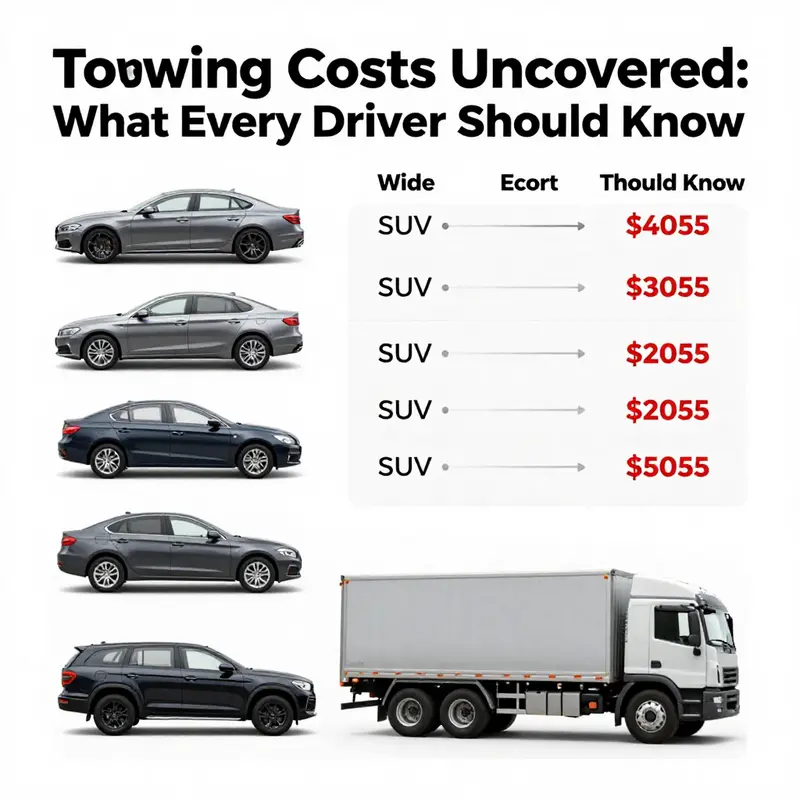
The cost of towing a truck is not a single number set in stone. It is a moving equation where the weight and size of the vehicle act like major levers that swing the final bill one way or another. When a tow truck is dispatched, the operator anticipates the tasks ahead not just from distance or the driver’s time, but from the specific demands a heavy, bulky vehicle imposes. Heavier trucks and larger vans require different rigs, more horsepower, more specialized gear, and more careful handling to prevent further damage on the road or at the curb. In other words, the vehicle’s class can define the job before the light goes on in the cab. This reality helps explain why two tows that cover the same distance can end up with very different price tags simply because one vehicle is a compact car and the other is a heavy-duty work truck. It also clarifies why, even before a tow begins, you should expect a pronounced difference in pricing for weight versus distance alone. As a chapter focusing on the role of vehicle type and weight, this discussion anchors the broader picture of how towing costs are built from the ground up, layer by layer, with weight as a constant pressure that reshapes each component of the bill.
To understand the scale of these differences, it helps to think about the towing scenario in terms of weight classes. Each class corresponds to a range of vehicle sizes, seating configurations, and gross vehicle weights, and with each class comes a distinct combination of equipment needs, labor intensity, and safety considerations. On highways and in urban corridors alike, these factors converge to form a predictable, albeit variable, pricing structure. The lightest category, for example, includes passenger cars and small pickups that can be managed with standard tow gear and routine procedures. Heavier classes demand specialty equipment—heavy-duty winches, wheel lifts, multiple dollies, and sometimes even a second operator—because the risk and complexity rise with weight. In practical terms, weight defines the scope of the job and thus the price ceiling. The math is not purely about mass; it is about the resources required to move mass safely and efficiently while protecting other vehicles and the recovering vehicle itself.
Across the industry, a common framework emerges when you map cost to vehicle class. Class I vehicles are the lightest category: passenger cars with seven seats or fewer, or trucks weighing two tons or less. For these, the base fee typically falls into a broad range, with initial charges around 260 to 700 dollars for the first roughly ten kilometers, followed by additional charges in the neighborhood of 15 to 35 dollars per kilometer beyond that. This reflects the balance between a relatively quick hookup, a standard tow platform, and a straightforward recovery path. The next tier, Class II, captures vehicles that can seat eight to nineteen passengers or weigh two to five tons. The base fee here tends to be higher—roughly 350 to 450 dollars—paired with per-kilometer costs of about 20 to 25 dollars. This reflects the added weight, the need for sturdier equipment, and often a longer or more complex recovery process from the roadside.
Moving into Class III and beyond, the scale of the work shifts noticeably. Class III vehicles, defined as those with 20 to 39 passenger seats or five to ten tons in weight, generally carry a base fee around 400 dollars, with per-kilometer charges of about 22 dollars. This class often requires more robust rigging, additional stabilization, and careful weight distribution during lift and tow operations. Class IV, which includes very large buses, 10 to 15 ton trucks, or 20-foot container trucks, starts with a base fee ranging at or above 500 dollars and adds about 25 dollars per kilometer. Class V, the heaviest category in common usage for towing, encompasses vehicles over 15 tons or 40-foot container trucks, with a base fee around 600 dollars and per-kilometer costs near 27 dollars. These figures are not rigid prices stamped in stone; they are regionally variable reflections of the equipment, training, labor, and risk involved when moving very heavy vehicles. Still, they illustrate a clear pattern: every jump in vehicle class typically brings a higher baseline cost and a steeper per-kilometer charge because the job requires more specialized resources, more precise handling, and longer, more demanding maneuvers.
The practical implication of this pricing framework becomes evident when analyzing a real-world tow. Consider a mid-sized Class II vehicle—think a heavy pickup or a mid-weight van—requiring a tow over a moderate distance, say twenty to thirty miles. The operator will likely quote a base fee somewhere in the 350 to 450-dollar range, with per-mile charges in the 20 to 25-dollar zone. If the same journey involved a Class IV vehicle, such as a large delivery truck, the base cost would push higher, closer to 500 dollars or more, with per-mile rates increasing to roughly 25 dollars. The difference may seem incremental on a per-mile basis, but when multiplied by tens of miles and the added complexity of securing a 20-foot container truck, the total can diverge substantially. These arithmetic relationships are not only about moving mass; they are about the heavier vehicle’s demand for higher-torque winching, longer straps, multiple points of contact, and more careful distribution of weight to avoid tire damage or mount failures during the lift.
Beyond the baseline numbers, weight also intersects with safety considerations and equipment needs in ways that quietly inflate costs. Heavier vehicles carry greater risks during the recovery and transport process. The tow operator must mitigate the chance of secondary incidents, such as shifting loads, axle damage, or road debris dislodgement. The heavier the vehicle, the more likely that specialized gear—heavy-duty wheel lifts, reinforced hooks, oversized winches, or even multiple crew members—will be deployed to ensure a stable, controlled tow. Each of these elements has a price. It is not simply the extra gear that adds cost, but the extra personnel time and the enhanced training required to operate it safely. The result is a pricing environment where weight compounds the cost in several directions: the equipment itself, the manpower needed, and the heightened risk premium that operators attach to high-stakes recoveries.
Another indirect but meaningful influence of weight is the time sensitivity and logistical complexity that often accompany heavier tows. Heavier vehicles are more frequently encountered in remote stretches of highway, at industrial sites, or in urban environments where maneuvering space is constrained. In rural areas, the distance penalties become a dominant factor because longer trips require more fuel, more wear on the tow rig, and a greater likelihood of encountering required stops for safety checks or repositioning. In urban settings, even short distances can incur higher hourly or zone-based charges due to congestion, insurance considerations, and the higher operating costs of maintaining city-ready equipment. These location-based dynamics interact with vehicle class to shape the final price: a Class II tow in a bustling city might end up costing more per mile than the same tow in a rural area, and a Class V recovery near a port or rail yard could carry a premium tied to the complexity of the scene and the securing of hazardous or heavy loads.
Estimating a tow bill with confidence starts with recognizing the weight class as a primary determinant, then layering in distance, timing, and location. If you know your vehicle’s class and the approximate distance to the destination, you can map a rough range by combining the base fee and the per-kilometer charges described earlier. It is crucial to request a breakdown of the total cost before service begins. Ask for a line-by-line estimate that separates the base hookup, the distance-based mileage, any surcharges for nights or holidays, and any potential penalties or emergencies that could apply. This practice protects you from surprise fees and provides a clearer sense of which components of the bill are driven by weight or by distance. For readers seeking a practical reference that delves into the pricing structures used by many operators, this guide on tow truck costs and pricing offers a detailed framework you can compare against local quotes. tow truck costs and pricing.
The weight-centered cost model also serves a larger purpose: it helps explain why the question, “How much does it cost to tow a truck?” cannot be answered with a single figure. The answer depends on the physics of the vehicle being moved, the capabilities of the tow rig, and the operational realities of the location and time. A light Class I tow over a short distance may be economical and fast, while a heavy Class V recovery across a long urban corridor can become a multi-hour operation with significant resource demands. The chapter’s focus on vehicle type and weight thus reframes the conversation from a blunt mileage estimate to a nuanced understanding of resource allocation, safety protocols, and the practical constraints that tug at the bottom line in every tow.
In sum, the weight of a truck is more than mass; it is a determinant of method, risk, and resource intensity. Each class carries its own profile of equipment needs, safety considerations, and labor requirements that translate into distinct pricing tiers. Recognizing this relationship helps drivers, fleet managers, and vehicle owners anticipate the financial implications of any tow and prepare more accurate, transparent quotes. It also sheds light on why two tows along the same route can diverge by hundreds of dollars simply because one vehicle sits in a heavier class. The weight-to-cost dynamic remains a core truth of towing economics, shaping how operators deploy their fleets and how clients plan for the unexpected disruption of a truck being out of service on the road.
External reference: For further regulatory context and industry guidelines on towing services in different jurisdictions, see the China National Highway Administration’s Towing Service Guidelines. https://www.mot.gov.cn/zhengce/zhengcefagui/202602/t20260212_123456.html
Beyond the Base Rate: Hidden Fees and the Real Cost of Towing a Truck
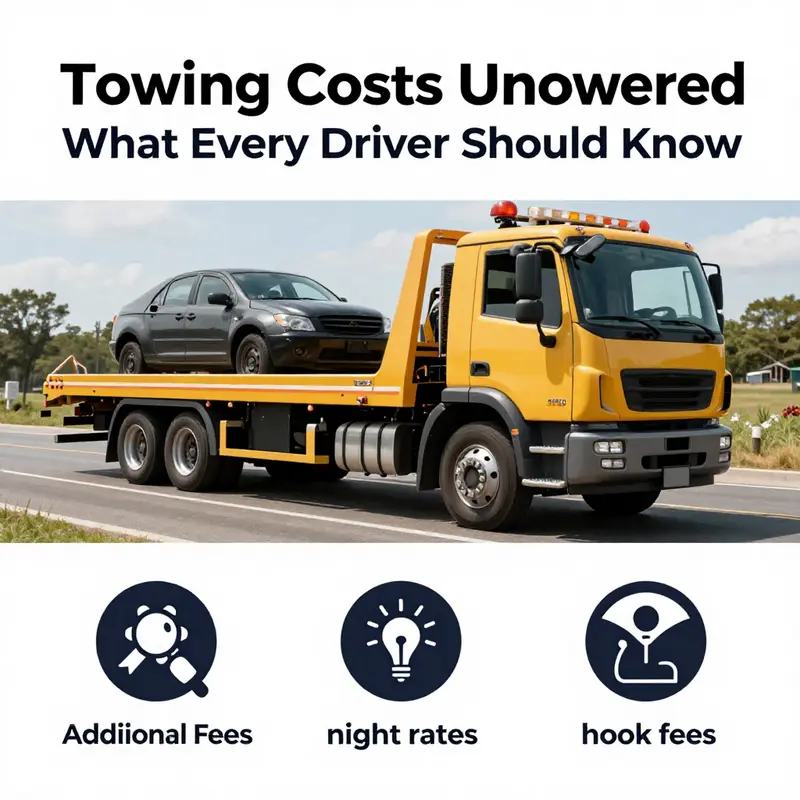
A tow is not simply a matter of distance; the price is built from a constellation of factors that extend beyond the odometer. Distance remains the loudest variable, but weight, access, timing, and the locale where service is needed can shift the total in surprising ways.
Vehicle size matters: a compact car is easier to lift and secure than a heavy truck, which may require longer straps, specialized wheel lifts, or even a tandem rig to distribute the load safely.
Fees typically break down into a hookup charge, a per-mile component, and an hourly labor rate, with potential surcharges for after-hours work, remote locations, or complex access.
Transparent pricing helps. Ask for a written estimate that lists each line item and note any conditions that could push the total higher. Request a final invoice that matches the agreed plan, barring agreed changes on-site.
Understanding the broader economics—fixed costs like depreciation and insurance, plus variable costs like fuel and equipment wear—helps customers budget and compare quotes more effectively.
Final thoughts
Awareness of the costs associated with towing a truck can save both time and money in critical situations. By considering factors such as distance, vehicle weight, and the potential for additional fees, drivers can better prepare for the unexpected. Ultimately, understanding these elements will empower truck owners, commuters, and property managers to make informed decisions should the need for towing arise.