
For many everyday drivers, truck owners, and property managers, understanding towing capacity can be vital. Towing capacity refers to the maximum weight a vehicle can safely haul, which is crucial for ensuring safe transport of trailers or other heavy loads. However, a common misconception persists: does this capacity include the weight of the truck itself? In this article, we explore this question, the role vehicle specifications play, safety implications, economic considerations, and the legal regulations surrounding towing capacities. Each chapter will provide you with a comprehensive view of why knowing the full scope of towing capacity—independent of the truck’s weight—is essential for any vehicle owner.
Beyond the Curb: Navigating the Intricacies of Towing Capacity and Truck Weight
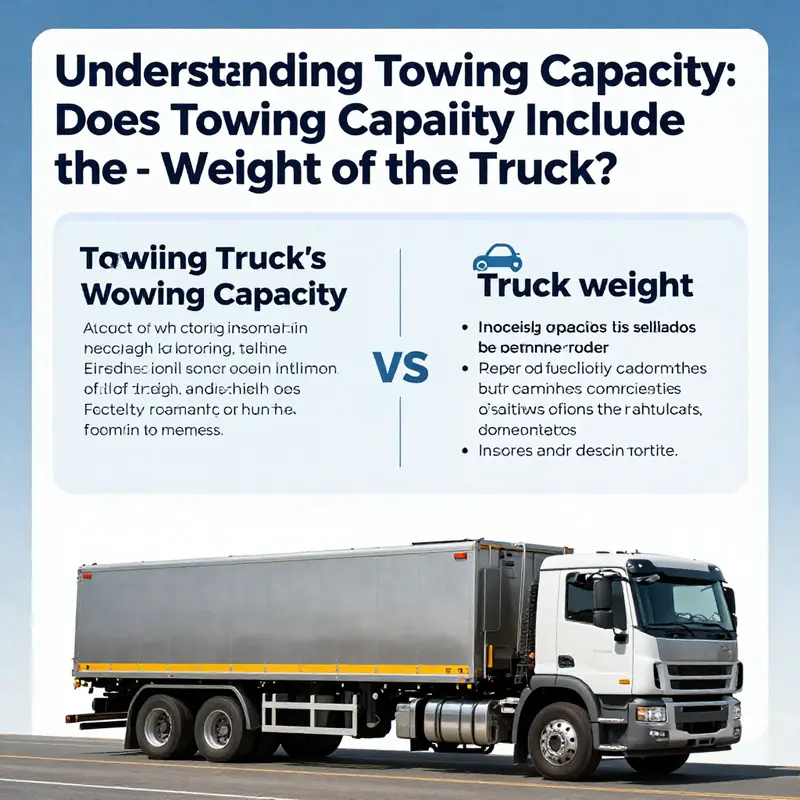
When exploring the mechanics behind towing, it is crucial to understand that the towing capacity of a vehicle is not a reflection of the truck’s own weight but rather a measure of the power and engineering behind its design. From the engine output and transmission responsiveness to the efficiency of braking systems and the robustness of the suspension, each component plays a pivotal role in determining how much weight can be safely pulled behind the vehicle. In simple terms, towing capacity is a forward-looking specification that accounts solely for the load appended behind the truck, entirely separate from the truck’s inherent curb weight.
This clear separation between the truck’s own mass and its towing capability provides vehicle owners with more precise guidelines on how to safely harness their truck’s potential. Imagine a scenario where the truck’s specifications are misunderstood: if a pickup truck is rated to tow 10,000 pounds, that figure represents the weight of the trailer or additional cargo it can pull, rather than a cumulative value inclusive of the truck’s weight. The vehicle’s curb weight is determined by its construction materials, onboard features, and even the fluids contained in its engine, all of which contribute to the overall heft but do not influence the towing calculation. This distinction is essential not only for safety but also for optimal vehicle performance.
Safety is a paramount concern when it comes to towing practices. Overloading a trailer beyond a truck’s rated towing capacity places undue stress on critical vehicle components. Such stress can lead to compromised braking performance, premature wear on suspension systems, and in some cases, a significant decline in overall vehicle handling. Drivers may experience an unexpected shift in weight distribution during braking, which, in turn, risks destabilizing the entire rig. These challenges underscore the importance of adhering to manufacturer guidelines and not conflating the truck’s inherent weight with its towing limits. The potential hazards of overloading are compounded by the physical realities of the vehicle’s design, which has been engineered primarily to manage the dynamic forces of pulling a load rather than supporting the weight of the truck itself in tandem with the towed mass.
The integration of towing capacity in the broader framework of a vehicle’s gross combined vehicle weight rating (GCVWR) further complicates how one should approach load management. The GCVWR specifies the combined weight of the truck and its trailer, ensuring that the total mass remains within safe operational bounds. This rating serves as a safeguard mechanism; while the towing capacity focuses on the load that the vehicle can pull, the GCVWR ensures that the overall distribution of weight, including the truck’s own mass, does not exceed what the design and structural integrity of the vehicle can sustain. It is critical to internalize that while a truck may handle a heavy trailer in isolation, the combined mass may still need to be balanced meticulously to avert risks such as brake failure or suspension damage.
Another layer of understanding comes from considering the engineering behind towing. Manufacturers invest significant research into optimizing the balance between engine power and mechanical endurance. In designing a vehicle’s towing capacity, engineers assess every component from the torque of the engine to the load-handling capacity of the chassis. These calculations are aimed at maximizing the safe towing potential without jeopardizing the structural integrity or safety features of the vehicle. A well-calibrated system ensures that even when operating near the upper thresholds of towing capacity, the truck remains stable, responsive, and secure. While the truck’s curb weight contributes to its overall mass, it is not a variable included directly within the towing capacity rating. Rather, the curb weight is a constant that influences how the load should be managed under varied driving conditions.
In practical terms, misinterpreting these ratings can lead to a series of operational missteps. For instance, if a truck with a towing capacity of 14,000 pounds has a curb weight of 6,000 pounds, one might mistakenly assume that the combined safe pull is 20,000 pounds. However, the vehicle’s engine, transmission, and braking systems were engineered specifically for the 14,000-pound figure when it comes to the trailer itself. Overestimating the load that can be safely towed by adding the truck’s weight risks pushing the vehicle beyond its mechanical limits. Success in safe towing lies in understanding that every component of the truck has been tailor-made to handle specific dynamic forces independently. This careful calibration means that while the truck’s own weight contributes to traction and stability, it does not augment the towing capacity.
Furthermore, practical towing guidelines often encourage drivers to consult the vehicle’s owner manual or physical specification labels that detail these limits. By adhering to the manufacturer’s guidelines, individuals ensure that their towing habits do not inadvertently compromise both vehicle performance and road safety. It is not uncommon for drivers to overlook the differentiation between towing capacity and curb weight, a mistake that can lead to unexpected mechanical failures or hazardous driving conditions. In-depth research and clarity in these matters are essential; for example, reviewing trusted resources can provide additional insights into the complexities associated with towing dynamics. Detailed information on how weight is calculated and how limits are determined can be found by exploring articles that focus on the mechanical and engineering aspects of towing. For instance, this guide on understanding how much weight your truck can manage offers valuable insights into the interplay between vehicle design and load capacity.
The engineering principles behind towing are a testament to the balance of power and design. When designing a vehicle, engineers invest countless hours in simulations and real-world testing to determine how various loads affect performance. They analyze factors such as acceleration, braking distances, and even the stress placed on various parts of the drivetrain. Real-world testing often reveals that even small deviations in the load can significantly alter the driving dynamics of a truck. This observation reinforces the importance of adhering strictly to specified towing limits, as even minor miscalculations can have serious consequences on the road. The intricate balance of forces displayed during towing showcases the nuanced relationship between the truck’s power and its ability to safely manage additional loads, with the vehicle’s curb weight remaining a separate and constant factor.
In scenarios where the towing capacity is pushed to its limits, drivers may observe that the overall performance of the truck changes noticeably. There is often a reduction in acceleration, a need for longer stopping distances, and occasionally, a decrease in fuel efficiency. These practical challenges highlight why manufacturers place considerable emphasis on load ratings. The underlying physics of towing dictate that each component—from the engine to the braking system—has been optimized to operate under predictable loads. When these loads are exceeded, the risk of mechanical failure increases, which can lead to dangerous situations on the road. With a deep understanding of these engineering principles, vehicle operators can better appreciate why the guidelines are in place and how to interpret the difference between towing capacity and curb weight.
Another important aspect to consider is the cumulative effect of towing on overall vehicle wear and tear. Over time, repeated towing operations, especially those done at or near the vehicle’s maximum capacity, can accelerate the deterioration of mechanical components. Owners who consistently push the limits without considering the separate variables of truck weight and towed load might experience faster wear on critical systems such as brakes and the suspension. Regular maintenance becomes all the more important when a vehicle is frequently used for heavy towing tasks. As such, understanding the separation of towing capacity from the truck’s own weight is not merely a theoretical exercise but a practical necessity that can extend the longevity of the vehicle and enhance safety standards.
Moreover, there is a broader economic consideration where manufacturers and consumers alike must balance performance with durability. The decision to push a vehicle’s towing limits can bear significant financial consequences, both in terms of repair costs and potential safety liabilities. Vehicle warranties and insurance policies often have clauses related to overburdening a truck beyond its rated capacity. When drivers mistakenly overestimate the weight that can be safely towed — by, for example, assuming that the truck’s own weight adds to this capacity — they risk voiding these protections. In such a context, a clear understanding of where towing capacity ends and curb weight begins is critical. This holistic view of vehicle performance not only promotes safer driving practices but also safeguards the economic interests of the vehicle owner.
In summary, comprehending the division between towing capacity and the truck’s own weight is essential for anyone who intends to tow heavy loads. This nuanced understanding of vehicle specifications underscores the need for precise adherence to manufacturer guidelines and engineering limits. By recognizing that the towing capacity refers strictly to the weight that may be pulled in a trailer, and that the truck’s own weight is accounted separately, drivers can ensure they do not inadvertently compromise the safety and performance of their vehicle. Maintaining this distinction is vital for preventing mechanical wear, avoiding dangerous driving conditions, and ensuring compliance with both the GCVWR and other safety standards. For further technical specifications and a detailed breakdown of how these limits are determined, interested readers are encouraged to consult external resources such as the Ford Trucks technical specifications page (Ford Trucks – Technical Specs: Towing Capacity).
Understanding these intricacies serves as a critical reminder that safe towing is not merely about the vehicle’s capacity to pull but also about managing every element of the mechanical equation meticulously. As more drivers become aware of the essential differences between the truck’s curb weight and its towing capacity, they can make informed decisions that protect both their investment and their safety on the road. This balanced approach, where technical knowledge meets practical application, epitomizes the progressive nature of modern vehicular design and the ongoing efforts to harmonize engineering innovation with everyday use. It is through such an informed perspective that the art of towing achieves its highest expression of safety and efficiency.
Towing Mechanics Unveiled: Decoding the Dynamics Between Vehicle Weight and Towing Capacity
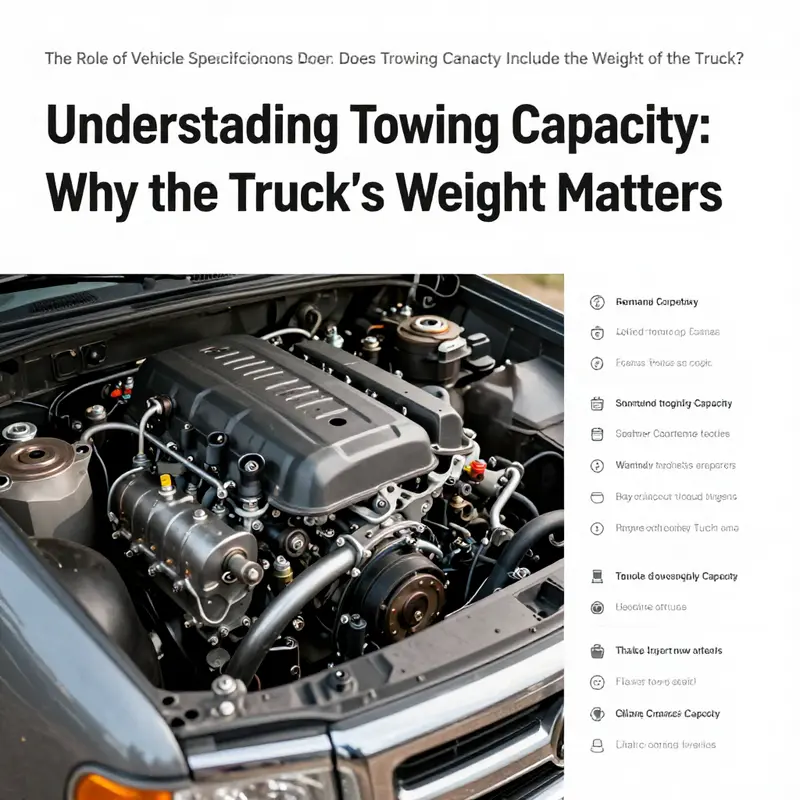
When considering the capabilities of a truck, one essential factor that vehicle owners and fleet managers must understand is the towing capacity. At its core, towing capacity refers to the predetermined maximum weight that a vehicle is engineered to pull safely behind it. However, many people mistakenly conflate this figure with the truck’s own weight, known as the curb weight. In reality, the two values are distinct and serve different purposes in vehicle performance and safety standards.
The differentiation between towing capacity and the truck’s own weight is rooted in fundamental automotive engineering principles. Towing capacity is determined by an extensive range of factors, including the vehicle’s engine power, transmission type, braking systems, and suspension design. These components are meticulously balanced during the design and manufacturing process to ensure that the vehicle can effectively and safely pull additional weight. The weight of the truck itself, in contrast, known as the curb weight, is measured when the vehicle is fully equipped and ready to drive, accounting for standard fluids but excluding passengers and cargo. This separation is critical because the truck’s performance in towing scenarios is compromised if one mistakenly assumes that the towing capacity number already factors in the weight of the vehicle.
In practical terms, if a truck is rated with a towing capacity of 14,000 pounds, this number indicates the maximum load that can be safely towed. What many do not realize is that this figure is exclusive of the weight the truck carries on its own. In essence, the vehicle’s Gross Combined Weight Rating (GCWR) plays an instrumental role. The GCWR represents the maximum allowable combined weight of both the truck and the trailer (along with passengers, cargo, and fuel) during operation. The towing capacity is effectively derived from subtracting the truck’s curb weight from the GCWR. This calculation is succinctly expressed by the formula: Towing Capacity = GCWR – Curb Weight.
Understanding this formula is paramount for several reasons. To begin with, it underscores why engineers and safety regulators place significant emphasis on not exceeding the prescribed towing limits. Exceeding these limits can lead to a number of potential hazards. For instance, when a vehicle is overloaded, the braking system can become less effective, the suspension may be damaged over time, and overall vehicle handling could be adversely affected. This interplay between weight distribution and vehicle performance forms the cornerstone of safe towing practices. The vehicle is designed to handle its inherent weight, and any additional load must be within the parameters defined by the manufacturer.
The practical considerations extend beyond the math behind the numbers. When planning to tow, a vehicle owner must be acutely aware of how the combined load—consisting of the towed weight and the vehicle’s own weight—can impact the overall performance. A truck that is inherently heavy might leave less margin for safe towing. It becomes essential to carefully evaluate any load in relation to the manufacturer’s specified gross combined weight rating. This not only affects braking and steering, but also factors into the dynamic stresses placed upon the vehicle’s engine and drivetrain. In many ways, the nuances of towing capacity serve as a reminder that a truck and its trailer do not operate as independent entities; rather, they are part of an integrated system where balance and design play crucial roles in ensuring safety on the road.
Vehicle manufacturers invest a great deal of research into optimizing the performance of their vehicles under towing conditions. They analyze factors such as weight distribution, dynamic loading, and aerodynamic forces that come into play when a trailer is hitched. The overall design incorporates reinforced frames, enhanced cooling systems, and upgraded transmissions to manage the additional stress. These improvements ensure that even when a vehicle is operating at its maximum towing capacity, the relative safety and stability are maintained. In this regard, the role of towing capacity becomes more a feature of engineering precision than a mere number. It is the culmination of rigorous testing under a variety of conditions to simulate different real-world scenarios.
A significant point of clarification is that the towing capacity figure is not a catch-all measurement that includes every weight factor associated with the vehicle. For instance, adding passengers, extra cargo, or even modifications can alter the overall performance. While the base calculation subtracts the curb weight from the GCWR, any additional load on the truck itself further reduces the available capacity for towing. It is for this reason that vehicle manual guidelines are so detailed about correct loading practices. The balance between air weight and engine performance is often a delicate one, where even a seemingly insignificant variation can have practical consequences on the vehicle’s handling under load.
For those who are exploring practical applications, the mechanics translate into everyday decisions. Imagine planning an excursion where you intend to tow a boat, trailer, or camper. It is critical to refer to the manufacturer’s documentation to verify the towing capacity. This documentation explains that the truck’s weight does not contribute to the number typically advertised as the towing capacity. Instead, the advertised towing capacity is the maximum additional weight that the truck can pull, assuming it is in optimal condition and not overburdened with additional loads. Essentially, if you have a truck weighing 6,000 pounds with a GCWR of 20,000 pounds, the remaining capacity for towing is 14,000 pounds. Overloading past this limit, or even close to it if additional passengers or cargo are present, can reduce the safety margin and lead to undesirable handling characteristics. Safety margins exist in engineering to accommodate minor variances, but these should never be relied upon as a substitute for adhering to proper weight limits.
Beyond the mathematical and technical explanations, the practical implications of proper towing capacity calculations cannot be overstated. Inadequate consideration of towing capacity and actual load distribution often contribute to road incidents. Drivers who misinterpret the figures risk running into mechanical issues—ranging from tire blowouts to brake failures—especially during sudden braking or evasive maneuvers. To help prevent such mishaps, it is advisable to not only adhere to manufacturer guidelines but also to conduct a regular assessment of load distribution and vehicle condition. Regular inspections and adherence to maintenance schedules are additional steps that safeguard against overloading risks.
When delving deeper into the subject, it might be useful to compare towing specifications across different vehicle classes. Many drivers have shifted from smaller passenger vehicles to larger trucks, especially for recreational or commercial purposes. Here, the emphasis on proper weight management becomes even more pronounced. Larger trucks are built to endure heavy-duty tasks; however, they still operate under the same fundamental rules. No matter how robust the vehicle, towing capacity remains a critical metric that is deliberately calculated without including the truck’s inherent weight. This approach allows for clear and consistent comparisons between different models and makes it possible for consumers to make informed decisions based on their particular needs. The importance of this discernment is evident in professional and personal contexts alike, where safety, performance, and longevity of the vehicle are all dependent on understanding the limits prescribed by towing capacity ratings.
It is also important to note that the engineering behind towing capacity extends beyond just the physical dimensions of a truck. Advances in technology have made it possible for modern vehicles to include features that monitor and adjust various parameters in real time. For example, some newer trucks come equipped with systems that alert the driver if the trailer load is approaching or exceeding the safe threshold. These safety systems rely on data from sensors strategically placed throughout the vehicle and trailer connection. By providing real-time feedback on weight distribution and mechanical strain, these innovations add another layer of safety and help to prevent unintentional overloading. They underscore once again that towing capacity is not merely a static number but an evolving parameter that is integrated into the vehicle’s overall performance management.
In addition to technological enhancements in modern vehicles, driver education remains a constant cornerstone of safe towing practices. Many drivers benefit from specialized training that covers both the theoretical aspects of towing capacity and the practical implications of load management. Such educational initiatives often highlight the importance of calculating the usable towing capacity, taking into account both the truck’s weight and the additional loads it may carry. Readers looking for further guidance on vehicle load assessment might find a comprehensive explanation by visiting a guide on truck towing capacity at this internal resource: how much can my truck tow. This guide, among other resources, reinforces the critical concept that the truck’s own weight is always separate from the maximum towing capacity.
A closer look at the balancing act performed by towing professionals reveals further insights. For instance, during long hauls or difficult driving conditions, drivers must frequently recalculate their load distribution. The interplay between trailer weight and vehicle dynamics becomes even more pronounced in scenarios involving steep grades or adverse weather. In such cases, additional safety practices, such as reducing speed and ensuring that the braking system is in optimal condition, become paramount. The overarching goal of these practices is to ensure that the vehicle remains stable and responsive throughout the journey. In this way, the deliberate separation of the vehicle’s own weight from its towing capacity is essential—not only because it offers a clear engineering calculation, but also because it facilitates a deeper understanding of the risks and challenges inherent in towing.
Moreover, vehicle manufacturers and regulatory bodies continue to work hand in hand to refine the guidelines concerning towing capacities. Organizations such as the U.S. Department of Transportation and the Federal Motor Carrier Safety Administration contribute to setting and enforcing standards that guarantee safe operation across all vehicle classes. Their guidelines are based on empirical research, accident statistics, and continuous performance testing. This collaboration ensures that the concept of towing capacity is not only theoretically sound but also practically applicable on everyday roads and highways. For anyone interested in understanding the comprehensive standards behind vehicle weight ratings, the official resource provided by the FMCSA offers detailed insights on this subject: FMCSA Vehicle Weight Ratings.
In summary, the critical takeaway from this discussion is that the towing capacity of a vehicle does not include the weight of the truck itself. Towing capacity is defined by the additional weight a vehicle is designed to pull, as determined by subtracting the truck’s curb weight from its Gross Combined Weight Rating. The intricate interplay between engine power, braking efficiency, suspension design, and load distribution creates a carefully calibrated system that prioritizes safety and performance. Understanding these dynamics is essential for anyone who intends to use their vehicle for towing, whether for personal recreation or commercial needs.
What emerges from this analysis is a clear picture: the principles of towing capacity are designed to safeguard both the vehicle and its operator. A clear separation between the truck’s weight and the additional load ensures that the vehicle can be evaluated accurately against its designed parameters. This, in turn, facilitates informed decision-making—empowering drivers to optimize performance without compromising safety. Whether you are a seasoned professional or a first-time trailer hauler, keeping these principles in mind will not only enhance your operational efficiency but will also help protect you and your investment on every journey. The mechanics of towing, when understood and respected, open the door to truly harnessing the full potential of your vehicle while minimizing risks on the road.
Designed for Safety: Understanding Towing Capacity Beyond Truck Weight
When evaluating a vehicle’s towing capabilities, it is essential to distinguish between the truck’s own weight and its towing capacity. Towing capacity refers exclusively to the maximum weight that a vehicle can safely pull behind it, a figure that is determined by a range of engineering considerations, including the engine’s power, the efficiency of the transmission, the robustness of the braking system, and the overall chassis design. In contrast, the weight of the truck itself, sometimes called curb weight, is accounted for separately in the vehicle’s overall weight assessments. This separation is not merely a technicality; it is a critical safety measure designed to ensure that each component of a vehicle’s performance is optimized for its intended function.
Understanding this distinction is fundamental for anyone who uses their vehicle to tow trailers or heavy loads. Manufacturers design the towing capacity based on extensive testing to ensure that under normal conditions the vehicle can perform its towing duties without compromising safety. When a truck is rated with a towing capacity of, say, 14,000 lbs, that rating is a measure of the maximum weight that can be safely drawn by the truck and does not include the weight of the vehicle itself. The truck’s curb weight, which is the weight of the empty vehicle including all its standard equipment, passengers, and fluids, must be considered separately when evaluating the total load a vehicle bears.
This separation is further delineated by the concept of Gross Combined Vehicle Weight Rating (GCVWR). GCVWR represents the maximum allowable combined weight of the loaded truck and the trailer. It ensures that when both are weighed together, the limits of the truck’s structural and mechanical systems are not exceeded. Drivers must be aware that while towing capacity provides a limit for the weight of the trailer, the actual mass that moves on the road during any towing operation is the sum of the truck’s weight and the trailer’s weight. Exceeding these predetermined limits can lead to catastrophic outcomes, including brake failure, compromised suspension integrity, and increased instability during maneuvers.
Engineers set the towing capacity through rigorous testing and performance evaluations. The powertrain is fine-tuned to ensure that the engine can generate enough torque to pull heavy loads while maintaining fuel efficiency and overall vehicle longevity. Transmission systems are designed to handle the stresses imposed by towing, providing smooth gear transitions that prevent abrupt mechanical shocks. Equally important is the braking system; when towing significant weight, the capacity for the brakes to decelerate both the truck and trailer safely becomes a paramount concern. Suspension systems also play a vital role. They are carefully calibrated to absorb the additional stresses of a towing load, thereby ensuring that the vehicle remains stable and controllable during transit.
A common point of confusion arises when vehicle owners assume that the towing capacity encompasses every aspect of the vehicle’s performance, including its own weight. However, the design philosophy behind these ratings is to isolate the towing performance from the weight of the vehicle itself. The truck’s overall mass is already factored into other ratings, such as the Gross Vehicle Weight Rating (GVWR), which dictates the maximum permissible loaded weight of the truck alone. This separation prevents a misinterpretation that could lead drivers to overload their trailer simply because the truck appears to be robust or heavy. In reality, exceeding the towing capacity by piling on additional weight can trigger mechanical degradation over time and create hazardous driving conditions.
Safety remains the foremost priority in the design of towing capacities. Overloading a vehicle not only puts undue strain on the mechanical components but also drastically reduces the overall handling and braking performance. When a driver surpasses the designated towing capacity, the brakes may overheat, the suspension could deteriorate, and the steering response may become unpredictable. These issues are not mere inconveniences; they represent a serious risk factor that can lead to loss of control on the road, especially in sudden stop scenarios or when navigating tricky terrain. It is vital, therefore, that every vehicle operator adheres strictly to the manufacturer’s specified limits and avoids any temptation to overburden their tow setup.
The implications of failing to respect these ratings extend beyond personal safety. Mechanical failures can result in costly repairs and may even void warranty protections offered by manufacturers. Modern vehicles are engineered with stringent tolerances, and stretching those boundaries can precipitate accelerated wear and tear. Drivers who ignore towing guidelines risk not only their safety but also the integrity of their vehicle’s design. As a result, automotive experts and safety inspectors continuously emphasize the importance of maintaining load limits. This vigilance is paramount when towing irregular or non-uniform loads, which may distribute weight unevenly and further exacerbate the stresses on the vehicle.
Another dimension to consider is the role of specialized tow trucks and heavy-duty vehicles designed explicitly for large-scale towing tasks. These vehicles often exhibit modified designs to handle increased loads. For instance, specialized tow trucks might incorporate added reinforcements in their chassis and enhanced braking systems to support both the towing and lifting of disabled vehicles. These modifications are carefully balanced against the truck’s own weight, ensuring that both the towing capacity and the structural integrity of the truck are maintained without compromise. Operators of such vehicles undergo extensive training to understand and manage the dynamic interactions between the towing load and the truck’s inherent weight, ensuring that even under strenuous conditions, the vehicle maintains stability.
There is also a significant educational component when it comes to safe towing practices. Vehicle owners must be aware of the different terms and ratings that are associated with their vehicles. By understanding concepts such as towing capacity, GVWR, and GCVWR, drivers gain a comprehensive view of how their vehicle is intended to perform under various loading conditions. It becomes clear that the truck is not a container for added weight; rather, it has a specific role that depends on the careful engineering of its towing and load-bearing capacities. Manufacturers provide these ratings in their user manuals, and it is incumbent upon operators to familiarize themselves with these guidelines before undertaking any towing venture.
The safety and performance of a vehicle’s towing operation are also influenced by the quality of maintenance it receives. Regular servicing of critical components like the braking system, suspension assembly, and transmission is essential to preserve the integrity of the towing capacity rating. Even if a truck is designed to tow a significant load, neglecting routine maintenance can erode its performance capabilities. Additionally, modern diagnostic tools help assess the condition of these systems in real-time, alerting the driver to potential issues before they escalate into dangerous failures. Maintenance is, therefore, a continuous process that directly impacts the safety margins defined by the towing capacity.
Transporting a heavy load is not merely about adhering to weight limits; it is also about optimizing the distribution of that weight. Load distribution is crucial because unevenly distributed weight can lead to sway, which is a dangerous situation where the trailer moves erratically behind the truck. Advances in towing technology have led to improvements such as integrated weight distribution systems that help maintain balance and prevent sway, enhancing both safety and handling. These systems, however, are designed within the parameters set by the towing capacity, meaning that even the most advanced technology does not permit the safe towing of an overburdened trailer.
The principles that underlie towing capacity extend to various operational scenarios, including emergency situations. Consider the case of emergency response vehicles that require the towing of disabled vehicles or other equipment. In these high-stakes environments, the margin for error is extremely narrow. Emergency responders are trained to not only understand the mechanics of their vehicles but also to execute towing maneuvers within the safe bounds set by their vehicle’s ratings. Overloading in these circumstances is not a luxury that can be afforded, as any compromise in towing performance could lead to delays or, worse, accidents during critical rescue operations.
In light of these considerations, it is imperative that vehicle operators remain diligent in their approach to towing. Emphasis should be placed on verifying the specified towing capacity from trusted sources, such as the manufacturer’s guidelines or reputable automotive regulatory bodies. Information published by authorities such as the National Highway Traffic Safety Administration (NHTSA) is invaluable, as it provides authoritative safe towing guidelines and technical assessments. For those unclear about how to interpret these ratings, resources like the official NHTSA website can offer further clarification on maintaining safety margins when towing NHTSA Official Website.
A further layer of complexity is added when considering the impact of environmental factors on towing performance. Weather conditions, road surfaces, and terrain variability all contribute to the effective towing capacity of a vehicle. For instance, towing a heavy load on an icy road can significantly reduce the performance of a braking system, heightening the risk of skidding or collision. In such cases, even if the load is within the specified towing capacity, the combined stressors of adverse environmental conditions and mechanical strain can push the vehicle to its operational limits. This scenario reinforces the necessity for drivers to not only adhere to the weight limits but also to adjust their driving behavior to the prevailing conditions, such as reducing speed and increasing following distances.
Technological advancements in vehicle design continue to influence the relationship between towing capacity and truck weight. Modern vehicles are increasingly equipped with systems that monitor load conditions and provide real-time feedback to the driver. For instance, sensors integrated into the suspension and braking systems can detect when a vehicle is nearing its operational limits. These innovative solutions are part of a broader move towards utilizing data-driven insights to enhance vehicle performance and safety. As these technologies become more widespread, drivers will have greater support in maintaining the delicate balance between towing capacity and overall vehicle weight. Incorporating such systems ensures that any momentary lapse in judgment does not compromise the vehicle’s ability to control heavy loads.
The precise engineering and careful planning that go into determining towing capacity serve as a testament to modern automotive safety standards. With each component, from the robust chassis to the powertrain and braking systems, designers consider the extreme demands that towing places on the vehicle. This multi-layered approach to safety means that the towing capacity is not a floating number; it is a well-rooted figure arrived at through meticulous engineering and rigorous testing. By keeping the truck’s weight separate from the towing capacity, engineers create a clear, manageable framework that helps drivers appreciate both the capabilities and the limitations of their vehicles.
Beyond the theoretical aspects of towing capacity, practical experience underscores the importance of respecting these limits. Many drivers learn through experience or training sessions that even a slight miscalculation in load weight can have compounding effects on the vehicle’s stability. This hands-on knowledge reinforces the idea that safe towing demands both an understanding of the technical details and a commitment to operating within established safety margins. Real-world applications reveal that even minor deviations or oversights in understanding load distribution can lead to significant challenges on the road. It is this blend of theory and practice that compels drivers to continuously educate themselves about the mechanical and safety aspects of towing.
As technology and regulations evolve, so too does the guidance on safe towing practices. Continuous improvements in vehicle design, combined with stricter regulatory oversight, ensure that modern towing capacities are matched by equally progressive safety protocols. Indeed, integrating advanced technologies such as electronic stability control and adaptive braking systems has markedly improved towing safety. Drivers benefit from these innovations as they provide additional layers of security, making it easier to maintain control even under challenging conditions. For more insights into the progression of towing technology and safety innovations, one can explore information on modern methods of enhancing tow truck technology and safety, which details many of these engineering breakthroughs.
In summary, the separation of towing capacity from a truck’s own weight is a vital aspect of vehicle engineering that ensures safety, performance, and reliability. This distinction protects mechanical systems, promotes safe driving practices, and underpins the rigorous standards that define modern automotive engineering. Every component, from engine performance to brake efficiency, contributes to a holistic understanding of what it takes to tow safely. Drivers must remain vigilant, keeping themselves informed by manufacturer guidelines and reliable external resources, and maintaining their vehicles in peak condition to handle the rigorous demands of towing. By adhering to these principles, the road remains safer for everyone, and the engineering legacy that defines these vehicles continues to support innovation in towing and beyond.
Decoding Economic Efficiency: How Towing Capacity and Truck Weight Interact
When evaluating a vehicle’s performance, the relationship between towing capacity and truck weight plays a pivotal role in both economic decisions and safety standards. The term towing capacity specifically refers to the maximum weight a vehicle is engineered to pull, and this figure is meticulously calculated to ensure that the vehicle can handle the drag of a trailer without compromising stability or safety. Importantly, this rating works independently from the truck’s curb weight, meaning that the vehicle’s own weight is not counted toward the towing limit. Instead, manufacturers tailor the towing capacity based on the engine power, transmission strength, braking efficiency, suspension design, and overall engineering of the towing apparatus, ensuring that the vehicle performs reliably even when pulling a heavy load.
Understanding this distinction is essential both from an engineering and an economic perspective. Manufacturers design vehicles with a specific towing capacity after extensive testing and optimization. They consider the mechanical advantages provided by advanced transmissions and robust braking systems, all while ensuring that the vehicle’s own mass does not detract from its pulling strength. In essence, when a truck is rated with a given towing capacity, it means that this is the additional weight that can be safely attached behind the truck while the truck’s own mass remains a constant, separate measure. This separation of numbers not only helps in labeling but also ensures that consumers receive accurate information for making financial and practical decisions.
From an economic standpoint, understanding these differences can have a significant impact on cost management and efficiency. Vehicle owners and fleet operators must account for the separate metrics of Gross Vehicle Weight (GVW) and Gross Combined Vehicle Weight (GCVW). The GVW represents the truck’s weight when completely loaded with passengers, cargo, and fuel, while the GCVW reflects the total weight of both the truck and the trailer, which must stay within prescribed limits to avoid mechanical strain. The careful balance between towing capacity, GVW, and GCVW directly influences factors such as fuel efficiency, maintenance costs, and overall operational longevity. Exceeding the manufacturer’s recommended limits can lead to increased wear and tear, frequent repairs, and even safety hazards on the road.
In practical terms, consider a scenario where a pickup truck has an unloaded curb weight of 6,000 pounds and a specified towing capacity of 12,000 pounds. The distinction here is critical: while the truck’s own weight forms part of the overall load that the drivetrain and suspension must manage, the towing capacity solely refers to the trailer and its cargo. Consequently, if a user attaches a trailer weighing 12,000 pounds to the vehicle, the overall load being pulled is indeed the sum of the two separate figures—a calculation that must never exceed the Gross Combined Vehicle Weight Rating (GCVWR) provided by the manufacturer. The GCVWR is carefully engineered to include a safety margin that accounts for dynamic conditions such as sudden braking or adverse road surfaces.
The economic implications of this separation reflect on various sectors including logistics, construction, and even recreational usage. Fleet management companies, for example, diligently monitor these ratings when planning routes and cargo loads to ensure operational efficiency and to minimize the likelihood of vehicle breakdowns. A truck operating consistently within its towing limits will have lower maintenance costs over time, thereby reducing long-term operational expenditures. Conversely, neglecting these guidelines often leads to financial setbacks—not only due to the increased risk of vehicle failure but also through the potential loss of cargo and the ensuing downtime for repairs. This further emphasizes that economic prudence in vehicle operation is interlinked with adherence to manufacturer specifications.
The design philosophy behind a vehicle’s towing capacity is rooted in balancing robust mechanical performance with practical cost management. Engineers incorporate safety features that prevent the vehicle from being overburdened, thus extending the vehicle’s useful life. They rigorously test every aspect of the truck, from the engine’s horsepower to the intricacies of its suspension system, ensuring that even when towing near the upper limit, the vehicle remains stable and controllable. Importantly, while the truck’s weight forms the platform from which these forces are managed, it is distinctly accounted for separately from the additional towing load. This systematic approach allows manufacturers to clearly advertise both the truck’s weight and its towing capability, empowering consumers to make informed investment decisions.
For those considering modifications or upgrades to enhance towing performance, the economic analysis extends to factors such as fuel consumption and potential impacts on resale value. A vehicle operating continuously at high towing loads may experience a reduction in fuel economy due to the additional strain on the engine and transmission. Moreover, routine maintenance practices become even more critical to avoid expensive repairs and to sustain a high resale value in later years. Owners who invest in quality upgrades—whether in advanced braking systems, reinforced suspension units, or modern engine tuning—often find that while the initial costs are higher, the long-term benefits in performance and reliability far outweigh these investments.
It is also worth mentioning that for enthusiasts and practical users alike, understanding the separate roles of towing capacity and truck weight leads to safer driving practices. Overloading a vehicle beyond its approved guidelines can directly translate into hazardous road conditions. Even if the towing capacity is dialed in correctly, the aggregate weight when combined with the truck’s GVW might push the system outside the optimal performance envelope. This not only raises the risk of mechanical failures such as brake wear or suspension breakdowns but can also substantially increase the probability of accidents. Responsible vehicle operation means honoring both the numerical ratings set by manufacturers and the physical limitations inherent in heavy-duty transportation.
Furthermore, this delineation between towing capacity and truck weight underscores the importance of thorough pre-trip planning and regular vehicle inspections. Operators should routinely verify that payload distributions are balanced and that all mechanical components are in optimal condition. When planning a trip that involves towing, it is advisable to use manufacturer guidelines as a reference point. For example, before setting off with a heavy load, drivers can check details included in the owner’s manual—a resource that provides exact numbers for towing capacity, GVW, and GCVWR. Detailed inspection routines and adherence to recommended limits not only ensure safety but also help in avoiding costly road mishaps and breakdowns.
In the broader economic landscape, truck and trailer manufacturers work incessantly to innovate and refine how these ratings are determined. Investment in technology, such as improved computer sensors and more resilient materials, is a significant factor in enhancing towing efficiency. With each generation of vehicles, the standards for both safety and economic performance evolve. Manufacturers are always seeking to push the envelope—developing systems that deliver higher towing capacities without a corresponding increase in the truck’s own weight. Such advancements are critical in segments like construction, where the efficient movement of heavy equipment can significantly boost productivity and reduce overhead costs. A modern vehicle that can closely align its towing potential with its design parameters offers tangible economic advantages for heavy-duty usage.
As these innovations continue to shape the market, users find themselves benefiting from vehicles that are simultaneously more powerful and more reliable. Economic models in the transportation industry now factor in the detailed metrics of towing capacity, truck GVW, and GCVWR during the procurement process, enabling a more granular approach to budgeting and operational planning. Detailed technical documentation and the disclosure of accurate towing information help businesses optimize fleet performance—in part through better financial planning and more precise risk management. In this context, the separation between towing capacity and truck weight is more than a technical nuance: it is a fundamental aspect of achieving economic efficiency and sustainable operational practices.
Moreover, educational efforts directed at drivers and fleet managers are critical in reinforcing these principles. For those wishing to deepen their understanding of their own vehicles, resources such as comprehensive articles on the subject may prove invaluable. Engaging with materials that explain the underlying mechanics—covering topics such as the impact of trailer weight on vehicle dynamics or the ways in which engine power can influence overall performance—empowers users to make informed decisions. For enthusiasts eager to learn more about the full capabilities of their vehicles, exploring topics like the guidelines provided on the page on how much can my truck tow offers an excellent start. Understanding these elements in depth bridges the gap between theoretical performance and real-world application.
Additionally, the economic rationale behind these specifications is reflected in the broader transportation industry trends. As fuel prices fluctuate and regulatory standards evolve, the cost-effectiveness of heavy-duty vehicles becomes a subject of intense scrutiny. Fleet purchases are heavily influenced by the long-term fuel economy and maintenance cost projections, both of which are intrinsically linked to how well the vehicle manages towing loads. Operating a truck at or near its towing capacity on a routine basis can increase operational costs if not managed properly. This understanding ultimately drives technological advancements aimed at reducing drag and minimizing energy losses in heavy-load conditions.
From an environmental perspective, vehicles that are optimized for load management also present an opportunity to reduce the carbon footprint associated with commercial transportation. Efficiently engineered towing systems that take into account not only the weight of the trailer but also the truck’s own mass can lead to better fuel utilization. In a scenario where vehicles are overburdened, unnecessary energy is expended, which in turn reduces overall efficiency and increases emissions. Thus, promoting awareness of these distinctions between towing capacity and truck weight becomes an environmental imperative as well as an economic one.
In summary, the separation between towing capacity and truck weight is not only a technical detail but a critical factor in ensuring economic efficiency and safety. The clear delineation allows for precise calculations when determining a vehicle’s overall load limits, ensuring that the truck, even when fully loaded, remains within safe operational bounds. Advanced engineering practices and constant technological improvements underscore the importance of adhering to these guidelines. For operators and fleet managers, the benefits of a well-informed approach—one that respects these distinctions—translate into reduced maintenance costs, improved safety, and enhanced operational efficiency over the lifetime of the vehicle.
For detailed manufacturer guidelines and to further explore the nuances of towing capacity, safety standards, and vehicle performance, consult the comprehensive information available at Ford Owner’s Manuals.
Towing Capacity Demystified: Unraveling the Difference Between Pulling Power and Truck Weight
Understanding the relationship between towing capacity and truck weight is essential for both safety and compliance with legal regulations. Many drivers mistakenly believe that the weight of the truck factors into the towing capacity. In fact, towing capacity refers strictly to the maximum weight a vehicle can pull in addition to its own weight. This chapter examines the nuanced differences between a truck’s pulling power and its curb weight, while also delving into the relevant legal guidelines, engineering principles, and safety considerations that govern these metrics.
When discussing towing, it is important to understand key terms. Towing capacity is defined as the utmost weight that a vehicle can safely pull behind it. This figure is the product of extensive engineering analysis, which considers the vehicle’s engine output, transmission strength, chassis construction, braking systems, and suspension components. In contrast, a truck’s curb weight is the weight of the vehicle itself when empty – it includes all standard equipment and fluids, but excludes passengers, cargo, and any additional modifications that may add extra mass.
The distinction is critical because the towing capacity is not reduced by the truck’s own weight. Rather, it operates independently from the vehicle’s weight. For instance, if a pickup truck is rated to tow 10,000 pounds, that figure represents the maximum load that can be attached behind the vehicle. This load is entirely separate from the truck’s curb weight, which might be 5,000 or 6,000 pounds. However, when planning any towing operation, drivers need to consider not only the towing capacity but also the gross combined vehicle weight rating (GCVWR). The GCVWR is the total allowable mass of both the truck and the trailer, ensuring that the combined weight does not exceed what the vehicle’s structure and mechanics can handle. This is essential to prevent issues such as brake failure, compromised suspension, or loss of vehicle control.
The methodology behind the calculation of towing capacity is rigorous. Engineers repeatedly test and evaluate vehicles under simulated conditions that mimic both highway and off-road scenarios. They assess the engine’s performance when drawing an additional load, the durability of the transmission under strain, and the overall stability of the vehicle under various towing configurations. These factors are meticulously analyzed to produce a towing capacity rating that is safe and reliable. Importantly, while these tests determine how much extra weight a vehicle can pull, they do not include the truck’s own mass. The truck’s weight is recorded separately as its curb weight, thereby leaving the towing capacity as the margin by which the vehicle’s design allows for additional pull.
From a legal standpoint, the separation between towing capacity and truck weight is significant. Regulatory bodies such as the National Highway Traffic Safety Administration (NHTSA) establish clear guidelines to ensure vehicles are used within their operational limits. These regulations mandate that manufacturers provide precise figures for both towing capacity and GCVWR, alongside other critical metrics like maximum brake performance and suspension load capacities. It is imperative for drivers to consult these manufacturer specifications before engaging in any towing activity. Overloading a vehicle not only voids warranties but also increases the risk of mechanical failure and accidents on the road.
In practical terms, drivers must be diligent about understanding the limits of their vehicles. Towing a load that exceeds the manufacturer’s recommendations can lead to severe consequences. For example, overloading may cause premature wear and tear on vital components such as the braking system or suspension, and can lead to scenarios where the vehicle struggles to stop effectively. Furthermore, excessive load can have a deleterious effect on handling and stability, especially during sudden maneuvers or adverse weather conditions. Awareness of these aspects is fundamental to maintaining both the performance and longevity of the vehicle.
Consider the scenario of a driver planning a long-distance move with a trailer. The driver must carefully calculate not only the weight of the trailer but also the full load it will carry – including cargo, fuel, and any additional equipment – ensuring that this figure remains within the designated towing capacity. It is equally important to ensure that when combined with the truck’s own weight, the overall mass does not surpass the GCVWR. Failing to adhere to these limits could, for instance, result in loss of control when traversing steep inclines or when bracing for sudden stops. In such cases, understanding that towing capacity is an independent parameter from truck weight helps the driver make informed decisions about load distribution and safe towing practices.
An additional layer of complexity arises when considering the changing dynamics of a vehicle’s performance under load. Factors such as wind resistance, road gradient, tire wear, and even ambient temperature can alter a truck’s ability to tow safely. The engineering behind towing capacity encompasses allowances for these variables, but it also necessitates that drivers maintain a margin of safety. By not conflating the truck’s weight with its towing capacity, manufacturers provide clear guidelines that help drivers mitigate risks by always considering the maximum pullable load as separate from the truck’s inherent mass. In this way, the calculated towing capacity becomes a reliable metric for planning secure towing operations.
The design of a towing vehicle itself reflects this critical separation. Modern trucks feature specialized components engineered specifically for towing. Reinforced transmissions, upgraded cooling systems, and advanced braking technologies are common features that ensure the vehicle can handle the stresses of hauling additional weight. Design elements such as a robust chassis structure and enhanced suspension systems also play a significant role. They allow the truck to maintain stability while towing, without the truck’s own mass interfering with these specialized modifications. Consequently, the towing capacity rating remains an accurate representation of the truck’s additional pull capability, regardless of its curb weight.
This deliberate exclusion of the truck’s weight from the towing capacity rating is not merely a technicality, but a foundational principle of vehicle safety design and legal regulation. Drivers who understand this distinction can better appreciate why adherence to weight limits is enforced by law. They can take proactive steps to prevent dangerous driving situations, whether by ensuring that load distributions remain within recommended boundaries or by maintaining the vehicle’s mechanical systems in optimal condition. With safety at the forefront, such practices help to avoid catastrophic failures on the road.
Educational efforts play a pivotal role in ensuring that vehicle operators are well-informed. Workshops, training sessions, and readily accessible online resources can demystify the often technical language of towing guidelines. For example, drivers may benefit from in-depth tutorials on how to calculate the gross combined vehicle weight. It is in these contexts that distinctions between towing capacity and truck curb weight are frequently emphasized, empowering drivers with the knowledge needed to make safe and informed decisions. Resources such as the comprehensive guidelines available at the National Highway Traffic Safety Administration (NHTSA) provide further specifics on regulatory requirements and safety practices NHTSA Guidelines.
A common source of confusion arises from marketing materials and anecdotal advice from peers. Many autoparts advertisements highlight towing capacity figures prominently without providing corresponding clarification on the role of the truck’s weight or GCVWR. This has contributed to widespread misconceptions among vehicle owners. Drivers are encouraged to verify any claims with official manufacturer specifications and trusted automotive sources. Indeed, using verified information not only ensures compliance with legal standards but also underpins effective maintenance and operational safety over a vehicle’s lifetime.
From an engineering perspective, the role of legal regulations cannot be overstated. Regulations are designed to protect not only the vehicle’s integrity but also the lives of those behind the wheel. When regulatory agencies set forth criteria for towing capacities, they take into account real-world variables and the potential risks of overload. The technical assessments involve factors such as tire adhesion, engine torque curves, and vehicle dynamics during turning maneuvers. Such evaluations ensure that the towing capacities prescribed by manufacturers remain robust enough to account for all aspects of performance during towing operations. This framework, in turn, reinforces the importance of keeping towing capacity distinct from the truck’s own weight.
It is also critical for drivers to consider the implications of improper weight management in everyday driving. Beyond the obvious challenges of handling an overloaded vehicle, there are legal implications tied to non-compliance with established weight limits. Fines, increased insurance premiums, and even the revocation of licenses can result from violations of weight guidelines. By maintaining a disciplined approach to load management, operators can avoid these pitfalls and foster a culture of safety. Furthermore, informed drivers tend to contribute to less congested roadways and fewer emergency incidents, a benefit that resonates across all users of the transportation network.
Innovations in vehicle technology continue to refine the principles that underlie towing capacity ratings. Many modern trucks feature onboard systems that monitor load distributions in real time. These systems can alert drivers if they exceed recommended limits and offer suggestions for corrective action. Such innovations are particularly useful when combined with educational resources that focus on the separate roles of towing capacity and truck weight. For example, some vehicles now incorporate digital dashboards that display both towing capacity and GCVWR alongside real-time weight measurements. These tools serve as invaluable aids to drivers, reducing the reliance on manual calculations and mitigating the risk of human error when planning to tow heavy loads. For further insights into how modern technology enhances vehicle safety metrics, one can explore comprehensive discussions on vehicle performance and towing limits in resources such as the guide on how much a truck can tow learn more here.
In summary, a clear and thorough understanding of towing capacity as a metric independent of the truck’s curb weight is integral for safe vehicle operation. The separation between the truck’s own mass and its towing capacity stems from careful engineering and rigorous regulatory standards. While the truck’s curb weight is a fixed attribute that reflects its build and standard components, the towing capacity indicates the additional load the vehicle can safely move. Recognizing this distinction enables drivers to make informed decisions, ensuring that both the trailer weight and the overall gross combined vehicle weight remain within safe, legally prescribed limits. This diligence not only protects the mechanical integrity of the truck but also safeguards the well-being of everyone on the road.
Adhering to these guidelines means owners can better plan their load distributions, incorporate the latest safety technologies into their practices, and ensure long-term durability for their vehicles. Regular consultation of owner manuals and manufacturer specifications remains the best practice, providing clarity and guidance tailored to the specific design and capabilities of each vehicle. Ultimately, informed and cautious towing practices build public trust in regulatory standards and promote a safer, more reliable transportation system.
The ongoing dialogue between manufacturers, regulatory agencies, and drivers underscores a shared commitment to safety. As vehicle designs evolve and new technologies emerge, the fundamental distinction between towing capacity and truck weight will remain a cornerstone of vehicular safety standards. Engaging with these topics through continuous education and practical application is essential for any driver who tows regularly. By integrating technical knowledge with responsible driving behavior, operators can navigate the complex world of towing with confidence, ensuring that every journey is both safe and compliant with legal regulations.
Final thoughts
Understanding the distinction between towing capacity and the truck’s own weight is crucial for safe towing practices. Each aspect—from vehicle design and safety implications to economic and legal factors—plays a significant role in ensuring that you stay within safe limits. By adhering to the specified towing capacities, drivers not only comply with regulations but also safeguard their equipment and lives. Remember, knowledge is power when it comes to towing.