
Tow trucks play a pivotal role in maintaining the flow of traffic and ensuring public safety on our roads. Though often overlooked, these vehicles are classified as emergency vehicles due to their essential functions in responding to accidents, breakdowns, and various vehicular emergencies. This article elucidates the various dimensions of tow trucks as emergency vehicles, beginning with an exploration of their critical role in roadside assistance. Following that, we will dissect the different types of tow trucks and their specific capabilities during emergencies. Finally, we will analyze the overall impact of tow trucks on traffic management and public safety, highlighting their necessity in modern transportation.
Tow Trucks as Lifelines on the Road: Redefining Emergency Response Beyond the Siren
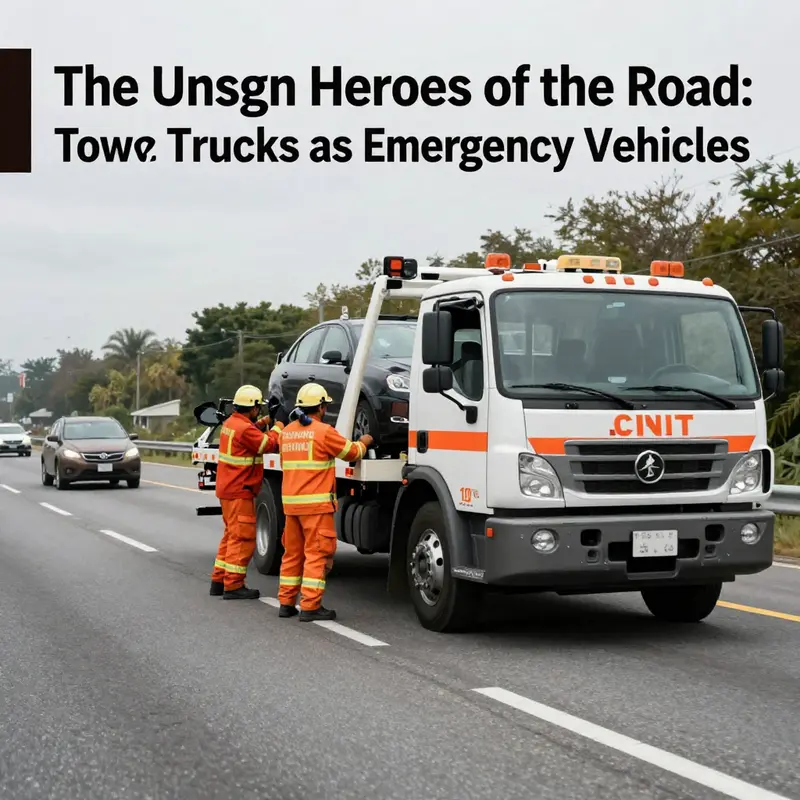
On a stretch of highway, in a moment when the ordinary rhythm of traffic becomes an anxious crawl, a tow truck arrives not as a souvenir of maintenance but as a lifeline. The scene is as much about safety as it is about recovery. A disabled vehicle may block lanes, spill fluids, or simply sit immobilized having lost power and purpose. In those moments, the tow truck is not a mere helper; it is a crucial component of the emergency response system. Its task is to restore the flow of life back to the road by removing hazards, opening space for responders, and offering a path back to safety for the driver and passengers. This chapter contends that tow trucks, while not always numbered among the classic first responders such as ambulances or fire apparatus, function as emergency vehicles in a very concrete sense. They are deployed in the heat of crises, guided by dispatch centers, and operate with the same sense of urgency that marks other emergency operations. Their work reduces risk, minimizes congestion, and preserves the order that allows rescue teams to reach, treat, and transport those in need.
To understand their role, one must begin with a historical frame. The tow truck’s lineage begins in 1916, when Ernest Holmes Sr., a garage worker in Chattanooga, Tennessee, faced a stubborn problem: how to pull a car from a creek using blocks and ropes, aided by six helpers, and make the operation safer and faster. Holmes designed a device that integrated a lifting jib and a winch, a combination that could secure, lift, and maneuver a vehicle with greater control than manual rigging. The invention marks the birth of a professional towing industry, a transition from crude desperation to systems-based recovery. Holmes’s contribution is remembered not only in technical terms but as a turning point that reframed the public perception of what a roadside incident could demand from a trained, equipped worker with a specialized vehicle. The International Towing and Recovery Hall of Fame and Museum in Chattanooga preserves the memory of that innovation, offering tangible links to a history that informs present practice. That history matters because it anchors a modern practice in an evolved sense of duty. Tow trucks have grown from improvised aids into purpose-built responders with an explicit mission: to restore safe passage by removing vehicles that threaten it.
The practice today rests upon a spectrum of vehicle designs, each tailored to specific recovery challenges. The most familiar typology begins with the lightweight and the heavy-duty distinctions, but there are subtler distinctions that reflect the varied needs of the road system. Flatbed or rollback tow trucks, with their bed that tilts and slides to carry vehicles completely off the ground, are especially valued when the goal is to minimize further damage during transport. They are the safest option for high-value, fragile, or heavily damaged vehicles that require careful handling, as well as for securing a vehicle in such a way that its wheels do not contact the roadway during transits through roadways and intersections. Their use signals an emphasis on preservation of the vehicle, but also a conscious choice to minimize the risk to road surfaces, other vehicles, and the tow operator as they execute a recovery.
Then there are self-loading or wrecker-type units. These can reach quickly for standard roadside recoveries, offering speed and simplified operation. Their approach suits the frequent, frontline tasks of roadside assistance, where time matters and the scene may demand rapid stabilization, quick extraction, and fast clearance. The wheel-lift configuration, using a yoke that lifts either the front or rear wheels, provides another option that balances speed with capability. Heavy-duty and super-heavy duties expand the repertoire further, enabling the recovery of large vehicles such as buses, trucks, or tractor-trailers, especially when accidents leave vehicles in awkward positions or when structural integrity renders other methods unsafe. These classifications are not mere catalog entries; they reflect the practical calculus of what is needed on a given scene. The dispatcher’s aim is to match the right tool to the job while protecting the safety of responders and road users alike.
The roles these diverse designs fulfill inside the broader emergency ecosystem are both practical and symbolic. In the moment of disruption, a tow truck provides immediate scene control. By removing a disabled vehicle from a live lane, it reduces the risk of secondary collisions—a hazard that often travels faster than the original incident’s danger. It also releases space for police, fire, and EMS units to reposition, triage, and stabilize the situation without contending with the unpredictability of a stalled vehicle at the edge of a highway. The consequences of clearing a lane quickly are tangible: fewer traffic slowdowns, less exposure for oncoming drivers to the consequences of a blocked roadway, and a smoother path for evacuation or rapid transport where necessary. In this sense, the tow truck transitions from being a mere utility vehicle to a critical node in a multi-agency response, one that helps to orchestrate a coordinated, safer, and more efficient rescue operation.
Indeed, the role of tow trucks extends beyond the moment of recovery. They participate in the pre-crisis ecosystem that shapes road safety. During inclement weather, when vehicles lose traction, abandon dual lanes, or become stranded, tow operators respond not only by removing physical hazards but also by communicating with other responders and clarifying the path forward for drivers who may be at risk. The capacity to clear, stabilize, and transport a vehicle to safety can also prevent the escalation of minor incidents into major emergencies. The ability to tow a vehicle away from a hazard site ensures that fuel spills, battery acid leaks, and other dangerous discharges receive timely containment and cleanup, thus protecting the environment and the public. In snow or ice, when vehicles become stuck or stranded, tow teams collaborate with municipal snow operations to maintain a corridor that keeps essential services moving—fire and EMS access, winter maintenance, and supply chains that depend on predictable travel times. In short, tow trucks are integral to maintaining resilience on road networks that experience regular stress from weather, volume, and accident risk.
What makes a tow truck an emergency vehicle in practical terms is the cadence and cadence continuity of its activities. Dispatch centers organize a chain of response where the tow unit arrives at the scene, assesses the vehicle, and determines the most appropriate recovery method under the constraints of traffic, weather, and road geometry. The operator’s task is not only mechanical; it is procedural. It requires situational awareness, an understanding of when to deploy a priority response, and the discipline to work within the coordination systems that link public safety agencies. The operator must balance speed with safety, efficiency with care, and the immediate needs of the driver with the broader public safety objective of restoring normal traffic flow. This balance is at the heart of why tow trucks have earned their place as emergency assets. Their work, often behind the scenes, makes it possible for responders to reach victims and for traffic to resume a safer rhythm.
The practical impact on traffic safety cannot be overstated. When a vehicle blocks a lane after a collision, the risk of secondary crashes rises sharply in the minutes that follow. The tow operator speeds the transition from a hazard to a managed scene. The immediate removal of a vehicle from the roadway creates a safer environment for paramedics to access patients, for firefighters to contain a fuel spill, and for police to manage the scene and facilitate safe traffic patterns. In a broader sense, this is not merely about clearing a lane; it is about maintaining continuity—continuity of care for victims, continuity of transport for essential workers, and continuity of the public’s confidence that the road system can recover quickly from disruption. The underlying principle is straightforward: speed in recovery, when performed safely, saves lives by reducing exposure to danger and by ensuring that help can arrive where it is needed with the minimum delay.
A closer look at the operational logic reveals that tow trucks fill a particular gap in the emergency spectrum. Ambulances and fire engines bring life-saving interventions; police manage order and safety; but only a well-synced towing operation can physically remove a non-operational vehicle or a wrecked vehicle that obstructs the path to care. In this sense, tow trucks function as enablers of the broader emergency response. They reduce the burden on other responders by handling what is often considered a relatively routine but high-stakes task: stabilizing the scene, extracting the vehicle, and transporting it to a secure location. The speed and reliability of this component influence the overall efficiency of the incident management system. If a tow crew can arrive promptly, assess quickly, and execute a safe recovery with minimal secondary risk, the agencies on the scene can rejoin the critical work of patient care, hazard containment, and traffic reconfiguration. In the long arc of road safety, these efficiencies accumulate. They inform training standards, equipment upgrades, and the evolving choreography of urban and rural response networks.
The human element remains central to this enterprise. Tow operators operate at the interface of mechanical skill and public service. They must be proficient in rigging and lifting techniques, adept at reading traffic dynamics, and practiced in communicating with other responders and with stranded motorists who may be stressed or frightened. Training and ongoing professional development are essential: they reduce the risk of on-scene accidents during recovery operations, improve the speed and quality of service, and help to standardize practices across jurisdictions. The safety culture within tow operations—emphasizing scene safety, passenger protection, and proper use of lifting equipment—serves as a testament to how seriously the profession takes its responsibility. When done well, it looks seamless and almost invisible to the casual observer; when done poorly, the consequences are stark and immediate. The chapter’s claim is not that tow trucks are glamorous but that they are indispensable. Their value lies in their practical ability to clear roadways, secure scenes, and enable the next steps in public safety to proceed without delay or obstruction.
A related but important thread concerns the economics and logistics of deploying tow services in emergencies. The dispatcher must match the right vehicle with the right moment, balancing the urgency of a call with the operational realities of the fleet. The choice between a fast, agile self-loading unit and a heavier, more deliberate flatbed is not merely a technical decision; it shapes the risk profile of the entire operation. A quick-response unit may be deployed to clear a lane rapidly, while a flatbed may be reserved for preserving a sensitive vehicle’s condition or for hauling an out-of-service vehicle to a repair facility without subjecting it to further damage. The coordination with traffic management and with other responders ensures that the tow unit’s arrival integrates into a broader plan rather than disrupting the scene. In practice, this means that the tow operator must be prepared to adapt to evolving conditions on the ground—weather changes, shifting traffic patterns, or the discovery of hazardous materials that require a specific approach to removal. The chain of decisions—from call to clearance—demands a process that values safety over speed when necessary, and speed over safety when it is prudent to do so. The result is an emergency service that remains efficient and accountable even under pressure.
The social dimension of towing as emergency work also deserves emphasis. Communities rely on the reliability of tow services during times of vulnerability. The visibility of a tow operator at a roadside incident—often standing near flashing lights, coordinating movement with other responders, and communicating with affected drivers—becomes part of the public memory of how safety is delivered on the road. This visibility can translate into increased trust in the system: people understand that there is a planned, practiced response to breakdowns and crashes, one that preserves life and keeps traffic moving. Still, the work carries risks for the operator and the public. Roadside operations place crews near fast-moving vehicles, in often crowded and poorly lit environments, with equipment that requires careful handling. This is why ethical practice in tow operations includes rigorous safety protocols, reflective gear, scene lighting, and constant communication between the crew and the dispatch center. The social contract surrounding tow work rests on competence, reliability, and compassion for drivers who find themselves suddenly vulnerable in the middle of a highway or a city street at night.
In contemplating the future, the tow truck’s place within emergency response will continue to evolve. Advances in vehicle recovery technology, improvements in hydraulic systems, and smarter dispatch algorithms promise faster responses and safer recoveries. The integration of tow units with broader traffic management systems can yield more predictable flows during incidents and better protection for workers. There is also a growing recognition that the boundaries between traditional emergency vehicles can blur in constructive ways. Tow operators may increasingly serve as a bridging force—providing the first link to safety, securing the scene, and handing off to specialized responders who can deliver medical care or fire suppression if the situation demands it. These developments do not diminish the distinctive roles of ambulances and fire trucks; they simply acknowledge that the road’s emergency ecosystem is a network. Each node—be it a medic, a firefighter, a police officer, or a tow operator—contributes its specialized expertise toward a common objective: to minimize harm, restore safety, and maintain public confidence in the ability of the system to respond when things go wrong.
The chapter’s synthesis is clear. Tow trucks operate as emergency vehicles through their essential functions: rapid scene stabilization, safe vehicle recovery, and the rapid restoration of traffic flow. They are not first responders by the conventional taxonomy of emergency services, but they perform an indispensable, time-critical service that underpins the entire emergency response framework. Their history grounds this function in a tradition of practical innovation; their present diversity reflects the varied demands of modern road networks; and their future hints at an expanded role built on safety, coordination, and resilience. The road does not need more loud alarms or flashing lights alone. It needs a reliable, well-trained, and well-integrated recovery capability that can adapt to the moment’s demands. Tow trucks are precisely that capability—an often unseen but deeply consequential element of how societies keep moving in the face of breakdowns, collisions, and winter weather.
For readers seeking a concise definitional anchor in formal language, the established definitions of a tow truck are consistent across dictionaries and professional guidelines. This formal reference helps situate the practice within broader legal and linguistic frames, reinforcing that tow trucks are indeed recognized as specialized vehicles designed to move disabled or non-operational motor vehicles in a way that preserves public safety and traffic integrity. In practical terms, this recognition translates into training standards, safety requirements, and operational protocols that allow tow teams to function as competent parts of the emergency landscape, closely aligned with the goals of keeping people safe and roads clear.
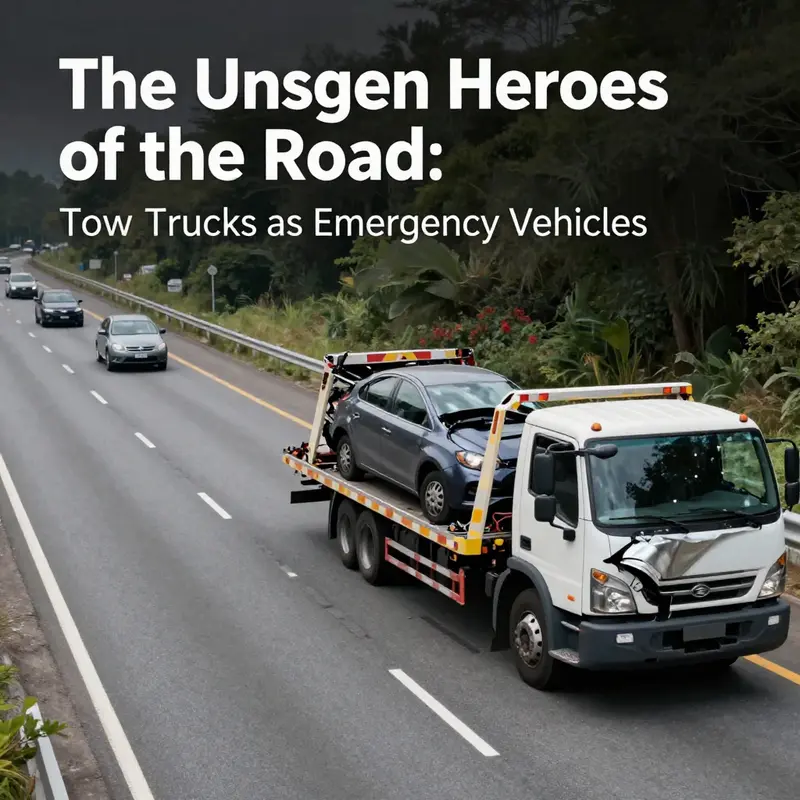
To illustrate the practical implication of these ideas, consider the following: when a tractor-trailer blocks a highway after a multi-vehicle collision, the immediate priorities are rescue, stabilization, and the preservation of life. Once the injured are assisted and care is in motion, a tow crew focuses on removing the involved vehicles and debris from the travel lanes. This action is not a mere cleanup; it is a controlled process that reduces exposure to hazards for emergency medical teams, police, and bystanders. It also minimizes the time that traffic remains at risk for secondary incidents. In a different scenario, a single-car breakdown on a busy urban arterial can trigger congestion that extends through multiple blocks. A swift tow response can reconnect the broken vehicle to safety and allow traffic to resume with minimal delay, preserving not only safety but also the economic vitality of the surrounding area. The common thread across these scenarios is that tow services enable the continuity of everyday life even in the wake of disruption.
The chain of insights offered here invites a broader reflection on how we define emergency services. Emergency response is not a monolith but a system with multiple actors, each fulfilling a distinct function at the right moment. Tow trucks occupy a critical niche that blends technical skill with public-service ethos. They remind us that resilience in the transportation network depends on people and machines capable of turning a moment of vulnerability into an opportunity for safety, order, and recovery. If this perspective resonates, it becomes easier to see why the question, are tow trucks emergency vehicles, deserves a nuanced answer: yes, they are, not by virtue of grandiosity or spectacle, but because their presence and performance are essential to protecting life, preserving safety, and restoring the ordinary order that permits society to continue its everyday work even after disruption.
For readers curious about the practical economics of towing within emergency response, the cost and pricing dimensions are a functional, though sometimes uncomfortable, part of the conversation. The deployment of tow services is influenced by factors such as vehicle type, distance, time of day, and the complexity of the scene. While the emphasis in this discussion is on safety, efficiency, and public welfare, understanding the financial aspects helps illuminate why certain choices—like deploying a rapid-response unit versus a heavier recovery vehicle—are made in the field. Access to this information demystifies the operational decisions that govern the day-to-day functioning of roadside assistance networks. If you would like to explore the cost dynamics more deeply, you can learn about the typical ranges and considerations involved in tow operations at how much is a tow truck. This reference offers a grounded sense of the economic realities that drive dispatch decisions, fleet composition, and the availability of emergency towing services in different communities.
In closing, as road networks become more complex and demands on emergency services intensify, the role of tow trucks will continue to mature. They will increasingly embody a hybrid of technical proficiency, operational efficiency, and a safety-first mindset. The emergent picture is one of a robust, adaptable, and essential element of the public safety landscape. Tow trucks are, in their own right, emergency vehicles—critical, competent, and capable of turning crisis into clear roads and renewed safety. The road deserves nothing less than that.
External reference: For a formal, definitional anchor, see the Cambridge Dictionary entry on tow trucks at https://dictionary.cambridge.org/dictionary/english/tow-truck.
Tow Trucks on the Front Lines: Understanding Their Types and Emergency Roles
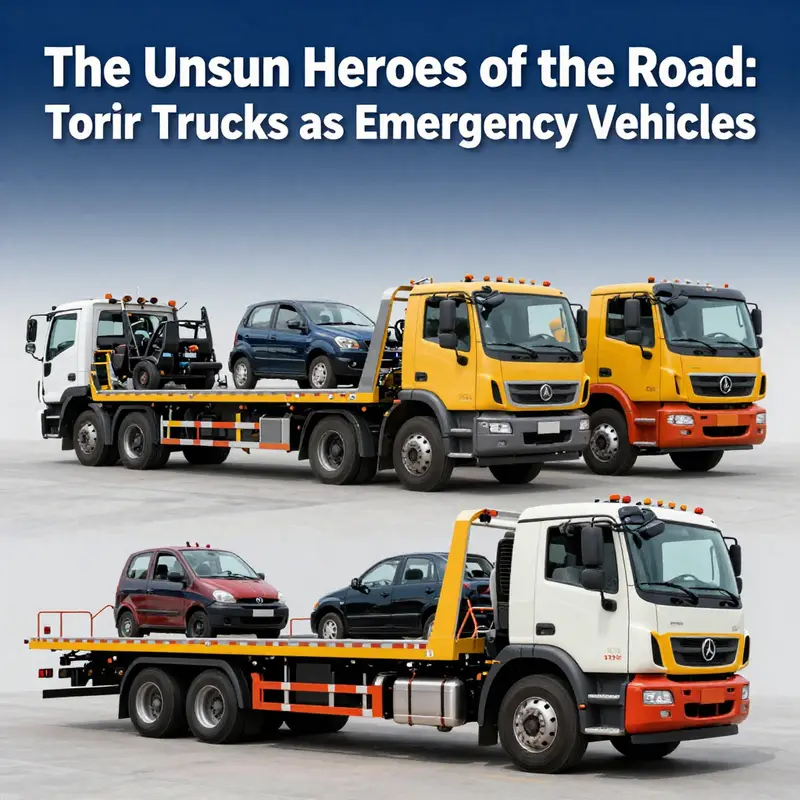
When people consider road emergencies, the image that often comes first is a siren-lit ambulance or a blazing fire truck. Yet the field of roadside crisis response relies as much on heavy, well-equipped support vehicles that are sometimes overlooked. Tow trucks, though not traditionally classified as first responders, perform a crucial emergency function: they clear hazards, restore lawful traffic flow, and enable continued safety on busy roadways. In the real world of incidents, a broken-down car, a stalled truck, or a wrecked vehicle can quickly become a moving obstacle that endangers drivers, pedestrians, and responders alike. The swift, careful removal of those vehicles is not merely a matter of convenience. It is a public safety operation in which the right tow truck, operating with trained personnel, performs a specialized emergency service. The objective is simple in words but demanding in practice: recover and remove the obstructing vehicle without creating new hazards, all while preserving the integrity of the roadway and the safety of everyone nearby. This is how tow trucks occupy a pivotal niche in the emergency response ecosystem, linking the scene to clearance and recovery with precision and restraint. The broader point is clear: tow trucks are emergency tools because they enable a safe, timely, and controlled resolution to incidents on the road. They partner with police, fire, paramedics, and road maintenance crews to transform chaotic beginnings into safer endings. They do not replace the roles of first responders, but they complete a critical loop in incident management by removing barriers to access, reducing the likelihood of secondary collisions, and helping to reopen lanes for the traveling public. Without the timely intervention of specialized towing resources, a minor breakdown could cascade into a full-blown traffic bottleneck, with ripple effects that stretch far beyond the original site. The art and science of towing in emergencies rests on understanding the strengths and limits of different equipment, on choosing the right tool for the job, and on coordinating movements with the discipline of professional responders. To grasp how tow trucks fulfill their emergency function, it helps to consider the four core types that dominate the field. Each type is designed to meet specific conditions, from the most rapid urban response to challenging rural recoveries, and each plays a distinct part in the choreography of a scene. Self-loader tow trucks, also known as automatic or quick-loader models, occupy a familiar place in urban settings. Their design emphasizes speed and efficiency. A press of a button or a simple hand signal can set the hydraulic system in motion, allowing the vehicle to be loaded onto the truck without the operator leaving the cab. This capability is invaluable when traffic is dense and time is of the essence. In many routine roadside assistance calls, a self-loader can restore a lane by removing a stalled vehicle or quickly relocating a disabled car to a safer stretch of road. This rapid response capability helps prevent the accumulation of stopped vehicles in high-traffic corridors, which in turn mitigates the risk of rear-end collisions and the cascading delays that follow. Yet every tool has its bounds. Self-loaders are typically best suited for lighter vehicles, often up to about 5,000 pounds. When the vehicle is severely damaged, overturned, or simply heavier than the system anticipates, a self-loader can quickly reach its limit. In those moments, the operator may switch to a more capable option, ensuring safety and reducing the chance of further damage to the vehicle being moved. The practical implication is straightforward: for light-duty recoveries and rapid urban assistance, self-loaders are a frontline asset. They enable responders to keep traffic moving with minimal disruption, a benefit that resonates across crowded streets and highway interchanges alike. The second major category, wheel-lift tow trucks, represents a different approach to minimizing damage while achieving secure transportation. Wheel-lift systems use hydraulic arms to lift either the front or rear axle of a vehicle off the ground while the opposite axle remains in contact with the road. This technique reduces contact with sensitive undercarriages, suspensions, and frames, which is especially important for low-clearance luxury cars, high-value sports cars, or vehicles with delicate components. Wheel-lift units shine in city environments where maneuverability and noninvasive handling matter. They are agile on narrow streets and can negotiate tight turns with relative ease, making them well suited for urban recovery operations and routine fleet maintenance tasks. The downside is that their capacity for completely immobilized or heavily damaged vehicles is limited. A wheel-lift truck may not be able to recover a car that cannot be rolled or whose front and rear axles are compromised. In those cases, a different configuration is needed. The third type, the flatbed tow truck, is widely regarded as the most versatile and protective option for emergency recovery. A flatbed uses a hydraulically operated platform that tilts and slides back to create a ramp. The entire vehicle is either driven onto the bed or winched up, then secured before the bed returns to its horizontal position. The advantage is clear: there is no contact between the vehicle and the road surface during loading. This eliminates exposure to road debris, weather, and other hazards, and it substantially reduces the risk of incidental damage to the vehicle being moved. For severely damaged cars after major accidents, flatbeds are a standard choice because they provide stability, controlled handling, and the ability to transport non-operable vehicles long distances without further suffering. While loading onto a flatbed can be slower than a quick-release method, the safety dividends are significant, particularly when the vehicle’s frame is compromised or when the owner seeks to preserve the integrity of valuable assets. The final major category, integrated tow trucks, blends the capabilities of multiple systems into a single, adaptable platform. An integrated unit may combine a wheel-lift mechanism with a boom (winch) and, in some configurations, a lightweight flatbed. This multi-tool approach makes the integrated unit the most versatile option for professional towing teams and public agencies. In unpredictable emergency scenes—ranging from rural accidents to urban incidents with multiple vehicles involved—the ability to switch between lifting, winching, and loading onto a flatbed is a practical advantage. Integrated units enable responders to tailor their approach to the specific demands of a scene, whether that means pulling a vehicle from a ditch, stabilizing a rollover, or delivering a damaged car to a salvage site or a service center. The real skill lies not only in choosing a vehicle type but also in applying sound operating practices during a live incident. Each mission requires careful assessment of the scene, the vehicle’s condition, and the surrounding risks to bystanders and responders. In addition, the environment matters. On a highway with a narrow shoulder, flatbeds may offer the safest option, while in a cluttered city street, a wheel-lift or self-loader might be faster and more practical. Rural scenes, where space is limited and access is challenging, may necessitate integrated units capable of a range of maneuvers, from a gentle pull to a full flatbed transfer. This is not a matter of personal preference alone. It is about operational safety, ultimately ensuring that responders can perform recoveries without creating new hazards or compromising the injured, the public, or the environment. The best operators bring to a scene a blend of technical knowledge and situational judgment. They understand not only how to operate a given machine but also how to coordinate with police, fire, and EMS personnel. That coordination is where the emergency value of towing becomes most evident. The moment a scene becomes chaotic, the objective shifts from rescue to restoration: restoring access, reducing exposure to risk, and enabling investigators to document what happened while vehicles are removed from vital lanes. In this sense, tow trucks act as specialized instruments of order amid the turmoil of a roadside emergency. The practical orchestration of a tow operation hinges on a few core principles. First, the choice of equipment must reflect the incident’s reality. A supposed “one-size-fits-all” solution does not exist in emergency towing. The weight of the target vehicle, its position, its damage state, and the surrounding traffic all guide the decision. Second, safety remains paramount. Operators wear reflective gear, use appropriate lighting, and establish a safe exclusion zone to protect bystanders and responders. Third, the vehicle’s recovery must be performed with meticulous attention to the mechanics of loading. The center of gravity, load distribution, and the vehicle’s alignment with the bed influence both the speed and the safety of the operation. Fourth, communication and coordination matter. The tow operator must synchronize with police instructions, EMS access points, and traffic management measures to reduce congestion while ensuring rapid, safe removal. These principles underpin the reliability that communities expect from tow services during emergencies. They also underscore why tow trucks deserve recognition as essential components of the broader emergency response framework. The notion of an emergency response extends beyond the initial incident; it includes the aftercare that follows, such as ensuring the scene is cleared, documenting the event for investigators, and facilitating onward travel for the affected motorists. In many cases, a well-handled tow operation can shorten the duration of an incident, minimize exposure to risk for all involved, and provide a smoother transition back to normal traffic patterns. To appreciate the depth of this role, it helps to look at the implied duties behind a typical recoveries. When a dispatcher assigns a tow truck to a scene, the operator must read the situation from a distance. They anticipate the kind of terrain they will face, the vehicle’s weight, and whether special attachments or additional crew support will be necessary. The anticipation reduces on-scene decision time, enabling rapid deployment. On arrival, the operator quickly evaluates whether the vehicle can be rolled, winched, or loaded on a flatbed. They consider whether highway obstacles, weather, or debris will complicate the approach. They determine if nearby vehicles can be safely diverted or if temporary barriers must be erected. The operator then executes the chosen plan with careful, deliberate movements, often in coordination with a police officer or a firefighter who is directing traffic. In such moments, the tow operator acts as a conductor, guiding the sequence of actions that will ultimately remove the obstruction and restore safe passage. And while the immediate outcome is measured by the clear lane and the absence of hazards, a broader, longer-lasting effect also emerges. By resuming traffic flow, emergency services can focus their attention more fully on injuries, fires, or other urgent perils. By moving disabled vehicles to a safer location, insurers can begin to document damage with minimal data loss, and road authorities can perform post-incident analyses to identify improvements in roadside safety. The cumulative impact is a safer road network that can adapt and endure under stress. It is no exaggeration to say that the presence of the right tow vehicle at the right moment can influence the entire cadence of a response. This is especially true in rural or high-speed environments where the margin for error is smaller and the consequences of delay more severe. The specialized nature of tow trucks therefore deserves careful attention in policy, training, and funding decisions at the municipal and regional levels. The institutions that oversee emergency response must recognize tow operations as a dedicated discipline with its own standards, certifications, and continuing education. In practice, that recognition translates into consistent training on load limits, winch operations, hitch compatibility, and scene safety; it means investing in equipment that can handle a wider range of incidents; and it implies protocols that enable rapid collaboration among agencies and private contractors who provide tow services. The synergy between towing and public safety becomes most apparent when one considers a scenario that stretches the imagination less than it used to. A highway collision leaves multiple vehicles stranded, some with severe damage and others just obstructive. A well-coordinated response could begin with a fast-responding self-loader to clear a lane and create space for EMS to reach occupants. A flatbed or integrated unit might then address the more damaged vehicles, loading them securely for transport to a collision clinic or a salvage yard. Throughout, the traffic management plan adapts in real time, using signs, barriers, and, when needed, temporary detours to minimize disruption. This fluid choreography is what keeps a community moving during a night of incidents, bad weather, or heavy traffic. It also highlights a truth that sometimes gets lost in the discussion of emergency services: tow trucks are not just trucks with a winch; they are dynamic systems designed to sustain public safety during the stress of an incident. The best operators bring to the work both technical proficiency and a sense of responsibility for the traveling public. They understand that their job is not simply to move metal from one location to another; it is to preserve the integrity of the roadway ecosystem, to protect vulnerable road users, and to support the broader mission of emergency responders who are already engaged in more visible, traditionally “life-saving” activities. For readers seeking a deeper dive into the core technologies and safety practices that underpin modern tow operations, there is value in exploring the detailed mechanics and safeguards described in specialized resources. A concise, practitioner-focused overview can be found at Tow-truck technology and safety, which covers how hydraulic systems, winching mechanisms, wheel-lift configurations, and flatbed controls interact in practice. This kind of resource helps demystify the equipment choices and demonstrates how operators translate theory into action at the roadside. In the same vein, the broader context of safety culture, incident response training, and organizational readiness is essential to understanding why tow trucks matter in emergencies. The evolution of this field—the development of safer load management techniques, improved synchronization with other responders, and more robust maintenance practices—reflects a continuous push to minimize risk while maximizing speed and reliability. The outcome is a resilience that communities can rely on when seconds count and the road is crowded with uncertainty. For further reading on how professional responders train, coordinate, and refine their approach to emergencies, see the comprehensive training frameworks that institutions across jurisdictions employ to standardize response—topics that sit alongside the hands-on knowledge of field operators in ensuring that towing remains a trusted, capable element of emergency services. To tie these ideas back to everyday road life, consider how a town or city experiences a typical weekend with scattered incidents or a winter storm that tests every lane on a major corridor. In such circumstances, the reputation and readiness of local tow operators can shape the pace at which normal traffic resumes. A city with well-equipped, well-trained tow teams can manage a higher volume of incidents without letting congestion spiral. The public experiences fewer frustrated delays, and the responders experience less pressure as they work within a predictable, well-practiced system. In short, tow trucks are not merely fallback devices for when a car won’t move. They are essential components of emergency response that transform potentially dangerous scenes into controllable operations. They bridge the gap between hazard and clearance, between a blocked lane and free-flowing traffic. They provide a practical, on-the-ground mechanism for moving from crisis to resolution, and in doing so, they fulfill a critical function that aligns with the broader goals of public safety on the road. Readers who want a more technical or policy-oriented perspective can consult the linked resource on tow-truck technology and safety for a deeper understanding of equipment capabilities and best practices, and they can explore broader safety literature for incident response to appreciate how towing fits into the continuum of care after a crash or breakdown. For those seeking further context on how the road safety infrastructure supports incident response, additional resources on general vehicle safety and highway operations can offer complementary insights. External references underscore that the journey from incident to recovery is a partnership among equipment, people, and procedures, all aimed at protecting lives and preserving mobility. In the end, the question of whether tow trucks are emergency vehicles has an answer that is both practical and principled. They may not wear the emblem of a traditional first responder, but their role in the emergency ecosystem is indispensable. They enable responders to do their jobs more effectively, preserve the integrity of the roadway, and enable communities to recover from disruption with speed and care. The work of tow professionals is a testament to the idea that emergency response is not a single act but a coordinated sequence of actions, with each tool and operator contributing to a safer road environment. The best modern tow operations blend speed with caution, adaptability with discipline, and technical skill with a steadfast commitment to public safety. They are, indeed, on the front lines of road emergencies, not in the sense of rushing into fires or medical crises, but in the sense of clearing the path to safety, one carefully controlled lift, winch, or load at a time. External resource: https://www.nhtsa.gov/road-safety/vehicle-safety
null
null
Final thoughts
Tow trucks are not just vehicles; they are indispensable assets in the realm of emergency response and traffic management. As they ensure that our roadways remain clear and safe, their contributions extend beyond merely assisting disabled vehicles. By understanding the types of tow trucks and their specific roles, we can appreciate their importance in maintaining public safety. For everyday drivers, commuters, and property managers alike, recognizing the value of tow trucks can foster a greater respect for these unsung heroes of the highway.