
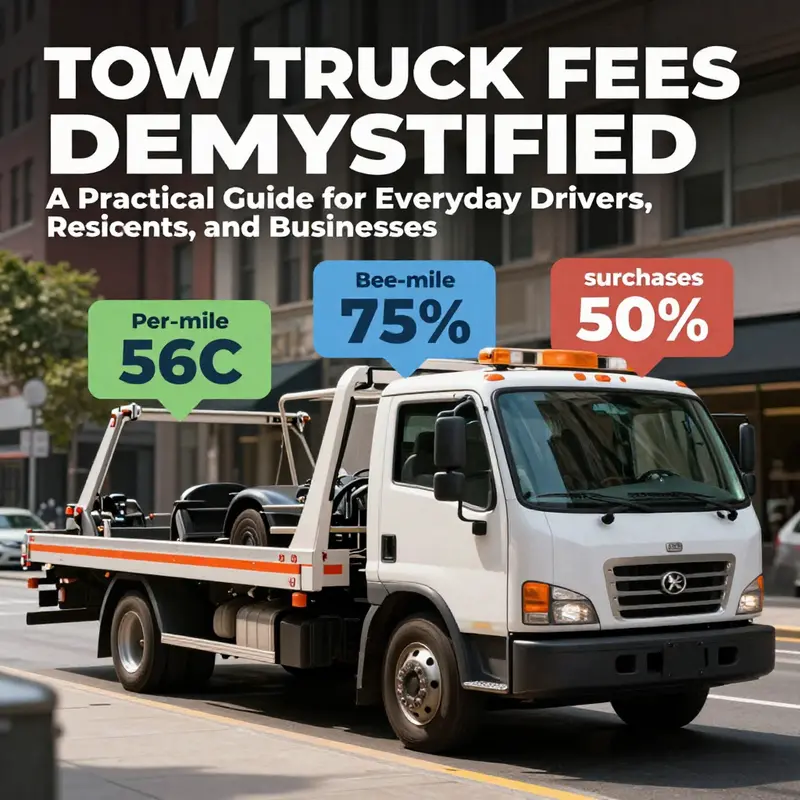
Tow truck fees are rarely a single number you can memorize at a glance. For everyday drivers, residents who rely on roadside help, truck owners, auto repair shops and dealerships coordinating frequent recoveries, and property managers overseeing fleets and emergency responses, understanding how a tow bill is built is essential. Pricing varies widely by location, service type, vehicle, and timing, so knowing what to expect—and how to verify it—reduces surprises when you need a tow most. This guide breaks down the core components that most providers use to calculate a final bill, then digs into two critical layers of complexity: specialized equipment and dynamic surcharges, and the regulatory and regional landscape that can cap or influence pricing.
How Base Fees and Mileage Drive Your Tow Truck Bill: What to Expect and How to Save
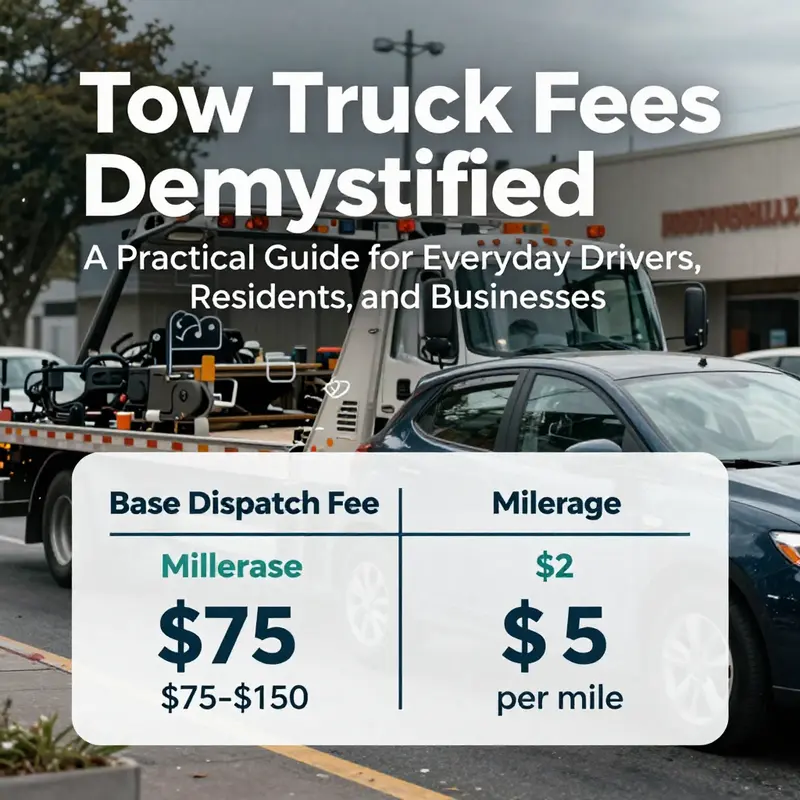
Understanding the foundations of a tow truck bill helps you avoid surprises and negotiate better outcomes. When you call for a tow, the company calculates the charge from a few straightforward components. The most important are the base fee and the per-mile charge. Those two numbers shape the lion’s share of your final cost. Knowing how they work will let you estimate expenses, compare providers, and ask the right questions before consenting to a tow.
A base fee is the starting price the operator charges for dispatching a tow truck and arriving at the scene. It covers the driver’s time, the truck’s fuel and wear, basic administrative costs, and the overhead of maintaining readiness. Typical base fees in many regions fall between $50 and $150. The exact amount depends on local factors: cost of living, labor costs, the density of towing operators, and municipal regulation. In denser urban areas, the base fee often sits at the higher end. In rural areas, it can be lower or similar, but companies may offset that with higher per-mile charges.
Per-mile charges are applied after the base fee and account for the distance the truck travels while carrying your vehicle. Per-mile rates commonly range from $2 to $5 per mile. That range covers standard tows for regular passenger vehicles on typical routes. In practice, operators may use different mileage pricing for various situations. For example, local city tows might have a lower per-mile rate for short trips. Long-distance or cross-state hauls frequently come with higher per-mile rates. Additionally, heavy-duty or over-capacity vehicles require specialized equipment and have significantly higher per-mile fees.
Together, the base fee and the per-mile charge give a simple equation: Total Cost = Base Fee + (Per-Mile Rate × Miles Towed). If you keep this formula in mind, you can create quick back-of-envelope estimates when you know the expected distance. For example, a 10-mile local tow at a $100 base fee and $3 per mile will total $130. The same base fee with $4 per mile for 40 miles climbs to $260. The per-mile portion becomes the dominant factor as distance increases.
Short urban tows illustrate how the components interact. For a common five-mile tow, many companies charge a base fee that covers the truck’s attendance and a small mileage charge on top. That typical five-mile service often costs between $75 and $125 when you add base and mileage. Consumers often perceive that as reasonable because the travel distance is small and the truck returns quickly to service. But even short tows can become costly if additional services are needed, such as winching a stuck vehicle, recovering a car from a ditch, or moving a vehicle from a tight parking lot.
For mid-range distances, the mileage component begins to dominate. A 40-mile tow commonly falls into the $125 to $275 range, depending on the base fee and per-mile rate. If the route crosses challenging terrain or requires a specialist driver, expect the higher end of the range. Operators may also include fuel surcharges for longer trips. Those small percent additions are not always obvious on a quoted price. Always ask whether the quoted total includes fuel or if that will be added later.
Long-distance towing dramatically increases costs. When your vehicle needs to travel 50 miles or more, or crosses state lines, totals can exceed $500 easily. Long hauls introduce more variables: driver time, return trip logistics, regulatory compliance across jurisdictions, and possibly permits. For tows approaching 100 miles, costs may climb to $600 or more. Some companies quote flat or tiered rates for longer trips, while others simply multiply the per-mile fee by distance. Either way, the per-mile rate becomes the chief driver of cost on long runs.
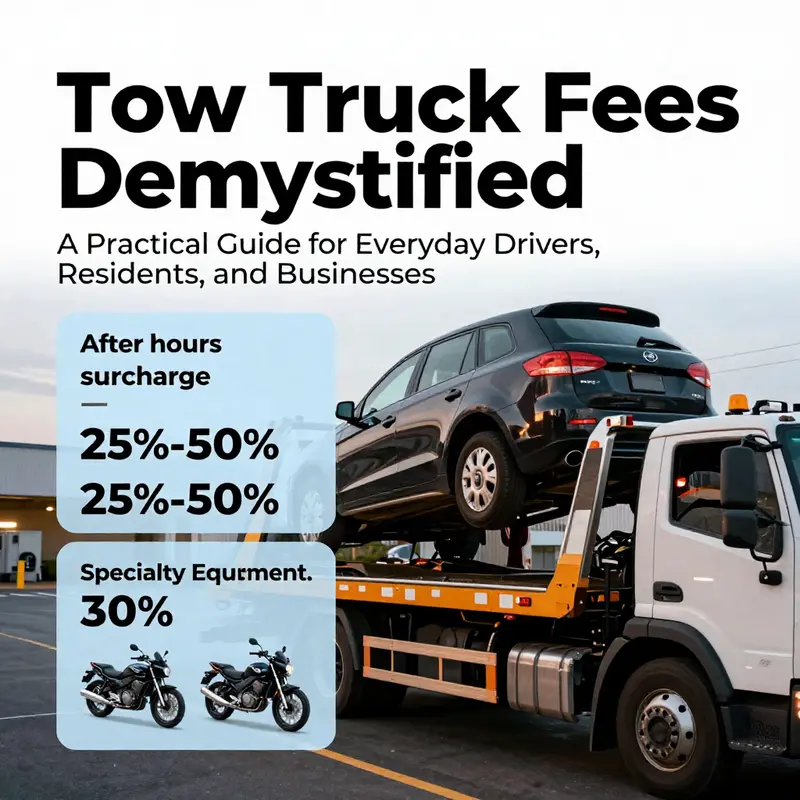
Specialty tows are another major factor. Flatbed trucks, motorcycle trailers, and heavy-duty rigs handle vehicles that ordinary wheel-lift towing cannot. Flatbed tows often protect high-value vehicles from damage and are the preferred method for many manufacturers and specialty shops. Base fees for these services typically start higher, often between $150 and $300, with mileage charges layered on top. Add-ons like lift-gates, winches, or extra crew members increase the bill. Those specialized operations require more equipment and training, and the price reflects that.
Time of day and urgency matter. Tow truck services that take place after hours, overnight, or during holidays frequently include surcharges. Emergency calls may add 25% to 50% to the standard rate. The reason is simple: staffing costs rise and the company sacrifices the driver’s off-duty time. If you need a tow immediately at 2 a.m., expect to pay a premium. Whenever your situation allows, scheduling a non-emergency tow during regular business hours reduces costs.
Local rules and protections influence what a tow can legally charge. Some cities and states regulate tow fees by setting caps or requiring posted rate sheets. Regulations often require written estimates for non-consensual tows or for tows from private property. Where such rules exist, transparency improves and extreme charges have less chance of surprise. Still, regulation varies significantly between jurisdictions. If you live in an area with strict oversight, you will likely see lower variability in rates and clearer billing practices.
Operational realities explain why rates vary so much. Tow truck companies must invest in vehicles and specialization. A modern tow truck can cost six figures. Maintenance, insurance, and licensing add recurring costs. Drivers require training and sometimes commercial licenses. All these inputs make the base fee necessary to keep the service viable. Furthermore, when demand spikes during storms or severe weather, companies rotate crews and equipment. Those peak events can justify higher rates because demand outstrips normal capacity.
Practical strategies help you manage costs. First, ask for a written estimate before the tow begins. A clear breakdown should include the base fee, per-mile rate, anticipated total miles, any known surcharges, and potential storage costs. If the operator refuses to provide a written estimate, consider calling another company. Second, compare two or three providers when time allows. Even small differences in base fee or per-mile pricing add up quickly on longer tows. Third, clarify whether the quoted price includes fuel, tolls, or permit fees. Those line items can appear later and surprise you.
If your vehicle is disabled but driveable, consider alternatives. Consumer-friendly options include light roadside assistance for jumpstarts, tire changes, or fuel delivery. Membership services from automotive organizations may cover short tows for free or at a reduced cost. Similarly, your insurance provider or credit card could offer towing benefits. Always check those options before engaging paid towing. When choosing a private company, confirm the method they use: a flatbed is safer for certain vehicles, but wheel-lift towing is often cheaper. If damage concerns you, a flatbed may be worth the extra cost.
When a tow involves private property or an accident, the billing dynamics change. Impounded vehicles or non-consensual tows often include storage fees per day. Those daily rates add quickly and can become the biggest component of the bill if you delay reclaiming your vehicle. Authorities or property managers sometimes have contracts with towing companies. These contracts can fix rates or determine which storage facility you must use. Know your rights: many jurisdictions require notification and an opportunity to retrieve vehicles without excessive fees.
Heavy-duty towing for commercial vehicles and large machinery follows different pricing. These operations require specialized trucks, sometimes multiple units, and skilled teams. Base fees and per-mile rates are substantially higher. Expect to see quotes that are custom and based on vehicle weight, recovery complexity, and route restrictions. For major recoveries, some companies charge by the hour rather than per mile. If your vehicle is a heavy-duty truck or bus, obtain multiple written quotes and confirm the rescue plan in advance.
Transparency from reputable providers is a hallmark of trustworthy service. Many credible operators publish rate schedules online. Those published schedules often show base fees, per-mile rates, and surcharge policies. Some include examples for common tow distances so customers can visualize final costs. If a company is opaque or resists sharing pricing details, it’s a red flag. Written contracts and clear receipts protect both parties and reduce disputes.
Negotiation has a place. If you get multiple quotes, you can sometimes negotiate a bundled rate for longer tows. For scheduled non-emergency moves, ask if there are discounts for off-peak days. Similarly, if your vehicle is low value and you pay in cash, some operators offer a small courtesy discount. Use competitive quotes as leverage, but remain reasonable. Tow operators run marginal businesses; fair rates ensure the service remains available when you need it.
Be mindful of extra services that drive up cost. Winching, off-road recoveries, vehicle storage, and administrative fees for title or lien checks each add to the total. Some companies charge a separate booking or dispatch fee. Others include these operations in the base fee. Clear communication saves you from surprises. Ask each operator to list potential additional charges and the conditions that trigger them.
Finally, document the transaction. If possible, photograph your vehicle before the tow. Keep copies of any written estimates and the final invoice. If damage occurs, documentation helps when filing complaints or insurance claims. Should a dispute arise, local consumer protection agencies can mediate, especially where regulations require posted rates and written estimates.
If you want to learn more about typical towing costs and how companies structure rates, a helpful resource is the Roadside towing costs guidance. It summarizes base fees, mileage rates, and common considerations that influence final bills. Referencing a trusted guide helps you compare local quotes to broader market expectations.
For further reading on tow company pricing and detail on how per-mile charges develop, see this guide: https://www.roadside.com/towing-costs
For local insights into towing services, pricing transparency, and related topics, consider checking a detailed article on tow truck costs and pricing available here: tow truck costs & pricing.
By understanding base fees and mileage as the core drivers of a tow bill, you gain control. Ask for written estimates. Compare rates. Consider alternatives for non-emergencies. And document the work. Those practices reduce surprises and ensure you pay a fair price for an essential service.
The Price of Precision: How Specialized Equipment and Situational Surcharges Shape Tow Truck Fees
Tow truck fees are rarely a single number you can memorize. They are the sum of several components that change with the scene, the vehicle, and the time of day. Among these, specialized equipment and situational surcharges stand out as the two most variable and frequently misunderstood drivers of the final bill. When you peel back the layers, you discover a system built to balance speed, safety, and vehicle protection with the realities of operating a roadside service business. The result is a price that can feel predictable in one moment and surprisingly complex in the next, especially once a high-value vehicle or an awkward recovery enters the equation.
Specialized equipment is the most tangible difference between a standard tow and a job that requires extra care, capacity, and control. The most common specialist option is a flatbed tow truck, a platform-style rig that carries the entire vehicle rather than dragging it on its undercarriage. Flatbeds are celebrated for protecting sensitive drivetrains, lowering the risk to low-clearance or exotic vehicles, and enabling secure loading with integrated restraints. They reduce the chance of tire damage, differential stress, and alignment issues that might accompany a traditional wheel-lift or dolly setup. For owners of high-value cars, all-wheel-drive units, or cars with unusually low ground clearance, the flatbed is not merely a preference; it is a practical safeguard. The perceived premium of flatbeds is not purely cosmetic. The equipment itself is costlier to purchase and maintain, requiring specialized operators who know how to strap, chock, and secure vehicles without creating new hazards. That expertise translates into higher base rates for the equipment itself, plus added time and fuel consumption that can accompany careful, methodical loading procedures.
Beyond flatbeds, other specialized arrangements exist to address unique circumstances. Motorcycle transport, for example, demands per-axle support and careful wheel stabilization. Recovery operations into or out of ditches, culverts, or partially collapsed spaces call for winch-assisted or cradle-based strategies that slow the process but reduce the risk of injury to the vehicle and the operator. In all of these cases, the intent is not just to move a car from point A to point B but to do so with a high level of control and protection. Those added layers of safety come at a price that customers may not anticipate when they first dial a tow operator. The pricing reflects the investment in trained personnel, the specialized equipment, and the procedural discipline required to complete a complex move.
From a financial perspective, the price delta between a standard local tow and a specialized transport can be substantial. The base fee, which covers dispatch and arrival, typically sits in the range of seventy-five to one hundred fifty dollars in many states. The per-mile charge typically runs two to five dollars per mile, depending on factors such as urban density, fuel costs, and road conditions. When specialty equipment is involved, the base rate for the service itself can jump to a range like one hundred fifty to three hundred dollars, with the knowledge that mileage will still apply. The total can grow quickly if the vehicle requires a flatbed for loading or if the driver must execute precise loading procedures, use extra straps and wheel chocks, or take a longer, more cautious route to ensure protection during transport. In short, the specialized equipment premium is both a physical reality and a decision about risk management.
The situation becomes even more nuanced when you factor in after-hours or weekend emergencies. Surcharges for time-of-day scenarios are common in the towing industry because staffing, on-call premiums, and the opportunity cost of personal time all come into play. Those surcharges can range from roughly twenty-five to fifty percent above standard rates, depending on local regulations, company policies, and the urgency of the call. The economic logic is straightforward: it is more expensive to mobilize a crew at midnight or on a holiday when demand is high and immediate readiness is essential. The customer, in turn, bears the brunt of those costs in the absence of a prearranged maintenance plan or roadside assistance coverage that stipulates specific terms. In practice, this means that a tow charged as a routine service in daylight hours can morph into a substantially larger bill when the clock conspires with geography and vehicle needs.
Distance adds another layer of complexity. Long-distance tows, typically beyond fifty miles, compound the price with increased fuel, time, and potential overnight stays for the driver. Distances that cross state lines or involve inland routing with diverse road networks can push the bill well into the five-figure realm in extreme cases, especially when combined with complex recoveries or specialized equipment. The per-mile rate holds but is only one part of the equation; the cumulative effect of extra equipment, additional personnel, and logistical overhead becomes a meaningful contributor to the final number. In many urban scenarios, a routine local tow can sit somewhere around the one hundred twenty to two hundred dollars range for a simple vehicle move, assuming standard equipment and no surcharges. Yet when a flatbed is unavoidable, or when the vehicle must be recovered from a tricky location after an accident, the price can escalate quickly, and the final tally may feel out of proportion to the apparent distance traveled. It is not unusual for such a job to tip into the two-to-three hundred-dollar range for a base fee, with mileage on top, and potentially more if the scenario demands additional safety measures, equipment checks, or protective transport for a high-value asset.
The consumer-facing truth is that transparency matters. Reputable operators strive to publish rate schedules or at least provide a detailed written quote before any work begins. In practice, this means that customers can expect a breakdown that separates the base dispatch fee, the mileage, the specialty equipment surcharge, and any relevant surcharges tied to time of day or specific circumstances. A comprehensive quote can illuminate whether the involvement of a flatbed or winch alters the expected costs and where the value lies in preserving the vehicle’s condition and safety. This is why the call for written estimates is not merely a bureaucratic ritual; it is a protective measure for the consumer to understand how a given tow is priced and where potential spikes might originate. It also serves as a reminder that pricing structures vary not only by state but also by locality within a state, as municipal rules and competitive dynamics shape the baseline expectations for customers in different neighborhoods. The same logic applies to the range of equipment options; the decision to deploy a flatbed or a wheel-lift is made in the moment, guided by vehicle type, road access, and the operator’s assessment of risk versus reward.
In the end, the core message for car owners and fleet managers alike is to anticipate that specialized equipment and situational surcharges can significantly influence the final bill. A routine tow can metamorphose into a multi-factor calculation once the mechanics of loading, securing, and transporting a vehicle with unique needs come into play. This is not merely about paying more; it is about paying for a safer, more reliable outcome. A high-value car or a car with unusual clearance demands demands special handling, just as a recovery from a ditch or an accident scene demands additional hands, tools, and procedural safety steps. The costs reflect the resources required to execute the job with minimal risk to the vehicle and to the people involved.
To illustrate, consider a practical scenario. A driver in an urban area experiences a breakdown of a standard sedan that cannot be driven due to a malfunction. The vehicle is on a street with average clearance, and the operator can access it with a standard tow apparatus. In this case, the price might be composed of a base fee in the lower end of the typical range, plus mileage for a short hop to a repair shop, with no extra surcharges if the service occurs during regular hours. Now imagine the same situation but the vehicle is a low-clearance luxury car that requires careful loading on a flatbed. The base equipment charge rises to reflect the use of the flatbed, the operator spends more time aligning the vehicle, and the total may include additional protective materials or straps. If this tow occurs during a weekend night with heavy demand, a surcharge could apply in addition to the specialized equipment costs. Add the possibility of a remote location or a need for a winch-assisted recovery, and the quote becomes a layered estimate that captures the realities of the scene, not just the distance traveled. Each factor, when combined, helps explain why two seemingly similar calls can yield significantly different invoices.
From a consumer education standpoint, the message is simple: ask for a detailed, written quote before committing to service. Look for a transparent line-by-line breakdown that identifies the base dispatch fee, the per-mile rate, the equipment surcharge for flatbeds or other specialized gear, and any after-hours or recovery surcharges. If a company is reluctant to provide a written estimate, that should raise a red flag about pricing transparency and overall service practices. In such cases, you may want to contact a few different providers to compare quotes, or check whether the company publishes a rate sheet online. Publicly posted rates give customers a baseline expectation and help avoid sticker shock when the tow is completed. It is also prudent to ask about potential caps on surcharges or any applicable regulatory limits in your state. The interplay between local laws and company policies can materially affect the final number.
With this understanding in hand, you can navigate the pricing landscape with more confidence. When you encounter terms like flatbed, wheel-lift, or winch recovery, you now know they are not mere adjectives but indicators of the level of care, risk management, and investment required to move a vehicle safely. The choice of equipment is not arbitrary; it is a decision anchored in vehicle dynamics, road geometry, and the expected handling during transport. The same is true for surcharges tied to time of day, distance, location, and recovery complexity. These charges acknowledge that the job is not just about moving metal from one point to another; it is about delivering a service that consistently protects property and people in less-than-ideal circumstances.
If you want a quick sense of pricing in the current market, you can explore a practical, user-focused breakdown that mirrors the topics discussed here. For an accessible overview that reflects contemporary pricing considerations and the common ranges associated with different types of towing operations, see the overview page on tow truck fees. This resource aggregates typical ranges and explains the practical implications of equipment choices and situational surcharges. How Much Are Tow Truck Fees
In addition to understanding how specialized equipment and surcharges work, it helps to be aware of how pricing is shaped by geography and regulation. Geographic location plays a significant role in the baseline rates consumers should expect. The cost of living, regional labor markets, fuel prices, and the density of service providers all feed into the numbers that towing companies publish. Rural areas may see higher per-mile charges to offset longer travel and maintenance costs, while urban areas often face congestion and legal restrictions that influence how quickly a tow can be completed and what equipment is appropriate for accessing vehicles in tight spaces. Vehicle type matters as well. A motorcycle, for instance, may require a different mounting approach and additional tie-down points, while a large SUV or pickup might necessitate a bigger trailer or specialized platform. The complexity of the tow is a separate dimension that can push the price beyond the standard currency of miles and base fees.
State and municipal law also leaves its fingerprints on the final bill. Some jurisdictions require clear disclosures about pricing, including the factors that contribute to surcharges and the maximum amount that can be charged for certain services. These rules are designed to protect consumers in stressful situations, when the value of speed and safety seems to outrun the need for price clarity. They create guardrails that help ensure that the most burdensome charges are not applied without a legitimate service reason. For consumers navigating a tow outside the familiar metro area, a basic rule of thumb is to seek explicit quotes, understand the equipment being used, and confirm that any long-distance or recovery-related charges are itemized and justified. If a discrepancy arises, having a written estimate that you can reference helps resolve disputes and fosters more predictable billing in the future.
The broader takeaway is that tow truck pricing is not a single knob that operators twist in a vacuum. It is a carefully calibrated mix of equipment logistics, risk management, and the realities of operating a service business around unpredictable events. The specialized equipment you encounter—whether a flatbed, a winch, or a cradle system—represents a deliberate choice to protect your vehicle and ensure a safe transport. The situational surcharges reflect the realities of working after hours, in remote locations, or in the aftermath of incidents where access is restricted or complex. When you approach a tow with this frame of mind, you can engage in a productive conversation with the service provider about what is essential for your vehicle and what is optional. If you have insurance coverage or roadside assistance, you may also have a built-in advantage, as some policies will pre-authorize certain charges or provide for pre-negotiated rate structures, thereby smoothing the path from incident to repair.
Ultimately, the cost of getting your vehicle moved is more than a price tag; it is a signal about the level of care and the quality of the service you will receive. It is about choosing the right kind of equipment for your car, and about recognizing that certain scenarios demand a premium that supports safer handling, faster access to your vehicle, and a higher standard of liability protection for everyone involved. The final invoice should reflect a clear alignment between the vehicle’s needs, the operator’s expertise, and the logistical realities of the scene. In practice, that alignment is what separates a routine, transparent tow from a stressful, opaque billing experience.
External guidance and consumer protection perspectives reinforce the same core ideas. They emphasize transparency, written estimates, and comprehension of fees tied to the type of equipment and the operational realities of the job. These resources encourage consumers to ask the right questions, compare quotes, and, when possible, rely on price disclosures that help prevent surprise charges. By combining practical knowledge of specialized equipment with awareness of the plausible surcharges tied to time, distance, and location, you build a framework for fair, predictable towing costs. This approach benefits everyone—drivers, insurers, and service providers alike—by aligning expectations with the actual work needed to move a vehicle safely and efficiently.
For readers seeking additional, consumer-facing guidance on towing services, the federal consumer protection perspective offers a helpful backdrop to the pricing conversation. FTC towing services guidance.
Tow Truck Fees Under Regulation and Region: How Rules and Local Markets Shape the Price Tag
Fees for tow truck services are not a single, static number that applies everywhere. They move with the weather of policy and the weather of the street—the rules that govern pricing, the supply of available tow crews, and the local economics of where you are when you need a tow. For a consumer trying to understand what a tow will cost, this means looking beyond a base quote and recognizing that the bottom line is the product of several interacting forces. In many places, a posted rate sheet exists, but the actual bill will still hinge on the regulatory environment, the local market dynamics, the type of vehicle involved, and the timing of the service. When you connect these elements, a clearer picture emerges of why tow fees can range from modest to surprisingly high, sometimes in the same city from one hour to the next or one block apart in a rural corridor. The discussion that follows weaves together these threads, showing how regulatory design and regional realities shape the numbers that land on a consumer’s invoice. It is not merely a matter of sticker price but a balance of policy intent, market structure, and the practicalities of roadside assistance.
Regulation sets the frame, but it does not always determine the exact number you will pay. At the heart of many regulatory approaches is the goal of transparency and fairness, ensuring that charges reflect the costs of providing a service while protecting consumers from hidden or arbitrary fees. One notable dimension of regulation that surfaces repeatedly is the after-hours surcharge. In certain jurisdictions, authorities have introduced a specific, one-time fee tied to costs incurred when a tow is required outside of regular business hours. For example, there are places where an after-hours surcharge of $138 operates as a fixed, one-time cost alongside the standard pricing. The logic behind this policy is straightforward: towing services during the night, on weekends, or over holidays demand a different staffing level, incur irregular on-call costs, and require a readiness that is not as economically efficient as daytime operations. This approach is intended to compensate providers for those additional burdens while giving consumers a predictable mechanism for bearing those costs. It is a vivid illustration of how regulation can translate into a concrete line item on a bill, one that accompanies the more familiar components such as base fees and mileage. Yet regulators have also signaled a wider caution: maximum charges for regional areas or for heavy vehicles may be introduced in the future as part of ongoing efforts to expand price transparency and cap escalating costs in locations where logistics are more complex or the market is sparsely served. The language and specifics may evolve, but the underlying thrust remains clear—pricing should reflect realistic costs, and there should be a clear ceiling or disclosure so that consumers are not surprised when the tow arrives.
Regional dynamics further amplify or dampen these regulatory effects. Geography matters, and in towing, where you live can meaningfully tilt the price tag. Rural and remote regions tend to experience higher base rates and per-mile charges than urban centers, even when the dispatch logic is similar. There are several reasons for this pattern. First, fewer tow operators in rural zones create a thinner market; the competition that pushes prices down in cities is less elastic when supply is scarce. Second, longer response times are a practical consequence of greater distances and less dense coverage, and those longer times translate into higher costs for the provider—fuel, labor, and the opportunity cost of being en route rather than at a likely call location. On the other hand, the urban landscape can yield more competitive pricing due to higher supply and more aggressive competition among nearby providers. The sheer number of available tow trucks within a metropolitan radius creates a market that absorbs price variability more readily, and customers can encounter a more robust range of quotes and options. Yet even in densely populated zones, certain submarkets—like high-cost neighborhoods or areas with limited parking and street access challenges—can tilt the calculations toward higher rates, especially when a vehicle is in a tight spot or requires additional equipment to secure and load.
The vehicle itself actively shapes the cost structure. The type and size of the vehicle being towed is one of the most practical determinants. Heavy vehicles—think large pickup trucks, commercial vans, school buses, or light-to-medium duty trucks—demand more specialized equipment and more labor hours. The overhead of heavier loads is not merely a matter of heft; it also involves more rigorous rigging, additional manpower, and sometimes specialized wheel-lift or flatbed configurations to preserve the vehicle’s integrity and comply with safety standards. In many markets, those heavier jobs carry a premium that is readily apparent in the final bill. The same logic applies to specialized towing tasks where equipment such as flatbeds, heavy-duty dollies, or multi-vehicle winching rigs is required. Operators must be ready to deploy high-cost assets on demand, and the base fee, the mileage, and the time to complete the job all reflect those constraints. Conversely, standard tows of ordinary passenger cars in favorable regulatory environments are often the simplest to price, resulting in base charges and per-mile rates that sit near the lower end of the spectrum, subject to the local cost of living and operator competition.
Time, distance, and urgency form the other axis along which tow fees are calibrated. The conventional base fee covers dispatch and arrival, but the distance charged per mile quickly becomes the dominant variable as the total miles accumulate. In rural regions, the per-mile tariff can be particularly impactful because the distances between calls and destinations can be longer on average, even if the number of calls per day is lower. In urban zones, shorter trip lengths can keep per-mile costs lower per mile, but the higher rate of emergency calls can push totals up due to time-of-day surcharges or standby premiums. The timing of the service translates directly into cost in at least two ways. First, after-hours or emergency surcharges add a percentage-based premium or a fixed amount that compensates for the burden of irregular hours and the effort required to maintain round-the-clock readiness. Second, the urgency of a call—whether it is a high-priority emergency response or a routine tow from a parking lot—can influence the speed with which a provider is dispatched, the resources mobilized, and the overall labor expended, all of which feed into the final bill. Consumers who require rapid helplines during off-peak times should expect to see these costs reflected in the quote they receive.
Long-distance towing introduces a distinct dynamic. When the journey stretches beyond approximately 50 miles, the price often climbs more aggressively than the simple combination of base plus per-mile charges would suggest. Long hauls involve more fuel consumption, longer driver time, possible overnight lodging for crews, and perhaps higher wear and tear on equipment. The prospect of crossing state lines, with its regulatory complexities and potential state-specific requirements, can push the total well into the hundreds or even into the five-figure range in some extreme cases, depending on the total distance, route, and the regulatory climate along the path. The interplay of these variables makes long-distance tows among the most variable and sometimes the costliest services homeowners and fleet operators may require. It is a reminder that the picture of tow pricing is not a flat plane but a terrain marriage of locale, law, logistics, and load.
A practical implication of all these factors is the importance of transparency and due diligence on the consumer side. The price that appears at the curb or in an online quote can reflect only a narrow slice of what the final bill will include. The simplest and most reliable way to avoid surprise charges is to request a detailed, written quote before service begins. A comprehensive quote should itemize the base fee, the per-mile charge, any after-hours or emergency surcharges, and any additional fees tied to specialized equipment or heavy vehicle handling. It should also specify any regulatory charges mandated by the jurisdiction, particularly if a surcharge or cap exists for after-hours service or for remote areas. Many reputable towing companies now publish rate schedules online, making it easier for consumers to compare offers before choosing a provider. Consumers should also be mindful of state and local consumer protection laws that regulate towing fees. In some states, there are rate caps or mandatory disclosures that aim to prevent gouging on a roadside emergency. Being aware of these protections can empower a consumer to question an unexpected invoice and to seek recourse if the charges appear misaligned with the quoted terms.
The political economy of tow pricing also underscores the value of a measured, informed approach. The regulatory toolkit—ranging from explicit after-hours charges to more general price caps and disclosure requirements—reflects policymakers’ attempts to balance access to essential services with fair pricing. Regions that experience sparse provider networks or high operational costs tend to lean toward higher baseline fees and greater use of surcharges to sustain 24/7 readiness and rapid response times. Urban regions, with higher competition, may exhibit more price competition but still see variability driven by the same core factors: vehicle type, distance, urgency, and the presence of any local regulatory constraints. In theory, price caps and disclosure laws should narrow the spread between the lowest and the highest quotes, but real-world dynamics—such as the availability of providers willing to operate at the regulated price point, the severity of a breakdown or accident, and the timing of the call—mean that actual bills can still vary substantially from one incident to the next. The consumer’s best defense remains education: knowing that the posted base rate is just the starting point, recognizing that mileage will accumulate, and understanding how time of day and the nature of the tow can alter the final number.
To put these ideas into a more tangible frame, consider the typical components of a tow bill and how they interact in a given scenario. A standard urban tow for a passenger car might start with a base fee in a modest range, with a per-mile cost that adds a predictable amount if the distance is short. If the same tow takes place late at night, the base equation is adjusted by an after-hours surcharge, which can substantially tilt the final sum, especially if the distance is not negligible. If the vehicle is in a remote area and requires a flatbed or other specialized equipment to avoid damage or to accommodate a high-clearance vehicle, the base fee for the specialty tow rises and the mileage continues to add to the count. The same physics apply to long-distance tows, where a few miles tandem with a high base can create a different experience than a short haul with modest mileage. These interactions illustrate why estimating a tow’s cost without a comprehensive quote is inherently uncertain, and why consumers should insist on a written, itemized estimate that captures all relevant charges and regulatory considerations.
The chapter’s thread centers on how regulation and regional factors converge to shape the financial landscape of tow services. Regulation translates into structure, offering benchmarks and guardrails that protect consumers from unpredictable, opaque pricing. Regional market dynamics translate into the texture and color of the final numbers, producing patterns that reflect local supply, demand, and the costs of doing business in a particular place. The result is a market that is both predictable in its governing rules and variable in its execution, depending on the specific conditions surrounding a call for service. If you are preparing for the moment you may need a tow, or if you manage fleets that depend on predictable service costs, the most reliable strategy is to approach pricing with both a regulatory lens and a regional awareness. Seek out quotes that break down each element, compare the structure across providers, and consider how your locale’s rules might alter the typical cost components. When you combine transparency with a clear understanding of local constraints, you can navigate tow pricing with greater confidence, turning a potentially stressful moment into a more manageable financial decision.
For readers seeking a practical anchor, the following reference points are useful as you interpret price variations and align expectations with reality. First, recognize that a price schedule exists not merely as a marketing tool but as a regulatory instrument that can, in some places, anchor the overall bill through caps or mandatory disclosures. Second, remember that geography is real in tow pricing; when you move from city streets to rural backroads, the cost structure changes because the underlying economics and the resource mix change. Third, drive home the point that the vehicle’s characteristics and the service’s timing are not optional add-ons but core determinants of cost. A passenger car in a city with a straightforward tow is not priced the same as a heavy-duty vehicle in a remote area at 2 a.m. on a Sunday. These truths, while simple in concept, become the compass by which consumers and fleet operators navigate the diverse landscape of tow pricing.
If you want a concise practical takeaway: expect that base fees are only the door price. The real figure is the sum of the base, the per-mile charges, the specialty equipment fees, and any after-hours surcharges, all scaled by the local regulatory environment and market realities. The most reliable approach to avoid sticker shock is to obtain a written quote before any service begins and to read the terms that accompany it. In addition, consult local consumer protection guidance to understand what the law allows in your region and what recourse you have if the invoice seems misaligned with the written estimate. These steps—diligent quoting, awareness of regulation, and an understanding of regional market structure—empower consumers to navigate tow pricing with greater assurance.
To deepen understanding of the pricing landscape and to see more about how pricing is discussed in broader industry contexts, you can explore a detailed exploration of typical costs and the underlying factors that shape them in related discussions online. For readers who wish to connect the chapter’s themes to a broader dialogue about pricing in roadside assistance, the following internal reference offers additional context: how much is a tow truck (https://winchestertowtruck.com/how-much-is-a-tow-truck/). This link provides a broader look at the components of tow pricing and a sense of how figures are broken down for consumers and professionals alike.
In sum, tow truck fees reflect a complex blend of policy design, market structure, and operational realities. Regulatory measures push pricing toward greater transparency and fairness, while regional conditions push and pull on the numbers in ways that can surprise even seasoned customers. The result is a pricing ecosystem that rewards those who educate themselves about the rules of the road and the economics of service provision. As you navigate potential emergencies or plan for fleet operations, the chapters ahead will continue to build on these foundations, offering practical guidance for comparing quotes, understanding the implications of different pricing components, and assessing how regional and regulatory factors intersect to influence the final bill you receive. For a broader view of how regulatory developments are shaping the industry and what future changes might mean for pricing, readers may consult external industry analyses and policy discussions, such as this overview of new regulatory approaches to tow pricing and compliance (https://www.sbdcblog.com/new-regulations-for-the-tow-truck-industry/).
Final thoughts
Understanding tow truck fees starts with the basics—base costs and mileage—before considering the extra layers that can change the final bill: specialized equipment, required towing methods, and timing. By recognizing how and why surcharges apply, and by checking state or municipal regulations and published rate schedules, everyday drivers, residents, fleet managers, and repair shops can secure clear, written quotes and avoid unexpected charges. The practical takeaway is simple: demand itemized estimates, compare published rates, and know your local regulatory landscape to navigate tow pricing confidently.