
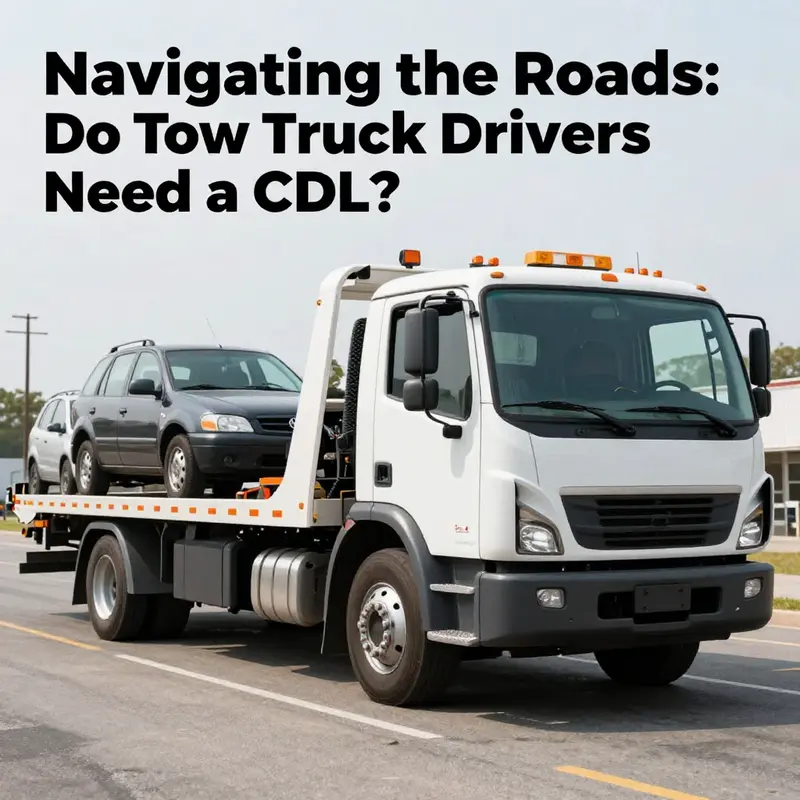
The landscape of towing is complex, merging regulatory demands with safety and operational needs. A fundamental aspect of this profession revolves around whether tow truck drivers require a Commercial Driver’s License (CDL). This question arises not just for the drivers themselves but impacts auto repair shops, property managers, and owners of heavy vehicles. This article examines the regulatory requirements of CDLs, how vehicle weight influences the need for licensing, safety considerations tied to CDL mandates, variations in state regulations, and the preferences of employers in the towing industry—all central to understanding the necessity of a CDL for towing operations.
Weight Thresholds and the CDL Gate: Navigating Tow Truck Licensing in the Real World
The question of whether a tow truck driver needs a CDL sits at the intersection of weight, purpose, and regulation. It isn’t a simple yes-or-no query but a careful calculus shaped by the vehicle’s weight, the configuration of the tow rig, and the specific duties the job demands. In the United States, the dominant rule hinges on weight thresholds that federal authorities use to determine licensing requirements. The most widely cited standard is that a CDL is required when operating a vehicle with a gross vehicle weight rating (GVWR) or gross combined weight rating (GCWR) that crosses the 26,000-pound line. In practice, this means that many tow trucks, by their very nature, fall under the CDL umbrella because their own weight, or the weight of the towed vehicle in combination, pushes the total over that threshold. This isn’t merely a matter of physics; it’s a matter of safety, training, and the ability to control a vehicle that is inherently more challenging to maneuver, brake, and secure than a standard light-duty pickup.
To understand the regulatory landscape, it helps to start with the federal framework administered by the Federal Motor Carrier Safety Administration (FMCSA). FMCSA’s core rule is straightforward: a Commercial Driver’s License is required for operating a vehicle with a GCWR of 26,001 pounds or more. That GCWR accounts for the weight of the tow vehicle and whatever it is towing. If the total weight remains below that threshold, a standard driver’s license may suffice under federal guidelines. Yet the federal rule is not a universal shield; state regulators frequently layer on additional requirements, and some situations—such as transporting hazardous materials or working in particular jurisdictions—may provoke stricter licensing expectations. In practical terms, the line between “ CDL required” and “ CDL not required” can shift depending on how a tow operation is structured: the vehicle’s own GVWR, the weight of the towed load, and the nuances of the state’s travel and safety laws.
The discussion of weight naturally leads to the question of class and endorsements. When the tow operation triggers a CDL, the specific class you’ll need depends on the anticipated duties. In most tow-truck contexts, a Class B CDL is the standard starting point. A Class B license permits operation of heavy single vehicles with a GVWR over 26,000 pounds and, crucially, it is typically paired with a T endorsement for towing. The T endorsement signals that the driver has demonstrated the necessary skills and knowledge to handle towing operations safely. That includes an understanding of load distribution, securement of the towed vehicle, and the use of specialized equipment such as winches and dollies. The alignment of Class B with a T endorsement reflects the practical realities of the job: drivers must routinely manage hooks, chains, winches, and the sometimes unpredictable dynamics of tying a disabled or wrecked vehicle to a tow rig while maneuvering through congested streets and altered road geometries.
It is important to acknowledge that the regulatory story isn’t uniform across all states. While the FMCSA sets the federal baseline, state departments of motor vehicles and public safety offices adapt that baseline to local traffic patterns, enforcement priorities, medical qualification standards, and training requirements. Some states may impose additional stipulations like periodic medical examinations, background checks, or mandatory training programs before a tow-truck operator can legally transport loads on public roads. In a highly regulated field, those state-specific layers exist for good reasons: tow operations inherently blend commercial transport with roadside recovery, sometimes in high-stress, dangerous environments. The bottom line is that drivers and fleet operators should verify both federal eligibility and state-specific requirements before extending their service footprint.
The consequences of non-compliance are real and economically tangible. Licensure issues can lead to fines, but more consequential for operations is the risk of operational restrictions or even suspension of driving privileges. Beyond penalties, non-compliance can undermine insurance coverage, jeopardize fleet safety programs, and complicate contracts with dispatchers, municipalities, and private property owners. In short, the licensing framework is not a bureaucratic obstacle; it is part of a broader safety architecture designed to reduce risk, protect road users, and ensure that heavier towing operations are staffed by drivers who have demonstrated appropriate knowledge of vehicle dynamics, braking, weight distribution, and securement techniques.
From a practical perspective, the licensing path for tow-truck operators often begins with the decision to pursue the CDL and then to obtain the right endorsements. A driver may already hold a CDL class that aligns with the vehicle’s weight and complexity, but the addition of a T endorsement is a crucial step for those routinely engaged in towing. The endorsement process typically involves both knowledge and skills testing, with evaluations aimed at confirming competence in load securement, brake systems, tire safety, and the correct use of towing equipment. The testing echoes the day-to-day demands of the job: controlling a heavy vehicle in low-traction circumstances, stabilizing a disabled vehicle so it does not shift or detach, and coordinating with other responders or traffic control devices under real-world pressure.
For readers who want a concise, practical reference as they plan their career path or fleet upgrade, there is a resource that distills these guidelines into actionable guidance: the CDL tow-truck guide. It provides a clear map for understanding which weights and configurations trigger licensing requirements and which endorsements are commonly expected for towing operations. The guide also addresses common scenarios—like what happens when a tow truck is operated in a city with heavy pedestrian traffic, versus a highway corridor with long-distance hauls—and how those circumstances affect licensing and compliance decisions. The guide serves as a useful starting point for drivers, fleet managers, and safety coordinators who want to align training, licensing, and operational practices with regulatory expectations. For direct reference, see the CDL tow-truck guide: CDL tow-truck guide.
Beyond the weight numbers and endorsements, the licensing conversation for tow-truck operators is also about professional readiness. Even when a CDL isn’t strictly required by law for a particular job, employers frequently prefer or require a CDL because of the specialized skill set involved. Towing is an activity that blends technical vehicle handling with a high degree of situational awareness. Drivers must read road conditions, manage risk, and execute secure loads while coordinating with other responders on the scene. A CDL signals to employers that the driver has not only the legal permission but also the validated competency to perform complex maneuvers under pressure. For many fleets, that credential becomes a mark of training integrity and safety culture, reinforcing the trust that customers place in responders who arrive at roadside incidents, traffic collisions, or impound situations.
For those navigating this space, the path forward is twofold: stay aligned with federal standards and stay attuned to state-specific requirements. The federal baseline provides the scaffolding for what kinds of weights and configurations necessitate a CDL, while state rules fill in the practical details that affect hiring, training, and ongoing compliance. It’s also worth emphasizing that licensing is not a one-and-done milestone. Medical certification, periodic refreshers, and ongoing safety training often accompany the CDL framework. A robust program will integrate CDL verification with regular safety drills, vehicle inspections, and equipment maintenance checks. This is where the broader safety ecosystem—training frameworks, rescue drill management, and incident-response protocols—intersects with licensing in meaningful ways. A driver who understands how a tow operation fits into emergency response or road-clearing workflows will be better prepared to contribute effectively, even when the job demands rapid decision-making in challenging environments.
As the profession continues to evolve, so too does the public conversation about what constitutes a “professional tow-truck operator.” The weight thresholds and endorsements are not merely regulatory artifacts; they reflect real-world expectations for safety, reliability, and accountability. For readers who are building toward a role in this field or who manage fleets that require heavy towing capacity, the immediate takeaway is straightforward: know the weight profile of your equipment, understand the GCWR implications for combined loads, pursue the appropriate CDL class and endorsements, and stay current with both federal and state regulations. In practice, this means a disciplined approach to licensing, training, and ongoing professional development that keeps pace with changes in vehicle technology, safety standards, and enforcement priorities.
For those seeking a practical touchstone, consider reviewing the deeper regulatory contours that FMCSA outlines and applying them to your particular context. The FMCSA website remains the authoritative resource for national standards, while state motor vehicle departments provide the specific requirements that govern your region. The combination of federal baselines and local rules forms the reliable compass for tow-truck operations, ensuring that drivers are equipped to meet public safety obligations and industry expectations alike. For a broader view of the official guidance, you can visit the FMCSA’s site at https://www.fmcsa.dot.gov. This resource underscores the collaborative framework that shapes licensing, training, and compliance across the country.
In sum, tow-truck licensing is about aligning weight, duty, and regulation into a coherent professional pathway. The weight threshold of 26,000 pounds, the role of GCWR, and the common pairing of Class B with a T endorsement form the backbone of the typical CDL decision for towing operations. Yet the story does not end there. State supplements, medical qualifications, and training requirements add layers that fleets must navigate to keep drivers safe and compliant. When in doubt, the CDL tow-truck guide provides a clear reference point, and the FMCSA’s official guidance offers the authoritative framework that anchors these practices in national standards. As the industry continues to adapt to changing road conditions and evolving equipment, the core principle remains the same: licensing is a fundamental element of safe, professional, and accountable towing work.
null
null
How CDL Rules Shape Safety on the Road for Tow Truck Drivers
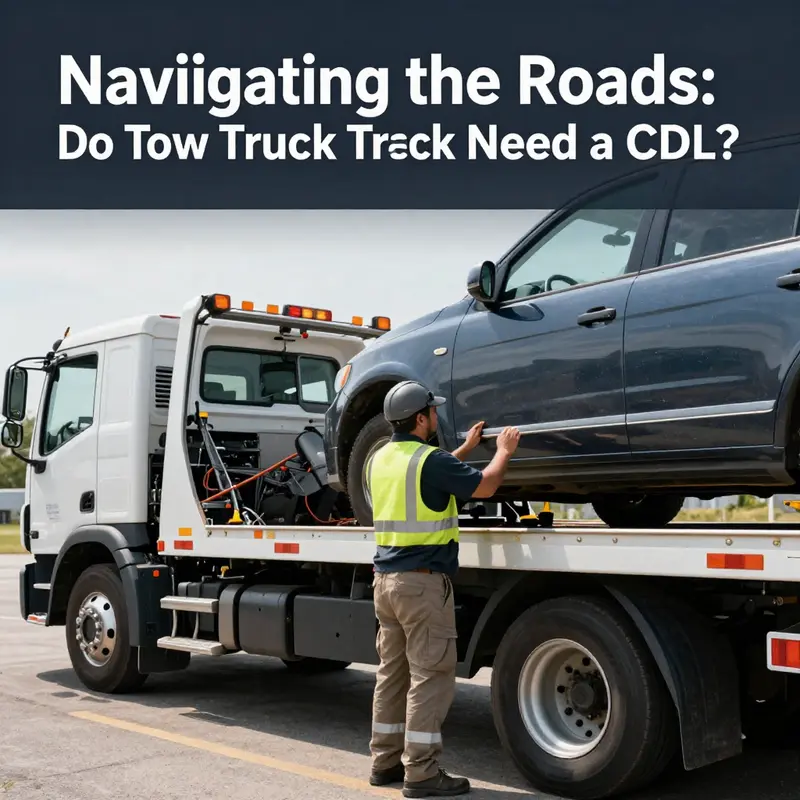
Safety on the road depends as much on the driver as the vehicle. For tow truck operators, that truth becomes stark when a lightweight passenger car becomes a heavy, shifting load. Licensing rules requiring a Commercial Driver’s License (CDL) exist to reduce those risks. They ensure operators understand the unique demands of towing, and they create a baseline of training and health standards across jurisdictions.
Tow trucks often work in high-risk settings. Drivers navigate highways, scene-strewn shoulders, and congested streets. They use winches, booms, flatbeds, and wheel lifts. These pieces of equipment change how a vehicle responds under acceleration, steering, and braking. When combined with increased mass and altered center of gravity, these factors raise the chance of rollovers, jackknifing, and loss of control. A CDL requirement recognizes that these risks are manageable when the operator has proper training.
The federal threshold tied to licensing is clear and objective. If the truck and towed vehicle together exceed a gross combination weight rating of 26,001 pounds, a CDL is required. The same applies when hauling hazardous materials. That rule targets scenarios with the greatest potential for catastrophic outcomes. When a single operator controls more mass, the stopping distance increases. The vehicle dynamics change. A license standard helps ensure the driver knows how to compensate. It also signals to employers that the operator has met a recognized competency level.
Beyond the weight threshold, the CDL process embeds safety-reinforcing elements. Candidates must demonstrate knowledge of vehicle systems and safe operation. They must show skill in backing, coupling and uncoupling, and in managing emergencies. These are not arbitrary maneuvers. They address the exact tasks tow truck drivers perform every day. For instance, safely loading a disabled vehicle onto a flatbed requires precise control and an understanding of winch limits. Proper coupling minimizes the chance that a trailer will detach on the road. A CDL exam forces mastery of those skills.
Medical fitness is another crucial component. CDL holders submit to regular medical examinations. These exams screen for conditions like uncontrolled diabetes, epilepsy, severe cardiovascular issues, and vision problems. The aim is to prevent sudden incapacitation while operating a heavy vehicle. For tow truck drivers who stop on busy interstates to recover vehicles, the margin for error is small. A medically fit operator is less likely to suffer a health-related event that can put other road users at risk.
Background checks and record-keeping also contribute to safer fleets. CDL regulations incorporate driving records and certain disqualifications that keep high-risk individuals out of service. This reduces the likelihood that a driver with a pattern of unsafe behavior will continue to operate a commercial vehicle. Employers benefit from this, and so do communities that rely on predictable, competent roadside services.
Even when a CDL is not legally required, many operators and companies treat it as a de facto standard. That preference is practical. Drivers with a CDL typically require less on-the-job coaching for heavy or complex tows. They often come with experience in on-road hazard recognition, defensive driving, and emergency braking. Companies that insist on CDLs do so because it lowers liability and insurance exposure. It also signals to customers that the operator meets a formal standard.
Training standardization matters for multi-jurisdiction operations. Tow companies may cross state lines to recover vehicles or move equipment. A CDL provides a common standard the industry can rely on from state to state. Without that standard, training quality can vary widely. Some states may require additional local certifications for particular towing operations. But the CDL creates a shared baseline of competence.
A lesser-discussed safety benefit lies in the culture CDL requirements foster. Formal licensing encourages continuing education and adherence to safety protocols. Drivers are more likely to follow written procedures when they know those procedures are tied to ongoing certification and employment prospects. Fleet managers can structure refresher training around the skills evaluated in the CDL tests. That creates a feedback loop that improves overall safety.
Practical safety measures reinforce licensing benefits. Proper load securement, correct use of chocks and outriggers, and attention to weather conditions all reduce risk. A CDL holder is usually more familiar with these measures. They understand how ice, rain, or a poorly balanced load can change stopping distances. They are more likely to use spotters and to place warning devices at appropriate distances. This operational prudence matters most on highways where speeds are high and reaction windows are short.
Tow trucks also present unique rescue and recovery scenarios. Drivers often work at night, during severe weather, or near accident scenes. These environments require working safely around traffic and emergency personnel. A CDL-trained operator is more likely to coordinate with law enforcement and first responders. They understand protocols for scene safety and can execute maneuvers that minimize additional risk.
The business side of safety cannot be ignored. Insurance underwriters recognize that trained, licensed drivers reduce claims exposure. Companies employing CDL-certified operators may find more favorable insurance terms. That economic incentive encourages fleets to invest in training and certification. In turn, that investment yields safer roads and fewer costly incidents.
Regulatory nuance is important, too. State rules can add layers to federal requirements. Some states impose a CDL requirement at lower weights or mandate endorsements for specific towing tasks. Others have exemptions for certain recovery operations. Drivers and fleet managers must know local rules to ensure compliance and maintain safety. For a practical introduction to CDL issues faced by tow truck operators, a useful internal resource is this comprehensive CDL tow truck guide. (https://winchestertowtruck.com/cdl-tow-truck-guide/)
Ultimately, the safety implications of CDL requirements are clear. They create a consistent training floor. They screen for medical and behavioral risks. They encourage procedural discipline and reduce liability. For tow truck drivers, whose work routinely intersects with danger, these safeguards are not bureaucratic hurdles. They are practical measures that protect drivers, other road users, and property.
For specific regulatory details, or to confirm whether a particular operation requires a CDL, consult the Federal Motor Carrier Safety Administration. Their guidance defines the federal thresholds and conditions that trigger a CDL requirement. https://www.fmcsa.dot.gov/
State Rules That Decide If a Tow Truck Driver Needs a CDL: Variations, Tests, and Practical Steps
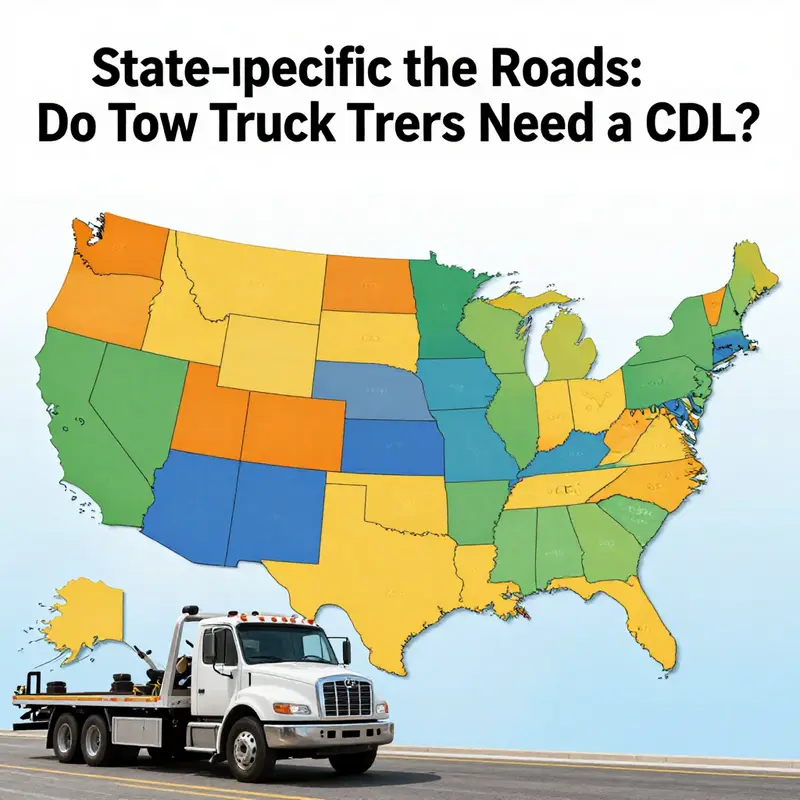
Understanding how state rules affect CDL requirements for tow truck drivers
Whether a tow truck driver must hold a Commercial Driver’s License depends on two linked realities. The first is the federal baseline set by regulators. The second is how each state interprets or tightens that baseline. Drivers and fleet managers need to navigate both levels. The federal standard gives a starting point. States often add layers of restriction or special testing. That combination shapes the day-to-day legal obligations for towing professionals.
At the federal level, the rule is straightforward: a CDL is typically required when a vehicle or combination meets or exceeds a gross vehicle weight rating (GVWR) or gross combination weight rating (GCWR) of 26,001 pounds. That weight includes the tow truck itself plus the vehicle it tows when the combined rating crosses the threshold. This baseline also triggers other requirements. These include skills testing, medical certification, and age limits for interstate operations.
States can and do expand on federal guidance. Some states follow the federal thresholds exactly. Others impose stricter guidelines based on truck class, the type of towing, or even the operational environment. For example, a state might mandate specific endorsements for operators who recover vehicles from highways. Another state could require additional classroom hours or field training for recovery operations. These differences often reflect local traffic patterns, road design, and public safety priorities.
Weight classification is the most common point of variation. In several states, tow trucks that exceed 26,000 pounds GVWR plainly require a CDL. In others, the requirement hinges on the towed vehicle and whether the combination exceeds the federal limit. A few states take a different approach entirely. They define tow truck classes by hauling capacity or by axle configuration. Those special classifications can bring recovery vehicles into the CDL net even when their total rated weight remains below the federal threshold.
Beyond weight, endorsements and skills testing are frequent state-level additions. Many jurisdictions require a separate endorsement for towing, recovery, or vehicle loading operations. These endorsements test practical skills such as winching, rigging, and safe scene management. The testing goes beyond lane control and backing. It focuses on techniques needed when working on shoulders, in traffic, or at accident scenes. States concerned about roadside safety often insist on such testing to reduce secondary crashes and improve driver decision-making.
Age and intrastate versus interstate distinctions also matter. A driver under age 21 may legally operate a qualifying tow truck within one state. That same driver cannot legally operate the same vehicle across state lines. Enforcement officers and company compliance officers must be aware of that difference. Drivers who expect to work near state borders should plan licensing accordingly.
Medical certification and disqualification rules apply where a CDL is required. A valid medical examiner’s certificate is typically necessary. Certain offenses lead to automatic disqualification from holding a CDL. These include major violations such as DUI convictions while operating a commercial vehicle. States sometimes layer additional restrictions, such as local convictions that trigger administrative action. Employers and drivers must track medical status and driving records closely. Lapses can mean immediate removal from service and costly fines.
Insurance carriers and employers often influence the practical outcome of state rules. Even when a state does not require a CDL, many tow companies prefer or require one. They see it as a risk management tool. A CDL signals that a driver passed formal testing and meets medical standards. Insurance underwriters may offer better terms to fleets whose drivers hold CDLs. This creates a de facto standard in some markets, especially where heavy recoveries are common.
Local permits and municipal ordinances introduce another layer. Cities or counties may require registration or special operating permits for tow companies. Those permits sometimes include training standards or background checks independent of state CDL rules. Municipal towing, such as impound or parking enforcement work, often has its own licensing path. Drivers working for those operations must meet both municipal and state requirements.
Reciprocity between states simplifies matters for many drivers. A CDL issued by one state is generally recognized by others. However, endorsements and special state-only qualifications do not always transfer cleanly. A driver who holds a state-specific recovery endorsement might need to retest after moving to another state. Employers that move equipment across state lines should verify that drivers hold the correct combination of license and endorsements for each jurisdiction.
Practical steps reduce uncertainty. First, weigh the vehicle combinations you plan to operate and compare the ratings to state thresholds. Second, consult the state Department of Motor Vehicles or equivalent agency for precise rules. Third, consider voluntary training even when not required. Training in winch operations, rigging, and scene management improves safety and reduces liability. Fourth, check company policies and insurance requirements. They often set stricter standards than the state.
Compliance documentation matters. Keep a binder or digital folder with licenses, medical certificates, vehicle GVWR plates, and any municipal permits. Regularly audit those documents. Drivers should also maintain a record of on-the-job training and any state-specific tests passed. Those records help when regulators inspect operations after an incident.
Consequences for noncompliance are real and escalating. They can include fines, license suspension, and impoundment of vehicles. In some cases, companies face civil liability if an unlicensed driver causes an accident. The risk extends to increased insurance premiums and reputational harm. Those outcomes make it sound policy for operators to err on the side of greater qualification.
Looking ahead, states may continue to adjust rules as towing technologies evolve. Advances in vehicle recovery equipment and telematics change what skills are necessary. Legislatures and regulators often respond to incidents and safety data. That means towing professionals must watch for updates and adapt their training programs.
For a practical checklist and deeper operational guidance, see the CDL tow truck guide for drivers and fleet managers. For official, state-level details, consult your state’s DMV and related agencies. For a federal perspective and links to state resources, refer to the National Highway Traffic Safety Administration’s commercial driver licensing information: https://www.nhtsa.gov/vehicle-safety/vehicle-operations/commercial-driver-licensing
What Employers Actually Want: CDLs, Endorsements, and the Qualifications That Win Tow Truck Jobs
What employers actually want is more than a check next to a license class. Hiring managers balance legal requirements with operational risk, insurance exposure, and customer expectations. For many tow truck companies, a Commercial Driver’s License (CDL) is either a baseline expectation or a significant advantage on an application, even when state law does not strictly require one. Understanding why employers prefer CDLs, which endorsements matter, and how to present your credentials can make the difference between an interview and a job offer.
Employers start by assessing legal exposure and insurance. A CDL signals formal testing and a standardized level of competency. Insurers often look more favorably on drivers who hold CDLs and relevant endorsements. That can reduce premiums and lower a company’s perceived liability. Even when a tow truck’s weight or the combined gross vehicle weight rating falls below federal CDL thresholds, employers still view a CDL as a practical hedge against risk. It reassures dispatchers and clients that the driver has been trained to operate heavy or complex equipment safely.
Endorsements further refine that reassurance. Employers hiring for specialized towing tasks routinely prefer candidates with endorsements that match their fleet and contracts. For example, a company that tows buses or shuttles may prefer drivers with a passenger endorsement. Firms that handle tank vehicles, specialized heavy recoveries, or hazardous cargo will favor endorsements tied to those roles. Including endorsements on a resume makes your skills immediately visible to a hiring manager. It shows you can step into specific assignments without additional, costly training.
Beyond endorsements, the class of CDL matters. Class A and B licenses cover different vehicle types and towing scenarios. Many local towing companies operate Class B wreckers and rotators. Larger recovery operations and long-haul towing services may prefer Class A holders who can operate larger combinations. Employers consider the typical size of tows and the routes drivers will service. If the job includes interstate recovery or fleet transport, a higher-class CDL can be a decisive advantage.
Formal training carries weight too. Accredited CDL training programs teach backing, load securement, air brake systems, and regulatory compliance. Employers favor graduates of structured programs because these candidates often require less remedial training. Completing a recognized program also shows commitment. That matters in a job market where turnover can be high. Companies see structured training as proof that a candidate invested time and resources into their trade.
Experience and a clean driving record often top the checklist. A candidate with years of towing experience, few or no major violations, and verifiable references stands out. Employers will pull motor vehicle records to check for DUI, reckless driving, or excessive speeding. Those marks can disqualify even qualified applicants because they increase insurance costs and public risk. Conversely, a spotless record, steady employment history, and strong references suggest reliability.
Additional certifications and practical skills increase hiring prospects. Defensive driving courses, first aid and CPR certification, and specialized equipment qualifications show preparedness. Employers appreciate drivers who can manage roadside incidents calmly and safely. Certifications in winch operation, rotator recovery, or vehicle stabilization are tangible assets. They shorten the time a new hire needs to reach full productivity.
Safety culture and attitude matter as much as technical ability. Tow truck drivers work in high-stress environments, often roadside, at night, and near moving traffic. Employers look for candidates who prioritize safety, follow standard operating procedures, and communicate clearly with dispatch and customers. A driver who can document incidents and follow company checklists reduces liability. During interviews, concrete examples of safe decision-making carry more weight than generic claims.
Background checks, drug testing, and work eligibility checks are standard. Many firms require a pre-employment drug screen and may conduct random testing. Background screenings assess criminal records and employment history. Municipal contracts or airport services may impose stricter pre-employment standards. Demonstrating compliance with these screening practices ahead of time can speed hiring and placement.
Resume presentation is a practical battleground. Employers often scan resumes for specific items: CDL class, state of issuance, license number, and endorsements. Include dates of your CDL program completion and any ongoing training. List relevant certifications and the type of equipment you have handled. Use clear labels such as Class B CDL — State, or Passenger Endorsement (P). These details let hiring teams quickly verify qualifications against job requirements.
Many companies offer on-the-job training or sponsor additional certifications. If you lack certain endorsements, inquire whether the employer will sponsor training. Some operators will pay for endorsement upgrades or advanced recovery courses in exchange for a term of service. This arrangement benefits both parties: employers gain qualified personnel, and drivers expand their skill set and future earning potential.
Understanding contract work and municipal requirements is important. Cities, airports, and government agencies often require specific licensing and background clearance. An employer bidding for a municipal tow contract will specify the required license classes and driver clearances. When applying to such companies, emphasize any prior municipal or contract experience. It demonstrates familiarity with the stricter operational standards these contracts demand.
Networking and reputation in the local towing community matter more than you might expect. Many towing positions fill through referrals. A strong reputation for reliability and safety can lead to steady work. Employers often ask local peers about a candidate before making a hire. Keep your professional relationships with dispatchers, shop managers, and fleet supervisors positive.
If you are starting out, consider targeted steps to improve marketability. Complete an accredited CDL program, earn endorsements that match local demand, and pursue safety certifications. Maintain a clean driving record and gather references from instructors or previous employers. Document hands-on experience, even if gained through volunteering or assisting on recoveries. Small steps become persuasive evidence of competence.
Ultimately, employers hire for two intertwined reasons: compliance and capability. A CDL satisfies compliance concerns and eases insurance issues. Endorsements and certifications demonstrate capability and reduce training costs. Together, they create a profile that tells a hiring manager you are ready for the job.
For a focused roadmap to entering the field, including entry-level steps and recommended certifications, see this guide on how to become a tow truck driver: https://winchestertowtruck.com/how-to-become-a-tow-truck-driver/.
For official regulatory thresholds and federal guidance on when a CDL is required, review the FMCSA resource at: https://www.fmcsa.dot.gov
Final thoughts
The need for a Commercial Driver’s License for tow truck drivers hinges upon a spectrum of factors including vehicle weight, safety protocols, state regulations, and employer expectations. Ultimately, while federal guidelines lay the groundwork, local laws and individual company policies significantly influence operational practices in the towing industry. Familiarity with these nuances is crucial for drivers and associated businesses alike, ensuring that safety and regulatory compliance are prioritized in daily operations.