
Tow trucks keep communities moving, from stranded motorists to service fleets and emergency crews. Earnings for tow truck drivers reflect a blend of regional economies, demand patterns, and the specific roles drivers perform. In fast-growing cities and in smaller towns, pay tends to rise with local cost of living, on-call demand, and the availability of specialized equipment. By contrast, areas with flatter demand or competition from larger fleets may offer lower base rates, offset by overtime or shift differentials. This overview stitches together current benchmarks from Canada, the United States, and Australia, and then explains the factors that push pay up or down. For everyday drivers, residents, commuters, truck owners, auto repair shops, and property managers, understanding these patterns helps with budgeting, planning, and choosing service options. The three chapters that follow connect regional data to international context and then unpack the practical influences—such as job type, experience, and scheduling—that shape earnings over the course of a career. Taken together, the piece provides a clear picture of how much tow truck drivers earn and why those numbers vary by place and role.
Tow Lines, Real Wages: Regional Pay Variations for Tow Truck Drivers
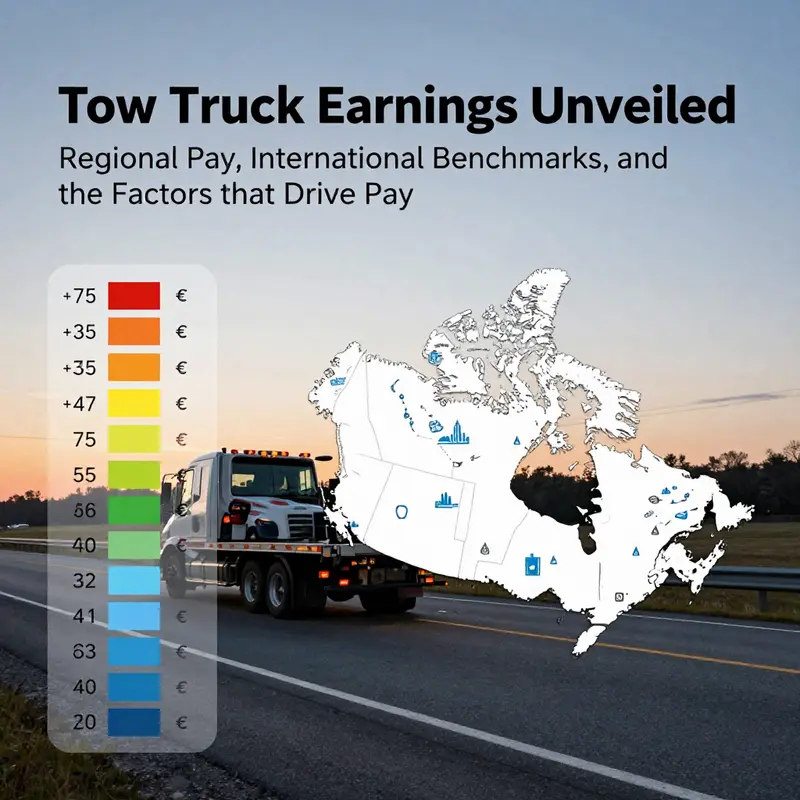
This chapter examines tow truck driver pay as a patchwork of regional markets rather than a single national figure. In Canada wages vary by province and city, with higher earnings in dense urban markets and resource areas, and lower baselines in smaller markets. For example, in British Columbia average pay sits near the national level, with Richmond among the highest local rates due to density and high service demand. In Ontario Thunder Bay and Ottawa show stronger rates driven by volume and local demand, while Atlantic markets like Halifax may exceed provincial baselines in cities with robust service networks. Alberta shows pronounced regional splits, with Edmonton near the general average and Fort McMurray offering top end pay tied to resource activity and extended hours. Across the border, the United States average hovers around twenty one dollars per hour, while Australia can exceed thirty two dollars per hour in New South Wales. The chapter also highlights how on call shifts overtime and the mix of heavy duty tasks, and local industry structure can push a driver toward higher monthly take home in peak markets even if base hourly rates are modest elsewhere. The practical takeaway is that earnings depend on market maturity, service mix, and the driver willingness to pursue peak demand periods and specialized tasks.
Tow Truck Wages Across the Globe: What Drivers Earn, How Regions Shape Pay, and What It Means for Those Behind the Wheel
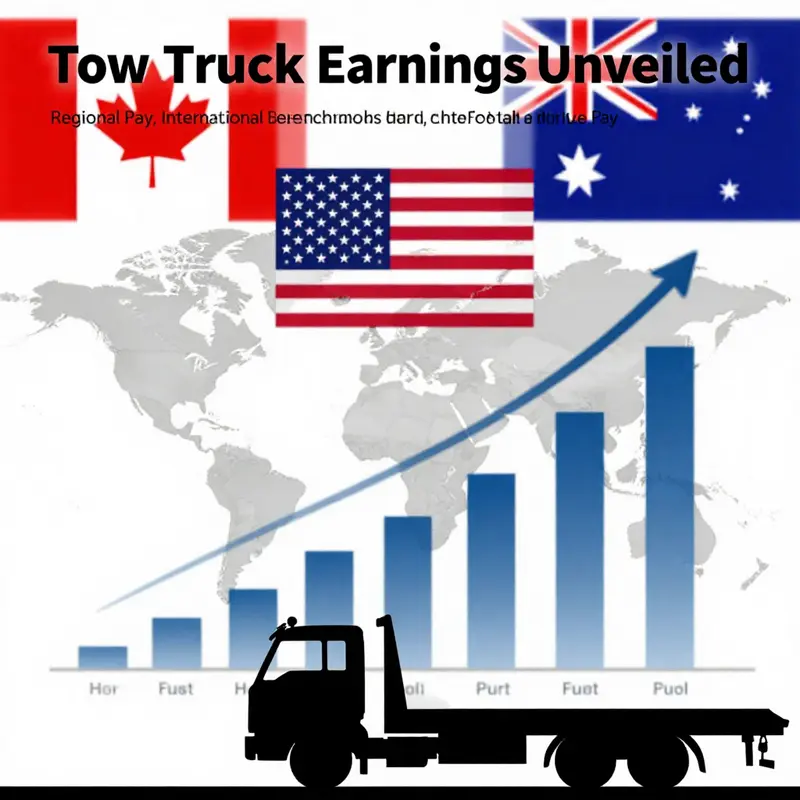
Wages for tow truck drivers are not a single, uniform number. They rise and fall with geography, demand, employer policy, and the kind of work a driver takes on. The most reliable way to think about it is to view salaries and hourly rates as a mosaic rather than a flat line. Across Canada, the United States, and Australia, drivers commonly earn in the same broad range yet can experience striking variations from city to city, and even within the same province or state depending on the employer, shift structure, and the complexity of the job. When you combine official statistics with real‑world job postings and employer practices, a clearer picture emerges of what today’s tow truck driver can expect to take home, and why a career in towing can look very different depending on where you work and whom you work for.
In Canada, the national frame is set by an average that sits just under twenty Canadian dollars per hour. As of early 2026, the national hourly wage for a tow truck driver hovered around $17.75. But averages like this don’t tell the full story. In practice, your paycheck is often anchored by the local economy and the kind of towing work you perform. In British Columbia, the headline figure is similar to the national average at about $17.85 per hour, a reflection of living costs and regional demand. Yet there are pockets where the math shifts noticeably. Richmond, a city in the Metro Vancouver area, has paid wages that skew higher—roughly $24.06 per hour across reported salaries, indicating a 36 percent premium over the provincial average in that locale. The pattern is not unique to Richmond. Vancouver, Victoria, North Vancouver, and Kelowna typically land around the provincial average, but a few standouts push that average upward.
Other Canadian cities illustrate the upside potential clearly. Thunder Bay in Ontario is a standout for pay equity in the north, with drivers earning around $26.53 per hour. Ottawa in Ontario and Edmonton in Alberta also show strong pay signals, at approximately $25.19 and $24.05 per hour respectively. For job seekers who want to see what a specific employer might offer, the landscape includes some eye‑catching figures. A full‑time role with a larger, locally oriented firm in Surrey, British Columbia offered as much as $39.50 per hour, while another Richmond employer was advertising $37 per hour. These postings aren’t the baseline, but they demonstrate that higher pay exists in well‑skilled market segments, often aligned with complex roadside assistance, accident recovery, or heavy‑duty towing.
Ontario’s landscape contains both modest and substantial opportunities. For instance, some firms openly advertise annual earnings models that can push pay into the higher decades of thousands per year as a result of overtime, on‑call duty, and a steady stream of recovery work. One longstanding example in the broader discussion is a company offering annualized income in the $70,000 range, which translates to about $36 per hour by a typical full‑time standard, assuming regular hours and a reasonable overtime load. It’s not universal, but it signals that the spectrum of earnings in Canada is wide enough to accommodate drivers who pursue more than a basic, weekday schedule.
The Canadian picture also includes regional outliers that underscore the variance in pay. A city like Dartmouth, Nova Scotia, sits on the lower end of the spectrum with an average closer to $15.70 per hour, roughly 12 percent below the national mean. This isn’t a rule of thumb for every employer in the region, but it helps illustrate how geography, population density, and provincial labor markets shape the pay scale. The broader takeaway is that while the national average provides a helpful baseline, a driver’s actual hourly wage or annual take depends heavily on where they work and which firm they align with.
Across the border, the United States presents a slightly more favorable headline for many drivers. The latest widely cited data places the national average hourly wage for tow truck drivers at about $21.14 as of late 2025, with the typical weekly earnings hovering around $1,226. The U.S. labor market for tow services tends to reflect a combination of urban and rural demand, a network of local and regional operators, and the distinct incentives that drivers encounter when overtime, on‑call duties, or emergency roadside calls are involved. The difference between the U.S. figure and the Canadian median is not purely about living costs; it also reflects the structure of pay plans, the prevalence of 24/7 service models, and the scale of local fleets.
Across the Pacific, the Australian experience has a distinctly different rhythm, shaped by its own labor standards and regional economics. In New South Wales, a tow truck driver earns, on average, about $32.70 per hour when translated from an approximate weekly schedule of 39 hours, which equates to roughly $1,264 per week. That weekly figure places the Australian average well above many other regions and consistent with a higher‑cost urban framework and a workforce that often operates under stricter safety and licensing regimes. The broader national picture, depending on the state or territory, reveals similar trends: higher base pay in many states, with some variance driven by cost of living, demand density, and the availability of specialized towing work, such as heavy recovery or fleet management assistance.
Taken together, the three countries present a global market with a shared core of responsibilities—responding to breakdowns, accidents, and roadside hazards—yet the pay envelopes still reflect the economic fabric of each region. The near‑term takeaway for a potential tow truck driver is straightforward: don’t assume the figure on a single poster or a single job listing. The numbers you’ll need to evaluate come from a blend of hourly rates, shift differentials, overtime opportunities, and the potential for annual compensation that factors in the volume of calls, the complexity of the tasks, and the safety or professional certifications that can unlock higher pay bands.
From there, it helps to interpret these numbers with a few practical lenses. First, consider the difference between hourly wages and annual income. An hourly wage is fluid; it grows with overtime, weekend work, on‑call duties, and the number of jobs a driver accepts in a given period. In systems where drivers are compensated not only for time but for the difficulty of the job—say, a heavy‑duty recovery or an accident scene—there is a built‑in incentive to take on more complex assignments. This is part of why an employer’s advertised rate for a single shift may seem low, but the overall earnings picture—once overtime, on‑call time, and the mix of calls are counted—can rise appreciably.
Another practical frame is to view pay as a function of regional demand, not just a static number. In Canada, high‑demand sectors and premium urban corridors create pockets where the hourly rate jumps, sometimes significantly. In the U.S., the spread can be wide between metropolitan centers and more rural areas, with some operators offering premium pay to cover high call volumes or specialized tasks. In Australia, the mix of licensing requirements, safety expectations, and the geographic spread of cities means that pay tends to be shaped by the relative density of calls plus the cost of living in the state or territory where a driver works. A driver who moves from a lower‑paying region to a high‑demand city might see a meaningful lift in earnings, while staying put may retain a more modest but stable income.
The role of the employer is another crucial thread in this tapestry. Large, well‑capitalized fleets may offer more robust hourly rates or annual compensation packages because they can afford to balance overtime with predictable schedules and better benefits. Smaller, independent shops can compete on flexibility, on‑the‑spot callouts, and a faster path to ownership or sole proprietor status for those who want to run their own business. In a few Canadian contexts, the most aggressive postings have indicated hourly rates approaching or exceeding $36 to $40 in certain roles, sometimes tied to a more demanding schedule or to specialized fleets focusing on urban recovery, accident response, or heavy towing. Similarly, in Ontario and Alberta, there are postings or notes from employers implying that top earners can approach or surpass the higher end of the provincial spectrum when overtime and a steady stream of specialized tasks align with a driver’s skill set.
Beyond the numbers, the life of a tow truck driver is shaped by the cadence of the work itself. The job carries a mix of steady, predictable hours in some firms and a volatile, on‑call rhythm in others. A driver in a busy city may face a near‑constant cycle of short, intense shifts and long hours spent in traffic at odd hours of the night or early morning. Drivers in rural or semi‑urban markets may experience longer stretches between calls, but with the opportunity to take on specialized work such as salvage or heavy‑duty recoveries that carry higher pay but demand greater expertise. The on‑call element can change the real value of the hourly rate, because the obligation to be available, even if not actively driving, is compensated either directly through on‑call pay or indirectly through higher rates for the drives that do occur.
The question of qualifications also matters. Licensing, certification, and safety training can unlock higher pay bands by signaling reliability and readiness for riskier assignments. In some regions, specialized training in heavy‑duty towing, vehicle recovery, or fire and rescue support may correlate with higher earnings or access to premium calls. Employers value drivers who can perform under pressure, manage complex scenes, and adhere to strict safety protocols, all of which contribute to a driver’s long‑term earnings potential. The capstone here is that a driver who invests in training and builds a reputation for dependable performance can command higher rates or earn overtime more consistently, which can be the difference between a modest hourly wage and a secure, well‑rounded income.
The economics of pay also intersect with the cost of living. When a driver weighs a job offer, they often implicitly compare the pay rate with their local living costs, commute patterns, and taxes. A $25 per hour role in a high‑cost urban area might yield a similar or even lower take‑home relative to a $18 per hour role in a lower‑cost region when taxes, housing, and transportation expenses are accounted for. The reverse can be true in places with strong commuting costs but a lower cost of living. In short, regional math matters just as much as the headline wage. This combination of regional demand, employer incentives, and the compounding effect of overtime means that two drivers with the same title can experience very different total earnings over a year depending on where they work and how they structure their hours.
For those approaching this trade with an eye toward long‑term prospects, it’s helpful to view the earnings landscape as a ladder rather than a fixed staircase. Early in a career, a driver may accept a modest hourly rate while building experience and a track record. As skills accumulate and the driver takes on more complex tasks, opportunities to earn more per hour and to qualify for premium calls become more accessible. Some drivers eventually move into supervisory roles, dispatch, or fleet management, and others pursue entrepreneurship, launching independent towing operations or partnering with small fleets. The financial rewards of these paths are not guaranteed, but the potential to upgrade pay through skill development, reliability, and business acumen is real. In many regions, this pathway can translate into meaningful annual gains beyond what a single employer might offer in a fixed hourly wage.
These patterns are mirrored in the data sources that analysts and job seekers consult when they map the market. In Canada, Indeed’s salary aggregates for Tow Truck Driver salaries provide a formal baseline, while regional postings reveal a more nuanced binding of pay to location and employer. In the United States, Indeed’s national snapshot points to a higher hourly average than Canada’s national figure, with a weekly pattern that aligns with a 40‑hour standard plus overtime opportunities in many markets. Australia’s PayScale data paints a similar picture of regional variability, with higher averages in some states reflective of local demand and living costs. Taken together, the global picture suggests not a single pay standard but a flexible, location‑driven market where the best opportunities often lie at the intersection of specialized skills, regional demand, and the willingness of drivers to work the hours that others won’t.
If you want a quick, big‑picture snapshot without wading through every city and province, you can start with a concise view of the headline figures and then drill into the regional and employer specifics as you plan a move or a transition. For readers who are exploring whether this line of work fits their goals, the phrase to remember is that pay is a function of location, assignment type, and the willingness to embrace the irregular schedule that defines roadside assistance work. It’s a career where the pay ribbon can stretch across a wide arc—from the lower end of the scale in some regions to well into the upper range in others—based on the confluence of geography, demand, and personal skill.
For readers who want to see a snapshot framed by a single, practical question, consider this: how much do tow truck drivers make? This question has many answers, and they change with every mile driven and every call logged. If you follow the patterns outlined here, you’ll understand not just the numbers, but why those numbers exist in the first place. You’ll also appreciate how quickly the landscape can shift as a market evolves, new fleets enter the scene, or labor conditions adjust to meet safety standards and consumer expectations. To explore a concise, current interpretation of the earnings landscape, you can reference our dedicated outline on this topic through the linked resource that summarizes the pay picture with a focus on practical implications for someone weighing a career in towing. How much do tow truck drivers make.
Beyond the immediate comparisons, it’s useful to anchor expectations by looking at a broader context: the economics of a 24/7 service industry that has to stay operational regardless of weather, traffic, or emergencies. Roadside assistance isn’t a nine‑to‑five vocation; it is a service that relies on readiness, skill, and the ability to remain calm under pressure. That combination—the skill set, the responsibility, and the unpredictable nature of the job—helps explain why wages can be relatively high in some markets and more modest in others. It also explains why many drivers value stable employers who provide predictable schedules, safety training, and opportunities for overtime or on‑call pay that can pad earnings during peak demand periods.
When you’re evaluating whether to pursue a career in tow trucking or to relocate for better pay, a practical approach is to map the numbers against your personal situation. How many hours can you realistically commit? Are you prepared to drive during late nights or weekends, or would you prefer a more regular schedule in exchange for lower but steadier pay? Do you have or are you willing to pursue certifications that unlock higher‑pay tasks, such as heavy‑duty recovery or winch operations in complex scenes? These questions matter as much as the posted hourly rate. They determine, in a real, tangible way, how the numbers translate into a comfortable living. The pay data gives you the headroom, but your choices—hours, location, specialization, and professional development—shape the actual take‑home at year’s end.
In summary, tow truck driver earnings vary widely by country and within regions of a country. Canada presents a landscape of solid pay in certain cities, with notable outliers that pay more for specialized or high‑volume work. The United States typically shows a higher national average than Canada, coupled with a broad regional spread that rewards urban density and a robust demand for on‑call roadside services. Australia, particularly New South Wales and Queensland, often posts higher hourly and annual figures, reflecting both demand and living costs in major coastal economies. The unifying thread across these markets is the ability of drivers to leverage experience, training, and a willingness to work under irregular schedules to move into higher‑pay bands. For those who want a quick, digestible reference, the linked internal resource provides a concise snapshot of how much tow truck drivers make in a general sense, while the broader chapter above offers a detailed map of the regional and employer‑driven variations that ultimately determine a driver’s real earnings. External data sources, like Indeed’s salary aggregations in the United States, underscore the broader trend toward higher average earnings in markets with dense competition and urgent demand for fast, reliable service. This dynamic balance of geography, job type, and personal professional development is what makes the earnings story in tow trucking both compelling and deeply local. External resource: https://www.indeed.com/career/tow-truck-driver/salaries
Shifting Gears: The Real Story Behind Tow Truck Drivers’ Earnings Across Regions, Roles, and Routines
Tow truck driving sits at an odd crossroads in the labor market. It’s a role built on responsiveness, physical stamina, and the ability to solve problems under pressure, often during the least convenient moments for most people. Because the work is so context-dependent—shaped by geography, demand cycles, fleet structure, and the kind of towing specialty involved—pay can feel like a moving target. To understand what tow truck drivers earn, we have to follow the road through several layers: the country and city where the work happens, the employer type and job classification, the specific tasks a driver is asked to perform, and the more personal rhythms of the job, including hours, on-call expectations, and the risk premium embedded in dangerous or challenging assignments. Each of these variables refracts pay in different ways, and taken together they illuminate why a single number never tells the full story of a tow truck driver’s earnings.
In North America, the picture shifts significantly from coast to coast, and in some cases even within a single country’s provinces or states. In Canada, the national snapshot places the average hourly wage for tow truck drivers around the mid-teens to the mid-twenties, depending on location and the employer’s scale. The national average in Canada sits near about $17.75 per hour as of December 2025, a figure that communities interpret through a mosaic of local realities. In British Columbia, the same ballpark is observed on paper—roughly $17.85 per hour—but the lived reality within the province is far more variegated. Consider Richmond, where reported wages tilt higher, around $24.06 per hour, reflecting the higher cost of living, intense local demand, and perhaps more specialized repertoires of service offered by local fleets. Yet elsewhere in the same province, the rate often hovers near the provincial average, with Vancouver, Victoria, North Vancouver, and Kelowna clustering around that $17.85 mark. The pattern is familiar in many regions: big-city pockets can pull the average upward, but the average itself hides pockets of both much higher and much lower pay.
Beyond the provincial averages, Canada also contains notable outliers that illustrate how pay can swing with the kind of towing work performed. In Thunder Bay, Ontario, and in Ottawa, Ontario, the numbers point to higher-than-average earning pools—Thunder Bay sits around $26.53 per hour, Ottawa around $25.19, and Edmonton, Alberta at about $24.05. These figures hint at tighter labor markets, elevated demand for highway-assistance services, or fleet configurations that emphasize higher-skill scenarios such as long-distance or heavy-duty towing. Some postings show even sharper contrasts with pay ranges well above the typical hourly ceiling. A full-time role cited in Surrey, British Columbia, with a reputable company, lists $39.50 per hour, signaling that specialized capabilities or seniority within a reputable operation can translate into markedly higher wages. Richmond again appears as a locus for higher-than-average pay, with a posting as high as $37 per hour in one listing and other nearby shops offering $22–$24 per hour in the same region. For job seekers in Canada, these figures do not just reveal where pay is better; they reveal where the work aligns with different life costs, labor markets, and the safety nets (or lack thereof) that accompany compensation.
While Canada paints a regional picture with pockets of elevated pay, the United States presents a different but equally instructive landscape. The American market typically reports a higher average hourly wage than Canada in many datasets. As of early 2026, the national average in the United States sits around $21.14 per hour, with some sources reporting slightly lower figures around $19.93 per hour when using different data sets. The discrepancy between these two numbers underscores the variability that comes from federal-state diversity, union presence, and the breadth of job types encompassed by the title “tow truck driver” in different data collections. In practical terms, the U.S. pay picture can swing from roughly the high teens to the thirties in metropolitan hubs. In high-demand, high-cost metros—places with dense traffic, heavy urban congestion, and a saturated market for roadside services—drivers can earn notably more, often driven by overtime, on-call premiums, and the need to address more complex incidents.
California and New York, as well as other major urban corridors, illustrate this premium. In California, typical hourly ranges cluster from the mid-range twenties to around thirty per hour in urban centers like Sacramento or San Diego, reflecting higher operating costs, stricter regulatory environments, and a larger base of emergencies and immobilized vehicles that require towing services. New York State, particularly New York City, becomes a similar story: hourly wages frequently top $22, with experienced drivers earning more than $25 per hour when overtime, on-call shifts, or specialized assignments come into play. The Midwest and certain Southern states tell a somewhat different tale, with many markets hovering around the national average or slightly above it—roughly $18 to $20 per hour, depending on city size and company policies. In rural areas, base pay sometimes dips, but fleets may offset that through fuel reimbursements, performance bonuses, or a more predictable on-call rhythm that stabilizes hours and earnings in the long run. The overarching theme in the United States is that geography creates a density of opportunity, but the richness of compensation frequently travels with the willingness to work long hours, shoulder irregular shifts, and manage the costs and risks inherent in operating a tow truck business, including maintenance and insurance implications for operators who work on their own.
Where the United States emphasizes market-driven premiums and regional variance, Australia anchors pay in a different, though equally instructive, way. In New South Wales, for example, a Tow Truck Driver earns about A$1,264 per week, which translates to roughly A$32.70 per hour if one assumes a typical 39-hour workweek. This rate sits well above many other regions and reflects Australia’s combination of higher wage floors, stricter regulatory expectations, and a market for on-demand roadside assistance that prizes reliability and speed. The Australian picture is notably consistent in its premium on time-sensitive response, a factor that not only drives hourly rates but also influences the overall compensation mix—opportunities for overtime, on-call allowances, and a broader benefit structure that accompanies employment in larger operations.
Together, these regional snapshots illuminate a simple but powerful truth: the pay for tow truck work is less a fixed salary and more a function of where you work, who you work for, and how your role is defined within the broader vehicle-services ecosystem. The same title—tow truck driver—can encompass a spectrum of tasks, from standard roadside assistance and winching to heavy-duty towing and long-haul recovery. The second axis of variation is how the work is organized: are you an employee of a local towing company, a driver for a large fleet, or an independent operator who bears all the costs and risks of running your own business? Each path carries its own economic logic. An employee may gain steadier hours and benefits but face more predictable caps on earnings. An independent operator may chase higher earnings in exchange for greater exposure to fuel costs, vehicle maintenance, insurance, licensing, and the unpredictability of a volatile demand cycle.
The job types themselves contribute to earnings in meaningful ways. Standard roadside assistance calls can be steadier and more predictable, earning a dependable hourly rate augmented by on-call stipends or overtime. Specializations—such as heavy-duty towing, long-distance recoveries, or fleet-based operations that require specialized equipment—can command higher pay bands, but they come with greater risk, more demanding training, and the need to maintain a broader tool kit and vehicle array. In Canada and the United States, several postings reflect this tilt toward specialization: some roles emphasize high hourly pay in exchange for the need to handle more complex loads, operate advanced winching systems, or perform longer recoveries that demand extended time on the road. The practical implication for drivers is clear: investing in additional training, certifications, or experience with particular vehicle classes can widen the ladder of opportunity and lift long-term earnings potential, though it may demand upfront time and cost.
Beyond expertise and geographic premium, the structure of pay itself matters. In many markets, the base hourly rate forms the foundation, but the total compensation package often includes a mix of bonuses, overtime, on-call stipends, fuel allowances, or even performance-based incentives. In the United States, for example, some companies and independent operators report scenarios where drivers’ earnings are bolstered by weekly fuel stipends or variable bonuses tied to on-time arrivals and response times. In Canada’s markets that tilt toward higher hourly rates, drivers may still see supplemental earnings if they accumulate a high trough of call volume and can complete more loads within a shift. In Australia, the premium hourly rate is generally accompanied by the expectation of quick, reliable response to incidents, and the compensation framework often reflects that with structured shift patterns that balance on-call time and paid hours. In all cases, the visible hourly rate is only part of the picture; the real take-home relies on the rhythm of the workweek, the pace of calls, and the ability to navigate the logistics of the job with efficiency and safety.
Another layer of consideration is how the broader market treats the role. In the United States, the employment structure—whether as a company employee or as an independent operator—shapes income volatility and long-term earnings potential. Independent operators may face higher upfront costs for equipment and maintenance, and they shoulder more risk, but they can capture higher overall earnings when the market is buoyant and demand is strong. Company employees, in turn, often enjoy more predictable schedules and a suite of benefits, including health insurance and retirement plans, which can improve the value of total compensation even if the hourly rate is lower than the high-end independent scenario. These trade-offs are not purely financial; they influence job satisfaction, career stability, and long-term planning for drivers who decide how to structure their careers around towing work.
The numbers, then, are a guide rather than a decree. They suggest strategies for drivers who aim to optimize earnings without sacrificing safety or work-life balance. If a driver’s priority is maximizing hourly wage, the pathway often involves targeting higher-paying geographic markets, seeking roles with specialized duties, or aligning with fleets that reward on-call coverage and rapid response times with premium pay. If a driver values steadier hours and a more predictable benefits package, pursuing roles in established fleets in cities with steady demand can be a viable path, even if the base rate isn’t the absolute top of the market. And for those who want the highest possible ceiling, the independent-owner route remains a powerful option—though it comes with the responsibility of managing a business, securing the right insurance, and handling the operational costs that accompany self-employment.
The practical reality is that a tow truck driver’s earnings are a tapestry woven from regional demand, the class of work performed, and the operating model chosen by the driver. It’s a profession that can deliver comfortable earnings in the right place and with the right mix of skills. It can also be a challenging line of work with long hours, irregular shifts, and the necessity of being accessible at odd hours for accidents, breakdowns, or emergencies. Those who study the pay landscape carefully—tracking local market conditions, understanding which regions pay a premium for certain services, and recognizing how regulatory environments influence overall compensation—stand a better chance of aligning their career decisions with their financial goals. In this sense, the chapter’s question—“how much do tow truck drivers earn?” becomes less about a single figure and more about a set of informed choices that combine geography, specialty, and professional strategy.
For readers who want to explore this topic further through practical, up-to-date data, the pay landscape is not a mystery but a field of accessible information. Regional statistics, employer-specific postings, and national reports collectively map the terrain. In the United States, for instance, the national averages are produced by labor statistics agencies and corroborated by salary portals. In Canada, job boards and provincial data provide the granular view that helps drivers compare city-by-city opportunities. In Australia, market summaries reflect the alignment of wage expectations with regulatory requirements and demand for reliable emergency response. Across all these markets, the common thread remains: earnings are a function of location, role, and operational framework.
In the end, the chapter invites readers to move beyond a single figure and toward a more nuanced understanding of how tow truck pay is built. It’s a story of geography and specialization, of shift patterns and business models, of the day’s call that can come at any hour and the long-term planning that sustains a career on the road. When you combine the data from the markets discussed—Canada’s high spots like Richmond and Thunder Bay, the U.S.’s metropolitan premiums and regional variability, and Australia’s robust weekly pay—the broader narrative emerges: tow truck driving can be financially rewarding in the right mix of place, role, and career choices. It’s a field where ambition and timing matter as much as the number on the hourly rate, and where ongoing training, strategic job selection, and smart business decisions can push earnings upward while maintaining a strong commitment to safety, reliability, and service.
As you navigate this landscape, you may want a quick reference to a broader discussion of how much tow truck drivers make. For a concise look at the pay spectrum and what influences it, you can explore detailed discussions directly tied to pay trends and job types. how-much-do-tow-truck-drivers-make
External resource: For authoritative statistics on the U.S. market that help contextualize these figures, see the Bureau of Labor Statistics data on tow truck driver earnings and related occupations at https://www.bls.gov/oes/current/oes537011.htm.
Final thoughts
Across regions and job types, tow truck driver earnings reflect a mix of demand, cost of living, and the specialized skills required for different on-road challenges. Urban centers often offer higher pay through overtime and on-call requirements, while smaller markets balance base rates with steadier, predictable shifts. Career choices—such as moving from roadside assistance to heavy-duty towing, or pursuing ownership and fleet roles—can shift long-term earnings more than a single location alone. For everyday drivers and fleet managers alike, recognizing these dynamics supports smarter decisions about where to source towing services, how to budget for maintenance, and which service options deliver the best value over time.