
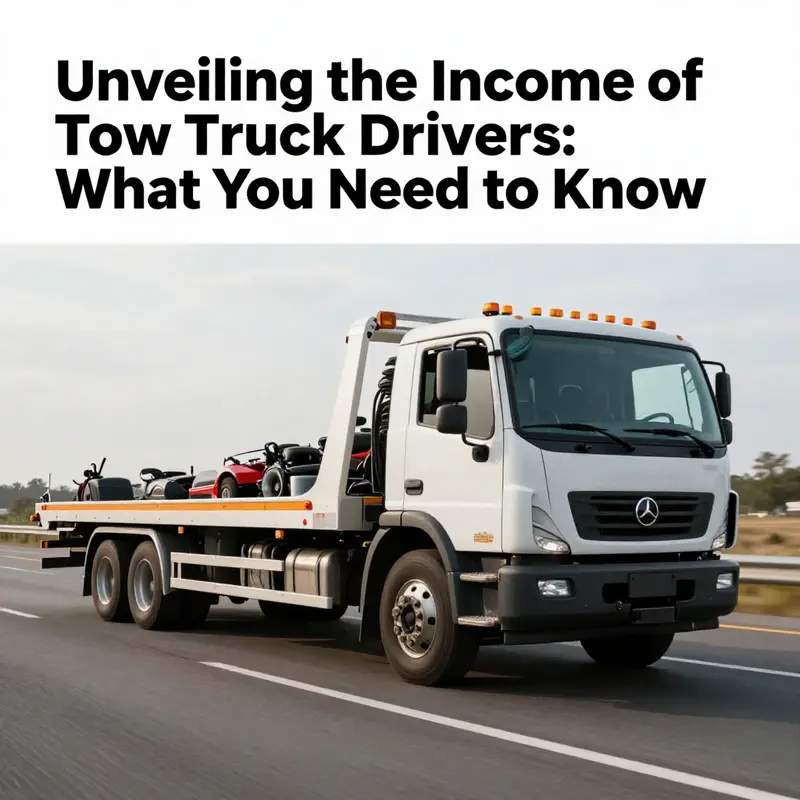
Tow truck drivers play a crucial role in automotive safety, providing essential services for drivers in distress. Understanding how much these drivers make annually is vital not only for those considering this career but also for everyday drivers, auto repair shops, and property managers who rely on these services. This article delves into the average salaries of tow truck drivers in the United States and Canada, explores regional earnings variations, and examines how experience and specialized roles impact yearly income. Each chapter will contribute to a clearer understanding of the financial landscape for tow truck drivers, equipping you with knowledge applicable in various contexts.
Tow Lines and Paychecks: Mapping North American Tow Truck Driver Earnings Across Regions and Roles
When people ask how much tow truck drivers make a year, they often expect a single flat figure. The truth is more nuanced, a landscape shaped by place, by the tempo of shifts, and by the path a driver chooses—whether as a company employee, a contractor, or an owner-operator overseeing a small fleet. Earnings accumulate not just as a fixed hourly wage but as a rhythm of on-call demands, the cadence of night shifts, the relief of weekend work, and the occasional surge of overtime after a multi-vehicle incident. Put together, these factors carve out a diversified earning potential across North America, with notable gaps between regions, across provinces, and along the spectrum of everyday duties that tow-truck work encompasses.
Across the United States, the most widely cited baseline is that tow truck drivers earn, on average, in the mid-$40,000s per year when you translate typical hourly wages into annual income. The most current snapshot points to an average hourly wage of just over $21, with yearly figures hovering in the low-to-mid forties. That means a driver working a standard full-time schedule, roughly forty hours a week for fifty-two weeks a year, stacks up to about $44,000 to $45,000 before taxes and without factoring in overtime, bonuses, or benefits. But averages are a blunt instrument. They mask a mosaic of realities: a driver on a busy urban corridor might pull in more when overtime and long call volumes are in play, while a counterpart in a smaller town could see steadier hours but fewer opportunities to bank premium pay. The underlying data reflect a broad pool of postings and reported wages, and any given year can tilt expectations upward or downward depending on demand, regional economy, and the overall health of the transport and roadside assistance sector.
In Canada, the picture resembles a similarly weighted blend of base pay and practical variability, with hourly wages set lower than many U.S. markets on paper but translated into competitive annual totals in certain locales. The average hourly wage hovers around $17.75 Canadian dollars, yielding an approximate full-time annual earnings figure near $37,000 to $38,000. Yet again, the provincial and city-level flavors matter. In British Columbia, provincial averages align with the national Canadian figure around the high teens per hour, but pockets of higher pay exist—especially near major metropolitan hubs where demand for rapid who-to-tow responses is high. Richmond, near Vancouver, shows a higher end of the scale, with hourly rates around $24.06, translating to roughly $49,800 annually if you work a full-time schedule. Thunder Bay in Ontario tells a different story, with wages closer to $26.53 per hour, which would push annual earnings to approximately $55,100 for an uninterrupted full-time routine. Add specialized roles—experienced flatbed operators, drivers with high-demand capabilities, or those working for top-rated agencies—and it’s not unusual to encounter listings offering annual pay far above the typical provincial average, with figures creeping toward or beyond $80,000 in some BC markets for highly skilled setups.
The British Columbia-specific profile further highlights this dispersion. While the provincial average lands near $37,100 with an hourly wage around $17.85, the top earners in cities like Surrey or Richmond capably breach the ceiling of the standard wage through a combination of higher hourly rates and more hours, culminating in annual compensation that can exceed $80,000 in select competitive situations. The contrast between the baseline and the high end reflects a few core realities about tow-truck work: pay scales naturally tilt upward in densely populated, high-traffic regions where incidents and roadside demand spike; specialized equipment and skill sets command premium rates; and the availability of contract work or owner-operator opportunities adds a volatile but potentially lucrative lane for earnings, depending on market conditions.
To translate these figures into a practical understanding, consider how shifts and job type shape the annual total. A driver who alternates between regular dispatch calls and overnight shifts can experience a more favorable hourly average simply because night differential pay and overtime often apply. Overtime, when accessible, can push a paycheck well beyond the base hourly wage. In some regions and at particular employers, weekend premiums, holiday bonuses, and on-call stipends contribute to a meaningful lift, especially during peak roadside seasons or in markets where weather events trigger a surge in call volume. By contrast, new entrants or drivers working for smaller outfits in lower-demand locales might find themselves constrained by a narrower window of overtime opportunities and a leaner benefit package, which can dampen the annual take-home when compared to larger markets with robust dispatch networks.
Beyond the hourly wage and the arithmetic of fifty-two weeks, the employment arrangement itself matters a great deal. Company drivers who are employees typically enjoy a more predictable schedule, some level of paid time off, and benefits that round out total compensation, even if the base hourly rate is modest by comparison. These benefits can translate into a more stable annual income when days off, sick leave, and paid holidays are factored into the overall package. Independent contractors or owner-operators, by contrast, shoulder business expenses but gain the potential to expand earnings through volume, multiple contracts, and strategic client relationships. They face the overhead of insurance, maintenance, fuel, licensing, and debt service for equipment, yet they also hold the leverage to negotiate higher rates with fleets or private clients when market demand runs hot. It’s not unusual for experienced operators who strategically manage fleets to surpass the median figures by a substantial margin, especially when combined with a diversified portfolio of services such as impound management, accident recovery, and fleet-rescue support for larger organizations.
There is also a natural caveat in any discussion of “average” wages: the data underpinning these numbers derive from a mix of job postings, self-reported salaries, and employer-reported compensation, with varying sample sizes across regions and time periods. In an industry that is highly sensitive to local conditions—such as storm aftermaths, highway incidents, or major traffic disruptions—the pay picture can swing quickly. Seasonal fluctuations, the cycle of construction projects and the resulting detours, and the ebb and flow of emergency response demand all shape the yearly earnings potential. The North American tow-truck landscape thus embodies both a floor and a ceiling: a floor defined by the minimum viable wages found in a locality and a ceiling shaped by high-demand scenarios, the skill mix of the driver, and the ability to monetize complex towing tasks that require specialized equipment or a command of on-site safety protocols.
The regional contrast within Canada versus the United States further underscores a practical takeaway: if you are evaluating a career in towing, you are not choosing a singular figure to expect every year. You are selecting a range of possibilities, anchored by geography, the type of work you pursue, and how you structure your professional life. In the U.S., the national picture is strongly influenced by the sheer size and variety of markets—from dense metropolitan corridors where call volume never sleeps to more rural counties where steady hours are the rule but spike events are rarer. In Canada, the geography is equally consequential. Coastal and inland provinces, the distribution of urban centers, and the proximity to major highways all translate into different earning tempos. A driver in a major BC corridor, blending high hourly pay with substantial hours, can outpace a similarly situated colleague in a smaller prairie town who earns a comparable hourly rate but with fewer shifts. And within provinces, you’ll find the same dynamic: strong earning opportunities paired with elevated living costs or greater travel demands, which then feed back into why some drivers pursue higher-skill roles or contract work to maximize income.
A practical way to think about the numbers is to anchor them to a simple reality: the value of the work is not only the wage on the paycheck but the leverage you can build through experience, specialization, and reputation. Flatbed or heavy-duty tow assignments require more training, certification, and often access to more expensive equipment. The payoff tends to be higher, and in markets with a premium on rapid, complex recoveries, the pay premium can be sizable. In many urban and regional markets, experienced professionals who master difficult recoveries, secure consistent private-tayload contracts, and maintain a robust on-call network can command top-tier hourly rates that push the annual total into the six-figure range, especially when paired with bonuses, overtime, and business ownership benefits. Those pursuing ownership or an expanded fleet role frequently discuss a broader calculus: top-line revenue growth versus operating expenses, debt service on fleet assets, insurance costs, maintenance budgets, staffing needs, and the unpredictable rhythm of incident-driven work. The math becomes a balancing act, with the potential for higher earnings offset by the risk and complexity of managing a business in a market that can swing on weather, policy, and competition.
To bring this closer to a reader’s everyday reality, consider a hypothetical path that many drivers follow. A newcomer starts in a standard tow-truck driver role in a mid-sized city, earning near the regional average. With a few years on the road, the driver earns more through overtime, assumes a broader set of call types, and expands their skill set into roadside assistance, winching, and light-to-mid-scale recoveries. The driver might take on additional hours during peak seasons, such as holidays and severe weather weeks, when roads demand a quicker, more visible response. By accumulating experience and reputation, the driver may transition into a senior role at a higher-pay employer, or decide to start a small tow-service operation, which adds responsibilities like equipment maintenance, scheduling, customer relations, and regulatory compliance. In Canada, a driver can see a similar trajectory, with provincial demands and urban centers shaping the opportunities to grow from base pay into specialized, high-value services. In British Columbia, for instance, the combination of higher potential hourly rates and a dense traffic network can support a pathway toward significant annual earnings, especially for drivers who diversify into heavier recovery jobs, fleet maintenance services, or emergency-response partnerships with regional authorities.
This broader perspective matters for readers anchored in the question, “how much do tow truck drivers make a year?” It invites a more nuanced answer: the figure is not a single tax-on-a-check value; it is a spectrum that runs from a reliable base in many markets to a potential ceiling that rewards specialization, entrepreneurship, and strategic scheduling. The numbers cited—roughly mid-$40,000s in the U.S. and mid-$30,000s to high-$40,000s in Canada, with regional tops hitting well beyond those baselines—capture a snapshot but leave room for the personal and professional choices that can lift or limit yearly earnings. It’s a practical reminder that compensation in this field is as dynamic as the roadways on which drivers operate. The decision to focus on routine, the willingness to work odd hours, and the choice to pursue advanced skill sets all interact to shape the yearly totals in meaningful ways.
If you want a concise, current snapshot to anchor comparisons, you can consult a dedicated salary overview that compiles submitted compensation data across regions. This resource reflects a synthesis of recent postings and self-reported wages, and it helps illuminate how the numbers can shift with the market. For readers who prefer a quick, direct route to the latest figures, the overview mentioned here offers a practical starting point. How Much Do Tow Truck Drivers Make. It’s valuable to match this with broader regional data and your own career plans, because the best-fit path often combines solid base pay with opportunities to grow through experience, specialization, and a steady client network.
As you map the earnings landscape, it’s also useful to consider one more layer: the total compensation package and the cost of living in your region. A higher wage in a city with steep housing costs may translate into a take-home amount that looks less impressive on paper, while a more modest wage in a lower-cost area can create a comfortable daily life with room to save. Benefits such as health insurance, retirement contributions, paid time off, and paid sick leave contribute to annual income as well, even if they don’t appear in the hourly wage narrative. Taxes, insurance premiums for vehicles and fleets, and the long-term investment in training and certification are part of the ongoing equation that governs whether the year’s pay feels substantial once the year ends. In practice, successful tow-truck professionals often balance immediate earnings against longer-term professional growth—learning to navigate permits and licensing, sharpening recovery techniques, diversifying services, and building relationships with fleets and municipalities that return predictable business.
For readers who want to situate themselves within this landscape, the core takeaway remains practical and actionable: earnings are regionally influenced, and the biggest earners typically combine higher hourly rates with substantial hours, specialized duties, and strategic business decisions. If you’re contemplating a move into tow-truck work or evaluating your current path, a close look at the regional market, the typical hours available, and the potential for overtime or specialization can illuminate the likely annual range you might expect. And if your goal is to maximize earning potential, consider not only the premium rates offered for complex recoveries but also the added value of training that increases your versatility—such as heavy-duty towing, winching through hazardous conditions, or combined roadside assistance services that attract repeat clients and reliable dispatches.
External factors, such as the state of the economy, the density of road networks, and seasonal weather patterns, will continue to shape the earning potential in both countries. As roadside needs evolve—whether through expanding fleets, changing regulatory requirements, or the emergence of new safety standards—the compensation picture will likely shift in response. For readers who want to stay informed about current figures, keep an eye on reputable salary aggregators and industry reports, and compare them against your own region’s demand and your personal career plan. The numbers above, anchored in recent data, provide a foundation. But the path to a year that aligns with your financial goals is built through skill, opportunity, and how you choose to apply those tools on the road.
External resource: https://www.indeed.com/cmp/Tow-Truck-Driver/salaries
Geography, Demand, and Dollars: How Region Shapes Tow Truck Driver Pay—and What It Means for Earners
Pay for tow truck drivers does not arrive as a single uniform number. It arrives as a tapestry woven from place, time, skill, and the specific needs of clients who rely on a driver’s readiness to respond at a moment’s notice. To understand annual take-home pay, readers should look beyond a single national figure and examine regional rhythms, cost of living, employer type, and the on-call dynamics that shape earnings. The figures across North America reflect a variable landscape where the same job title can carry different earning potential depending on where you work, whom you work for, and how you leverage your unique set of capabilities.
Across the United States, a useful starting point is the common estimate that the average tow truck driver earns about $44,570 per year, based on an average hourly wage of about $21.23. This figure, drawn from job postings and industry data, provides a broad baseline but sits alongside other data that can paint a different picture, depending on methodology and dataset composition. It also underscores a simple truth: the headline number is only a starting point, and real-world earnings depend on region, employer, experience, and on-call demands.
Canadian wage data often show an hourly figure around $17.75, translating to roughly $36,900 annually for a full-time schedule. However, wages vary by province and city, with urban centers offering higher averages due to demand, cost of living, and the prevalence of specialized equipment. In places like Vancouver or Toronto, top rates for skilled operators may exceed provincial averages, reflecting localized market strength.
Beyond base pay, total earnings are shaped by overtime, shift differentials, bonuses, and on-call responsiveness. Experience, certification, and the employer type (municipal, private, or independent contractor) influence the pay bands. Regions with higher incident volume and dense urban cores tend to reward higher earning potential, while rural areas may offer steadier hours but lower hourly rates, compensated by travel stipends or longer multi-call coverage.
Readers evaluating career options should consider regions with robust demand for towing, opportunities to specialize (flatbeds, heavy-duty recovery), and the total compensation package, including overtime and bonuses. Geographic mobility can be a powerful lever for those willing to relocate to hubs with higher pay and more dynamic overtime opportunities.
Ultimately, region matters but so do your choices—experience, credentials, employer type, and willingness to work nonstandard hours. The numbers are best viewed as signposts to map a career path, not as fixed ceilings or floors.
Time, Skill, and Specialization: How Experience and Niche Roles Shape Tow Truck Driver Income
Earnings in the tow truck industry are not a fixed line in the sand but a shifting landscape that depends on who you are, what you can do, and where you work. The numbers that float around the profession—whether you’re just starting out or you’re steering a fleet through a city’s nighttime grid—come from a mix of hourly rates, overtime, on-call duties, and the sometimes layered income that arises from running your own operation. What makes this picture more than a simple salary chart is the way experience and specialization carve their own routes through the landscape, creating pockets of higher pay even in a field that many associate with steady but modest wages. The broader context matters, too: regional demand, urban density, and the mix of services a company provides can tilt the scales in favor of more lucrative outcomes for those who invest in skill, equipment, and the ability to handle risk with confidence.
Entry into the field sets the initial threshold. Data from major job postings place entry-level tow truck drivers near a modest starting point, with hourly pay around the mid-teens. Specifically, entry-level wages hover near $15.51 per hour in recent postings, a reminder that the door to the trade often opens to those who are willing to learn on the job and prove their reliability on the road. This starting point anchors the financial trajectory for many newcomers and underscores the practical reality: the first year or two is about building experience, learning dispatch patterns, and absorbing the fundamentals of vehicle recovery, safety protocols, and customer service. The work tends to be physical, sometimes arduous, and it requires a mindset that blends mechanical aptitude with the temperament to stay calm under pressure. The value of that early experience isn’t just in the paycheck; it’s the foundation upon which higher earnings can be built through time, skill, and opportunity.
As drivers accumulate years behind the wheel, earnings begin to move not in a straight line but in a stair-step pattern. Experienced tow truck operators, especially those who stay with one company or who build a reliable on-call reputation, commonly earn between $18 and $28 per hour, with overtime compounding the total. Yet even with higher hourly rates, annual earnings for many company drivers still often stay under the ceiling of $55,000. The reason is simple: while the hourly rate climbs, the number of hours worked and the degree of on-call responsibility fluctuate with staffing, seasonal demand, and local competition. In markets with high demand for rapid response and cross-service capabilities—such as accident recovery, vehicle transport, and roadside assistance—the same driver can see bursts of hours and occasional overtime that lift annual figures beyond the base wage. The paperwork of a career in tow services—logbooks, dispatch software, and customer follow-up—becomes as important as the wrench in hand for maintaining a steady income and a dependable schedule.
Another dimension—one that often distinguishes income potential from one operator to the next—is the choice between working as a company driver and becoming an independent operator. Independent operators who invest in their own truck and the business systems to manage work, insurance, maintenance, and customer relationships can sometimes achieve substantially higher earnings. Data cited for the industry suggest that a one-truck operation can average around $72,400 annually. This figure reflects the independence of owning the asset and controlling the workflow, but it also carries the counterbalance of risk and responsibility: the truck’s maintenance, insurance, fuel, licensing, and the need to secure a steady stream of calls all factor into net income. The leap from a steady, W-2-like paycheck to running a small tow business is not just about more revenue—it’s about managing a broader set of variables that influence profitability. For those who can balance the mechanical demands with business acumen, the upside can be meaningful, and the personal reward of entrepreneurship often accompanies a more flexible schedule and a direct link between effort and return.
Specialization within the trade adds another layer to the earnings equation. Tow operators who tackle heavier wrecks, operate in hazardous conditions, or deliver high-demand emergency roadside services frequently command premium pay rates. The premium is not merely about the extra hours worked; it is the specialized skill set and risk management that come with heavy-duty towing, winching, securing loads, and navigating complex accident scenes. In many markets, these roles require more advanced training, certifications, and sometimes a proven track record in challenging recoveries. The pay scale for specialized work tends to rise in step with risk and expertise, and experienced professionals who have built a reputation for safe, efficient, and reliable service can negotiate higher rates or access higher-paying shifts within a company or within independent operations that market their specialization. The mathematics behind this premium is practical: the same dispatcher who one night assigns a routine tow may, on another shift, call on a technician with specialized rigging and recovery skills to handle a complex incident where speed and precision directly affect outcomes. The value delivered in those moments becomes a clear case for premium compensation, because clients and insurers alike recognize that mishandled recoveries can carry substantial cost and risk.
The geographic dimension adds yet another layer of nuance. Across the United States, the national snapshot places tow truck drivers at an average annual income of roughly $44,570 per year when extrapolated from an average hourly wage of about $21.23. This national average encapsulates the broad spectrum of urban centers with high demand for rapid response and rural areas where the volume of calls may be steadier but the hourly rate and overtime opportunities differ. Regional dynamics—such as the density of vehicles, the prevalence of road incidents, and the regional differences in labor markets—shape not only the hourly wage but also the potential for overtime and the likelihood of independent work. In Canada, the hourly wage picture shifts a bit: an average of $17.75 per hour translates to about $36,900 annually for a standard full-time schedule. Yet the provinces add color to that canvas. In cities like Richmond, British Columbia, the hourly rate can climb to around $24.06, equating to roughly $49,800 per year for full-time work. In Thunder Bay, Ontario, a higher average—$26.53 per hour—produces about $55,100 annually. And the possibility of higher earnings persists within specialized or experienced roles, with some postings in British Columbia showing pay up to $80,000 per year for flatbed operations or other highly in-demand capabilities.
When we zoom in on British Columbia specifically, the average hourly wage sits around $17.85, translating to roughly $37,100 annually. However, the variability within the province is notable. Top earners in cities such as Surrey or Richmond can push well beyond the provincial average, with some drivers earning $39.50 per hour—equating to $82,160 annually in the right circumstances. This isn’t a universal ceiling, but it underscores how urban demand, the presence of specialized service providers, and the willingness of clients to pay for rapid, reliable recovery can lift earnings above the wider regional averages. The ongoing evolution of the industry—driven by technology, dispatch efficiency, and an ever-expanding suite of roadside services—continues to shape where the real opportunities lie for the ambitious driver who blends hands-on skill with strategic job placement.
Location matters in another practical way: it determines the kind of shifts available and how often a driver can capitalize on overtime. Urban centers with 24/7 road networks typically offer more call volume and more opportunities to work overtime, late-night shifts, and weekend duties. Rural areas may offer fewer calls but can surprise with high-value recoveries or agreements with local fleets that yield steady on-call demand. A driver who wants to maximize earnings may weigh the benefits of staying in a high-demand metro area where the volume of incidents amplifies the value of each hour worked and the potential for premium pay in specialized roles, against the costs of living in a more expensive urban environment. This decision—where to live, how to schedule hours, and which niche to cultivate—can shape the bottom line as much as the stated hourly rate.
The path from entry-level wage to meaningful, sustainable income also depends on the willingness to diversify skills and the readiness to pursue targeted training. The journey from the street to the shop floor includes sharpening mechanical skills, learning how to assess vehicle conditions quickly, and mastering the dispatch and sometimes the customer relationship management that comes with roadside recovery. The article’s research highlights that drivers who invest in broader skill sets—such as light-to-heavy towing, specialized wreck recovery, flatbed operation, or heavy-duty towing—often see their earning potential rise. Some specialized operators command premium pay due to the level of risk and the expertise required to secure a vehicle safely and efficiently. In this sense, earning more is not simply a function of time behind the wheel; it is about the quality and breadth of the services a driver can offer and the trust they build with clients, insurers, and dispatch teams over time.
This is where the idea of experience as a multiplier comes into sharper focus. The longer a driver stays in the trade and proves reliable, the more opportunities become available. Companies will often rely on senior technicians for the most complex jobs or for shifts that demand a quick, precise response to incident scenes. Those opportunities tend to come with higher hourly rates, but they also require a proven history of safety, efficiency, and successful recoveries. In other words, the experience multiplier isn’t just about getting paid more for the same hour; it’s about gaining the permission to take on more complex tasks that carry both higher pay and higher responsibility. The more consistently a driver demonstrates they can manage difficult recoveries, coordinate with other responders, and protect the safety of everyone on scene, the more likely they are to unlock higher wage brackets, become eligible for premium shifts, or attract clients willing to pay for specialized expertise.
For readers who want a practical sense of how earnings by role and experience compare, a useful starting point is a concise guide on tow-truck-driver earnings, which summarizes how entry-level wages give way to higher compensation with time and skill. This resource helps connect the dots between a driver’s years on the road, the types of calls they handle, and the financial outcomes that follow. It also underscores the reality that income in tow services is a composite of hourly rates, overtime, and the strategic value a driver offers through reliability and versatility. The trajectory isn’t purely linear, but with a clear path—learn, specialize, own the equipment or build a reputation, and seek opportunities in markets with strong demand—drivers can shape a meaningful financial future within a field that remains essential to road safety and rapid incident response. For those curious about how earnings can evolve as a driver’s profile expands, this evolving landscape provides a useful map and a reminder that the most rewarding financial outcomes often accompany the most deliberate investment in skill and opportunity. For a closer look at how a driver’s experience feeds into earnings, see the practical guide on tow-truck-driver-earnings.
Beyond numbers, the story of income in tow services is a narrative about responsibility and reliability. The driver who can balance speed with safety, who can manage a hazardous scene without compromising on care for the vehicle or the person involved, is building a professional value proposition that translates into compensation. The income signal appears strongest where there is trust—trust from dispatch, trust from customers, and trust from insurers—because those stakeholders know they can rely on a driver who has walked through the practical, sometimes dangerous, work with a cool head and a steady hand. The professional who combines hands-on proficiency with a disciplined approach to documentation, scene safety, and after-action reporting creates a durable value proposition. In a market that rewards prompt response and accountable outcomes, experience and specialization become more than just adjectives they become currencies that elevate the entire earning potential of a tow truck professional.
As you consider the broader arc of income in this field, keep in mind that data points come from varied sources and reflect averages across different regions, company types, and professional paths. The most meaningful takeaway is not a single salary figure but the recognition that earning growth in this field often tracks a driver’s willingness to invest in expertise and to pursue opportunities where risk, skill, and service converge to deliver value. An entry-level driver may start with a modest wage, but with persistent effort, training, and a willingness to step into specialized roles, the trajectory can bend toward substantial earnings—especially when one combines operating independence with a robust service portfolio. And while the path may take different shapes—whether you rise within a company, specialize in heavy-duty recoveries, or launch your own tow operation—the core principle holds: experience and specialization are potent catalysts for income growth in towing, a trade that supports communities by keeping roads moving, even in the most trying moments. For readers who want to explore more about the financial possibilities and the practical steps to reach higher levels of earnings, the linked internal resource offers a concise framework to begin evaluating where their own career path might head.
External reference: For a broader market perspective on how tow-truck driver salaries are discussed in global marketplaces and to compare figures across regions, see the industry resource at https://www.alibaba.com/showroom/tow-truck-driver-salary.html. This external reference provides a sense of how questions about pay scale and compensation are addressed in industry showrooms and supplier platforms, reflecting one set of market signals that professionals and employers consult when discussing compensation structures.
Final thoughts
Understanding the earnings landscape for tow truck drivers reveals insights into the financial aspects of this vital service. Factors such as location, experience, and specialization significantly influence income levels. For potential drivers and those in related industries, this knowledge can help in career planning and budget considerations. With a clear understanding of what tow truck drivers make annually, stakeholders can appreciate the value provided by these essential services.