
Across neighborhoods and highways, tow trucks operate as critical mobility links—yet the true cost of ownership and operation is a layered equation. For everyday drivers who rely on occasional tows, residents managing property fleets, truck owners, auto repair shops, and dealerships maintaining service capabilities, understanding cost components helps you plan, compare, and negotiate with confidence. Tow trucks come in a spectrum from light-duty flatbeds to heavy-duty wreckers and the rare rotator with 360-degree capability. Each category carries distinct purchase prices, maintenance needs, and return-on-investment profiles. On the incident side, towing fees hinge on distance, vehicle size, time of day, and optional services such as winching or on-site repairs. For fleet operators, the economics extend into ownership costs—equipment, safety gear, maintenance, insurance, and software—plus the ongoing operational cost of fuel and wages. Finally, the pricing rhythm in the market shifts with supplier availability, regional demand, and evolving vehicle technologies, making real-time pricing a practical advantage rather than a guess. This piece ties those elements together into four focused chapters, so readers can estimate true costs, compare options, and plan for contingencies. Chapter 1 anchors the purchase side with a focus on light-duty units. Chapter 2 dissects the per-incident cost structure. Chapter 3 outlines ownership and operating costs for fleets. Chapter 4 pulls the thread of real-time market sources to help you navigate current pricing signals. Each chapter builds toward a practical understanding you can apply whether you’re choosing a tow truck for a shop, negotiating a tow for a stranded commuter, or optimizing a property management fleet for reliable recovery support.
null
null
Chapter 2: The Price of a Tow: How Per-Incident Costs Emerge from Distance, Vehicle Weight, Timing, and Extras
When a driver faces a roadside mishap, the sticker shock often comes from the bill that arrives after the tow, not from the tow truck itself. The price of a tow incident is not a single fixed number. It grows from a careful blend of factors that vary by distance, the weight and type of the vehicle, the time of day, and the extras the driver chooses or the situation demands. Understanding these variables helps road users anticipate costs more accurately and separates the routine charges from the surprises that can crop up on a difficult recovery. In practical terms, most pricing structure patterns revolve around a base hookup fee, a per-mile charge, and additional labor or service costs that creep in when the job becomes more complex than a straight tow from point A to point B. This framework is echoed across the industry and captures how a simple short tow can feel very different from a long-distance haul or a recovery in hazardous terrain.
Distance is the dominant driver. The math is straightforward in principle, even if the circumstances of a given job introduce some nuance. For a typical short tow, a base hookup fee tends to cover the cost of dispatch, arrival, and the initial equipment setup. In the current pricing landscape, that base fee commonly sits in the $50 to $75 range. After that, a per-mile rate applies, varying roughly from $2.50 to $5 per mile depending on the operator, the equipment required, and the geographic market. The total cost then becomes a sum of the base hook-up and the distance-based charges. For a 10-mile tow, customers frequently see total prices in the neighborhood of $80 to $150. A longer journey magnifies the impact of the per-mile rate, and for a 50-mile tow the bill can easily exceed $300 before any extras are added. These figures reflect typical industry patterns rather than a fixed price, but they offer a useful quick-check when planning a recovery in a predictable environment.
The type and weight of the vehicle being towed also reshape the cost landscape. Heavier or more complex vehicles demand more specialized equipment and more labor. A light-duty tow truck carrying a passenger car uses different gear and procedures than a flatbed or wheel-lift setup designed to protect a luxury vehicle or a vehicle with low ground clearance. In practice, the more capacity and protection required, the higher the operating expense. Flatbeds, for example, deliver superior protection for delicate or non-operational vehicles, but their higher fuel consumption, longer loading times, and greater equipment needs translate into higher charges. Conversely, lighter vehicles contribute less to the bill because they require less labor, fewer trips to secure wheel lifts or dollies, and shorter loading times. The vehicle’s weight and the complexity of the recovery—such as a tow from a ditch, a rollover, or a steep incline—can push the price up noticeably. A simple winch-out from a roadside shoulder is not the same as a multi-point extraction from uneven terrain, and the pricing reflects that difference.
Time and location add another layer of variability. Emergency tows during after-hours—nights, weekends, or holidays—tend to carry premium rates. These premiums compensate for scarce staffing, heightened risk, and the need to mobilize resources quickly. Remote or urban locations can also influence the price. In rural areas, the distance to reach the vehicle may be longer, fuel usage higher, and the chance of requiring specialized equipment greater if a vehicle is stranded in a difficult location. In city centers, navigating traffic and parking restrictions can slow response times, potentially increasing labor hours. In short, the same scene can produce different final costs depending on when and where the tow is requested.
Beyond distance and weight, the nature of the service matters a great deal. Standard towing from point A to point B is relatively straightforward, but many incidents come with additional services that can escalate the total quickly. On-site repairs, such as a jump-start, battery replacement, or fuel delivery, are commonly billed separately. A small amount of fuel, delivered to get a car running long enough to reach a shop, often costs in the range of $30 to $50. A full battery replacement can fall between $100 and $200, depending on the battery type and the vehicle model. These on-site services are frequently offered as add-ons with their own service fees and, in some cases, parts costs.
Another factor is the vehicle’s access and condition. Replacing a flat tire, securing a vehicle trapped in a ditch, or removing a vehicle from a steep or precarious position calls for specialized equipment and may require more labor hours. In such scenarios, many providers shift to hourly labor rates for extended operations or for multiple attempts. The additional time spent on-site, the risk involved, and the potential need for multiple winch attempts all translate into a higher price tag. For customers planning ahead, it is wise to discuss anticipated contingencies before the tow begins. A detailed estimate helps prevent surprise charges and clarifies what is included in the base fee, what is distance-based, and what constitutes an extra service.
To a degree, each tow becomes a small negotiating conversation between customer and operator, shaped by the specifics of the incident. The base hookup fee is the anchor, the per-mile charges scale with distance, and extras push the total into new territory. This structure means even two tows of the same distance can look different if one involves a heavy, damaged vehicle requiring a flatbed and the other involves a light car with a straightforward wheel-lift. It also means that customers who receive a broader scope of service—say, a tow plus roadside assistance—should expect a more complex invoice that itemizes each component. The upshot is that there is no single price thumbprint for every incident. Instead, the final bill reflects a layered assessment of risk, effort, and resource use on a case-by-case basis.
For readers looking to anchor expectations before calling for help, a practical rule of thumb emerges from the data. A typical short tow in ordinary conditions will land somewhere around the base fee plus a moderate distance charge, often echoing the $75 to $150 band for around 10 miles. For longer trips, the per-mile cost compounds the total, and destinations that involve out-of-town facilities or remote recovery sites can push the price into ranges that require careful budgeting. In more complex cases—such as recoveries from a ditch, a rollover, or a vehicle stuck in a challenging location—labor hours, additional equipment, and on-site services can transform the bill even further. The guidance from industry sources consistently emphasizes the importance of transparency. Customers should always ask for a detailed estimate before any service begins. An itemized quote helps avoid surprise charges tied to hidden fees, unexpected equipment, or extra services that were not initially discussed.
From a planning perspective, it helps to think about incident pricing as an ecosystem rather than a single number. The ecosystem includes the basic structure—the base hookup and the per-mile rate—plus the context in which the tow occurs. The context includes vehicle weight and type, the terrain and accessibility, the time of day, and any on-site tasks the operator performs during the intervention. This broader framing makes it easier to compare quotes from different providers. It also clarifies why two tows of identical distance sometimes result in different totals. If one tow requires a flatbed and a delicate handling approach for a high-end vehicle, the price will be higher than a standard wheel-lift tow for a mid-range sedan. If another tow is performed at night in a remote area, the higher labor and travel costs may be reflected in a premium.
For those who want a quick touchpoint to ground their understanding, a concise reference point often cited in industry discussions shows typical ranges that reflect common scenarios. A 10-mile tow often lands in the $80 to $150 band, with a base fee typically between $50 and $75 and a per-mile rate generally between $2.50 and $5. Longer tows naturally push the total higher as each additional mile adds to the cost. It is not unusual for longer or more complex trips, such as those requiring a heavy-duty wrecker or a rotator, to surpass $300 or even reach higher figures when multiple services are bundled. While these numbers provide useful guidance, they remain estimates that depend on market factors and the specifics of the job.
In practice, customers who want to avoid unwelcome surprises should approach the call with a plan. Before the tow begins, ask the dispatcher for a written estimate that includes the base hook-up, the per-mile rate, and all potential extras. If the vehicle needs special handling, or if the location is remote or hazardous, request a line item that describes the anticipated labor hours and any anticipated on-site services. If possible, share details about the vehicle type, its condition, and the exact location. This level of detail helps the operator provide a more accurate quote and reduces the risk of price shocks when the job is finished. For those who prefer to educate themselves further, there is a broad landscape of pricing data that can illuminate typical practice across regions and scenarios. The chapter on general towing costs and factors offers a wider context that can help readers calibrate expectations against local norms. For a more comprehensive, external perspective on typical tow costs, see the external resource at the end of this chapter.
Within this framework, there is value in remembering that the tow operator is balancing speed, safety, and efficiency. The quickest response is not always the most cost-effective path, and the most robust recovery is not always the cheapest option if it preserves the vehicle and reduces risk. A well-structured estimate supports safer decision-making for everyone involved. It also helps customers avoid last-minute decisions prompted by fear or urgency. The interplay of distance, weight, timing, and extras creates a dynamic pricing environment where informed choices lead to the best outcomes for both the customer and the tow operator.
If you want a quick entry into the pricing conversation from an additional angle, consider how the internal pricing guidance within a local network might affect the numbers you see in your area. Some shops and fleets share a common framework for base fees and per-mile costs, while others tailor their quotes to reflect local labor costs, fuel prices, and regulatory requirements. The result is a spectrum rather than a single template. In practice, this means your final invoice could vary by a few dollars at one provider and by much more at another, especially when you throw in after-hours calls or specialized recovery work. The most reliable move remains the same: obtain a clear, written estimate before any service begins and confirm the anticipated scope of work.
For readers who want to explore the topic further, a concise entry point is available on an internal guide that examines tow costs in more detail. See how the related topic is framed in the internal overview how-much-is-a-tow-truck, which helps contextualize the per-incident costs within the broader questions of towing pricing. This internal resource offers a useful cross-reference for readers who want to compare their local scenarios with a general framework. how-much-is-a-tow-truck.
Ultimately, the cost of a tow incident is best understood as a balance between necessary resources and the specifics of the job. Distance, weight, time, and extras create a mosaic that shapes the final figure. By approaching the pricing with a clear sense of base charges and potential add-ons, customers can navigate the refundable uncertainties of roadside recovery with greater confidence. The result is not a single number, but a transparent, itemized snapshot of what was required to recover the vehicle, restore mobility, and ensure safety—both for the driver and for the responding crew. External market data reinforces these patterns and provides a comparative lens across regions. For readers seeking a broad perspective on typical costs, an established external resource outlines average prices and the factors that influence them. https://www.aaacar.com/tow-costs/
Tow Truck Economics: The Real Costs of Operating a Fleet, from Purchase to Daily Operations
Operating a tow truck fleet is more than matching a vehicle to a job and hitting the road. It is a continuous calculation of asset value, risk, and relentless overhead that begins the moment a truck leaves the showroom and ends only after it is retired from service. For fleet operators, the economics of towing hinge on a careful balance between upfront investment, ongoing expenses, and the revenue that each incident generates. The picture that emerges in early 2026 is one where the purchase price of the vehicle is only the opening chapter. The real story unfolds in the days, weeks, and years that follow, when fuel, maintenance, insurance, labor, and administrative costs shape whether a fleet earns a sustainable return or edges toward margin erosion. In practical terms, this means operators must plan with both precision and flexibility, constantly adjusting to shifts in fuel prices, regulatory requirements, and the rhythms of demand that govern when a tow is needed and where a stuck vehicle will be recovered.
The initial investment for a tow truck varies widely, and it is tempting to fixate on sticker price alone. Light-duty tow trucks intended for passenger cars typically represent a lower entry point, while heavy-duty wreckers designed for commercial or highway operations command larger sums. A common strategic posture for fleet buyers is to think in tiers: a mid-range asset that can cover a broad spectrum of recoveries without paying the premium price tag of specialized equipment. In addition, the fleet operator must weigh whether to purchase new or to explore a well-maintained used asset, factoring depreciation, warranty coverage, and maintenance that aligns with reserve budgets. The numbers behind these decisions are not mere abstractions. They translate directly into capital planning, financing terms, and cash flow projections. In broader market terms, the initial cost of acquiring tow trucks for a fleet can span a wide band—from roughly fifty thousand dollars to over a hundred thousand dollars per unit, depending on size, configuration, and the anticipated workload. This range reflects strategic choices about capability, safety features, hydraulic systems, wheel lifts, and the booms that are most effective for the kinds of incidents the fleet expects to encounter. For readers seeking a quick sense of the market as it exists today, a practical takeaway is that the asset price is only a starting line; the total cost of ownership stretches far beyond the initial purchase price.
Beyond the truck itself, startup costs can include licensing, insurance, business registration, and the procurement of essential recovery equipment. Insurance premiums, in particular, can be a significant annual expense, sometimes exceeding ten thousand dollars per vehicle when coverage is comprehensive and tailored to a fleet’s risk profile. Licensing fees, registrations, and regulatory compliance costs add further annual obligations. These one-time and recurring charges lay the groundwork for a fleet that operates within legal and safety standards while delivering reliable service to customers. The equipment that accompanies the truck—winches, wheel lifts, towing dollies, chains, straps, safety gear such as cones and vests, and the communications hardware needed for dispatch and remote coordination—also represents a meaningful line item in the budget. Each piece of equipment has a life cycle, a replacement curve, and a maintenance rhythm that must be integrated into the fleet’s financial plan. The practical implication is straightforward: even when a fleet operator negotiates favorable financing terms for the trucks themselves, the ongoing costs of equipment ownership persist year after year and must be budgeted with discipline.
Once a fleet is on the road, the daily economics become a balance between predictable overhead and the variability of on-demand work. Fuel represents one of the largest recurring expenses for any recovery operation, particularly for larger trucks that travel longer distances to reach incidents, load vehicles, and navigate congested corridors. The fuel curve is not a flat line; it swells and contracts with shifts in fuel prices, traffic patterns, and the geographic spread of service coverage. Maintenance and repairs form the other critical leg of the chair. Tow trucks endure heavy use, exposure to road hazards, and the strain of winching and loading operations that can accelerate wear on engines, transmissions, and brake systems. Industry data suggests that maintenance costs can average roughly two to six thousand dollars per year per vehicle, though actual figures depend on usage intensity, driving conditions, and the age of the fleet. Tires, brakes, and hydraulic components can become recurring budget items, especially for fleets that operate in rough or hilly terrain or in markets with high demand for heavy-duty pulls.
Labor costs complete the triad of ongoing expenditures. Wages for drivers, dispatchers, and support staff are a meaningful portion of the operating budget, and these costs are influenced by geography, market competition, and the hours of operation. A 24/7 towing operation requires shifts that ensure readiness around the clock, which can raise wage costs and overtime exposure. Administrative expenses also accumulate over time, including office space, utilities, software subscriptions for dispatch, fleet tracking, and customer relationship management, plus marketing and customer service investments aimed at building recurring business and elevating the reputation of the fleet. In a multi-vehicle operation, economies of scale can help reduce some per-vehicle costs, but they also introduce layers of complexity in scheduling, compliance, and maintenance planning. Insurance needs tend to become more nuanced with fleet size, as risk exposure grows and the insurer weighs the collective risk of multiple concurrent incidents. The overarching message is that ownership costs do not stay constant; they evolve with the fleet’s composition, route patterns, and the regulatory environment that governs commercial roadside assistance.
To translate these broad themes into actionable management, operators must embrace a disciplined approach to cost control and strategic investment. Prevention is cheaper than replacement, as the adage goes, and preventive maintenance programs can significantly reduce unexpected downtime, extend the life of critical components, and stabilize long-term cash flow. A robust maintenance cadence includes regular inspections of hydraulics, chassis integrity, fuel systems, and electrical wiring, as well as proactive tire management and alignment checks. Telematics and fleet tracking software offer another layer of value by revealing patterns in vehicle utilization, idle time, route efficiency, and fuel consumption. When a fleet monitors these metrics, it can identify underutilized assets to reallocate to higher-demand routes or adjust shift patterns to minimize overtime. The deployment of routing optimization tools can shave miles off the day, reduce idle time, and produce meaningful savings in fuel and wear. These are not theoretical benefits; they translate directly into lower per-tow costs, faster response times, and happier customers who are less likely to encounter unexpected charges or delays.
Yet cost discipline cannot ignore the revenue side of the equation. Towing is a service driven by incidents, and the per-incident economics are shaped by distance, vehicle type, time of day, and additional services performed at or after the scene. The cost structure that operators must price into bids and service agreements includes a base tow fee plus a per-mile component, with surcharges for emergency calls, remote locations, or complex recoveries such as winching rollovers or immobilized vehicles. It is a reminder that the economics of ownership and the economics of service are intertwined: the price charged for a tow must reflect not only the truck’s annualized cost of ownership but also the market’s willingness to pay for immediate, reliable response in moments of urgency. A practical practice for fleet operators is to obtain transparent estimates up front and to communicate clearly with customers about the factors that influence price, such as mileage, vehicle weight, and any on-site services performed beyond the simple tow. In many cases, the customer will expect a structured quote that itemizes the base fee, distance charges, after-hours premiums, and any ancillary services, so the operator can avoid disputes and ensure that profit margins are protected.
For those who want a quick gauge of where these numbers land in everyday practice, it helps to anchor expectations to the current pricing environment. A common rule of thumb is that the base capital cost of acquiring a tow truck for fleet use sits in a broad band—roughly fifty thousand dollars to over a hundred thousand dollars per unit—depending on the configuration and the anticipated workload. This spectrum captures the contrast between basic, light-duty recovery capacity and highly specialized equipment engineered for demanding scenarios. It is equally important to recognize that several other line items impact total cost of ownership. Licensing and insurance are ongoing obligations with lasting financial consequences, and the cost of equipment like winches, dollies, and safety gear compounds year after year as vehicles gain miles and experience wear. These realities underscore why fleet operators must maintain a robust capital plan that accounts for depreciation, potential tax incentives, and the residual value of aging assets when it comes time to replace units. In this sense, the economics of tow truck fleets hinge not on a single price tag but on a well-tuned system of decisions that orchestrate asset utilization, risk management, and cost efficiency over the life of the fleet.
For readers who want to connect these concepts to practical market information, consider exploring current market pricing and specifications in accessibly written overviews of tow-truck cost benchmarks. A useful starting point for a broad sense of today’s market is a resource that aggregates pricing and specifications for new and used tow trucks, helping operators compare configurations without committing to a purchase. How much is a tow truck?
Beyond the purchase price and one-time startup costs, a fleet must plan for the ongoing balance of fuel, maintenance, and labor. Fuel efficiency is only one piece of the fuel equation. The size and weight of a truck, the efficiency of the engine, and the duty cycle—how often the truck is on a call and how hard it must work during each tow—determine fuel consumption in real-world conditions. In practice, fleets that implement fuel management strategies—such as monitoring fuel economy by vehicle, enforcing efficient driving practices, and identifying routes that minimize needless mileage—can flatten some of the volatility in fuel costs. Maintenance, as noted, is a predictable risk. The maintenance budget should cover routine service, brake work, tire replacement, and hydraulic system checks, with a reserve for unexpected repairs that can occur after a high-intensity assignment or in adverse weather conditions. When a vehicle is out of service, the entire operation bears the cost of reduced capacity and delayed response to customers. The ripple effects extend to dispatch efficiency, spare parts inventory, and the scheduling of backup units to cover for maintenance windows. To manage these dynamics, many fleets adopt preventive maintenance calendars keyed to mileage, time, and observed wear patterns, paired with data analytics that flag components approaching end-of-life thresholds. The upshot is that disciplined maintenance pays for itself by reducing downtime and preserving resale value, both of which feed back into lower total ownership costs and higher lifetime profitability.
Labor, too, has its own storm of costs and opportunities. Wages for drivers and dispatchers, shifts, overtime incentives, and benefits all shape the ongoing expense line. In markets where staffing is tight, operators may need to budget for higher wages or more flexible scheduling, which, in turn, raises unit costs but can improve service levels and on-time performance. Administrative costs—such as office space, utilities, software for dispatch and fleet management, and marketing to maintain a steady stream of business—also accumulate. The challenge for fleet managers is to align staffing levels with demand patterns so that labor is neither idle nor insufficient to meet peak periods. The most successful operators use data-driven planning to forecast demand, adjust crew sizes ahead of anticipated surge periods, and invest in cross-trained staff who can cover multiple roles during busy times. These strategies soften the impact of labor costs on per-tow profitability and contribute to more predictable financial performance over the life of the fleet.
A further practical dimension arises when considering the level of service delivered to customers. The economics of ownership are not isolated from the economics of customer expectations. Timely response, careful vehicle loading, and professional, safe on-scene recovery all contribute to customer satisfaction and repeat business. The revenue side, in turn, is shaped by how fleets price services, the range of services offered (from basic to on-site repairs or winching), and the geographic scope of coverage. In highly competitive regions, fleets may negotiate contracts with fixed monthly commitments that guarantee a minimum number of tows, supplemented by per-tow charges for additional demand. In other markets, operators may emphasize rapid response and premium pricing for after-hours calls, emphasizing the value of reliability in critical moments. The balance here is subtle: pricing must reflect the real costs that ownership creates, including depreciation and debt service, while ensuring that customers perceive the value of rapid, professional service. The most resilient operators view pricing as a dynamic tool rather than a fixed rate card, adjusting to market conditions, travel distances, and the complexity of each incident rather than relying on a one-size-fits-all approach.
To support these observations with external perspectives, readers can consult broader studies of tow-truck ownership costs that synthesize industry data and owner experience. A comprehensive guide on ownership costs offers a structured overview of the long-term economics facing prospective owners, including capital costs, operating expenses, and cash-flow considerations that accompany fleet management. This external reference complements the chapter’s focus on the day-to-day realities of owning and running a tow-truck fleet and provides a broader context for comparing different ownership models, financing strategies, and maintenance regimes. External resource: https://www.towtruckowner.com/ownership-costs-guide.
Tow Truck Economics: Reading Purchase Price, Towing Fees, and Real-Time Market Signals
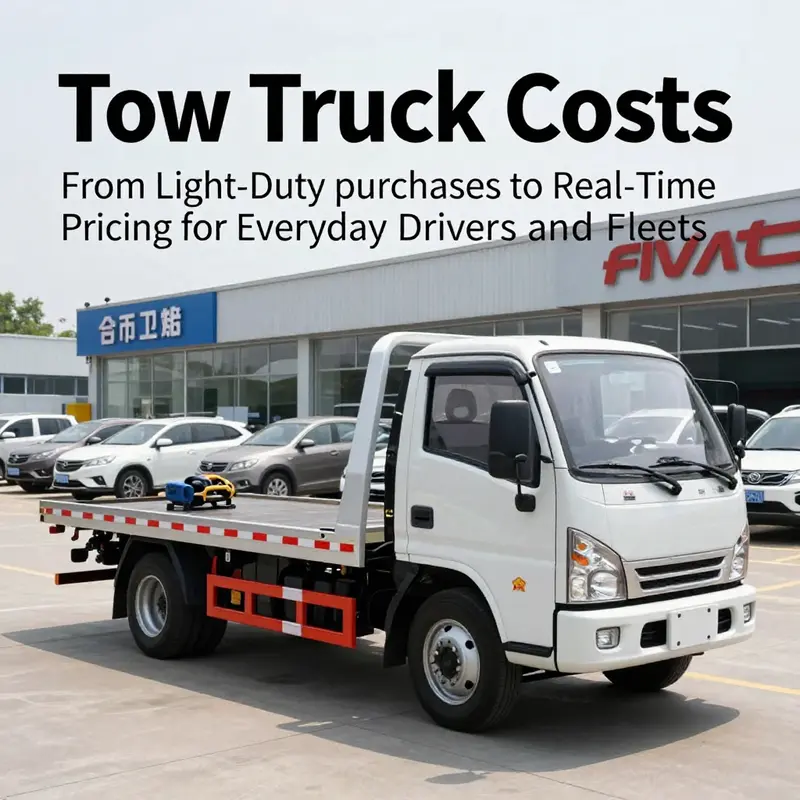
Pricing for tow trucks sits at the intersection of capital expense and operational discipline. The chapter that covers the cost of a tow truck is not merely a catalog of sticker prices; it is a map of choices, trade-offs, and risk management. A buyer or fleet operator must weigh the upfront cash outlay against long-term maintenance, insurance, fuel, and wages. The spectrum runs from light-duty, urban-focused units to heavy-duty wreckers and beyond into the realm of rotators with 360-degree capabilities. Each category carries its own logic about what it can recover, how quickly, and at what cost. The numbers are not static either. They shift with supply chains, regional demand, labor markets, and the broader environment in which towing and recovery operate. To understand the price signals a consumer or small operator should read, it helps to trace the lifecycle of a tow truck purchase, then pivot to the costs that accrue per incident and the costs of running a towing operation day by day. The aim is to connect the dots between the initial price tag, the ongoing cost of ownership, and the pricing a service provider must apply to stay solvent while meeting customer expectations. As a practical starting point, consider the tiered structure of new tow trucks. Light-duty machines, designed for passenger cars and smaller vans, typically land in a range from roughly twelve thousand eight hundred dollars up to about thirty-nine thousand eight hundred dollars per unit. These are the kinds of trucks that most municipal fleets and independent operators use for the everyday task of vehicle recovery, including flatbeds and wheel-lift configurations. They are nimble enough to maneuver urban streets, cost-efficient enough to justify frequent use, and straightforward to maintain compared with their heavier siblings. The next tier, heavy-duty tow trucks, accounts for more robust applications. These 8×4 50-ton wreckers are engineered for commercial or highway operations and commonly sit between forty thousand and seventy thousand dollars per unit. They carry the capacity to lift larger vehicles, transport heavy loads, and operate in more demanding environments. The final and most conspicuous category are rotators—the sophisticated devices with rotating booms that can pivot, twist, and flip a vehicle in place. Rotators command a price that starts around one hundred fifty thousand dollars and can soar past three hundred thousand dollars, depending on reach, rotation capability, and optional safety and control systems. In other words, the price ladder reflects not just size but capability, reliability, and the complexity of the work the truck is built to perform. Yet price is only the starting line. For fleet operators, the operational costs that ride along with ownership can eclipse the sticker price over the life of the asset. A tow truck is both a machine and a service tool, so it requires a steady stream of consumables and supporting systems. Winches, wheel lifts, towing dollies, and a full complement of straps and safety gear all add up. There is also the quiet and steady expense of maintenance—regular servicing, replacement parts, and occasional overhauls that help prevent downtime. Insurance premiums are sized to the risk profile of a towing operation, which includes the weight of the vehicles to be recovered, the geographic area of operation, and the training level of the crew. Licensing, annual inspections, and compliance with local and national regulations form ongoing costs that never truly disappear. Fleet operators frequently invest in communications equipment and GPS tracking to optimize dispatch efficiency and route planning. All of this—plus the fuel burned during a typical shift and the wear and tear from repeated starts and heavy lifting—loses its sting only when it translates into reliable, timely service for customers and predictable margins for the business. The price of admission for a tow operation is thus twofold: upfront capital for the vehicle and recurring costs that support the vehicle’s availability and effectiveness. The market for towing services reflects this dual nature. When a client needs a tow, the cost structure looks different from the purchase price of a new unit. The base rate and per-mile charges form the backbone of towing fees, and these charges are highly sensitive to distance, vehicle type, and situational factors such as time of day and location. A typical base rate covers the first set of miles, usually within five to ten miles, with a base fee that commonly falls in the range of fifty to seventy-five dollars. After that, a per-mile charge applies, typically in the ballpark of two to seven dollars per mile, depending on the operator, the vehicle’s weight, and the equipment required. These are not arbitrary numbers but reflect the incremental costs incurred as the tow distance grows or as specialized recovery equipment becomes necessary. For instance, a short tow of about five miles may cost around seventy-five dollars in total, while a much longer tow—say, a hundred miles—might range from roughly one hundred fifty dollars up to four hundred dollars as the per-mile rate compounds. The pricing models observed in the industry vary. Some outfits use a straightforward hook-and-roll structure—a fixed hookup fee plus a per-mile rate. Others implement tiered pricing, where rates shift in blocks, such as 0–10 miles, 10–25 miles, and beyond. The effect of such structures is to introduce a degree of predictability for longer jobs, but the real determinant remains distance, vehicle weight, and the level of service required. It is this last factor—level of service—that introduces another important price driver: after-hours and emergency towing fees. Towings performed at night, on weekends, or during holidays tend to carry higher rates because of higher demand, fewer available providers, and elevated risk for the operator. An after-hours surcharge can be substantial, sometimes ranging from roughly thirty percent to a hundred percent or more added to the daytime base. The practical implication is clear: a daytime tow that might cost a hundred dollars could spike to one hundred fifty or two hundred dollars after hours, depending on local dynamics. Some providers also add overtime or call-out fees to urgent services, further shaping the final bill. Vehicle type and weight represent another key dimension of cost. Heavier vehicles, larger SUVs, trucks, and commercial vans demand more specialized equipment and extra labor. They may require larger tow trucks, additional winching power, and more careful handling, all of which push the price upward. In contrast, compact cars typically incur lower base and per-mile charges. The geographic context matters as well. In urban centers, there is often greater competition among providers, which can restrain price growth during normal hours but may not eliminate it. Yet even in crowded markets, the complexity of the job—such as a heavy vehicle in a multi-vehicle collision—can trigger premium pricing. In rural regions, longer distances to service providers and repair facilities can inflate total costs simply due to travel time, with occasional surcharges for remote call-outs or traffic-safe recovery operations. When thinking about costs from a fleet-management perspective, the economics become more nuanced. Owning a tow truck is not a one-off purchase but a capital investment that must pay for itself through utilization. A light-duty tow truck might be budgeted with a higher annual utilization rate given its versatility and lower operating costs, while heavy-duty and rotator units demand careful workload planning to achieve acceptable return on investment. A fleet manager may consider the amortization period, financing terms, and residual value when evaluating the purchase. The decision is intimately tied to expected dispatch volume, typical call types, and regional demand patterns. Of course, there is a risk dimension. Rotators, with their advanced capabilities, bring not only higher upfront costs but additional training requirements and ongoing maintenance needs. Operators must ensure that staff are properly certified to handle the equipment, as improper use can increase the likelihood of accidents, insurance claims, and downtime. The financial calculus therefore extends beyond the price tag into the realm of risk management, training costs, and reliability. A practical approach for a prospective buyer is to translate the market numbers into a realistic budget that aligns with the business’s anticipated demand. Start with the base line: what is the expected annual utilization? Then map the likely mix of service types—short tows, long-hauls, on-site recoveries, and complex extractions. Each category carries its own cost signature, and the mix informs maintenance schedules, spare-parts inventories, and labor planning. As a consumer reading these figures, you can apply a similar logic to your personal situation or your business model. For instance, if you own a small, local fleet that handles mostly light-duty tows within a metropolitan area, the most relevant data point is the combination of initial purchase price for light-duty units and the base- plus per-mile towing charges typically encountered when responding to calls near your base. If your business is specialty-focused or located along major corridors with heavy industrial traffic, heavy-duty units and perhaps rotators may be the prudent choice, despite their higher upfront and ongoing costs. In such cases, price transparency becomes critical. It is worth insisting on itemized estimates from providers, especially when after-hours or emergency services are involved. A thorough estimate should break out the hookup fee, the distance-based charges, time-of-day surcharges, and any ancillary fees such as winching, on-site repairs, or specialized recoveries. The goal is to avoid surprise charges and to create a predictable framework for customers and the business alike. For those seeking a compact, consumer-facing overview of current prices, a straightforward resource is available that consolidates recent pricing and specifications. The chapter on tow truck costs has discussed the nuances you would expect in a real market where supply meets demand, and where technology, training, and safety drive both capability and cost. See How much is a tow truck? for a concise primer that mirrors the general patterns described above. While no single resource captures every regional variation, consumer-facing guides provide a useful cross-check against provider quotes, helping to benchmark expectations and avoid thin margins or inflated add-ons. For readers who want a broader market snapshot beyond the specific pricing ranges cited here, external sources offer updated numbers and regional context. A widely used reference aggregates current pricing and specification data from multiple manufacturers and distributors, enabling comparisons across light-duty, heavy-duty, and rotator configurations. This broader market view underscores the same themes: a higher upfront cost for greater capability, a much larger margin of operational cost for heavy-duty and specialized recovery, and the persistent influence of distance, weight, and service level on the final bill. When weighing these realities against the ideal of dependable, timely service, the prudent path is to calibrate expectations with a robust analysis of utilization, risk, and total cost of ownership. A well-structured approach to budgeting for a tow operation begins with scenario planning—considering near-term needs, mid-term expansion, and long-term strategy. If the plan is to operate in busy urban zones with occasional rural calls, a mix of light- and medium-duty units with efficient, modular maintenance could deliver solid returns with lower capital risk. If the plan leans toward high-volume recovery in intercity corridors, heavier units with more sophisticated recovery capabilities may be necessary, and the business should prepare for higher maintenance, insurance, and labor costs with correspondingly higher pricing to customers. The final piece of this economics puzzle is market discipline: pricing strategies that reflect value and realities on the ground. Towing is a service business where the value proposition combines speed, safety, and reliability. Customers respond not only to the cost but also to the confidence that the provider can deliver the vehicle back in a timely, damage-free manner. The same market forces that shape consumer prices in other service sectors apply here: shift toward value, transparency in pricing, and consistency in service levels. In the end, the cost to own or to tow is less a simple calculation than a structured dialogue between the market, the operator, and the customer. The numbers guide decisions, but the business dynamics—risk, demand, and execution—determine sustainability. For readers who want to explore more about the pricing landscape and how to read a tow-truck quote, the linked resource provides practical context and up-to-date market signals. See the internal reference above for a consumer-facing overview, and refer to industry pricing databases and supplier catalogs to ground projections in current data. External market snapshots reinforce that the core principles remain stable even as prices drift with economic conditions, fuel costs, and regional competition. The conversation about tow truck pricing, then, is a conversation about value creation. It asks: How much must be charged per mile, per hour, or per incident to ensure the equipment remains ready, the crew stays trained and safe, and the business remains solvent through after-hours calls, remote locations, and complex recoveries? It is a conversation that blends engineering, operations, and financial planning into a single, ongoing calculation. The next chapter will pivot from these macro considerations to the practical tools a buyer or operator can use to forecast costs with confidence, including a simple depreciation model, a maintenance budget framework, and a pricing checklist that helps ensure every job is priced to cover cost plus a reasonable margin. As we move from the theory of market pricing into the instruments of budgeting and decision-making, it becomes clear that the cost of a tow truck is a lens on how the towing industry balances capability, risk, and service reliability in real time. External link reference: For a broader market snapshot of current pricing and specifications, see TruckWorld’s pricing and specifications page. https://www.truckworld.com/tow-trucks/pricing
Final thoughts
In the tow truck ecosystem, costs flow through four linked channels: the initial purchase price of equipment, the fees tied to each tow, the ongoing expenses of owning and operating a fleet, and the real-time signals from supplier markets. For everyday drivers, understanding these lanes clarifies whether a quick roadside assist is worth a flat-rate fee or a time-based charge, and it helps you anticipate out-of-pocket costs before a service call. For property managers and shop owners, the same framework translates into budgeting for a reliable recovery partner, weighing upfront investment against the flexibility of third-party services. Informed decisions hinge on recognizing how light-duty units compare with heavy-duty rotators, how distance and vehicle weight alter the bill, and how maintenance and safety investments protect uptime and safety. Real-time pricing sources then close the loop, offering current quotes and configurations rather than relying on static lists. With these four chapters as a guide, readers can assess, compare, and act with confidence, aligning equipment choices and service strategies with actual cost realities rather than assumptions.