
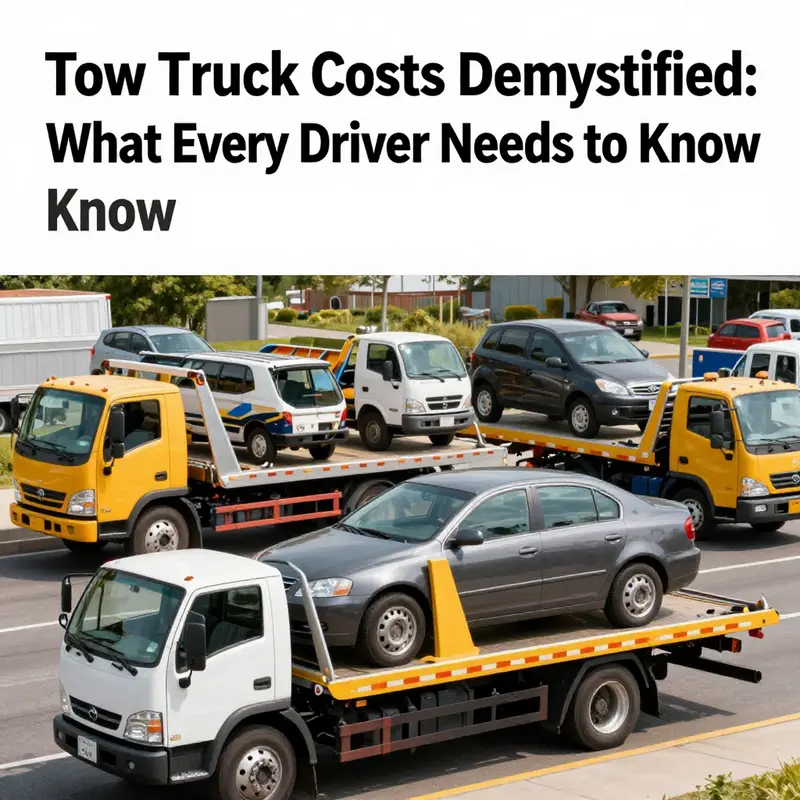
Understanding the cost of a tow truck is essential whether you’re an everyday driver, a truck owner, or a property manager. This article delves into the complexities of tow truck pricing, breaking down costs by model and features while considering market trends. Each chapter guides you through pricing factors, additional ownership expenses, and future market predictions, giving you a complete picture to aid in your decision-making process.
null
null
Pricing the Road Saver: What Determines Tow Truck Costs in a Modern Fleet
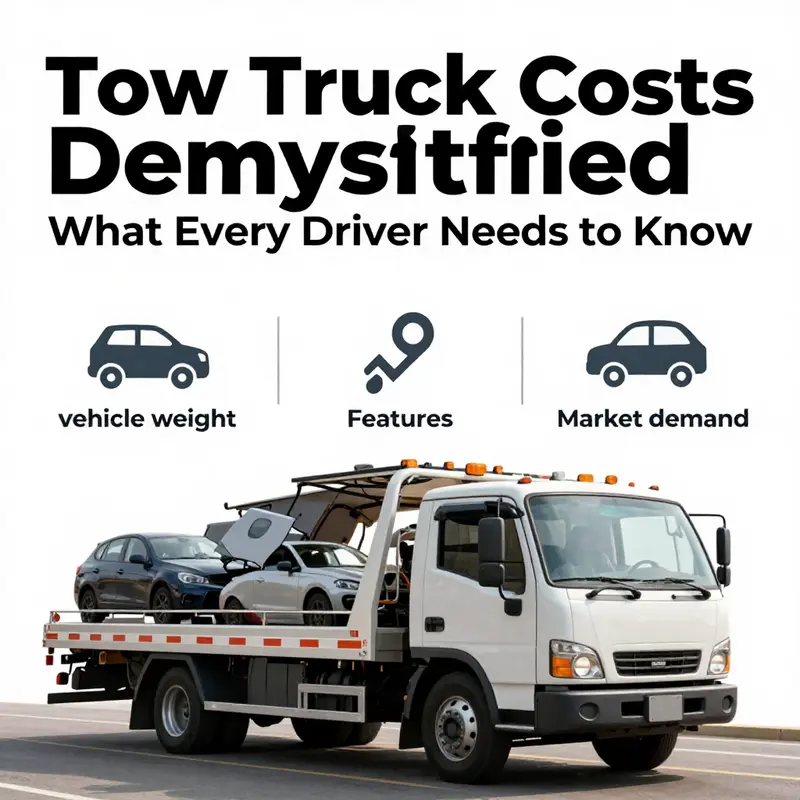
Pricing the road-saver that is a tow truck is not a single line item but a spectrum shaped by purpose, build quality, and the realities of operating in a busy, regulation-heavy world. When a shop or fleet manager asks, what does a tow truck cost, the honest answer is that the sticker price tells only part of the story. The type of vehicle, its weight class, the sophistication of the recovery systems, and even where the purchase happens all push the final total in distinct directions. In recent market snapshots, basic flatbed models—those designed for safe transport of a wide range of passenger and light commercial vehicles—start in the low tens of thousands. A reported starting point around twelve thousand eight hundred dollars gives a sense of where entry-level capability meets price. Yet that figure sits in contrast to the upper end of the spectrum, where the most capable rotator tow trucks with 360-degree rotating booms designed for heavy-duty recoveries can easily fall into the range of one hundred fifty thousand to three hundred thousand dollars or more, depending on configuration, capacity, and vendor. In between these poles sits the 25-ton class road wrecker, a workhorse priced in the low to mid thirty-thousand-dollar zone, with variation driven by additional certifications, load rating, and optional safety and efficiency packages. These numbers reflect broad market tendencies rather than a single manufacturer’s catalog, and they are best used as a compass for budgeting rather than a precise quote. As with any capital equipment, a buyer should expect to factor freight, taxes, installation fees, and introductory warranties into the first-year cost, alongside the recurring expense line that will shape total ownership value over the asset’s useful life. The practical takeaway is that the choice of truck is a balancing act between current needs and future obligations, with the price tag largely tethered to the expected duty cycle and the operational environment in which the tow truck will perform.
Beyond the base price, the ongoing cost story adds layers that are easy to overlook at the initial showroom or dealership visit. For a fleet that handles a mix of light passenger cars and heavier trucks, the winch capacity, hydraulic system resilience, and the robustness of the boom determine not just performance but the risk profile of daily operation. A heavier-duty boom, built from higher-grade materials and equipped with more precise control systems, delivers greater lifting certainty and safer operation, but it also adds to both the upfront investment and the replacement or repair costs that may accrue over time. The material quality of critical components—boom sections, winch drums, roller bearings, and hydraulic cylinders—dictates service intervals and maintenance spends. In other words, the most capable system may offer long-term savings through reduced downtime and fewer field failures, but it requires a higher initial commitment. Inventory planning becomes part of the cost equation as well; trucks with advanced safety features, camera systems, GPS fleet management integration, and diagnostic tools increase the upfront price but can reduce operating expenses by improving route efficiency, reducing fuel burn, and shortening response times.
The market also reflects a spectrum of propulsion options that influence price trajectories. Electric tow trucks are increasingly visible in urban fleets, often presenting lower upfront costs in some configurations when compared with diesel or hybrid counterparts. The catch is that long-term maintenance and battery replacement considerations can shift the total cost of ownership over the truck’s life. Diesel and hybrid models, by contrast, tend to command higher initial price tags but may offer advantages in fuel efficiency and robustness, especially in regions with established fueling infrastructure and longer operating hours. Availability of different propulsion systems can sway price as well; electric variants may appear more frequently in certain markets, while conventional diesel configurations remain a steady mainstay in others. For operators planning a national or multi-region rollout, these differences matter, because fuel pricing, maintenance familiarity, and repair networks all influence total cost over the asset’s life.
The boom system itself deserves closer attention as a key driver of cost and capability. The boom is more than a lifting arm; it is the fulcrum of operational reach, stability, and control. The design determines how easily a tow operator can access a damaged vehicle, how effectively the machine can stabilize a load, and how repeatable the recovery process remains under demanding conditions. High-grade materials raise both manufacturing costs and anticipated lifetime durability, which in turn affects warranty terms and maintenance spend. More sophisticated booms, offering a broader range of motion, faster cycle times, and enhanced precision, drive the price up but also promise greater productivity on the job site. The relationship between material quality, capability, and price is a classic example of the core tension in fleet purchasing: invest more now for reliability and efficiency later, or accept higher risk and more frequent downtime in exchange for a lower upfront price.
Regulatory and environmental considerations further color the pricing picture. Urban areas with stringent emissions standards can limit the operation of certain models or force fleets to invest in compliant configurations. Equipment that aligns with current environmental regulations tends to command a premium because it reduces compliance risk and future-proofes the fleet against evolving rules. On the other hand, markets with looser emissions controls may see a wider spread of options at different price points, potentially expanding the choices for operators watching the budget closely. This regulatory layer interacts with the availability of models and with regional maintenance ecosystems, shaping both price and resale value as fleets migrate between regions or adjust to changing local demands.
Used versus new remains a pivotal component of any pricing discussion. A substantial gap often exists between new units and pre-owned machines, reflecting wear, maintenance history, and the anxiety of downtime in service. A well-maintained used tow truck can deliver a compelling total cost of ownership, particularly for smaller operators or startups testing demand. Yet buyers should conduct a thorough due diligence process—reviewing maintenance logs, assessing hydraulic system integrity, inspecting the winch and boom for signs of stress, and validating safety equipment and electronics. While used units lower the entry price, they invite careful consideration of potential maintenance spikes and parts availability, especially for older models or specialized configurations. Conversely, new units bring the advantages of modern systems, longer warranty coverage, and access to the latest safety and efficiency features, but they demand a larger initial outlay and may require time to tailor specifications to the operator’s exact workflow.
For those planning a purchase, a practical rule of thumb is to sit down with a detailed quotation that captures every line item. Freight, taxes, installation fees, and pre-delivery inspections can quickly alter the headline price and shift the financial picture. The intent is to create a transparent, apples-to-apples comparison across candidates and to reveal the total cost of ownership over a 5- to 7-year horizon. When evaluating quotes, it helps to translate the sticker price into annual depreciation, projected maintenance costs, fuel or energy costs, and expected downtime. In this light, the question “how much does a tow truck cost?” becomes less about a single price and more about a calculated forecast that ties the vehicle’s capabilities to the fleet’s service levels, risk tolerance, and growth ambitions.
As you weigh options, consider marking a spot in the budgeting process where you can insert a quick reference to market benchmarks. A concise snapshot of typical price ranges can serve as a guidepost during negotiations and while comparing proposals. For a quick snapshot of current market pricing, see how-much-is-a-tow-truck. This link offers a practical context for the numbers above, while still leaving room for the inevitable variability that comes with custom configurations and vendor differentials. It is also worth noting that the broader ecosystem—availability of service networks, the ease of sourcing replacement parts, and the presence of skilled technicians—will influence both price and the reliability of the investment over time.
In closing, the price you pay for a tow truck is a blend of the vehicle type, the quality of its components, the propulsion and control systems, and the regulatory and market conditions in your region. A basic flatbed opens the door at a comparatively modest entry price, while a rotator with advanced boom capabilities represents a premium aligned with high-intensity recovery work. Between these endpoints lies a continuum where used units, optional equipment, and regional factors all reshape the final figure. The most prudent path is to balance current operational needs with a clear view of total cost of ownership, rather than chasing the lowest upfront price. If you map the expected workload, maintenance cadence, and downtime tolerance, the path to a financially sound purchase becomes much clearer. In the end, a tow truck is not merely a machine to lift and tow; it is a tailored asset that must harmonize with the fleet’s service commitments, safety standards, and long-term strategic goals. External considerations—like evolving environmental guidelines and the availability of repair ecosystems—will continue to influence the price landscape, but the core decision remains anchored in service quality, reliability, and the operator’s readiness to invest in a vehicle built for the road ahead.
External resource: https://www.towtrucks.com/boom-standards-and-materials
Beyond the Sticker Price: Weighing the Hidden Costs That Drive Tow-Truck Investments
A tow truck isn’t just a vehicle. It is a small, highly specialized business tool that carries risk, duty cycles, and the unpredictable rhythms of roadside emergencies. When buyers ask, “How much does a tow truck cost?” they often start with a sticker price. What follows, though, is a different kind of math: the total cost of ownership that accumulates over months and years. The purchase price is just the opening chapter. To understand the true expense, you must account for a constellation of ongoing costs that evolve with the truck’s type, its age, how you use it, and where you operate. In conversations about price, it helps to picture three broad tiers tailored to different towing needs. On the entry side, a basic flatbed designed for safe transport of a wide range of vehicles can be found in the low tens of thousands. In practice, the first chapter of cost is modest capex, but it is followed quickly by maintenance, insurance, and fuel that scale with use. Moving up, mid-range configurations—still practical for everyday duties—carry higher upfront costs, and they demand stronger components, better hydraulics, and more robust safety features. Finally, there is the tier of heavy-duty, rotator-style machines built for complex recoveries, overturned vehicles, and urgent emergency scenarios. These are priced in a range that dwarfs lighter equipment, reflecting power, reliability, and the ability to perform under high stress. The numbers from current market data illustrate the spread clearly: a basic flatbed may start around twelve thousand eight hundred dollars, with many dependable units landing somewhere under forty thousand depending on age and configuration. A mid-range wrecker, capable of handling larger loads or awkward recoveries, often sits in the thirty-thousand-dollar neighborhood. And for truly demanding work—heavy-duty rotators with 360-degree booms and significant lifting capacity—price tags commonly run into six figures, sometimes surpassing a quarter of a million dollars. Those figures are not just lines on a page; they map directly onto the capabilities, maintenance needs, and insurance profiles that turnkey operators face every day. When buyers assess these prices, they rarely view the truck in isolation. The weight class of the vehicle, the boom or winch configuration, and the presence of advanced safety and fleet-management features all push the cost upward. Heavier trucks require stronger frames, larger hydraulic systems, and more powerful winches. Each added feature—GPS tracking, color-coded safety gear, enhanced lighting for roadside operations, or integrated communication consoles—adds another layer of expense. Location matters as well. In urban markets, labor costs, taxes, and regulatory fees can push numbers higher, while rural or lower-demand regions might offer more room to negotiate. The same truth applies to the used market. A used unit can be a compelling entry point, often priced well below a new machine, yet it can bring with it a higher probability of maintenance surprises. For buyers who want predictability and manufacturer support, new equipment remains the preferred path, but it demands careful budgeting for ongoing costs that arrive with the first mile—insurance, service plans, and compliance. As a practical rule of thumb, it helps to separate the purchase price from the ongoing costs that accumulate over time. Insurance is a substantial ongoing line item, driven by the risk profile of towing operations, the truck’s load capacity, the regions served, and the operator’s safety record. Tow trucks, because of their specialized role and duty cycles, often require policies tailored to commercial fleets. Premiums reflect not only liability but also physical-damage coverage for heavy hydraulic gear and winches, which must be ready for action at any moment. Maintenance and repair costs form another large block. Regular service intervals for the transmission, hydraulic systems, winches, and chassis are essential to prevent failures that could strand a vehicle in a critical moment. Heavy-duty systems demand even more rigorous maintenance, because neglect can translate into costly downtime during peak demand. Fuel expenses also climb for towing fleets, particularly for diesel engines and high-mileage operation. Fuel efficiency tends to be worse than standard service trucks due to weight, terrain, and the heavy load carried during recoveries. In addition, licensing and registration fees vary by state and are often pegged to vehicle weight and environmental requirements. Those costs are predictable but not negligible, especially for fleets with multiple units. Financing charges compound the upfront expenditure. Whether a buyer finances through a bank loan or a vendor-financing program, interest payments accumulate, expanding the total outlay over the life of the loan. Leases add a different flavor to the equation, offering lower upfront costs and access to newer equipment, at the expense of long-term ownership. For many new operators, leasing can be an attractive way to test the market, maintain a newer fleet, and avoid large depreciation hit while still delivering reliable service. Aside from the big-ticket items, specialized tools, safety gear, and incident-specific equipment constitute a continuous outflow. Towing straps, wheel lifts, dollies, lights, cones, reflective gear, and on-truck communication devices all contribute to a safer, more efficient operation. Fleet management software, used to track jobs, dispatch, and maintenance schedules, is another recurring cost that grows with a larger fleet. The sum of these elements—the upfront investment plus ongoing operating expenses—defines the real price of owning a tow truck. When a prospective buyer asks, “What is this truck really going to cost me over five years?” the best answer is to build a detailed ownership budget. Start with the purchase price, adjust for taxes and delivery, then forecast annual maintenance by model and past performance. Add insurance estimates based on risk and local regulations, then include fuel, licensing, and financing. Finally, reserve a contingency for unexpected repairs or equipment upgrades to stay compliant with evolving safety standards. The math is not mystical, but it is precise enough to change a business plan. In this sense, the distinction between a low-cost, basic flatbed and a high-cost rotator is not just about capability. It is about how many annual recoveries you anticipate, the speed at which you must respond, and the level of risk you are prepared to manage. For operators entering the field, the numbers may feel daunting, yet there is a path to affordability: opt for a reliable, well-maintained used unit to start, couple it with a robust maintenance schedule, and structure a financing plan that aligns with cash flow. Leverage a leasing arrangement that minimizes upfront capital while you validate demand, and gradually upgrade as the business scales. Even the most careful buyer benefits from reading up on price ranges and ownership costs across the market. For a practical sense of current price ranges and the variables that swing them, you can explore broader guidance at how-much-is-a-tow-truck. This reference helps contextualize the jump from a basic setup to a heavy-duty operation, illustrating how even small differences in configuration or location can swing the total cost of ownership. Alongside these discussions, remember that market dynamics shift with new regulations, fuel prices, and the evolving landscape of fleet management technology. If you are negotiating a deal, request a detailed, all-in quote that itemizes freight, taxes, installation, and any required training. That transparency not only clarifies the immediate price but also illuminates the long arc of operating costs. In the end, the sticker price is a starting point, not a verdict. The true price is the ongoing commitment of capital and resources to keep a tow operation reliable, compliant, and ready to answer the call at any hour. To tailor this framework to your situation, consider the volume of calls you expect, the typical weight you will haul, and the geographic areas you plan to serve. A thoughtful forecast will guide choices about chassis type, winch power, and the level of safety and monitoring features you require. It will also shape your budgeting for maintenance schedules, spare parts, and licensing needs. The result is a more predictable financial path through a sector known for its urgent, variable demands. External references can augment your internal calculations, providing benchmark data and real-world context across the industry. For a detailed snapshot of current market pricing and product categories, see the external resource linked above. That reference helps anchor expectations in a broader market reality, complementing the practical budgeting approach outlined here. As you compare options, keep in mind that the economic value of the vehicle rises when it reduces downtime and increases reliability. A well-chosen truck with a solid maintenance plan typically pays back the investment through better service levels, faster response times, and fewer unscheduled repairs. In sum, understanding how much a tow truck costs means looking beyond the initial price to the lifecycle costs that shape profitability. It requires a disciplined budgeting mindset, an awareness of regional price variations, and a strategic choice between ownership and access through leasing. The road to a sound purchase hinges on translating capability into reliability, and reliability into revenue. For readers seeking a concise overview, consider the core ranges: basic flatbeds at the low end, mid-range wreckers in the mid-range, and heavy-duty rotators at the top end. Each tier carries distinct maintenance needs, insurance profiles, and financing implications. The right choice aligns with the business model, expected call volume, and tolerance for risk. In this sense, the worth of a tow truck is not only the weight it can lift or the speed with which it can recover a vehicle. It is the degree to which it empowers a business to stay solvent, compliant, and available when the road asks for help. For further steps, reflect on your planned operating footprint, the typical vehicle weights you will encounter, and how quickly you expect to grow. By grounding price in practical ownership costs, you gain a clearer view of the true investment a tow truck represents and the disciplined plan needed to sustain it over time. External resource cited: https://www.alibaba.com/product-detail/Brand-New-Sinotruck-HOWO-6X4-10wheel-25tons_1600578791879.html
Tow Truck Costs by Type and Feature: A Practical Guide for Fleets
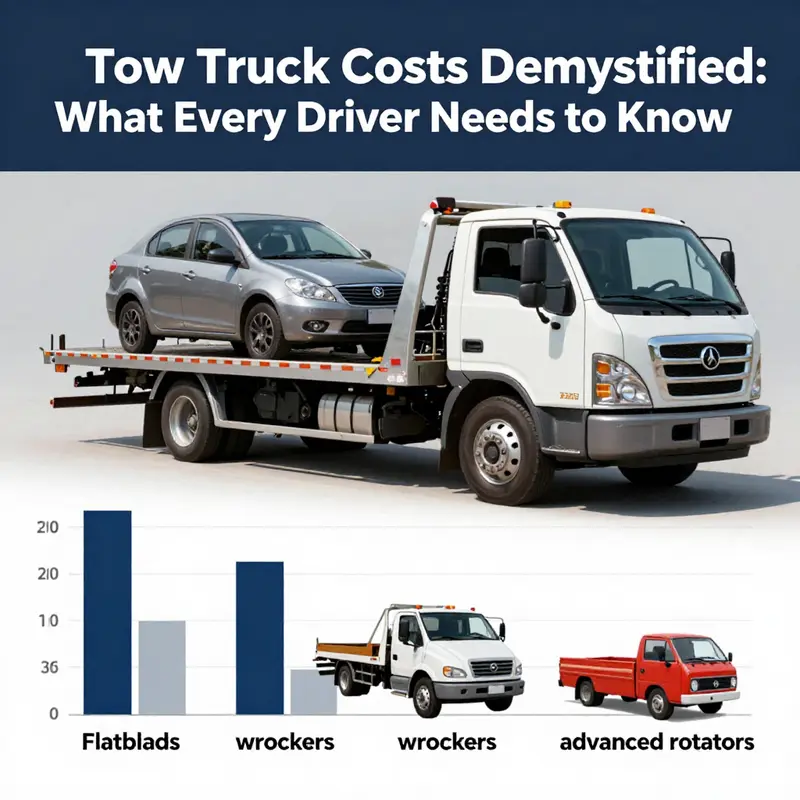
When a fleet manager or independent operator weighs the cost of a tow truck, the decision hinges on more than the sticker price. Tow trucks live in a niche where function, safety, and reliability are inseparable from capability. The initial purchase is only the first line item in a larger ledger. To truly understand what a tow truck costs, picture the vehicle as a modular system whose price combines the chassis, the lifting or pulling mechanism, hydraulic or rotary systems, and a range of safety and software features that govern day to day operations. The result is a price continuum that reflects not just size, but intended use, duty cycle, and the level of risk a business is willing to assume or mitigate through technology and training. In practical terms, different types of tow trucks command markedly different prices, and the gap between them is driven by engineering required to safely move, lift, and control vehicles under load.\n\nFlatbed tow trucks sit at the upper end of the entry level spectrum for many fleets because their core advantage is versatility. The hydraulic tilting bed is the heart of their appeal. It allows a vehicle to be loaded with minimal tire contact and, crucially, without dragging the undercarriage. This protection matters for modern vehicles with low ground clearance or all wheel drive configurations, where even small contact with a loading ramp can cause scratches or more serious issues. The tilting, sliding bed integrated with a winch creates a platform that can cradle nearly any vehicle type—from compact cars to higher profile SUVs—without compromising bodywork. It is this protective capability that explains, in many markets, why flatbeds carry a higher upfront cost. The engineering required to maintain precise bed angles, along with robust hydraulic redundancy and safety interlocks, translates into a price that, on new units, sits in a broader range than the more traditional boom and winch setups. Buyers should also account for the fact that a flatbed’s longer life cycle often reduces the likelihood of roadside damage on returns, which can yield lower maintenance claims and more predictable wear across a fleet.\n\nConventional tow trucks, which rely on a boom and hook or wheel lift to hoist a vehicle, present a different economics profile. These units typically fall below flatbeds on the initial price scale. The simplicity of a boom and winch system—while effective for many standard tows—also introduces a higher risk of tire or suspension contact on certain vehicles, particularly if the operator navigates tricky angles or heavy loads without the same level of width adjustable guidance that a flatbed offers. The upfront savings, however, can be substantial. Fleets must weigh those savings against the potential for increased maintenance needs and repair costs over time, and the possibility of more frequent insurance claims related to incidental damage. In practice, many operators choose conventional units for steady, mixed-use scenarios where extreme vehicle protection is less critical or where the majority of tows involve mid size vehicles or straightforward recoveries. The price delta between a basic conventional unit and a feature rich flatbed thus becomes a strategic question: is the added protection and versatility of a flatbed worth the premium given projected utilization and the risk profile of the local environment?\n\nThe most commanding category in the price narrative is the heavy duty rotator or recovery unit. These are specialized tools designed for complex recoveries, overturns, and emergency responses that stretch beyond routine towing. A rotator’s value rests not only in its ability to rotate a vehicle to a safe orientation for loading but in the sheer strength and control it provides. 360 degree booms, reinforced frames, high capacity winches, and a constellation of auxiliary systems—such as multiple hydraulic circuits, outriggers, and advanced stability controls—are all part of the package. The investment is substantial, and for good reason: operators depend on these units to resolve dangerous, high stakes scenarios, sometimes under adverse conditions like steep slopes, uneven terrain, or inclement weather. The price reflects the engineering required to maintain operator safety, protect the vehicle under tow, and deliver rapid, reliable recoveries when every minute counts. For businesses that perform frequent heavy duty recoveries or require rapid response for municipal contracts, rotators are not a luxury; they are a central capability. The total cost of ownership, including specialized operator training, ongoing maintenance, and higher fuel demands, must be understood as part of the service proposition, not just a line item on a purchase receipt.\n\nBeyond the core type, there is the reality that new versus used inventory reshapes the financial landscape. New units come with warranties, the latest safety and telematics integrations, and the confidence of factory support. The downside is the higher upfront price and longer lead times in some markets. Used tow trucks, by contrast, provide immediate cash flow relief and lower initial outlays, but they can embed hidden costs in maintenance, parts availability, and potential reliability gaps. A used unit may save thousands on day one, yet the long arc of operating expenses, including tires, hydraulics, and generator runs for lighting and signaling, can erode that initial saving if the unit is not well cared for or thoroughly inspected before purchase. This reality makes a robust due diligence process essential, particularly for fleets that rely on consistent uptime. A careful inspection that covers hydraulic seals, winch drums, drive train integrity, braking systems, and electronic controls can illuminate hidden costs that would otherwise surprise the budget after delivery.\n\nIn addition to the core vehicle price, prospective buyers face a constellation of ownership costs that shape the long term economics of a tow truck investment. Every unit requires winches, straps, wheel lifts, and towing dollies; safety equipment such as cones, vests, and flares to maintain compliance with roadside assistance standards; and communications and lighting infrastructure that helps crews coordinate under pressure. Fleet management software or GPS tracking becomes a meaningful multiplier for efficiency, enabling better dispatch, route optimization, and maintenance scheduling. Fuel consumption is not trivial, particularly for rotators and heavy duty models that carry more massive hydraulic systems and operate at higher RPMs during recoveries. Maintenance budgets must reflect not only routine servicing but the potential for major component repairs—hydraulic pumps, booms, and rotator motors—where downtime translates into revenue loss. Even insurance pricing can respond to the configuration chosen; higher capacity units may carry higher premiums because of the increased exposure associated with complex operations. The prudence of budgeting for installation fees, freight, taxes, and any necessary on site integration should not be underestimated when accepting a new purchase quote.\n\nThe market’s geography and demand dynamics also leave fingerprints on price. In urban settings, labor costs, parts availability, and the demand for quick response tows interact to push prices upward, particularly for new units or highly equipped models. In more rural or regional markets, price pressure may be more pronounced, and fleets might find value in modular configurations that emphasize reliability and ease of maintenance over the most advanced feature sets. The result is a spectrum rather than a single price, where a 25 ton capacity wrecker can sit near a mid range price but a rotator with advanced control systems and safety features can hover in a much higher tier. In all cases, the total cost of ownership deserves close attention: fuel efficiency, downtime, and durability often determine whether a purchase delivers the return on investment expected by the business.\n\nFor readers seeking a concise roadmap to current pricing, consider the broader market overview that catalogs typical price bands by type and configuration. As a practical step, always request a detailed quote that clearly itemizes freight, taxes, and any installation or integration fees when buying new. An informed buyer will compare not just the list price but the entire financial profile of the asset over its service life. That includes anticipated maintenance intervals, replacement-part availability, and the training needed to operate a complex unit safely and efficiently. If you want to explore a clearer, side by side snapshot of pricing as it stands today, you can check a dedicated pricing guide that focuses on the different tow truck configurations and their corresponding cost ranges. This resource helps frame the conversation around the real world numbers cited in industry reports and supplier catalogs, while also guiding readers toward sources that reflect regional variations and the latest market activity.\n\nAs a final note, the spectrum of price shows why fleets often approach purchase as a strategic decision rather than a single financial event. Flatbeds deliver safety and versatility at a premium, conventional units offer predictable performance with lower upfront costs, and rotators provide maximum capability for demanding recoveries with a commensurate price tag and ongoing cost considerations. The ultimate choice depends on the fleet’s service mix, risk tolerance, and the mission profiles that define its day to day work. For researchers and practitioners alike, the conversation around price is inseparable from the conversation about service quality, uptime, and the ability to protect customers vehicles and property in challenging roadside situations. The broader context of market forces, technology, and regulation continues to shape what a tow truck costs—and what a tow truck, in turn, promises to deliver on the road.
Tow Truck Economics: Market Trends, Price Dynamics, and the Road Ahead
Prices do not exist in a vacuum, and the cost of a tow truck is a fingerprint of a much larger economic story. The global market for tow and recovery vehicles is expanding as fleets, fleets-in-build and independent operators alike tilt toward more capable, safer, and data-driven tools. A trajectory that has been visible in recent years is set to accelerate: a rise from roughly USD 2.5 billion in 2023 to an anticipated USD 4.3 billion by 2033, driven by a compound annual growth rate of about 5.57%. This growth is not just a matter of more trucks; it reflects heightened demand for reliable roadside assistance, mounting vehicle ownership, and a growing emphasis on rapid, safe, and efficient recovery operations. When a consumer or business considers the price of tow equipment, they are indirectly weighing the same macro forces—how many vehicles are on the road, how often incidents occur, and how much operators are willing to invest to reduce downtime and damage. In that respect, pricing becomes a barometer for the evolving standards of service and safety in the industry.
Within this larger market, several factors consistently push price in different directions. The type of truck matters profoundly: a basic flatbed, a compact wheel-lift, a heavy-duty wrecker, or a high-capacity rotator all sit at different ends of the pricing spectrum. Heavier lifting capacity and more complex recovery capabilities naturally demand larger, more powerful chassis, more advanced hydraulics, and sturdier booms. These attributes translate into higher upfront costs and longer procurement lead times, but they also bring greater versatility and safer handling of diverse vehicle scenarios. In practice, buyers encounter a broad spectrum of price bands even within seemingly similar configurations, because the lifting mechanism, reach, stabilizing systems, and the sophistication of optional equipment vary from one manufacturer to another.
Technology is a second, decisive driver of cost. Modern tow trucks increasingly rely on hydraulics because these systems deliver safer, more precise vehicle recovery, minimizing wear to bumpers and frames. Yet the same hydraulic focus raises price and maintenance needs, since these systems require careful calibration, regular checks, and trained operators. Beyond hydraulics, onboard diagnostics, safety systems, GPS tracking, and telematics for fleet management are gradually becoming standard expectations in many markets. Each layer of electronics and connectivity adds incremental cost, but it also expands the operational value—improving route planning, maintenance schedules, insurance profiles, and dispatch efficiency. Operators who pursue higher-end models often justify the added expense with faster response times, reduced vehicle damage, and stronger resale value.
From a buyer’s perspective, the cost calculus also hinges on the nature of ownership and the resale environment. In many regions, used tow trucks present a viable shortcut to lower upfront expenditure, typically offering a wide price range depending on age, mileage, and overall condition. A used machine can be substantially cheaper than a new unit, but buyers must weigh potential maintenance risks, the remaining life of critical components, and the availability of skilled service. For prospective buyers, a meticulous quote that itemizes freight, taxes, installation fees, and warranty coverage becomes essential. When a buyer scouts for a truck, the decision is rarely about the sticker price alone; it is about total cost of ownership, including tires, winches, straps, wheel lifts, safety gear, maintenance, fuel, and the upkeep of safety and communications systems.
The market’s trajectory also reflects divergent regional dynamics. Urban centers often bear higher labor and operating costs, which translates into higher entry costs for fleets and a premium on service speed. Rural and less dense markets may favor compact, versatile configurations that maximize return on investment despite lower call volumes. These regional nuances influence pricing trends by shaping demand for specific configurations, service packages, and after-sales support networks. In parallel, the ongoing evolution of safety and training requirements influences total life-cycle costs. As new standards emerge for operator training and vehicle safety, buyers may incur higher initial training costs, though those investments tend to lower long-term accident risk and insurance liabilities.
The forecast for the next decade emphasizes not only what trucks cost today but how buyers should plan for a shifting price landscape. With the market leaning toward specialized recovery solutions, anticipatory maintenance programs, and smarter dispatch, pricing pressure is likely to settle into a range where value is defined less by a single feature and more by an integrated package. A basic flatbed or light-duty option will remain the most accessible entry point, offering essential transport capabilities at a modest price relative to larger, more capable machines. These lighter units are well suited to routine towing and accident scenes with minimal risk of damage, while still benefiting from safety-conscious hydraulic systems and reliable components. At the other end of the spectrum, rotators and high-capacity wreckers will command premium prices, reflecting their role in complex recoveries, overturns, and heavy-duty operations. The cost delta here is not merely about heft; it is tied to the boom’s reach, rotation capacity, stabilization systems, and the breadth of rescue tools integrated into the chassis. The evolution of these high-end tools will continue to be shaped by demand from emergency services, construction sectors, and regions with challenging terrain or high incident rates.
For buyers evaluating current pricing and future affordability, the prudent path is to anchor expectations in total cost of ownership rather than sticker price alone. This means accounting for ongoing maintenance, replacement parts, and the cost of specialized operators who can safely manage advanced hydraulic systems and high-tension recovery rigs. It also means recognizing the hidden costs that accumulate over time—such as wear on tires and wheels, hydraulic fluid changes, and the potential for downtime during refurbishment or major service intervals. In addition, the cost of safety and compliance, from cones and flares to training certifications and insurance premiums, can influence the long-run economics of a tow-truck fleet. The principle is simple: a lower upfront price may mask higher later costs if the configuration does not align with the operator’s typical duty cycle or servicing capabilities.
This nuanced pricing reality invites a practical, forward-looking approach. Prospective buyers should seek detailed, configuration-specific quotes that cover the vehicle, the hydraulics, the stabilizers, and the recovery gear, plus installation and commissioning. A robust quotation will also include a clear breakdown of warranty terms and an explicit maintenance schedule, because proactive maintenance is a central lever for controlling lifetime costs. The market’s positive long-term outlook—anchored by a healthy growth forecast and ongoing innovations in both mechanical design and digital integration—suggests that today’s buyers gain the most by investing not only in a capable chassis but in a solution that supports safer operations, faster turnover, and better customer satisfaction.
To connect these ideas to practical decision-making, consider the dynamic between cost and capability: a fleet that prioritizes speed, safety, and data-driven dispatch may incur higher upfront costs but will likely realize lower downtime, fewer vehicle damages, and stronger service levels over the vehicle’s life. In turn, fleets operating in regions with high incident rates or complex recovery needs will tend to allocate more budget toward higher-capacity, feature-rich units, recognizing that these investments translate into faster and safer service delivery. For readers seeking a concise snapshot of current price ranges and how those ranges map onto different operational needs, a focused guide on tow-truck pricing can be a valuable resource. It offers a practical sense of how much a tow truck costs in today’s market and how that cost may evolve as the fleet landscape shifts. How much is a tow truck.
As the industry continues to blend traditional mechanical strength with modern sensing, connectivity, and training, the pricing narrative will keep moving toward value-based decisions. Operators who align their asset mix with anticipated workload, maintenance capacity, and safety expectations are more likely to optimize total cost of ownership and service performance over the long run. The market’s trajectory—driven by vehicle growth, accident rates, and the push for smarter roadside support—signals that the cost of tow trucks will remain a function of capability, reliability, and the ability to deliver rapid, responsible recovery under diverse conditions. The convergence of technology, safety, and demand points to a future where pricing reflects not just the physical heft of a machine but the measurable value it brings to every recovery operation. For those who want a deeper sense of where pricing is headed, an external resource offers technical features, mechanical properties, and applications to inform strategic decisions: https://www.example.com/towing-truck-price-report.
Final thoughts
In summary, understanding how much a tow truck costs involves more than just the sticker price. Factors such as model type, additional ownership costs, and market trends play pivotal roles in determining the total financial commitment for potential buyers. By equipping yourself with this knowledge, you can make informed decisions that best suit your towing needs, whether you’re a driver, a truck owner, or involved in auto repair.