
Tow trucks power roadside assistance, fleet operations, and daily commutes where reliability matters. The cost to own a tow truck isn’t just the sticker price; it’s a ledger of upfront investments and ongoing expenses driven by vehicle type, usage, and local regulation. This guide targets Everyday Drivers, Residents & Commuters, Truck Owners, Auto Repair Shops & Dealerships, and Property Managers, offering a clear framework to forecast true ownership costs. We break the topic into five core areas: Initial Purchase Cost and Vehicle Selection, Insurance and Risk Management, Maintenance, Repairs, and Lifecycle Costs, Operating Expenses including Fuel and Consumables, and finally Compliance, Licensing, Permits, and Upgrades. Each chapter connects a practical decision point to a financial outcome—helping readers plan acquisitions, negotiate better terms, schedule preventive care, and stay compliant without surprises. The overarching objective is a holistic view of what it takes to own a tow truck responsibly and profitably, where every dollar has a purpose and every choice feeds into uptime, safety, and service quality.
Chapter 1: Tow Truck Ownership Costs — Navigating Initial Purchase and Vehicle Selection
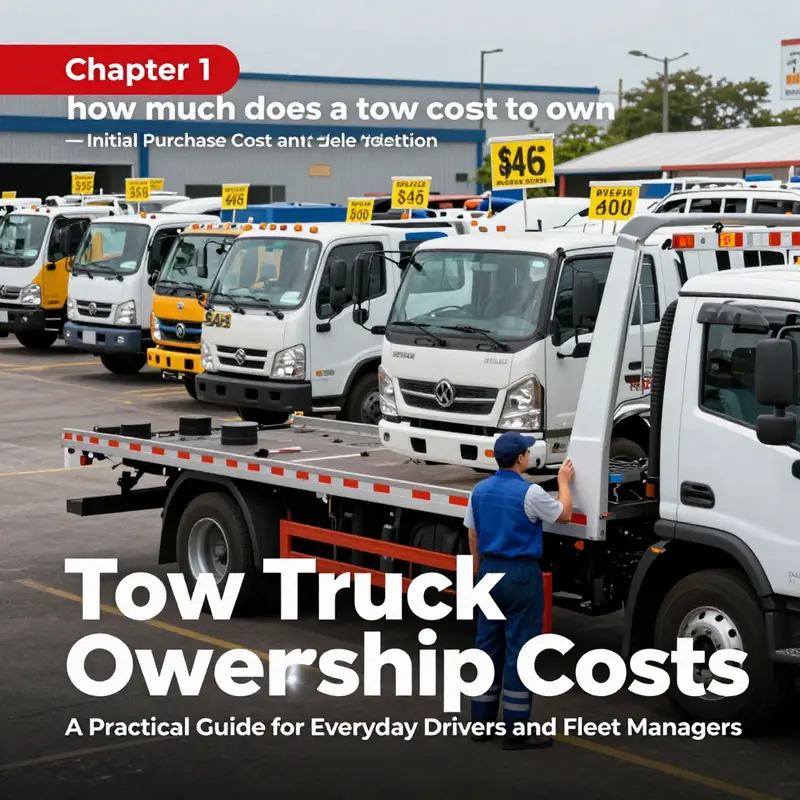
Owning a tow truck starts with a single, defining step: choosing the right vehicle at the right price. The purchase price is the largest upfront hurdle and the anchor for every other expense that follows. Prospective owners quickly see that a used tow truck can carry a price tag in the range of roughly $20,000 to $50,000, depending on the make, model, and how many miles the unit has accumulated. New models, on the other hand, carry a heftier sticker. For many operators, especially those aiming for reliable, long-term performance, the base price for a new unit often sits between $60,000 and $150,000, and in some cases climbs higher when you factor in heavy-duty configurations or advanced customization. These figures reflect the chassis and towing power alone. They do not capture the essential add-ons and system integrations that turn a bare vehicle into a proven workhorse.
When you map out what you need, the decision becomes more nuanced than simply opting for the lowest invoice price. There are several core vehicle types that dominate the market, each with a distinct balance of capability, footprint, and operating economics. Flatbed tow trucks, sometimes called rollbacks, are among the most versatile options. They feature a hydraulically operated bed that lowers to the ground, enabling vehicles to be rolled onto the deck. This setup minimizes the risk of damage to most car types, including several AWD and low-clearance models, and it shines on long-distance tows where careful loading matters. Yet the flip side is equally clear: their upfront cost tends to be higher, they require more storage space, and loading can be slower in tight spaces. The trade-off is safety and vehicle protection versus speed and footprint.
Integrated tow trucks—often labeled heavy-duty wreckers—offer another clear path. Built into the chassis, these units combine a boom, a winch, and a wheel-lift system in a single, high-torque package. They deliver exceptional control during complex recoveries and are durable enough for demanding operations, such as accident scenes and heavy vehicle handling. They are ideally suited for professional fleets and emergency-response contexts, yet they come with a premium price and more demanding maintenance requirements. Operators who choose an integrated configuration usually plan for higher ongoing upkeep and the need for skilled operators who can maximize the machine’s power without compromising safety. In markets where budgets are tighter, the higher purchase price and specialized maintenance can make these units less accessible, even though they deliver unmatched performance in the right hands.
A third major category—the wheel-lift configuration—offers a middle ground in terms of price and capability. Wheel-lift tow trucks use suspended platforms to lift a vehicle by its wheels, enabling efficient roadside recovery and transport of a broad range of vehicle types. They strike a balance between the flatbed’s gentle handling and the integrated wrecker’s sheer lifting power. For many small businesses and mid-size fleets, a wheel-lift model represents a pragmatic entry point that can scale with growth while keeping maintenance and training requirements manageable. The choice among flatbeds, integrated wreckers, and wheel-lift units hinges on the work you expect to perform, the typical vehicles you will encounter, and the geographic patterns of your service area.
No discussion of vehicle selection can stop at the chassis. Owners soon learn that the base price is only part of the story. The long list of upgrades and essential equipment quickly adds tens of thousands to the initial investment. A robust winch, various tow straps, wheel lifts, and towing dollies are not optional extras for a serious operation. Axle pads, heavy-duty fasteners, and specialized securing gear protect expensive vehicles during transit. Emergency lighting—light bars, sirens, and warning beacons—improves safety and compliance on the road. Communication systems, GPS tracking, and fleet-management software help coordinate dispatches, optimize routes, and monitor maintenance. Safety gear such as cones, vests, and flares reduces risk on scene work. In practice, these add-ons can push the first-year investment well beyond the base price, and sometimes far into the six-figure range for high-volume operators.
For many buyers, the question of how to fund this purchase is just as important as the price tag itself. Financing is a common path, but commercial lenders typically require a down payment, often in the 15–25% range, before they will extend credit for a tow truck. That means cash-flow planning needs to account for not only the purchase price but also the accompanying costs of equipment, installation, and initial operating capital. A cautious forecast will include time to ramp up revenue, establish a customer base, and build a reserve to absorb any early maintenance surprises. In this context, the vehicle you select should be aligned with a clear business plan that weighs service scope, expected daily miles, and the mix of vehicles in your local market.
Evaluating the potential return on investment begins with a realistic service profile. A small shop operating a used medium-duty tow truck, for instance, might focus on standard roadside assistance, light recoveries, and intra-city towing. Their annual ownership costs will skew toward dependable maintenance and predictable fuel efficiency, with a lower upfront capital burden and a faster path to cash flow. In contrast, a larger fleet pursuing a broader geography and higher-capacity recoveries may justify a brand-new, specialized unit, accepting the higher entry price as part of a long-term efficiency dividend. In both cases, the decision rests on a careful balance: how quickly you need to recoup the initial outlay, how reliable you must be in your service window, and how much risk you can shoulder when the vehicle is out of service for repairs.
The practical takeaway is that initial purchase cost cannot be viewed in isolation. The true price of ownership emerges from the combination of vehicle selection, planned upgrades, and the anticipated work pattern. A concise primer on the price tag for such equipment is captured in a resource that surveys current market realities and helps frame expectations around total cost of ownership. A helpful overview can be found at How much is a tow truck. This reference highlights how different configurations affect both upfront outlays and long-term operating economics, reinforcing that the right choice depends on the intended scope of work and the region you serve.
To complete a thoughtful purchase plan, buyers also weigh the logistical realities of ownership. Storage space matters, as larger flatbeds and integrated wreckers demand more garage real estate. The weight of these machines influences insurance quotes, parking considerations, and permitting requirements in certain municipalities. The decision must incorporate the downstream costs of maintenance, spare parts, and technician labor. The initial purchase is the doorway to a complex ecosystem of expenses that, taken together, determine profitability. In short, the most prudent buyers approach the process with a clear map: a realistic budget for the base unit, a disciplined line item for equipment and installation, and a strategic plan for financing that preserves cash flow while enabling rapid deployment to customers.
As you navigate these choices, remember that the market offers a spectrum of options designed to fit different business models and geographic realities. The right configuration for a one-truck operation in a small town may bear little resemblance to a multi-truck fleet serving a dense urban corridor. Yet both share a common thread: the optimal purchase decision must balance capability, reliability, and total cost of ownership over the life of the vehicle. The initial price sets the stage, but the ongoing costs—insurance, maintenance, fuel, licensing, and equipment upgrades—ultimately determine whether the investment pays off. For operators, the lesson is to scrutinize not just the ticket price but the entire financing and maintenance ecosystem that supports a tow-truck business over time.
External industry insight and pricing perspectives can deepen this understanding. For a broader view of ownership costs and how they scale with fleet size and usage, consult an external resource such as External industry pricing guide.
Tow Truck Ownership: The Real Cost Equation of Insurance, Risk, and Everyday Operations
Owning a tow truck is more than writing a check for a chassis and a hydraulic system. It is a long arithmetic problem that unfolds across years, with the sticker price only the first line of a much larger ledger. The ownership cost begins with the vehicle itself, but it quickly multiplies as you count insurance, maintenance, fuel, licensing, equipment, and the invisible but essential expenditures tied to risk management and reliable service. In practical terms, the decision to buy a tow truck is less about predicting a single yearly expense and more about estimating a steady, sustainable cash flow that can withstand the inevitable shocks of on‑the‑job hazards, equipment wear, and market cycles. For a quick reference on the price tag itself, many prospective owners start with the question, How much is a tow truck? and then translate that curiosity into a disciplined cost model that accounts for every foreseeable line item.
The upfront purchase is the most concrete portion of the equation, yet even there the range is wide. Used tow trucks typically land somewhere between twenty thousand and fifty thousand dollars, a window that reflects differences in make, model, capacity, age, and mileage. New vehicles command a far larger investment, often sixty thousand dollars to well beyond a hundred thousand, especially when planners add heavy‑duty configurations and specialty equipment designed for demanding recoveries. The initial outlay isn’t simply the end of the story; it interacts with everything that follows. If you buy new, you might gain in reliability and lower immediate maintenance risk, but you also lock in higher depreciation and possibly larger insurance premiums. If you buy used, you may reduce upfront costs but accept higher uncertainty about remaining life and repair needs. Either path demands a careful assessment of how the truck will be deployed: the tempo of jobs, the typical distances, the urban versus rural mix, and whether you intend to run a solo operation or a small fleet with several vehicles.
Beyond the chassis, the equipment and safety gear form a second critical wave of expenditure. Winches, wheel lifts, dollies, hydraulic lifts, lighting, radios, and the full array of safety gear are not optional adornments; they are essential to regulatory compliance, job effectiveness, and worker safety. The initial investment for these tools can range from roughly five thousand to twenty thousand dollars, depending on the sophistication of the system and the scope of services you plan to offer. The more capable your setup, the more you can accomplish in a single call, but you also increase the need for regular inspections, calibration, and spare parts. This is where the risk-management mindset begins to take shape: every dollar spent on durable equipment is an investment in uptime and reliability, and it travels with you into every call where a customer’s property and your crew’s safety are on the line.
Insurance sits atop the ongoing cost pyramid for good reason. Tow trucks operate in high‑risk environments—on busy streets, around repair facilities, and at accident scenes where property damage and bodily injury claims can loom large. While standard auto policies provide a baseline, commercial auto insurance for tow operations is significantly more expensive because of the elevated exposure. Recent ranges place annual premiums broadly from about eight thousand dollars to fifteen thousand dollars or more, depending on location, fleet size, coverage level, and the operator’s claims history. Some owners have seen premiums that spike above these figures when they add endorsements for specialized services, increase deductibles, or set tight restrictions on the kinds of jobs the fleet will accept. Conversely, strong risk controls, reputable safety records, and a relationship with an insurance broker who understands specialty vehicles can help a policyholder secure more favorable terms. The reality is that insurance is a variable guardrail—costly, but indispensable when your margins depend on predictable response times and safe, compliant operations.
Maintenance and repairs form a parallel stream of ongoing costs that can surprise newcomers if not planned for. Regular maintenance—oil changes, tire rotations, brake inspections, fluid checks, and cooling system service—keeps the tow truck dependable and helps manage long‑term depreciation. Yet heavy‑duty and specialized equipment often demand more frequent attention and more expensive parts. A practical budgeting approach often places maintenance and repairs in a broad band of roughly five to ten thousand dollars per year, recognizing that some years will be lean while others will require more substantial repairs after a heavy call load or a rough operating environment. Fuel represents another sizable line item, particularly for operators who chase miles and returns. Diesel remains the standard, reflecting the torque required for towing and the durability demanded by constant usage. Expect one thousand to three thousand dollars per year in fuel, with tires, lubricants, and consumables adding their own steady costs. In urban settings or long‑haul recovery scenarios, fuel can push higher, reinforcing the importance of routing efficiency and preventive maintenance to protect fuel economy.
Licensing, permits, and regulatory compliance add a quieter but persistent cost thread. These annual or periodic fees vary by state and city but can range from a hundred to a thousand dollars. The exact amounts depend on the licensing scheme, local vehicle weight classifications, and whether the operator holds additional credentials or endorsements. While these figures may seem modest, they accumulate across a fleet and across years, underscoring the importance of treating compliance as a core operating discipline rather than an afterthought.
Equipment upgrades and optional attachments are another variable frontier. As customer expectations evolve and safety standards advance, operators often invest in upgrades that improve lifting capacity, handling precision, and on‑scene safety. The cost of these improvements can span five thousand to twenty thousand dollars initially, with some upgrades yielding longer‑term savings through faster job completion or reduced wear on core components. These decisions should be guided by a clear view of service lines, average job size, and the probability of requiring specialized equipment for certain scenarios, rather than by a desire to chase the latest gadget. In practice, the most sound equipment investments are those that extend uptime, reduce the risk of injury, and enhance the reliability of response—traits that support healthier profit margins even when the market tightens.
Labor and management overhead complete the practical framework. If you run solo, your labor costs are still real, because your time is your most precious resource. Time spent marketing, scheduling, route planning, and maintaining records is time that cannot be spent on revenue‑generating calls. If you operate with drivers or a small crew, wages, benefits, payroll taxes, and training become even more prominent. A robust business will view labor not as a fixed line item but as a dynamic driver of profitability: the more effectively you deploy people, the more you can deliver on a tight dispatch schedule, and the more predictable your cash flow becomes.
All of these costs—vehicle price, equipment, insurance, maintenance, fuel, licensing, and labor—intersect with the broader concept of risk management. The chapters of insurance and risk are not separate from the cost sheet; they are the cost sheet in disguise. The practical risk management practices that protect margins start with rigorous driver training and clear safety protocols. They extend to regular maintenance schedules and the use of telematics to monitor driver behavior, speed, braking, and vehicle performance. They include well‑drafted contracts with clients that define scope, liability, and expectations, and they rely on meticulous documentation of every job and incident to support claims handling and dispute resolution.
New owners, in particular, benefit from early planning with a broker who specializes in specialty vehicles. The advice is practical: tailor coverage to your specific operations, implement a risk management plan from day one, and keep detailed records of all jobs, client agreements, and incidents. These steps do more than protect the bottom line; they provide the operational backbone that lets a tow business scale with confidence. When you map out the costs across the lifecycle of the vehicle and its equipment, you begin to see a coherent pattern: ownership costs are real, but they can be managed through disciplined budgeting, proactive maintenance, and a culture of safety and accountability.
If you’re weighing whether to buy now or wait until you can retire debt or acquire a larger fleet, consider the real decision as one of capacity and resilience. A small, used medium‑duty tow truck with a lean but well‑maintained setup may drive annual ownership costs around the twenty thousand dollar mark in a modest operation. A larger fleet with new trucks and a broad suite of equipment can push annual costs well beyond thirty thousand dollars per year, particularly when you factor in insurance for multiple vehicles and the higher risk exposure that comes with scale. The exact figure hinges on how aggressively you pursue uptime, how efficiently you deploy your crew, and how carefully you manage the non‑driving costs that nonetheless shape your company’s long‑term viability. For deeper insight into the price tag and how it translates to a practical business plan, you can explore broader cost estimates in this resource: How much is a tow truck?.
Ultimately, the question of how much tow truck ownership costs cannot be answered with a single number. It is a dynamic, evolving calculation that reflects vehicle choice, service scope, risk appetite, and operating discipline. The core truth remains constant: insurance and risk management are not peripheral expenses but central to protecting margins and ensuring consistent service delivery. A well‑structured risk program, combined with disciplined cost control and a clear sense of the service market you intend to serve, will determine whether your investment in a tow truck translates into sustainable profitability or a creeping drain on capital. The journey from sticker price to true ownership cost is not a straight line; it is a loop that tightens with each new contract, each safety improvement, and each mile logged under dispatch. External resources such as dedicated guides on towing insurance can provide a framework for estimating premiums and tailoring coverage to your exact operations. For ongoing reference, consider consulting authoritative materials in the industry to refine your model and keep pace with regulatory changes and market expectations. External resource: https://www.towtruckinsurance.com/owners-guide/
Beyond the Sticker Price: A Practical, Long-Haul View of Tow Truck Ownership—Maintenance, Repairs, and the Lifecycle Equation
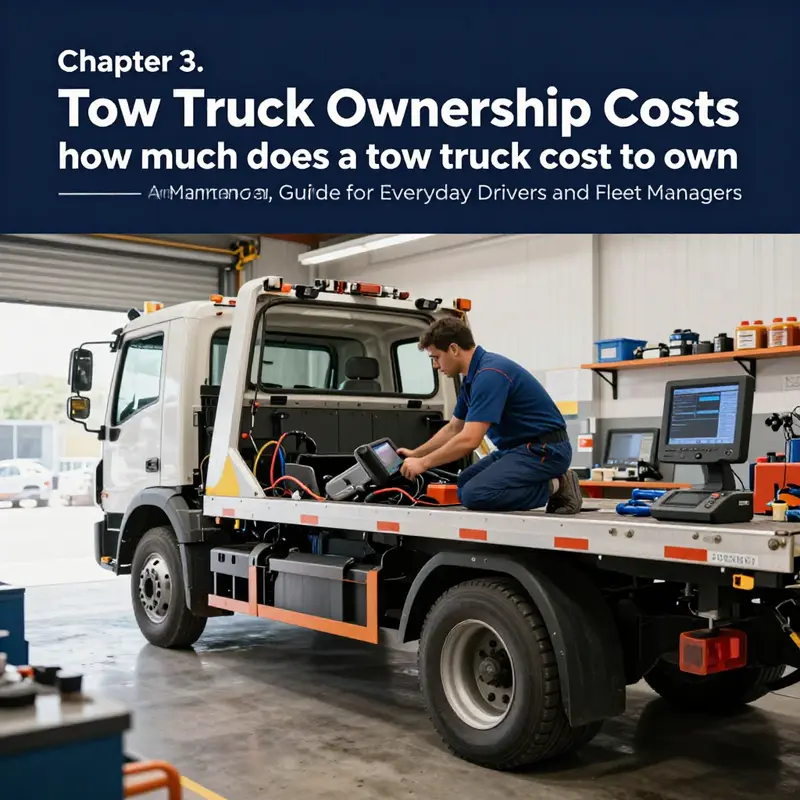
Owning a tow truck is rarely a simple matter of paying upfront and driving off into profitability. The real story unfolds in the months and years that follow, as maintenance needs accumulate, parts wear down under heavy workloads, and the vehicle remains on the clock for every recovery, emergency call, and roadside assist. The chapter you’re reading isn’t about a single expense, but about the lifecycle of cost—how routine care, unexpected repairs, and strategic decisions shape the total cost of ownership over a tow fleet’s lifespan. When you look at ownership this way, the numbers begin to tell a more complete narrative. The initial price tag, whether for a sturdy used unit or a robust new model, is just the opening chapter; the rest is written in maintenance schedules, replacement cycles, and the tempo of your daily operation. For those weighing the tradeoffs, a holistic view reveals how preventive discipline and smart asset management translate into more reliable service, steadier cash flow, and, ultimately, a healthier bottom line. If you want a quick reminder of the upfront side, you can consider How much is a tow truck?, but the deeper, ongoing costs are what determine long-term viability and profitability.
Maintenance is the backbone of a reliable tow operation, and it comes with a predictable, if sometimes stubborn, price tag. A typical annual maintenance budget falls in a mid-range of a few thousand dollars—roughly two thousand to five thousand dollars for many medium- and heavy-duty rigs that see steady use. This is not cosmetic care. It covers oil changes, brake inspections, tire rotations, and the ongoing servicing of the winch and lifting mechanisms that keep a tow truck ready for duty. It also includes periodic testing of safety systems—lights, sirens, radios, and electronic controls—that must function flawlessly during peak demand or when speed to scene matters. Preventive maintenance is not a luxury; it’s risk management. A small delay in servicing a critical component can cascade into a costly breakdown, especially when a dispatcher’s call volume spikes and downtime eats into revenue. The cost of a failed winch motor or a damaged hydraulic line doesn’t stop at the repair bill. It includes lost income from idle hours and the potential for missed calls during a high-demand window.
If you peer inside the vehicle’s anatomy, the wear pattern tells a clear story. The most stressed components in tow operations include the winch system, hydraulic lifts, tires, brakes, and the engine. Each is built to endure heavy loads and frequent, sometimes jarring, use. The winch, in particular, endures cyclical strain that can degrade cables, gears, and electrical connections; hydraulic lines face pressure and temperature fluctuations that intensify wear; tires absorb the brute force of traction on varied surfaces; brakes endure frequent, intense stopping. Engine health matters too, since the engine must deliver reliable power under load and across long shifts. Regular, proactive servicing—oil and filter changes at manufacturer-recommended intervals, brake inspections, tire health checks, and targeted servicing of winches and hydraulics—helps reduce the likelihood of unexpected, high-cost repairs. It also extends the vehicle’s useful life and preserves resale value, which matters when depreciation enters the financial picture.
Depreciation, in particular, is a discipline you can plan around. Heavy-use tow trucks tend to depreciate quickly, with a common view that after about five years a well-used unit may have shed roughly sixty percent of its original value, depending on mileage, maintenance history, and market conditions. That figure isn’t a fate—it’s a trend you can impact through meticulous upkeep, timely part replacement, and measured investment in reliability. The economic effect is twofold: it preserves more of the asset’s resale value and lowers the cost of ownership by reducing unplanned downtime and emergency repairs. In other words, a disciplined maintenance program does not just preserve current performance; it reshapes the long-term economics of owning a tow truck.
Beyond the mechanical, there is a governance layer of safety and compliance that quietly adds to the annual cost of ownership. Safety equipment—lights, alarms, and communications gear—requires regular testing and occasional updates to meet evolving local regulations. These checks are not optional in high-coverage towing work; they are a price of staying legal and insured, and they contribute to both reliability and peace of mind on the road. Insurance sits alongside as a recurring line item that reflects the broader risk profile of towing operations. Commercial auto coverage for tow trucks tends to be a significant expense, often exceeding five thousand dollars per year, depending on coverage depth, location, and claims history. That cost is inseparable from the service you provide, because it underpins the ability to respond quickly and safely to emergencies while ensuring financial protection for your business and drivers.
Fuel and operating costs are another part of the lifecycle math, and they are inherently variable because they ride on the tides of usage and fuel prices. Diesel remains the standard for many tow rigs due to the power demands of heavy-duty work, and annual fuel outlays typically run somewhere in the range of one thousand to three thousand dollars, with additional spending on lubricants and consumables. The exact figure depends on the mix of light-duty tows versus long-haul recoveries, route patterns, and the weight of the loads carried. Yet even a modest increase in miles per year can shift the cost curve meaningfully, making fuel efficiency and route optimization a practical area for intervention.
The lifecycle continues with the often overlooked, yet essential, line items: licensing, permits, and regulatory fees. These annual expenses vary by state and city but generally sit in the lower thousands or hundreds of dollars range, sometimes as little as a hundred, sometimes up to a thousand. It may feel modest, but it compounds with fleet growth and recurring renewals. Related to the lifecycle is the equipment and upgrades side: many operators find value in investing in additional tools and attachments—enhanced winches, specialty dollies, or hydraulic lifts—that can expand capability and speed at the scene. Such upgrades can add five thousand to twenty thousand dollars to the initial investment, and they carry their own maintenance and wear costs. When you fund these improvements, they alter the long-term cost structure, potentially reducing downtime and accelerating throughput, which in turn improves utilization and revenue capture.
Labor costs and management overhead are the human dimension of lifecycle costs. Even if you operate solo, your time matters. When you hire drivers or support staff, the business absorbs wages, benefits, training, and supervision. In a small operation, the management burden may be modest, but for fleets, it becomes a significant factor in profitability. The more you scale, the more critical it becomes to align human resources with maintenance scheduling, job tracking, and dispatch efficiency. The chapter of lifecycle costs thus widens to include the software and systems that keep a face-to-face service business functioning smoothly. Modern tow operations increasingly rely on fleet-management technology—GPS tracking, maintenance alerts, mileage logs, and driver performance data. These tools carry ongoing subscription and hardware costs but offer tangible benefits: reduced downtime, better route planning, more predictable maintenance windows, and clearer, data-driven budgeting. The investment is usually justified by less idle time and better job-turnover rates, especially as call volumes rise.
In budgeting terms, the takeaway centers on two practices. First, treat maintenance as an ongoing investment rather than a reactive expense. Build preventive maintenance into your calendar, track wear patterns on the winch and lift systems, and use data to forecast when parts will wear or fail. Second, model the lifecycle with depreciation in mind. If a unit tends to degrade in value after five years, you can structure reserves around this cycle, planning for refresh or replacement to minimize the risk of a costly, unplanned outage. This disciplined framing turns maintenance from a cost center into a strategic lever for reliability and profitability. The most resilient tow operations balance careful part selection and supplier reliability with a maintenance cadence that matches workload and duty cycle. They pair this with prudent insurance and a clear understanding of the fuel, licensing, and labor costs that compound year after year. In practical terms, that means budgeting with foresight: allocate funds for anticipated wear, set aside reserves for major repairs, and continuously evaluate whether fleet-management tools deliver a favorable return on investment through higher utilization and reduced downtime. The long view—careful maintenance, steady driving, and timely upgrades—can convert a fleet from a chronic maintenance burden into a dependable, revenue-generating asset.
For readers seeking a broader context on upfront and ongoing costs, a quick reference point is How much is a tow truck?, which helps frame the initial investment side of the equation while this chapter focuses on the ongoing maintenance, repairs, and lifecycle considerations that ultimately determine true ownership costs. As you refine your cost model, consider how preventive maintenance, component wear patterns, and lifecycle planning intersect with insurance, fuel, and labor to shape profitability. A disciplined approach to maintenance is not merely about avoiding breakdowns; it is a strategic asset that sustains service quality, customer trust, and financial viability over the life of your tow operation.
External resource: Understanding Tow Truck Ownership Costs: A Complete Guide provides additional context on the broader cost landscape and can help calibrate expectations across regions and fleet scales. https://www.towtruck.com/ownership-costs-guide/
null
null
Beyond the Sticker Price: Navigating Compliance, Licensing, Permits, and Upgrades in Tow Truck Ownership
Owning a tow truck is often framed by the sticker price of the vehicle itself. Yet business owners quickly learn that the cost to own extends far beyond the purchase. The decision to operate a tow service invites a continuous planning exercise that spans regulatory obligations, insurance architecture, and the need for regular upgrades. In practical terms, a small operation might start with a used medium-duty model priced around twenty to fifty thousand dollars, yet that figure is dwarfed by annual obligations that accumulate as you roll through the market. The financial picture grows foggy because each jurisdiction adds its own rules about safety equipment, driver qualifications, and environmental compliance. When you tally up the long view, ownership costs often rival or exceed the initial outlay within a few years, especially if you scale up or pursue higher-end fleets. The math becomes more nuanced as you factor in depreciation, financing terms, and the opportunity cost of capital tied up in the vehicle. For many operators, the more accurate question is not just what a tow truck costs to buy, but what it costs to own responsibly, reliably, and profitably over the life of the asset.
Compliance, licensing, and the ongoing need to upgrade form a core part of that equation. The vehicle must not only perform reliably, but also meet a web of safety and environmental standards that keep staff safe and communities protected. In the United States, for example, this typically translates into DOT-related requirements that demand regular inspections, proper lighting, reflective markings, and functional emergency equipment. While the exact rules vary by state, the throughline is clear: non-compliance carries real penalties, from fines to operational shutdowns and heightened liability. The upfront task is to assemble certified parts and a documentation trail that proves the truck remains compliant over time. This is much more than paperwork; it is a disciplined maintenance culture that reduces the risk of costly downtime and the cascading effects of a roadside incident. The same principle appears in other regions as well, where standards emphasize material properties and technical reliability to keep tow operations steady under challenging conditions. This broader perspective reinforces a simple point: the cost to own increases when compliance gaps appear or when inspections lag. The price of a missed inspection can be far higher than the price of the inspection itself, and the disruption to service can erode customer trust more quickly than a mechanical issue ever could.
Licensing and permits layer another dimension onto the ownership ledger. A Commercial Driver’s License is often necessary when towing heavy loads or operating certain types of tow trucks, and many jurisdictions require a business license or a specific tow-truck operator’s license. Background checks, proof of insurance, and bonding are common prerequisites, and some cities impose additional permits to operate in restricted zones or in areas with stringent emissions rules. Cost ranges for licenses and permits are remarkably variable—roughly from a hundred to more than a thousand dollars annually depending on location and the scope of operation. This is not mere bureaucracy; it is a gate to legality and reputability in a field where street-side emergencies demand timely response. Even if you begin as a one-person operation, you are navigating a landscape where labor, insurance, and compliance costs intersect with regulatory demands, shaping both short-term cash flow and long-term viability.
Upgrades and maintenance sit at the intersection of safety, efficiency, and legal compliance. The pace of regulatory change—whether through more stringent emissions standards, updated safety guidance, or new data reporting requirements—creates a compelling case for scheduled upgrades. Modern features such as GPS tracking, enhanced winching mechanisms, and improved hydraulic systems are not optional luxuries but considerations that can influence inspection outcomes and operator safety. Low-emission retrofits may be mandated in dense urban areas, and diesel technologies continue to evolve toward cleaner, quieter operation. A 2026 landscape suggests that leasing high-end equipment can help control upfront capital needs while still granting access to advanced capabilities. This approach can be practical for small fleets or single-owner operators who anticipate growth but remain cautious about capital outlays. Yet leasing does not erase ongoing costs; it shifts them into a different timing and risk profile. Regardless of how you structure ownership, ongoing costs for fuel, parts, tires, and routine repairs remain a constant. Diesel efficiency, maintenance intervals, and the cost of specialized service shops all modulate the annual burden. Gasoline or diesel power presents its own trade-offs: gasoline may be cheaper upfront but can incur higher maintenance or regulatory constraints in certain markets, while diesel offers durability and torque but faces rising emissions scrutiny. These dynamics dictate how an operator plans for replacement cycles, how frequently upgrades are scheduled, and how the business budgets for surprise repairs that tend to arrive with heavy-use equipment.
All of these factors contribute to a realistic budgeting framework that goes beyond sticker price. Prospective owners should anticipate licensing fees, compliance certifications, insurance premiums, and the cost of upgrades as part of a holistic ownership plan. The total annual ownership burden commonly falls in a broad band—often cited as roughly fifteen thousand to over thirty thousand dollars—depending on usage, the exact vehicle class, and local regulatory intensity. In practice, a small operation using a well-maintained used medium-duty tow truck might operate with an annual cost near twenty thousand dollars, while a larger fleet of new or near-new units could push the total well above fifty thousand dollars per year when all regulatory and upgrade costs are factored in. These ranges are not merely generic estimates; they reflect real-world experiences observed across workshops, regulatory reviews, and operator feedback. They remind us that the value of a tow truck is not simply the cost of the steel and hydraulics on the frame, but the comprehensive capability to stay compliant, safe, and competitive in a demanding market.
To ground this discussion in practical terms, it is helpful to view ownership costs through the lens of long-term risk management and service reliability. Compliance failures can halt operations, delaying urgent recoveries and triggering customer dissatisfaction. Licensing lapses can complicate insurance arrangements and jeopardize revenue streams. Upgrades—when staged strategically—can improve efficiency and safety, reducing the likelihood of accidents and the magnitude of downtime. The goal is not to maximize upfront spend but to cultivate a dependable, compliant operation that can adapt to shifting demand and evolving regulations. For those seeking a concise snapshot of the broader cost picture, a practical reference point is available online: How much is a tow truck?. This resource helps translate the initial price into a more complete forecast of ongoing obligations, and it complements the insights captured in dedicated ownership guides.
As a final note, the accounting for these costs benefits from a structured approach that recognizes timing and risk. Upfront licensing and permit fees may appear as one-time costs, yet many permit regimes renew annually. Upgrades can occur in staggered cycles aligned with fleet growth or regulatory deadlines. Insurance terms evolve with claims history and geographic exposure. A disciplined budgeting model that maps purchase price, financing terms, licensing cadence, compliance checks, upgrade cycles, and maintenance milestones can illuminate the true economics of tow truck ownership. In practice, owners often complement internal planning with external guidance, comparing regional data and industry benchmarks. The broader discussion in the field — including comprehensive guides and regional variations — provides a richer context for decision making and helps ensure that the investment in a tow truck supports sustainable, compliant, and productive operations over time.
External resource: https://www.towtruckpros.com/ownership-costs-guide
Final thoughts
Ownership costs for tow trucks are a moving target shaped by vehicle class, duty cycle, and local rules. A disciplined, category-led approach—clear upfront selection, robust insurance, proactive maintenance, disciplined tracking of operating expenses, and deliberate compliance planning—transforms uncertainty into a sustainable, predictable cash flow. Readers can translate the five chapters into a practical blueprint: choose the right vehicle for the use case, secure appropriate coverage, schedule preventive care, monitor day-to-day costs, and budget for upgrades that maintain uptime and safety. The payoff is a transparent framework that supports reliable service delivery, healthier margins, and long-term growth for individuals and organizations alike.