
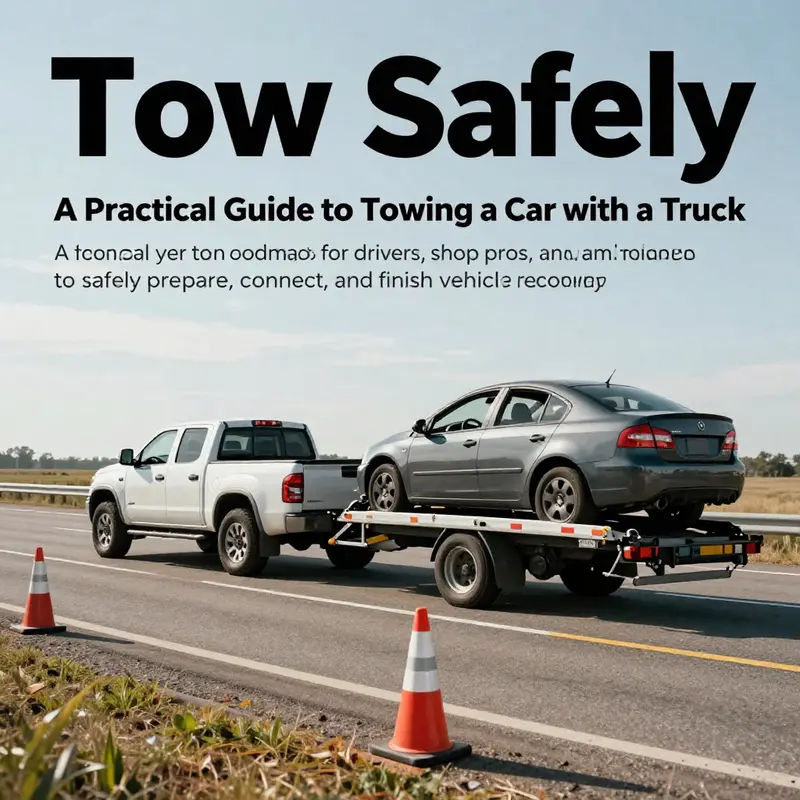
Towing a car with a truck is a common, sometimes unavoidable, task that everyday drivers, residents and commuters, truck owners, auto repair shops and dealerships, and property managers may face. The maneuver demands careful preparation, the right equipment, and strict safety discipline to protect people, vehicles, and property on public roads and in parking areas. While it can be done with basic gear, the risks of poor setup—underrated weight, worn straps, or unstable connections—can lead to accidents, mechanical damage, or legal consequences. This guide breaks the process into four chapters that build a complete, safety-first approach: Chapter 1 covers preparation and safety protocols to establish a solid starting point; Chapter 2 explains how to connect the vehicles and secure attachments with proper hardware; Chapter 3 lays out the towing procedure, with attention to speed, distance, and clear driver communication; Chapter 4 outlines completion steps, post-tow inspection, and a safety follow-up to close the loop. By adhering to manufacturer guidance and established best practices, readers gain confidence to handle routine recoveries and fleet evolutions with measurable safety and control.
Tow-Ready: The Prep, Equipment, and Safety Protocols for Towing a Car with a Truck
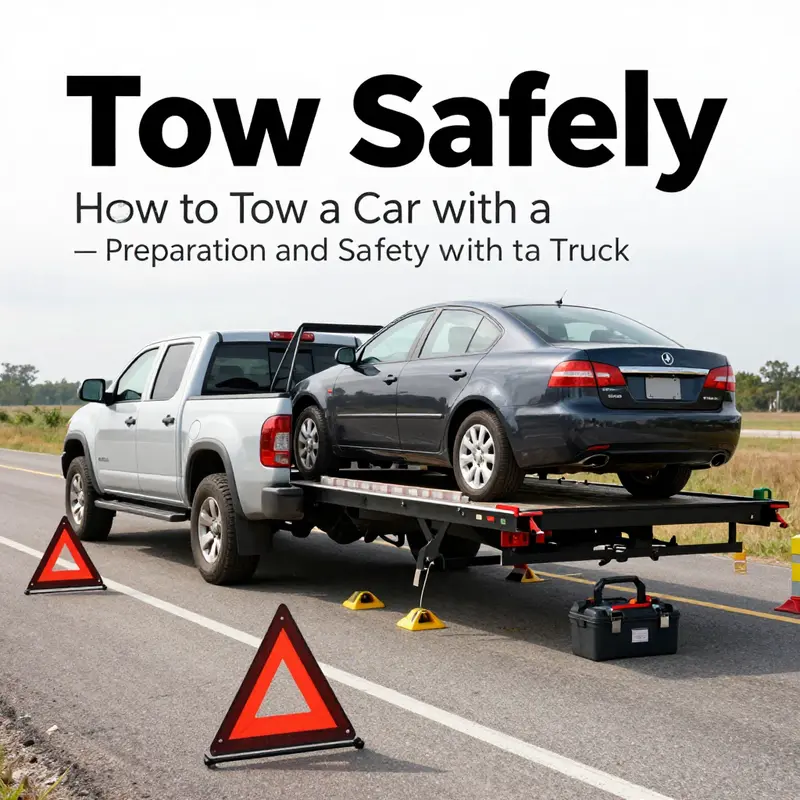
When a vehicle breaks down or must be moved after an incident, the first impression often determines the safety and outcome of the operation. Chapter 1 sets the stage for a tow that is predictable, controlled, and compliant with best practices. Preparation is more than a checklist; it is a frame of mind that keeps everyone on the road safer and the towed car intact. The core idea is straightforward: choose the right equipment, verify its condition, and establish clear measures that govern how the tow unfolds. In this regard, a flatbed tow truck—often called a rollback or slide-bed—emerges as the most reliable option for many scenarios. Its completely level deck lowers to ground level to load the vehicle, providing a stable platform that minimizes dynamic stresses on the towed car’s suspension and drivetrain. This design is particularly advantageous when delicate or high-value vehicles must be transported, and it aligns with the safety-first mindset that guides every good towing operation. While a flatbed is ideal, the chapter that follows emphasizes that the fundamental principles of preparation and safety apply regardless of the specific rig in use. The National Highway Traffic Safety Administration (NHTSA) guidelines anchor the standards that professionals follow, reinforcing the idea that a towing job is as much about prudent judgment as it is about mechanics. For the reader who wants to connect the practical and the policy side, the NHTSA resource remains a trusted reference point throughout the process.
Before the tow begins, the choice of equipment deserves careful consideration. The flatbed’s advantage is clear: a level platform that supports the vehicle without requiring it to roll on its own wheels during loading or transport. Even when the truck is equipped with robust wheel straps and ratchets, the operator should confirm that the winch and securing mechanisms operate smoothly and without excessive play. The securing system must be capable of withstanding the weight of the towed vehicle under a range of road conditions and speeds. The standard practice is to inspect the winch, the straps or chains, and all locking and ratcheting devices for signs of wear, fraying, or damage. The load capacity of the tow truck must exceed the weight of the vehicle being moved, plus a margin for dynamic forces encountered on the road. In other words, preparation is not about over-engineering; it is about ensuring that the chosen equipment is rated for the job and maintained in a course of readiness that reflects the day’s risk profile.
The second pillar of preparation concerns the vehicle being towed. A comprehensive systems check of the towed car ensures there are no surprises once the journey begins. If the car is automatic, it should be shifted into Neutral, and if it is manual, it should rest in Neutral with the parking brake disengaged only if safe and advised by the operator’s protocol. Brakes, steering, and lighting must be verified as functional. If any of these systems is compromised—for example, a brake concern, a degraded steering assist, or nonfunctional tail lights—the tow plan should be revised to minimize risk. The operator must also account for the color of the road ahead: hazards such as traffic, weather, or construction zones demand additional caution in planning the route, stopping points, and the spacing between the tow vehicle and the towed car. These considerations come together to form a safety fabric that fights complacency, especially during long hauls or in heavy traffic.
Beyond the immediate vehicle checks, a precise understanding of the physical connection between the tow truck and the towed car is essential. Tow hooks are the standard anchor points on most vehicles, typically located under the front bumper for the towed car and the rear or undercarriage area for the truck’s hitch or tow bar. Some vehicles require assembling a dedicated tow hook from a spare kit, and others rely on built-in connection points that are designed for towing. The operator must verify the correct points to attach the securing equipment and ensure all protective covers or guards around these anchors are in place. With rope or strap-based connections, a secure knot such as a figure-eight is a traditional and reliable choice, but modern systems routinely employ locking hooks, clevis pins, or quick-release mechanisms to reduce risk of accidental detachment. When a tow bar is involved, it must be fully engaged with all locking mechanisms secured and the bar correctly aligned to prevent side loads that could stress the towed vehicle. The emphasis here is on deliberate, methodical action—never rush a connection. A moment of diligence at this stage pays off for the next hour or more of road travel.
As the two vehicles prepare to move, the towing procedure itself demands steady, disciplined execution. The guiding principle is smoothness: the towing vehicle should start moving slowly and steadily to avoid a sudden jerk that could stress the connection. Abrupt acceleration or abrupt braking is a primary source of failures in towing operations, especially when the towed vehicle has compromised braking or steering. Speed should be kept within a conservative range, typically no more than 30–50 kilometers per hour (approximately 18–30 miles per hour), with adjustments based on road conditions, visibility, and the weight and type of the towed car. Maintaining a safe and predictable pace reduces the dynamic load on both vehicles and makes it easier to anticipate any issues that arise. A safe following distance is essential; a general guideline is to keep at least 50 meters of separation to allow for reaction time and to reduce the chance of a contact if a sudden stop occurs. Communication between the drivers is a quiet, ongoing responsibility throughout the tow. The driver of the tow vehicle serves as the primary signaler, but the towed-car operator must stay attentive and ready to respond to directions such as easing off the accelerator, applying a steady pressure on the accelerator, or slowing to facilitate a smoother stop. This collaborative attention to detail helps prevent miscommunication that can cascade into a dangerous scenario.
Regular monitoring during the journey reinforces safety. The connection point should be checked frequently, particularly after each stop or when negotiating hilly terrain or rough pavement. If the towed car exhibits brake issues or steering drift, anticipate the need for earlier, gentler stops and more gradual deceleration. In such cases, the tow plan may require additional travel time, more frequent rest stops, or the use of a different securing configuration to preserve control and avoid inducing unintended wheel lock or loss of grip. The operator should also be mindful of weather-related changes—rain, ice, or strong crosswinds can alter the handling characteristics of both vehicles. In these conditions, reducing speed further and increasing following distance are prudent precautions. The emphasis remains on prevention: identifying a potential problem early and addressing it before it becomes a critical incident.
At the moment of arrival, the completion process is deliberate and orderly. The tow should be slowed gradually to minimize shock to the towed vehicle and to permit a controlled disconnection. Only when both vehicles are completely stationary should the tow equipment be detached. After detachment, a careful inspection of the towed car is prudent to look for any signs of damage, such as misaligned wheels, loose trim, or unexpected movement in the suspension. A post-tow check reinforces the safety net and helps identify any issues that might require professional attention before the vehicle is driven again. The towed vehicle is then parked in a safe, well-lit area for a final, thorough examination and, if needed, a professional inspection.
The guidelines above also acknowledge that not all towing scenarios are created equal. Automatic transmission cars should not be towed long distances unless a flatbed is used, because extended towing with the standard method can cause transmission damage. Four-wheel drive (4WD) or all-wheel drive (AWD) vehicles may require special procedures; some models cannot be towed with all wheels on the ground due to drivetrain design. The manuals for individual vehicles often provide explicit instructions and cautions for towing. When in doubt, the safest choice is to employ specialized equipment, such as a flatbed trailer, to avoid drivetrain or suspension stresses that could lead to expensive or dangerous consequences. The overarching message is that preparation and safety are inseparable from the selection of equipment, the method of connection, and the careful execution of the tow.
To connect these practices to everyday decisions a reader might face, consider the practical cost and procurement considerations that come with towing. The cost of towing services can vary based on the equipment used, distance, and whether a flatbed is involved. For a better sense of the economics behind tow-truck services, one practical reference point is the guide to tow-truck costs and pricing. It provides a framework for understanding what affects the price and how different setups influence both the safety and the final outcome of the tow. This is not a sales pitch but a situational awareness tool that helps plan for emergencies with clear expectations. You can explore this topic here: tow-truck costs and pricing.
The content here aims to weave practical steps with a philosophy of caution and competence. The best approach to towing is built on a foundation of readiness, careful assessment, and a disciplined workflow that respects the limits of both vehicles and people involved. For readers who want to broaden their technical understanding beyond immediate practice, a technical guide on car carrier tow trucks offers deeper insight into standards, properties, and applications in practice. This external resource complements the practical steps here by situating them within broader industry standards and real-world engineering considerations: https://www.truckequipmentmag.com/technical-guide-car-carrier-tow-truck/ .
Chapter 2: The Critical Link—Connecting and Securing a Towed Vehicle to a Truck
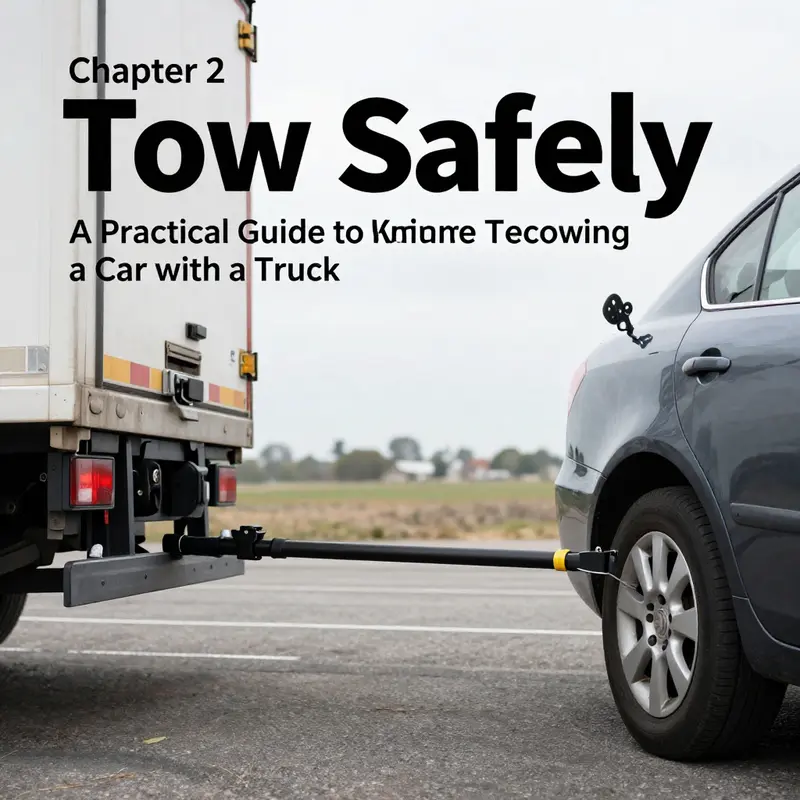
The moment the tow begins, the entire operation pivots on one critical link: the attachment between the tow vehicle and the vehicle being towed. The stability of that connection determines whether the journey ahead remains controlled and predictable or devolves into a dangerous sequence of jerks, sudden pulls, or even a collapse of the towing setup. This chapter treats connection and secure attachment as more than a technical step; it is the safety fabric that holds together every decision made on the road. Begin with the simplest rule: before any physical attachment, both vehicles must be ready for a deliberate, measured handoff. The tow vehicle, typically a truck, should have its brakes tested and functioning, its tires properly inflated, and its engine in good shape so that power and control can be delivered smoothly when needed. The hitch—whether a standard receiver hitch or a specific towing apparatus—must be rated to handle the weight of the towed car, plus a margin for safety. This is not a casual check. It is a foundational verification that prevents a miscalculation from turning into a rollover or a collision. On the towed vehicle, the brakes should respond reliably, tires should be at proper pressure, and the parking brake should be released only after the connection is secure. In practice, many drivers choose to power down nonessential electrical systems in the car being towed. Radios, GPS units, and other electronics can create unexpected surges or feedback that complicate the tow. Neutral is essential for automatic transmissions, and neutral is also the default for manual transmissions once the connection is ready. These steps, while seemingly routine, set the stage for a controlled pull rather than a reactive lurch. With both vehicles ready, you move to the equipment that will actually link them. The choice of tow devices depends on the vehicles involved and the distance you anticipate traveling. A rigid tow bar offers excellent stability and is ideal for short distances and low speeds; it keeps the towed car tracking in a straight line and provides clear feedback to the driver, but it limits steering, so you must anticipate every turn and lane change. A flexible tow rope gives more maneuverability and is sometimes chosen for very short distances or special circumstances, such as a car with a flat tire; it is lighter and simpler but demands careful handling because it can snap under heavy load or sudden stress. A heavy-duty tow strap can cover longer distances and heavier vehicles, but it requires secure anchoring and a higher degree of discipline from the operators. When selecting length, the rope is typically kept between three and five meters to balance visibility and control, while straps or bars are used at four to six meters to provide a safe following distance. These specifications aren’t arbitrary; they reflect practical experience about how much space is needed to react to a given situation and to absorb the forces generated during towing. Once the equipment is chosen, the actual connection process begins, and this is where meticulous attention to detail becomes nonnegotiable. Start by bringing the vehicles into alignment as parallel as possible, with their bumpers close but not touching. This alignment minimizes lateral stress during attachment and reduces the risk of accidental slippage as the tow begins. Attach one end of the tow device to the tow truck’s hitch or designated attachment point, using the manufacturer’s locking mechanism, pin, or safety chain as designed. This is not a decorative step; it is a critical safety measure that prevents the device from disengaging during movement. On the towed car, identify the approved tow points. These are typically located under the front bumper or along the frame rails. Do not attach to the rear bumper, suspension components, or other parts that are not designed to bear towing loads. The correct connection point is essential because misplacing the tow device can transfer forces in ways the vehicle’s structure cannot tolerate. For ropes, a reliable technique is to use a double-loop knot or a secure figure-eight configuration to reduce the risk of slippage. For bars or rigid links, ensure that any locking pins, safety clips, or quick-release mechanisms are fully engaged and that the couplers are snug and unyielding. The final security check is a thorough inspection of every link and every connector. Rotate and flex the system, pulling gently from different angles to verify that there is no play at the joints and that nothing has loosened during the setup. Look for signs of wear—fraying on ropes, cracks or deformation in bars, and damaged or missing pins or clips. If any doubt arises about a component, replace or repair it before moving. It is precisely this stage—careful, methodical verification—that transforms a potential hazard into a controlled operation. With the attachment verified, you begin to move, but the pace remains deliberate. Start slowly and apply power gradually so the towed car experiences no abrupt acceleration that could shock the connection. The brake system of the towed vehicle, particularly if there is any existing fault, should not be relied on for controlled stopping from the towing vehicle’s momentum alone; instead, anticipate the need for reduced speeds and planned stopping points. A general guideline is to keep speed modest—roughly within 30 to 50 kilometers per hour, adjusted for road conditions and the weight of the towed vehicle. In practice, that means choosing a speed that allows ample time to react to traffic, road irregularities, or sudden stops ahead. Equally important is maintaining a safe following distance. A sizable buffer—about 50 meters or more in normal conditions—gives the tow driver and the towed driver time to respond to evolving situations without forcing abrupt maneuvers. Communication between drivers becomes a practical necessity rather than a courtesy. The towed-car operator should stay alert, follow the lead of the driver in the truck, and avoid sharp turns, sudden braking, or any maneuvers that push the towing system beyond what was planned. The driver of the tow vehicle remains responsible for smooth acceleration, steady steering input, and predictable braking. Regular communication is essential, particularly if the road conditions change or if traffic requires a slower pace or a temporary stop. As the operation progresses, monitoring becomes ongoing rather than intermittent. The connection point should be checked periodically, especially if the towed vehicle has any braking issues or unusual movements. A slight tug on the rope or a gentle test pull can reveal whether the attachment has shifted or loosened. If anything feels off, stop safely at the first opportunity, reassess, and re-secure the attachment before continuing. Special vehicle considerations add further nuance to the procedure. Automatic transmission cars are generally not to be towed for long distances; if a tow is necessary, the distance should be minimized—often limited to about fifty kilometers—and the vehicle’s transmission should be kept in neutral to avoid lubrication issues that can cause damage. Four-wheel-drive or all-wheel-drive vehicles require even more caution. Many manufacturers advise against towing such vehicles with all four wheels on the ground because of the risk to the transfer case and drivetrain. In most cases, a flatbed trailer offers the safest approach; if a tow bar or rope is used, the owner manuals and the manual’s guidance should be followed to the letter. Towing at night or in poor weather introduces additional hazards. When visibility is reduced, ensure both vehicles’ lights—headlights, brake lights, and hazard lights—are functioning and illuminated. Slower speeds and greater following distances become essential, and if weather worsens, consider stopping to wait for conditions to improve rather than persisting with an imperfect setup. Throughout the process, a philosophy of humility and caution is essential. The attachment is not just a mechanical linkage; it is the conduit through which safety travels from one vehicle to another. A robust connection reduces the likelihood of detachment, minimizes the risk of steering drift, and lowers the chance of an unexpected chain of events that could involve other road users. In time, you may find that the cost of aligning, securing, and maintaining a professional-looking connection is repaid many times over in the form of predictable handling and the peace of mind that comes with dependable control. For those who want to explore the broader realities of towing costs and options, consider exploring how much a tow truck costs, as it frames the practical choices you face when deciding between a short tow with a simple device or a longer haul requiring more robust equipment and perhaps professional services. how much is a tow truck. Finally, always anchor your practice in trusted safety guidance. Official, evidence-based standards provide a baseline that keeps both drivers and bystanders secure on the road. For those seeking authoritative directions, consult the National Highway Traffic Safety Administration’s towing safety guidelines to ensure alignment with national best practices and legal requirements: https://www.nhtsa.gov/vehicle-towing-safety.
null
null
Tow Safe: Completion, Post-Tow Inspection, and Safety Follow-Up
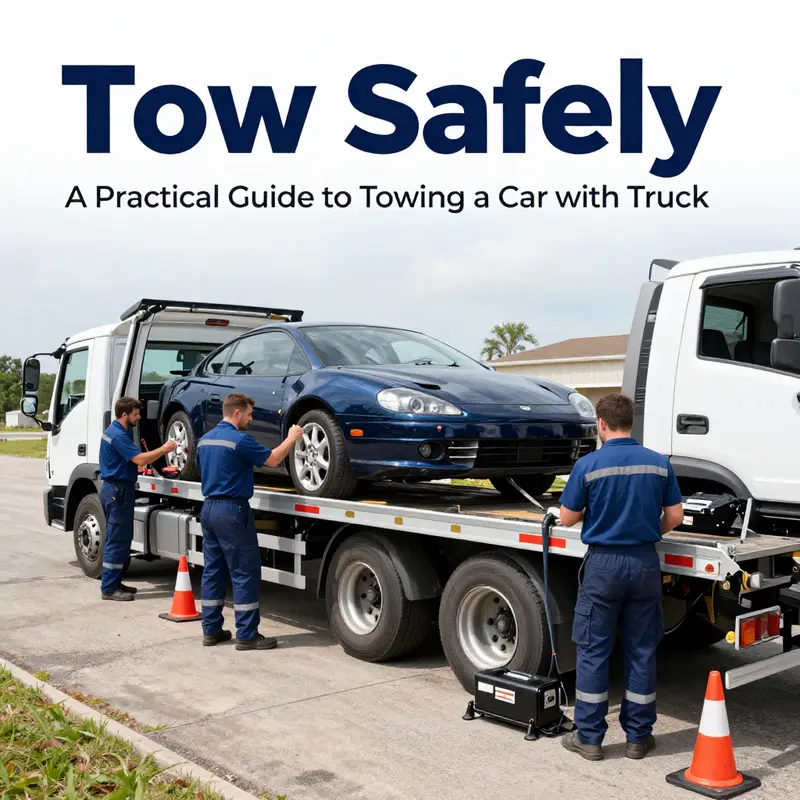
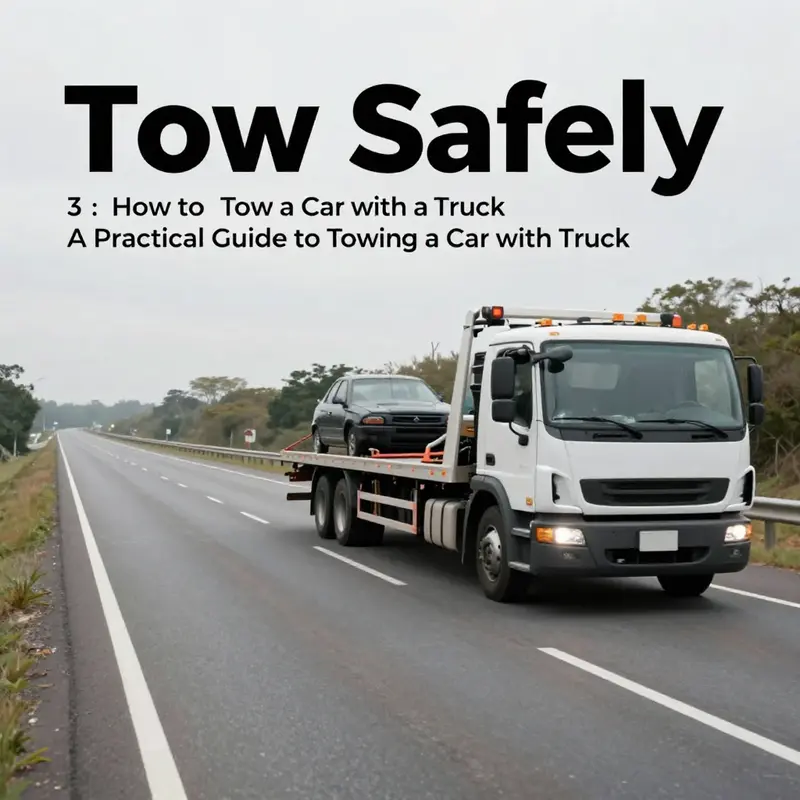
Final steps after a tow are about verifying, securing, documenting, and learning. The completion phase focuses on confirming that every component is rated for the load, securing and immobilizing the vehicle, checking electrical connections and lighting, assessing weight distribution, and performing a controlled on-road test in a safe area. After the tow, inspect the towing apparatus, make notes for maintenance, and log everything to support accountability and future safety. A structured post-tow safety follow-up—briefing the crew, scheduling part replacements, and addressing training needs—helps close the loop and reduce risk on the next operation. For reference on capacity and standards, consult the relevant guidelines and the National Highway Traffic Safety Administration’s towing safety resources: https://www.nhtsa.gov/vehicle-towing-safety
Final thoughts
A successful tow hinges on preparation, the right hardware, disciplined operation, and a thorough post-tow check. By following the four chapters—preparation, secure attachment, controlled towing, and post-recovery inspection—Everyday Drivers, residents and commuters, truck owners, auto shops, and property managers can perform tows with greater safety and predictability. When in doubt about weight limits, equipment, or drivetrain implications, consult the manufacturer manual or engage a professional service. The core takeaway is simple: safety, communication, and controlled actions beat speed any day in vehicle recovery.