
Understanding Tow Capacity: Safety and Importance
Tow capacity is a crucial metric for truck owners and everyday drivers alike. It refers to the maximum weight a vehicle can safely tow behind it, whether it’s a trailer, boat, or any other load. Knowing your vehicle’s tow capacity is essential for ensuring safety on the road, as exceeding this capacity can lead to severe consequences. The National Highway Traffic Safety Administration (NHTSA) has found that improper towing-specifically exceeding the vehicle’s rated towing capacity-is a leading cause of trailer accidents. When drivers overlook this key specification, they risk brake failure, loss of steering control, and overheating of both brakes and engine components, significantly increasing stopping distances and the likelihood of accidents.
For truck owners who use their vehicles for work or recreation, understanding tow capacity ensures not only compliance with legal standards but also prevents mechanical strain and potential financial repercussions. Everyday drivers, especially those using SUVs or crossovers for occasional towing needs, must recognize that even small overages can compromise overall driving stability and safety. Consequently, to enjoy a smooth and safe towing experience, it is vital to consult the vehicle’s owner’s manual and adhere to the specified capacity limits. For more information on safe towing practices, visit the NHTSA’s towing safety guidelines and the AAA’s insights into towing capacity and safety.
Understanding Tow Capacity
Tow capacity refers to the maximum weight a vehicle can safely pull behind it. It’s crucial for truck owners and drivers who frequently haul trailers, boats, or other heavy loads, as exceeding this limit can lead to severe mechanical failures and safety hazards.
How Tow Capacity is Measured
Manufacturers determine a vehicle’s tow capacity through rigorous testing in controlled conditions, simulating real-world towing scenarios. Key measurements include an array of factors:
- Engine Power and Torque: A more powerful engine can handle heavier loads.
- Transmission Type: Automatic transmissions tend to have better efficiency and durability under load.
- Cooling Systems: Adequate cooling facilities prevent overheating when towing heavy weights.
- Braking Ability: The truck must be able to safely stop the load it is carrying.
- Frame and Suspension Strength: A robust frame and suspension system are essential for supporting the weight of the towed load.
Tow capacity is usually mentioned in pounds or kilograms and can be found in the owner’s manual or a label on the driver’s side door. It’s vital not only to consider the weight of the trailer but also any cargo and passengers in the tow vehicle, as these factors contribute to the overall load.
Factors Influencing Tow Capacity
Several components contribute to a truck’s towing ability:
- Rear-End Gear Ratio: A lower gear ratio offers more torque, enhancing towing performance.
- Payload Capacity: This is the weight the truck can carry in its bed, which impacts how much it can also tow.
- Aftermarket Modifications: Changes like larger tires or lift kits can reduce the effective towing capacity.
For optimal safety and performance, drivers should always refer to their vehicle’s specifications and adhere to the manufacturer’s guidelines, ensuring they stay within the prescribed limits of their truck’s towing capacity. For more detailed information about how to find your truck’s towing capacity, consider visiting Car and Driver’s guide or the U.S. Department of Transportation guidelines.
| Factor | Description |
|---|---|
| Vehicle Weight | Includes curb weight and payload. Heavier vehicles have decreased towing capacity due to weight distribution limits. |
| Engine Capacity | Measured in horsepower and torque, a higher output allows for better acceleration and hill-climbing ability under load. |
| Axle Ratio | Affects torque delivery; lower numeric ratios provide more torque for towing, while higher ratios can improve fuel efficiency. |
| Hitch Limitations | Must not exceed the weakest link in the towing system, including hitch and trailer specifications. |
5 Methods to Find Your Truck’s Tow Capacity
Determining your truck’s towing capacity is essential to ensure safety and optimal performance. Here’s a list of common methods to find this crucial information:
-
Check the Owner’s Manual: The most reliable source for your truck’s towing capacity is the owner’s manual. It typically provides detailed specifications, including the towing capacity section, which is essential for understanding your truck’s limits.
-
Look for the Vehicle’s Placard: Often located on the driver’s side door jamb, the placard displays important numbers such as the Gross Vehicle Weight Rating (GVWR) and Gross Combined Vehicle Weight Rating (GCWR). The difference between the GCWR and the truck’s curb weight will give you the maximum towing capacity.
-
Visit Manufacturer Websites: Truck manufacturers like Ford, Chevrolet, and Ram often have tools on their websites that allow you to input your truck’s model, year, and trim. This can provide you with accurate towing specifications tailored to your specific vehicle configuration. For detailed information, learn more about calculating towing capacity.
-
Use Online Towing Calculators: Websites like Edmunds provide free towing capacity calculators where you enter your truck’s details. The results will give you precise towing capacities and recommend the right hitch type for safe towing.
-
Consult with a Dealer or Mechanic: If you’re unsure about interpreting the specifications, don’t hesitate to ask a professional. They can provide insights based on their experience and access to the latest manufacturer data.
Using these methods will help ensure that you correctly determine your truck’s towing capacity, allowing you to tow safely and efficiently.
Safety and Legal Implications of Exceeding Tow Capacity
Exceeding the tow capacity of a vehicle can lead to serious safety hazards and legal repercussions. Safety Risks include:
- Mechanical Failures: Overloading can cause brake failures, suspension damage, and tire blowouts, increasing the risk of accidents.
- Loss of Control: A vehicle that is overloaded may handle poorly, leading to accidents attributed to inadequate stopping distances and maneuverability, especially in emergency situations.
- Statistics: Studies suggest that approximately 70% of accidents involving overloaded vehicles stem from insufficient stopping power and loss of control during critical driving conditions.
Legal Ramifications
Legally, towing beyond the rated capacity violates state and federal regulations, resulting in potential fines ranging from $100 to $1,000. For example:
- California: Fines from $250 to $1,000
- Texas: Fines from $300 to $800
- Florida: Fines from $200 to $750
Additionally, insurance claims can be denied if the accident was due to towing overload, leaving the driver financially liable for damages. Manufacturers set towing limits based on rigorous testing, and exceeding these limits not only voids warranties but can also result in significant legal consequences. For further details, see our towing guidelines.
Maximum Towing Capacity by State
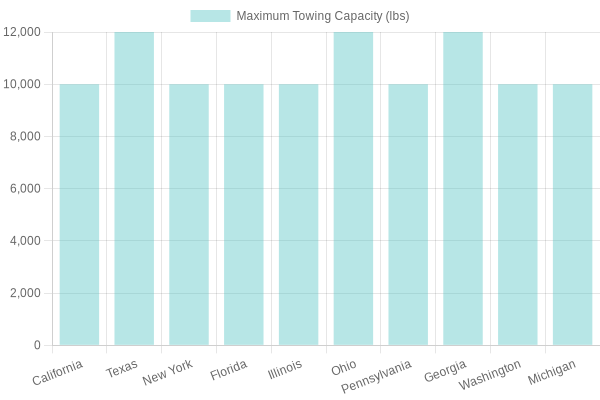
| State | Maximum Towing Capacity (lbs) | Legal Fine Range (USD) |
|---|---|---|
| California | 10,000+ | $250 – $1,000 |
| Texas | 12,000+ | $300 – $800 |
| New York | 10,000 | $100 – $500 |
| Florida | 10,000 | $200 – $750 |
| Illinois | 10,000 | $150 – $600 |
| Ohio | 12,000 | $250 – $900 |
| Pennsylvania | 10,000 | $100 – $400 |
| Georgia | 12,000 | $300 – $1,000 |
| Washington | 10,000 | $200 – $850 |
| Michigan | 10,000 | $150 – $700 |
How to Calculate Towing Capacity
Calculating the towing capacity of your truck is crucial for safety and performance. The formula to determine this capacity primarily involves two key metrics: Gross Combined Weight Rating (GCWR) and Curb Weight of your vehicle.
Step-by-Step Guide
- Understand Key Terms:
- GCWR: This is the maximum allowable weight of your vehicle when fully loaded with passengers, cargo, and the trailer. This value is set by the manufacturer and reflects the combination of your truck’s weight and the weight of what you are towing.
- Curb Weight: This is the weight of the truck without passengers or cargo, but with a full tank of fuel and all necessary fluids.
- Compute the Towing Capacity:
-
Use the following formula:
Towing Capacity = GCWR – Curb Weight
-
For example, if your truck has a GCWR of 16,000 lbs and a curb weight of 7,000 lbs, then your towing capacity will be:
Towing Capacity = 16,000 lbs – 7,000 lbs = 9,000 lbs.
- Refer to Manufacturer Specifications:
- Always consult the owner’s manual or the vehicle’s certification label for accurate GCWR and curb weight figures.
- Ensure that you never exceed the specified towing capacity as doing so can compromise safety and lead to vehicle damage.
- Check for Additional Weight Considerations:
- Consider the tongue weight of the trailer, which should typically account for 10-15% of the total trailer weight. Make sure that this weight falls within the payload capacity of your truck.
Following these steps will help ensure that you tow safely and effectively. For additional safety practices while towing, visit Emergency Response Training Best Practices to learn more about the appropriate measures during towing operations.
Finding Your Truck’s Tow Capacity: The Importance of Knowing Your Limits
Understanding your truck’s towing capacity is vital for safe driving and ensuring the longevity of your vehicle. The towing capacity can significantly influence driving dynamics, efficiency, and safety when hauling heavy loads.
The Risks of Exceeding Tow Capacity
When a truck exceeds its rated towing capacity, it can lead to dangerous situations, such as brake failure, transmission damage, and increased wear on suspension components. According to automotive expert Mike Ramsey from Car and Driver,
“Exceeding the towing capacity can lead to brake failure, transmission damage, suspension wear, and even loss of control. Always check the manufacturer’s specifications in the owner’s manual and use a tow rating calculator to ensure safe towing practices.”
This highlights the critical nature of understanding your truck’s limits before engaging in heavy towing activities. By adhering to the manufacturer’s guidelines, drivers can safeguard not only their vehicles but also their lives and those of others on the road.
How to Determine Towing Capacity
To find out your truck’s towing capacity, you can:
- Check the Owner’s Manual: This is your best source for accurate towing information.
- Look for a Sticker on the Driver’s Door Jam: Many trucks have a sticker that outlines maximum towing and payload capacities.
- Consult Manufacturer Websites: Most manufacturers provide specifications online.
Conclusion
Knowing your truck’s towing capacity is not just a suggestion; it’s a necessity for safe driving. With the increasing prevalence of large, heavy trailers on the road, taking the time to educate yourself on towing limits can be the difference between a safe journey and a disastrous scenario.
For additional insights, consider checking out our article on how much your truck can tow.
Conclusion on Tow Capacity
Understanding your truck’s tow capacity is not merely a recommendation; it’s vital for ensuring safety, performance, and vehicle longevity. Tow capacity determines how much weight your truck can safely haul, and exceeding this limit can lead to increased wear and tear on your truck, compromising its braking efficiency and stability. Moreover, it can pose serious risks for you, your passengers, and other road users.
As highlighted by recent studies, over 40% of trailer-related breakdowns are attributed to improper towing practices, including exceeding tow limits. This is a stark reminder that every truck owner, whether it’s for personal use or business, must prioritize this aspect of vehicle maintenance.
To accurately gauge your truck’s towing potential, always refer to the manufacturer’s specifications and guidelines. Utilize the methods discussed in this article to measure your truck’s tow capacity effectively. For comprehensive understanding, you may also want to check out this guideline on tow capacity and learn about the dangers of over-towing here. By taking these steps, you enhance your truck’s performance and ensure a safer driving experience for everyone on the road.
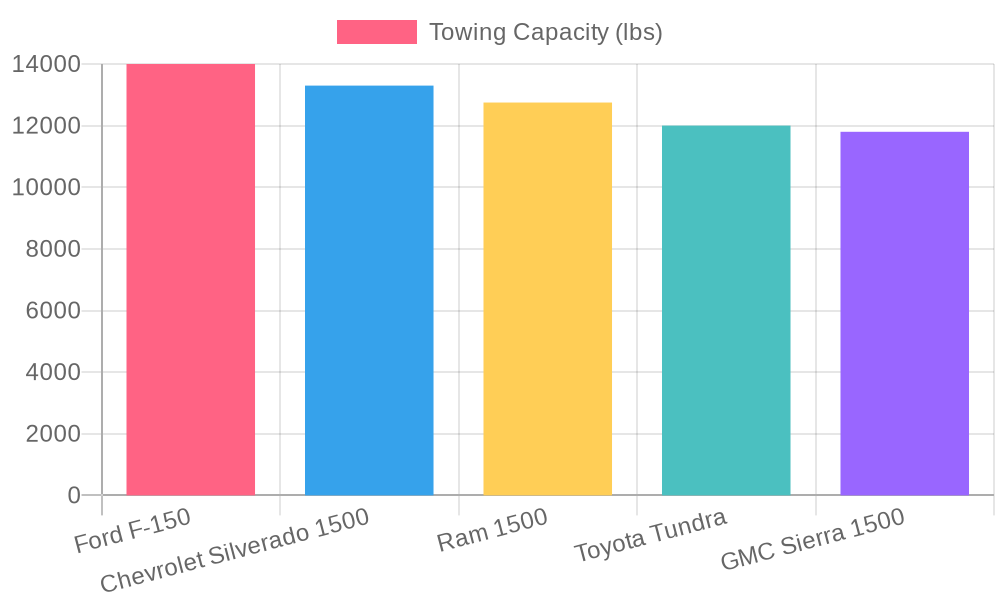
Truck Towing Capacities Comparison
This chart illustrates the towing capacities of various popular truck models in 2023. By comparing these, consumers can make informed choices based on their towing needs and preferences.
| Truck Model | Towing Capacity (lbs) |
|---|---|
| Ford F-150 | 14,000 |
| Chevrolet Silverado 1500 | 13,300 |
| Ram 1500 | 12,750 |
| Toyota Tundra | 12,000 |
| GMC Sierra 1500 | 11,800 |
Sources: