
Tow services are a routine yet high-stakes component of modern mobility. When a vehicle fails or an accident disrupts your day, a tow truck driver can be the difference between getting back on the road quickly and waiting hours for help to arrive. Tipping tow truck drivers is not a universal obligation, but in many scenarios it’s a courteous gesture that can reflect service quality, time sensitivity, safety considerations, and professional standards. This guide is crafted for Everyday Drivers, Residents & Commuters, Truck Owners, Auto Repair Shops & Dealerships, and Property Managers who rely on towing networks to keep operations moving. It draws a clear line between what is customary, what is expected, and what is appropriate given the circumstances. While the practice is not standardized by law, there are practical guidelines that help you decide when to tip, how much to offer, and how to handle payment in a way that respects both you and the driver. The chapters that follow build a cohesive framework: from understanding tipping’s rationale to navigating payment programs like DARP and ROTOW, to recognizing regulatory considerations such as NYC DCWP postings and accepted payment methods, and finally to the etiquette and regional variations that shape tipping norms across contexts. By keeping a consistent set of criteria—service quality, timeliness, safety, transparency, and fairness—you can approach tipping with confidence, ensuring that support is recognized without creating unnecessary expectations. This holistic view is designed to help everyday drivers and professionals assess each tow interaction fairly, while also supporting the operational realities of tow operators, repair facilities, and property managers who coordinate these services.
Tow Moments, Gracious Gestures: Reading the Moment to Tip a Tow Truck Driver
A roadside moment feels suspended between frustration and relief. The car sputters to a halt on the shoulder, the hum of traffic fading into a tense quiet, and then the tow truck arrives with its own calm rhythm. The driver steps out with a steady posture, speaks in plain terms, and moves with practiced efficiency. In that moment, a small gesture can feel like a bridge between distress and resolution. Tipping a tow truck driver is not a universal obligation, but many travelers discover that a timely tip can acknowledge skill, safety, and courtesy when a difficult situation is navigated smoothly. The question of whether to tip—and how much to give—often rests on the particulars of the service, the driver’s conduct, and your own comfort in the moment. Etiquette here is practical, not performative, and it asks you to weigh the value you received against the pressure you’re under as you plan your next steps on the road.
The general rule of thumb is that tipping isn’t required, yet it is frequently appreciated, especially when the service delivered exceeds basic expectations. The typical range most people settle on spans from five to twenty dollars, with higher amounts reserved for exceptional effort. Consider the speed of arrival during an emergency, the driver’s discretion and tact in maneuvering a vehicle through tight spaces or challenging terrain, and the extra guidance they offer—such as clarifying what will happen next, providing safety tips, or helping you understand the process. When a driver comes through under stress, with patience and a steady hand, that extra recognition seems fitting. If you’re facing a complex recovery, where a driver spends additional time aligning the vehicle, protecting it from damage, or coordinating with others to prevent road hazards, the gesture can feel especially meaningful.
It’s important to separate tipping from the base price you’re quoted. A tip is a voluntary expression of gratitude for service quality, not a built-in fee. You may encounter companies or dispatchers that discourage tipping, for policy reasons or to keep pricing uniform. If you’re unsure about a particular company’s stance, a sincere thanks—accompanied by identifying what the driver did well—can still convey appreciation. You can also view tipping guidance as a rough compass rather than a fixed rule, tailored to your circumstances and values. For a concise framework on etiquette in these moments, many readers turn to established guidance that emphasizes sincerity and proportionality, rather than obligation.
What qualifies as “exceptional” can be subjective, but some concrete scenarios tend to invite a larger gesture. A driver who arrives within minutes of a call during a serious incident, who calmly negotiates a difficult recovery in rain, snow, or heavy traffic, or who patiently assists through multiple steps—such as securing the vehicle, checking for hazards, or providing practical advice about next steps—creates a situation where a tip feels like a natural extension of gratitude. In contrast, a routine tow performed without delay or complication might warrant a modest acknowledgment rather than a sizeable gratuity. The key is alignment with the value you perceived: timing, effort, and the extent to which the service reduced your stress or protected your vehicle.
Cash remains the most straightforward method for tipping a tow truck driver, because it is immediate and explicit. If you know in advance that the driver accepts tips by card, or if the company permits adding gratuity to the invoice, you can choose the method that minimizes friction while still honoring your appreciation. In busy or high-risk environments, asking the driver discreetly whether a tip by card is possible respects their policy and preserves safety. If neither option is feasible, a verbal thank you paired with a written note or an online compliment can still reinforce positive outcomes. In any case, the gesture should feel voluntary and proportional, never coerced or rushed by the surrounding chaos.
This is a moment where policy and practice intersect. Some drivers or agencies publish clear tipping guidelines to maintain consistency and prevent misunderstandings. If a driver declines tips, respect that preference and consider alternative expressions of gratitude such as a kind word, a brief compliment to the dispatcher, or a favorable online review. Programs that support veterans, rental vehicle services, or on-call arrangements may include specific rules about gratuities; understanding those guidelines before a call can prevent awkward exchanges and help you make a thoughtful choice about whether to tip and how much. The practical takeaway is simple: tip when the service genuinely improves your situation and you can do so safely, then proceed with honesty and courtesy.
Beyond money, there are other effective ways to show appreciation that many drivers welcome. A concise, specific compliment about what the driver did well can travel farther than a loose gratuity. If you have a moment after the service, a quick note to the dispatch office praising timeliness, communication, or careful handling can reinforce positive behavior across the team. When you reflect later, consider what you learned about preparation, risk assessment, and clear guidance; that reflection can inform how you evaluate future service and tipping decisions, rather than turning the moment into a routine formula.
Regional norms naturally shape tipping habits, as do personal finances and the emotional weight of the incident. In some areas, modest tokens are customary; in others, tipping is less common and sometimes discouraged altogether. The most reliable approach is to respond to the service you received with honesty. If a driver is courteous, transparent about costs, and careful with your vehicle, a tip near the lower end of the range tends to be well received. If the job required substantial physical labor, or involved navigating hazardous conditions or a time-sensitive rescue, a larger tip is a natural acknowledgment of extra effort—yet never forced, and never offered if you know the driver would rather not accept it.
For those who want a practical starting point, five to twenty dollars remains a common baseline, adjusted for the scale of the job and the level of professionalism shown. If the encounter was brief, a simple thank-you and a modest tip may suffice. If the driver spent additional time explaining the process, offering safety tips, or coordinating with others to ensure a safe recovery, a larger amount is reasonable. If you’re unsure, remember that a genuine expression of gratitude can be just as meaningful as cash in some contexts. The important thing is to keep the moment respectful, safe, and aligned with your values.
A helpful way to reinforce good practice is to seek guidance from reputable etiquette resources that address tipping for emergency services like towing. They can help you calibrate your generosity without overthinking or overextending, especially in an already stressful moment. For readers who want a quick anchor, the external resource linked here provides a broader perspective on the etiquette of tipping in urgent service scenarios. It is not a mandate, but a reference point to support your judgment when time, safety, and finances collide on the side of the road.
If you’d like a more formal overview of tipping etiquette in this context, you can explore additional guidance through the following resource: Should You Tip a Tow Truck Driver?
Additionally, if you want to see how a broader industry conversation frames timely, respectful tipping, a related discussion is available through internal guidance on tow-truck etiquette that emphasizes thoughtful, considerate interactions with drivers during demanding moments. For a direct, context-rich reference, you can review the guidance here: tip-tow-truck-drivers-etiquette.
In sum, tipping a tow truck driver is a personal decision anchored in service quality, situational complexity, and your ability to respond with generosity and restraint. It is not a universal duty, but it is a meaningful way to recognize skillful, safety-conscious work when the stakes are high and the road ahead is uncertain. The right moment to tip is rarely dictated by a clock or a fixed rule; it emerges from a clear read of the driver’s performance, your own relief from the service, and a shared understanding that, in that moment, another human made a difference when you needed it most.
Reading Service Quality: Economic Guidelines and Tipping Ranges for Tow Truck Drivers
Tipping a tow truck driver sits at a curious crossroads of courtesy, practical value, and personal judgment. It isn’t a legal requirement, and no universal tariff governs what you should hand over after a roadside crisis. Yet the right tip can feel like a straightforward thank-you for a job that blends physical risk, technical skill, and sensitive handling of vehicles in motion, weather, or tight spaces. The question isn’t merely how much to tip, but what kind of service you’re tipping for, and how that service aligns with your needs in the moment. When a tow arrives quickly, when the driver communicates clearly about what is happening, and when the vehicle is secured with care, many people instinctively want to acknowledge that value. The minimum expectation in this space is often simple respect: a driver who arrives promptly, follows safety protocols, and leaves the scene without complicating an already stressful situation should be met with a polite acknowledgment. The larger truth, though, is that tipping practices tend to track the quality and complexity of the service, rather than a rigid checklist of tasks completed. In that sense, tipping becomes a private conversation between you and the driver about what you felt was fair for the effort involved, the time required, and the risks navigated to help you move forward.
As a practical matter, many people anchor their tipping decisions in a range that reflects the service level they received. For routine roadside tows that unfold without drama—call it Standard Service—the typical tip often lands in the $10 to $20 range. This acknowledges the driver’s promptness and professionalism without implying extraordinary effort. When the tow grows more complicated—perhaps the vehicle must be retrieved from mud, snow, or a precarious angle, or the driver must maneuver a tight space in a narrow lane—the tipping range commonly increases. Above-average service, with extra time, skill, and risk management, can justify a $25 to $50 gratuity, especially if the driver demonstrates clear problem-solving, provides additional guidance about next steps, or manages a challenging set of conditions deftly. Exceptional service, where the driver not only handles the tow with calm efficiency but also offers steady communication, practical advice, and a degree of roadside support beyond the bare minimum, often prompts a tipping expectation of $50 or more.
These guidelines are intentionally discretionary. They reflect customs that have grown up around the service industry and around the particular pressures of roadside assistance. If your tow is connected to an insurance claim or a roadside program, the tipping dynamic can shift. Some programs set expectations that reduce the likelihood of tipping, while others leave room for a gratuity if the service stands out. The important distinction is not whether you tipped someone else in a given week, but whether the service you received met or exceeded reasonable expectations given the context. When you’ve been charged by an independent tow company or when the service is billed directly to your policy, you might weigh the tip differently than you would in a cash-on-the-spot scenario. In any case, the act of tipping remains a personal expression of appreciation for competence, courtesy, and effective problem-solving under pressure.
The factors that contribute to a decision about tipping extend beyond the speed of arrival. Consider the driver’s communication—whether they explained the tow plan, clarified what would happen next, and kept you informed about timing and safety checks. Consider safety practices—whether the vehicle was secured properly, whether you felt the driver respected your property, and whether the scene was managed with professional restraint that minimized risk to you, bystanders, and the car itself. Consider the handling of your vehicle—whether doors and windows were protected, whether fluids or loose items were managed with care, and whether the car was loaded securely in a way that reduces the chance of further damage. The sum of these elements often determines whether the service feels valuable enough to merit a higher gratuity, especially when a driver negotiates tricky terrain, weather, or space constraints. When a tow is performed with finesse and care—under pressure or within a shorter window than expected—a tip in the higher micro-range can feel like a natural extension of the gratitude you already feel for a job well done.
A broader context to consider is how tipping interacts with the economics of the service industry and with personal financial choices. In many places, tipping remains an expression of goodwill rather than a contractual obligation. It’s also important to recognize that some people are in situations where tipping feels more complicated: if the tow is arranged through a program like a medical or disability support network, or if you’ve relied on a credit card that makes the transaction easy to process, you may feel differently about tipping than if you hand over cash at the scene. In New York City and other large urban areas, regulatory frameworks also influence transparency and payment options. For instance, official regulations require tow truck companies to post their license and complaint information where customers can see it and to accept credit card payments. These rules are about accountability and convenience, not about tipping, but they shape the overall experience and reassure customers that their concerns can be addressed if something goes wrong. While these standards do not dictate gratuity, they set a baseline of trust that makes it easier to decide how you want to respond to service quality in real time.
If you’re feeling uncertain about tipping, a good starting point is to ask yourself what you actually needed in that moment. Was the tow straightforward, with minimal delay and professional conduct? Or did the driver go above and beyond by offering extra advice, helping with roadside safety, or guiding you through the next steps after the tow—like arranging a ride, a temporary loaner, or coordinating with a repair shop? Even in cases where the service is excellent, if the tow is covered by a warranty or a roadside assistance agreement, you may decide that a smaller tip is appropriate, or you may choose to forego a tip altogether. The underlying principle remains consistent: tip amounts should be proportional to the value you perceived, not the price tag of the service itself. If you’re unsure, it’s perfectly acceptable to opt for a modest tip and focus on a clear, sincere expression of thanks, because gratitude can be as effective as the number you hand over.
For readers seeking practical guidance beyond the range of numbers, consider a quick mental model: tip within the Standard Service range for routine, prompt help; add to your tip for above-average handling when the situation demands more skill or time; and elevate the tip when the driver demonstrates exceptional, compassionate, or problem-solving approach under pressure. This model tends to align with real-world expectations across many regions and tends to be well-received by drivers who face unpredictable scenes day after day. If you want a concise primer on whether tipping is appropriate in a particular moment, you can read Do You Tip Tow Truck Drivers? for more targeted guidance that focuses on etiquette and context. Do You Tip Tow Truck Drivers?
In weighing these considerations, it is also useful to remember that tipping is not an obligation tied to the mere presence of a service, but rather to the perceived value of that service. You may encounter drivers who are reluctant to accept tips, or who politely suggest that tips are not necessary. In such cases, a sincere thank-you and a respectful nod to the work performed may be the most appropriate response. The point is to avoid a rigid rulebook and to tune your response to the reality of the moment: the weather, the location, the vehicle type, and the driver’s demeanor. After all, a tow can be a stressful interruption to your day, and a thoughtful tip—when offered—acts as a bridge between a tough experience and a sense of relief once you’re back on your way.
To close the loop on this topic, remember that tipping remains a personal decision rooted in the service received, the context of the tow, and your own financial comfort. It is not a universal expectation, but rather a tangible way to acknowledge a job well done when the driver has added value beyond the basic task. If you need a quick reference, think of tipping as a ladder: Standard Service at the base, above-average service as the middle rung, and exceptional service as the top. Climb it only as far as the work you experienced deserves, and you’ll feel confident in your choice when the next roadside prompt arrives. For further guidance on general tipping etiquette, see the external resource linked above.
External resource: Should You Tip a Tow Truck Driver? https://www.aaa.com/automotive/tips/should-you-tip-a-tow-truck-driver
Tow, Tip, and Timing: A Practical Guide to Tipping Tow Truck Drivers in City Emergencies
When a tow truck arrives at your moment of vehicle trouble, the scene is rarely ideal. You may be stressed, cold, or hurried, and the last thing you want is to stumble through a tipping policy with a driver who’s just trying to get you safely back on the road. In such moments, tipping is not a legal requirement, but it can be a meaningful gesture of appreciation for service that feels above and beyond. Prompt arrival, courteous communication, careful handling of your vehicle, and a calm, professional demeanor from the driver all factor into how you perceive the encounter. If the service is punctual and effective, a tip can feel like a small, practical way to acknowledge their effort. If the driver goes the extra mile—staging safety cones, coordinating a tow route that minimizes risk, or staying in contact to guide you through the next steps—a larger tip can be a simple way to recognize that extra care.
In a big city like New York, the practical realities of towing intersect with a web of rules about payments and accountability. There is no universal tipping standard across all tow services, but in many cases travelers find that a tip ranging from ten to twenty dollars reflects a fair gesture for solid service. The amount, of course, should fit the situation: a routine roadside recovery might merit a modest tip, while a challenging, high-pressure tow through heavy traffic, adverse weather, or a complicated recovery could justify a larger thank-you. The key is to assess the service you received and respond with honesty and respect.
A significant layer of complexity in the NYC context comes from payment programs designed to ensure accessibility and fairness for communities with varied needs. Programs like DARP, the Disabled Access Ramp Program, and ROTOW, the Rental Vehicle On-Call Waiver, place certain expectations on how payments are handled. One important rule that emerges from these programs is the obligation for tow operators to accept credit card payments. Specifically, these programs require a minimum standard of payment flexibility, including acceptance of at least two major credit cards such as Visa, MasterCard, American Express, or Discover. This requirement helps ensure that customers who participate in these programs can complete the formal aspects of the transaction without unnecessary delays. It also introduces a factor to consider when tipping: credit card tips are recorded alongside the base fee, and in some situations the transaction is monitored by city regulators to maintain compliance with program rules and consumer protections.
Because credit card transactions are traceable, tips left on a card can become part of an audit or review process. This reality teaches a practical rule of thumb: if you intend to tip, a cash tip given discreetly at the scene tends to simplify documentation and compliance. The recommended approach in many NYC contexts is to pay the official towing fee with a credit card as required by the program, and then offer a separate cash tip if you’re able. This separation helps keep the formal payment clean and reduces the risk of inadvertently complicating program compliance or triggering unnecessary scrutiny from oversight agencies. Cash tips, when delivered respectfully and privately, are often appreciated just as much as a card tip—without tying the gratuity to a recorded card transaction that could complicate bookkeeping for the company or the regulator.
The broader regulatory backdrop also matters in how you approach tipping. New York City regulations require tow truck companies to post their DCWP license and complaint information in a place visible to customers, and to accept credit card payments. These transparency provisions help customers understand who they’re dealing with and how to file concerns if something goes wrong. This framework reinforces a general principle: keep the financial side of the encounter clear and straightforward. If you’re navigating the scene with a DARP or ROTOW participant in your vehicle, you’ll want to ensure you’re following the card-acceptance rule as you settle the charge, and then consider a tip that reflects your satisfaction with the service.
From a social perspective, tipping remains a personal choice shaped by your experience, your means at the moment, and the manner in which the driver carried out the job. If the tow involved complex circumstances—e.g., handling a vehicle in poor lighting, a narrow street, or a high-stress environment—the driver’s ability to stay calm, communicate clearly, and protect your vehicle deserves recognition. Conversely, if the service felt rushed, unprofessional, or unsafe, you’re within your rights to forgo a tip or adjust your response to reflect your experience. In any case, the intent behind tipping matters more than the amount. A genuine expression of gratitude communicates respect for the driver’s professionalism and helps reinforce positive service norms in an industry that relies on quick, reliable responses from trained personnel.
For readers navigating this topic, it can be helpful to think of tipping as a two-layer decision: first, the payment method for the official fee, and second, the optional gratuity for service quality. The recommended strategy, especially in NYC, is to complete the official fee by credit card (as required by DARP or ROTOW participation and city rules) and then offer a cash tip if you can. If cash isn’t readily available, consider a verbal thank-you and a short note of appreciation that follows the driver to their next assignment or simply acknowledges the service in a polite, respectful way. In some cases, drivers may be willing to accept card tips if their employer’s policy allows it, but this is not universally available and should be confirmed with the driver or the company representative at the scene.
If you’re unsure about etiquette, a practical resource can help bridge the gap between common sense and formal guidelines. For a concise, scenario-based look at tipping etiquette tailored to tow-truck drivers, you can consult a dedicated etiquette resource that presents straightforward guidance. This reference provides practical examples of how to phrase thanks, how to offer a tip discreetly, and how to handle situations when you don’t carry cash. It’s especially useful when you’re dealing with the stress of a roadside emergency and want to maintain courtesy without compromising clarity in the transaction. See the resource here: tip-tow-truck-drivers-etiquette.
At the end of the day, the question isn’t simply whether you should tip a tow truck driver. It’s about balancing a respectful acknowledgment of good service with a clear, compliant payment process that aligns with city rules and program requirements. If the driver has provided prompt arrival, professional conduct, and careful handling of your vehicle, a cash tip within the neighborhood of ten to twenty dollars can be a fair gesture. If the service meets higher standards or involves a difficult scenario, adjust the amount accordingly. If you’re operating under DARP or ROTOW, remember to separate the official payment from the gratuity, keep receipts and documentation tidy, and rely on cash to tip when possible to avoid entangling the tip with the card payment records. This approach protects both you and the driver, and it helps maintain the integrity of the program rules that are designed to ensure accessible, reliable service for everyone.
For readers who want to verify the regulatory framework directly, the official NYC Tow Truck Regulations page provides the most authoritative guidance on licensing, complaint procedures, and payment acceptance requirements. External resource: https://www.nyc.gov/site/dcp/tow-trucks.page
Tow-Tip or Trust? Navigating Courtesy, Compliance, and Clarity in NYC Tow Services
When you find yourself stranded on a city street or at the edge of an unfamiliar highway, a tow truck arrives like a steadying hand. The scene often unfolds quickly: flashing lights, a driver’s calm commands, a few practical questions about location and vehicle condition, and the hum of the truck’s engine as it steadies into motion. In moments like these, a question silently passes between you and the professional who will help you recover from a breakdown, a car lockout, or a stalled engine: should you tip? The short answer, steeped in practical wisdom and regulatory guidance, is that tipping is optional, not mandatory. Yet in a city with one of the most regulated service landscapes in the country, gratuity carries social currency because it signals appreciation for service that goes beyond the baseline. The nuances matter, especially in New York City, where consumer protection guidelines emphasize fairness, transparency, and clear pricing. The decision to tip—or not—lands at the intersection of service quality, cost transparency, and the dignity of the worker who is doing a dangerous job under time pressure and public scrutiny.
Tipping is not a legal obligation, and it does not create a right to preferential treatment or faster service. But it is widely regarded as a meaningful gesture when the tow truck driver arrives promptly, communicates clearly, handles your vehicle with care, and follows professional standards through a difficult moment. The city’s Department of Consumer and Worker Protection (DCWP) does not mandate tips; instead, it guides consumers toward recognizing when a tip is appropriate and how to distinguish it from any mandatory charges. This distinction matters because some invoices may include what is labeled as a service charge or a dispatch fee. Those charges can resemble tipping but are not gratuities. Understanding the difference protects you from overpaying or misallocating tips to charges that should be considered part of the service fee. In practice, the fine line between tip and fee is the line you should walk with awareness and due diligence. When you review an invoice, you should be able to identify whether a charge is optional and voluntary or a mandated cost of the service.
In New York City, the tipping guideline commonly cited by consumers and practitioners rests in part on the experience of the service delivered. The DCWP suggests that if you choose to tip, a reasonable range is typically around 15% to 20% of the total tow service cost. This percentage strikes a balance between recognizing genuine effort and maintaining a fair price for the customer, a principle that supports trust in all service industries. However, it is crucial to emphasize that this range is advisory, not prescriptive. The driver’s initiative, how the situation is managed, and the overall quality of communication should inform your judgment. If the driver arrives during a high-stress emergency, explains what they will do, and demonstrates meticulous care with your vehicle, many people feel that a tip within or even above that range is appropriate. If, on the other hand, the service is routine, arrives late, or leaves you with unresolved concerns about your vehicle’s safety, a tip may be smaller or omitted altogether. The emphasis remains on fairness and personal judgment rather than a hard-and-fast rule.
The DCWP’s emphasis on transparency dovetails with a broader ethic in the city’s consumer culture: you should not be surprised by what you pay. That is why the agency encourages customers to request itemized invoices. An itemized bill helps you see exactly what you are paying for, including whether there is a service charge, a dispatch fee, or any other line item that could be mistaken for a tip. If you can clearly identify a separate tip line—or if tipping is explicitly optional—that clarity supports both consumer confidence and the driver’s ability to plan for compensation. When you can separate fee-based charges from gratuities, you can make a more informed decision about tipping based on actual service quality, not on any bundled or confusing pricing structure. You may also choose to pay with a credit card, which many tow services accept under modern practice, including programs that ensure payment flexibility such as certain on-call or assistance programs. The ability to pay by card does not, however, automatically resolve the tipping question. It simply ensures you have a reliable, traceable method for compensating the service you’ve received.
In this nuanced space, it helps to keep a few guiding principles in mind. First, tipping should reflect the level of service, not the obligation to comply with a standard. If a driver arrives at dawn, navigates a snowy street with skill, ensures your vehicle is tethered securely, and communicates clearly about what will happen next, that is a moment where a tip can be a meaningful acknowledgement of their professional effort. Second, be mindful of the distinction between a tip and a fee. If an invoice indicates a clearly labeled service charge, do not double-count it with a tip. And if you are unsure whether a gratuity is expected or appropriate, you can politely ask the driver or the dispatcher to clarify which charges are discretionary. Third, consider the context. In a busy urban environment, where drivers may be juggling multiple calls and a wide range of hazards, a tip can become an incentive not merely for personal kindness but for maintaining service quality across a system that depends on reliable interactions between customers and responders. The city’s transparency rules support this ecosystem by helping customers verify that the charges they see align with the services provided.
For the practical reader, there is value in a simple, thoughtful approach. If the cost of tow service is low and the driver has delivered ordinary service—prompt arrival, professional demeanor, and careful handling—a modest tip, such as 15% of the total, often feels appropriate. If the service involved additional effort—extending beyond the basics to access a precarious location, coordinating transportation for a vehicle with special needs, or providing extra guidance in a confusing or dangerous area—a tip within the 15%–20% bracket remains reasonable. If you encounter a situation where the service is merely routine, with no particular challenge or personal engagement, a tip is optional and should reflect your own judgment and budget. The DCWP’s stance helps temper expectations, reminding customers that tipping is a voluntary gesture of appreciation rather than a paid mandate, and that your invoice should provide a clear accounting of what you are paying for.
In the practical rhythm of a city rescue, many customers find it helpful to have a mental framework they can rely on without overthinking the moment. Some of the best guidance comes from those who have written about these interactions before, including practical etiquette for tipping tow truck drivers. A quick reference point is to consider the etiquette as a guide you can adapt to your own circumstances: your location, the nature of the breakdown, and your ability to comfortably offer a tip. For readers who want a concise, real-world perspective, a quick read on how to tip tow truck drivers can complement the regulatory guidance and provide a grounded sense of what is appropriate in typical scenarios. For deeper insight into etiquette and norms, you may want to explore additional perspectives on this topic, such as practical commentary on tipping habits that align with the norms of service workers and customers alike. This helps ensure you approach tipping with both respect and practicality, recognizing the driver’s expertise while honoring your own financial boundaries.
When discussing these practices, it is important to resist the temptation to reduce the interaction to a single moment of payment. A tow operation is a collaboration, and the way a driver communicates, coordinates with you, and explains the process can have lasting value that extends beyond the immediate transaction. Clear, courteous dialogue reduces stress, helps you understand what is happening, and can prevent miscommunications that lead to disputes about charges later. If the driver is receptive to questions, that is a sign of professional conduct that may heighten your sense of confidence and, in turn, influence your tipping decision. In other words, the act of tipping sits within a broader frame of trust—the trust that competent, courteous workers deserve fair compensation for their skill and risk, and that customers should feel confident in the fairness of the charges they incur. This is the ethical core the DCWP underscores: tipping remains optional, but transparency and respectful treatment of workers are non-negotiable.
For readers seeking further practical nuance, consider a short pause before you hand over payment. Review the invoice. Note whether you see a line labeled as a service charge or dispatch fee. If the line item is clearly labeled as a fee rather than a gratuity, you can decide to adjust your tipping accordingly. If no such line exists or the charge is clearly discretionary, you can proceed with a gratuity that reflects your experience. If you decide to tip, you may choose to provide cash directly to the driver or use a digital method that leaves a traceable record and ensures the driver is compensated promptly. The key is to tip for service delivered, not to tip to avoid a poor experience, and to use the opportunity to reinforce a culture of fairness in a city that values clear, accountable transactions.
For readers who want to ground their approach in a single, practical reference, consider the broader context of how tipping guidelines are communicated in the city and how they relate to the customer’s rights and responsibilities. The DCWP guidance is part of a larger landscape of consumer protections that seek to balance the power dynamics between service providers and customers. By understanding these principles, you can approach each tow service interaction with greater calm, knowing you are participating in a system designed to be transparent and fair. If you want to deepen your understanding of etiquette and norms, there is a concise resource on tipping tow truck drivers that offers practical tips and polite language for discussing charges and tipping expectations. It’s a useful companion to the formal guidance and can help you approach the moment with confidence and care, ensuring that the interaction remains respectful and mutually beneficial. tip-tow-truck-drivers-etiquette.
In closing, tipping a tow truck driver in a regulated city like New York is a thoughtful choice that reflects service quality and professional conduct. It is not a requirement, but it is a gesture that many drivers appreciate when it is warranted by the situation. The DCWP’s emphasis on transparency—about charges, fees, and the nature of the service—serves to empower consumers to tip wisely, rather than out of obligation or confusion. By paying attention to the invoice, understanding the difference between fees and gratuities, and using tact and fairness in your tipping decision, you participate in a marketplace that values reliability, respect, and accountability. When the next call comes in and a driver arrives with a calm, capable presence, you will be better prepared to respond with courtesy and clarity, recognizing that a well-timed tip can be as much about acknowledging a job well done as about strengthening the trust that makes the city’s roadways safer for everyone. For further official guidance on tipping practices, see the NYC DCWP resources on tow-truck tipping. External resource: https://www.nyc.gov/site/dcp/consumer/tips/tow-truck-tipping.page
Tow, Tip, and Timing: A Practical Guide to Tipping Tow Truck Drivers
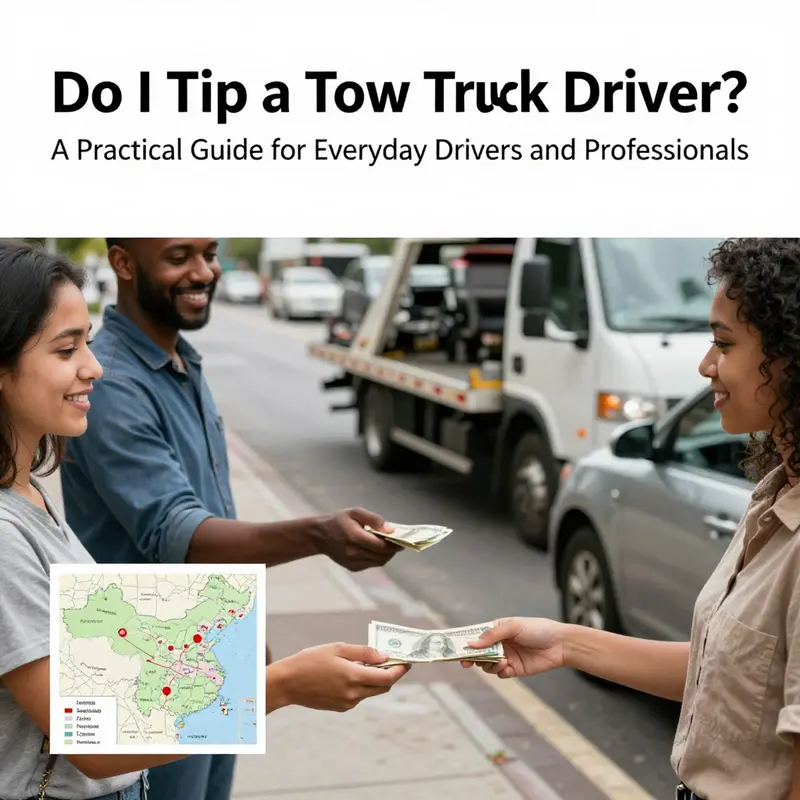
When your car breaks down or you’re stranded on the roadside, a tow truck’s arrival can bring relief but also uncertainty about tipping. Tipping tow truck drivers is generally optional, not a formal rule, but a thoughtful gesture can acknowledge the driver’s skill, safety focus, and the physical effort of a demanding job. The decision to tip depends on the service quality and context: quick response, clear communication, careful handling of your vehicle, and help with next steps can all justify a tip. The amount should be reasonable, proportional to complexity, and given after you’ve assessed the service.
Regional norms vary. In many parts of the United States, a tip in the range of $10 to $20 for a standard tow is commonly expected, with higher amounts for longer hauls, remote locations, or complex maneuvers. Some communities also use a percentage-based approach (for example, 10%–20% of the service fee), but local practice can differ, so discreetly checking with the dispatcher or driver can help set expectations. If the company policy discourages tipping, respect those guidelines, while still acknowledging good service in other ways.
Best practices: first pay the full price you were quoted, then consider tipping based on the service quality. Cash remains the simplest option, though many drivers now accept digital tips. If you don’t have cash, ask what digital methods are acceptable. Your tip should reflect effort, safety, and attention to care (like protecting paint, careful loading, or on-site guidance). In urgent situations, a slightly higher tip may be appropriate to recognize extra assistance or on-site safety measures.
Regional and company factors can influence tipping norms. Some regions or firms have pricing that minimizes tipping expectations, while others rely on flexible gratuities tied to service quality. If a policy prohibits tipping for certain employees, follow those rules. Regardless, tipping should feel like a response to excellent service rather than a payment already included in the price.
Bottom line: tipping tow truck drivers is a personal choice grounded in service quality and context. When done thoughtfully, a tip can acknowledge the driver’s professionalism, support good service culture, and provide practical help in a stressful moment.
Final thoughts
In conclusion, tipping a tow truck driver is a discretionary gesture shaped by service quality, time sensitivity, and clear payment practices. The practical framework outlined here helps you assess when to tip, how much to offer, and how to handle payments in a way that respects the driver’s effort and your own constraints. By recognizing the nuanced interplay between service excellence, cost considerations, and regulatory transparency, everyday drivers and professionals can navigate tow interactions with fairness and confidence. Remember: tipping is not a universal obligation, but when deserved, a thoughtful tip reinforces positive service, supports drivers who go above and beyond, and fosters a culture of appreciation within roadside assistance networks. As you encounter future tow scenarios, use these guidelines to decide whether a tip is appropriate, and if so, what amount aligns with the value you received and the context of the service.