
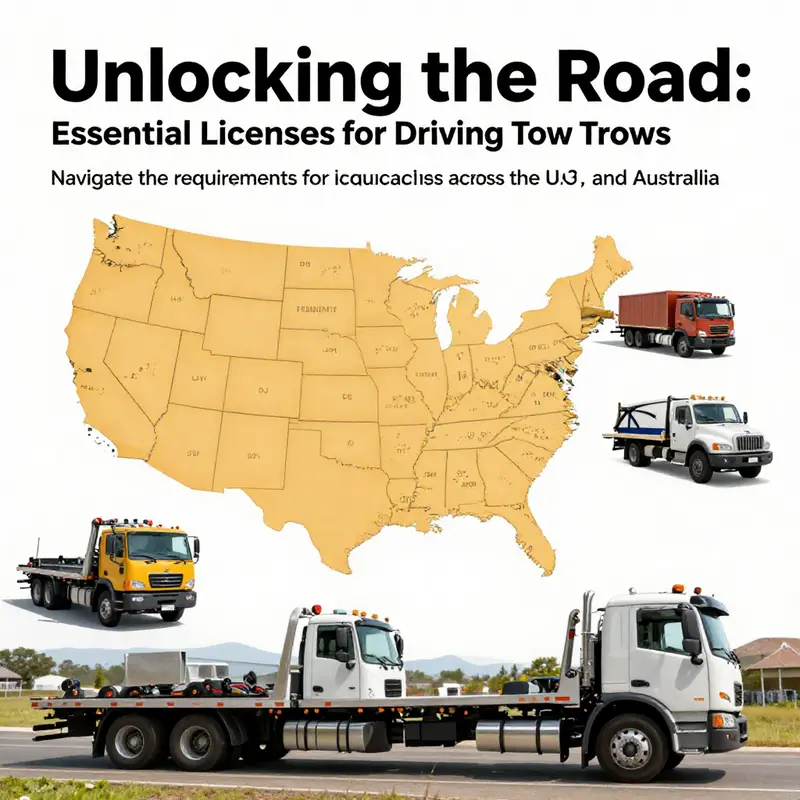
Driving a tow truck is a specialized profession that requires adherence to specific licensing regulations depending on location. Whether you’re an everyday driver eager to understand the requirements, a vehicle owner needing a tow, or part of an auto repair shop, knowing what licenses are necessary is pivotal to ensure safety and legality on the road. This article will delve into the state-specific licensing mandates in New York, present general regulations across the United States, and explore international license considerations for tow truck operators in Australia, offering a comprehensive overview for residents, commuters, truck owners, and property managers alike.
Tow Truck Licensing in New York: Navigating W Endorsements, CDL Rules, and the Road to Professional Driving
In New York State, the road to driving a tow truck is not just a matter of grabbing a permit at the DMV or earning a generic driver’s license. It is a careful alignment of endorsements, classifications, and tests that reflect the weight of the vehicle you intend to operate and the responsibilities that come with moving other people’s property. For someone who wants to tow for a living, understanding these requirements is essential long before the first tow call arrives. The landscape is layered: a basic license is not enough when the job involves removing or transporting vehicles for compensation; a separate endorsement may be required, and a commercial license with its own set of tests might be mandated if the vehicle crosses certain size or material thresholds. This chapter unpacks those layers, clarifying what it means to be legally empowered to drive a tow truck in the Empire State and how that empowerment aligns with the broader goal of professional, safe, and compliant towing operations.
At the heart of New York’s framework is the distinction between a standard driver’s license and the endorsements that expand what you can do behind the wheel. For many tow truck operators, the starting point is the standard Class C driver’s license, which covers conventional passenger vehicles. But the job of towing introduces a different calculus. If you are involved in moving or removing disabled, illegally parked, or abandoned vehicles for compensation, you are not simply a driver—you are performing professional towing work. In this context, the state recognizes the need for a specialized credential that signals competence in towing-specific procedures, safety practices, and legal responsibilities. The most recognizable element of this credential is the Tow Truck Operator endorsement, often referred to as the W endorsement in NY documents. The W endorsement is the mechanism by which a driver demonstrates their authority to engage in certain tow activities that fall outside ordinary vehicle operation. The endorsement is not a mere formality; it is a recognition that towing is a regulated service with unique operational hazards, legal constraints, and civic duties that extend beyond basic driving.
The practical implication of the W endorsement is straightforward yet critical: if your work involves moving vehicles for compensation, you will likely need this endorsement on your driver’s license. The endorsement process itself varies by state, but in New York it is designed to ensure that operators understand the nuances of safe vehicle removal, proper towing procedures, and the responsibilities that come with handling other people’s property. It also serves as a signal to employers and customers that the operator has met a baseline standard of professional competence. The existence of the W endorsement underscores a larger truth about tow work: it sits at the intersection of driving skill and liability management. Tow trucks do not simply transport cars; they operate in tight spaces, navigate around pedestrians, manage liability for damaged vehicles, and coordinate with law enforcement and property owners. The endorsement is a practical acknowledgment of these duties.
Beyond the W endorsement, New York’s licensing framework also contemplates the realities of heavier tow equipment and the logistics of moving larger vehicles. This consideration leads to the other major axis of licensing: the Commercial Driver’s License, or CDL, with a T endorsement. The T endorsement is specifically tailored to tow truck operation. A CDL becomes necessary when the tow truck’s gross vehicle weight rating (GVWR) reaches 26,001 pounds or more, or when the vehicle is used to transport hazardous materials. In other words, if your tow operation involves a heavy-duty routine where the vehicle itself approaches or surpasses the threshold that marks heavy trucks, the CDL with the T endorsement becomes the legal gateway to operate. The logic is clear: heavier vehicles create greater potential risk on the road, and a CDL is designed to assess a driver’s ability to manage those risks under stricter standards and with more rigorous oversight.
The dual-track pathway—W endorsement for vehicle removal activities and a CDL with T for heavier tow trucks—creates a practical continuum rather than a rigid dichotomy. An operator may start with a standard Class C license and, as their equipment or scope of work grows, pursue the W endorsement to formalize the towing authorization. If the business model or fleet composition evolves toward heavier tow rigs or hazardous materials transport, the operator then transitions to a CDL with the T endorsement. Each step requires specific examinations and proof of competency, and each step carries implications for insurance, employer expectations, and regulatory compliance. In short, the license to drive a tow truck in New York is not a one-and-done credential but a career-long pathway that adjusts as your vehicle scale, service model, and risk exposure change.
To translate these concepts into a concrete roadmap, it helps to understand the examinations involved. New York requires both knowledge and skill assessments to certify tow truck operators. The knowledge test examines a driver’s understanding of the rules of the road as they apply to towing operations, safety protocols specific to towing, vehicle mechanics relevant to tow equipment, and the legal duties tied to moving other people’s property. The skills test, on the other hand, is a hands-on evaluation of practical abilities: the driver must demonstrate precise maneuvering in constrained spaces, proper use of tow rigs, safe hooking and unhooking of towed vehicles, load security, and the ability to adapt to a range of towing scenarios. The emphasis on both theory and practice reflects a comprehensive approach: a tow operator must not only know the rules but also execute them with controlled precision under real-world pressure.
In addition to the state’s core licensing requirements, employers may impose their own standards. Tow truck operators often work for service providers who require you to complete state-approved training programs beyond the minimum licensing requirements. These programs typically cover a spectrum of safety procedures, equipment operation, and the legal responsibilities that come with towing. The training may also address company-specific procedures, dispatch protocols, customer service expectations, and incident response practices. This layered approach ensures that operators entering the field are not only legally compliant but also aligned with industry best practices that minimize risk and maximize service quality. Training can be particularly valuable for those transitioning from other driving roles, as it helps bridge any gaps between everyday driving and the specialized demands of towing work.
Given the regulatory complexity, the New York State Department of Motor Vehicles (DMV) serves as the central authority overseeing these licensing standards. The DMV’s role is to provide clear guidance on how to apply for the appropriate CDL and endorsements, to define the medical and background checks required for commercial operation, and to publish the rules that govern renewal and compliance. This centralized oversight helps ensure consistency across the state and provides a reliable reference for drivers who are trying to chart a path into towing as a profession. It is worth noting that while the DMV offers the official framework, the practical experience of becoming a tow truck operator often involves interactions with employers, training institutions, and sometimes local law enforcement agencies who understand the day-to-day realities of towing work.
If you are contemplating the licensing path, a practical way to think about the process is to start with the basics and layer in the additional requirements as your fleet and responsibilities grow. Begin with the standard Class C license and evaluate whether your intended work requires the W endorsement. If your operation will involve moving vehicles for compensation in any capacity, the W endorsement is typically the essential first step to formalize the authority to engage in towing activities. As you accumulate experience and plan to operate heavier equipment or to handle hazardous materials, assess whether you must transition to a CDL with the T endorsement. The decision is not purely academic; it shapes your training needs, the certification tests you will sit, and the timelines for getting on the road with your tow truck.
The practical path is also influenced by the administrative steps that follow testing. Applicants must meet medical requirements, especially when commercial operations are involved. A medical examination certificate is often a prerequisite for CDL eligibility, ensuring that drivers can meet the physical demands of operating heavy tow equipment while maintaining safety on the roads. Background checks are another important aspect, reflecting the sensitive nature of towing work, where operators interact with stranded motorists, property owners, and potentially vulnerable locations. The DMV and employers alike look for a history that supports reliable, safe, and responsible conduct on duty. These checks contribute to a system designed to protect the public, support accountability in towing operations, and reinforce the trust that customers place in licensed tow operators.
For those who prefer a direct route to understanding the practical requirements, a reliable starting point is to consult a concise, practical guide on CDL and tow-truck endorsements. Such resources distill the regulatory language into actionable steps, providing a clearer sense of what forms to complete, what documents to gather, and how to prepare for the tests. A widely used reference is the CDL tow truck guide, which outlines the relevant endorsements, the testing process, and the typical timelines involved in obtaining the licenses. This kind of guide is particularly useful for applicants who are juggling a job, training classes, and the logistical realities of scheduling exams with a DMV testing office. Accessing a trusted overview can help you map your personal timetable and avoid common delays caused by missing paperwork or misinterpreted requirements. CDL tow truck guide
As you plot your course, it is important to remain mindful of the distinctions between the state’s licensing requirements and the broader professional expectations in the towing industry. For instance, many jurisdictions, including New York, recognize that licensing is only one part of the equation. Once you hold the necessary endorsements and certifications, continuing education and on-the-job training continue to matter. Tow truck work demands knowledge of vehicle recovery techniques, load securement, wheel-lift and rollback operations, tire failure scenarios, and the safe handling of unpredictable roadside environments. Even highly skilled drivers benefit from periodic retraining to keep pace with evolving equipment, updated safety standards, and changes in regulations. Employers may provide or require refresher courses, or you may choose to pursue additional state-approved programs that emphasize advanced techniques, incident management, and customer service under stress. The broader aim is to maintain a workforce that is not only compliant with law but also proficient at protecting people, property, and themselves during a demanding line of work.
In closing this overview of New York’s licensing framework for tow truck operation, it is useful to keep a few practical principles in mind. First, license requirements are location-specific and can change with updates to statutes or DMV policies; therefore, staying current with official DMV publications or trusted state resources is essential. Second, the distinction between the W endorsement and the CDL with the T endorsement matters: one governs routine towing activities performed as part of compensation, the other governs the operation of heavier equipment and potentially hazardous materials. Third, the path to becoming a licensed tow truck operator is a journey that evolves with your equipment and professional goals. Starting with a solid foundation of driving competence, then layering in towing-specific knowledge, and finally aligning with the heavier-vehicle standards when necessary will help build a credible, compliant, and resilient towing career. For readers who want a concise, practical overview of the CDL and endorsements that apply to tow trucks, exploring a dedicated guide can be a time-saver and a clarity-builder as you begin the process. For official, up-to-date details on the CDL framework and endorsements, the New York DMV remains the authoritative source, and prospective drivers should consult their CDL information pages to confirm the most current requirements and procedures. External resource: https://www.dmv.ny.gov/apply/cdl.htm
Tow Truck Licensing in the United States: A State-by-State Roadmap
Tow truck licensing in the United States is determined by state and local authorities, not a single federal license. There is no universal license to tow for compensation. Operators must meet the licensing requirements of the state where they work, which typically include obtaining a commercial driver’s license (CDL) if the vehicle and load exceed weight thresholds, selecting the appropriate CDL class, and often earning a state-specific tow endorsement. Requirements vary by state and can also involve medical exams, background checks, drug testing, vehicle inspections, and business licensing for tow companies. In many states an endorsement specific to towing (sometimes called a Tow Truck Operator endorsement) confirms knowledge of load security, equipment operation, and safety procedures. The general path usually starts with CDL eligibility (age, clean driving record, medical qualification), followed by the standard CDL testing and then the tow endorsement. Beyond licensing, operators must comply with ongoing safety and regulatory requirements such as vehicle inspections, insurance, and adherence to local towing laws. Because rules differ, it’s important to consult the state DMV or transportation authority for exact requirements and to use reputable state guides for up-to-date information. A state-by-state CDL tow-truck guide can help with planning study timelines and testing.
Tow Truck Licensing Across Australia: WA Pathways and the Australian Context

Licensing a tow truck in Australia varies by state, with Western Australia offering a clear, structured pathway that emphasizes identity, vehicle inspections, and operator compliance. WA uses Form VL17 for in-person applications, followed by a vehicle inspection at a facility such as the Kelmscott Vehicle Inspection Centre. Documentation like proof of identity and business registration is required, and exemptions may apply for regional vehicles. Foreign operators must meet the same requirements as local operators. Temporary exemptions may exist for tourism or short-term work, but safety standards remain central. Ongoing compliance, inspections, and updates to regulations shape a living credential for tow-truck professionals. Across states, the core principles are consistent: safety, accountability, and transparency in licensing, inspection, and governance. External references include Transport WA’s licensing resources and official guidance for operators seeking to establish or expand tow-truck services in Australia.
Final thoughts
Understanding the licensing requirements for driving tow trucks is crucial for ensuring safe and compliant operations. As highlighted, regulations can significantly vary by location, particularly between states in the U.S. and in international contexts like Australia. By familiarizing yourself with these regulations, whether you’re a property manager, auto repair shop owner, or every day commuting driver, you can take informed steps toward a smoother, secure experience on the road.