
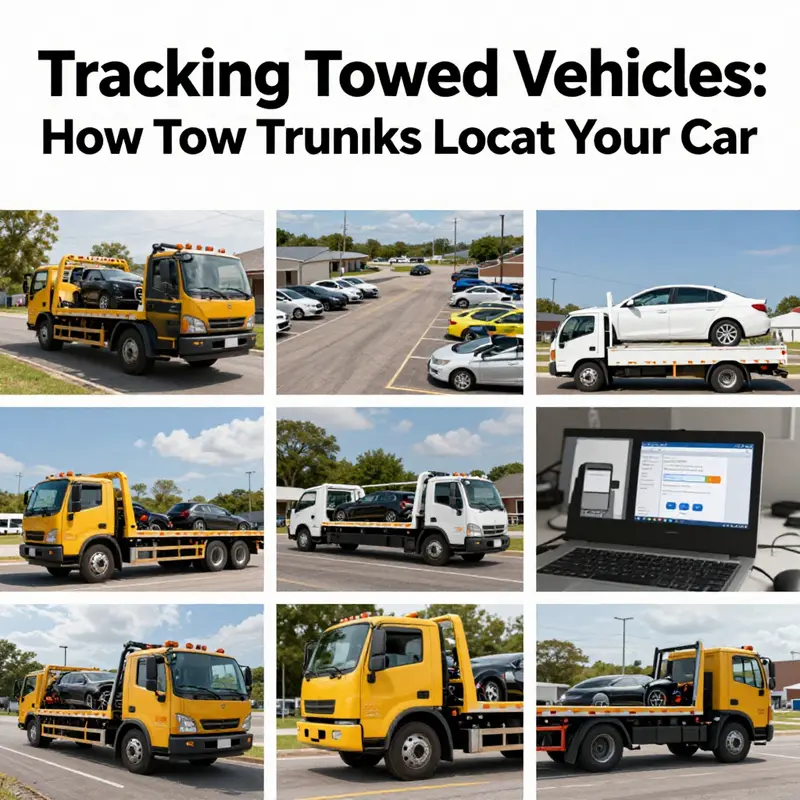
When your vehicle is towed, it can feel like searching for a needle in a haystack to find its location. Understanding the systems in place that govern how tow trucks know where your car is crucial for everyday drivers, residents, property managers, and more. This article unpacks the intricacies of tow truck dispatch systems, the role of local authorities in reporting towed vehicles, and how municipal towing websites can serve as a valuable resource in your vehicle recovery efforts. By the end, readers will have a comprehensive understanding of the towing landscape, empowering them to navigate the challenges of retrieving a towed vehicle with greater ease and confidence.
Pinpoint by Dispatch: How Tow Trucks Locate Your Car in Real Time Without Hidden Trackers
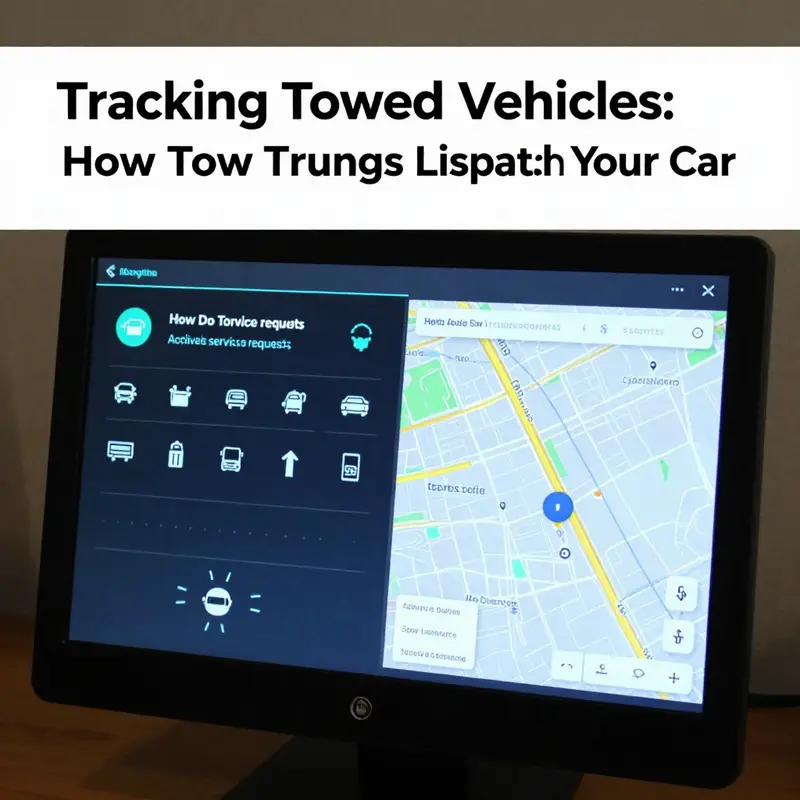
When people ask how a tow truck finds their car, the mental image often stars a silent vehicle creeping along a highway, somehow reading license plates from a distance with a secret GPS tether. In reality, the process is less cinematic and more coordinate-driven. Modern towing relies on a layered system of information sharing, location data, and fleet management tools that originate in a central command center and radiate outward to the nearest available tow operator. There is no covert appending of trackers to every vehicle by the towing company in ordinary practice. Instead, the location of a vehicle—whether a car in a roadside emergency, a vehicle in a parking violation, or one involved in an accident—is established through a combination of reports, precise location signals, and the logistical calculus of the dispatch software that guides the fleet. The result is a service that feels almost instantaneous because the data is processed in minutes, or even seconds, rather than hours. This is the backbone of the dispatch ecosystem and the thing that truly makes a tow feel immediate, reliable, and efficient.
When a driver calls for help or a police report comes in about a derelict vehicle, the first piece of information the dispatcher seeks is a precise location. In many cases, this comes from the caller’s described position: the highway name, exit numbers, mile markers, or nearby landmarks. In other scenarios, the caller might be able to share a GPS coordinate or a digital map pin, particularly if the service is integrated with a smartphone app or a Bluetooth-enabled device in the vehicle. The dispatcher then translates this input into a location that can be communicated to the fleet management system. A web of digital maps, satellite imagery, and real-time traffic data feeds the system, so the operator can choose not only the vehicle closest to the site but also the most suitable configuration for the job—whether that means a wheel-lift truck, a flatbed, or a chain of services that might require a light tow before a more complex extraction. This dual-input, human-plus-machine workflow is what makes dispatch feel precise and adaptive rather than generic and slow.
The core of this process is a centralized command center that uses GPS technology and mapping software to pinpoint a vehicle’s exact location. The data stream can originate from several sources. In the simplest case, the caller’s phone provides a GPS signal if the user has location services turned on. The dispatcher’s system can then triangulate the position against the street network, cross-referencing with nearby landmarks. In more complex situations, the location data is refined through a manual entry by the caller or by the first responders who have a more precise vantage point. Either way, the dispatch platform receives this information and feeds it into a digital queue. The software then evaluates real-time location, vehicle availability, and service type to determine which tow truck should be sent first. The goal is not merely to reach the scene quickly, but to ensure the right kind of tow is used in the right context. A heavy-duty tow might be required for a wreck, while a smaller vehicle could be pulled by a wheel-lift rig. The decision is a synthesis of distance, accessibility, equipment needs, and the current workload of the fleet.
The driver’s experience is shaped by a similar harmony of data and intuition. The moment the dispatcher assigns a job, the nearest qualified tow truck is identified by the system, which relies on real-time location from the crew’s in-cab device or mobile app. The driver views the pickup location, customer details, and the estimated arrival time on a map overlay. If there is a traffic incident en route, the platform can recalculate the route to optimize travel time, even suggesting alternative streets or access points that the driver can use to minimize delays. This is where the technology becomes more than just a map; it’s an adaptive decision engine that considers road conditions, incident reports, and the vehicle’s own constraints. The bigger fleets often deploy sophisticated fleet-management software that integrates GPS tracking, automated vehicle location (AVL), and live traffic feeds. The result is a dynamic pair of maps that show both the driver’s current position and the customer’s location in the same frame, with a live ETA that adjusts as conditions change. For those curious about the broader technological trajectory of the industry, a deeper look into tow-truck technology and safety can offer historical context and current best practices on how these systems evolved from simple radio dispatch to the modern, data-driven networks we rely on today. Tow truck technology and safety.
Within a modern dispatch framework, there is a continual balancing act between speed and accuracy. The software prioritizes the closest eligible unit, but it does not dispatch a random vehicle simply because it is nearby. It weighs the unit’s current availability, its service history with similar tasks, the type of equipment aboard, and the travel time required to reach the customer. If the scene demands a specialty unit—say, a heavy-duty tow for a multi-vehicle collision—the system will search for the few trucks in the fleet that can handle the assignment, even if they are marginally farther away. The real-time nature of the data means that as soon as a truck’s status changes—from available to en route, or from en route to on-scene—the system updates the rest of the network. This minimizes the number of trips and reduces redundancy, which is particularly important in dense urban environments where every additional mile adds to the clock and the cost. The net effect is a service experience that feels almost synchronous with the moment the request is made.
The example set by major towing companies often illustrates the maturity of these dispatch platforms. They deploy interfaces that merge GPS locations with AVL to keep a live, screen-based conversation between the customer, the dispatcher, and the driver. The customer may not see this backend, but what they do notice is the sudden appearance of a tow truck on the horizon and the steadily shifting ETA on their dashboard or phone screen. In the background, the technology is constantly analyzing the traffic network for the fastest path, factoring in incidents like construction or accidents that could threaten a timely pickup. The software’s ability to adapt to live conditions is what makes it possible for a tow operator to say with confidence that the truck is on its way and that arrival will be measured in minutes rather than tens of minutes. This is the practical upshot of a system designed to connect people with the right vehicle at the right moment, rather than chasing a conventional vision of a single truck roaming the perimeter of the city.
For readers who want a more granular sense of what those dispatch screens look like on a typical shift, the same dispatch ecosystem is what underpins the visible aspects of a modern tow operation. The driver’s in-cab computer presents a map, a list of job details, and a live ETA. On the dispatch side, the operator watches for incoming calls, assigns the most suitable unit, and tracks progress as the vehicle moves toward the pickup location. All of this rests on the trust that the data is timely and accurate and that the system will re-optimize in response to new information—such as a change in location communicated by the caller, or a truck becoming delayed because of a parking enforcement zone or a road closure. In practice, the reliability of the dispatch system translates into fewer surprise delays, better customer communication, and a smoother handoff from the moment the call comes in to the moment the vehicle is secured and on its way to safety.
The complexity behind such dispatch accuracy deserves attention, not as a curiosity but as a reassurance. The underlying principle is simple: locate the vehicle, locate the customer, and route the closest appropriate specialist. The data link is the invisible pulse of the service. It travels through multiple layers—from the customer’s initial report, to the dispatcher’s screen, to the driver’s mobile device, and back again as the job progresses. In practice, this cycle resembles a tightly choreographed relay race, with each leg dependent on the information passed along and the speed at which it travels. The dispatcher does not rely on a single source of truth; instead, they synthesize inputs from the caller, the vehicle’s on-board systems when available, and the live traffic ecosystem to maintain a precise sense of where everyone and everything stands. In this sense, dispatch systems are not just about pointing a tow truck toward a location; they are about orchestrating a set of moving parts to deliver a rapid, reliable, and safe service.
It is worth noting what these systems do not do. They do not permit the towing company to secretly track a private vehicle through a hidden device for purposes outside the service context. Standard practice does not include installing trackers on ordinary towed vehicles to monitor payment or movement. Cars that do include GPS trackers are typically outfitted by insurers or manufacturers for theft recovery or fleet management, not by the towing operator to follow a car after a tow. The belief in such trackers as a universal practice is a misconception that can muddy the picture of how legitimate dispatch works. The correct picture is a layered, permission-driven data exchange where the customer, the dispatcher, and the service technicians share essential location information to complete a safe, efficient tow. For those who want to explore the operational side of the industry beyond the dispatch screen, the relationship between technology, safety, and service delivery is often discussed in resources that cover tow-truck technology and safety in greater depth.
Beyond the vehicle’s location, the system’s reach extends to how a tow is billed and how a customer can recover a vehicle after it has been towed. In most municipalities, the status of a towed car is not a function of a tracking signal that follows the car to a lot or a yard. Instead, it is managed through municipal or private impound databases and official towing portals. A vehicle’s license plate becomes a key identifier that impounds check in their centralized records. The public often learns of a tow by a notice left on the car or by a city’s phone line or website. When a person discovers that their car has been towed, the practical route to recovery is to visit the city’s official towing website or contact the impound yard directly with the license plate number. Some cities provide dedicated search portals where you can enter your plate to verify whether a vehicle has been towed and to see the impound’s location and release requirements. This process is the standard, transparent channel for locating a towed vehicle and is separate from the dispatch system that sends the tow truck to the pickup location.
From a user’s perspective, the difference between the dispatch system and the impound search is sometimes subtle but important. The dispatch system is about getting you from the moment you call for help to the moment the tow arrives and the vehicle is secured. The impound portal is about the ongoing journey of the vehicle after it leaves the scene. You may never see the dispatch system in action, but its efficiency shapes your experience in those first few minutes. Then, once you know your car is being held at a specific lot, you can begin the process of retrieval, which may require paying fines or fees, providing proof of ownership, and presenting identification. The knowledge that these processes exist and are accessible through official channels provides a sense of security that the service operates with defined rules and predictable steps. It is a reminder that the world of towing sits at the intersection of real-time logistics and public-facing procedures.
In the end, the core truth remains straightforward: tow trucks do not rely on secret trackers to follow your car. They are guided by precise, permission-based data that travels through a chain of systems designed to optimize location, timing, and equipment. The pickup location you provide or the location reported by a caller becomes the starting point for a digital chain—from the dispatcher to the driver—that culminates in a fast, accurate response. The entire chain depends on reliable data, smart routing, and the driver’s skill in navigation and on-scene management. The result is a service that, while often perceived as instantaneous, is really the product of careful data handling, fleet logic, and on-the-ground coordination that keeps pace with changing conditions. Readers who want to understand the evolution of this technology can consult resources on tow-truck technology and safety, which revisit how dispatch systems evolved from early radio calls to today’s GPS-enabled, route-optimized operations.
For those who want to connect this thread to a broader context of emergency services and roadside resilience, consider how dispatch systems intersect with other urgent response networks. The same principles—precise location, rapid decision-making, and adaptive routing—underpin many forms of mobile support, from emergency medical services to law enforcement. The idea is not that one system “tracks” a person in a private sense, but that it coordinates an orderly, scalable response to a moving target in urgent need. The dispatch center acts as the conductor, the tow truck is one instrument in the ensemble, and the map is the score that keeps every player in harmony. This orchestration is the practical heart of how tow services deliver help quickly and safely, while also aligning with public expectations around accountability and accessibility.
As you navigate your next roadside incident, this model offers a clear orientation: your location is confirmed through a blend of data points, the nearest qualified unit is chosen with an eye toward equipment compatibility and traffic realities, and the driver receives real-time guidance designed to minimize time and maximize safety. The process is deliberately transparent in its intent—speedy assistance backed by data fidelity and professional practice. If you seek more detail on the mechanics behind the dispatch dashboards and the safety protocols that govern modern tow operations, the referenced resources can provide deeper insight into how these technologies are implemented and validated in real-world service delivery.
External resource: https://www.erausa.com/services/roadside-assistance
Locating a Towed Vehicle: How Public Reports and Regulation Map the Path of Your Car
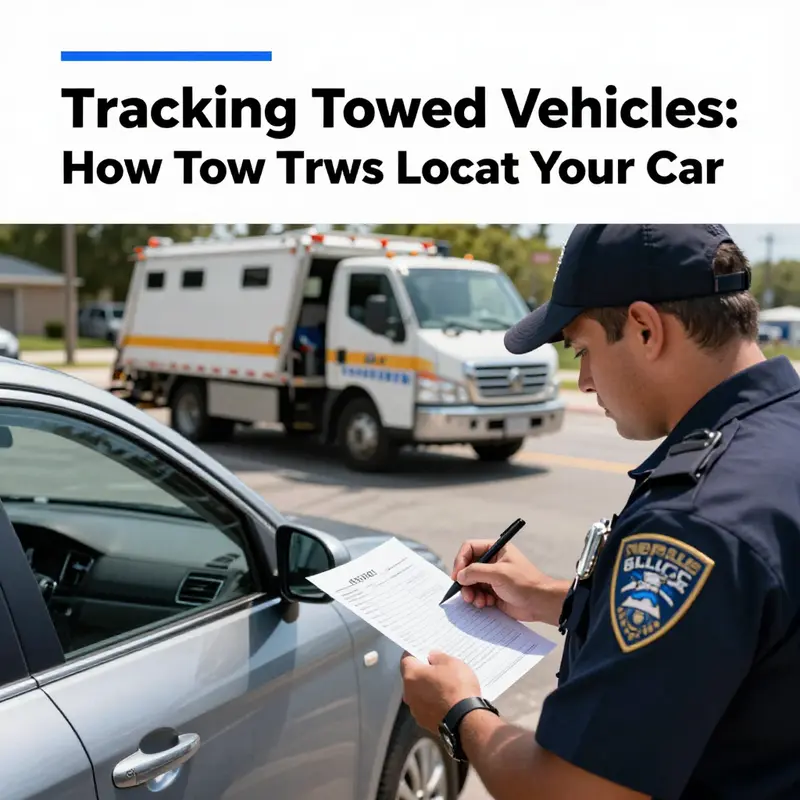
When you ask, how do tow trucks know where your car is, the answer is often counterintuitive. It is not a hidden fleet of trackers following every curbside arrest of a car. It is a structured cascade of reports, records, and official procedures that begins with a scene, a complaint, or a call for service, and ends with a vehicle resting in an impound yard. The truth is more about bureaucracy and coordination than about a secret device hidden in the back bumper. Tow trucks don’t automatically know your exact location in real time. They don’t silently shadow a vehicle until payment is made. Instead, locations are determined at the moment of dispatch and through carefully maintained records that track each tow, each vehicle, and each destination. The result is a system where the path from incident to impound is shaped by public records, regulatory standards, and the transparent work of licensed operators working under the authority of local government. To understand how a tow truck finds your car, it helps to follow the journey—from the initial report to the moment your car sits behind a locked gate at an impound facility—and to see how the pieces fit together in most jurisdictions, including those in Australia where local authorities play a central role in documenting tows and regulating the equipment and vehicles used in the process.
If you look beneath the surface, the core mechanism is not the stealth tracking of your car but the interplay of three elements: the official notification that a tow is warranted, the dispatcher who translates that notification into a field operation, and the impound or storage facility that records the vehicle as part of a formal process. When a car is towed, the event is typically triggered by an incident report—often from law enforcement, a roadside assistance provider, or parking enforcement. The dispatcher uses that report to determine the appropriate tow operator and to provide precise instructions about where the tow should begin. The operator, once on site, executes the tow in accordance with safety standards and regulatory requirements, and converts the event into a record that travels through the public system to the impound facility. The car, now in the custody of the impound, is then logged with its license plate, its Vehicle Identification Number, the make and model, the reason for the tow, the date and time, and the exact location where the tow occurred. This chain of documentation is essential for accountability, and it is what gives the public reliable means to locate a towed vehicle through official channels, rather than through any covert tracking method.
Central to this process is the role of local authorities and the specific procedures they enforce. In many jurisdictions, authorities bear primary responsibility for the documentation and reporting of towed vehicles. This is not a universal law written in one place and copied everywhere; it is a patchwork of regulations designed to ensure accuracy, prevent abuse, and provide a clear trail for owners to recover their property. The emphasis on documentation matters for several reasons. First, it creates a verifiable record that a tow occurred, when it occurred, and why it occurred. Second, it links that tow to the vehicle, usually by license plate and VIN, so there is little ambiguity about which car belongs to whom. Third, it ensures that the operation adheres to safety and construction standards for the tow truck itself, as well as for the towing process. The result is a regulated ecosystem in which every tow is traceable and recoverable, and where public information about a vehicle’s status remains accessible to the owner through official channels.
Take a closer look at the licensing and compliance dimension, and one sees a careful balance between safety and accountability. When government or emergency vehicles are involved in towing, the rules become more stringent. Local government ranger vehicles, for example, may be approved to fit and display yellow flashing lights during a towing operation. This visible signaling is not cosmetic; it is a regulatory shield that helps other road users recognize the authority of the tow operation and maintain safety during the process. It also demonstrates that the towing activity is carried out under clearly defined standards, with the appropriate equipment, and within the framework of public safety obligations. Such stipulations emerge from formal approval processes and are documented in the relevant licensing or regulatory bodies. The effect is to reassure the public that when a tow involves a government or emergency vehicle, it is conducted with the same level of oversight that governs other public safety operations.
The mechanical and procedural backbone of the system rests on strict inspection and licensing of the tow vehicles themselves. In many places, tow trucks must pass an initial licensing inspection at designated Vehicle Inspection Centres before they are authorized to operate. These inspections verify that the equipment, construction, and safety features of the tow truck meet minimum standards, ensuring not only that the vehicle can safely perform a tow but that its use will be properly recorded and reported. The inspection regime, while technical, serves an essential public function: it standardizes what counts as a tow permissible under the law, and it standardizes how each tow is documented afterward. A fleet of compliant trucks contributes to a predictable process when a vehicle is seized or parked illegally. The result is a predictable pathway by which a car moves from a roadside incident to an impound lot, with every step formally logged and auditable by authorities.
This regulatory scaffolding—emergency vehicle rules, licensing inspections, and rigorous record-keeping—helps demystify the process of locating a towed vehicle. When you wonder, how do tow trucks know where your car is, you are really watching a chain of custody. The chain starts with the incident and the report that triggers a response, and it ends with you standing in front of a locked gate that guards your car in an impound facility. The intermediate steps are the pieces that connect the incident to the impound: the dispatcher translates the report into an actionable assignment for a licensed tow operator; the tow operator executes the maneuver on site, using equipment and methods that meet regulatory standards; and finally, the vehicle is recorded in the impound system with its plate, make and model, and the reason for the tow. Each link in this chain is designed to be transparent and traceable, not to conceal the location of the vehicle but to document how it arrived at the impound.
From the owner’s perspective, the practical reality of locating a towed vehicle is less about a live feed and more about information access. Cities and towns often publish online portals or provide direct contact points where a person can enter a license plate number to inquire whether their car has been towed and where it is being held. This is the public-facing side of the system: a user-friendly interface that explains whether a vehicle has been towed, when, and to which impound facility. For someone who has had a car towed, this access is the fastest route back to the vehicle, and it underscores the truth that the location is not a secret held by tow operators but a matter of public record maintained by the authorities and the impound yards themselves.
Another layer of clarity comes from the common misconception about GPS or tracking devices. Some vehicles do carry GPS trackers, typically as part of insurance plans or theft-recovery services. These trackers are not installed by tow companies, and they are not used to locate a vehicle for towing purposes. The function of such devices is usually to aid the owner or insurer in recovering a stolen car or monitoring the vehicle’s location for safety. They do not provide real-time, operational data to tow operators during a tow. Therefore, even in cases where a car happens to be equipped with a GPS tracker, the tow operator is not perpetually aware of the car’s precise, live location. The act of towing occurs when a competent authority or dispatcher assigns the tow to remove the vehicle from the location where it is found to be in violation or obstructing traffic, not through a covert chase powered by hidden tracking devices. This distinction matters because it clarifies why someone might imagine a car being followed by a tow truck, while the actual system operates through official channels and publicly accessible records.
The operational narrative of locating a towed vehicle also emphasizes the human elements involved in the process. Dispatchers are not mere signal relays; they interpret reports, cross-check details, and coordinate with licensed operators to ensure the tow is executed safely and legally. They confirm the vehicle’s location by the information available at the scene, the nature of the incident, and the jurisdiction’s regulations. In many circumstances, the tow may take place because a vehicle is illegally parked, abandoned, or involved in an accident. The authority’s decision to tow hinges on the assessment of the scene, the safety considerations, and the applicable municipal rules. The operator’s job is to perform the tow in accordance with those rules and to return the vehicle to the impound yard with all relevant documentation. The impound facility then assumes responsibility for recording the tow, preserving the vehicle, and serving as the point of contact for the owner seeking release. The cycle reinforces the central purpose of the system: to manage and track tows in a transparent and regulated manner so that the vehicle’s location can be identified by its owner through official channels, rather than through any private or hidden means.
In a broader sense, this architecture of towing reflects a public interest in orderly streets and accountability. The procedure protects residents and visitors by ensuring that vehicles blocking traffic or creating hazards do not linger on public right-of-way. It also protects vehicle owners by providing a clear, accessible process to recover their property, with details such as the exact time of the tow and where the car has been stored. The emphasis on public portals and documented records helps prevent disputes about whether a tow occurred, when it happened, or where the vehicle is currently located. When you consult your city’s towing portal, you are seeing a structured manifestation of the same system: a record-keeping, jurisdiction-driven approach to locating and recovering a towed vehicle.
To illustrate the practical implications of this system, imagine a scenario in which a car is towed after being found illegally parked in a commercial area. Law enforcement or parking authorities determine the tow is warranted, and a dispatch is sent to a licensed tow operator. The operator arrives, attaches the vehicle, and completes the tow according to safety rules. The car is taken to an impound yard, where it is logged with its license plate, make and model, VIN, and the reason for the tow. The owner, if they do not have an immediate understanding of what happened, can search the local portal by license plate to see that their car has been towed and to obtain the impound’s address, hours of operation, and the necessary steps to recover. If the owner needs to be guided by the public system rather than a private inquiry, the impound records and the municipal portal provide a clear path: they can prepare the documents required for release, pay the relevant fees, and arrange for transportation of the vehicle if needed. The entire process is anchored in documentation and public records rather than in any covert tracking activity, and that is why it remains predictable and accountable to car owners and to the community.
One notable facet of the regulatory landscape is how it integrates with emergency and government operations. The presence of yellow flashing lights on ranger or government towing vehicles is not merely cosmetic; it is a documented compliance feature designed to improve safety and compliance on the road. The approval for local government ranger vehicles to fit and display these lights is a formal recognition of the distinctive role that government-sanctioned tow operations play in maintaining public order. The same regulatory framework that governs police, ambulance, and fire service activities extends to these authorized towing operations. This alignment helps reinforce the legitimacy of the process and ensures that the public can distinguish between private towing operations and official interventions.
It is also instructive to consider the standards that govern the tow trucks themselves. The notion that any tow truck can be deployed anywhere at any time dissolves once you recognize the licensing inspections that validate a truck’s fitness for service. A tow truck is more than a mechanical tool; it is a regulated asset that must meet structural, safety, and operational standards before it becomes part of the official towing ecosystem. The inspection at Vehicle Inspection Centres, such as those designated by local authorities, is a checkpoint that guarantees the truck’s readiness and its compliance with the rules that govern weight limits, braking performance, lighting, and secure loading. These standards are not theoretical. They are the backbone of a system designed to deliver reliable service while reducing risks for operators, other road users, and vehicle owners. In this sense, the question of how a tow truck knows where your car is becomes a reflection of a broader commitment to public safety and reliable service that is embedded in every stage of the process.
The public-facing dimension of locating a towed vehicle—how you discover the status and location of your car—often hinges on a practical, user-friendly interface provided by the city or municipality. The online portals and impound yard contact points are designed to be accessible, and owners are typically advised to check these resources first if their car disappears from a legal parking zone, a road shoulder, or any other public space. It is common to be asked to provide the license plate number and sometimes a photo ID or proof of ownership when recovering a towed vehicle. The public system aims to minimize friction for the owner while maintaining a rigorous chain of custody that ensures the appropriate vehicle is recovered by the rightful owner. This combination of careful record-keeping and transparent public access is at the heart of how the system communicates the location of a towed car without relying on covert tracking or private surveillance.
The narrative above helps explain why the original question—how do tow trucks know where your car is—centered on a misconception: that tow trucks are silently pursuing a car with covert trackers. In reality, the closure of the loop occurs through public records, regulatory oversight, and the disciplined workflow from incident to impound. The tow operator executes a location-based intervention based on a dispatch, and the outcome—your car in an impound lot—becomes a matter of official record. If you ever need to locate your towed vehicle, the fastest path is to your city’s official towing portal or to contact the impound yard using your license plate. The portal is designed precisely for the case you face: you know your plate, you know your vehicle, and you want a straightforward, audited path to recovery. And if you want to dig deeper into the technical and safety considerations behind tow operations, a dedicated resource on tow-truck technology and safety offers a more granular view of how the equipment, training, and procedures come together to support the entire process.
For readers who want to explore the broader context of towing technology and safety, the linked internal resource provides an accessible overview of how modern tow operations balance efficiency with safety. This deeper dive can help you understand why the mechanics of towing—when done properly—rely on predictable practices rather than surveillance. In the same way that reporting and impound records create a transparent path to recovery, the combination of well-regulated equipment, trained personnel, and clear public access creates a reliable framework for dealing with towed vehicles. The upshot is simple and practical: if your car is towed, your route back to it is through official channels, not through a private chase; and the city’s records are your best ally in reclaiming your property, confirming the tow took place, and understanding the exact location of your car.
To summarize, locating a towed vehicle is less a matter of real-time tracking and more a matter of public administration. It hinges on the incident report, the dispatcher’s coordination, the tow operator’s compliance with safety standards, and the impound’s methodical record-keeping. When you ask where your car is, the response you receive—whether through an online portal or a phone call—reflects a system designed to be transparent and accountable. The perceived mystery of a tow truck following your car dissolves when you recognize the role of licensing inspections, official signaling on emergency and government vehicles, and the public access points that reveal the vehicle’s status. The end result is a predictable, auditable pathway from incident to impound, with your car’s location documented in the very records that govern the towing process.
In closing, the path your car takes after being towed is a product of governance and procedure as much as it is of equipment and skill. The myth of hidden trackers is less about the technology used and more about the absence of public information. The system works because it is designed to work in the open, with clear steps, defined responsibilities, and accessible information for vehicle owners. If you ever find yourself in the situation of a towed vehicle, remember this: start with the official towing portal, bring your license plate and proof of ownership, and follow the guided steps to recover your car. The process exists to protect you and to maintain order on the road, and the chain of custody that follows your car from the moment of tow to its return is the most reliable map to its location.
Internal resource for deeper technical context: Tow Truck Technology and Safety.
External resource: For official procedures and regulatory context, see the licensing publications maintained by the relevant transportation authority at https://www.transport.wa.gov.au/vehicle-and-driver-licensing/licensing-publications.
Tracing the Tow: How Municipal Dispatch and Databases Pinpoint Your Car Without Real-Time GPS
When a car vanishes from a street or a parking area, the first impulse for many drivers is to imagine a hidden GPS beacon tearing through the night, a tow truck quietly following the car until payment is ready to be collected. The reality, though, is more practical and less spycraft than most people expect. Tow trucks do not float along in real time, guided by the car’s own location data or a secret tracker embedded by a charging department. Instead, dispatch relies on a robust system of on-site identification, official reporting, and carefully maintained databases that connect the dots after a vehicle has been found in a tow-worthy violation or incident. To understand how a tow operator ends up at the right curb, you have to trace the steps that begin with enforcement officers observing infractions and end with the impound fate of the vehicle. It is a chain of custody and communication, not a live map trail, and the chain is kept tight by processes that are designed to be transparent and traceable to the driver who owns the plate, the VIN, and the car itself.
The most common starting point is a clear on-site finding. A parking enforcement officer, police responder, or roadside assistant identifies a vehicle that is illegally parked, abandoned, or part of an incident scene. This identification is not a guess but a precise matching exercise. The driver looks at the car, notes the license plate, and checks the VIN against city records if necessary. The vehicle’s plate number becomes the primary handle, but the VIN can serve as a secondary, more exact identifier when there are multiple cars sharing a similar plate pattern or when the plate is obscured or damaged. The goal at this stage is not to watch the car’s movement but to confirm that the car in question is the one listed in violation or incident reports. From there, the enforcement officer creates a formal notice that travels through official channels to the towing system. This notice identifies the vehicle by plate or VIN, states the reason for the tow, and records where the car was found at the moment of enforcement. It is a moment of capture, not a moment of tracking.
The dispatch order that follows is crucial. Tow companies do not receive a live feed from a city portal; they receive an official dispatch. The dispatch includes the license plate number, sometimes the VIN, the stated reason for the tow, and a precise location. It may also include a due time or a note about special conditions, such as a tow being part of a court order or a city-wide enforcement sweep. This is the formal notification that sets the tow in motion. The towing company then mobilizes a driver and equipment to the listed location. There is no need to remotely monitor the car’s position because the location is already embedded in the dispatch data. The driver’s job is straightforward: pull up to the vehicle’s location, verify it against the official records, and complete the tow once the vehicle is secured.
When the tow truck arrives, the operator does not rely on a live feed, but on a verification process that is almost ritual in its precision. The driver will check the license plate and sometimes the VIN against the records provided by the city’s parking enforcement or police department. This cross-check is essential. It guards against mistakes in the field and ensures that the right car is removed from the curb. The database behind this process is not a public map but a controlled repository that records which vehicles have been towed, where they were found, when the tow occurred, and under what authority. This is how a city can maintain order and accountability in a system that involves private companies, law enforcement, and the public alike. The database’s strength lies in its ability to be accessed by authorized personnel—city parking authorities, police, and licensed towing firms—so that any given car can be traced through its plate or VIN in a matter of moments by those with the necessary clearance.
The moment the vehicle is towed and escorted to an impound lot, another layer of verification comes into play. The facility staff again verify the vehicle’s license plate and VIN against the records, confirming that the right car is in the yard. This step is not merely a bureaucratic formality; it protects vehicle owners from error and ensures that the payment and release procedures are tied to the correct vehicle. If a plate is damaged or a car appears similar to another on the lot, the VIN helps disambiguate. The privacy and security concerns here are balanced by the practical need to prevent wrongful release and to maintain a clear chain of custody for the vehicle as it moves from street to storage.
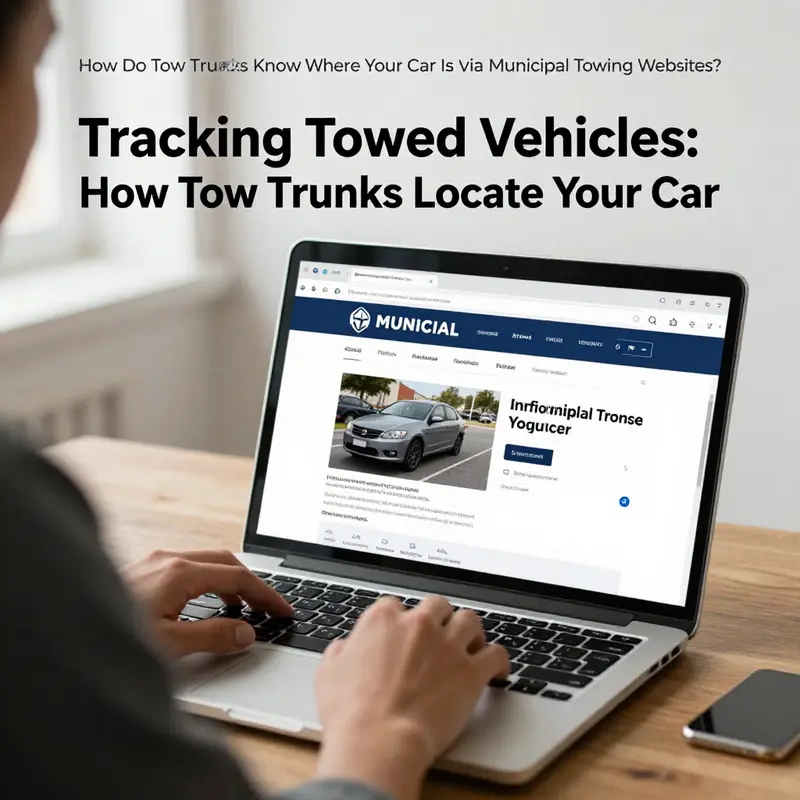
For the owner trying to locate a towed car, the process looks different. There is no universal, real-time public map that reveals the exact path of the tow truck or the car’s precise in-transit coordinates. What exists is a system of official notices and online portals that allow a vehicle owner to determine whether their car has been towed and where it is being held. In most cities, you can search by license plate in an official towing or impound database, or you can contact the local police or towing company directly for the status. These portals are not streaming location services; they are lookup tools that confirm the car’s current status and location based on the plate or VIN. The data behind them is the same data that authorities used to dispatch the tow in the first place, only now focused on providing the owner with a concrete retrieval path.
There is a practical reason for this design. Real-time tracking of every vehicle in a municipal tow scenario would require a level of privacy-invasive infrastructure that would raise significant concerns and invite a host of logistical challenges. Tow operators are not in a position to monitor a vehicle’s every move across a city; they respond to incidents and enforce policy. The public’s need to recover a towed car is met through a transparent, auditable process where the vehicle is logged in a controlled system, and the owner is given a direct line of access to its status through official channels. This separation—between a public-facing status check and the private, internal dispatch workflow—helps ensure that the system remains accountable while avoiding the more intrusive implications of continuous, real-time tracking by private contractors.
The myth that tow trucks secretly track vehicles through embedded devices—then follow them until the debt is settled—persists because it taps into familiar fears about surveillance and loss of privacy. But the reality is anchored in straightforward procedures. A vehicle is found, a plate is noted, the car is towed, and then it is stored. The public-facing part of the process is the information portal that confirms whether the car exists in the system and where it can be retrieved. This portal is usually straightforward: enter the license plate, check the status, see the impound lot address, and review any required documentation or fees. In most cases, the owner can also call the impound lot directly to confirm the vehicle’s status and to arrange payment and pickup.
An important caveat is that some vehicles may carry GPS devices as part of insurance or theft recovery services. Those devices can be detected by the owners and, in some cases, by the authorities if needed. But those tracking devices are not installed or used by the towing company as part of their standard operations. The presence of a GPS device in a car does not translate into a live signal that the tow operator follows; the device serves its own security or recovery purposes, independent of the tow process. The tow operator’s knowledge of a vehicle’s location comes from the official dispatch and the on-site verification, not from a hidden feed from the car itself.
To connect this to a broader picture of how modern towing operates, consider how technology and safety intersect in the field. The mechanics of location, verification, and release hinge on a structured ecosystem. Dispatch software, access-controlled databases, and standardized identification protocols ensure that the right vehicle is acted upon at the right time. The operator’s role is to implement the instructions that originate in law enforcement or parking enforcement, not to chase a moving target across the city. The movement is a consequence of the system’s rules, not a consequence of a continuous pursuit by the tow truck. For readers who want to explore the practical and technical dimensions of this ecosystem, a more comprehensive discussion of the safety and technology that guide tow operations is available in a related resource that examines the broader topic of Tow Truck Technology and Safety.
The implications for owners are practical and straightforward. If your car has been towed, you should not expect a live map showing its route. Instead, you should prepare to interact with official channels. Start by checking the city’s official towing portal or calling the impound lot with your license plate ready. You may need to provide some form of identification and proof of ownership to retrieve the vehicle. Fees, storage times, and required documents vary by jurisdiction, so it is wise to confirm these details with the impound lot or the policing agency that issued the tow. If you are unsure where to begin, the city’s public information office or the department that handles parking enforcement can guide you to the correct portal or contact numbers. This approach keeps the process orderly and ensures that you are aware of the exact location where your car is being held, as well as the steps required to recover it.
As with many public services, the reliability of the system rests on clear communication and accessible records. The difference between a public expectation of real-time tracking and the actual mechanics on the ground is mostly a matter of audience and access. The public wants an intuitive map; the system provides a verifiable, auditable record that allows authorized personnel to locate and move a vehicle in a controlled sequence. This distinction is not merely academic. It affects how a person searches for a towed car, how a driver communicates with the impound, and how a city maintains trust in its parking enforcement and towing procedures. It also highlights why the release process can feel slow to the owner, even though the underlying operations are designed to be efficient and accountable. In practice, the speed of recovery depends on the accuracy of the initial dispatch, the efficiency of the impound facility, and the owner’s ability to present proper identification and documentation.
The journey from curb to custody to retrieval is therefore a choreography of official channels rather than a chase of a moving target. The public-facing steps—checking a city portal, locating the impound lot, paying fees, and presenting ownership documents—form a predictable pathway that keeps the system fair and transparent. This is perhaps why the myth persists; it offers a narrative where a car slips away on a secret track, while the real story emphasizes the robustness and accountability of municipal processes. The two narratives are not mutually exclusive; they simply operate on different aspects of the same ecosystem. The public-facing portion centers on accessibility and clarity for car owners, while the internal workflow emphasizes accuracy, verification, and accountability within the enforcement and towing network.
If you are curious about how the technological and safety considerations fit into this picture, you can explore the broader conversation about tow-truck technology and safety in more depth. The resource discusses how operators balance speed, accuracy, and safety in the field, a dynamic that underpins every step from dispatch to release. This reference is not a map of a car’s path but a map of the values and practices that keep the towing system reliable and trustworthy for everyone who relies on it. Ultimately, the goal is not to obscure the car’s whereabouts but to ensure that the right vehicle is located, identified, and returned to its owner with appropriate documentation and care. In a system built on enforcement and accountability, the public’s role—knowing where to look, understanding what information to provide, and following the proper procedures—remains central to a timely and legitimate recovery.
For readers seeking a concrete, actionable path when their car has been towed, a practical rule of thumb holds: start with the city’s official towing portal or the impound facility’s contact information, and use your license plate number as your primary identifier. If the portal provides a status check, use it. If not, call the impound lot or the police department’s non-emergency line and request the current location and any required steps to retrieve the vehicle. While the process can feel procedural, it is designed to protect vehicle owners from losing access to their cars due to misidentification or misfiled records. The chain of custody remains intact when every step—from the identification on the street to the verification at the tow yard—is anchored by precise data points tied to the vehicle’s plate and VIN.
The next time you wonder how tow trucks know where your car is, remember that the answer lies less in the car’s own signals and more in the city’s enforcement workflow. It is a system where real-time public location tracking is not the norm, but a carefully managed array of checks, records, and controlled access ensures that the correct vehicle is located and returned. This is the architecture of a municipal towing process: a blend of on-site due diligence, formal dispatch, and meticulous record-keeping that, taken together, forms a reliable path from curb to custody and back to you.
As a final note, it helps to view the entire procedure as a collaboration among city authorities, towing professionals, and vehicle owners. Each party has a role to play in ensuring accuracy and timely retrieval. The city provides the rules and the access to official records. Tow operators execute the procedures with precision and care. Vehicle owners supply the necessary identification and pay the required fees. When this collaboration works as intended, the result is not a mysterious chase but a transparent, legitimate process that respects both public safety and personal property. If you want to deepen your understanding of the technical and safety dimensions that shape these operations, a focused look at Tow Truck Technology and Safety offers valuable context that complements this chapter’s focus on how municipal systems guide the tow, not how a hidden signal chases a car through city streets.
External reading for further exploration: https://www.carinterior.com/how-to-find-your-towed-car/
Final thoughts
Grasping how tow trucks locate your car involves understanding multiple systems and reporting mechanisms at play. Dispatch systems facilitate the efficiency of towing operations, local authorities are vital in tracking vehicle states, and municipal websites serve as a resource for drivers seeking to reclaim their vehicles. With this knowledge, citizens can make informed decisions and swiftly navigate the aftermath of vehicle towing. Whether you are a commuter, a property manager, or simply an everyday driver, being equipped with this information can save time and stress in what is often a frustrating situation.