
Tow truck ownership blends field operations with business discipline. Everyday Drivers and Residents gain a dependable partner during breakdowns and emergencies. Truck Owners can diversify revenue and reduce risk. Auto Repair Shops and Dealerships secure a stable channel for vehicle movement. Property Managers rely on timely, compliant services to keep fleets and tenants moving. Building a tow truck company is not just buying a truck; it’s creating a small service operation that must meet local rules, safety standards, and customer expectations. The path revolves around four core domains: startup costs and business setup, licensing and bonding, insurance and risk controls, and ongoing operational compliance plus growth strategies. This guide translates regulatory requirements into a scalable model anyone can follow. Each chapter ties a critical decision—financing, licensure, coverage, and process discipline—to outcomes that matter to the people who rely on tow services every day. The goal is to help a diverse audience understand what it takes to own one truck or a small fleet, from cost estimates and funding steps to RTTO licensing (where applicable), the insurance you must carry, and the everyday practices that prevent disputes and fines. By treating ownership as a disciplined program, you can build a trustworthy brand, adapt to regulatory changes, and grow by serving drivers, shops, property managers, and fleets that keep communities moving. Read on to connect the dots between dollars, documents, and dependable service, chapter by chapter.
Tow Paths to Prosperity: Capital, Compliance, and the Road to a Sustainable Tow Truck Company
Launching a tow truck business is less about a single clever maneuver and more about a disciplined climb, step by step, from idea to everyday operation. It begins with capital, but it quickly flows into licensing, insurance, fleet planning, and the daily discipline of compliance. The road to a sustainable tow company is shaped by thoughtful budgeting, a realistic view of regulatory requirements, and a readiness to adapt to the market’s rhythms. If you approach it with a plan that respects both risk and opportunity, you can build a service that keeps other drivers safe while delivering dependable revenue on a steady basis. The core challenge is not just buying a tow truck; it is creating a business backbone that supports customers, pays the bills, and stays within the lines of the law.
Start with the money you need to get moving, then map how that money will be deployed over time. The most visible line item in startup costs is the tow truck itself. A new truck in this category typically represents a substantial investment, often in the range of fifty thousand to over one hundred thousand dollars, depending on the size, capacity, and on-board equipment. Used trucks can offer a lower entry price, but they bring tradeoffs in reliability and maintenance costs. Beyond the vehicle, you must budget for essential equipment such as winches, chains, lighting, and communications gear, plus the basics of a shop or garage space, permits, and a professional website. Add in branding, marketing, and initial operating capital for fuel, tires, and driver salaries, and the upfront burden grows quickly. Some operators mitigate this by leasing equipment rather than purchasing outright. Leasing high-end gear can dramatically lower upfront cash needs while ensuring access to reliable, compliant machines that meet regulatory standards and customer expectations.
A practical starting point is to treat the business like a project with clearly defined milestones. Your first milestone is the legal authorization to operate. Licensing requirements vary by state, but the essential pattern is common: you file an application with the appropriate state agency, provide proof of financial responsibility through insurance, post a bond if required, and demonstrate that your business and vehicles meet local standards. In many states the licensing framework centers on the Registered Tow Truck Operator, or a comparable credential, and it often includes a background check, vehicle inspections, and proof of liability insurance. The specifics differ, so you should treat licensing as an early and ongoing activity, not a one-time box-check. The process is not merely bureaucratic; it protects public safety and creates a credible platform on which to build your customer base.
From the outset you should expect to incur insurance costs that are a major and unavoidable line item. General liability insurance protects against third-party bodily injury, property damage, and related claims arising from your operations. Commercial auto insurance covers the tow trucks and drivers when they are on the road, while cargo insurance protects the vehicles you tow. If you hire employees, workers’ compensation coverage becomes mandatory in most jurisdictions. The total annual insurance cost for a tow business can vary widely by location, fleet size, and risk profile, but typical ranges place combined general liability and commercial auto insurance in the low thousands per year, with per-vehicle auto coverage often running higher as you add more trucks. The actual premiums hinge on driver experience, the types of towing services you perform (light-duty versus heavy-duty), whether you own or lease your fleet, and the deductibles you choose. Insurance providers who specialize in commercial vehicle coverages can tailor quotes that reflect your plan, but staying within a reasonable premium band is essential to preserving profitability over time. For a quick sanity check and guidance, you can consult the state and national resources that help buyers compare coverage and verify policy details.
Regulatory compliance extends beyond licensure and insurance. Tow operations are tightly regulated to prevent fraud, protect motorists, and ensure fair pricing practices. Most locales require proper authorization for towing, limits on unauthorized towing, and stringent maintenance and recordkeeping. Vehicle safety standards apply, including regular inspections and proof of up-to-date licensing for drivers. In some regions, authorities require advanced equipment tracking, such as GPS, to provide real-time location and activity data. The overarching aim is accountability: dispatch accuracy, traceable billing, and an established point of contact for customers and law enforcement when questions arise.
This regulatory landscape also informs how you structure your business from day one. You may elect to operate as a sole proprietor, form an LLC, or establish a corporation, depending on liability considerations and tax planning. Your choice shapes your filing requirements, how you handle contracts, and the way profits flow to owners. It also affects your ability to secure lines of credit or favorable terms with suppliers and lenders. Whatever structure you choose, it is essential to keep accurate financial records, separation of personal and business finances, and a clear system for tax reporting. A strong business plan will outline startup costs, anticipated revenue, and a two-year horizon for scaling with a single truck to begin, then adding more units as reputation, volume, and cash flow allow.
The economics of ownership also deserve careful attention. Independent tow operators typically face lower upfront capital than franchise entrants, because they avoid franchise fees and ongoing royalties. Yet independence means building the brand, customer trust, and service differentiation from scratch. Franchises can offer a tested business model, brand recognition, and operational playbooks, but they require upfront fees, ongoing royalties, and adherence to corporate standards. If your appetite and capital align with independence, you can reinvest profits into growth at your own pace. If a franchise aligns with your risk tolerance and goals, the predictability and support may shorten the path to steady revenue. Either route requires disciplined budgeting, a clear sales and service strategy, and a contingency plan for market downturns or regulatory shifts.
When piecing together your fleet, the capital expenditure picture becomes a practical map. The fleet’s composition—how many trucks, and of what type—depends on your service area and customer mix. A typical new tow truck costs in the ballpark of fifty to over a hundred thousand dollars, while a typical used unit can be substantially cheaper but with uncertain maintenance costs. The fleet’s supporting equipment—dollies, chains, straps, diagnostic tools, safety gear, GPS tracking, and dispatch software—adds another several thousand dollars per vehicle. For a small, five-truck operation, you might be looking at three hundred thousand to seven hundred thousand dollars in upfront capital, with larger operations doubling or tripling that figure. These estimates reflect the current pricing dynamics described by industry analyses and practical field experience, acknowledging that supply chain conditions and inflation can push costs up or temper them down over time.
As you model the business, consider how much of your fleet you want to own versus lease. Leasing is a common way to reduce upfront capital while maintaining access to dependable equipment, especially when you expect rising demand but want to preserve cash reserves for working capital and marketing. In markets with high competition or seasonal swings, a lease strategy can provide the flexibility to adjust capacity quickly as demand ticks up or down. Regardless of ownership structure, you should set aside capital for insurance premiums, vehicle registration, fuel, maintenance, and driver wages during the ramp-up phase. You also need to reserve funds for marketing and branding—an essential element if you plan to compete in congested urban areas or with well-known local providers.
Beyond the core capex and opex, your business plan should identify revenue pathways that will sustain profitability. A tow operation earns revenue per tow, and the rate can vary by vehicle type, time of day, and geographic market. Industry data suggests typical proceeds per tow for standard passenger vehicles fall within a broad range, with higher rates in busy metros and during adverse weather. In addition to per-tow income, many operators monetize additional services such as storage fees, winching, or towing heavy or specialized vehicles. Realistic forecasting must account for fuel costs, tire wear, maintenance intervals, insurance renewals, and labor costs. Net profit margins for well-managed operations commonly fall in the low to mid-teens, though top performers in demand-rich markets may report healthier returns. A steady, well-managed fleet paired with disciplined pricing and robust safety practices tends to deliver durable profitability over time.
As you plan, remember to anchor your strategy in credible guidance from established sources. The Small Business Administration offers a wealth of practical frameworks for planning, startup capital, and risk management. A solid plan also motivates lenders and investors by translating your visions into numbers—initial capital, ongoing costs, break-even timelines, and the capital needs for incremental growth. If you are uncertain about the exact costs in your state, use these benchmarks as a starting point while you drill down into local licensing fees, insurance premiums, and equipment costs. A careful appraisal of local demand, combined with a cash-flow-focused business model, will help you scale with confidence.
Where to look for concrete cost guidance, while you’re compiling your plan, matters. A broad, numbers-driven approach is essential for honest forecasting. It helps you avoid undercapitalization and reduces the risk of late-stage pivots that interrupt service. For readers who want a practical, current look at the cost landscape, a representative synthesis shows ranges for key inputs and highlights where prudent levers exist. For example, the cost discussion around truck acquisitions, insurance, licensing, and working capital reveals the structural trade-offs between owning versus leasing, between independent operation and franchise affiliation, and between a compact one-truck start and a scalable multi-truck model. The goal is not to lock yourself into a single path, but to illuminate the decision space and empower you to tailor a plan to your market, your resources, and your appetite for risk.
When you begin to drill into specifics, you will naturally want to compare local numbers. A practical step is to reach out to industry associations and your local SBDC or chamber of commerce for state-specific guidance. These organizations can provide template business plans, procurement tips, and vetted insurance partners who understand the regulatory environment in your area. They can also help you map out a realistic ramp-up plan that aligns with your cash flow and growth ambitions. As you tighten the numbers, keep a simple guiding principle in place: aim for a credible path to break-even within a realistic period, then pursue disciplined growth with a focus on safety, reliability, and regulatory compliance. By keeping the emphasis on service quality and accountability, you build trust with customers, police departments, roadside assistance networks, and commercial clients who rely on timely, professional towing.
To ground your financial planning in a sense of scale, consider a practical data point that many owners use in early-stage budgeting. A first-pass model might assume one truck at start, with revenue flowing from single-vehicle tows, plus optional revenue streams as you capture more contracts. As your fleet grows to two, three, or five trucks, your operating leverage improves—the fixed costs are spread across more units, and you can negotiate more favorable terms for insurance, parts, and dispatch software. The arithmetic is simple but powerful: the more you grow with discipline, the more your non-tow revenue streams and residual service agreements contribute to the bottom line, while maintaining a high standard of safety and compliance that protects your business and your customers.
As you close this chapter of planning and move toward execution, embed one practical teaching into your routine: build early, document everything, and validate every assumption with data. The numbers tell you where you stand, but the legal and safety frameworks tell you how you must operate. Your license, your insurance, and your fleet plan are not obstacles; they are the scaffolding that supports every tow you perform and every contract you win. A well-constructed plan, coupled with a disciplined approach to risk, can convert a capital-intensive industry into a reliable, repeatable business. If you want a quick pointer to the broader market realities while you finalize your cost model, you can explore a concise resource focused on the ownership costs and practical economics of tow truck ownership. how much do tow trucks cost
External resources can also illuminate the regulatory spine that holds the industry together. For a comprehensive overview of motor carrier insurance requirements that govern these operations at the federal level, see the U.S. Department of Transportation’s guidance on motor carrier insurance. This resource helps you align your insurance plan with national standards and prepare for the kinds of audits and validations that accompany legitimate fleet operations. External link: https://www.transportation.gov/what-we-do/motor-carrier-insurance
Chapter 2: Licensing, Bonding, and Regulatory Compliance—Charting a Safe, Legal Path for Your Tow Truck Company
Licensing, bonding, and regulatory compliance form the backbone of a tow truck business. They are not mere hurdles to clear; they are the public safeguards that enable trustworthy service, safe operations, and lasting reputation. When you set out to own a tow company, you are not just purchasing a fleet and a name. You are committing to a framework of responsibilities that protect customers, other drivers, property, and your own team. In practice, this means embracing licensing as the foundational credential to operate legally, bonding as a financial commitment that underwrites accountability, and a robust compliance program that keeps every move within the lines drawn by law and industry standards. All of this work happens before the first dispatch or the first roadside call, and it must be approached with the same seriousness you give vehicle maintenance or driver training.\n\nA practical way to think about licensing is to see it as a passport to legitimate operation. In many jurisdictions, tow operations are treated like specialized transport services because they affect public safety and road access. The first critical step is securing the appropriate business license, and the landscape here is intentionally diverse. For example, in Washington, D.C., a Tow Truck Company license is required if your business moves or removes disabled, illegally parked, or abandoned motor vehicles. That licensing isn’t a mere checkbox; it establishes the legal authority to perform specific acts, and failure to obtain it can trigger fines, suspension of operations, or worse. It is here that a concrete, jurisdiction-specific checklist becomes invaluable. The District of Columbia Department of Consumer and Regulatory Affairs (DCWP) provides a comprehensive checklist detailing the documentation you’ll need, the background checks you may undergo, the insurance that must be demonstrated, and the proof of equipment that the city requires. Reading and aligning with this checklist helps prevent avoidable delays and reduces the risk of punitive actions down the line. When you approach licensing this way, you are not chasing a bureaucratic hurdle; you are building a foundation for reliable, responsible service that can scale with your business.\n\nTo connect the dots between licensing and the practical day-to-day realities of operating a tow company, consider the breadth of qualifications your operation must reflect. Beyond the license itself, your workforce must meet standards that cover vehicle safety, driver competence, and proper towing procedures. A robust licensing package will typically include a background check and fingerprinting in some states, proof of liability insurance, and a clean, verifiable business footprint. The process is not meant to trap new entrants but to ensure that operators who move into the space can be trusted to handle potentially hazardous situations with care. In this sense, licensing is not a barrier; it is a quality signal that helps you win legitimate contracts, win over customers, and reduce friction with law enforcement and municipal authorities.\n\nBonding is the other half of the financial equation that underwrites trust. A surety bond acts as a contractual guarantee that your company will fulfill its obligations, comply with applicable laws, and handle vehicles and drivers in a responsible manner. In many states, bond requirements are not optional; they are prerequisites for obtaining or renewing licenses. The bond amount varies, but a common range you’ll encounter is from about $10,000 up to $50,000, depending on the expected volume of towing activity and local regulations. The bond serves a dual purpose: it protects customers against potential malfeasance or mistakes, and it signals to partners and insurers that you are serious about accountability. It also provides a financial buffer that the licensing authority can rely on if a customer grievance leads to a claim. For a fledgling company, this is not simply a one-time cost. It is part of your operating discipline—recording, maintaining, and renewing the bond in tandem with your license so that there is no mismatch in status or coverage should a dispute arise.\n\nInsurance stands alongside licensing and bonding as a nonnegotiable safety net. While bonds guarantee financial recourse, insurance protects people, property, and the business from the actual risks of tow work. A typical package includes commercial auto insurance to cover the fleets and drivers, general liability insurance with a practical minimum that commonly falls around the $1 million mark per occurrence, and cargo insurance for vehicles in tow. If your business expands to employing staff, workers’ compensation becomes essential to protecting both workers and the company from workplace injuries. The consequences of skimping on insurance can be severe—from fines and license revocation to costly litigation and irreparable damage to your brand. The numbers reflect the stakes: accurate, adequate coverage is not optional; it is a strategic investment in resilience and continuity.\n\nRegulatory compliance goes far beyond the licensing and bonding documents. It encompasses the day-to-day rules that govern how you operate on the street and in your shop. The most basic premise is simple: tow operations require proper authorization to remove or recover vehicles. This means towing should occur under the right circumstances—police dispatch, roadside assistance contracts, permits, or other legally sanctioned triggers. Many jurisdictions also proscribe explicit practices, such as prohibiting unauthorized towing, limiting chokepoint fees, and mandating careful handling to avoid further damage. On the equipment side, vehicles must meet safety and performance standards. This often includes certified lifting mechanisms and adherence to weight limits and load securement protocols. A common point of emphasis is the wheel-lift or other approved methods used to lift and tow a vehicle in a way that does not introduce additional risk to the vehicle, the tow crew, or bystanders.\n\nAlongside equipment standards, regulatory compliance requires documentation and traceability. Regular inspections, meticulous maintenance logs, and accurate driver records are not mere formality; they provide a verifiable history that can be consulted in the event of disputes, accidents, or inspections. Some jurisdictions may require more advanced features, such as tow truck tracking systems or GPS-enabled reporting that helps prevent fraud and increase accountability. Knowing that these systems exist and can be deployed helps an operator design procedures that are not only compliant but also efficient and transparent. The guidance you follow is not arbitrary; it is anchored in the goal of safe, predictable, and fair towing services. When you implement these measures, you create a chain of accountability that reassures customers and partners, from police fleets to roadside assistance programs, that your operation will perform as promised and within the rules.\n\nCommitted operators often lean on established standards to inform their policies and training. Industry literature and professional associations provide practical insights into equipment specifications, safety benchmarks, and performance metrics. For example, guides focused on towing equipment and operations emphasize the importance of selecting the right configuration for the jobs you expect to handle, ensuring reliability, and planning for maintenance cycles that keep downtime low. While you should tailor equipment choices to your market, the overarching themes remain consistent: invest in quality, train diligently, and document everything. These practices translate into fewer service failures, shorter response times, and stronger relationships with customers who value safety and reliability as much as price. In tandem with licensing and bonding, this disciplined approach to compliance helps you build a business that can weather regulatory changes and market fluctuations.\n\nTo weave licensing, bonding, and compliance into a coherent start-up strategy, integrate these elements into a single, actionable workflow. Start with a licensing assessment for your state and municipality, then secure the necessary business license and any local permits. Parallel this with obtaining the appropriate surety bond and comprehensive insurance packages. Develop a compliance calendar that tracks license renewal dates, bond maintenance, insurance expirations, vehicle inspections, and driver training recertification. Build standard operating procedures that cover dispatch authorization, vehicle maintenance schedules, load securement practices, and incident reporting. Train staff not only to perform their duties but to recognize compliance flags and escalate them early. As you create your policy playbook, embed a culture of transparency: maintain clear records, make information accessible to your team, and welcome audits or inspections as opportunities to improve rather than as threats. The more your operation behaves in a compliant, documented, and professional manner, the more you will be trusted by customers, local authorities, and insurers alike.\n\nAs you prepare to launch or expand your tow truck company, keep a few practical considerations in mind. Begin with a candid assessment of your jurisdiction’s rules and how they interact with your business model. Some regions require separate licenses for specific activities, while others consolidate licensing under a broader transport or public safety umbrella. Don’t underestimate the value of a network—industry associations, service providers, and experienced operators can share templates, best practices, and referrals that simplify the process. Consider a phased approach: secure one well-documented license, bond, and insurance package for a pilot fleet, then scale gradually as you accumulate compliant operating history and revenue. And remember, compliance is not a cost to minimize but a living system to maintain. It should adapt to personnel changes, shifts in regulatory expectations, and the growth trajectory of your business. Doing so will help you protect your investment, serve your customers with confidence, and build a resilient company that can navigate the evolving landscape of tow operations.\n\nExternal resource: For jurisdictions that blend public safety with transportation and commercial towing, you can consult authoritative guidance on regulatory frameworks and licensing standards at Caltrans’ Tow Truck Operator page: https://dot.ca.gov/programs/tow-truck-operator
Safeguarding the Fleet: Insurance and Risk Management for a Tow Truck Company
Owning and operating a tow truck business places you at the intersection of customer service, road risk, and regulatory scrutiny. Vehicles move in unpredictable environments, drivers contend with stressed motorists, and the consequences of a mistake can be costly. Because liability can mount quickly—from a roadside incident to a damaged vehicle in transit—the most durable path to profitability is built on a foundation of carefully selected protections and a proactive risk-management culture. Insurance is not mere compliance; it is a strategic tool that stabilizes cash flow, protects assets, and sustains reputation when the unexpected occurs. The chapter that follows treats insurance as a living system—one that blends proper coverage with disciplined operations, data-driven oversight, and clear contractual boundaries with clients and partners. The aim is to embed risk awareness into daily practice so that every tow, every dispatch, and every inspection reinforces resilience rather than exposing the business to avoidable losses.
At the heart of any tow operation lies a core set of insurance protections designed to address the most frequent and the most severe exposures. The first pillar is a form of vehicle coverage that recognizes the distinct hazards of towing work. This coverage protects against bodily injury and property damage caused by the tow trucks while they are in service. The nature of towing—heavy equipment attached to a vehicle that may operate in traffic, on busy streets, and in less-than-ideal lighting—means premiums will reflect factors such as the type of tow rig, the configuration of recovery gear, the driver’s safety record, and the geographic area of operation. The exact cost will vary, but the message is clear: generic auto coverage is insufficient for towing use cases. The coverage must be tailored to the realities of winches, wheel lifts, hook-ups, and the possibility of roadside interactions that transition quickly from routine to high-stress.
Beyond the vehicle-specific risk, a broad general liability policy covers non-automotive incidents that could arise at the shop, on the tow, or during storage. A customer who visits the facility and slips on a wet floor or a vehicle stored in a way that creates a tripping hazard can become the center of an expensive claim. General liability is not about rare events; it is about the everyday possibilities that, if left unmanaged, escalate into legitimate lawsuits. A well-structured policy helps ensure that the business can respond promptly, preserve operating capacity, and avoid the crippling costs of out-of-pocket settlements.
Tow operators also carry cargo or vehicle-damage coverage to address the risk that a car in tow sustains damage during loading, securing, or transport. When cars, trucks, or equipment are in motion under your control, even minor loading mistakes or equipment faults can trigger meaningful losses. The handling of high-value assets makes a dedicated cargo and property-damage layer essential. Some insurers offer coverage specifically tuned to the nuances of towing—including protections for vehicles while being transported and for the attendant equipment used to secure them. This layer, while sometimes overlooked in early budgeting, is frequently the line between a smooth recovery and a costly post-incident process.
If you employ drivers or maintenance staff, workers’ compensation coverage becomes a non-negotiable requirement in most states. The policy provides medical benefits and wage replacement for employees who are injured on the job. In a tow operation, injuries can occur during complex recovery jobs, at the scene of accidents, or while performing maintenance on heavy equipment. Workers’ compensation not only fulfills legal obligations in many jurisdictions, but it also creates a predictable framework for responding to injuries, reducing out-of-pocket medical costs, and protecting the business from crippling liability.
To guard against catastrophes that exceed primary policy limits, umbrella liability coverage is a prudent addition. This excess layer helps protect against exceptionally large claims, which can arise from severe multi-vehicle incidents or operations that cross into high-risk environments. The umbrella policy serves as a financial backstop, ensuring that a single event does not threaten the entire enterprise. Taken together, these coverages form a comprehensive shield that aligns with the financial scale of the operation and the realities of fieldwork, dispatch continuity, and customer expectations.
Insurance, however, is only part of the equation. Risk management—actively reducing the likelihood and impact of losses—offers a multiplier effect. Building a culture of safety starts with the drivers. Regular, structured training that covers safe towing techniques, proper use of winches, axle pads, and wheel lifts reduces the likelihood of accident or equipment damage. Training should be ongoing, with refreshers that address evolving procedures, new equipment, and lessons learned from recent recoveries. Certification programs not only improve safety outcomes; they can influence premium costs, producing tangible financial benefits over time.
A disciplined maintenance regime is another cornerstone. Tow trucks and recovery gear operate under high load and in demanding conditions. Regular inspections of winches, cables, straps, hooks, lighting, and electrical systems prevent breakages in the field and minimize the risk of a breakdown that could create a hazardous scene for the operator and other road users. Maintenance history becomes part of the operational narrative: it demonstrates to insurers, partners, and customers that the business prioritizes reliability as well as safety.
Operational safety procedures must be codified and practiced. A written set of checklists—one for scene assessment, one for equipment setup, and one for post-operation wrap-up—helps standardize behavior, especially when multiple drivers operate in different shifts. Checklists reduce the chance that a critical step is overlooked at a chaotic accident scene. They also provide a framework for training new staff, speeding up onboarding without compromising safety. In practice, these protocols extend beyond the yard and into dispatch decisions, route selection, and even the pacing of a recovery that may involve police or roadside assistance networks.
Technology can play a supportive role in risk management. Telematics and GPS tracking systems deliver real-time visibility into vehicle location, speed, and braking patterns. This data informs coaching conversations and helps identify risky driving behavior before it leads to costly incidents. It can also enhance the accuracy and efficiency of routing, reducing exposure time on busy roads and improving overall reliability. Beyond driver behavior, technology supports compliance by maintaining electronic logs, recording maintenance intervals, and generating automatic reminders for inspections and renewals. The practical payoff is not just a lower probability of loss but faster response times and better recovery outcomes when incidents do occur.
The contracts you sign with clients and partners also carry risk. Service agreements should clearly define the scope of work, the responsibilities of each party, and the allocation of risk. A well-drafted contract can include limitations on liability for pre-existing damage to towed vehicles, provided that a proper inspection procedure was followed before towing. Indemnification clauses and insurance requirements should be aligned with the realities of the operation and the expectations of customers, police departments, roadside assistance programs, and local authorities. This is not a one-time legal exercise; it is a living document that should be reviewed as the business grows, new service lines emerge, and regulations shift.
Incorporating an explicit safety culture into everyday activity creates a protective halo around the business. A robust incident response framework—covering immediate scene safety, clear reporting channels, and a post-incident review—helps convert near-misses into learning opportunities. It also demonstrates to insurers and regulators that the company is serious about risk control, which can influence premium trajectories and compliance standing. For those seeking practical guidance on building this capability, there are industry resources that outline best practices in emergency response training and incident management; these can serve as a supplementary blueprint for in-house development. See the resource linked here for an in-depth look at emergency response training frameworks: Emergency Response Training Best Practices.
Beyond the shop floor and the street, the premium-costing calculus matters. Insurance is priced not only on the number and type of trucks but also on the insurer’s view of risk management maturity. A fleet with documented safety programs, certified drivers, and a history of clean claims tends to command more favorable terms. This creates a virtuous circle: better risk management helps control premiums, which, in turn, funds broader safety initiatives, training programs, and maintenance investments. The financial discipline required to manage these costs—budgeting for premium increases, planning for deductible levels, and forecasting future risk exposure—becomes part of the business’s strategic planning process.
To operationalize this, start with a clear risk profile and put it into a living plan. Track incident frequency, severity, and root causes. Measure driver performance not only by on-time performance but also by safety metrics—near-misses, adherence to checklists, and adherence to maintenance schedules. Use this data to tailor coaching, adjust training timelines, and decide where to invest in equipment upgrades or enhanced protective gear. When negotiating with insurers or brokers, present this evidence-driven narrative: the business has a documented approach to reducing exposure, and that approach is demonstrable through records, training certifications, maintenance logs, and incident reports.
The procurement process for insurance should be approached with the same rigor as any major capex decision. Gather all relevant information—fleet size, vehicle configurations, typical routes, average annual miles, and a history of claims. Present this data to a specialist who understands vehicle operations and the regulatory environment. The goal is not to obtain the cheapest coverage but to secure comprehensive protection that aligns with the business’s risk appetite and growth plans. In parallel, ensure compliance with licensing and regulatory prerequisites; insurance and licensing sites often outline the exact responsibilities of operators at the state level, and failing to align can undermine coverage validity or result in gaps during a claim.
This chapter would be incomplete without acknowledging that the risk landscape is not static. New regulations, evolving towing technologies, and changing traffic patterns continually reshape exposure. Staying ahead means building a flexible risk-management framework that can scale with the business. It means negotiating terms that allow for policy reconsideration as fleets grow or diversify into new service lines, such as emergency roadside assistance, fleet recovery, or municipal contracts. It also means cultivating relationships with trusted industry partners, including associations that offer guidance on best practices and compliance resources. A mature risk program thinks beyond the next renewal date and considers the long arc of the company’s operational priorities.
External benchmarking and continuous learning are practical accelerants. Use public data and industry analytics to compare your claims experience with peers in similar markets. An informed perspective on insurance trends helps you anticipate premium movements and plan capital accordingly. It also informs strategic decisions such as whether to centralize maintenance in a single facility or to expand a vetted network of service yards. The endgame is not merely surviving a bad year but creating a resilient platform that supports growth, protects people, and maintains competitive service delivery under pressure.
Finally, remember that a well-structured risk program is an enabler of trust. Clients, lenders, employees, and regulators observe how you treat risk. When your operations demonstrate disciplined safety practices, transparent reporting, and promptly managed incidents, you reinforce credibility and reliability. That credibility translates into smoother dispatch operations, more favorable terms in partnerships, and a stronger reputation in a community where road hazards and vehicle recovery are daily realities. Insurance and risk management, properly executed, are not about avoiding risk; they are about managing it with foresight, data, and disciplined execution. They create stability in a business that thrives on speed, skill, and service and they provide the peace of mind a tow truck company needs to stay focused on helping people when they need it most.
External resource for further reading: https://www.naic.org/committees/cic_index.htm
Tow Line to Traction: Building a Compliant, Profitable Tow Truck Company
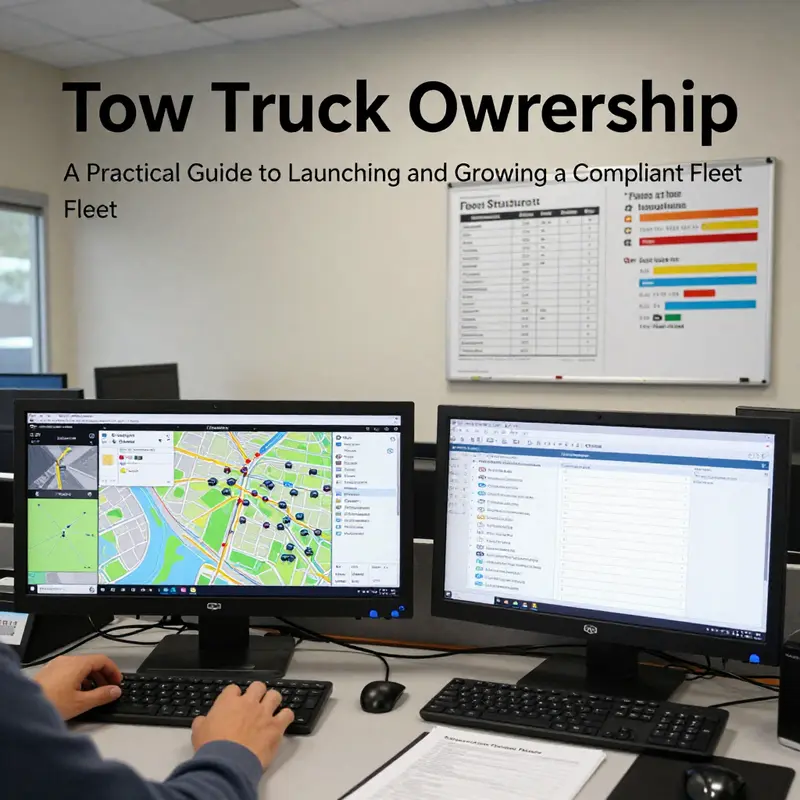
Owning a tow truck company is less a sprint of bravado and more a marathon of discipline, clear rules, and steady growth. The dream of owning one truck, a garage, and a steady stream of calls often gives way to the less glamorous but indispensable work of building a compliant, resilient business. The landscape is shaped as much by how you manage risk and regulate your fleet as by how quickly you can respond to a roadside emergency. In this chapter, we move beyond the initial push to purchase equipment and obtain licenses. We trace a path that threads regulatory obedience, prudent financial planning, reliable operations, and thoughtful expansion into a coherent, sustainable enterprise. The objective is straightforward on paper but demanding in practice: deliver timely, safe towing services while guarding against liability, ensuring customers trust you, and charting a course from a single truck to a fleet that can serve fleets, municipalities, and insurers without sacrificing service levels or margins.
A tow business does not operate in a vacuum. It sits at the intersection of local ordinances, state regulations, and industry standards that govern who can tow, how they are paid, and how they handle the property of others. Your first substantial decision—how to structure the business—affects liability, taxes, and whether you can scale. An LLC offers liability protection and simpler tax handling for many operators, while a corporation might suit those planning to raise capital or bring on multiple partners. The next layer is licensing and permits. In most states, you will need to register with the state or local authorities to legally provide towing services. You may also need city or county permits related to operation hours, yard storage, and signage. In some jurisdictions, interstate operations invite additional federal considerations, such as motor carrier authority and compliance with the FMCSA’s safety regulations. The practical takeaway is to map your regulatory terrain early and keep it updated. The easiest way to overpay is to neglect a permitting or licensing renewal that quietly lapses, triggering fines or service interruptions later.
Once the formalities are in place, the question turns to protection against the unexpected. Insurance is not a back-office burden but a core component of your operating strategy. General liability protects you from third-party injuries or property damage arising from on-scene activity or roadside operations. Auto liability covers the risks associated with the tow vehicles and their drivers. A garage keeper’s liability policy is often essential when you are responsible for cars being towed or stored in your yard, especially if you manage impounds or storage facilities. Workers’ compensation becomes unavoidable if you hire employees, and cargo insurance protects the vehicles you tow—an often overlooked but critical coverage.
With licensing and insurance in place, the foundation shifts to day-to-day operations and fleet management. A tow business thrives on reliability. Dispatch accuracy, responsive communication, and the ability to predict and meet service-level expectations determine whether a customer calls you again or switches to a competitor. A robust dispatch system—whether a simple phone-based process or a modern software stack—helps you prioritize tasks, track the order from call to completion, and maintain an auditable record for disputes or audits. Regular preventive maintenance is the invisible driver of reliability. A well-maintained tow truck is less likely to break down on a critical call, less likely to cause on-scene accidents, and less expensive to insure because it carries lower risk. The maintenance record for each vehicle becomes a living history that informs replacement timing and parts strategy. You should document inspections, service events, and any mounted equipment such as booms, winches, and wheel-lift devices. This attention to maintenance also supports safety and regulatory compliance, which often require proof of ongoing equipment checks.
Driver standards, too, define the quality and safety of your service. Depending on vehicle weight and service scope, a CDL may be required for your operators. Hiring the right people means running thorough background checks, training programs, and ongoing safety coaching. Safe driving and proper towing technique reduce accident risk, protect your customers’ property, and lower insurance costs over time. Hours of service rules, when applicable, should be observed with electronic logging devices and clear scheduling practices to prevent fatigue and service gaps. A culture of safety, backed by documented procedures and regular drills, reverberates through every call—from the on-scene traffic setup to the moment a vehicle is released back into customer hands.
In this landscape, technology becomes a force multiplier. Real-time tracking, reliable GPS, and transparent dispatch records not only improve efficiency but also deter fraud and improve accountability in the eyes of customers, insurers, and law enforcement. Data privacy matters, too. Personal information collected during dispatch, invoicing, or storage operations must be protected, with access controls, secure software, and regular backups. When you invest in fleet telematics, you gain mileage data, driver behavior signals, and maintenance alerts that enable you to optimize utilization, schedule PMs, and reduce unexpected downtime. The smartest operators use this data not just to solve problems but to plan growth—identifying which service lines and which times of day yield the strongest ROI and which markets are ripe for expansion.
Pricing and revenue models deserve thoughtful design as well. A transparent, consistent structure helps manage customer expectations and stabilize cash flow. The standard components are familiar: a base hookup fee to cover the initial mobilization, per-mile charges for the actual tow distance, and additional fees for after-hours service and storage. Depending on local rules and market dynamics, you may also bill for special services like winching or on-site troubleshooting. A well-communicated pricing framework reduces disputes and increases trust, particularly when dealing with insurance companies or fleet managers who require predictable billing. You might explore differential pricing for peak times or limited surcharges for remote locations, but any variation should be firmly anchored in market reality and regulatory compliance. When you work with insurers or fleet networks, define fee structures and payment terms clearly to avoid later disagreements or delays in payment. Every invoice should itemize hook-up, mileage, storage, and any extras so customers and partners see exactly what they are paying for, which in turn reduces disputes and accelerates collections.
Growth, naturally, follows discipline. A single tow truck can become a foundation for a broader service portfolio, but only if the expansion is anchored in realities: a market with real demand, a capable crew, and systems able to absorb higher volume. A practical approach is to select a niche and own it before expanding. This could mean focusing on heavy-duty towing for fleets, roadside assistance for a municipal contract, or recovery services for accident scenes. Partnerships become a central engine of growth. Building relationships with insurance adjusters, local repair shops, rental agencies, and municipal fleets creates recurring demand rather than one-off calls. A robust network yields steadier revenue and reduces the volatility typical of the towing industry.
Service diversification is another path to resilience. Roadside assistance programs, storage and impound management, and lien sales can provide additional revenue streams if your jurisdiction allows them. Each comes with its own regulatory and operational requirements, so treat them as potential extensions rather than immediate bets. Embracing technology is essential here as well. A modern fleet uses dispatch software and mobile apps to connect drivers with customers, while analytics guide where you hire, what equipment you buy, and how you price services across different times and locations. A strong brand and reliable customer experience drive referrals, which in turn lower marketing expenses and improve lifetime value. Your website, online reviews, and responsiveness to inquiries reflect your company’s reliability and ethics and play a critical role in maintaining a competitive edge.
But growth does not come without warning. Common pitfalls include underestimating regulatory complexity, which varies widely from one jurisdiction to another. Underinsuring or letting policies lapse after changes in fleet size is another trap that can dramatically increase risk exposure. Poor driver management—high turnover, inconsistent service quality, or safety incidents—drags up costs and damages reputation. Pricing and cost control can make or break margins; if you do not account for storage, fuel, maintenance, and staffing, you risk erosion of profit. Finally, expansion without the infrastructure to support it—dispatch capacity, yard space, maintenance facilities—can degrade service levels and destroy goodwill. The antidote to these risks is a structured governance framework: annual license and permit reviews, ongoing safety training, updated insurance certificates, disciplined contract management, and a data-informed approach to growth that favors measured, profitable scaling over rapid but unstable expansion.
For those who want a practical, start-to-finish orientation, the framework centers on a few compass points. First, know your regulatory landscape inside and out. Second, align insurance and contracts to the risks you carry and the clients you serve. Third, invest in dispatch and fleet systems that deliver reliable service, accurate records, and actionable insights. Fourth, design pricing that is fair, transparent, and capable of supporting both service quality and growth. Fifth, pursue partnerships that yield predictable revenue while preserving your autonomy and brand values. And finally, continually test assumptions. Run small pilots for new service lines, measure the impact on profitability, and cut what does not perform while expanding what does. In other words, owning a tow company is less about chasing every opportunity and more about building a durable engine of compliance, efficiency, and customer trust that can be tuned for steady acceleration over time.
To connect practical numbers with these principles, consider the often-quoted cost ranges for startup and the ongoing requirements you will encounter. The initial investment to launch a tow business commonly falls between fifty thousand and a hundred fifty thousand dollars, depending on scale and location. Major line items include purchasing or leasing trucks, specialized equipment, facility space, licensing and bonding, marketing, and a cash reserve for fuel, maintenance, and payroll. Licensing requirements—such as a Registered Tow Truck Operator (RTTO) license in many states—usually entail a formal application, a bond (often around five thousand dollars), proof of liability insurance, and sometimes fingerprinting or a background check. Insurance packages incorporate general liability, auto liability, cargo coverage, and workers’ compensation for employees; each policy shapes how you price risk, how you structure contracts with customers, and how you respond to incidents.
The operational heartbeat runs through fleet maintenance, safety, and dispatch discipline. Vehicles must meet equipment standards, and records of inspections and service must be kept. Drivers require appropriate licensing, safety training, and reliable performance histories. In an era of heightened accountability, many jurisdictions employ GPS tracking and real-time reporting to prevent fraud and improve service transparency. Your steps should be deliberate: register the business, secure insurance, obtain the necessary operating licenses and permits, acquire a core fleet, implement dispatch and billing systems, and begin with modest service lines. You can then scale by expanding into complementary services and markets, all the while preserving the quality and safety that defined your early days.
If you want a concrete benchmark while planning your own pricing, you can consult industry discussions and cost analyses that outline typical tow rates, service fees, and incidental charges. These resources can help you calibrate your base hookup fees, per-mile charges, storage rates, and add-on services in a way that remains competitive yet profitable. For a practical lens on truck costs, look up the article on tow-truck costs and consider how capital expenditure interacts with revenue projections as you model growth. how much is a tow truck
As you prepare to embark on this path, remember that success hinges not on a single clever tactic but on disciplined execution across licensing, risk management, fleet operations, pricing, and strategic relationships. The chapter closes with a reminder that the road to a scalable tow-truck business is paved with dependable compliance, steady cash flow, and a customer-centric approach that turns every roadside encounter into a trustworthy, repeatable service.
Internal link: For a practical, concrete look at one essential cost consideration, see how much is a tow truck. how much is a tow truck
External reference: For official licensing steps and regulatory details, consult the California Department of Transportation Tow Truck Operator page and the broader FMCSA guidance on motor carrier safety and operations. https://dot.ca.gov/programs/tow-truck-operator
Final thoughts
Owning a tow truck company is a disciplined blend of cost control, legal compliance, and service reliability. Start lean to validate demand among drivers, shops, and property managers, then layer in coverage and processes that protect customers and the business. Focus on transparent pricing, consistent response times, and rigorous documentation. As regulations evolve, a proactive approach to licensing, bonding, and safety keeps you ahead of risk. Growth comes from dependable partners and scalable operations—one truck, then a second, then a network of trusted contractors. With clear steps across startup, licensing, insurance, and operations, tow truck ownership becomes a repeatable, sustainable venture rather than guesswork. The final takeaway: align every decision with customer value, stay compliant, and invest in the systems that turn incidents into reliable service.