
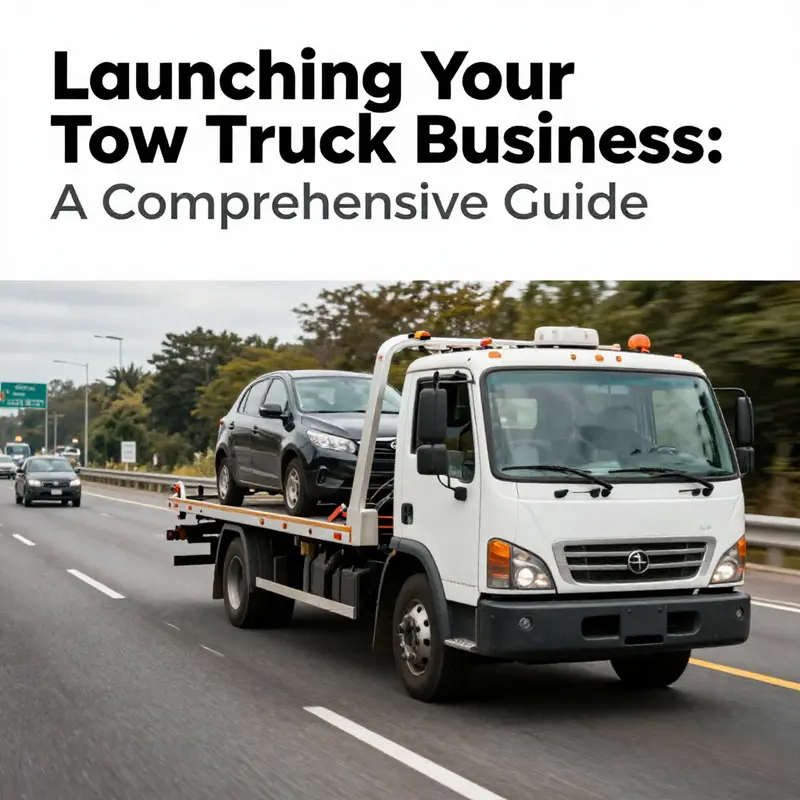
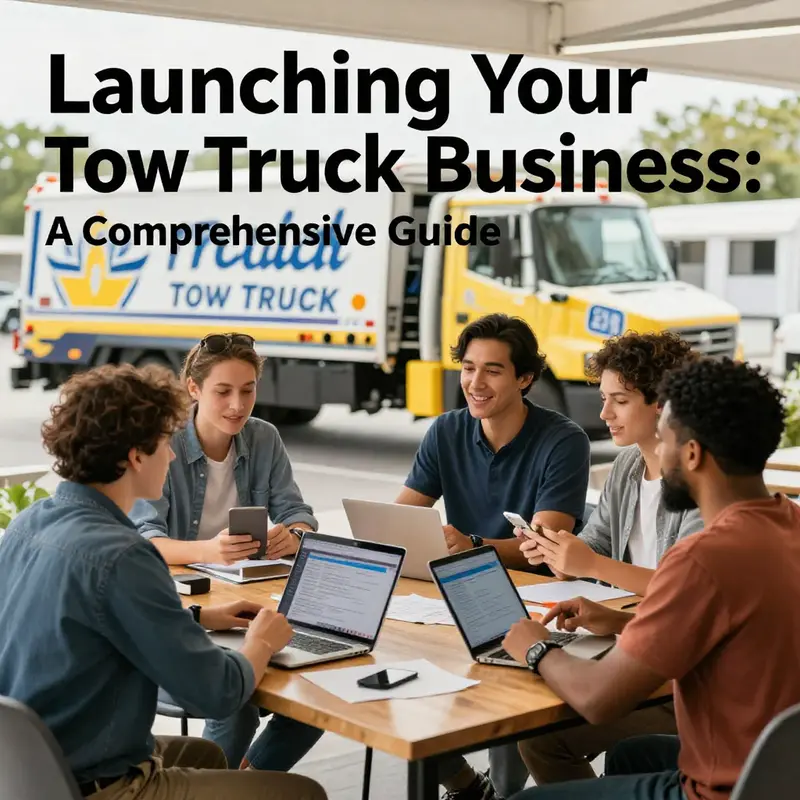
Starting a tow truck company is a venture that combines technical know-how with a keen understanding of market dynamics. Whether you’re an everyday driver, a property manager, or part of the automotive sector, the demand for reliable towing services is ever-present. Understanding how to establish this business effectively can empower you to cater to not only vehicle owners but also dealerships and auto repair shops. This guide will explore market research and business planning strategies, insights on structuring your company, necessary licensing and permits, and proven marketing strategies, all aimed at setting your tow truck company up for success.
null
null
Structured for Safety and Scale: Choosing the Right Legal Form for Your Tow Truck Venture
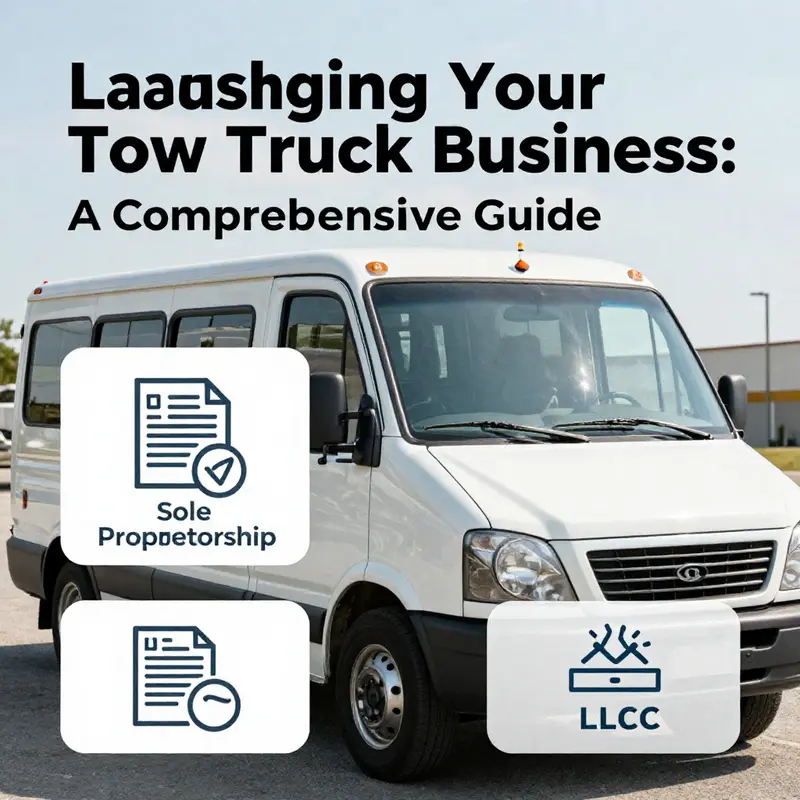
Selecting the right business structure for a tow truck company is more than a legal checkbox. It is a strategic decision that shapes liability, taxes, access to capital, and operational habits from day one. In the towing field, where equipment weight, roadside urgency, and demanding timelines collide, the structure you choose becomes a framework for risk management and growth. As you map out your plan, think not only about what protects you today but also about how you will adapt as your fleet, clients, and geographic reach expand. The core motivation is clear: you want a form that limits personal exposure while preserving flexibility in pricing, hiring, and reinvestment. This is especially important given the high accident potential and the complex mix of private, law enforcement, insurance, and repair shop customers you will serve.
Among the common legal forms, each option carries distinct implications for daily operations. A sole proprietorship offers simplicity and speed to launch. It is tempting for a one person shop eager to move fast, but the hallmark risk is unlimited personal liability. In the context of long distance recoveries, insurance claims, potential property damage, and the pressures of emergency response, that exposure is not a mere theoretical concern. If you later add drivers or staff, the line between personal assets and business risk can blur in ways that complicate finances, debt, and even family planning. A partnership mirrors the same liability challenge, with the added layer of shared responsibility and, potentially, conflicts that arise from differing standards of safety and service. In a service business built on trust, misalignment among partners can ripple through every job.
The Limited Liability Company, or LLC, is often the focal point for new tow truck operators. It provides liability protection that separates personal assets from business risks while offering flexible tax treatment. The hybrid nature of an LLC is particularly attractive for a service that must balance capital needs with prudent budgeting for maintenance, insurance, and compliance costs. An LLC supports a straightforward path to growth. It can accommodate multiple owners, invest in a fleet, or bring in outside capital without forcing you into the administrative rigor of a corporation from the outset. The operating agreement can assign management roles, specify profit sharing, and set procedures for vendor contracts, incident reporting, and customer data practices. In other words, an LLC gives you a governance framework that aligns with the tempo of a tow truck operation, where speed and safety must coexist with clear lines of authority.
Corporations present another route, especially if you foresee aggressive expansion, multiple layers of management, or plans to attract formal investors. A C corporation offers robust liability protection and the opportunity to raise capital through stock issuance. It imposes more formalities, including meetings, record keeping, and potential double taxation on profits retained inside the company. An S corporation can avoid double taxation, but it comes with eligibility rules and limitations that may not always fit a growing towing business. For most early stage tow truck ventures, the complexity and ongoing administrative load of a fully-fledged corporation are unnecessary hurdles. Still, understanding these options gives you a compass for future planning. You may decide to transition to a more formal structure as your fleet grows, contracts become larger, and your business becomes less personal and more institutional.
The decision should also consider risk management beyond liability. The towing industry intersects with regulatory compliance, insurance costs, and customer expectations around data and service reliability. A modern operator must protect customer data and comply with privacy expectations even in a hands-on field. The choice of structure subtly influences these risks. An LLC, with its clear governance and obligation to maintain sound operating agreements, can support stronger internal controls, better vendor due diligence, and clearer accountability for safety and incident handling. It can also ease the process of purchasing commercial insurance, negotiating coverage for inland marine needs, and aligning payroll and workers compensation with state requirements. These details matter more than a quick label, because the structure becomes a backbone for how you hire, train, and manage personnel who will operate and service your fleet.
When weighing the options, consider how you will finance growth. If you expect to scale through gradual reinvestment, a pass-through taxation model typical of LLCs can simplify personal tax planning while preserving cash for equipment upgrades and service enhancements. If you anticipate bringing in partners or investors who want formal equity and governance, an LLC can be structured to accommodate a flexible ownership mix while maintaining protective provisions. If you lean toward rapid expansion with substantial external investment, your counsel might guide you toward a corporate form, where stock and governance frameworks align with investor expectations. This is not a one size fits all decision; it is about mapping your market ambitions to a structure that can carry the load without stifling your ability to respond to emergencies, negotiate favorable terms with insurers, and maintain competitive pricing.
Practical steps can turn this strategic choice into a solid operational plan. Start with a candid assessment of your growth trajectory, risk tolerance, and funding needs. If you choose an LLC, you will want to file articles of organization, draft an operating agreement that clearly defines management roles, profit distribution, and procedures for adding members or dissolving the entity. An EIN from the IRS becomes essential for banking, payroll, and hiring drivers, especially as you scale. A robust operating agreement is not a formality; it is a playbook for everyday decisions, including how you handle dispute resolution, equipment purchase approvals, and compliance with state towing operator licensing. If you anticipate complex ownership structures or future equity investments, you may want to layer in buy-sell provisions, voting thresholds, and defined lines of authority to avoid friction when a high-stakes incident occurs on the road.
For operators who already run or plan to run with a handful of drivers, protecting personal assets extends beyond the entity chosen. Insurance becomes a critical partner in risk management. The structure you select informs how you approach insurance pricing and risk mitigation strategies. A corporate or LLC framework typically pairs with comprehensive liability, commercial auto, inland marine, and workers compensation coverage. This combination helps you address the two persistent realities of towing work: the chance of vehicle damage during recovery and the responsibility for drivers’ safety. Your insurer will evaluate your company’s structure along with your fleet size, service area, and safety record, so establishing a clean organizational chart and clear operating procedures earlier pays dividends when you file a claim or renew coverage.
Beyond liability and taxes, think about regulatory and customer expectations. The DMV and state business authorities often require specific licenses or registrations to operate towing services. A properly structured entity reduces the risk that personal assets are exposed in regulatory challenges, and it simplifies the process of obtaining or renewing licenses tied to your business name and ownership. In addition, customers increasingly seek partners who demonstrate governance discipline and data stewardship. An LLC or corporate structure supports formalized training programs, documented safety protocols, and transparent reporting on incident handling and service quality. It signals to insurers, clients, and partners that your operation is prepared to meet rigorous standards without compromising the pace needed to assist stranded motorists.
To help you navigate this decision, consider consulting a legal and tax professional who understands transportation and towing operations. They can help you model different scenarios, project tax outcomes under various structures, and draft essential documents such as operating agreements or shareholder provisions. If your plan includes bringing in family members as co-owners or creating a long term succession path, a well crafted agreement now saves time and preserves your company’s continuity later. A practical way to deepen your understanding is to explore a proven starter guide that walks through the mechanics of forming and operating a tow truck business under a chosen structure. For a practical starter reading, you can explore how-to-own-a-tow-truck-company and adjust it to your specific state rules and market needs. how-to-own-a-tow-truck-company.
In the end, the best structure for most new tow truck ventures around 2026 is an LLC. It blends liability protection with tax flexibility and a governance framework that supports growth without the heavy compliance demands of a large corporation. It also aligns well with the realities of operating a fleet, hiring drivers with valid CDLs, managing insurance costs, and maintaining compliance with licensing regimes. Yet the choice should reflect your particular goals: whether you intend to stay lean and local, or scale across multiple counties and insurance markets. Whatever path you pick, anchor it in clear operating terms, prudent financial planning, and a discipline to review and revise the arrangement as your business expands. This approach helps ensure that when the phone rings at 2 a.m. and a stranded driver needs assistance, you have a structure that can move quickly, act responsibly, and protect everything you have built.
External resource: https://www.shopify.com.au/blog/types-of-business-structures
Clearing the Legal Gatekeepers: Licensing and Permits to Launch a Tow Truck Company
When you set out to open a tow truck company, the road you must travel is paved with licenses, permits, and regulatory checks. This is not just paperwork for the sake of formality; it is the framework that keeps roads safe, protects customers, and buffers your business from costly legal setbacks. The licensing landscape varies by jurisdiction—city, county, and state offices all claim a share of the authority over who may tow, where, and how. Yet the underlying logic remains consistent: prove you’re a legitimate business, demonstrate you can operate safely, and show you have the financial backing to cover potential claims. The sequence typically begins with the basics of business formation, but the moment you plan to haul another vehicle, specific towing-related authorizations enter the stage. Understanding this sequence helps you anticipate delays, costs, and the kinds of records you will need to produce when regulators ask for them. It also clarifies why many successful operators treat licensing as a core investment rather than a mere hurdle to clear on the way to a shiny new truck.
First, you must establish your business as a legal entity. In practice, most tow operators choose a structure that blends liability protection with manageable taxes and administration. An LLC is the steady favorite for small to mid-sized outfits because it shields personal assets from business risks while offering straightforward tax treatment. The decision affects not only your day-to-day finances but also the paperwork you file with government agencies. When you form an LLC, you typically file articles of organization with your state, obtain an Employer Identification Number (EIN) from the Internal Revenue Service, and open a business bank account. Each step sounds routine, but it creates the essential footprint regulators will reference when evaluating your license requests. This footprint signals that you are a bona fide business, committed to professional operation and accurate reporting. If you’re unsure about the best structure for your goals and risk tolerance, the process of forming the entity often prompts a consultation with a lawyer or a seasoned accountant who understands transportation services and the regulatory environment.
With the entity established, you move to the core licensing tasks. A local business license comes first in many jurisdictions, because it confirms you are authorized to operate within a municipality or county. It is your platform permit—the door you must open before you pursue specialized towing authorizations. Next comes the towing-specific license. In many large cities and some states, a separate designation is required for a company that moves disabled, illegally parked, or impounded vehicles. This is not a one-and-done credential; it is a continual obligation that ties to compliance standards, service areas, and sometimes operational audits. In places like major urban centers, the towing license acts as a gatekeeper, ensuring entrants meet minimum standards for safety, ethics, and customer protection.
Beyond the company-level license, every tow vehicle in your fleet tends to need individual recognition. States require vehicle licenses or registrations that tie the truck to your business and verify it meets ongoing safety and equipment standards. In many regions, you’ll undergo a vehicle inspection process that culminates in a formal inspection certificate. This certificate, sometimes called a Certificate of Inspection in analogous regulatory frameworks, confirms the truck is roadworthy and properly equipped for towing operations. The inspections cover brake systems, lighting, reflectivity, tow apparatus, and weight compliance. Getting through these inspections costs time and money, but it also yields tangible benefits: it reduces liability, helps you secure insurance, and reinforces your reputation with customers and partner businesses.
Proof of identity and adequate insurance are non-negotiable components of the licensing journey. Regulators want to know who owns and operates the business and who bears responsibility for the vehicle and its cargo. You will be asked to provide proof of identity for the business owners and documentation that your company maintains appropriate liability coverage. The exact minimums can vary, but most jurisdictions expect a level of coverage that protects customers from property damage, bodily injury, and other plausible liabilities arising from towing operations. In some places, you may also encounter bonding requirements—a surety bond that offers a financial safeguard against unethical practices or failure to meet contractual obligations. While bonds add to the upfront cost, they can smooth the way to licensing by signaling financial credibility and a seriousness about compliance.
Regulatory rules extend to the operational footprint of your fleet as well. Some jurisdictions impose size and equipment restrictions designed to prevent oversized or undersized equipment from operating in certain corridors or on particular routes. The numbers can seem like trivia at first glance, but they serve practical purposes: they ensure that your trucks safely navigate urban streets, compatible loading practices, and predictable maneuvering around tight spaces. As a reference point, certain regions have defined limits—for example, maximum width around 2.5 meters, height around 4.3 meters, and length constraints that differ depending on whether a vehicle is connected to a towed unit. In some guidelines, you’ll see a cap on the length when the towed vehicle is not connected or a longer total length when connected. These specifications compel you to design your fleet and equipment to fit within the legal envelope and, more critically, to integrate safely with the traffic ecosystem.
The licensing journey, though, is not a solitary task. It requires coordination with multiple government offices: the city licensing office, the state department that oversees motor vehicles or transportation, and perhaps a consumer protection or public safety agency that monitors towing practices. The process is inherently bureaucratic, but it benefits from disciplined preparation. Gather corporate documents, certificates of insurance, proof of bond or other financial assurances, and a clear fleet roster with each vehicle’s inspection status. You will likely need to present a business plan that articulates how you will handle dispatch, customer communication, and compliance with state or city minimum standards for tow services. A ready-made plan helps regulators see that your operation is not a speculative venture but a thoughtfully designed service with predictable workflows and quality controls.
An important practical note concerns timing and pacing. Licensing timelines are rarely the same from one jurisdiction to the next, and delays are common when documents are missing or forms are incomplete. Start early, and treat the application process as part of your startup budget. Some regions charge initial fees that reflect both the complexity of the license and the scope of your intended service area. Having a clean, complete submission helps avoid back-and-forth delays that can stall your launch by weeks or even months. To navigate this landscape more confidently, lean on official resources that outline the steps for small transportation businesses. For foundational guidance and a structured roadmap, consult the official Small Business Administration resources, which offer tailored step-by-step guidance for transportation and towing services. This external guidance complements the jurisdiction-specific requirements you will encounter and helps you calibrate expectations as you map out your opening plan.
If you’re exploring how to align your ownership journey with practical licensing steps, you may want to compare the ownership path with other routes in the industry. For a concise, turnkey look at the entrepreneurial track, you can review a detailed overview of what it takes to become an operator and own a tow truck company. This resource outlines not only the legal steps but also the financial and operational considerations that frequently appear in startup conversations. The linked guide can illuminate how your licensing choices influence long-term business design, including fleet growth, insurance strategy, and compliance discipline. How to own a tow truck company.
Throughout this journey, remember that licensing is not a one-time hurdle but a set of ongoing obligations. It requires periodic renewals, annual or biannual inspections, and continuous adherence to evolving regulations. Your recordkeeping will be your best ally. Keep a central file of licenses, permits, insurance certificates, inspection reports, and correspondence with regulatory bodies. Maintain a disciplined calendar that flags renewal dates, inspection deadlines, and any regulatory changes that impact your operations. The moment you treat compliance as a core business discipline, the licensing process becomes less of an obstacle and more of a predictable routine that undergirds customer trust and operational reliability.
With licensing and permits in place, you gain more than legality—you gain a platform for credibility. Customers, insurers, and service partners prefer to work with operators who demonstrate regulatory diligence, clear governance, and transparent processes. That perception translates into more stable contracts, smoother claims handling, and better dispatch relationships. In the end, the licenses and inspections you secure are not only legal requirements; they are the first concrete signals that your tow truck company is a serious, accountable, and capable participant in the road services ecosystem. As you continue to build your business blueprint, keep the regulatory spine intact, and let the licensing framework support every other facet of growth—from fleet acquisition and driver recruitment to customer experience and community partnerships.
External resources for broader context and ongoing compliance can be invaluable as you scale. For foundational guidance on starting any small business, including transportation and towing services, the Small Business Administration offers step-by-step information and templates you can adapt to your locale. Reviewing these resources alongside your local regulatory guidance helps you anticipate common stumbling blocks and design your processes to minimize rework. External research and official guidance together create a balanced, resilient approach to licensing and permit management that aligns with both market opportunity and public safety requirements.
As you approach the next chapter of opening your tow truck company, the licensing ledger becomes your compass. The careful orchestration of licenses, vehicle inspections, and insurance not only fulfills regulatory demands but also sets a tone of professional stewardship for your entire operation. With a compliant foundation, you can focus on building service excellence, strengthening partnerships, and delivering dependable road assistance when it matters most. The journey from registration to fleet readiness is a continuous loop of planning, verification, and renewal, and each cycle reinforces your capacity to serve customers with confidence and integrity. The road ahead is long, but with clear gatekeepers in place, your tow truck venture stands a strong chance of thriving within a robust and respected industry ecosystem.
External Resource: https://www.sba.gov/start-your-business
From Street Side to Online Spotlight: Marketing Strategies That Grow Your Tow Truck Company
A tow truck operation lives and dies by reliability, speed, and trust. Marketing isn’t a luxury for a tow business; it is the mechanism that connects those core strengths to the people who need help most—drivers stranded on a highway, auto shops coordinating repairs, rental agencies managing fleets, and insurers lining up partners for rapid recovery work. The purpose here is not to flood the market with flashy promises but to build a recognizable, trusted presence that aligns with how customers think and act when a vehicle breaks down. When done well, marketing becomes an extension of your operational discipline: every technician, every dispatcher, and every piece of equipment reflects the promises you publicly make. The goal is continuity—consistent message, consistent service, and consistent follow‑through that turns one‑off calls into long‑term relationships.
Your marketing plan should feel like a natural outgrowth of the business you’re building. It begins with clarity about service areas and capabilities, then translates into channels and tactics that match real customer needs. In a field where speed and accessibility are paramount, the most effective strategies are those that reduce the friction between a problem and your solution. This means a blend of online presence, local visibility, relationship building, and service excellence that customers can quantify—faster response times, clearer communication, transparent pricing where appropriate, and dependable follow-up.
A practical mindset to adopt is to treat every marketing interaction as a customer experience touchpoint. From the moment a potential client discovers your company online to the moment you complete a tow and confirm delivery of a vehicle, each contact should reinforce your reliability and professional standards. That approach not only improves conversions but also strengthens word‑of‑mouth referrals, which remain the most powerful asset in towing. With that foundation, let’s walk through the core elements that shape a tow‑site marketing machine without getting lost in buzzwords or gimmicks.
First comes a solid online home. A clean, fast, mobile‑friendly website is the anchor for every other effort. Your site should convey the scope of services you provide—emergency towing, flatbed work, winching, jump starts, fuel delivery, on‑scene recovery—along with service areas, typical response times, and a straightforward way to request help. The design should reflect the practical reality of dispatch work: clear calls to action, prominent contact details, and a simple form or phone prompt that gets a dispatch request in minutes, not hours. High‑quality photos of your fleet, your team in uniform, and well‑lit scenes of your operation help customers gauge professionalism before they ever pick up the phone. In addition, ensure your website highlights safety and compliance—proof that your team operates within regulatory standards and follows best practices. A well‑crafted site isn’t vanity; it’s a reliable dispatch portal bundled with trust signals.
Alongside the site, claim and optimize your Google Business Profile (GBP). A complete profile with accurate service areas, hours, and a real‑world map makes you more visible in local searches and on maps. Real customer reviews convey credibility in a way no brochure can. Encourage satisfied customers to leave assessments, and respond promptly and professionally to both praise and criticism. A thoughtful response to a negative review can demonstrate your commitment to safety and service even when things go wrong, turning a detractor into a potential advocate. Local visibility is not a one‑and‑done task; it’s an ongoing discipline of updating details, posting fresh information, and engaging with community feedback.
Local search and reputation work hand in hand. When someone searches for emergency towing in a specific area or mentions a tow in a nearby city, you want to be the first name they see. Local SEO requires more than keywords on a page; it calls for consistent NAP (name, address, phone number) across directories, local content that answers common roadside questions, and the creation of geographically focused service pages. A simple policy of adding a short blog or article about common winter breakdowns in your service region can boost relevant long‑tail searches and establish you as a go‑to authority in your market. Encourage customers to describe the service they received in their reviews using language that mirrors how they spoke to you on the phone; this helps search engines recognize relevance to real customer intents.
Social media offers a complementary path to visibility that isn’t about broadcasting sales pitches but about building trust and familiarity. Platforms such as Facebook and Instagram enable you to share real‑world stories—safe towing practices, behind‑the‑scenes looks at how a dispatcher prioritizes calls, or a quick tutorial on what to do if you’re stranded with a flat tire and a spare. When you post, aim for content that’s useful in the moment: tips for staying safe on icy roads, reminders about emergency numbers, and updates on service availability during severe weather. You can also use social media to spotlight your team, celebrate long‑term employees, or show how your trucks handle difficult recoveries with professional caution. These posts aren’t just marketing; they’re micro‑proof of your readiness and capability, occurring in real time and building a narrative customers come to trust.
Paid advertising, while not essential for every market, can accelerate growth when targeted carefully. Start with a modest budget focused on high‑intent searches—people who need immediate towing in your service radius. Use keywords that reflect urgency and locality—terms like emergency towing, 24/7 tow service, and the specific city or neighborhood. Retargeting can help you stay present with people who visited your site but did not call or request a quote. The key with paid campaigns is measurement: track call volume, on‑site conversions, and average ticket for each campaign. If you see that certain messages or times of day yield more requests, scale those elements while preserving service quality. A disciplined approach that pairs online ads with offline service excellence often yields better ROI than either channel alone.
Promotions and referral programs are low‑risk ways to stimulate initial trials and ongoing engagement. A first‑time user discount, a flat‑rate emergency tow bundle, or a complimentary roadside inspection as a follow‑up can create a compelling reason to choose you over a competitor. Likewise, a structured referral program for local businesses—auto repair shops, rental agencies, or insurance partners—can convert routine business into a reliable revenue stream. The economics of a referral program are straightforward: the cost of a successful referral is offset by the value of the steady pipeline it creates. Track the source of each customer to understand which partnerships are most productive and adjust incentives accordingly. In all promotions, clarity matters: spell out the terms, avoid hidden fees, and ensure your service promises remain accurate under the pressures of real‑world towing scenarios. A marketing offer that feels manipulated will damage trust faster than it earns new customers.
Strategic partnerships lie at the heart of the tow business network. Your drivers will cross paths with auto repair shops, dealerships, rental fleets, and insurance partners more often than with individual consumers. Cultivate relationships with these entities by offering reliable, predictable service that lowers their costs and reduces their headaches. A formalized service level agreement, even a simple memorandum of understanding, can establish expectations and set a baseline for performance. In conversations with partners, emphasize communication—dispatch updates, ETA transparency, and post‑service reporting. A good partner program creates a cycle of reciprocity: you receive steady referrals, your partners gain consistency in service, and customers experience seamless assistance during stressful moments. You can deepen those relationships by hosting quarterly meetups or informal roundtables where partners share their needs and you present improvements you’ve implemented based on their feedback. This is more than networking; it’s shaping a community around dependable response.
If branding matters as a quiet backbone of trust, then storytelling matters as its voice. Craft a consistent brand narrative that foregrounds reliability, safety, and humane service. Your trucks, uniforms, and customer communications should reinforce this brand identity. The story you tell is not simply about what you do but how you do it: fast dispatch, careful handling of vehicles, transparent pricing where applicable, and respectful, empathetic customer interactions. Brand consistency helps customers recognize you in a crowded market and makes referrals easier because people feel they know what to expect when they call you. This isn’t about clever slogans; it’s about aligning every customer touchpoint with a set of tangible, measurable service standards.
Content marketing offers sustainable ways to attract local searches and demonstrate expertise without always chasing paid media. A steady stream of practical articles—what to do after a breakdown in winter conditions, how to prepare a vehicle for long road trips, or the differences between flatbed and wheel‑lift towing—helps answer questions that potential customers may have hours or days before they need you. It also gives you material to share on social media and in partnerships with local businesses. When you publish content, keep it approachable and locally relevant. Even small, well‑researched posts can drive traffic and position you as the neighborhood authority on on‑site recovery and vehicle dispatch.
The customer service core should run through every marketing decision. Train dispatchers and drivers to communicate clearly, with realistic ETA quotes and updates if conditions change. A customer who feels informed is more likely to be forgiving if a tow takes longer than expected, and a fleet that consistently follows up after service demonstrates accountability. Collect feedback not just through reviews but through brief post‑service surveys or quick check‑ins that show you care about the customer experience, not just the sale. When a customer takes the time to provide feedback, acknowledge it and show how you’ve used it to improve processes. The strongest marketing messages are born from genuine, customer‑driven improvements rather than generic promises.
Finally, leverage content that demonstrates safety and compliance. Share documented safety practices, explain the training your team undergoes, and flag certifications or inspections that underscore your professional standards. This kind of transparency can distinguish your company from competitors and reassure customers that their vehicles are in capable hands. It also creates a valuable can‑do proposition for insurance providers and fleet managers who rely on consistent, compliant service when they approve assignments.
If you’re ready for a broader, structured guide on building a sustainable business alongside these marketing practices, you can explore a deeper dive on owning a tow truck company to connect marketing with governance and operations. how to own a tow truck company
As you implement these strategies, remember that marketing isn’t a one‑time push; it’s an ongoing, data‑driven discipline. Set measurable goals for lead generation, conversion rate, average response time, and customer satisfaction. Build a dashboard for your team that tracks the most meaningful metrics and shares progress in regular briefings. When the numbers reflect improvements in responsiveness and reputation, your strength becomes self‑reinforcing: more visibility attracts more inquiries, which improves your market position and makes your dispatch and operations teams more confident and efficient. That cycle—visibility feeding demand and demand rewarding reliability—defines growth for a tow truck company in any competitive market.
To support steady growth while staying aligned with regulatory and industry expectations, it’s helpful to anchor your marketing plan in reputable guidelines. The U.S. Small Business Administration offers a robust framework for marketing that emphasizes planning, market understanding, and consistent execution. It’s a practical reminder that marketing should be built on real customer insights, not transient trends. For more authoritative guidance on implementing these strategies, consult the SBA resource on marketing your business: SBA Marketing Your Business.
Final thoughts
Successfully launching a tow truck company involves strategic planning and adherence to legal requirements. By conducting diligent market research, choosing the correct business structure, obtaining necessary licenses, and developing robust marketing strategies, you can position your towing business for growth and sustainability. Embrace the challenges and opportunities ahead, and ensure that your offerings meet the diverse needs of drivers, auto repair shops, and property managers in your community.