
The road to becoming a tow truck owner operator is not just about driving a truck; it’s about building a business from the ground up. This journey combines your passion for vehicles with the entrepreneurial spirit, allowing you to provide crucial services to your community. Understanding the requirements, importance of experience, crafting a robust business plan, and navigating legal and financial pathways are essential for success in this competitive field. Each chapter will guide you through these aspects, empowering you to make informed decisions as you embark on this promising career path.
Foundations on Four Wheels: A Practical Roadmap to Becoming a Tow Truck Owner-Operator
Choosing to become a tow truck owner-operator is less about the vehicle you drive and more about the organization you build around that vehicle. This chapter outlines a practical roadmap from skilled driver to small-business owner, emphasizing discipline, compliance, and thoughtful planning. It covers licensing, financing, equipment, operations, relationships, and the strategic mindset needed to transform a single truck into a durable, compliant enterprise.
First, establish the regulatory foundation. In most places, readiness to operate a tow business starts with a minimum age, a valid driver’s license, and a clean driving record that can withstand insurer and regulator scrutiny. The standard path typically involves a Class B commercial driver’s license (CDL) with a towing endorsement, often marked as a T. Depending on your planned fleet, a Class A CDL could be required for the largest vehicles you might tow. The license should reflect the vehicle size, weight, and towing responsibilities you intend to handle. A clean driving history is more than cosmetic; it is essential for favorable insurance pricing and for earning the trust of partners who rely on you in stressful moments.
Beyond the license, regulators commonly require a background check and, in many jurisdictions, a drug screen. These checks are not punitive; they establish a baseline for safety and accountability that customers and insurers expect. In some states, you may also encounter an additional credential such as a consent tow license, which authorizes you to tow a vehicle at the owner’s request and provides a legal framework for roadside recovery and related scenarios. If your plans include approaching insurance providers, dealer networks, or fleet operators, understanding these requirements early can prevent costly delays later.
Next comes the business structure and the finances that sustain operation. Decide whether you will operate as a sole proprietor, form an LLC, or adopt another structure that fits your risk profile and tax situation. An employer identification number (EIN) from the IRS can be useful if you form a corporation or partnership. Local permits, business licenses, and any state requirements for tow-truck operators or license plate considerations vary by jurisdiction, so consult a local attorney or a trusted regulatory resource to map your path. A bond or surety bond is common in many markets, offering customers recourse and signaling a credible level of protection in your operations.
Startup costs can be substantial, and your financing decision will shape your cash flow for months or years. Options include purchasing a truck outright, leasing, or adopting a hybrid approach that preserves liquidity while exposing you to manageable long-term costs. The choice should align with your workload, expected utilization, and risk tolerance. Equipment matters almost as much as the truck itself. Decide on a vehicle type that matches your anticipated calls—wheel-lift, flatbed, or a combination—while ensuring it can handle the payload and distances typical of your service area. Equip the unit with the essentials: reliable winches, strong tow straps and chains, safety gear, reflective clothing, road-safe lighting, and a comprehensive set of spare parts and tools.
Insurance is a recurring cost and a cornerstone of risk management. At minimum, you will need liability insurance to cover damage or injury arising from your operations. Cargo insurance protects the towed vehicle in transit, and physical-damage coverage protects your own tow truck and equipment. The exact limits and coverages depend on your location, vehicle type, and contract mix, but the principle remains the same: you are guarding against financial risk for both your customers and your business.
With licenses and financing in place, establish a practical base of operations. Your home garage, a small lot, or a dedicated shop can all work, provided they support efficient routing, easy access to frequent service areas, and a secure place to park and service your truck. Invest in dispatch software or fleet-management tools that help you track calls, optimize routes, and maintain clear records of service levels, response times, and customer interactions. A strong operational backbone reduces friction on busy nights and reinforces your reliability to clients and partners.
But the heart of the business remains people: customers, repair shops, insurance providers, and your own team. Build a network of trusted relationships that can generate steady referrals and provide mutual support during peaks in demand. Presenting yourself as a professional, safety-conscious operator matters as much as technical competence. A credible brand—an informative website, a clear Google Business Profile, and consistent, professional outreach—helps set expectations and minimizes misunderstandings when time is critical.
Articulate a concrete business plan early. Define your target market—local residents, auto dealerships, emergency fleets, and insurance partners—and establish a clear pricing structure and scope of services. Outline service offerings such as flatbed towing, wheel-lift operations, and emergency roadside assistance, and map a marketing strategy centered on reliability and local footprint rather than dependence on a single channel. Include financial projections that cover startup costs, ongoing operating expenses, and revenue under realistic assumptions. A well-crafted plan is not just a roadmap for decision-making; it is a tool to obtain financing, align partners, and stay disciplined as you grow.
As you advance, consider the regulatory and practical implications of hiring. If you eventually bring on helpers, you will face workers’ compensation requirements, payroll taxes, and additional compliance considerations for onboarding and supervision. Growth may include a small team and a small fleet, which introduces managerial challenges that extend beyond the mechanical task of towing. Even in the early stages, your commitment to safety, fair pricing, and respectful customer service will define your reputation and support sustainable growth.
Finally, stay adaptable. Regulatory landscapes evolve, markets shift, and new technologies affect how you track calls, manage equipment, and measure performance. Your willingness to learn and adjust will separate durable businesses from short-lived ventures. For readers seeking jurisdiction-specific guidance, consult local regulatory bodies and industry associations to ensure you are addressing current requirements in licensing, bonding, and insurance. A practical, grounded approach—centered on readiness, accountability, and disciplined execution—will help you move from a skilled driver to a credible, compliant owner-operator who can serve customers with speed, safety, and integrity.
null
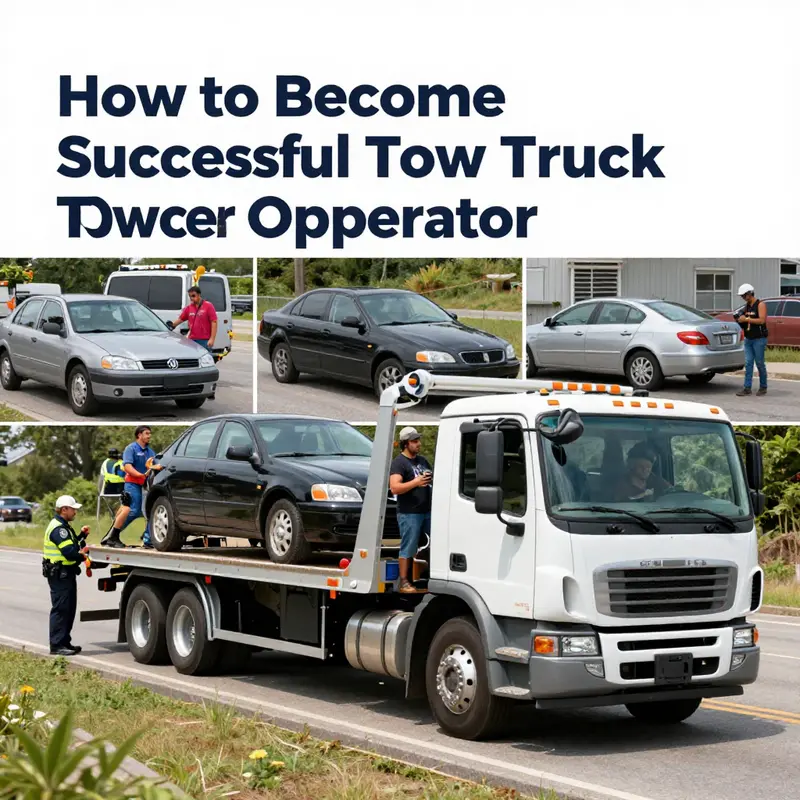
null
Blueprint for Profit: Building the Business Plan That Launches Your Tow Truck Owner-Operator Career
The Business Plan: From Market Research to Risk Management
A business plan does more than satisfy lenders. It defines how you will run, grow, and protect your tow truck operation. Treat it as a working blueprint. Update it as you learn. Keep it focused on the market, operations, money, and risk. Each section should answer clear questions. Who will hire you? How will you reach them? What will it cost to operate? How will you survive surprises?
Begin with market intelligence. Study your service area with purpose. Note traffic patterns, accident hot spots, and seasonal shifts. Urban centers need fast hook-and-go services and quick response windows. Rural areas require reliable long-distance towing and stronger recovery gear. Identify the number and size of local competitors. Observe their hours, pricing, and coverage maps. Read reviews and learn what customers praise or complain about. That reveals gaps you can fill. Look for underserved niches. Examples include heavy-equipment recovery, luxury vehicle roadside assistance, or fleet contracts with local businesses.
Map your target customers precisely. Stranded motorists react to speed and trust. Insurance companies value documentation and billing accuracy. Dealerships want damage-free transport and punctuality. Define the services each segment needs and the value they place on speed, price, and professionalism. This clarity will shape your pricing, marketing, and daily routines.
Craft a strong Unique Value Proposition (UVP). Your UVP must answer a single question: why choose your truck? Keep it specific and measurable. Faster average response times, transparent flat rates, specialist training in accident recovery, or round-the-clock availability are all viable UVPs. Match your UVP with operations you can sustain. Don’t promise 15-minute responses if you cannot achieve them without extra trucks and staff.
Operational planning turns strategy into daily practice. Start with vehicle selection tied to service type. Flatbeds serve transport and luxury cars. Wheel-lifts are efficient for standard towing. Wreckers handle heavy recoveries. Factor in payload capacity, fuel economy, and maintenance ease. Write maintenance schedules and spare-part lists. Preventive maintenance reduces downtime and expensive repairs.
Decide on a base of operations early. A home garage may work for one truck. A small lot or shop allows for multiple vehicles and faster staging. Consider zoning rules and local ordinances. Confirm parking permissions and noise restrictions. Outline route planning and dispatching workflows. Will you manage calls manually, use a simple dispatch app, or subscribe to a full dispatch platform? Include procedures for call intake, estimated arrival communication, job logging, and invoicing.
People matter as much as equipment. If you plan to hire, define hiring standards and training processes. Require clean driving records, proper endorsements, and a customer-service mindset. Build a safety manual that covers winching rules, traffic management at scenes, PPE use, and incident reporting. Safety reduces accidents, lowers insurance costs, and builds your reputation.
Financial planning turns ideas into numbers. Begin with a realistic startup budget. List one-time costs first: truck purchase or down payment, towing gear, business registration, initial insurance, signage, and basic tools. Then estimate working capital for the first three to six months. Include fuel, repairs, licensing renewals, marketing, and a modest owner draw.
Revenue modeling should align with your UVP and market. Determine how you will charge: per mile, flat rates, hourly, or a hybrid. Benchmark local rates by calling as a mystery shopper. Factor in typical job lengths and average distances. Project monthly revenue under conservative, realistic, and optimistic scenarios. Create a break-even analysis. Know how many jobs you need weekly to cover fixed costs like loan payments, insurance, and rent.
Cost control is a continuous task. Monitor fuel efficiency, tire wear, and maintenance frequency. Negotiate parts and service discounts with local shops. Track key metrics: cost per mile, average job revenue, response time, and utilization rate of your truck. Use those numbers to adjust pricing and route tactics. Aim for improving margins, not just revenue growth.
Explore funding options with clarity. If you buy new, equipment financing and lease programs are common. If you prefer used, a business loan or personal savings might suffice. Build a funding pitch with your business plan. Show lenders your market research, revenue forecasts, and break-even timeline. Be realistic about down payments and monthly obligations. Consider a line of credit to cover seasonal slumps or unexpected repairs.
Insurance is non-negotiable. Commercial auto insurance with adequate liability limits is required. Add garage liability and on-hook coverage where available. If you hire, include workers’ compensation. Insurers will ask for safety programs and driver records. A documented training regimen and routine inspections can reduce premiums. Budget insurance costs into your monthly fixed expenses and review coverage annually.
Regulatory compliance keeps your business legal and trusted. Obtain all local and state permits. Register the business and secure an employer identification number if necessary. In many areas, bonding or surety is required to protect customers. Keep permit renewals and inspection records organized. Compliance reduces the risk of fines and interruptions.
Marketing turns capability into customers. Start with a professional online presence. A simple website with contact buttons, service descriptions, and clear pricing builds trust. Claim your business on local maps and review platforms. Encourage satisfied customers to leave reviews. Network with local repair shops, dealerships, and insurance adjusters. Offer introductory rates for fleet accounts and loyalty pricing for repeat clients. Local partnerships provide steady business and reduce the cost of customer acquisition.
Pricing should be transparent and defensible. List common service fees and explain mileage or labor charges. Offer packaged pricing for popular services. Provide digital invoicing and multiple payment methods. Fast, clear billing improves cash flow and customer relationships. Consider policies for after-hours work and roadside assistance to protect time and margins.
Risk management must be realistic and layered. The tow industry faces operational risks, regulatory updates, and market volatility. Create an emergency fund equal to several months of operating expenses. Maintain contingency plans for equipment failure, including a vetted repair shop and access to short-term rentals. Document incident response steps to minimize liability after accidents. Keep digital backups of permits, insurance, and financial records.
Plan for growth with scalable systems. Set milestones for adding a second truck, hiring a dispatcher, or expanding service hours. Tie each milestone to a measurable trigger, such as maintained revenue levels or utilization rates. Reinvest profits strategically. Replace aging equipment before it becomes unreliable. As you grow, invest in dispatch software and better communication tools to preserve service quality.
Finally, make the plan a living document. Review it monthly at first, then quarterly. Update financials with actuals and revise forecasts accordingly. Monitor local market shifts and competitor moves. Adjust your UVP if customer needs change. A dynamic plan keeps decision-making grounded in reality and prepares you for both opportunity and challenge.
For practical templates and step-by-step guidance tailored to truck-based businesses, see the box-truck business plan resource linked below. It offers frameworks you can adapt to towing specifics and will help refine financial projections and operational checklists.
External resource: https://www.shopify.com/blog/how-to-write-a-box-truck-business-plan
Internal resource: For operational insights on launching and scaling a tow business, review this guide on how to own a tow truck company: how to own a tow truck company.
Chapter 4: Keeping the Tow Line Tight—Legal Shields and Financial Foundations for Tow Truck Owner-Operators
Every path from driver to owner-operator in the towing world is a path through law and ledgers. The job you perform on the roadside is physically demanding and high-stakes, but the daily discipline of running a legal, financially sound business is what sustains you when the adrenaline of a fresh call wears off and the next week arrives with unpredictable costs. This chapter threads together the legal armor you need with the financial backbone that keeps your operation resilient. It’s not just about being licensed to drive a heavy vehicle; it’s about building a structure that can weather lawsuits, insurance gaps, and the cash-flow ebbs that come with irregular income. The shift from employee to owner-operator is a shift in mindset as much as in title. It calls for a deliberate design of liability protection, a disciplined approach to compliance, and a system for money management that can outlast market fluctuations and regulatory changes. Read as a continuous flow of practical realities, the discussion below is organized not as a checklist to memorize, but as a framework you can live with—and adapt as your business grows.
Choosing a business structure begins with a simple question: how much personal risk are you willing to bear if something goes wrong on a job or in a contract dispute? The answer determines whether you operate as a sole proprietor, form a limited liability company (LLC), or adopt a more complex corporation structure. A sole proprietorship offers simplicity and minimal startup effort, but it leaves your personal assets exposed to business liabilities. An LLC, by contrast, creates a legal buffer between personal assets and business obligations, which matters when collisions, vehicle damage, or customer disputes arise. In many towing operations, an LLC becomes a prudent default choice because it preserves flexibility in management and taxes while providing a shield against personal exposure. Some operators eventually pivot to a corporation when growth demands more formal equity distribution or outside investment. The key is to align your structure with both your current scale and your anticipated risk exposure.
Beyond the structure itself, you must register the business properly. Most jurisdictions require you to file with the state, obtain a business license, and secure an Employer Identification Number (EIN) for tax administration. If you plan to hire drivers or contract with subcontractors, the EIN becomes essential for payroll, tax reporting, and compliance purposes. A solid foundation also includes understanding any local requirements for a name registration and a fictitious or trade name filing if you operate under a name different from your legal entity. The formal ownership vehicle you choose drives your tax reporting, your liability protections, and even your eligibility for certain types of contracts or lending avenues. For many owner-operators, an LLC paired with a carefully drafted operating agreement and clear ownership percentages offers the most practical mix of protection and simplicity.
Another dimension to consider early is licensing and bonding that may be required in your jurisdiction. A tow operator’s license, specific to your locality, often accompanies competency and safety standards that regulators expect you to meet. In some places, a surety bond or performance bond is a customer protection that reassures garages, insurers, and property owners. Bonds are not just a regulatory hurdle; they are a signal to potential clients that you stand behind your work and can cover costs if something goes wrong. The exact mix of licenses and bonds varies widely, so walk the regulatory path with patience and meticulous record-keeping. Do not underestimate the time and expense involved in staying compliant year after year.
With the legal shell in place, the insurance landscape becomes your financial firewall. Insurance in the towing sector is non-negotiable because the nature of roadside work includes exposure to property damage, bodily injury, and the risk of cargo loss. Begin with general liability coverage to address third-party claims for damage or injury that occur during a tow or roadside interaction. Next, secure commercial auto insurance that covers the tow vehicle itself and any auxiliary vehicles you operate for your business. Physical damage coverage protects your equipment against theft, fire, or collision. If you employ drivers or contract labor, workers’ compensation becomes a regulatory requirement in most states and a key risk-management tool for your team’s wellbeing. Non-owned and hired auto liability (NOHPL) coverage can be essential when you use personal vehicles or hire independent drivers for specific jobs. Cargo insurance, which covers the vehicles you tow, is often overlooked but critical. As your business grows, you may add cyber coverage, equipment breakdown insurance, or inland marine coverage for specialized gear. The central rule is to tailor your policy to the realities of your operation—fleet size, vehicle weight, service mix, and the level of risk you’re comfortable managing.
Insurance is not a one-and-done purchase; it is a relationship with an advisor who understands commercial transportation. Work with a broker or an agent who specializes in this field, not a generalist who handles only household policies. They can help you align your coverage with your operational footprint and regulatory requirements. The cost of insurance is not just a line item; it’s a reflection of risk appetite, safety programs, and driving records. A clean driving history, safe operating procedures, and well-maintained equipment can translate into more favorable premiums over time. The effort you put into risk management—employee training, vehicle maintenance, documented dispatch procedures—becomes measurable in your bottom line.
Compliance with federal and state regulations is the heartbeat of a lawful operation. In the United States, federal rules from the FMCSA may apply if your tow operation crosses certain weight thresholds or engages in interstate commerce. Hours-of-service (HOS) requirements, drug and alcohol testing, and meticulous vehicle maintenance records can affect your ability to operate and your insurance costs. Even if you primarily serve local calls, staying abreast of federal thresholds and safety expectations keeps you prepared for growth into larger jobs or interstate work. At the state level, towing laws cover pricing, dispatch procedures, and the handling of abandoned vehicles. Some states require licensure, bonding, or specific permit regimes for tow operators, and these rules can change as new traffic laws or local ordinances emerge. A disciplined approach to regulatory updates—perhaps a quarterly review of state transportation department notices or a membership in a relevant trade association—will save you penalties, fines, and service interruptions. Finally, emergency vehicle lighting and siren usage must remain within local traffic laws and safety standards. Missteps can not only carry fines but also complicate liability in claim scenarios.
The financial side of running a tow operation hinges on disciplined record-keeping and forward-looking planning. Separate business and personal finances from day one. Open dedicated bank accounts and use a robust accounting system or software to categorize income and expenses, track mileage for tax deductions, and monitor cash flow. Mileage tracking is not merely about tax savings; it supports asset-depreciation calculations, maintenance budgeting, and forecasting for fleet replacement. Regularly generate profit-and-loss statements and balance sheets so you see where money is coming from and where it is going. Estimating quarterly tax payments becomes a fixed discipline rather than a rush at year-end. A well-structured budget that aligns with your service mix—flatbed towing, wheel-lift, roadside assistance, and emergency response—lets you spot seasonal dips and plan accordingly. If you hire personnel, you’ll need to integrate payroll taxes, workers’ comp premiums, and unemployment insurance into your financial model, ensuring you do not find yourself surprised by payroll timing or benefit costs.
Cash flow, in particular, deserves careful attention. Towing work often involves delayed payments, insurance payments, or disputes over charges for large-haul jobs. Build a cash buffer to bridge the gap between invoicing and payment, and consider payment terms that protect your liquidity without alienating customers. When negotiating with insurers, garages, or fleet managers, your contract terms should spell out scope, payment timelines, and what happens in the event of a dispute. A clear contract is not just a legal shield; it’s a practical blueprint that reduces back-and-forth, clarifies expectations, and speeds up payment cycles.
Contracts and dispute resolution form a cornerstone of professional risk management. A robust contract should spell out the services you provide, the pricing structure, and the payment terms. It should include clear liability limitations and service timelines, especially for emergency calls that require rapid response and exacting standards. Where disputes arise, a documented process—preferably through mediation or arbitration before litigation—can save time and money while preserving business relationships. It is wise to have contracts reviewed by an attorney who specializes in transportation or service-industry agreements to ensure you are not inadvertently exposing yourself to unfavorable terms. The objective is not to intimidate clients with legalese but to create mutual clarity and a practical path to resolution if disagreements occur.
You may wonder how all these pieces fit into a single, coherent business plan. The answer lies in deliberate, consistent administration. The business plan you develop as part of your owner-operator evolution should explicitly address legal structure, insurance strategy, regulatory compliance, and the financial controls that govern everyday operations. It should map out target markets, service offerings, and a pricing strategy that covers costs, accounts for risk, and remains competitive. It should also outline supplier and partner relationships—from repair shops and insurance adjusters to police escorts or fleet managers—so you can navigate the industry’s networks with confidence. The transition from driver to owner-operator is a cultural shift as much as a regulatory one. It asks you to think beyond the next tow to the next year, the next contract, and the next fleet agreement. It asks you to build a business that can absorb a bad week, a slow season, or a sudden regulatory change without collapsing.
In this sense, your chapter on legal and financial considerations is not a stand-alone manual. It is the quiet backbone that supports every roadside call you answer. The choices you make about structure, licensing, insurance, and contracts will echo in your revenue, your risk exposure, and your capacity to grow. This interconnected framework helps you move from the impulse to own a tow truck into the disciplined practice of owning a business. When you sit with a prospective client on a gurney of paperwork after a collision scene, or when you review your monthly numbers and plan for the next fleet upgrade, you’ll feel the difference that solid structure makes. The road ahead remains unpredictable, as does every insurance claim, every law revision, and every shift in demand. But with a careful, comprehensive legal and financial foundation, you reduce uncertainty and put yourself in a position to turn independence into lasting value.
To explore the practical steps of shaping your ownership path further, consider the following reference that guides many operators from startup to ownership. how-to-own-a-tow-truck-company
External resource for deeper structure guidance: https://www.sba.gov/business-guide/plan-your-business/choose-business-structure
Final thoughts
Embarking on the journey to become a tow truck owner operator is a significant step toward independence and professional fulfillment. By understanding the essential requirements, gaining hands-on experience, crafting a solid business plan, and addressing legal and financial considerations, you position yourself for success in this dynamic industry. Your dedication and preparation will pave the way for a sustainable towing business that not only meets the needs of your community but also offers you a rewarding career path.