
Understanding how much weight a half-ton truck can tow is crucial for truck owners, property managers, and everyday drivers alike. The term ‘half-ton’ reflects the truck’s payload capacity, while its towing capacity can vary significantly based on several factors, like engine type and configuration. This article will delve into four key areas: the typical towing capacity of half-ton trucks, insights on high-performance models, the various factors influencing towing capabilities, and the importance of adhering to manufacturer specifications. With this comprehensive overview, you’ll be better equipped to assess what your vehicle can handle, ensuring safety and performance in your towing endeavors.
What a Half‑Ton Truck Can Tow: Typical Capacities and the Factors That Matter
Typical towing capacity and what shapes it
A half‑ton truck is commonly thought of as a light‑duty pickup. The label refers to payload, not towing. Yet many owners ask the same practical question: how much weight can a half‑ton truck tow? The short answer is a range, and the longer answer explains why a range exists and how to use it safely. Most half‑ton pickups today are engineered to tow between roughly 10,000 and 14,000 pounds. That span covers everyday tasks like hauling a boat or utility trailer, as well as heavier jobs such as towing a large camper. But that number is not a guarantee. It depends on how the truck is configured.
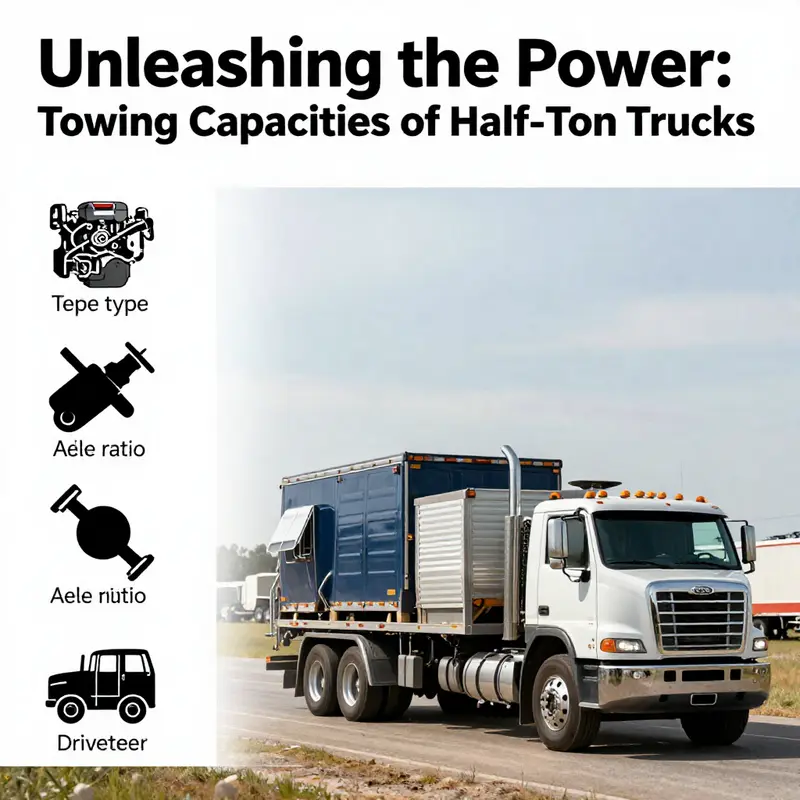
Towing capacity is a specification that manufacturers publish for each configuration. It assumes the truck is properly equipped and that other limits—such as the gross vehicle weight rating (GVWR) and gross combined weight rating (GCWR)—are respected. The trailer weight must remain below the published towing capacity. Within the 10,000–14,000‑pound window, many variables shift the number up or down. Engine size and type, transmission, axle ratio, drivetrain layout, rear springs and suspension settings, cooling systems, and the presence of a factory or dealer towing package all influence the final rating. A half‑ton with a larger, more efficient engine and a heavy‑duty towing package will sit near the top of the range. A base trim with a smaller engine, different axle gearing, or lighter suspension will be near the bottom.
Two weight ratings are central to understanding towing limits. GVWR is the maximum weight the truck can safely carry, including its own curb weight plus passengers, cargo, and tongue weight from the trailer. GCWR is the maximum combined weight of the tow vehicle and trailer. Towing capacity is effectively GCWR minus the truck’s curb weight and allowable payload. Owners often miss that payload and towing capacity are directly related: increasing cargo or passenger weight reduces how much you can tow. Tongue weight, the portion of trailer weight pressing down on the hitch, typically sits between 10% and 15% of the trailer’s gross weight. That weight counts against payload. If you overload the cab or bed, you reduce tongue weight capacity and may exceed GVWR even if the trailer itself is within the towing rating.
Hitches and tongue weight limits also matter. Hitches are rated by class and by specific tongue weight and towing capacity. A receiver and ball rated for shorter, lighter trailers will limit what you can tow and must be upgraded for heavier loads. Many trucks offer a factory‑installed heavy‑duty hitch or a dealer‑installed hitch package that increases tongue weight capacity and upgrades electrical and cooling systems. Without the correct hitch and wiring, you cannot safely handle higher towing ratings.
Tires, brakes, and cooling systems complete the picture. Towing heats up drivetrain components. Manufacturers often add larger radiators, transmission coolers, upgraded engine oil coolers, and stronger brakes to trucks sold with higher towing ratings. Trailer brakes and an adequate brake controller are essential when trailer weight exceeds the truck’s dry braking ability. Tires must carry the load and maintain proper pressure. Overstressed tires or an insufficient brake system quickly turn a safe tow into a hazard.
Axle ratio affects towing in two ways. A taller numerical ratio (for example, 3.73 instead of 3.23) gives stronger low‑end torque multiplication, improving acceleration and grade performance under load. That helps when you need to pull a heavy trailer up a steep grade or get onto a highway. Conversely, a lower numerical ratio improves fuel economy at highway speeds but can reduce towing performance. Drivetrain choice—two‑wheel drive versus four‑wheel drive—also changes ratings slightly. Four‑wheel drive adds weight and complexity, sometimes lowering towing capacity compared with a two‑wheel drive configuration that shares the same engine and axle gearing.
Trailer type and configuration change the real‑world towing experience. A boat trailer with a concentrated center of mass sits differently than an extended travel trailer with distributed mass and living gear. A fifth wheel or gooseneck setup transfers more weight to the truck’s frame and often increases the practical towing limit compared with a bumper pull arrangement. However, most half‑ton pickups reach their upper towing limits with conventional trailers rather than fifth wheels, so owners looking to tow the heaviest loads may prefer a different truck class or a fifth‑wheel conversion when appropriate.
Real‑world use highlights why published numbers matter, and why a simple figure alone is not sufficient. Two owners with identical trucks might have very different safe towing limits on any given trip. One may carry four adults and a bed full of gear; the other may drive alone with a lightly loaded bed. The same truck in hot weather pulling a heavy trailer up a mountain will face boatloads of stress compared with mild flat highway towing. For safe operation, you must consider the specific trip conditions: ambient temperature, elevation changes, cargo distribution, and anticipated stops.
Practical tips keep you inside safe limits. First, consult the manufacturer’s towing guide and the vehicle’s owner manual. Locate the GVWR and GCWR stickers, often on the driver’s door jamb or inside the glove compartment. Use those numbers when planning loads. Second, weigh the vehicle both empty and loaded at a public scale. Confirm how much cargo and tongue weight you have before hitching a trailer. Third, choose a hitch and towing package matched to the trailer’s weight and tongue weight. If you plan to tow at or near the high end of a truck’s rating, make sure the truck has upgraded cooling, brakes, and suspension options.
Safety systems on modern pickups help but do not replace judgement. Trailer sway control, integrated trailer brake controllers, and advanced stability systems make towing easier and safer. Still, electronics cannot compensate for gross overload or poor weight distribution. Sway control reduces oscillation but cannot prevent a trailer from becoming unstable if the load is excessive or poorly secured. Mechanical best practices remain critical: distribute weight low and centered, secure cargo tightly, and check tire pressures and lug nut torque before each trip.
Licensing and legal considerations can also influence what you can tow. Local and state regulations may require a special license for trailers above a certain weight. Some jurisdictions mandate extra safety equipment or limits on trailer length and braking. Even when a truck is rated to tow a particular weight, legal restrictions might apply on public roads. Always check rules where you travel, especially when towing commercial or exceptionally heavy loads.
Performance and comfort tradeoffs are worth noting. Towing near a truck’s maximum rating increases fuel consumption and adds wear on drivetrain components. Expect reduced acceleration and longer braking distances. Cabin noise and vibration can increase under heavy load. If you plan frequent, heavy towing, consider options that reduce long‑term cost: stronger axle ratios, upgraded brakes, or a higher payload‑rated suspension can extend component life and improve control.
For many owners, the typical capacity range of 10,000–14,000 pounds is more than enough. It covers midsize campers, boats, loaded utility trailers, and many work trailers. For heavier commercial loads, or for those who routinely haul the heaviest fifth wheels, a heavier duty truck class exists. The key is matching the truck configuration to the task. If you aim to tow near the top of the half‑ton range, plan your vehicle spec carefully before purchase. Factor in engine choice, axle ratio, hitch class, cooling upgrades, and whether a heavy‑duty towing package is fitted.
Finally, use available resources to verify real numbers for the exact truck and configuration you own or plan to buy. Manufacturer towing guides list capacities by model, year, and equipment. Practical calculators available online let you subtract cargo and passenger weight to reveal the remaining towing allowance. For a quick check on your situation, consult a targeted guide that helps owners answer the question: how much can my truck tow.
When you combine those steps—reading official specifications, weighing your vehicle, planning for tongue weight and payload, choosing the correct hitch and brakes, and adjusting for environmental factors—you turn a published towing figure into a safe, repeatable practice. The published 10,000–14,000‑pound range gives a useful benchmark. The safe, real‑world answer depends on careful preparation, correct equipment, and conservative weight management.
For more detailed specifications and model‑specific figures from a trusted automotive resource, see this guide on current truck towing capabilities: https://www.edmunds.com/trucks/ford/f-150/.
Tow Power Demystified: Real-World Towing Capacities of Half-Ton Trucks
The half-ton label often invites a certain confident expectation about what a light-duty pickup can pull. Yet the truth about towing capacity sits a little deeper than the bumper sticker promise. In the real world, payload and towing are governed by a web of interdependent factors: engine torque, transmission design, axle ratio, suspension tuning, cooling capacity, and the hitching setup. A half-ton truck refers to how much weight the vehicle is designed to carry inside the cab and bed—payload—rather than the weight it can legally and safely tow. That distinction matters because a high payload allowance does not automatically translate into supreme towing numbers. The same truck that feels nimble loading tools and passengers may surprise a trailer with higher weight than expected if the drivetrain configuration isn’t optimized for heavy pulls. And the opposite is true as well: a lighter payload pick-up with a robust towing package can handle surprisingly heavy loads when properly equipped and operated within its limits. It is this nuance that designers, engineers, and owner communities emphasize when talking about real towing potential rather than simple labels.
From a practical standpoint, the typical towing capacity seen across many half-ton models today sits roughly in the 10,000 to 13,000-pound range. That span accounts for a broad mix of configurations, including standard tow packages and more aggressive setups designed for heavier trailers. In some instances, models equipped with advanced towing packages and high-output drivetrains can push toward 14,000 pounds. While these figures reflect the upper end of the practical spectrum for light-duty pickups, they do not guarantee universal ability across every model year and trim. Small shifts in a vehicle’s gearing, the presence or absence of a heavy-duty towing package, and even the specific axle ratio can swing the rated capacity by several thousand pounds. For the most accurate picture, the exact model year and configuration must be consulted in the official specification. The story becomes clearer still when you consider that the destination you intend to tow, the weight distribution of the trailer, and how you plan to use the truck all interact with the published numbers.
One helpful way to frame the conversation is to keep the terms straight: payload versus towing. Payload is the weight the truck can safely carry in its cab, bed, and hitch area—passengers, cargo, and any immediate load in the tow hitch. Towing capacity, by contrast, is how much weight the vehicle is engineered to pull behind it, including the trailer and its contents, while keeping the engine, transmission, brakes, and cooling system within safe operating limits. Those numbers live on the truck’s door sticker and in the owner’s manual, but they also face real-world limits beyond what the rating suggests. If the road climbs, if wind pushes against a long trailer, or if the trailer is loaded unevenly or with equipment that shifts the tongue weight, the actual safe towing weight can be lower than the nominal rating. It is a reminder that a towing label is a maximum guideline, not a guaranteed outcome in every situation.
Within the broad landscape of half-ton trucks, some configurations emphasize torque and gearing in a way that makes towing feel effortless, even when the trailer weight verges toward the upper end of the category. These are the high-performance variants that combine strong low-end torque with well-tuned transmissions and chassis components designed to cope with sustained pull. In practical terms, such setups often leverage a more robust torque curve, enabling steadier acceleration from a stop and more stable control during ascent. A turbocharged six-cylinder or a similar high-torque powertrain, paired with a transmission and differential gearing chosen for towing, can make a noticeable difference as you haul heavier loads. The result is not simply raw horsepower; it is the ability to convert torque into effective pulling power across a wider range of speeds and conditions. While the exact numbers vary by year and package, the principle remains: more torque at the right RPM often translates to easier towing and less stress on the engine during climbs and sustained pulls.
Fuel economy is another layer that often comes into play with high-torque, tow-capable half-ton configurations. Diesel-powered variants, in particular, can offer a compelling balance between power delivery and efficiency. A diesel engine tends to deliver substantial torque at lower RPMs, which helps in maintaining speed on grades and during starts with a trailer attached. This torque profile can translate to steadier tow performance without always requiring high engine speeds, which, in turn, contributes to improved highway fuel economy. The trade-off is that diesel variants may have different maintenance profiles and upfront costs, but for some users—contractors or outdoor enthusiasts who tow frequently—the fuel-saving potential can be a meaningful portion of the total ownership experience.
For those weighing a half-ton purchase, a practical mindset is to think about the kind of towing you expect to do most often. If your routine involves short trips with smaller trailers, light boats, or utility trailers, a baseline configuration within the 10,000-pound range may be ample, with a comfortable margin for daily driving and occasional towing. If you anticipate regularly hauling heavier payloads or longer, more demanding trips, a higher-end or specialized towing package within the half-ton family may be more appropriate. The key is to match the drivetrain and gearing to your typical load profile, while also respecting safety margins for tongue weight and trailer stability. A trailer’s tongue weight—the portion of the trailer’s weight that sits on the hitch—affects steering feel and your stopping distance. Too light a tongue weight can induce trailer wobble; too heavy a tongue weight can overburden the hitch and affect braking efficiency. In other words, the towing number is important, but how you connect and distribute weight matters just as much.
If you want a quick refresher on how towing ratings are determined and how to translate those numbers into real-world practice, consider this reference: How Much Can My Truck Tow. It helps connect the published figures to on-road realities, including hitch choices, trailer configurations, and load distribution. While it is tempting to rely on top-line numbers alone, remembering the broader context gives a clearer sense of what a half-ton truck can do for your specific needs. In this broader context, the audience for these capabilities widens to include contractors who rely on consistent, mid-weight towing, outdoor enthusiasts who frequently move campers or boats, and families who occasionally tow a trailer for trips or activities. Each of these use cases benefits from understanding that towing is not a single static statistic but a functional capability that improves with proper configuration and careful operation.
To translate the numbers into a concrete decision, you should also consider the gross combined weight rating, or GCWR, which is the maximum allowable combined weight of the vehicle and the trailer when loaded to specification. This value acts as a cap for total mass during movement, and it can be a decisive factor when evaluating a particular setup. If you routinely drive in hilly terrain or other challenging conditions, the GCWR becomes a practical ceiling that takes into account engine cooling, transmission load, braking capability, and overall handling. In those circumstances, the difference between the published towing rating and the real-world performance you experience can come down to engineering margins designed to preserve reliability and safety over the long term.
From a consumer perspective, the decision process benefits from a straightforward, staged approach. First, identify your typical trailer weight, including equipment and cargo. Second, consult the factory towing rating for the specific configuration you are considering, and compare that with your calculated trailer weight plus a reasonable safety margin. Third, verify the trailer’s tongue weight and the hitch class, ensuring compatibility with the chosen vehicle. Fourth, account for options that influence towing performance: a heavier-duty hitch, transmission cooler, upgraded cooling fans, and a compatible axle ratio that supports higher sustained torque. Fifth, assess the driving environment you expect to encounter—hills, headwinds, and long miles—and factor in how these conditions affect the required power and braking distance. Taken together, these steps illuminate how much of the published towing capacity is realistic for your daily routine and how comfortable you feel behind the wheel while towing.
The discussion naturally leads to a broader perspective about the role of a half-ton truck in a towing ecosystem. The half-ton platform has evolved beyond a simple workhorse for light duties. Today’s configurations blend comfort, technology, and calculated capability to handle a wide spectrum of tasks, from weekend adventures to steady, daily hauling. The best choices balance a practical payload against a robust towing limit, with the drivetrain tuned to deliver torque where it matters most. Even with high-performance variants, the goal remains the same: to provide predictable, controllable, and safe towing experiences without compromising the everyday practicality that families and small businesses rely on.
In closing, the towing capacity of half-ton trucks is not a single number carved in stone. It is a dynamic figure shaped by the engine character, the transmission-gear choreography, the axle gearing, and the specific towing package installed. It is also shaped by the way you load and drive, the trailer’s weight distribution, and the environment in which you operate. The result is a spectrum—from roughly 10,000 pounds to the mid-teens for some configurations, with higher-end setups nearing 14,000 pounds under ideal conditions. As you weigh your options, keep your eyes on the practicalities: the payload you must carry, the tongue weight you can manage, and the conditions under which you will tow. With careful configuration and honest assessment of your needs, a half-ton pickup can deliver the kind of towing performance that aligns with your projects, your adventures, and your daily life, without stepping into the heavier and more fuel-thirsty territory of heavier-duty trucks.
External resource: https://www.dodge.com
null
null
Why Manufacturer Towing Specs Matter: The Rules Behind How Much Your Half-Ton Truck Can Tow
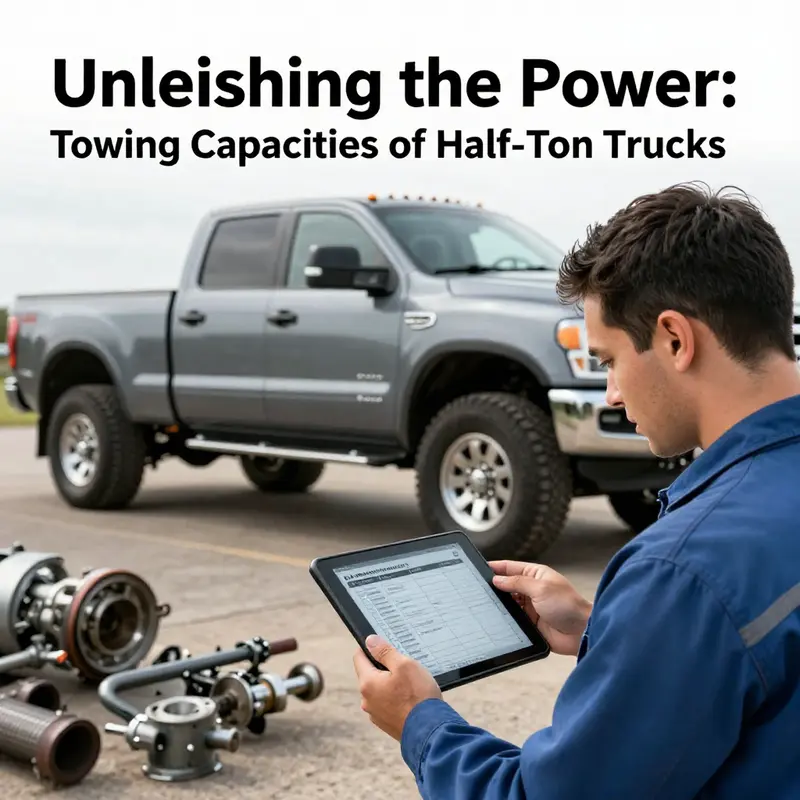
Understanding and respecting manufacturer towing specifications is not optional for owners of half-ton trucks. These specs are the result of systematic testing and careful engineering that balance power, structure, and safety. A towing limit is more than a number; it defines the safe operating envelope for an entire vehicle and protects the driver, passengers, other road users, and the vehicle itself.
Manufacturers set towing limits after evaluating many components working together. Engineers consider engine output and torque delivery, transmission strength and gearing, cooling system capacity, axle ratios, frame integrity, suspension design, brake performance, and electrical systems. They test combinations of these elements across duty cycles that mimic real-world towing: highway speed, low-speed maneuvering, long uphill hauls, and repeated starts with heavy loads. The resulting figure reflects not only raw pulling power but the ability of the whole system to manage heat, stress, and braking under continuous load.
Two different weight ratings illustrate why the precise label matters. Gross Vehicle Weight Rating (GVWR) defines the maximum vehicle weight when fully loaded. Gross Combined Weight Rating (GCWR) sets the maximum combined weight of the truck and trailer. Towing capacity is derived by subtracting the loaded vehicle weight from the GCWR. Trailer tongue weight and payload also play critical roles. Tongue weight — the downward force the trailer exerts on the hitch — must fall within a recommended range. Too little tongue weight makes the trailer prone to sway. Too much shifts weight onto the truck’s rear axle, compromising steering and handling. Following the manufacturer’s published numbers ensures these balances remain within safe limits.
Safety is the most immediate reason to follow these guidelines. Exceeding rated towing capacity increases stopping distances dramatically. Brake systems are sized to stop a vehicle within certain limits; adding excess trailer mass can overwhelm brake cooling and fade the braking surface. Transmission and engine overheating is another serious risk. Prolonged operation near or beyond rated loads raises internal fluid temperatures and stresses moving parts. This can cause accelerated wear, catastrophic failure, or immediate breakdown in extreme conditions like mountain descents.
Chassis and suspension wear escalate with overload. Leaf springs and shocks are tuned to support both payload and towing forces. Overloading compresses suspension beyond design, creating unstable handling and premature metal fatigue. Frame components and hitch attachment points are likewise engineered for specific forces. Pushing beyond those limits risks cracks, bends, or sudden failure under dynamic loads.
Many owners assume aftermarket enhancements will boost towing capacity. While upgrades can improve components, they rarely change the vehicle’s certified rating. Manufacturer towing specifications also reflect electronic controls and integrated safety systems. Electronic stability control, transmission control modules, and brake proportioning are calibrated for certain loads. Altering hardware without recalibrating electronics may produce unsafe or unpredictable behavior. Manufacturers typically reserve their official capacity numbers for vehicles configured and maintained to factory standards. Modifications may void warranty coverage if they contribute to a failure.
Warranty and liability are practical considerations. Manufacturer warranties cover defects and certain failures only if the vehicle is used within its intended ratings. Exceeding specified limits can void coverage for parts and labor related to the towing system, drivetrain, or even the whole vehicle. From a legal standpoint, operating beyond rated capacity may shift liability, particularly if an overload contributes to a crash or mechanical failure. Insurance claims could be denied if investigators find the vehicle was used outside manufacturer guidelines.
Conditions matter more than many drivers expect. The towing capacity listed in a spec sheet usually assumes ideal test conditions: moderate temperature, level terrain, and no extreme altitude. Real-world variables reduce effective capacity. High altitude reduces engine power because of thinner air. Hot ambient temperatures lower cooling efficiency and increase the risk of transmission and engine overheating. Long grades or repeated steep climbs demand more from brakes and drivetrain. Manufacturers often publish reduced capacity charts or operational cautions for hot conditions and steep grades. Drivers must interpret capacity as a guideline informed by actual conditions.
Equipment and configuration strongly influence the number on the spec sheet. A truck equipped with a stronger engine, heavy-duty cooling package, reinforced axle, and upgraded rear-axle ratio will typically tow more than the same model fitted with a smaller engine and standard components. The presence of a factory-installed towing package can add a more robust hitch, wiring harnesses, trailer brake controller provisions, and specialized cooling. Even tire selection and tire pressure affect towing safety and performance. Maintaining the recommended tire pressure for load carrying is essential. Underinflated tires increase rolling resistance, heat buildup, and the risk of blowouts.
Trailer braking systems are crucial to overall towing safety. Many jurisdictions require trailers above a certain weight to have their own brakes. A functioning trailer brake system reduces the load on the truck’s brakes and shortens stopping distances. Manufacturers assume certain braking interactions when rating towing capacity. Using a trailer without adequate braking reduces system performance and may render the factory towing rating unsafe in practice.
Proper hitch selection and installation also matter. Hitch classes and designs are rated for specific tongue weights and towing loads. Using a hitch that is undersized or improperly mounted can transfer forces to the truck body in unexpected ways. Weight-distribution hitches and sway-control devices help maintain better handling with heavier trailers. Manufacturers may recommend particular hitch types or provide installation guidance in the owner manual. Matching the hitch setup to the truck’s ratings preserves designed load paths and reduces risk.
Maintenance is an overlooked factor in towing safety and capacity. Routine checks of engine cooling, transmission fluid, differential oil, brakes, and suspension ensure the system performs as intended. Neglecting service intervals can reduce the vehicle’s ability to manage towing stresses. For example, dirty cooling systems restrict airflow and heat transfer, increasing the likelihood of overheating under load. Scheduled maintenance keeps components within design tolerances so the published towing numbers remain realistic for everyday use.
Driver behavior completes the safety picture. Smooth, anticipatory driving reduces strain. Avoiding sudden accelerations, managing speed on long descents with engine braking, and allowing additional stopping distance all reduce the mechanical stress placed on a truck and trailer. Overloading often compounds driver errors; a slightly overloaded rig driven aggressively is far more likely to experience failure than a properly loaded, carefully driven one.
When in doubt, consult the vehicle’s certification label and owner’s manual. These sources list GVWR, GAWR (gross axle weight rating), GCWR, and recommended tongue weight ranges. If questions remain, contact the manufacturer’s technical support or an authorized dealer. They can confirm ratings for specific configurations, including optional packages and factory-installed upgrades. A single towing capacity figure rarely tells the whole story; the documentation clarifies assumptions and limitations.
For owners seeking more towing capability, the correct path is choosing the right factory configuration rather than improvising. Look for models offered with higher-capacity engines, reinforced axles, heavy-duty cooling systems, and factory towing packages. These configurations undergo testing as a complete system and come with published ratings the owner can rely on. Aftermarket upgrades may increase perceived capability, but they do not change the certified ratings unless completed under controlled, engineered conditions that the manufacturer recognizes.
Respecting manufacturer towing specifications protects the truck’s longevity and resale value. Vehicles continuously operated near or above their limits show accelerated wear. Frames develop stress fractures, transmissions require earlier overhaul, and suspension components sag prematurely. A well-documented maintenance and usage history demonstrating adherence to towing limits supports resale and preserves value. Conversely, evidence of repeated overloading can reduce market value and complicate resale negotiations.
Finally, safe towing practices and adherence to manufacturer limits are about predictability. Engineers design systems to behave within specified ranges. Operating inside those ranges makes performance reliable and failures rare. Exceeding the limits introduces unknowns. Those unknowns increase risk to life, property, and financial well-being. For anyone who depends on a half-ton truck to tow trailers for work or recreation, the best decision is informed compliance: know the published ratings, understand the variables that affect them, and match loads and equipment to manufacturer guidance.
For a quick reference on how to assess your vehicle’s towing capability, consult a detailed guide that explains the interplay of GCWR, GVWR, payload, and tongue weight. A useful resource is the manufacturer’s official specifications and towing guides, which list factory-tested capacities and configuration-specific limits: https://www.ford.com/trucks/f-150/
For further practical advice on determining what your truck can tow and how to do it safely, see this article on how much a truck can tow that walks through the steps of checking labels, calculating payload, and matching trailer requirements: https://winchestertowtruck.com/how-much-can-my-truck-tow/
Final thoughts
In summary, understanding how much weight a half-ton truck can tow is essential for safe and effective usage. The typical towing capacities range widely, and with powerful models pushing limits further, knowing each truck’s specifications is vital. Factors such as the engine, drivetrain, and the load’s distribution play significant roles in determining towing capabilities. Furthermore, always refer to the manufacturer’s specifications to avoid unintended overloads that could risk safety. Equip yourself with the knowledge to tow confidently and effectively.