
Tow trucks are critical for roadside assistance and vehicle recovery. As vehicle ownership continues to rise, understanding the cost of a tow truck becomes vital for various stakeholders, including everyday drivers, commercial truck owners, auto repair shops, and property managers. From small, flatbed models to heavy-duty wreckers, the price range can vary significantly based on different factors. This article will explore the cost of buying a tow truck, analyzing key elements that influence pricing, detailing the various types available, and examining current market trends that shape these costs. By the end, readers will have a comprehensive understanding of what determines how much a tow truck costs and what to expect when making a purchase.
Tow Truck Price Horizons: Aligning Purchase Costs with the Demands of Your Towing Operation
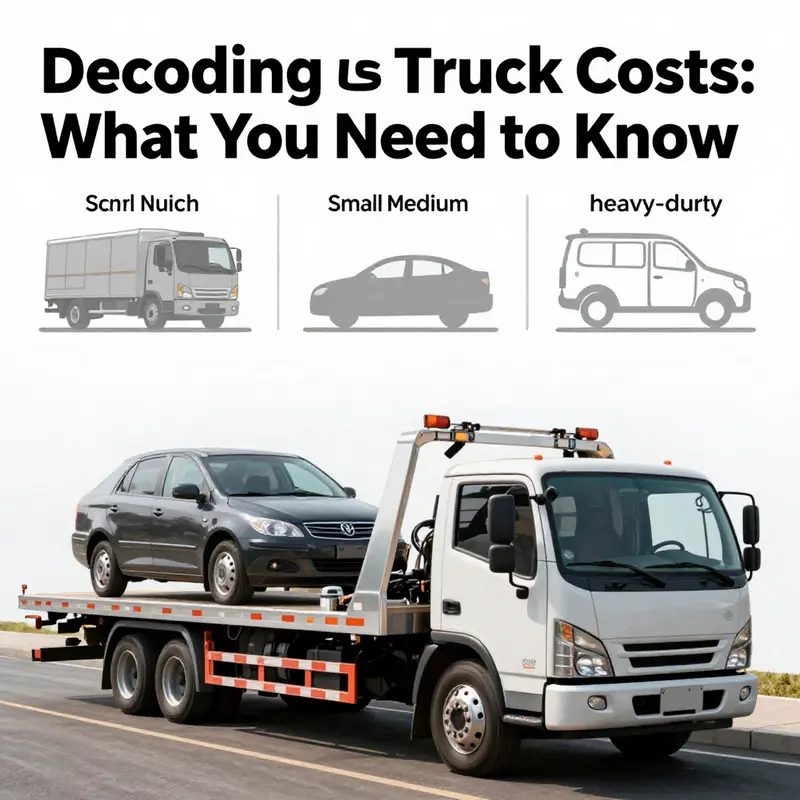
Tow truck prices vary by size, capability, and the work you expect the vehicle to perform, from compact urban flats to heavy recovery units. A 1-3 ton flatbed with a basic drivetrain can start around $15,500, making it a practical entry point for small fleets. A 4×2 5-ton wrecker or light recovery unit typically carries a much higher price, with market data often around $60,000 or more due to a stronger winch, heavier hydraulics, and a more robust frame. For heavier work, an 8×4 road wrecker or larger unit can range from the high tens into the low six figures depending on options such as wheel-lift capacity and crane systems. In the top tier, 50-ton class wreckers and specialized equipment can exceed $90,000, reflecting advanced hydraulics, reinforced frames, and extended reach. Beyond sticker price, total cost of ownership matters: shipping, warranties, maintenance, fuel efficiency, and the dealer network all influence long-term profitability. The best purchase aligns with the expected mix of calls and the financial plan, while allowing room for growth and reliable service.
Beyond the Sticker Price: Understanding the True Cost of Buying a Tow Truck in a Shifting Market
Buying a tow truck is more than the sticker price. It means weighing upfront cost against total cost of ownership, maintenance, parts availability, and downtime risk. Trucks vary by size, drivetrain, and equipment, so price bands span from light-duty flatbeds to heavy-duty wreckers with premium hydraulics. A typical 5-ton light platform might range from the mid teens to the high thirties of thousands, while 20- to 50-ton heavy units can start around twenty thousand and rise to sixty thousand or more depending on features, warranties, and after-sales support. The decision should consider not only purchase price but ongoing fuel, insurance, tires, routine servicing, and depreciation. Bulk purchases and direct-from-manufacturer deals can alter economics, as can sustainment packages such as service agreements and training. In the end, the right choice balances capability with reliability, ensuring rapid recovery times and predictable maintenance while respecting budget and cash flow. For a practical approach, build a staged procurement plan: start with a baseline unit for daily tasks, then scale capacity as demand grows, keeping future upgrades in mind. External pricing trends and market dynamics can help anchor expectations, but real-world value comes from how well a given truck fits your workload, uptime goals, and service commitments.
Beyond the Sticker Price: A Practical Guide to Buying the Right Tow Truck for Your Fleet
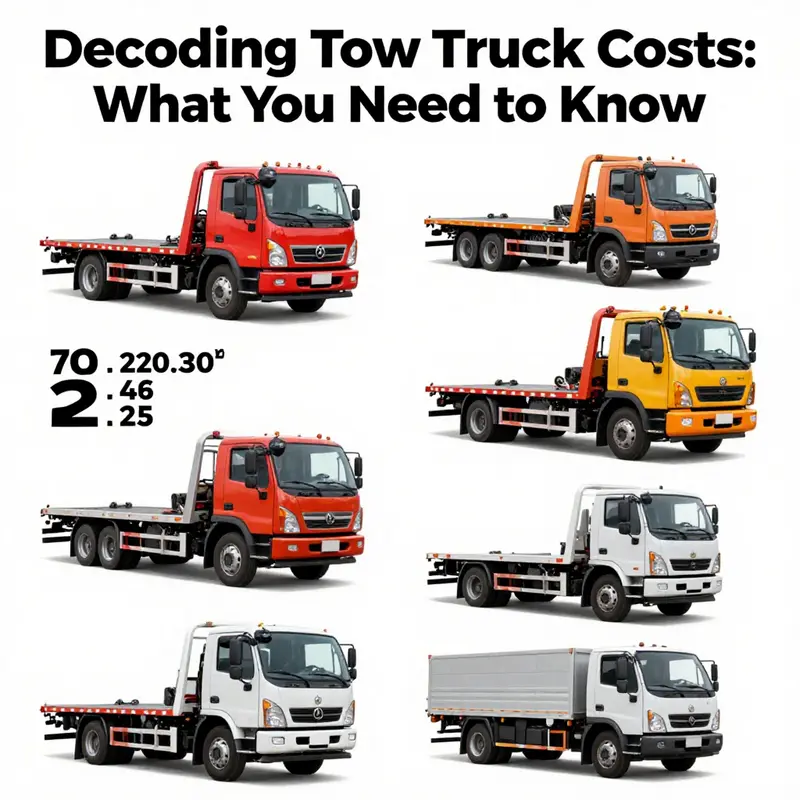
Buying a tow truck is less about chasing the lowest price and more about matching a machine’s capacity, configuration, and reliability to the work you actually do. The price landscape is broad, and the budget you allocate hinges on how you plan to use the truck, how often it will run, and what it must haul or recover. In a fleet, the goal is to balance upfront cost with long-term value, factoring in maintenance, resale, and the potential to take on more demanding work as demand grows. A careful approach begins with understanding the main types of tow trucks and the price bands they inhabit, then translating those numbers into a practical decision that serves your operation today and in the years ahead. Although the numbers shift with market dynamics, the relative scale remains consistent: small to mid-size units cover light to moderate recoveries; mid-range machines handle heavier loads with greater versatility; and the high end is reserved for complex, high-risk recoveries that demand specialized equipment and trained operators. The first decision point is not the price alone but the required capacity. A light-duty, 5-ton to 8-ton wrecker or flatbed will handle most roadside assists and common recovery tasks for passenger cars and light commercial vehicles. In market terms, these units typically begin in the mid-to-upper twenty-thousands, with entry-level flatbeds and light-wrecker configurations sometimes dipping below thirty thousand when purchased new from generic chassis suppliers or assembled with standard hydraulics. As capacity grows and features stack—extended booms, more powerful winches, upgraded hydraulics, and rugged chassis—the sticker price climbs into the mid-range territory. A typical 5-ton to 8-ton winched tow truck, commonly used for routine calls and lighter commercial work, often sits in the neighborhood of the mid- to upper-twenties through mid-thirties thousand dollars, depending on the specifics of the winch, boom length, and safety packages. For buyers who need a robust platform capable of safe transport of damaged or high-value vehicles, the flatbed option becomes especially attractive. Flatbeds are favored for their vehicle-damage minimization and ease of loading, particularly for all-wheel-drive and low-clearance cars. The cost curve for flatbeds starts with basic, smaller configurations in the lower end of the thirty-thousand-dollar range and can exceed six figures when the chassis, hydraulic system, and bed are enhanced with advanced materials and automated features. The landscape expands further when you step into heavier categories and specialized configurations. A 20-ton to 50-ton heavy-duty wrecker is designed for larger vehicles, more demanding recoveries, and often, highway incidents. Price examples in this band can be surprisingly varied. Some models with options for high horsepower and extended reach begin around the low tens of thousands, while higher-capacity, all-wheel-drive, four-axle configurations with advanced stabilization, lighting, and safety systems can push toward the mid to upper four-figure thousands, and in some cases higher, depending on the propulsion system and chassis. In one portion of the market, rotator tow trucks—the most advanced and capable recovery units—sit at the pinnacle of price. These machines incorporate rotating booms, 360-degree reach, and the ability to recover from almost any angle, including overturned or awkwardly positioned loads. Their price range reflects their complexity and the training required to operate them safely, typically landing well into the six-figure territory and often climbing into the low seven figures for fully loaded, mission-critical configurations. Given that most fleets do not need a rotator for day-to-day operations, rotators are usually considered only after a business has a confirmed demand for their unique capabilities and can justify the higher acquisition and operating costs. Beyond the core chassis and lifting system, there is a spectrum of specialized and customized options that can significantly affect price. Highway rescue configurations, multi-trailer setups, and modular or hybrid designs exist to meet unusual or mission-specific requirements. Some buyers find that modular designs, dual-trailer arrangements, or highly engineered safety features deliver value in particular operating environments—such as regions with challenging terrain or strict regulatory standards. A practical takeaway is that the price scale is not merely a function of raw lifting capacity; it is the sum of capacity, reliability, and the scope of features that directly impact uptime and driver efficiency. On a per-vehicle basis, bulk buying and fleet discounts can also shift the economics of a single unit, turning a higher upfront cost into a more favorable long-term investment. The total cost of ownership extends well beyond the purchase price. Fuel efficiency, maintenance intervals, and the availability of aftermarket parts and service networks all influence the long-term economics of owning a tow truck. A lower-purchase-cost unit that suffers frequent downtime or requires costly repairs can end up being more expensive over the life of the vehicle than a more expensive, well-supported model. Warranty terms, typically around twelve months in many markets, and post-sale service commitments can be decisive when weighing options. Prospective buyers should add contingency funds for safety equipment, training, and regulatory compliance as well, since these elements ensure the unit can be deployed effectively from day one. With this broader view in mind, a simple rule of thumb emerges: if your work primarily involves light-duty roadside assistance or small commercial vehicles, start with the lower end of the pricing spectrum and prioritize reliability and ease of maintenance. If your operation regularly handles heavier vehicles, or if you anticipate a surge in demand for more complex recoveries—such as multi-vehicle incidents on highways or off-road recoveries—the investment into a mid-range to high-end unit becomes more compelling. If you expect a mix of tasks, a versatile mid-range platform with an expandable hydraulic system, a robust boom, and a capable winch becomes a sensible compromise. It is also wise to consider a staged approach: begin with a capable but not overbuilt unit, validate its performance in real-world operations, and then scale up as your workload grows. This approach reduces the risk of tying up capital in equipment that might outpace your actual demand. The topic of price is not only about the number on a price tag but also about the fit of the vehicle to your operational model. A smaller 8-ton flatbed or winch tow truck may be sufficient to handle most daily calls in a regional network. For larger fleets operating across broader geographies or dealing with heavy-duty recoveries, investing in a 20-ton to 50-ton gross vehicle weight class or a modular system could deliver greater uptime and more opportunities to service high-value customers. In terms of concrete pricing cues, there is a wide band. Entry-level or basic flatbed and light-wrecker configurations can begin in the mid-twenties thousand dollars, while more sophisticated 5-ton to 8-ton winch trucks typically sit in the high twenty thousands to low thirty thousands range. Heavier-duty 20-ton to 50-ton models with stronger drivetrains and specialized hydraulics can range from the low forties thousand to well over sixty thousand, depending on the exact drivetrain, chassis, and feature set. For the most demanding and unique applications, rotator units and high-capacity, custom-built solutions can easily exceed $150,000, climbing toward $300,000 or more when fully equipped with the most advanced safety, control, and recovery features. While such figures can be instructive, they should be seen as benchmarks rather than hard caps. The real driver is how the truck will be used in practice and what it must withstand over a typical service life. Returning to the practical task of budgeting and procurement, begin by listing your expected workload, vehicle mix, typical recovery scenarios, and required load capacities. Then translate those needs into a specification sheet that includes target payload, boom reach, winch capacity, bed type, chassis configuration, and required safety features. With that specification in hand, solicit bids or quotes from reputable suppliers, asking for detailed breakdowns of the price components: chassis, hydraulics, electrical systems, safety devices, and any customization. It is wise to request warranty terms, service agreements, and the availability of parts and technicians within your geographic area. In addition to the price, assess the total cost of ownership, including insurance, fuel, maintenance, and anticipated depreciation. A straightforward rule is that a higher upfront price is often justified if it yields superior reliability, lower fuel consumption, longer service intervals, and stronger resale value. Conversely, if the planned utilization is modest and the expected uptime is manageable with a simpler platform, the premium for advanced features may not be warranted. For readers exploring this topic online, a broad overview of the price landscape can be helpful: How Much Is a Tow Truck? offers a concise map of where prices tend to land across categories and configurations. See How Much Is a Tow Truck? for a quick reference to typical price bands and how they align with capacity and features. As you balance price against practicality, remember that the most cost-effective choice is the one that reliably keeps your fleet moving and expanding its capabilities over time. External considerations include supplier stability, the likelihood of customization, and post-purchase training for your drivers. A robust training program, aligned with the complexity of the chosen configuration, can substantially reduce downtime and improve safety on the road. Training investments should be treated as a core component of the acquisition, not as an afterthought. Finally, the decision to buy or to lease is not purely financial but operational. Leasing can spread the cost of a higher-spec unit over time and keep your fleet technologically current, while outright purchase may offer greater long-term value and control over maintenance decisions. In short, the price you pay to buy a tow truck is a mirror of the work you expect it to perform, the reliability you require, and the level of service you insist on from your supplier. The right choice aligns the unit’s capabilities with your actual workload, ensuring fast, safe, and economical recoveries rather than simply signaling a large paycheck at the outset. For those who want a focused, common-sense summary of the price landscape, the following resource distills typical costs and can serve as a practical companion guide when talking to suppliers: How Much Is a Tow Truck? Internal link. External reference: https://www.alibaba.com/product-detail/5ton-to-8-Tons-Winch-Tow-Trucks1600452873558.html?spm=a2700.productlist.0.0.3d6c4a29JLr1kW
Tow Truck Prices in Flux: How Market Trends Redefine the Purchase
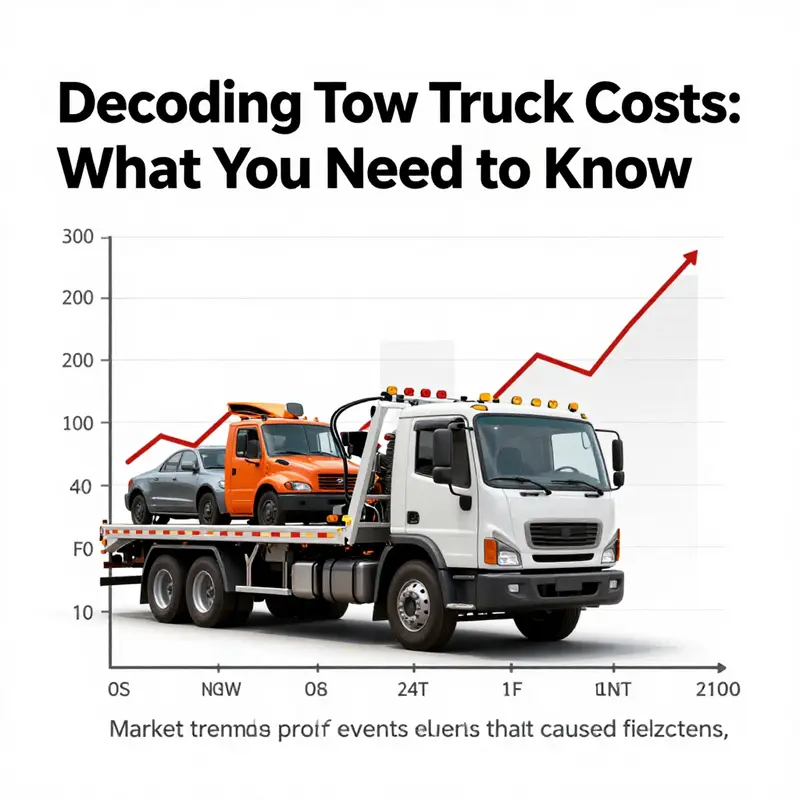
Prices to buy a tow truck in 2026 arise from a landscape that feels less like a fixed price sheet and more like a dynamic market diagram. The total outlay isn’t dictated solely by the vehicle’s size or its lifting capacity; it’s shaped by the configuration you choose, the drivetrain, and the era of emission standards it must meet. Across the industry, buyers are navigating a broad spectrum of options, from compact light-tow solutions to heavy-duty wreckers that can pull a small fleet out of a jam. What remains constant, however, is the way policy, technology, and local regulations bend the price curve, sometimes in surprising directions. In practical terms, you can expect a wide band of numbers, and the exact price hinges on weighing a stack of tradeoffs that go far beyond the sticker price on the dealer lot. The most telling picture in 2026 is not a single value but a pattern: a bifurcated market where older diesel models depreciate under regulatory pressure while newer, cleaner, particularly electric, models arrive with government support nudging their price downward relative to what simple market economics would predict on their own.”\n\nFrom the broad categories most fleets rely on, the numbers provide a useful map. Small to medium capacity, typically in the 5-ton to 8-ton range used for light-duty towing and recovery, remains the most price-stable segment for buyers who want a balance of affordability and practical capability. On one end, a basic 5-ton wrecker built on a Sinotruk Howo 4×2 frame might list between roughly $18,000 and $39,800, a spread that reflects differing body configurations, winch capacity, and optional equipment. If a buyer is seeking a more specialized setup within the same weight class—such as a 5-ton to 8-ton unit equipped with a heavy-duty winch—the price can land around the mid-to-high $20,000s, with typical ranges around $27,500 to $28,500. Those numbers remind us that even within a single modality, the configuration tension between cost and capability remains high.”\n\nMoving up the ladder to medium-to-heavy duty work, the landscape shifts as the scale of operations expands. A 20-ton to 50-ton configuration can handle larger vehicles and more demanding recoveries, and the price band expands accordingly. The most cost-conscious entry in this tier might be a bare-bones 50-ton road recovery vehicle with options offering up to around 371 horsepower; such a model can start near $20,000 in some markets, though that baseline often corresponds to limited features or less modern compliance packages. If you chase higher-capacity, more robust builds—such as an 8×4 50-ton heavy-duty wrecker—the sticker cost typically ranges from about $40,000 up to $70,000 or more, depending on chassis, winch rating, hydraulics, and additional safety or telematics systems. These are the numbers that fleets scrutinize when they must balance the need for speed and reliability with a plan for maintenance and possible upgrades over a multi-year lifecycle.”\n\nLight platform and flatbed tow trucks introduce another, sometimes cheaper entry point for operators handling smaller vehicles or specialized roading tasks. An 8-ton flatbed rollback, designed to accommodate compact pickups or small commercial vehicles, may be priced from roughly $15,500 to $29,000, with variations driven by bed length, mounting hardware, and the degree of automation in the bed operation. For bulk buyers or fleets looking to standardize across several units, the economics can tilt toward the lower end of that range as volume discounts apply. In fact, bulk purchases can unlock particularly attractive starting points; for example, some 5-ton platform tow trucks of certain brands are available from around $18,990 when a buyer commits to multiple units. The difference between a single-unit purchase and a fleet order is not just price; it often translates to more favorable lead times, better service packages, and more predictable maintenance arrangements.”\n\nThese broad ranges illustrate how the market has historically presented price thresholds. Yet 2026 introduces a new layer of complexity that can alter the math in meaningful ways. A major driver is policy. A substantial government push toward cleaner transportation has redirected the incentives surrounding tow trucks. In 2026, a large-scale government finance instrument—a $50 billion special treasury bond—exists to accelerate the retirement of older, high-emission trucks. This is more than a headline; it translates into accelerated demand for newer models, particularly electric tow trucks, as fleets look to comply with rolling emission standards and regional restrictions that penalize older diesel equipment.”\n\nSubsidies are the other half of the policy equation. Governments are offering meaningful subsidies up to around $20,000 for electric tow trucks, which directly reduces the effective purchase price. The combination of bond-fueled retirement programs and subsidies makes electric models surprisingly competitive with diesel equivalents on a first-price basis. What looks like a premium for new technology in a vacuum can, in practice, be offset by these incentives and the lower operating costs that electric powertrains bring over the life of the vehicle. In other words, the high upfront sticker on an electric unit is frequently balanced by a more favorable total cost of ownership, assuming electricity costs and maintenance are managed well. The result is a market that simultaneously encourages buyers to adopt electric builds while compressing the price gap between options that previously lived in separate economic worlds.”\n\nThe shift toward electrification, however, does not erase other price dynamics. There is a pronounced bifurcation in play: new, compliant, and especially electric tow trucks are seeing demand surge, underpinned by subsidies and a fleet need to future-proof operations. At the same time, the market for older diesel models is undergoing a dramatic revaluation. Cross-provincial sales restrictions and tightening emissions standards contribute to a sharp decline in the resale value of pre-Post-2026 diesel vehicles. In practical terms, the used-diesel market has become a buyer’s playground and then some, with older models sometimes finding prices that plunge toward the lower end of the spectrum—some listings even dropping below RMB 10,000 in certain markets where local rules are stringent and supply is abundant. That volatility is a reminder that buying a tow truck is not simply selecting a chassis and a bed; it’s choosing a strategic position in a regulatory and technological arc that will influence depreciation, resale, and re-leasing opportunities for years to come.”\n\nThe price journey is further colored by regional policy variations. Not every jurisdiction applies the same rules at the same time, and local contexts matter. In some big urban centers, authorities have tightened restrictions on older equipment earlier in the cycle, while others lag behind. Take Chongqing, where the authorities have expanded restrictions on older trucks that fail to meet newer standards, and places like Hainan where additional paperwork is required for certain vehicle types. These regional differences complicate the purchase decision and can push price and availability in unexpected directions. Buyers must weigh the cost of regulatory compliance alongside the sticker price, shipment logistics, and after-sales support when budgeting for a multiyear fleet upgrade.”\n\nAgainst this backdrop, the practical art of buying a tow truck in 2026 hinges on a broader calculus than a single price tag. Fleet managers and independent operators are increasingly asked to forecast not just the next year’s maintenance outlays, but the total cost of ownership over the vehicle’s expected life. That equation weighs fuel or electricity costs, maintenance intervals and parts availability, warranty terms, downtime costs during service, and the depreciation curve shaped by regulatory compliance and market sentiment toward diesel versus electric. In a market where subsidies can tilt the economics of electric models so decisively, it becomes essential to compare apples to apples. It is not enough to ask, \”What does this truck cost today?\” Instead, buyers should ask, \”What will this truck cost over five, seven, or ten years, given the incentives, the region’s emissions trajectory, and the parity—or lack thereof—between diesel and electric operating costs?\””\n\nFor those who want a quick sense of price scales without losing sight of the broader dynamics, there is a practical route. Price databases and dealer networks increasingly compile market-driven valuations, which consider current inventories, regional demand, and the mix of new versus used stock. In this environment, it is sensible to consult a few sources and cross-check with real-time listings to capture the latest pricing signals. If you are seeking a quick pointer to the price scales discussed here, you can explore our detailed overview on tow truck costs and pricing, which compiles the typical ranges across configurations and highlights how subsidies and regional rules alter the bottom line: tow-truck-costs-pricing.”\n\nThe market’s complexity is not a signal to abstain from buying, but a call to adopt a more nuanced approach to procurement. Buyers should map out their primary use case—whether it’s urgent roadside recovery in urban cores, long-distance highway towing, or heavy-duty recovery in industrial zones. The choice of drivetrain and configuration should be aligned with forecasted utilization, downtime tolerance, and the regulatory environment the fleet will navigate. The price discussion, in turn, must be anchored in a careful calculation of the total cost of ownership. Hardware decisions that prioritize higher upfront costs—such as electric powertrains with longer warranty coverage—can pay off if they deliver substantial savings on fuel, maintenance, and downtime. Conversely, in regions with limited charging infrastructure or where incentives are uncertain, a diesel platform with lower initial costs might be the more prudent short-term bet, even as the policy backdrop remains uncertain.”\n\nThe practical upshot for buyers is a multi-layered decision framework. Compare category scales: a compact 5-ton to 8-ton unit may meet most light-duty needs at a price range roughly between $18,000 and $39,800, with specific configurations nudging the numbers higher or lower. For those who require more muscle, a 20-ton to 50-ton solution can enter around the mid-stretch of the market—roughly $20,000 for sparing, budget-oriented entries, to $70,000 for high-end, fully equipped models. Light flatbeds kick in at a lower baseline, around $15,500, but stretch toward the high-twenties depending on bed length, winch load, and automation features. In bulk, a 5-ton platform unit can dip near $18,990, illustrating how volume discounts can compress the price threshold, a reality buyers should actively leverage during negotiations.”\n\nYet above all, 2026’s market reality stresses due diligence. Buyers should read the policy climate as part of their purchase plan. Look beyond the quoted price at the incentives available in your region, the probable lifetime energy costs, and the resale trajectory of diesel versus electric. Seek transparent pricing that reflects ongoing maintenance costs, parts availability, and the availability of qualified service in your area. The literature and market analyses point to a clear pattern: electric models are becoming increasingly price-competitive thanks to subsidies, while older diesel models, even when cheap today, risk higher regulatory drag and diminished resale value tomorrow. The best-buy decision, then, is not simply a matter of finding the lowest upfront price but selecting a configuration and a financing plan that align with your long-term operational needs and regulatory horizon. For the cautious buyer, this means a blend of market intelligence, policy awareness, and a willingness to adjust plans as new incentives or restrictions emerge. In the end, the question, \”how much is a tow truck to buy?\” becomes a strategic inquiry about future-proofing a fleet in a rapidly evolving transportation ecosystem.”\n\nExternal reference for broader context on 2026 market dynamics and the policy landscape includes a detailed overview from a leading industry source: 2026 Truck Market Trends & Buying Guide. This external resource situates the price ranges discussed here within the macroeconomic and regulatory forces reshaping vehicle ownership and market demand. For more practical price navigation within our own site, you can explore related material on our pricing page, which aggregates typical ranges by configuration and highlights the interplay of subsidies and regional variations: tow-truck-costs-pricing.
Final thoughts
Understanding the cost of purchasing a tow truck is essential for a variety of users, from individuals to businesses. Prices vary widely based on the truck’s type, capacity, brand, and additional features. When considering a tow truck purchase, it’s crucial to account for these factors to ensure you’re making an informed decision. Whether you’re a driver in need of recovery services, a property manager ensuring commercial vehicle readiness, or running an auto repair shop, knowing how much a tow truck costs based on current market trends and specific requirements can ultimately lead to smarter investments. Always stay informed about market dynamics to adapt to changes in pricing effectively.