
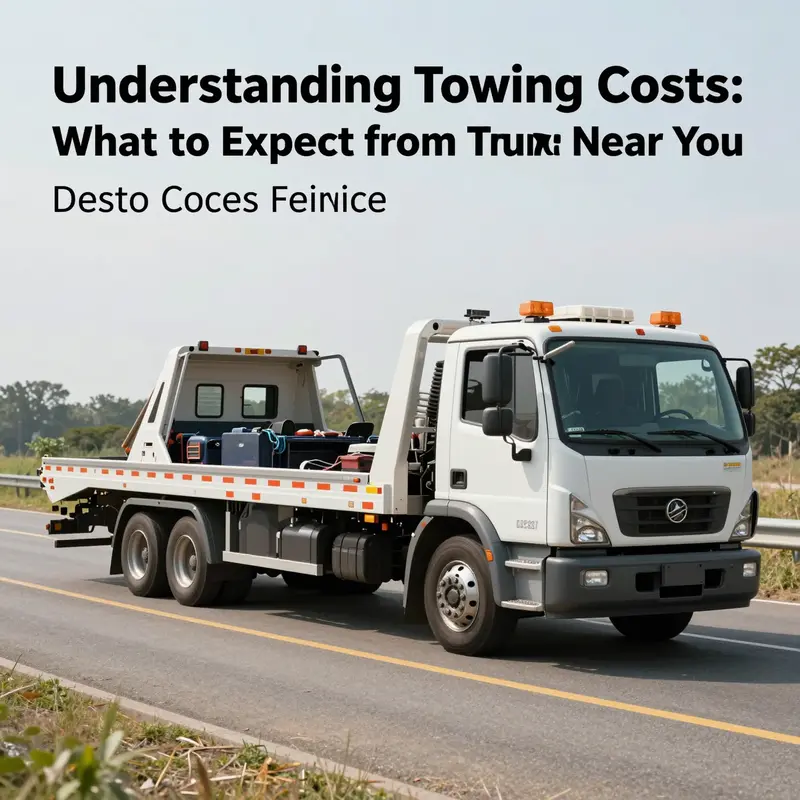
When you find yourself stranded on the roadside, understanding the costs associated with tow truck services can provide peace of mind. Towing prices can fluctuate dramatically based on various factors, including distance, type of tow, and location. This article offers insight into what you can expect in terms of pricing, breaking down the core elements that influence costs. We will explore three main chapters: the factors that affect towing prices, the regional variations in rates, and how modern technology can help you estimate costs more accurately. By the end, readers will be equipped with the knowledge to navigate the often-unpredictable landscape of tow truck charges.
Tow Costs Unfolded: What Determines the Price of a Tow Truck Near You
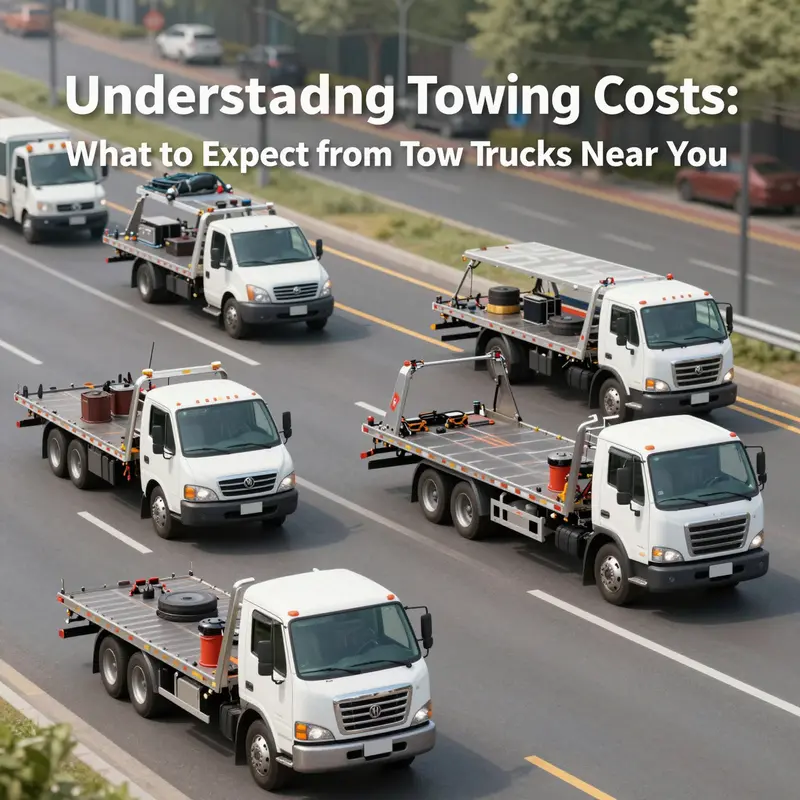
When a car tows you into a rough moment on the road, price becomes a practical concern alongside safety and getting back on your way. The question, how much is a tow truck near me, is never answered by a single number. Instead, the final bill is the sum of several factors that work together like gears in a machine. The most important thing to understand is that towing is a service shaped by real-world constraints: the distance the vehicle must travel, the size and weight of the vehicle, the time of day, and the local market that governs supply and demand. Recognizing these variables helps you anticipate costs, ask informed questions, and avoid surprise charges when the tow arrives or when you receive the final invoice after a breakdown, collision, or impounding. The sequence of pricing often unfolds in a familiar pattern. A base connection fee is charged to cover the costs of dispatch, mobilization, and the initial hookup. From there, a per-mile rate is added for the distance the tow truck must cover. In some pricing models, a fixed rate is applied for a bracket of distance—say, a short run within 5 to 10 miles—then a different rate kicks in once you move beyond that bracket. The underlying logic is simple, but the details can be intricate because each company may structure its charges a little differently, and your location can magnify or mitigate the total. For example, in many places a short tow might sit in the $75–$125 range, but a longer tow, say 50 miles, can easily top $300, especially if the route passes through steep terrain, high-traffic corridors, or rural stretches where fewer providers are available. The math isn’t just about distance; it’s about the practical realities of moving a vehicle from a roadside spot, often in unpredictable conditions, to a shop, storage facility, or another destination. As you read or hear a quote, the first number you encounter is almost always the hook-up or base fee. The hook-up fee is meant to cover the work of getting the vehicle attached to the tow rig, securing it, and preparing it for transport. After that comes the mileage charge, which is typically calculated per mile. Some operators also add a time-based element, particularly if the tow involves a congested urban area, a long wait for service, or a round trip to a distant location. In this sense, distance is the primary driver, but the numbers you see reflect a blend of fixed costs and variable operations. If you want to see the pricing logic in action, think of a short 5-mile tow as a baseline: the base fee plus a modest per-mile charge will usually land somewhere around $75 to $125. As distances grow, the per-mile charges accumulate, and the total can rise steeply. In rural areas, you might find that the distance alone pushes costs higher because repair shops and impound lots are more dispersed. In denser urban settings, the same 10 to 20 miles might be accompanied by traffic delays, additional hourly rates, and higher demand that compresss the time a driver spends on the call. Some companies use a “hook and roll” approach, where you pay a fixed hook-up fee followed by a set per-mile rate. The important takeaway is not the exact numbers, but the understanding that a quote should break down these elements clearly. A transparent quote helps you compare apples to apples, rather than receiving a bundle of charges that feel vague once the tow is complete. The second major factor is the vehicle’s type and weight. Not all vehicles pose the same challenge to tow. A compact car requires relatively little equipment, labor, or fuel, and can be towed quickly with standard gear. A full-size pickup, an SUV, or a commercial van, on the other hand, demands heavier equipment, more manpower, and more fuel, which translates into higher costs. Vehicles with high ground clearance, lifted suspensions, or off-road modifications require careful handling. In some cases, the tow truck must bring specialized apparatus, such as a heavy-duty wrecker or a wheel-lift system, to protect the vehicle from damage during loading and transport. Each extra piece of equipment, each additional operator, and each extra minute spent on preparation adds to the price. The more complex the vehicle, the more likely you will see elevated fees, even beyond distance-based charges. And the sort of damage the vehicle has sustained can also influence the process. A car that is stuck or badly damaged may require winching or extrication from mud, snow, or a ditch. Each of those services represents an add-on that can push the total higher than a straightforward, flat-toed transport. The third factor, time of day and emergency status, is a reminder that towing is not a nine-to-five service. After-hours, weekends, and holidays often carry surcharge pricing. When a breakdown happens late at night or during a holiday, the provider is absorbing additional risks and costs—standing by in less-than-ideal weather, coordinating rosters for night shifts, and possibly absorbing the opportunity cost of not taking other calls. In practical terms, this means higher base rates or premium hourly rates, and sometimes a minimum service charge to ensure the driver’s time is compensated. The longer you wait for help, the more you may pay, especially if the tow requires time-sensitive coordination to reach the vehicle, protect it from weather exposure, or deliver it to a preferred facility. Some dispatchers also factor in the time spent on the scene, not just the drive, which can increase the quoted amount if the operator is waiting for your place of delivery, securing permission from a property owner, or performing extra steps to ensure your vehicle’s safety. The location and local market conditions shape the broader price landscape as well. In densely populated urban cores with high competition, you might expect a wider range of quotes and more opportunities to negotiate or shop around. Conversely, rural or remote areas may show fewer providers, which can push prices up because the cost of maintaining service coverage over large territories is higher and the fixed costs are spread over fewer jobs. In some places, regulatory requirements and licensing fees that operators must incur are reflected in the base rate, even though those costs are invisible to the consumer at a glance. The interplay of supply and demand matters, too. On a sticky morning with many breakdowns or during severe weather, demand can surge, and the nearest provider may charge a premium simply because they can. The fourth key factor is the ancillary services and fees that often appear on the final bill. Even if your car is towed a short distance, you may encounter extra charges for winching out of mud or snow, if the vehicle needs to be recovered from a ditch, or if a tow involves special equipment. Storage fees can apply if the vehicle ends up held at a lot while a repair decision is made or while you shop for a repair option. Locksmith services or fuel delivery can also be add-ons if you’ve locked your keys inside the vehicle or run out of fuel, respectively. It is not unusual for these extra items to push the total well beyond the initial estimate if you do not anticipate them. This is why a written estimate that itemizes each possible fee is invaluable. It reduces the risk of hidden costs and helps you compare quotes with greater clarity. When you request a price quote, ask specifically whether the amount includes mileage, labor, winching, storage, and any other potential charges. Some companies offer fixed-rate towing for special scenarios, such as routine lockouts or minor breakdowns; these fixed-rate options can be attractive for budgeting, but they require careful verification to ensure they apply to your exact circumstances. In the spirit of transparency, you can expand your inquiry by asking for a detailed breakdown on the phone or in writing before the tow truck arrives. This proactive approach is especially important if you’re on the edge of a busy intersection or if you’re in a place where the local rate structure can vary between neighborhoods. If you want a practical touchpoint on how these factors interact in real quotes, consider reviewing a pricing reference that others in the field rely on. For more information on pricing structure and how it’s typically presented, you can explore this resource: tow-truck-costs-pricing. This link provides a sense of how the base fee, distance charges, and incidentals are usually communicated, which can make side-by-side comparisons more meaningful when you’re deciding who to call. Beyond the internal dynamics of pricing, there is value in knowing how to pursue real-time pricing in the moment. Some local tow providers offer online or mobile pricing estimates that take into account your location, the vehicle type, and the anticipated distance. While not every company guarantees an immediate quote, those options can help you avoid long phone calls and set expectations before a tow begins. In any case, you should be prepared to share your current location, your vehicle’s make and model, whether the vehicle is operable, and any special circumstances such as immobilization in a mud, snow, or ditch, or vehicle damage from a collision. The more precise you are, the more accurate the estimate will be, and the less chance there is of a mismatch between the quote and the final invoice. Another practical angle is to align your expectations with typical car-to-tow economics covered in national references. Provincial or national estimates can differ, especially when local labor costs and fuel prices shift. For that reason, you may want to check a reputable external reference that aggregates regional data and offers context for how pricing is typically calculated. For official regional estimates and a broader understanding of base fees, per-mile charges, and emergency rate information, you can consult AAA’s towing and roadside assistance costs page. While not a substitute for a local quote, it provides a baseline to gauge whether a quote seems reasonable in your area. The bottom line is that the price of a tow truck near you is never a single fixed figure. It is a composite of distance, vehicle weight and complexity, time-of-day volatility, local market structure, and additional services that may be required to recover or store the vehicle safely. As a consumer, your best strategy is to gather a few quotes, ask for itemized breakdowns, and be mindful of the typical patterns described here. If you’re in a position to plan ahead, consider maintaining a standing agreement with a roadside assistance program or a preferred local provider that offers predictable rates for regular, smaller tows and a clear policy on after-hours charges. While it is rarely possible to predict exactly when you will need a tow, understanding these factors helps you anticipate costs, communicate clearly with dispatchers, and avoid the dread of an unexpectedly large bill when the situation has already caused enough stress. For more actionable guidance on how pricing is structured and how to read a tow quote, you can refer to the linked resource noted earlier. This background makes it easier to navigate one of the road’s common uncertainties with confidence and clarity, ensuring that you know what you’re paying for and why. In the end, the specifics of your scenario—the distance, the vehicle’s weight, the time of day, and the local market—will converge to form the final price. Knowing that, in advance, gives you meaningful leverage when you speak with dispatchers, compare quotes, and decide the best path forward for getting your vehicle to safety and back on the road. External reference for regional estimates and context: AAA Towing & Roadside Assistance Costs.
Pricing by Place: How Regional Variations Shape Tow-Truck Costs Near You
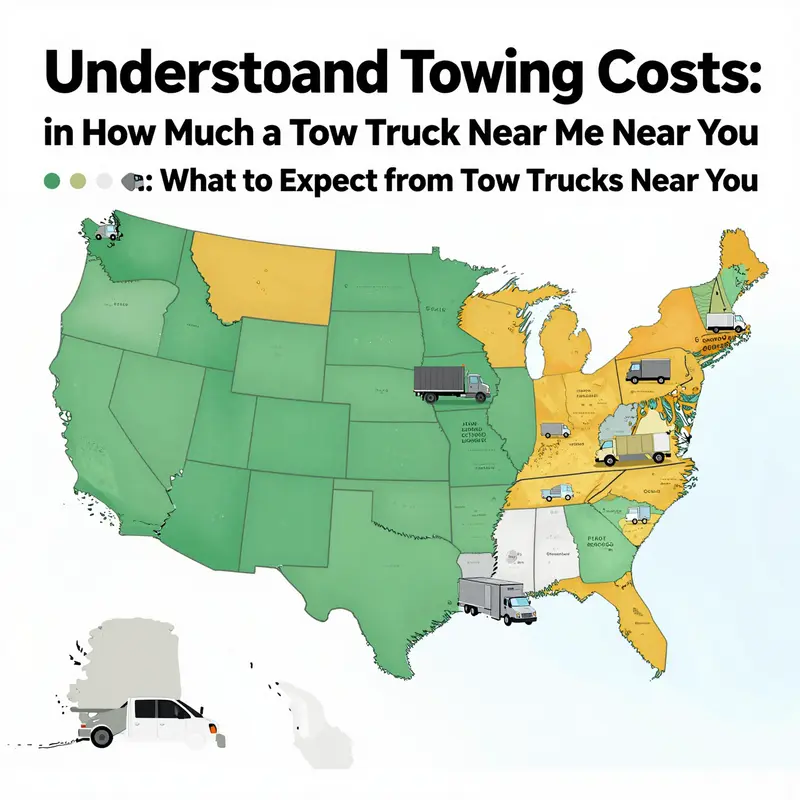
Prices for tow services vary by geography in the same way other costs do. Local demand, labor, fuel, and the costs of operating near the road shape what you pay. In dense urban areas, base fees and per-mile charges tend to be higher and travel time can add to the bill; in rural areas the same distance may cost less, but longer drives can still raise the total. The mode of towing matters too: flatbed versus wheel-lift often carries different price structures because of equipment needs and handling. Regulatory rules and after-hours or weekend service can push prices up further. The practical takeaway is to obtain multiple quotes with clear itemization and to look beyond the bottom line at the breakdown of call-out, distance, labor, storage, and any surcharges. A rough starting point in many markets is a basic call-out around 75 to 125 dollars with per-mile charges typically between 2 and 5 dollars, but exact prices vary by region. Real-time quotes that reflect your ZIP code and vehicle details help you compare apples to apples. In short, regional pricing is a map rather than a single number, and informed buyers can navigate it by asking robust questions and insisting on transparent invoices.
Tow Costs in Real Time: How Mobile Tech Turns a Guess Into a Real-Time Quote
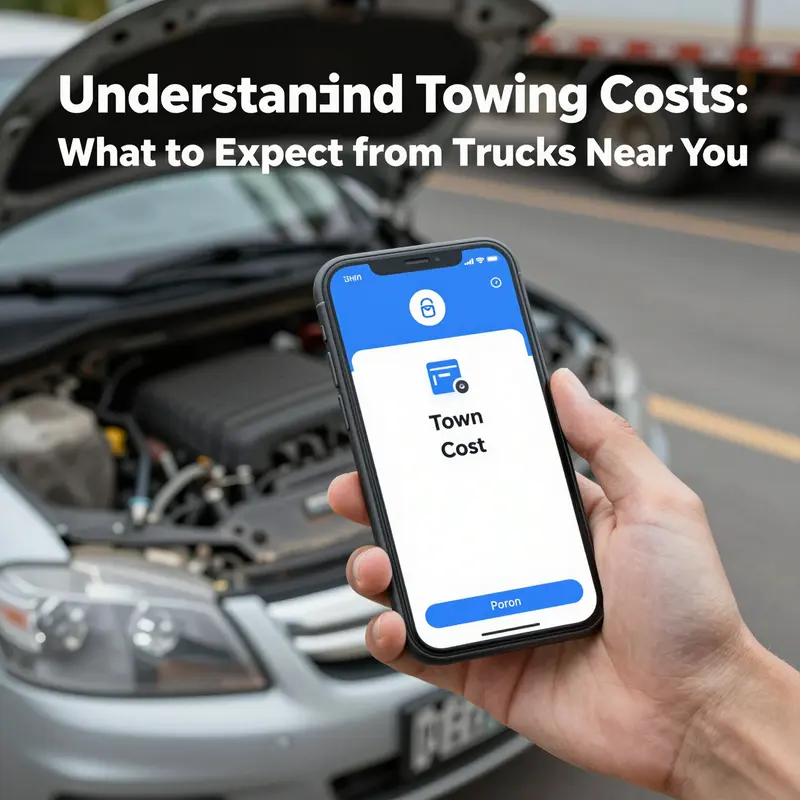
When a roadside emergency hits, the first question on most minds is not which provider to call but how much it will cost to get moving again. The good news is that technology has turned cost estimation from a rough approximation into a live, location-aware calculation. A handful of connected tools can map your exact situation, pull in local pricing norms, and deliver a price range in minutes. Because these estimates hinge on dynamic data rather than rumors, you can approach the tow with transparency and confidence, knowing what to expect before the truck arrives. Yet technology alone does not erase every variable, and familiarity with how these tools work can save time, money, and stress when you need a tow most. Understanding what drives price, how the estimates are generated, and where to look for the most reliable numbers will help you navigate an unfamiliar landscape with a steady hand and a sharper purse string.
At the core of modern tow cost estimation is distance. Almost every tow pricing model treats the miles from your location to the destination as a primary engine of cost. Short pulls across town are typically priced in the mid range, while longer hauls quickly accumulate more fees. But the distance alone does not tell the whole story. The type of tow required plays a crucial role as well. A basic wheel-lift tow, suitable for a standard sedan, will cost less than a flatbed tow, which is often used for high-end or damaged vehicles that require a more controlled transport method. The choice between these options is usually driven by the vehicle’s condition and the tow’s final destination, but digital estimates can help you forecast the likely tier of service from the outset. Add to that the time of day and day of the week, and the math becomes even more layered. After-hours or weekend service tends to carry a premium as dispatch networks balance staffing with demand, so the same location can produce noticeably different quotes depending on when you need help.
To glimpse how a modern estimator works, picture the mobile device in your hand as a bridge between your immediate need and a network of nearby tow resources. The device uses GPS to pin your exact location and then queries a real-time database of available providers and their current capacity. The estimator factors in your vehicle type, the distance to the tow site, and the typical rate schedule for the area. In many markets, you will see a price range rather than a single figure, reflecting how next-door providers may balance supply and demand in real time. Some systems also account for the logistics of a particular scenario, such as the need to disconnect or secure items, the possibility of a multi-stop haul, or storage costs if the vehicle cannot be released immediately. This approach mirrors how modern ride-hailing and delivery apps operate, with the difference that towing requires specialized equipment and handling that constrain, rather than expand, the set of available options.
The point of this technology is not to replace a human conversation but to empower it. If you know roughly what a fair price looks like for your situation, you can ask the dispatcher to confirm whether the quote covers every line item you might encounter. A typical estimate should clarify whether mileage is included, whether there is a labor charge for hooking up the vehicle, whether the tow includes any storage time, and whether there are surcharges for after-hours service. Many drivers and providers publish pricing ladders or range bands for common scenarios, and the digital tools present these bands in an easy-to-compare format. It is still prudent to ask for a ceiling price or a cap in writing, particularly if you are far from a shop or the vehicle is hard to access. With this approach, the moment the tow is booked, you have a clear understanding of the potential total and a plan for managing any deviations that might occur at the scene.
As you engage with these digital systems, you will notice a few recurring patterns that help explain why estimates can vary from one moment to the next. First, the geographic density of providers matters. In dense urban centers, the competition among local operators often yields tighter price bands, because several trucks can swing by quickly and with shorter distances. In rural or congested corridors, the nearest available truck may be farther away or may require navigating restricted lanes, which pushes up both the base rate and the per-mile charge. Second, the vehicle’s profile matters more than you might expect. A small sedan is straightforward to hook and tow, while a pickup or SUV may require different rigging and potentially a heavier truck to handle the weight. The estimator translates those differences into cost adjustments, applying standard safety margins to reflect the increased complexity of each job. Third, the system accounts for the specific tow method. A flatbed tow has higher equipment and labor costs but offers enhanced protection for sensitive exteriors or transmission components, making it preferable for certain vehicles. A wheel-lift tow is commonly sufficient for many everyday transports, offering a quicker and cheaper option when appropriate. The model presents this choice as a negotiation between protective needs and price, and it gives you the information you need to decide which path aligns with your vehicle and budget.
To illustrate how these tools integrate into real-world decision-making, imagine you are stranded on a suburban street with a mid-size SUV that won’t start. You pull up a roadside app and enter a few details: your exact location, your vehicle type, and where you want to be towed. Within moments, you receive a price range and an estimated arrival time for a nearby tow provider. The estimate may show a lower baseline if the weather is clear and traffic is light, and it may update in real time as a truck becomes available or as a different route is preferred by the driver. If the range is broad, you can drill down by requesting more precise numbers or by asking for the exact rate per mile and any flat fees that could apply. This is where the value of a hybrid approach—combining digital estimation with direct confirmation—becomes evident. You learn the likely cost, then you pick up the phone or message the dispatcher to confirm that the number is binding and not just a promotional promo. For a deeper dive into general tow-cost scenarios, consider reading How much is a tow truck? to see how the same factors translate across markets and vehicle types.
A complementary thread in this digital tapestry comes from the broader ecosystem of roadside assistance networks, which often layer in their own pricing rules and service guarantees. These networks leverage a combination of fixed-rate programs for common scenarios and flexible, location-based pricing for more complex situations. When you interact with a network that is integrated with your vehicle’s onboard assist systems or a trusted third-party provider, the app can pull in standardized price bands that reflect a nationwide or regional policy. The result is a more consistent reading across towns and counties, reducing the sense of price roulette that used to accompany a tow. The cost you see is not merely a number but a snapshot of a network in motion—ofdemand, supply, weight, distance, and timing—all working together to deliver the needed service with a grace note of transparency.
As you ride the wave of digital estimation, you may also encounter marketplace-type apps that connect you to nearby service providers who offer towing as a service alongside other car care options. These platforms can show you multiple quotes from different providers in one place, enabling side-by-side comparisons that highlight differences in price and service levels. While this can be immensely helpful, it is important to approach it with a critical eye. Not all providers price the same way, and some quotes may omit essential elements such as mileage fees, hold times, or after-hours charges. The best practice is to read the quote line by line, confirm any ambiguous terms, and keep an eye out for any mention of optional services that you do not need. If a price feels unusually low, consider the possibility that it may not include all required fees, or that the provider might be stepping into a scenario where more expensive equipment would be necessary. If a mid-range quote seems to fit your needs, ask for a brief explanation of how the price was built and what safeguards exist to prevent unexpected add-ons at the destination.
For readers seeking a broader sense of how these processes unfold across different locales, the digital tools provide a practical map of pricing norms. In some markets, the cost to tow a short distance may cluster tightly around a standard base rate with modest per-mile additions. In others, the same short pull can carry a noticeably higher base price because of local licensing, vehicle weight limits, or the availability of flatbed resources. In rural areas, the added distance to the closest certified tow truck can shift the math significantly, and the user experience can reflect that reality in the form of a higher waiting time and a larger portion of the estimate allocated to fuel and labor. The most reliable estimates are those updated in real time, reflecting the current state of the network rather than historical averages. If you want to sharpen your sense of the landscape, these digital tools are designed to do the heavy lifting for you, turning a potentially tense moment into a clear, informed decision.
In the heat of the moment, a few practical steps can help you extract maximum value from these tools without getting overwhelmed by numbers. First, keep your vehicle information handy but not exposed. Many estimates improve when you input precise details about the car model, axle count, and any special equipment, but you should never disclose sensitive data unnecessarily. Second, choose a destination that makes sense for your plan. If you know you will be taken to a repair shop, you can specify that in the app to see the cost implications for a local drop-off versus a longer relocation. Third, use the price range to guide your talk with the dispatcher. If the range is wide, ask for a precise per-mile rate and a breakdown of any base fees so you can understand how the total is assembled. Fourth, pay attention to the timing. If you have flexibility, you might choose to schedule the tow for a time when rates are typically lower, provided that your safety and logistical constraints allow it. These steps, though simple, can meaningfully reduce surprises and help you retain some sense of control over a stressful situation.
The landscape of digital estimation is not a universal constant; it evolves with technology, regulation, and consumer expectations. That is why practicing a little preemptive education can pay off later. If you know what to expect in your area, you will be better prepared to interpret a quote and to challenge any component that seems out of place. It is also worth remembering that while these tools provide robust guidance, they cannot perfectly predict the real-world contingencies that often arise at the roadside—like traffic bottlenecks, driver availability, or the need for special equipment to access a vehicle in a tight space. The best approach is to use technology to illuminate the path, then couple that insight with direct communication at the curb. In other words, let the app give you a reasonable range, and let the dispatcher confirm the exact figure at the moment the truck is dispatched. This two-step process protects you as a consumer and helps you navigate the moment of truth with less anxiety and more confidence.
When you read through the pricing landscape in this way, you begin to see how a tow near you becomes less of a guessing game and more of a well-informed choice. Technology does not remove the need to compare, confirm, and decide, but it does flatten the cliff between curiosity and clarity. It turns a fog of numbers into a guided experience where you know what to expect, where the numbers come from, and how to ask questions that prevent unwelcome surprises. The result is an empowered approach to a routine but essential service. You arrive at the destination with a plan, you understand the potential costs, and you have the information needed to decide whether to proceed with the quoted option or to seek alternatives that align more closely with your vehicle’s needs and your budget. In the end, real-time estimation is not about guaranteeing a single price; it is about delivering transparent, actionable information that helps you regain mobility faster and with less financial anxiety.
As you prepare to navigate the next roadside moment, keep in mind that the same digital tools you use for quick quotes can also help you plan ahead. If you want to build a baseline for your typical vehicle and area, you can run a few test estimates for common scenarios, such as towing a standard car for short distances within town or moving a heavier vehicle across a county line. These exploratory checks can establish a personal reference point that makes actual emergencies less volatile. With practice, you will find a balance between the speed of the digital estimate and the reliability of human confirmation, and you will emerge with a pragmatic, psychologically comfortable approach to tow costs. The technology is not a substitute for judgment but a robust assistant that brings pricing into the open, enabling you to act decisively when you need to.
In the end, the journey from uncertainty to clarity hinges on the same fundamentals that guide good shopping in any field: accurate data, transparent terms, and a straightforward process for validating a claim before you commit. The digital estimation landscape provides all three. It offers real-time inputs, a clear structure for what is included in the price, and a practical path to confirming numbers before a tow begins. If you ever find yourself staring at a blinking phone screen on the side of the road, remember that you do not have to guess. A few taps can reveal a range that captures the upcoming miles, the method of transport, and the timing of the service. You can then decide with confidence whether to proceed with the nearest option, ask for a different setup, or even wait for a more favorable window if your safety and circumstances allow. With these tools at your disposal, the concept of a tow near you becomes less of a scramble and more of a negotiated, informed choice that respects both your vehicle and your wallet.
Final thoughts
In conclusion, understanding the various factors that influence tow truck pricing, as well as the regional differences in rates, can significantly empower drivers and property managers alike. Employing mobile technology to acquire estimates not only enhances transparency but also prepares you for any unexpected roadside situations. Whether you are a daily commuter, a truck owner, or managing properties, being informed allows you to navigate towing services with confidence and make the best choices when emergencies arise.