
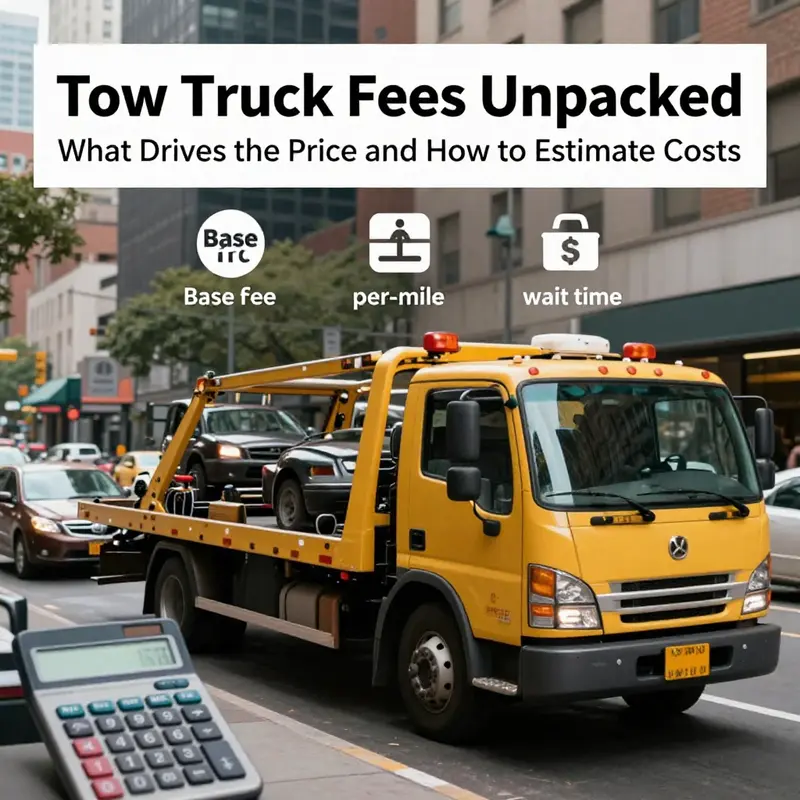
Tow truck fees vary widely, and the final bill can surprise even careful shoppers. Distance is the primary driver, but several other levers shape the number you’ll pay: the vehicle’s size and weight, the equipment needed to load and transport it, the time of day, and where you’re located—urban corridors vs. rural routes. For everyday drivers and commuters, understanding these factors helps you budget and avoid surprises. Auto repair shops and dealerships rely on consistent, transparent pricing to quote customers accurately; property managers and rental fleets benefit from predictable surcharge patterns for on-site incidents or road calls. This guide maps the price landscape across four focused chapters, each anchored to the central question: how much is a tow truck fee? By exploring distance-based pricing, weight and equipment considerations, timing and geography, and the ancillary charges that creep into the final total, readers gain a practical framework for estimating costs, comparing providers, and requesting clear, itemized estimates before service. We’ll also share typical pricing ranges to set realistic expectations so you’re prepared when you need a tow. With the right questions and a written quote, you’ll move through a tow with confidence and avoid sticker shock.
Tow Truck Fees Demystified: Distance, Time, and the Hook-and-Roll Price Puzzle
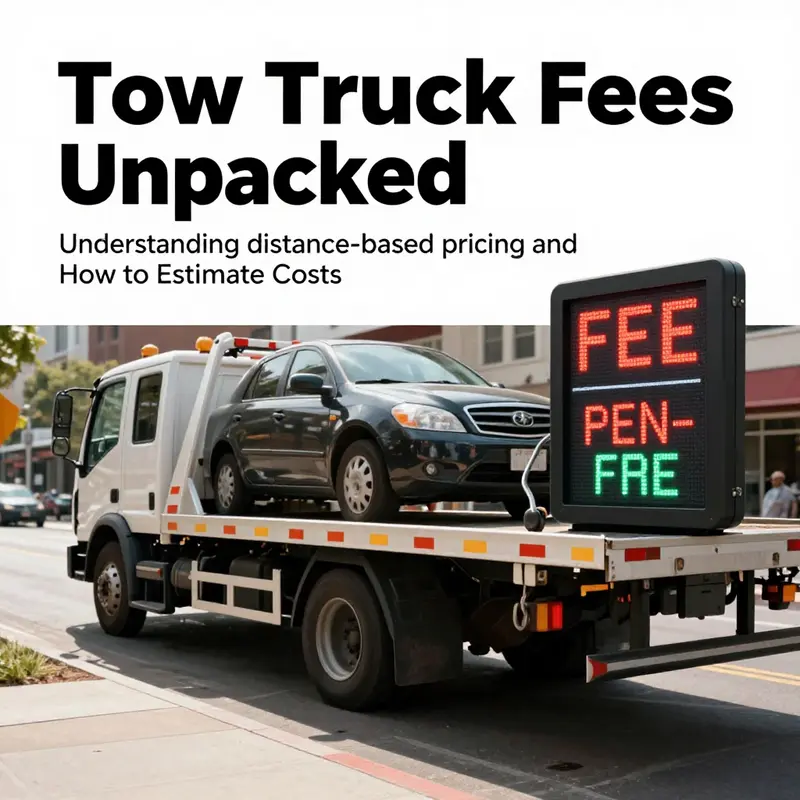
When a vehicle needs a tow, the question is rarely a single number. The final bill depends on a mix of factors that interact in real time. Distance between pickup and destination is usually the strongest driver, and the miles traveled can push a simple short tow into a noticeably higher total.
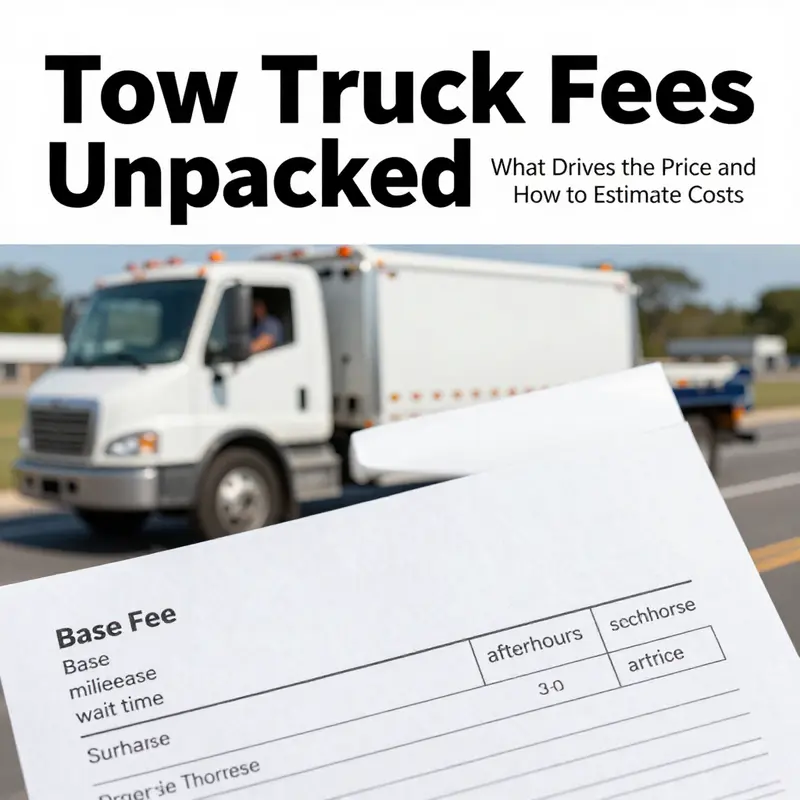
The pricing framework most providers use is base fee plus per mile. Some companies also offer fixed rate models or a hybrid we often call hook-and-roll, where a fixed hookup fee is followed by a per-mile rate for the distance moved. The exact structure matters because long distances amplify the impact of the per-mile charge.
Vehicle type and weight matter too. A light car requires less rigging and lighter equipment than a heavy SUV or commercial van, which changes the base cost and sometimes the per-mile rate. Access challenges, such as heels, rugged terrain, or multi-vehicle recoveries, can require extra personnel and equipment.
Time of day and location influence prices as well. Urban tows may be closer, but traffic and higher labor costs can raise the hourly component or add surcharges. Rural areas may involve longer travel times and fewer nearby providers, which can increase total cost despite similar per-mile rates. Wait time at the scene is another common add-on when the tow must wait for the road to clear or for the vehicle to be prepared.
To avoid surprises, ask for an upfront estimate that itemizes base fees, per-mile charges, time-based fees, and any potential add-ons. If possible, compare destinations and consider whether the destination affects the quote. Clarify which services are included in the quote and whether memberships offering discounted or capped towing exist in your area. By treating price as a conversation rather than a single line item, you can navigate a tow with greater confidence.
Tow Truck Fees Uncovered: Key Drivers Behind the Price
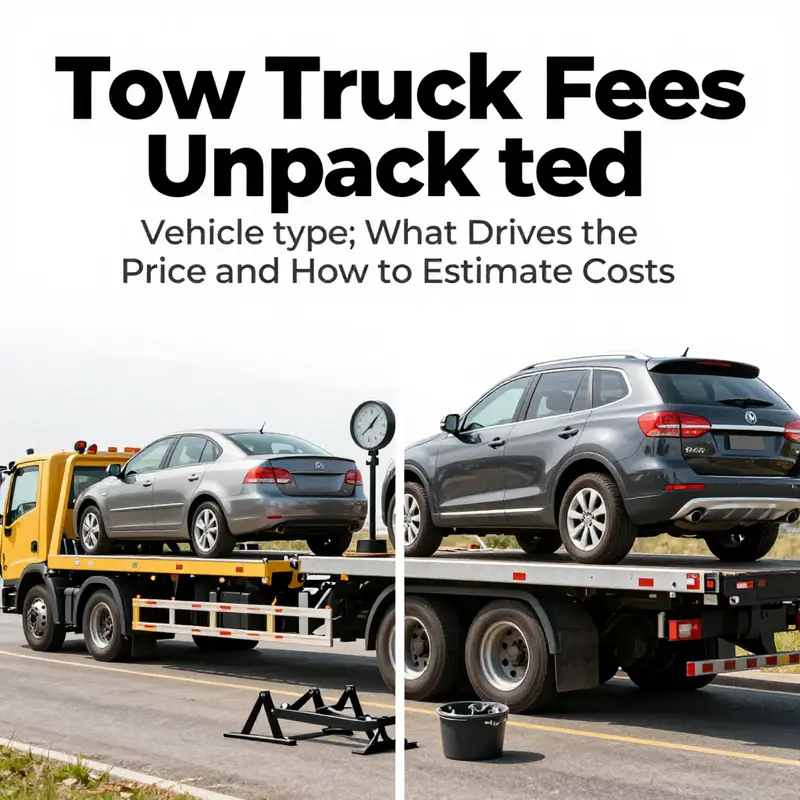
When you’re stranded on the shoulder, the price of a tow is not a single number. It’s a layered calculation driven by distance, vehicle weight, equipment, and timing. Understanding these factors helps you budget and ask the right questions before agreeing to service. The main variables are distance, vehicle type and weight, the tow truck type, and any after-hours surcharges or wait times. Distance matters most; short local tows can be a base fee plus per-mile charges, while longer hauls rapidly increase total cost. Heavier vehicles need bigger equipment, more labor, and sometimes multiple operators, pushing the price higher. The choice of tow truck—flatbed, wheel-lift, or rotator—also affects pricing: flatbeds are gentler but can carry a higher rate; wheel-lift is common and typically cheaper; rotators add specialized capabilities and higher costs, especially in recovery situations. Location and time of day further shape the bill: urban areas and after-hours service often bring premium fees and waiting time charges. A transparent written estimate that itemizes base charges, per-mile rates, included miles, equipment fees, and any surcharges is the best protection against surprise bills. When shopping for a tow, ask: Is the distance quoted for the full journey? Are there separate charges for equipment or after-hours service? Is the return trip included? With these questions, you can compare apples to apples across providers and select the option that offers clear value and reliable service.
Tow Truck Fees Decoded: How Time of Day, Location, and Service Conditions Shape the Bill
Stranded on the side of the road, you watch the first glow of a streetlamp flicker as headlights pull up. The driver hops out, asks where you’re headed, and you feel that familiar knot of worry in your stomach—not just about getting your vehicle to a shop, but about what this will cost. Tow truck fees don’t arrive as a single number, settled in advance the way a fare for a taxi might. They arrive as a weathered map of variables, each one nudging the final total higher or lower. The price you ultimately pay comes from more than the simple distance between pickup and destination. It reflects the entire choreography of the call: how far the tow truck must travel to reach you, what kind of vehicle needs to be hauled, the time of day and the demand on roadways, and the specific hurdles tied to the scene once the tow begins. Understanding this choreography helps you anticipate the bill rather than be surprised by it when the scene seems already tense and stressful. It also helps you advocate for clarity when you call for help, which is a practical skill in a moment when most drivers simply want to be back on the road and out of the cold or heat.
To begin with, distance is usually the biggest driver of cost. The numerical framework many shops disclose is a base hookup or dispatch fee complemented by a per-mile charge. Some operators blend those elements into a single flat rate that covers the hook-up and the first miles, then charge a per-mile rate beyond that. Others operate a more granular structure, what you might hear described as a “hook and roll” model: a fixed hook-up fee plus a predictable set of miles priced at a standard rate. The geometry of a tow—how far it must travel from the roadside, to a repair facility, or to an impound lot—shapes most of the bottom line. In practical terms, a short tow for a passenger vehicle can sit around the mid-range, often in the neighborhood of $75 to $100 in a typical urban setting. A long tow—say fifty miles or more—easily climbs past the three-hundred-dollar mark if you’re far from the nearest service center or if the trip spans urban core and suburban sprawl. These figures aren’t universal guarantees, but they help you calibrate expectations before you receive the first estimate from a dispatcher. They also underscore the importance of asking for a written estimate before service begins, something many reputable outfits are happy to provide. The goal is to know the shape of the bill before the driver leaves the scene so you can decide if a certain destination makes the most sense financially, not just logistically.
Vehicle type and weight compound the distance cost in a meaningful way. Heavier vehicles demand larger tow rigs and heavier equipment, and that translates into bigger base fees and higher per-mile rates. A compact sedan can be tendered with a standard wheel-lift or flatbed arrangement without specialized gear, which keeps the overhead relatively modest. A full-size pickup, a substantial SUV, or a commercial van introduces constraints. The tow operator must deploy equipment that can handle the mass and geometry of the vehicle safely, which consumes more labor time and uses more heavy-duty machinery. When you’re dealing with a commercial vehicle or a larger SUV, expect not just a higher hook-up fee but potential surcharges tied to equipment wear and the crew’s expertise for handling larger, more fragile components. The cost structure is therefore a ladder: distance matters, but the rung you’re on can shift based on the vehicle’s weight and the complexity of the lift required.
Time of day and location inject their own layers of complexity into the price. Urban environments, with their dense traffic, proximity to repair facilities, and higher operating costs, tend to push base rates upward. The same distance in a city can feel more expensive because a tow may need to negotiate congested streets, parking restrictions, or the added risk of making a pickup in a high-traffic zone. Conversely, rural areas may demand significant travel to reach a shop or impound lot, so even if the per-mile rate is similar, the overall bill can be driven up by travel time and fuel, as the driver must cover more miles to reach you or to deliver the vehicle to a distant destination. In some jurisdictions, regulatory caps on towing fees or explicit disclosure rules provide a range that operators must stay within, while in others the price controls are looser and depend on competition and market demand. The result is a mosaic: in some places, a short tow could be quite affordable, while in others, the same short distance may be priced higher due to limited local competition or local pricing practices. Being aware of local norms can help you interpret a written quote and detect whether a charge seems out of step with nearby providers.
Then there are the service conditions and the job’s intrinsic difficulty. The type of vehicle matters, as noted, but the scene’s special challenges can add distinct charges. If you’re involved in an accident or if the vehicle needs to be towed onto a flatbed rather than a standard wheel-lift, the price can rise quickly. Accident scenarios may require additional care, insurance documentation, or damaged-vehicle handling that warrants a higher fee. Access to the pickup point is another common source of extra costs: a narrow alley, a steep or uneven terrain, or an off-road approach often requires extra labor, protective equipment, or time and can trigger long-distance or on-site waiting charges. Longer on-site wait times, if the driver must remain at the scene to assist with paperwork or coordinate a destination, also accrue incremental costs. In some cases, the tow is not just a straight shot from roadside to shop; it may involve detours, multiple destinations, or special routing around road closures that extend the service window and raise the final price. The broader point is simple: every additional hurdle at the pickup or during the tow—whether it’s the vehicle’s size, the accident’s complexity, or the navigation around a difficult access point—creates a price drag that operators recoup through the final bill.
One practical way to think about the day-to-day reality of these charges is to imagine a typical call. A 10-mile tow of a standard passenger car during regular hours might hover around $100. If that same tow is requested at 2 a.m. on a Sunday when staff and equipment are less available and demand is high, the same 10 miles can push past the $200 mark. The premium posted at odd hours reflects both the operator’s need to recruit personnel and the scarcity of available resources that night. It’s not simply a higher rate; it’s also a balancing mechanism that keeps a smaller local operation viable through the off-peak hours. The numbers demonstrate why the timing of the tow matters not just for your schedule but for your wallet as well.
To avoid a surprise tally, it’s essential to request a written estimate that itemizes each component of the charge before the tow starts. A clear quote will typically separate the base hookup fee, the per-mile charges, any after-hours surcharge, destination or impound fees, and any storage charges if the vehicle ends up held at a facility. Asking for a price breakdown helps you compare apples to apples when you receive multiple estimates, and it also frames the conversation with the dispatcher so you can decide whether the easiest path is to take the vehicle to the nearest shop or to a preferred facility that might offer a better rate or a more convenient inspection once the vehicle arrives. In the same breath, clarify whether the charge is billed roadside or upon pickup, and whether insurance coverage or roadside assistance benefits might offset part of the cost. If you’re covered by an insurance policy or a roadside assistance program, understanding how those benefits apply to tow charges can turn a potentially large out-of-pocket expense into a portion of a larger claim or service package. The more you know up front, the less likely you are to confront a bill that feels inconsistent with the scene you faced.
The practical implications extend beyond the moment of service. If the vehicle is to be taken to a repair shop, you should consider the total journey’s cost, including long-distance tows that reach distant facilities. Some people assume that a longer tow always means a larger price, and while distance is a key driver, the distribution of that distance matters too. The choice between a flatbed and a wheel-lift, for example, can introduce several tens of dollars in premium costs. A flatbed is often safer and more versatile for certain types of vehicles or for damaged bodies, but it can carry a higher hook-up fee and per-mile rate compared with a traditional wheel-lift. Being prepared to answer a few targeted questions when you call the dispatcher—what type of vehicle is being towed, where the pickup is located, where the destination is, and whether a flatbed is necessary—can lead to more accurate estimates and a smoother call. Some shoppers find it useful to visit a dedicated explainer page that breaks down the pricing structure in a way that aligns with how they think about the service. For those who want a grounded reference point and a model for understanding the price components, How much is a tow truck? provides a comprehensive framework for thinking about base fees, per-mile charges, and the role of service conditions in pricing. The page makes the abstract concrete by laying out the building blocks of a tow quote and by offering scenarios that resemble real-life calls.
Another layer of guidance comes from recognizing the regulatory landscape that can influence prices. Some cities or states enforce caps on towing fees or require transparent, itemized pricing and clear disclosures. Others place fewer constraints on pricing, leaving more room for competition to shape the market. When a local ordinance exists, it can provide a ceiling for certain charges or mandate that operators present a breakdown of all potential fees before service begins. In jurisdictions without explicit caps, the key to avoiding surprises remains the same: insist on an itemized estimate, verify what each line item represents, and compare quotes not just on total price but on the reasoning behind each cost component. The goal is to move from a single number to a narrative about what created that number—distance, weight, access challenges, and timing—so you can decide with confidence whether the final figure is fair given the specific circumstances.
For readers who want to prepare for the unpredictable nature of roadside incidents, the best practice is to build a small mental model of the cost drivers and to keep a few pragmatic habits in place. Always have a phone-ready note that records the call details, the dispatcher’s name, the estimated arrival time, and the written price breakdown. If you’re in an unfamiliar area, consider asking for a rough geographic range and a time window for arrival, then validate the numbers with a second estimate from another provider. In some emergencies, this step might seem impractical, but it remains a powerful tactic to secure a fair price rather than accepting the first quote that comes along. The more you document, the less room there is for ambiguity when the driver arrives, begins the hook-up, and proceeds with the tow. And if you’re in a position where you must decide between two courses of action, think not only about the shortest route but also about the most cost-effective one. A tow to a nearby, reputable shop could be far cheaper than a longer trip to a distant facility, even if the latter might be more convenient for an immediate inspection or for warranty reasons.
In sum, tow truck fees are a composite, dynamic figure driven by distance, vehicle type, time of day, geography, and the scene’s particular challenges. The same mile can be priced differently depending on whether you’re in a dense city or a remote corridor; the same weight category can incur divergent charges based on the equipment deployed; and the same crisis can shift from a standard tow to an elevated service that includes flatbed handling, extended on-site work, or waiting time. The only reliable safeguard against a surprise bill is a clear, written estimate that itemizes every fee and a practiced habit of asking the right questions before the driver begins. Even in the most stressful moments, you can maintain a sense of control by demanding transparency and understanding the levers that move the price. If you want a concise primer that breaks down these components into familiar terms, the cited explainer above provides a practical map you can keep in your wallet or your phone notes for the next roadside incident. And as you confront the next tow call, you’ll carry with you a mental model that helps you anticipate the bill rather than react to it, a small but meaningful form of financial clarity in a moment when clarity matters most.
External resource: Towing – Wikipedia
null
null
Final thoughts
Understanding tow truck pricing is easier when you see it as a matrix rather than a single figure. The central answer to how much is a tow truck fee depends on four core dimensions: distance-based pricing (and how hook-and-roll structures set a base plus per-mile cost), the vehicle’s type and weight (which determine the equipment and truck size needed), timing and location (which introduce after-hours and urban vs. rural differentials), and the additional charges that can appear—wait time, emergency service premiums, specialty equipment, and destination fees. For everyday drivers and commuters, this means requesting a transparent, written estimate that itemizes base fees, per-mile rates, and all surcharges before service. For auto shops, dealerships, and property managers, standardized quote templates and a clear explanation of each line item reduce disputes and improve customer trust. Armed with these insights, you can compare providers confidently, budget more accurately, and minimize surprises when you need a tow.