
Tow trucks span a spectrum of sizes and capabilities, and so do their price tags. For everyday breakdowns, light-duty units offer practical value; for highway rescues and larger vehicle towing, medium- to heavy-duty wreckers bring scale and reliability; for the most challenging recoveries, specialized rotators command premium prices. Understanding current price ranges helps everyday drivers, residents, fleet owners, auto shops, and property managers budget accurately, compare quotes, and plan for total cost of ownership. The discussion below breaks down costs across three tiers—light-duty equipment, medium-to-heavy-duty vehicle recovery, and specialized high-end towing technology—tying each tier to typical use cases, ongoing costs, and decision criteria. Expect real-world price ranges, what features drive price changes, and practical guidance on evaluating quotes. By the end, you’ll see how the price ladder maps to your needs, whether you’re an individual driver, a repair shop, or a property manager coordinating on-site towing services.
Light-Duty Tow Trucks and the Price of Everyday Recovery: Decoding the Range, Options, and Tradeoffs
When a fleet owner, shop, or independent operator starts to assemble the backbone of a recovery operation, the light-duty tow truck sits at the center of the decision. These machines are built for daily use, dependable service, and the kinds of incidents that fill a regional call sheet—minor breakdowns on city streets, stalled vehicles on suburban roads, and the routine recoveries that keep traffic moving. They are not the towering rotators or crane-assisted giants that handle the most extreme recoveries; instead, they are the workhorses designed for speed, reliability, and cost efficiency. The price of these units, unsurprisingly, mirrors their practical mission: the better the balance of capacity, durability, and features, the higher the upfront cost, but the price punch comes with correspondingly steady returns in uptime and productivity. For anyone lining up a fleet or choosing a first truck for an independent operation, understanding the light-duty price landscape is essential—because it shapes not only the initial capital outlay but also the long-term costs of ownership, including maintenance, insurance, and resale value. In this sense, light-duty pricing is not merely a sticker on a catalog page; it is a hinge point for strategy, cash flow, and the cadence of daily work.
Most new light-duty tow trucks occupy a fairly narrow corridor in price, yet even within that corridor there is meaningful variation. The typical range settles roughly between the mid-teens and the low-to-mid-thirties thousands of dollars. What pushes a unit toward the higher end of that spectrum is a combination of higher engine power, tougher construction, more advanced hydraulic systems, and a broader slate of standard equipment. The distinction between models that can handle smaller tasks and those that can shoulder heavier urban load demands is a practical line that operators watch closely. In many markets, the performance envelope of light-duty units extends to as much as eight tons of towing or recovery capacity, with engines in the neighborhood of two hundred sixty-six horsepower up to roughly three hundred seventy-one horsepower depending on the configuration. This horsepower range translates into quicker lifting cycles, more confident handling of heavier or awkward-to-load vehicles, and better performance in challenging recovery scenarios, all of which can justify a higher price tag when a fleet is evaluating total cost of ownership.
The spectrum of light-duty configurations includes flatbeds with under-lift capability and rollback-style wrecker mechanisms. The flatbed with an under-lift option combines the reliability of a flat deck with the ability to pull an immobilized vehicle onto the bed without dragging it across the pavement, reducing tire wear and potential damage to a recovered vehicle. The rollback or car-carrier variant emphasizes ease of loading a wider variety of vehicles by gently rolling them onto the platform. In the light-duty class, these configurations typically sit side by side in the market, with corresponding price differentials driven by the complexity of the tilting mechanism, the length and sturdiness of the bed, and the sophistication of the winch and hydraulic system. The expense of a light-duty unit is therefore not merely the chassis and cab; it is the aggregate of towing attachments, bed design, and the reliability of the hydraulic hardware that physically moves and stabilizes a vehicle during recovery.
Issuing a price tag to a light-duty unit requires looking beyond the base chassis to the installed equipment and the compliance framework under which the truck is built. The range in new-unit pricing is especially sensitive to the level of customization and the inclusion of options such as enhanced winching capacity, multiple hydraulic-powered functions, and multi-axle configurations that improve stability during lifts. Emission standards and certification regimes can also tilt the price. Buyers in different regions may specify Euro II or other regional standards, and a truck that complies with a broad environmental and safety package may command a higher price than a baseline model. Similarly, quality certifications—such as ISO 9000 family standards or other regional certifications—often correlate with a higher upfront cost but can deliver longer-term value in warranties, parts availability, and consistency of performance across a fleet.
To give a clearer sense of the numbers, consider the central takeaway: new light-duty units commonly fall within a price band near the mid-teens to the mid-thirties. Within that band, the exact figure depends on the blend of features selected and the intended duty cycle. A light-duty unit designed for urban or regional recovery with an under-lift flatbed and a robust winch might be priced toward the lower portion of the range if it prioritizes simplicity and efficiency over heavy-duty capabilities. Incremental upgrades—such as higher engine power, more advanced control systems for the hydraulic deck, or additional safety and sensor packages—tend to push the price higher, but they can also yield improvements in uptime and the speed of recoveries, which in turn affect the overall cost of operation across the vehicle’s life.
Pricing dynamics for light-duty tow trucks also reflect the broader market realities that affect all specialty equipment. The base price for a given model can vary noticeably between suppliers and across regions due to differences in freight, import duties, currency fluctuations, and the level of configurability offered by the manufacturer. The same model configured for a different emission standard or with a different certification suite may command a higher price in one market and a more modest price in another. The cost of the hydraulic system—how many cylinders, the size of the boom, and the reach of the deck—also directly informs the final number you see on the quote. If a buyer requests additional features such as a more powerful reel-type winch, a longer deck, or a dual-control system for operator safety and precision, those choices add up quickly and have a material impact on price.
An important practical note for buyers is that these figures represent new-unit pricing and exclude the full spectrum of additional costs a purchaser should anticipate. Delivery charges, tax, and installation or commissioning fees can add substantially to the bottom line. In many cases, fleet owners must arrange for site delivery and setup, which means engaging technicians to calibrate hydraulic systems, ensure alignment with the truck’s electrical architecture, and test-load the winch and bed under controlled conditions. If a unit is being imported, additional layers of cost arise from shipping, brokerage, and compliance testing that can lengthen the time to deployment and further influence the final price. The result is that a quoted “base price” for a light-duty tow truck is almost always only the starting point for a broader, more complex total-cost-of-ownership calculation.
For readers seeking an up-to-date, data-driven sense of what a price quote might look like in practice, a quick glance at market data platforms and supplier catalogs can be instructive. These sources show a concentration of offerings within the mid-teens to the low-to-mid-thirties, with outliers at the upper end where buyers order more specialized variants or push for premium build standards. Because these lists are subject to change with supplier promotions, regional import duties, and changing raw-material costs, it is prudent to treat any quoted price as a snapshot rather than a fixed, eternal figure. The recommended approach is to request detailed quotes that incorporate delivery, tax, and installation, and to compare apples-to-apples by ensuring each quote includes the same bed configuration, winch capacity, and hydraulic package. In short, the sticker price for a light-duty tow truck reveals the plan for its performance on the road, but the real cost story unfolds when you account for the total package—the end-to-end solution that will keep a fleet moving through months and seasons of demanding work.
From a buyer’s perspective, the decision to lean toward one light-duty configuration over another is rarely driven by a single factor. It is a balancing act among cost, reliability, speed of recovery, and the anticipated mix of tasks. A truck with a strong, compact engine and a flatbed with a simple under-lift may deliver excellent daily performance in a city environment, where the primary objective is quick turnaround and minimal vehicle wear. In contrast, a more powerful light-duty unit with a longer deck, heavier-duty hydraulic components, and a more capable winch may provide a higher ceiling for recovery operations that require lifting heavier loads or managing awkward recoveries in tighter spaces. The former might be a smarter choice for a business that handles a high volume of standard break-downs, while the latter may be favored by operators who regularly face tougher incidents or who anticipate growth into a busier service area. Either way, understanding the price implications of these design choices—how small upgrades translate into recurring costs and revenue opportunities—helps owners plan for capital expenditure, financing options, and the pace at which a fleet can expand its reach.
To connect these ideas back to practical decision making, consider the way a procurement team might compare quotes. They will weigh the base price against the expected maintenance profile of the truck, the availability of spare parts in their region, and the depth of their after-sales support. They will also evaluate the engineering margin—the extent to which more capable components reduce downtime and accelerate the tempo of service calls. It is often the case that a modest premium on a light-duty unit pays for itself in reduced downtime and higher customer satisfaction, especially for fleets that compete on reliability and rapid response. Conversely, a tighter budget might favor a more economical configuration that still meets the essential recovery requirements but demands a more conservative service plan, with careful maintenance scheduling and a pragmatic replacement cycle to maintain uptime without overspending upfront.
For readers who want to explore pricing in a broader, global context, it is worth noting that real-time price data and supplier listings exist on trade platforms that connect buyers with manufacturers and distributors across borders. These platforms are particularly useful for buyers who are evaluating multiple suppliers and looking to compare configurations from different manufacturers who offer similar platforms and bed designs. They can provide quick visibility into typical price bands, the range of customization options, and the trade-offs involved when selecting a light-duty model that meets local regulations and performance expectations. As with any major equipment purchase, the path to an informed decision lies in gathering several quotes, meticulous specification comparison, and a careful assessment of total ownership costs that extend well beyond the initial invoice.
For readers who want a consolidated view of pricing dynamics and a more expansive discussion of how these factors play into light-duty decisions, see the broader article on tow-truck costs and pricing. The resource offers a deeper dive into the drivers of price across the light- to heavy-duty spectrum, along with context about related costs and the ways in which local market conditions can shift the numbers in meaningful ways. Internal reference: tow-truck-costs-pricing. This pathway can help readers connect the dots between the granular figures discussed here and the larger framework of fleet budgeting and strategic investment.
As a final note, while the numbers and configurations described here provide a practical map of the light-duty landscape, buyers should approach any purchase with a plan that recognizes the total cost of ownership. The sticker price is only one axis of the decision. The real value comes from how the truck performs in routine service, how quickly it can be mobilized to recover a vehicle, the durability of its hydraulic systems, and the continuity of the uptime it supports over the life of the fleet. In an industry where every minute counts and each call is a potential revenue opportunity, the preparation a buyer invests in selecting a light-duty unit can pay dividends in reliability, service levels, and profitability. That is the core logic behind the price range—a price that reflects more than the cost of metal and paint; it captures the operating realities of everyday recovery work and the business case for choosing the right tool for the job.
External reference: https://www.alibaba.com/product-detail/Foton-Light-Duty-Tow-Truck-Under-Lift-Flatbed_1600349739385.html
The Balance of Power and Price: Navigating Medium- and Heavy-Duty Tow Truck Costs
Pricing a tow truck is, at its core, a study in capability.
When fleets contemplate a new asset for vehicle recovery, they weigh the value of power, reach, and reliability against a single question: how much is enough? The spectrum runs from compact light-duty units to heavy rotators, and the cost is a ladder of price points that climb with capacity, sophistication, and the promise of faster, safer operations. The decision hinges on how often the equipment will be used, the types of incidents it handles, and the geographic footprint of the service area. It is a narrative of scarcity and demand, where a small difference in lifting power or control precision can translate into meaningful changes in readiness, crew safety, and incident clearance time.
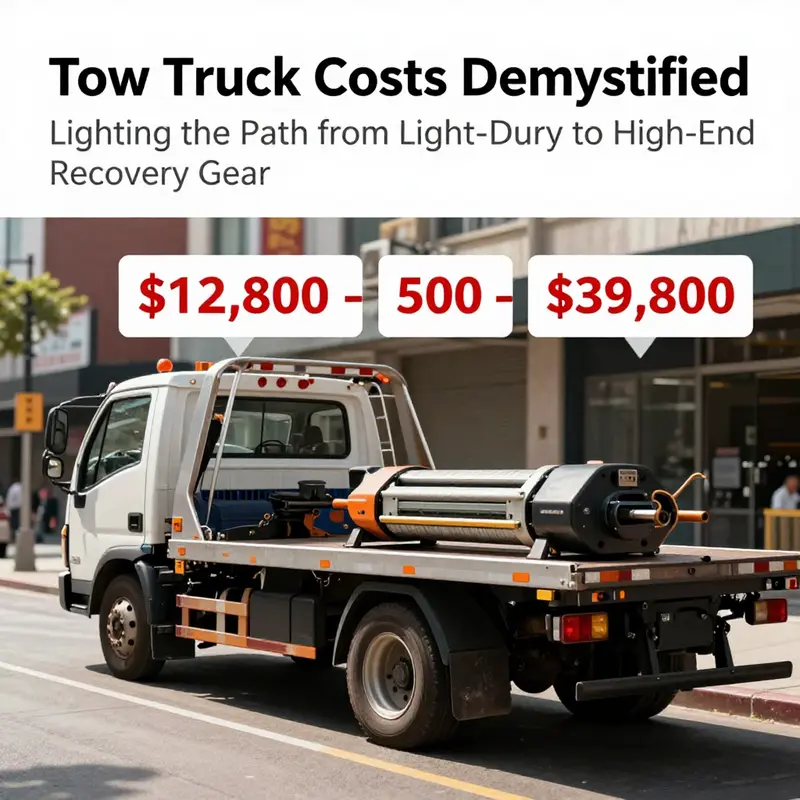
Beginning at the lower end, light-duty tow trucks are designed for urban and regional recovery tasks. They fit for roadside help and small-vehicle recovery, with flatbeds or small wreckers and winches handling up to about five tons. Price ranges for fresh builds sit roughly between $12,800 and $39,800, depending on configuration and equipment. The appeal is maneuverability and a lower upfront investment; they are well suited for busy city streets where rapid response matters. For operators expanding a small fleet, a light-duty unit offers a predictable entry point with room to scale.
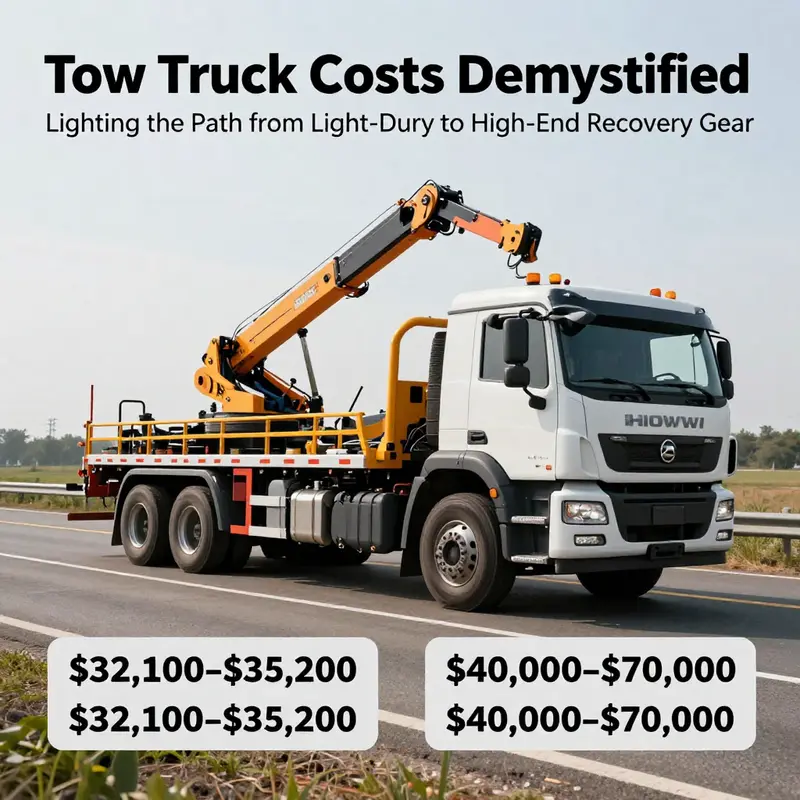
Moving up to medium- and heavy-duty applications, the price architecture becomes more layered. A typical 6×4, 25-ton chassis is a common benchmark for highway incidents. In the new-unit market, the 25-ton class often falls in a band around $32,100 to $35,200, with margins that reflect heavier builds and more robust hydraulics. Larger 8×4 heavy-duty wreckers span upwards of 40 tons and can approach 50 tons of lift capacity, with prices commonly ranging from $40,000 to $70,000. The jump signals a shift in engineering emphasis: longer frames, stronger hydraulics, and more extensive outriggers and stabilization features, enabling operations on highways, construction zones, or locations with imposing recoveries.
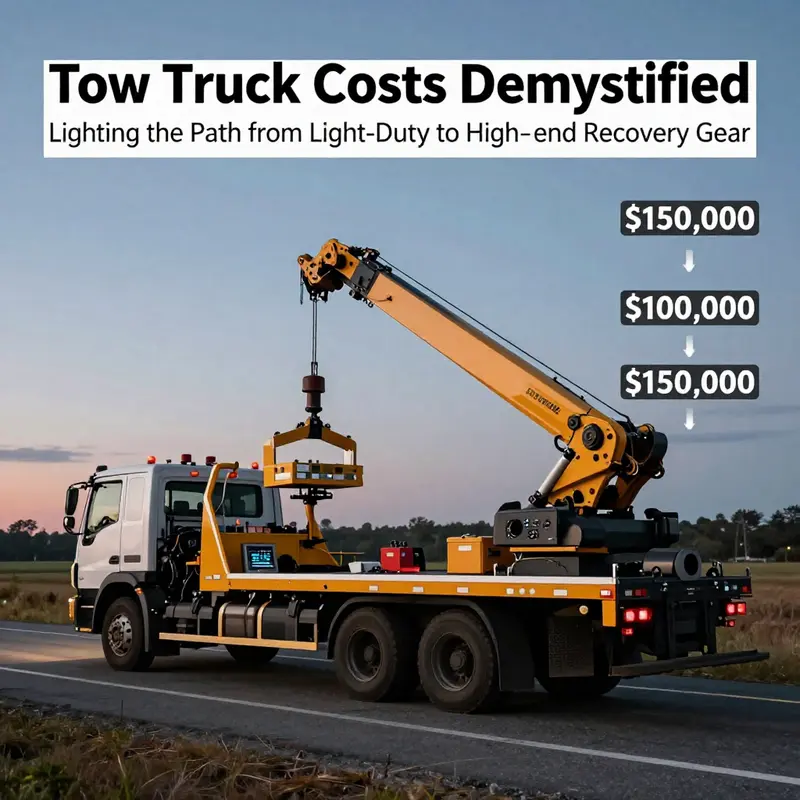
For the most demanding missions, high-end rotator tow trucks push the price into a higher stratum. Rotators, with rotating booms or crane assistance, are designed for emergencies that require precise lift control and complex recoveries. Prices start around $150,000 and can climb past $300,000. The premium covers the rotating mechanism plus capabilities like extended booms and enhanced stabilization. In fleet contexts, rotators are strategic assets for critical incidents where faster, safer recoveries reduce risk and downtime.
Across all new units, the baseline price landscape is shaped by capacity, chassis length, hydraulics, control logic, and on-vehicle safety systems. There is a direct relationship between reach, lift smoothness, and the speed of incident stabilization. Costs rise with safety and reliability; compliance costs and certifications embedded in price reflect regulatory requirements. Buyers should anticipate additional charges such as delivery, installation, taxes, and training, and consider import duties, freight, and local fees when sourcing from abroad. The market remains dynamic, with regional price dispersion tied to demand and after-sales support.
To expand understanding, buyers often consult price benchmarks from aggregator platforms and industry reports. Yet price is highly contextual: a unit with a longer wheelbase, heavier wheels, and a more robust hydraulic pack will not match the price of a standard configuration with the same nominal capacity. A concise roadmap of the pricing ladder helps frame expectations for where a project sits within light to rotator.
In practical terms, consider ongoing costs beyond purchase price: maintenance, parts availability, routine service, fuel, tires, and wear items. High-capacity systems require higher maintenance, and regular inspections of outriggers, hydraulics, and electricals are essential for safety. Insurance costs reflect risk exposure, and depreciation schedules must be factored into the financial model. Higher upfront price can be justified if it yields lower downtime, safer recoveries, and longer service life with fewer repairs.
The quoting process is where many differences emerge: base chassis price, core recovery equipment, line items for features and options, delivery timing, installation, training, and after-sales support. Obtain three quotes with itemized costs to compare configuration and service. Ability to deliver parts and service locally and faster maintenance turnaround time are important considerations affecting uptime.
The central theme remains constant: cost is a proxy for capability, risk management, and long-term productivity. A higher upfront investment must be justified by utilization, ROI, and the breadth of incidents the fleet handles. A smaller operation might start with a lighter platform and scale up later, balancing cash flow with the need for upgrades and evolving safety standards.
For those seeking practical context, external resources can offer benchmarks and case studies that illustrate how price maps to performance in different operating environments. The goal is to blend price clarity with an understanding of expected usage, maintenance readiness, and the ability to deliver timely, safe responses when every second counts. See also the external resource: https://www.towtruck.com/vehicle-recovery-pricing
null
null
Final thoughts
Pricing a tow truck purchase or fleet upgrade hinges on matching the job profile to the right tier. Light-duty units cover everyday breakdowns with affordable upfront costs and manageable maintenance, while medium- and heavy-duty wreckers unlock higher capacity and reliability for road incidents and larger vehicles, reflecting larger chassis, stronger hydraulics, and longer service life. At the extreme end, specialized rotators and crane-enabled units deliver unmatched recovery capabilities at a premium, justified only when your work involves high-risk or technically demanding recoveries. Across all tiers, total cost of ownership includes not just the sticker price but ongoing maintenance, insurance, tires, fuel, and downtime. Regions, import/export duties, and delivery/shipping can swing quotes by thousands. With clear tiering, buyers—from everyday drivers to shop owners and property managers—can estimate budgets, request targeted quotes, and plan for a fleet that scales with risk and workload. This view helps you align capabilities with the level of service your scenarios demand.