
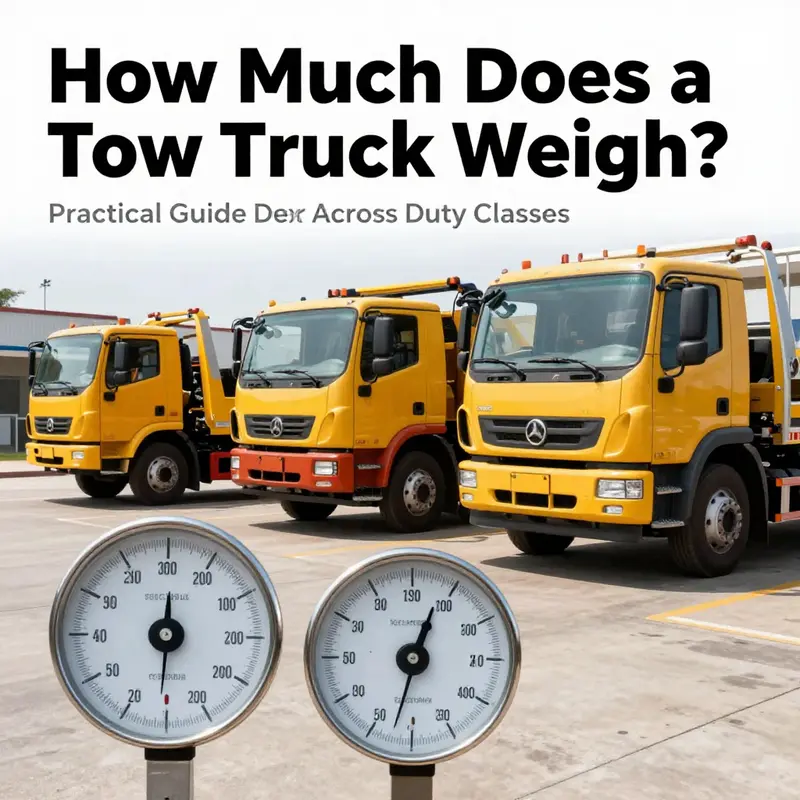
Weight is a fundamental parameter for tow operations. The mass of a tow truck affects handling, braking performance, fuel efficiency, insurance considerations, and compliance with road limits. Because tow trucks span a wide spectrum of sizes and configurations, there isn’t a single number that fits all jobs. Light-duty models designed for passenger cars and small SUVs sit at the lower end of the scale, while medium-duty trucks used for fleet Rescues and service work sit in the middle, and heavy-duty wreckers built to recover tractor-trailers, buses, and emergency fleets sit at the top. Understanding where a vehicle falls on the weight spectrum helps drivers plan routes, manage load limits on bridges and streets, and select the right tools for a given recovery. For shop owners and fleet managers, accurate weight data informs maintenance planning, crane and winch specifications, and essential safety margins. This guide connects practical numbers to real-world decisions. Chapter 1 sets the stage with broad weight categories and definitions. Chapter 2 focuses on light-duty models and their typical ranges. Chapter 3 dives into medium-duty configurations and how their ratings translate into daily tasks. Chapter 4 covers heavy-duty wreckers and what high-end specifications mean for payload and operation. Chapter 5 rounds out the discussion by outlining factors that drive weight and a straightforward approach to verifying manufacturer specs. Across everyday drivers, residents and commuters, truck owners, auto repair shops, dealerships, and property managers, the aim is to provide a clear frame for planning, budgeting, and safety when moving or recovering vehicles.
Weights of Tow Trucks: GVWR, Ranges, and Real-World Impact
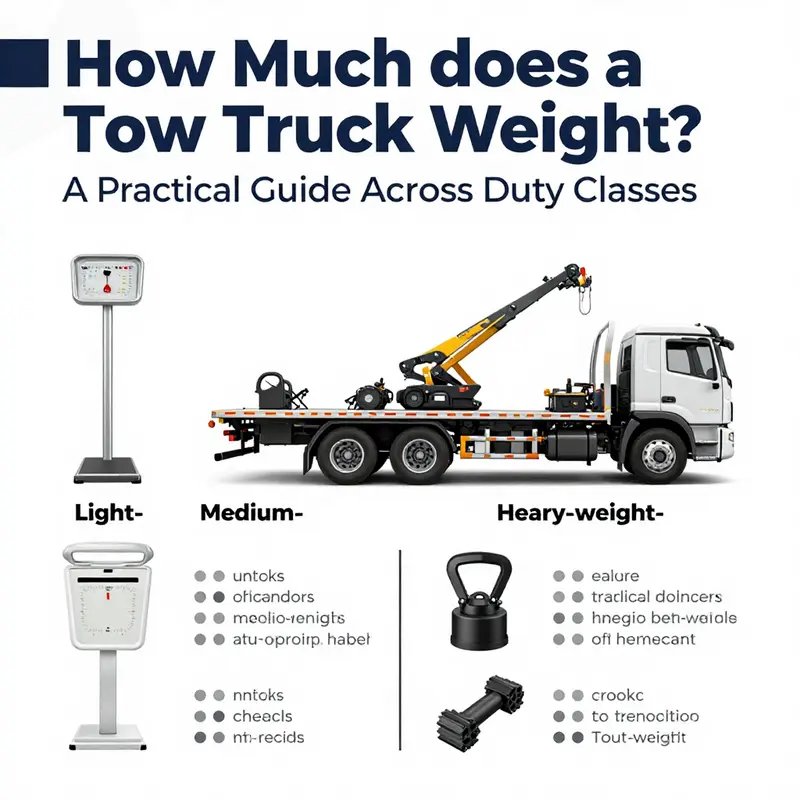
Weight on a tow truck is not a single number but a range tied to its job. The GVWR, or gross vehicle weight rating, defines the maximum operating mass of the vehicle when full of fuel, passengers, and equipment. Light-duty units stay near or below 10,000 pounds GVWR and typically weigh roughly 6,000 to 10,000 pounds depending on options. Medium-duty trucks typically carry 10,001 to 20,000 pounds GVWR, with curb weights often in the 12,000 to 25,000 pound range as configuration grows. Heavy-duty wreckers can exceed 20,000 pounds GVWR and may reach 30,000, 40,000, or 50,000 pounds depending on multi-axle setups, cranes, and large beds.
Actual mass varies with chassis length, bed or crane type, ballast, outriggers, and engine/powertrain. Heavier machines demand more braking, tire grip, and stable weight distribution to stay safe during lifts or recoveries. The weight also influences fuel use, maintenance, and compliance with road restrictions and bridge limits. Because configurations differ widely, the best way to know a specific truck’s weight is to check the manufacturer’s spec sheet for the exact model and option package.
Understanding tow-truck weight matters for safety, performance, and compliance with fleet weight distribution strategies. It is the practical bridge between capacity, maneuverability, and the road rules that govern when and how a unit can be deployed.
Weight on the Line: How Tow Trucks Balance Mass, Power, and Performance
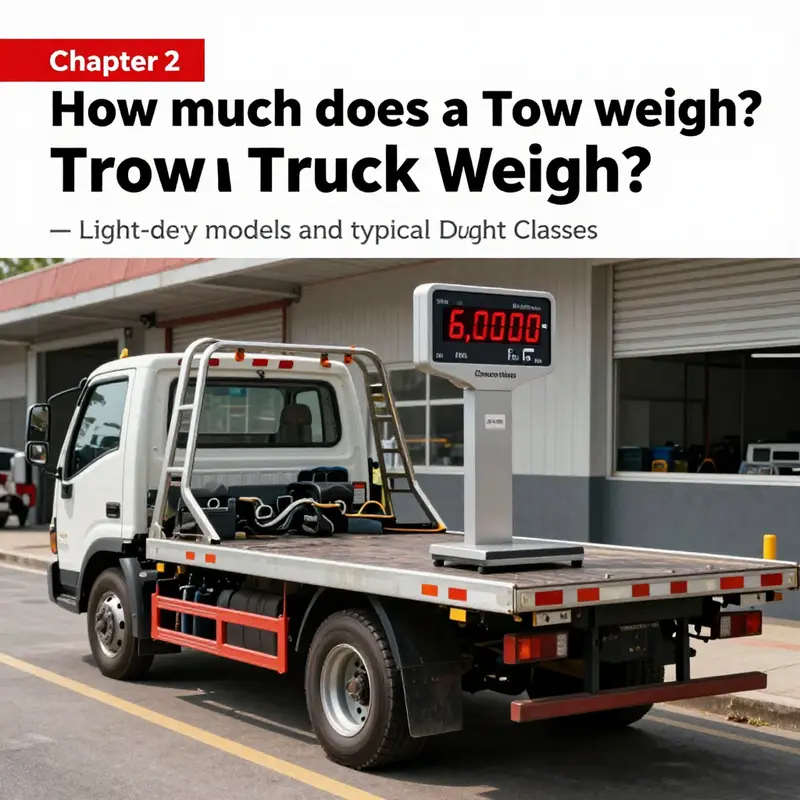
When you ask how much a tow truck weighs, you’re asking about more than metal and hydraulics. You’re looking at a moving balance of mass, strength, and purpose. Across the industry, tow trucks span a wide spectrum: small, agile units designed for quick urban recoveries; mid-range machines built to handle a broader mix of vehicles; and heavy-duty wreckers whose reinforced frames and lifting gear push into the upper end of the scale. Each category carries a distinct self-weight, defined by chassis choices, embedded equipment, and the engineering needed to deliver reliable towing without compromising stability or safety on the road. In practice, the weight you see on the scale is a combination of the truck’s own mass and the gear it carries, which in turn shapes how it maneuvers, how quickly it can respond, and what kind of loads it is certified to handle.
Light‑duty tow trucks sit at the lower end of the mass spectrum, yet they play a pivotal role in everyday road service. Their self-weight commonly ranges from about 3,000 to 7,000 pounds (1.4 to 3.2 metric tons). This lean mass is deliberate: lighter rigs offer better fuel economy, quicker acceleration, and easier maneuvering through tight city streets where space is at a premium. Even with a compact frame, these trucks can carry respectable towing capacities, often up to 10 tons (20,000 pounds).
The distinction between weight on the curb and towing capacity is essential here. A light-duty unit may weigh as little as three thousand pounds when unloaded, yet be engineered to pull a car or small SUV of roughly five tons or more, depending on configuration and the specific lifting method used—be it a flatbed, a motorized wheel-lift, or a combination of winch and dollies. This separation between self-weight and pull capability explains why the heaviest assets in a fleet aren’t always those that move the slowest the moment a call comes in; rather, it’s the combination of chassis strength, hydraulic reach, and control systems that determines performance.
Moving up a notch, medium-duty tow trucks occupy a middle ground that blends payload throttle with greater stability and lifting power. These machines commonly weigh in the region of 12,000 to 25,000 pounds (5,400 to 11,300 kg) in their basic, unloaded state. Their towing capacities typically expand into the range of 10 to 20 tons, a leap that reflects reinforced frames, more capable winches, and often larger rear trailers or integrated crane systems. The shift from light to medium duty isn’t just a matter of scale. It involves deliberate design choices that preserve maneuverability in urban settings while expanding the range of recoveries a crew can undertake—from mid-sized commercial vehicles to larger passenger buses in certain configurations. Heavier frames support higher lift capacities, but they also demand more careful handling: longer stopping distances, altered weight distribution, and the need for skilled operation to keep the vehicle stable under load. In practice, a medium-duty unit may dedicate more of its mass to the lifting apparatus and chassis integrity, offset by a willingness to forego some of the nimbleness that marks a lighter model. The result is a versatile tool whose weight and strength align with a wider spectrum of incidents and fleets, especially in municipalities and service fleets that encounter a steady mix of vehicle sizes.
At the far end of the spectrum lie heavy-duty wrecker trucks, built to recover some of the largest road-going machines. These vehicles can weigh well beyond 30,000 pounds (13,600 kg), with many models operating in the 40,000 to 50,000 pounds range (18,100 to 22,700 kg) and beyond depending on equipment and configuration. The sheer mass of these wreckers serves a clear purpose: they support reinforced chassis, heavy-duty winches, hydraulic cranes, and robust undercarriage protection that makes it feasible to lift, tilt, and haul heavy commercial vehicles—trucks, buses, and other substantial payloads. In some cases, the same unit that provides a 25,000 kg (55,000 lb) towed weight may also contribute a sizable portion of its own mass to achieve that capability. The distinction between the weight of the truck itself and the weight it can tow becomes especially important here; many heavy-duty systems are designed to approach limits that require special licensing, road permits, and careful route planning to ensure safe transport and recovery operations, even at slower speeds and with a full load.
Beyond the simple sum of a truck’s mass, several design elements contribute to a given model’s total weight. The chassis is the backbone, and its geometry—whether a more compact ladder frame, a reinforced heavy-duty frame, or a flexible platform that supports a flatbed or a crane—directly adds self-weight. The choice between a flatbed and a wheel-lift configuration matters too: flatbeds often require a broader, heavier platform, while wheel-lift systems must tolerate a different balance of rear reinforcement and wheel-holding structures. Winch capacity is another weight variable, as the winch itself, its mount, and the hydraulic or electric drive add to the overall mass. If a truck includes a crane or a supplementary lifting apparatus, that additional hardware contributes significantly to curb weight while expanding the unit’s lifting range and reach. Engine type and power also matter. Diesel engines—often from common industrial families—provide the torque and efficiency needed to power hydraulic pumps and operate heavy-duty systems, but the engine’s size and accompanying cooling, exhaust, and mounting systems contribute to the vehicle’s total mass. The interplay of these choices—frame, bed, lift, crane, winch, and powertrain—explains why two trucks with similar towing capabilities can differ meaningfully in weight.
For fleets and crews, the implications of weight extend into daily operations and regulatory realities. Heavier vehicles demand more from braking systems, tires, and suspension, and they require careful attention to payload distribution to maintain stability when lifting heavy loads. The gross vehicle weight rating (GVWR) paints a crucial ceiling on what a given unit can safely carry, factoring in the chassis, bodywork, and all installed equipment. The lighter end of the spectrum benefits from lower fuel use and easier maintenance access, while the heavier end demands specialized driving skills, more robust maintenance regimes, and sometimes alternate routes or permits to navigate bridges and roads with weight restrictions. For an operator, understanding the weight profile of a given tow truck means knowing not only how much it weighs on its own, but how much it can safely tow, how its mass affects braking and cornering, and how its configuration will perform under load in diverse recovery scenarios. This is not a simple one-number calculation. It is a layered assessment that connects the vehicle’s purpose with its physical heft.
In practice, the most reliable way to know a specific model’s weight is to consult the manufacturer’s specifications for that exact configuration. The numbers above describe broad bands that exist in the market, but the exact curb weight and GVWR can shift with engine choice, bed type, and added equipment. When a department or contractor evaluates a fleet, they weigh not only the capability to tow a given load, but the real-world impact of mass on fuel efficiency, wear and tear, and maneuverability. For readers curious about how those figures translate into a practical decision, a visit to a detailed product page can illuminate the specifics. For example, a representative light-duty configuration might be referenced in supplier documentation, which helps illustrate the baseline self-weight and the typical towing range in actual field conditions. You can explore more about these relationships through a dedicated overview page that discusses the economics and practicalities of tow-truck weights and configurations. See an external resource for a representative light-duty specification sheet here: https://www.alibaba.com/product-detail/Foton-Light-Duty-Tow-Truck-UnderLift1600597076595.html
Weight and Capacity in Medium-Duty Tow Trucks: Balancing Mass, Load, and Safety
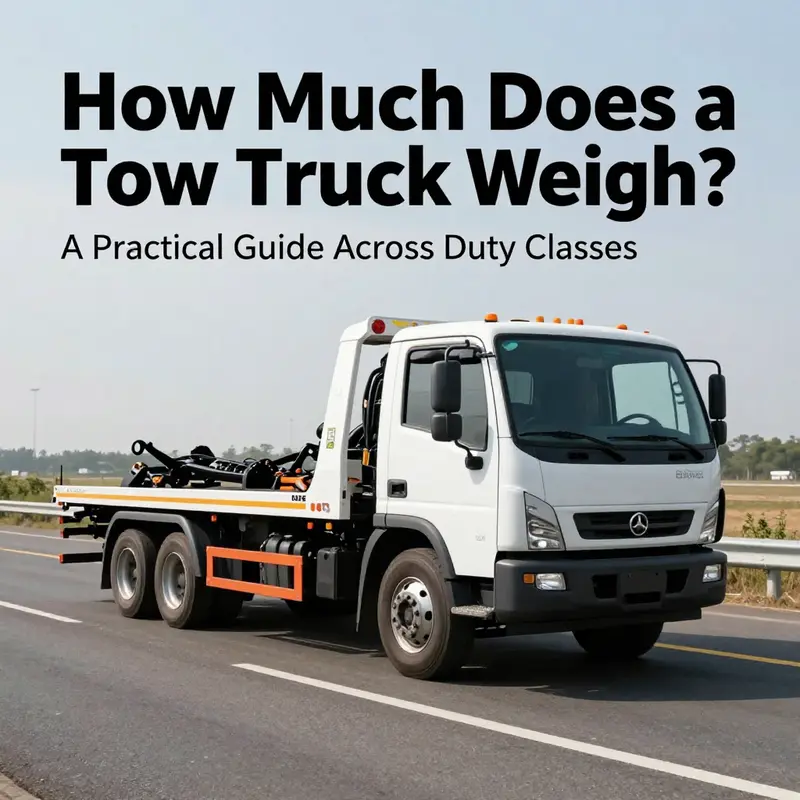
Weight is a critical factor in medium-duty tow work. It affects stability, braking, and how the truck handles a recovery. Medium-duty tow trucks occupy a middle ground between light-duty and heavy-duty units, able to move passenger cars as well as small commercial loads. This chapter explains how weight, capacity, and balance interact in practice and why careful mass management matters for safety and efficiency.
At the core of the design is a simple idea: the truck must carry its own weight plus tools and gear, while leaving room to tow a second vehicle. In practical terms, many medium-duty models target a GVWR range that defines the upper limit the chassis and axles are designed to support. The curb weight, or empty weight, sits in a broad band, and adding recovery gear and payload raises total mass before a tow begins. The key concept is that weight and load must be managed together to maintain control during a recovery.
Weight translates to performance. A truck that is too light may feel unstable during heavy recoveries, especially on uneven surfaces or slopes. A heavier chassis can feel planted on the road but may reduce maneuverability and increase fuel use. The goal is a design that strengthens the parts that matter most while avoiding unnecessary mass that harms handling and efficiency. Manufactures use smart chassis design, material selection, and targeted reinforcement to raise capacity without adding needless weight.
Weight distribution and regulatory limits matter. GVWR defines the maximum permitted weight of the tow truck when loaded for normal service, including fuel and equipment. Staying within this rating supports predictable handling and drivetrain longevity. Be mindful of the towed load as well, since it affects stability, braking, and tire wear. Per-axle limits are commonly set by law and bridge rules; distributing weight across axles helps keep handling safe and reduces road wear.
Operational discipline matters. Before a shift, teams verify the truck weight with full fuel and equipment, confirm payload and tow capacity, and ensure correct weight distribution. How tools and gear are stored, how stabilizers are deployed, and how the winch is used all influence the load path during a recovery. Smart load planning and controlled recovery speeds reduce the risk of overload and protect the truck and operator.
Advances in materials and design help raise capacity without heavy mass. Stronger, lighter alloys and optimized structures raise lifting power while keeping curb weights reasonable. Fleets gain by balancing miles, maintenance, and return on investment, and by staying within axle and bridge rules. Weight is not a fixed number but a dynamic factor that informs planning, technique, and risk management on every job.
In practice, operators use clear procedures to keep weight in check: verify the truck weight with full fuel, confirm payload, check axle distribution, and secure the recovery gear. The goal is to keep the load shared between the truck and the towed vehicle, using winch points to control load transfer. A disciplined approach helps maintain control, brakes, and tire life during challenging recoveries.
Mass on the Tow Path: Understanding Tow Truck Weight Across Light, Medium, and Heavy-Duty Roles
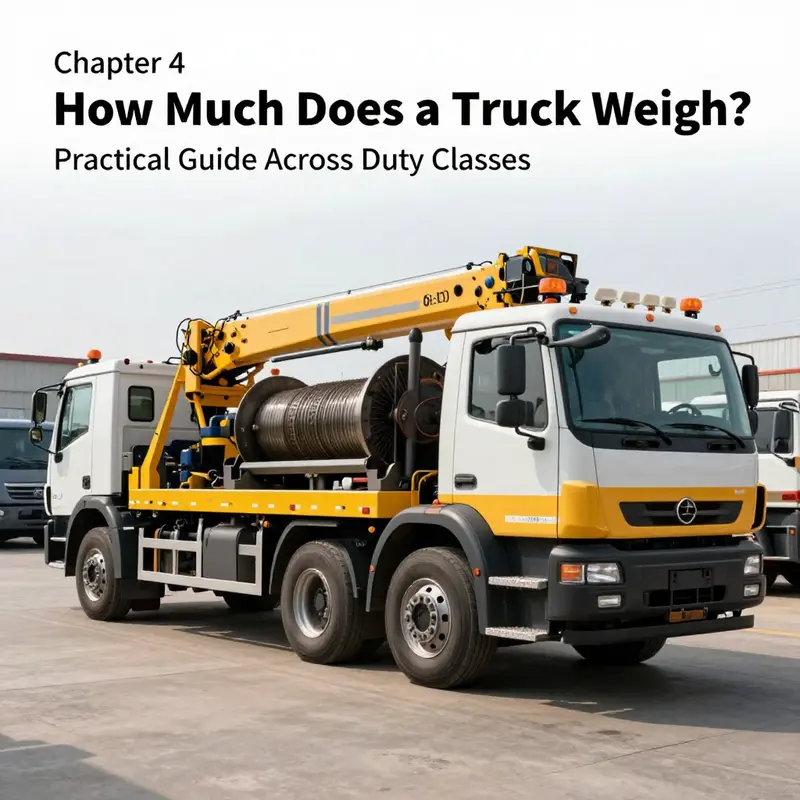
Weight is the quiet backbone of a tow truck’s capability. It governs stability, braking, handling, fuel use, and the way the vehicle interacts with roads and the lifting surface it guards. In tow-truck design, weight tracks directly with purpose: light-duty models for moving passenger cars and small SUVs, medium-duty models for larger vehicles, and heavy-duty wreckers designed for trucks, buses, and other heavy assets.
Light-duty tow trucks typically weigh between 6,000 and 10,000 pounds (2,700 to 4,500 kilograms). In this class the emphasis is on compact frames, efficient engines, and a drive profile that can park, reverse, and accelerate with a car in tow. These machines usually rely on a straightforward hook-and-tow approach or a modest under-lift system. Lighter weight translates into better fuel economy and shorter stopping distances when not loaded, but it also means a smaller maximum towing capacity. That capacity is perfectly adequate for most personal vehicles and small SUVs, which are common on city streets and in residential neighborhoods where rapid response and the ability to fit into tight spaces are valued as much as raw pulling power.
Medium-duty tow trucks step up in scale and capability, landing in the 12,000 to 25,000 pound band (about 5,400 to 11,300 kilograms). Here the emphasis shifts toward versatility. A medium-duty unit can handle larger sedans, light trucks, and a variety of configurations—from flatbeds that can slide and tilt to under-lift models equipped with hydraulic booms that reach out to secure a disabled vehicle in awkward angles. In practice these machines are popular for towing vehicles that exceed the everyday curb weight of a car but do not yet require the brute force of a heavy wrecker. The increased mass supports more robust winches, stronger booms, and heavier axles, while still maintaining reasonable maneuverability and serviceability.
At the far end of the spectrum lie heavy-duty wrecker trucks. These are explicitly designed for demanding rescue and recovery work, where the payload weighs tens of tons and the recovery task demands substantial reach, lift, and stability. In practice, heavy-duty models typically weigh well beyond 30,000 pounds (about 13,600 kilograms), with many configurations edging toward or past 50,000 pounds (roughly 22,700 kilograms) as they are equipped for extreme operations. The self-weight dwarfs lighter classes because reinforced frames, multiple axles, and large hydraulic systems are required to provide the confidence needed to move or lift heavy-duty vehicles under load. The maximum towing weight and the stiffness of the structure can be astonishing: a heavy-duty unit may be configured to tow a vehicle in the 25-ton class, while its lifting gear might be rated to lift several tons separately.
What makes a tow truck heavy is a mix of structural design and the specialized equipment that accompanies it. Chassis frames in heavy-duty units are built from heavy-gauge steel or reinforced materials; the suspension is beefed up to handle high loads; the winch systems are integrated with high-capacity drums, heavy cables, and braking mechanisms tuned for controlled, safe operation under load. Hydraulic booms and lifts contribute significant weight as they extend, rotate, and hoist; their multi-stage configurations enable longer reach and greater lifting capacity. Flatbeds must be robust enough to bear the structural load as well as the burden of the vehicle being towed. In high-end layouts, the combination of a strong frame, a powerful hydraulic system, and an extended boom can push total weight into the heavier end of the spectrum.
Another layer of complexity is the difference between curb weight and what fleets actually need on the road. The curb weight describes the base mass the vehicle carries when new, but the realistic operating weight grows as equipment is installed, fuel is loaded, and recovery gear and ballast are added to meet stability and weight-distribution requirements. Manufacturers publish a gross vehicle weight rating (GVWR) that caps how much total weight the vehicle can safely carry, including passengers, fuel, and cargo, while payload capacity remains for the recovery apparatus and tools. For heavy-duty recovery, the GVWR can be substantial, ensuring controllability even when outfitted with a heavy crane, an extended booms, or multiple outriggers. These design choices reflect performance goals and regulatory realities; weight and axle loading must comply with road laws, bridge load limits, and licensing categories. The interaction of weight with braking systems, tire construction, and wheelbase geometry becomes more intricate as capacity grows.
The numerical outlay in catalogs often includes not just the self-weight of the chassis and equipment, but also the performance targets that come with heavy-duty design. A 25-ton class road wrecker emphasizes high-capacity towing with a substantial lifting envelope, backed by a multi-stage hydraulic system and heavy-duty winching. A 30-ton breakdown service truck might feature a reinforced frame designed to support an original lifting weight that can exceed twelve tons, with an extended reach. A 50-ton class machine prioritizes a high lifting capacity and a robust reach, often accompanied by outriggers and ballast that increase on-site stability. Within these ranges, weight is the product of the integration of chassis, engine, hydraulics, and recovery gear, calibrated to achieve a balance between speed, control, payload, and operating environment.
For readers evaluating a tow truck purchase, weight considerations ripple through every decision. Heavier machines demand more fuel, require stronger transport infrastructure to move them, and may necessitate permits or special routing on public roads. They also bring greater inertia, which can complicate maneuvering in tight spaces but dramatically improve the ability to stabilize and lift large loads once in position. The flip side is increased safety margins: a heavier, well-designed unit sits more stably on uneven ground and can manage heavier loads with less wheel slip and less dynamic movement during a recovery. Across the spectrum, manufacturers and operators must weigh the benefits of increased lifting capacity, spread and outrigging, and extended reach against the realities of road transport, maintenance complexity, and operating costs. The decision often comes down to typical call profiles—vehicles towed, weight ranges, environments—and how those needs map to the self-weight of the unit and its loaded configuration.
Weight and Tow Trucks: How Mass Shapes Lifting, Handling, and Regulation
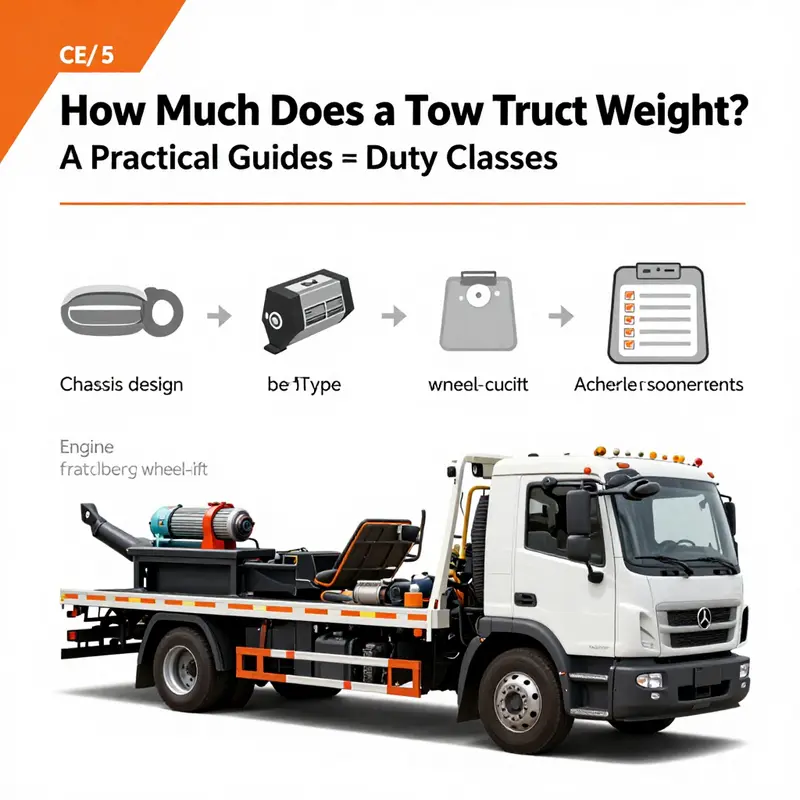
Weight is not a side detail in towing work. It is the bedrock on which capability, efficiency, and safety rest. When people ask how much a tow truck weighs, they are asking how that mass translates into what the truck can lift, how it handles under load, and what rules govern its use on public roads. Tow trucks fall into three broad categories: light-duty, medium-duty, and heavy-duty. Light-duty models tow passenger cars and small SUVs and typically weigh about 6,000 to 10,000 pounds. Medium-duty units designed for a wider range of recoveries often weigh 12,000 to 25,000 pounds. Heavy-duty wreckers commonly weigh well over 30,000 pounds and can exceed 50,000 pounds with heavy equipment. These ranges matter because they frame lifting, braking, steering, and fuel use on the job. The total mass is the sum of the chassis, bed, hydraulic system, winch, crane if present, and mounted tools. A heavier frame allows mounting larger engines, thicker axles, and stronger suspension, which increases weight. A steel bed adds durability but adds mass; aluminum beds save weight but can be more expensive and trade off some strength. The bed hydraulic system, winches, and cranes contribute their own weight as well. Higher capacity gear adds heft but increases capability. Mass affects performance. Heavier trucks resist acceleration, require more braking, and need stronger tires, brakes, and cooling. Weight distribution between front and rear axles affects stability, steering, and wheel lift under load. A well balanced machine improves handling when the bed lowers or the winch pulls a vehicle. Regulatory framing centers on GVWR, the maximum safe weight for a fully equipped vehicle. Curb weight plus fuel and gear sits below GVWR, but adding recovery gear and crew approaches the limit. Data plates and manuals matter for legal payload, licensing, and routing. Exceeding GVWR raises safety risks and legal penalties and demands attention to braking, tires, and suspension. In practice, there is no single answer to how much a tow truck weighs. Lighter models emphasize efficiency for routine jobs, while heavy crawlers emphasize lifting power and durability for demanding scenes, at the cost of size and weight. The right balance depends on intended use and regulatory boundaries. The most practical approach is to match design choices to mission, payload, and road realities, and verify with manufacturer specs and official scales when precision matters. For readers evaluating purchases or operations, consider not just weight but weight in relation to capacity and payload. Official resources from the Federal Motor Carrier Safety Administration provide guidance on vehicle weight limits and classifications. Always consult the model specific data plate and manual to build a complete, compliant picture. The journey from weight to capability is about intent and design as much as mass. If you want broader context, you can read more at how-much-is-a-tow-truck. For exact numbers, rely on the manufacturer specifications, GVWR, and real weight measured on a certified scale.
Final thoughts
Tow truck weights span a broad spectrum, driven by chassis design, bed type, lifting gear, and horsepower. By understanding the defined categories—light, medium, and heavy-duty—you can anticipate performance, plan routes that respect gross vehicle weight limits, and select the right equipment for each job. Always verify the manufacturer’s specifications for each configuration (GVWR, axle ratings, bed and winch capacities) before committing to a recovery task. In practice, pairing accurate weight data with site-specific considerations—like road restrictions, access, and payloads—reduces risk, improves efficiency, and supports safer tow operations for drivers, shops, dealerships, and property managers alike.