
For everyday drivers, truck owners, and auto repair businesses, understanding the cost of purchasing a tow truck is crucial for operational success. Whether for personal use or professional investment, the price of tow trucks can vary widely based on type, size, and features. This article dissects the market to provide insights into the costs associated with different tow truck categories, enabling informed purchasing decisions. From light-duty models to high-capacity advanced vehicles, each chapter delves into specific cost analyses while also considering market dynamics that influence overall pricing.
Pricing the Tow Line: A Comprehensive Look at Light-to-Medium Tow Truck Costs and What They Mean for Your Fleet
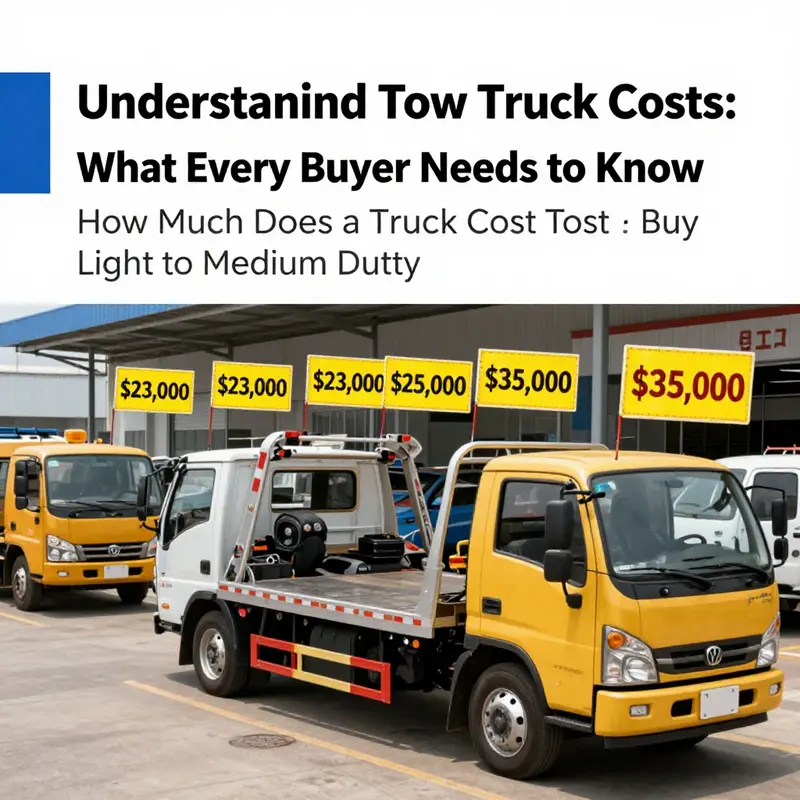
Pricing a tow truck is rarely a single-number proposition. It unfolds across a spectrum determined by size, capacity, configuration, and whether the unit is fresh from the factory or sourced as a used asset with its own history. For operators focused on urban recovery, accident response, or vehicle repossession, the most common yardstick centers on light to medium duty models. These are the workhorses that navigate crowded streets, squeeze into tight alleys, and repeatedly lift and tow vehicles that sit just above compact-car weight classes. Yet even within this broad category, the price can stretch widely depending on how the truck is equipped and what the buyer needs it to do on a day-to-day basis.
From a practical standpoint, the key is to map the intended application to the most cost-effective configuration. A conventional tow truck with an integrated towing mechanism offers tidy ergonomics and a compact footprint, which matters when streets are narrow and parking is scarce. The hydraulic systems, the winch capacity, and the wheel-lift arrangement all contribute to lifting power and speed but also to maintenance and upfront investment. When a fleet operator assesses whether to buy new or used, the trade-offs center on reliability, downtime, warranty coverage, and long-term total cost of ownership. In most cases, light to medium duty units designed for urban recovery carry a price range that sits meaningfully higher than a bare chassis, simply because the integrated systems and the compact, serviceable design are designed for quick, repeated use under demanding urban conditions. For many buyers, this is where the conversation should start: how much operation do you expect, and how critical is uptime?
The most direct way to quantify the investment is to anchor on the typical price bands reported by industry sources for light-to-medium conventional tow trucks. In recent market analyses, conventional tow trucks with built-in towing mechanisms suitable for everyday recovery tasks are commonly priced in the range of seventy-five thousand to one hundred fifty thousand dollars when new. That band reflects units engineered for steady daily use, with hydraulic power, robust chassis integration, and dependable wheel-lift and boom configurations that make city tasks feasible without specialized crew or extreme equipment. It is important to note that this band is a general baseline; actual prices can drift up or down depending on the precise combination of features, the supplier, and regional factors such as freight, taxes, and local import duties.
Within this landscape, more specialized light-to-medium configurations begin to push the price upward. Rotator tow trucks, which incorporate a heavy-duty hydraulic boom capable of righting overturned vehicles or handling complex recovery scenarios, often clock in at a premium well above the standard conventional unit. These machines are priced in the range of roughly one hundred fifty thousand dollars to three hundred thousand dollars or more, depending on the extent of the equipment package, the hydraulic reach, and the sophistication of the stabilization and stabilization accessories. The cost differential here is not merely a bigger boom; it includes enhanced pump capacity, faster recovery cycles, and the increased engineering risk that comes with more complex operations. If a shop or fleet’s work frequently involves challenging recoveries, rotators can be a worthwhile investment, but they also demand更 intensive maintenance and more highly trained operators.
Flatbed configurations, another widely used option, tend to sit within the same broad band as conventional units when equipped for standard recovery work, but the price can tilt higher with longer beds, more robust hoists, and advanced immobilization systems. A newer flatbed tow truck in the light-to-medium class may fall into the seventy-five thousand to one hundred fifty thousand dollar range, yet the specific price is inseparable from bed length, payload capacity, bed construction, and the presence of wheel-lift integration or other recovery aids. The flatbed’s advantage lies in its ability to transport vehicles without traditional dragging or hook-and-chain methods; for operators who want to minimize road wear on towed vehicles or who regularly transport vehicles to shop lots, the flatbed approach offers tangible value, even if the initial price bumps higher in some configurations.
Among the broader categories, integrated boom trucks—the ones featuring a powerful hydraulic boom and wheel-lift systems built into a single, compact package—live in a mid-to-high range that reflects their specialized function and the added complexity. These vehicles are priced in a range that often starts in the mid-sixties thousands and can approach the upper end of the lower tens of thousands to ninety thousand or more, depending on the exact specs. The presence of integrated operations means faster, more versatile recoveries, but it also introduces more maintenance considerations and higher ongoing operating costs. The decision to pursue an integrated boom is driven by your typical job mix and the operational realities of your service area.
The market data also reminds buyers to account for the fact that price is only part of the equation. A number of ancillary costs can significantly affect total ownership. Freight and delivery, regional taxes, and any necessary customization or branding all factor into the bottom line. More subtly, the cost of ownership includes ongoing maintenance, routine inspections, potential warranty coverage, operator training, and insurance premiums aligned with the risk profile of the vehicle and the tasks it will perform. A newer, well-equipped unit often represents a more predictable cost of ownership over time, especially if uptime and fast response are strategic priorities for the business. On the other hand, a carefully vetted used unit can deliver substantial upfront savings, but it may require a more robust maintenance plan and possibly a longer ramp-up period to achieve the same level of reliability.
To help buyers navigate this landscape, it helps to frame the decision around the kind of work you expect to do most days. If urban recovery and roadside assistance are your bread and butter, a conventional or flatbed model in the seventy-five to one-fifty thousand dollar range will likely meet most needs, with a careful eye kept on anticipated miles, load cycles, and the frequency of heavy or unusual recoveries. If overturns or complex multi-vehicle recoveries are common, a rotator in the one-fifty to three-hundred-thousand-dollar zone becomes a practical consideration, as the efficiency gains from faster, safer recoveries can justify the premium. In markets where extreme duty or specialized operations are routine, the affordable path shifts toward larger, more capable heavy-duty wrecker models or even integrated boom platforms, with price tags that reflect the added power and the need for specialized crews.
These general ranges, while helpful, should not obscure the finer point that local supply conditions can tilt pricing in meaningful ways. Availability of models, regional demand, and even the timing of a purchase can push quotes up or down. Buyers should engage with multiple suppliers, request detailed specifications, and insist on itemized quotes that spell out the equipment package, service terms, and any post-purchase support. It is also wise to factor in the potential value of warranties, maintenance plans, and training programs that can dramatically influence long-term cost-of-ownership calculations. For a baseline sense of general pricing across the landscape, readers can explore a concise overview of tow-truck pricing and model considerations at how much is a tow truck.
Beyond the calculator, the decision matrix often comes down to the balance between upfront investment and long-run reliability. A fleet that prioritizes rapid deployment, low downtime, and consistent performance will often lean toward newer units with comprehensive warranties and service plans. Conversely, a shop looking to expand quickly with minimal upfront cash might opt for a carefully selected used unit, provided it has a documented service history and a clear plan for ongoing maintenance and potential parts replacement. In either case, the goal is to align the purchase with the company’s service mix, the expected life of the asset, and the realities of the local operating environment. A good buying process includes not just price comparisons but also a realistic assessment of downtime risk, maintenance cycles, and the supplier’s ability to deliver training and parts on a predictable timetable.
For readers seeking current market data and model comparisons, the literature and industry guides provide a useful snapshot of pricing. An external resource that compiles market data and specifications for tow trucks can help corroborate this chapter’s ranges and offer up-to-date variations by region and configuration. Heavy Equipment Guide’s tow-truck pricing and specs page provides an external reference point for those who want to validate numbers or explore newer models and feature sets as they plan a purchase. Access to such resources can complement the internal benchmarks discussed here and help ensure that buyers are not surprised by freight, tax, or customization costs when final quotes arrive.
Internal linkage note: for a broader narrative on how pricing can influence strategy and operations, readers may consult the cost-focused overview linked earlier in this chapter and explore how pricing interplays with your fleet’s maintenance, staffing, and utilization. Internal links should be used judiciously to maintain narrative flow while offering a pathway to deeper dives without interrupting the thread of the argument. See the linked resource on how much is a tow truck for a baseline pricing orientation.
In the end, the price tag is less a single figure than a framework. It encodes the capacity, durability, and adaptability you need to service your market effectively. Light-to-medium duty trucks hinge the decision on urban practicality and daily readiness, while rotators and advanced flatbeds justify themselves through specialized recovery capabilities and speed. As with any substantial capital investment, a disciplined approach—clarifying intended use, evaluating total cost of ownership, and balancing upfront spend with long-term reliability—will yield the best return. Buyers should not only compare sticker prices but also weigh the value of warranties, service networks, maintenance costs, and the overall life-cycle economics that will define how quickly the new asset pays for itself through better uptime and more efficient recoveries. External market snapshots, supplier consultations, and a careful run-rate calculation should all feed into the final decision, ensuring that the chosen tow truck is not just affordable today but sustainable for years of service.
External resource reference: for additional market-pricing context and model-specific considerations, visit Heavy Equipment Guide’s tow-trucks pricing and specs page: https://www.heavyequipmentguide.com/tow-trucks/pricing-and-specs/.
Beyond the Sticker Price: Decoding the True Cost of Heavy-Duty Tow Trucks
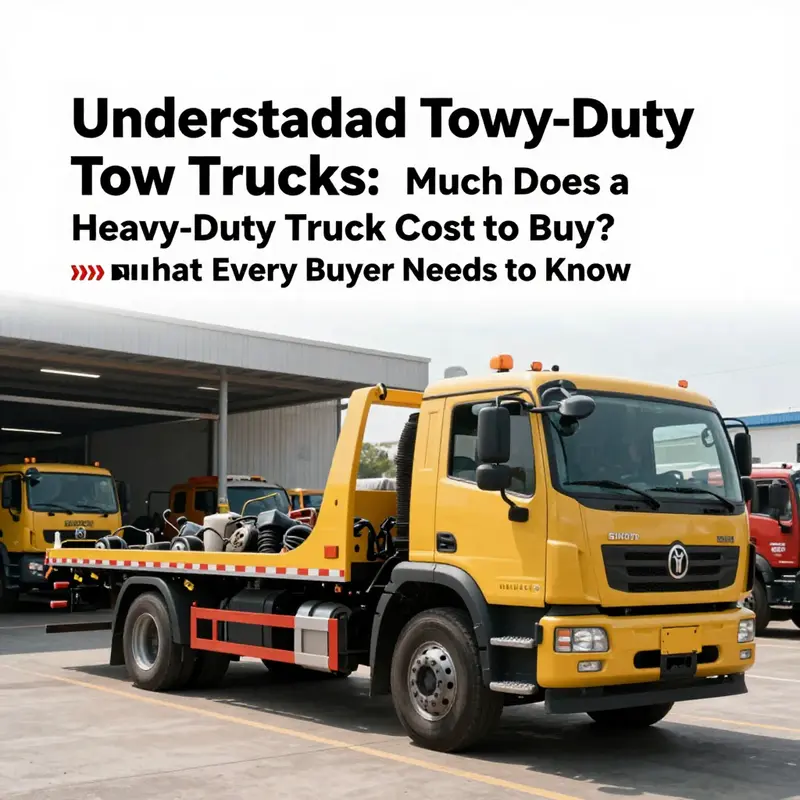
Prices for heavy-duty tow trucks do not sit at a single rung on the ladder. They vary as much as the jobs they are built to perform. A buyer who needs a 50-ton capacity wrecker to handle the backbone of a regional fleet faces a different cash outlay from someone who wants a compact, 10- to 20-ton unit for an urban towing operation. The range is shaped by the same forces that shape any heavy equipment purchase: the powertrain, the structural framework, the hydraulic ambitions, and the level of automation and safety that a buyer expects. The goal of this chapter is not to pin a single price to every scenario but to illuminate the clusters of price and to describe what a buyer should weigh before writing a check. When you step back from the sticker price, you begin to see a landscape where capacity, configuration, and condition rewrite the math in ways that matter for daily operations and long-term profitability.
One of the most conspicuous drivers of cost is capacity and the corresponding configuration. A heavy-duty wrecker built to lift and recover at extreme weights typically sits at a higher price bracket than a lighter, more modest unit. The lift capacity, hydraulic boom strength, and the length and reach of the boom influence not just the initial outlay but also how reliably the machine can perform demanding recoveries under load. A higher capacity often implies a more robust chassis, heavier axles, stronger braking systems, and more powerful hydraulic pumps. In practical terms, this means that a 20- to 30-ton model will usually command more than a 10- to 15-ton unit, all else equal. Yet the relationship is not linear. A 20- to 30-ton model with advanced wheel-lift systems and an integrated assistive boom can push past the price of a simpler, all-wheeled setup because buyers are paying for reliability, faster cycle times, and reduced crew effort on the road.
Another critical variable is the configuration and the number of axles. Two-axle, four-axle, and even multi-axle frame arrangements underpin different service profiles. A basic road tow or light-wrecker setup generally costs less than an eight-axle, road-ready wrecker designed for high-demand operations and multi-vehicle recoveries. The choice of a wrecker, flatbed, or integrated-boom design also reshapes the cost curve. A flatbed tends to require a different hydraulic circuit and a longer, heavier bed, which adds to the upfront price and to maintenance costs. An integrated boom, with robust hydraulics and winching systems, adds another layer of capability and complexity, typically lifting the price but expanding the scope of jobs a fleet can tackle with a single vehicle.
New versus pre-owned is another major fork in the road. Market data consistently shows that well-maintained, certified pre-owned heavy-duty tow trucks can offer substantial savings, often in the range of twenty to forty percent compared with new units. The appeal is clear: you get a vehicle with proven performance, a shorter lead time, and a depreciation profile that can be easier to absorb in a budget. The decision hinges on the buyer’s tolerance for risk, the availability of service and parts in their region, and the level of reassurance they require from a seller or dealer. When a buyer leans toward new, the premium usually buys you the latest compliance features, improved fuel efficiency, longer warranties, and the certainty of a clean maintenance history. In contrast, a certified pre-owned model may present an opportunity to accelerate fleet expansion while maximizing return on investment, provided the vehicle has a solid refurbishment record and a transparent service history.
The price spectrum for new and used heavy-duty units is broad enough to include striking outliers. Some listings for heavy-duty, high-capacity wreckers on global marketplaces report new units in a wide band that can stretch from roughly seventy-five thousand dollars to well over two hundred thousand dollars, depending on lifting capacity, cruelty of duty cycles, cab configuration, emissions requirements, and the level of customization. A representative example in the heavier end of the spectrum shows how quickly the price climbs as capacity and complexity rise: a high-capacity 50-ton class model can appear in the marketplace with price anchors that reflect upgrades to hydraulic systems, weatherproofing, safety integrations, and advanced control interfaces. On the smaller side, 40- to 70-ton targeted specifications may still land in the mid-range, but once features, warranties, and regional considerations are added, the cost floor rises to match the broader capability offered. The practical picture is that a buyer should not anchor expectations on a single number; rather, they should map their required capacity to a tiered feature set and then compare across options that share that tier.
A useful way to conceptualize the pricing landscape is to think in terms of capacity bands paired with feature intensity. In the lower band, models around the 10- to 20-ton range with basic wrecker or wheel-lift capabilities sit in a more accessible price space. The mid band, covering roughly 20- to 30-ton capacity, often includes more robust booms, stronger winches, and sometimes optional remote-control operation that can speed recovery times. The high band, typically 30 tons and above, includes the most capable wheeled wreckers, frequently with extended booms, heavy-duty wheel-lift systems, and the kind of hydraulics that support rapid, multi-vehicle recoveries in challenging terrains. Within each band, the exact price depends on the chassis, the dealer network, and the specific configuration chosen by the buyer.
To ground this discussion in concrete ranges, consider what a buyer might encounter when surveying current market data. New heavy-duty tow trucks in the 50-ton class tend to sit in a broad new-vehicle range where prices span from roughly seventy-five thousand dollars to more than two hundred thousand dollars. A 50-ton unit can be parked closer to the lower end if the buyer prioritizes core capabilities and prefers a simpler setup, while the higher end often reflects premium features: extra long booms, enhanced hydraulics, greater redundancy, advanced safety packages, and a more elaborate control ecosystem. On the other end of the spectrum, a road-wrecker or a heavy-duty carrier designed for high-demand recovery can present a more tightly scoped feature set but still command a substantial price, driven by the build quality, OEM or chassis choices, and the integration of wheel-lift and winch efficiencies. The pricing picture becomes even more nuanced when you factor in the two broad pathways buyers frequently pursue: new versus pre-owned. Certified pre-owned options can reduce upfront costs by a meaningful margin, but buyers must carefully validate the refurbishment, confirm that critical wear parts have been replaced or refurbished, and verify the availability of after-sales support.
Regional considerations further complicate price. Shipping costs, duties, taxes, and currency exchange can swing the total outlay by thousands of dollars, even when the base price remains ostensibly similar. Dealers often negotiate payment terms that include deposits, progress payments aligned with milestones, freight and insurance, and, for buyers operating across borders, guarantees or letters of credit. A smart buyer will include in the cost assessment not only the purchase price but also the anticipated expenses for delivery, commissioning, and initial maintenance while the truck searches for its first wave of service needs.
For readers seeking a practical touchstone, it helps to anchor the discussion in a few illustrative figures drawn from recent market listings, recognizing that these examples are snapshots and that prices shift with supply, demand, and shipping realities. A high-capacity, integrated-boom model can command a price in the higher range, potentially surpassing the six-figure mark when heavily customized. Conversely, a robust but less elaborate 50-ton unit could fall within a mid-range window, where the base price reflects core lifting and recovery capabilities but leaves room for optional enhancements. Within this landscape, buyers have real opportunities to structure the purchase around cash flow, financing terms, and service commitments that align with both immediate needs and long-term maintenance.
As buyers weigh options, a simple, practical step is to compare not just the sticker price but the value and risk embedded in each proposal. Request a clear bill of materials that itemizes the chassis, the hydraulic system, the boom length and rating, the wheel-lift capacity, and the control architecture. Ask for a maintenance and parts support plan, not just a warranty, to understand how quickly a fleet can restore full operation after a breakdown. In many cases, a slightly higher upfront price for a unit with stronger warranties, easier access to parts, and a longer service life can deliver a lower total cost of ownership over the first few years of operation. The considerations extend to downtime: a unit with faster, more reliable recovery performance translates into higher vehicle availability and better utilization of time and personnel. The math quietly shifts in favor of the better-equipped machine when uptime is a tangible factor in revenue generation.
To connect the discussion to real-market framing, one can explore a spectrum of listings and quotes that illustrate these principles. A representative example shows new heavy-duty trucks with substantial lift capacity offered at a broad range of prices, reflecting differences in specifications, regional markets, and delivery terms. At the same time, the higher end of the spectrum reminds buyers that premium configurations, enhanced safety features, and extended warranties can also push the price beyond the simpler baseline, a trade-off many fleets will accept to secure reliability on the road. Buyers should not overlook the impact of shipping and customs, which can dramatically alter the out-the-door price, especially for cross-border purchases. For readers who want a more tangible, source-based comparison, an accessible starting point is to consult listings on centralized marketplaces, where real-time pricing reflects current market conditions and available stock. how much is a tow truck can serve as a practical primer for broader price expectations while you navigate the more specialized heavy-duty segment.
In sum, the cost to buy a heavy-duty tow truck is a function of capacity, design, and the level of sophistication required for the work at hand. Buyers should expect a wide price envelope, with substantial variation across new and used models, and a premium attached to high-capacity, feature-rich configurations. The prudent path is to translate the job profile into a tiered specification list, obtain multiple quotes that clearly spell out the bill of materials, and factor in shipping, duties, and service support as non-negotiable components of the total investment. With a careful assessment of the true needs, the choice becomes less a matter of chasing the lowest price and more about aligning a vehicle’s capabilities with the demands of the towing operation, ensuring reliability, safety, and a favorable return on investment over time. For readers who want to see how this landscape translates into real-world price points, the available data points offer a telling, if sometimes surprising, picture of what buyers can expect when they step into the market for heavy-duty tow trucks.
External data reference: the detailed price ranges and specific per-unit figures cited in this chapter draw from Alibaba listings and related market data illustrating new and used heavy-duty tow truck pricing. See https://www.alibaba.com/product-detail/Heavy-Duty-Tow-Truck-999_1601546262922.html for a snapshot of the current market dynamics.
Pricing for Advanced Tow Truck Models: How Much Does a High-Capacity Tow Truck Cost to Buy?
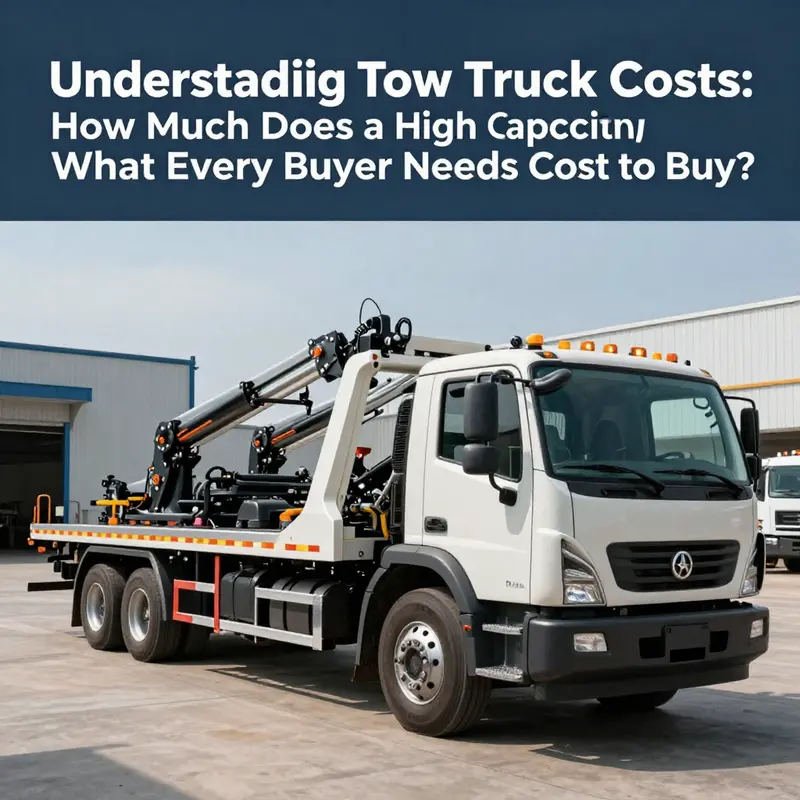
A high-capacity tow truck is more than a vehicle; it is a mobile recovery system designed to deploy quickly, lift heavy loads, and operate under demanding conditions. Because the job demands vary widely—from highway recoveries to long-haul lockouts and disaster-response scenarios—the price tag on these machines reflects a web of interdependent choices. The heart of the matter is simple in theory and intricate in practice: capacity, configuration, and build quality together determine market price, and even identical capacity can carry different totals depending on the features wrapped around the chassis. For fleet managers and independent operators alike, this means that a single number rarely captures the true cost of a high-capacity unit. The ranges described in market data show a spectrum where gentler configurations sit at one end and fully equipped, purpose-built platforms sit at the other, with newness, region, and customization pushing the math in either direction. In broad terms, the pricing landscape for advanced tow trucks is shaped by four core axes: lifting and towing capacity, the chassis and drivetrain, the recovery apparatus, and the level of integration with safety and control systems. When you combine these with whether the truck is new or used, the shape of the price becomes a three-dimensional map rather than a single line on a price tag. High-capacity models, especially those intended for road rescue, heavy-duty recovery, and large-scale operations, typically inhabit a premium segment. The market data indicate that pricing for advanced and heavy-duty variants generally falls into a band that starts well above basic work trucks and moves toward distinctive features that improve efficiency and safety on demanding assignments. In particular, a category known for road-critical performance—complete with hydraulics, wheel-lift systems, and robust booms—often lands in the mid-to-upper six-figures in local currency when new and fully specified for intensive use. Yet the headline figure can shift meaningfully with even modest changes in configuration or supply chain conditions. The most important factor is how the truck is configured to deliver the required recovery capability. For example, a 5-ton capacity flatbed wrecker, designed for rapid lane clearance, may be priced in the range of roughly sixty thousand to ninety thousand dollars when new, depending on transmission type, engine power, and the presence of auxiliary controls. This range reflects not only raw capacity but the added value of features such as hydraulically powered tilts, tie-down systems, and enhanced operator visibility. When the configuration tilts toward more complex systems—integrated booms, wheel-lift mechanisms, multiple winch setups, and remote operation—the price pressure moves upward. The same logic applies to 8×4 or other multi-axle chassis configurations built to deliver more stability, traction, and load distribution in tough terrains or heavy-duty environments. In those cases, the price band can widen, with the most feature-rich models pushing toward the higher end of the spectrum. It is also essential to acknowledge the impact of a vehicle’s core platform. A heavy-duty wheeled chassis, with a more powerful engine and reinforced transmission, will naturally cost more than a lighter-duty counterpart, even if the tow and recovery systems were equal in specification. The reverse is true when buyers opt for fewer frills or simplified hydraulics: a 4×2 flatbed wrecker with a reliable hydraulic system and a basic but dependable winch can still command a substantial price because it is built to endure high-mileage service under demanding conditions. The result is a tiered pricing picture in which buyers weigh the value of longevity, reliability, and safety integrated into the machine against the upfront outlay. Another driver of price is new-versus-used status. New units offer the reassurance of the latest engineering refinements, stricter warranties, and the certainty of current compliance with evolving standards. They arrive with zero wear, yet the premium for newness can be substantial when compared to well-maintained used units. Used high-capacity tow trucks may carry 20 to 40 percent less price than fresh stock, depending on age, mileage, previous service history, and the condition of critical components such as the hydraulic systems and the chassis. Prospective buyers often perform a careful balance: they weigh the lower upfront cost against potential maintenance risk, the absence of modern safety features, and the expected lifecycle costs. When an operator is budgeting, it is prudent to forecast not only the purchase price but the total cost of ownership (TCO) over several years. TCO encompasses routine maintenance, part replacements, hydraulic fluid, tires, and the potential costs of electronics and control systems that can be expensive to repair or recalibrate. It also includes insurance, registration, inspections, and any regional taxes or duties that apply to commercial heavy equipment. The regional variable is not trivial. Freight, import duties, and local compliance requirements can tilt the price in meaningful ways. A unit sourced from overseas may be competitively priced on sticker but incur sizable freight charges, handling fees, and longer lead times. In some markets, certification for emissions, noise, and safety can add layers of expense, while in others, these are bundled into the purchase price through a local distributor network. This is where the decision tree becomes most intricate: buyers must decide how much to invest in advanced safety systems, like enhanced lighting, proximity sensors, and redundant hydraulic circuits, versus relying on a robust yet simpler baseline system. The more sophisticated the recovery apparatus—boom range, winch tonnage, hydraulic outriggers, wheel-lift capabilities, and remote-control features—the higher the price but the greater the potential for quicker recoveries, safer operations, and reduced crew risk. It is also important to recognize that pricing does not occur in a vacuum. Suppliers often structure deals with add-ons, service packages, and extended warranties that affect the bottom line. A five-year service and parts package can shift the immediate price but may dramatically reduce the long-run maintenance costs and downtime, a critical consideration for fleets that operate around the clock. These decisions—how much to invest upfront, which features to prioritize, and how to balance newness with reliability—are shaped not only by the nature of the work but by the operator’s risk tolerance and service model. For readers seeking a quick sense of market timing, a broad takeaway is that high-capacity tow trucks sit in a price band where the core capability is matched by a host of upgrade options. If the fleet needs a reliable 5-ton or greater recovery platform with a moderate level of automation, one can expect prices toward the lower end of the advanced range. If the mission requires a multi-axle, fully hydraulized system with integrated safety protocols and remote operation, the price gravitates toward the upper end. In discussing these decisions, it helps to anchor the conversation with a concrete pointer to how buyers nowadays approach price discovery. Many purchase decisions begin with a baseline assessment of required capacity and job profile, then expand into a multi-quote process across several suppliers, and finally converge on a specification package that aligns with maintenance forecasts, spare-part availability, and operator training. The process typically involves a back-and-forth on specifications such as engine power, transmission type, hydraulic pump capacity, and the reach and load of the boom. Buyers should also consider the practical implications of color and branding, which may seem cosmetic but sometimes influence procurement timelines and installation of safety decals and operator controls. For a quick snapshot of general tow-truck pricing, see the overview here: How much is a tow truck. If readers want a more concrete market example that illustrates a high-capacity configuration with a robust hydraulic system and a 5-ton towing capacity, the numbers demonstrate why the price can land in the mid-to-upper six figures when new, as common specs attract premium features and compliance packages. This is not to say that the same model cannot be acquired at a lower price in a used market or through regional promotions; it is simply the reality that advanced configurations, safety features, and long-term reliability all carry a premium. In summary, high-capacity tow truck pricing is a function of how much capability you’re buying and how much of the platform you want pre-configured to run at speed and safety. The more you require integrated booms, wheel lifts, multi-axle stability, and remote operation at rescue sites, the higher the price—and the greater the expected return in uptime and reduced crew exposure. For those who monitor the market, this means a disciplined approach: clarify mission requirements, compare multiple configurations, weigh ownership costs, and plan for the total cost of ownership rather than the sticker price alone. A concrete external reference with a representative product category confirms the broader pattern: a modern road-rescue flatbed with a hydraulic system can be found in the sixty-thousand-to-ninety-thousand-dollar range, with variations driven by regional factors and customization choices. For a product-level example and current price range, see an industry listing here: https://www.made-in-china.com/products-detail/Howo-New-4X2-Flatbed-Wrecker-Tow-Truck-Road-Rescue-Truck-for-Sale/1307559417.html.
Integrated Boom Tow Trucks: How Much Does a Tow Truck with Advanced Features Cost to Buy?
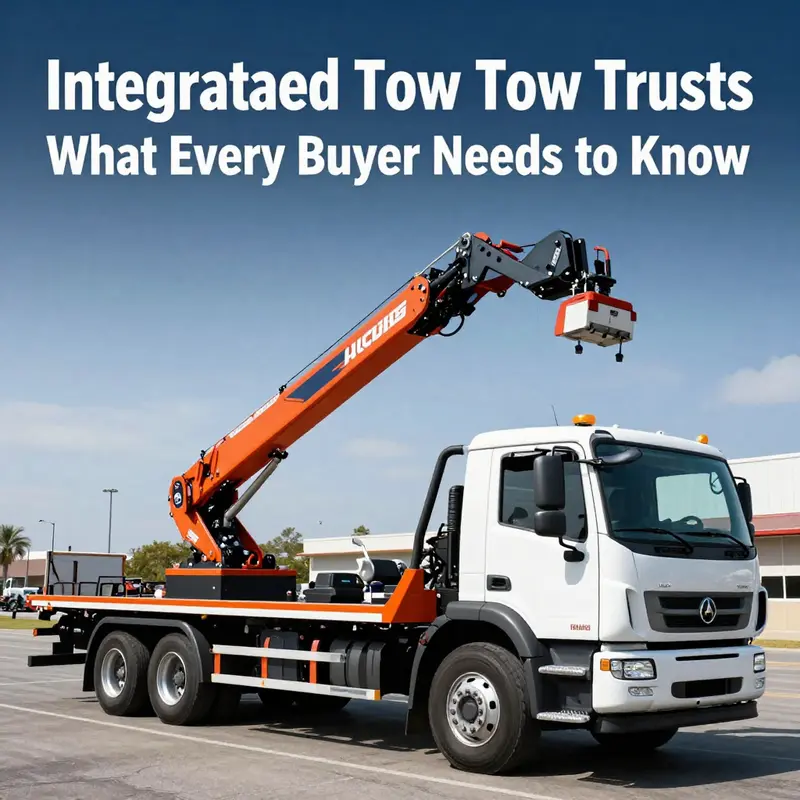
Tow trucks that feature integrated booms and built in recovery systems sit at a unique crossroads of capability and cost. They are not simply about pulling a vehicle from a ditch; they are compact, multi functional platforms designed to lift, stabilize, and tow with a single integrated unit. When buyers begin to compare prices, they quickly discover a wide spectrum. On one end, light to medium duty units with basic towing capabilities and standard wheel lifts can be found in the lower price ranges. On the other end, truly integrated machines that combine folding booms, heavy towing hardware, and sophisticated recovery systems command much higher prices. The market data reflect that range clearly, yet the real cost picture is layered, influenced by size, capacity, configuration, and how new or used the equipment is. For someone planning a fleet or a single start up, that layering matters because it shapes not only the upfront outlay but also the ongoing operating costs and the utility of the vehicle in daily service.
To anchor the discussion, it helps to distinguish between the broad categories of tow trucks here. Light to medium duty models, typically around 10 tons in capacity and often configured as low bed wreckers, usually carry price tags in the mid two to mid three tens of thousands of dollars when new. In many markets a bulk order will push the unit price down into the low twenty thousands, while smaller orders tend to cluster toward the higher end of that range. For heavier work, the price escalates quickly. A compact yet robust heavy duty wrecker, such as a 15 ton variant built on a sturdy chassis, commonly lists in the mid twenty thousands up to the mid thirties, depending on specifications and supplier terms. Once you step into larger capacity trucks—multiple axles, longer wheelbases, and advanced hydraulic assemblies—the cost jumps again. A traditional large capacity road wrecker, particularly one with extra boom reach and higher lifting capacity, is typically in the forty four to fifty thousand dollar range. If a buyer is pursuing a modern flatbed wrecker with more sophisticated loading and recovery features, price tags can be substantial, often landing between sixty thousand and ninety thousand dollars for newer models with premium configurations. And when a vehicle is fully integrated with a powerful hydraulic boom and wheel lift system designed for rapid recovery and urban response, the typical sticker price rises even further, most commonly quoted in the sixty five thousand to ninety thousand dollar neighborhood for new, purpose built units.
These ranges are not arbitrary. They reflect a combination of the core engineering that defines a tow truck’s performance and the commercial realities of sourcing, assembling, and delivering a ready to work vehicle. The capacity envelope matters because higher lifting capacities require stronger structural members, more robust hydraulics, and more complex control systems. A truck designed to hoist heavier loads must run at higher hydraulic pressures, include larger booms, and incorporate more advanced stabilization mechanisms. All of this adds cost. Similarly, integration matters. An integrated tow truck that houses a folding or telescoping boom, plus a built in wrecker and wheel lift system, is a more complicated product than a simple chassis with a tow apparatus bolted on. The complexity touches the list price, the manufacturing lead time, and the after sales service commitments that accompany the sale. To that end, buyers also report that customization terms—such as branding, packaging, extended warranties, or lifetime technical support—can push the final price further upward, even when the base model sits inside a familiar range.
A notable counterpoint to the typical price ladder is a reported listing that presents a markedly lower figure for an integrated boom configuration. In a specific market, a model described as an integrated boom tow truck with an eight ton folding boom crane and an integrated recovery system is listed at around US$15,000. This data point is important for understanding regional pricing and market segmentation. It likely reflects a smaller capacity configuration, a conversion oriented package, or a lower cost sourcing option in a market where construction and industrial equipment can be priced aggressively. Buyers should treat this as a case that illustrates how price can diverge sharply from the norm when budgets, supplier incentives, and local factors align in a particular way. It does not erase the broader market pattern, but it does underscore the importance of verifying what is included in the price, such as core lifting capacity, hydraulic reach, warranty terms, and after sales service.
For buyers who require more power, configurations with higher lifting capacity and longer reach carry a premium. A truck built to offer twelve tons of under lift with a sixteen ton boom lift capability represents a step up in mechanical systems, control logic, and durability. In these cases the price premium is driven by both the higher load envelope and the specialized hardware that must stand up to frequent, demanding recoveries. The literature notes that such configurations command higher prices, reflecting the added material strength, more sophisticated hydraulics, and the need for more resilient maintenance support. The practical takeaway is simple: as lifting capacity and boom reach increase, the price tends to climb, and buyers should anticipate not only the upfront cost but also the potential lifecycle costs associated with higher duty cycles and more frequent service interventions.
The price landscape is also colored by non purely mechanical considerations. Customization options can alter both the bottom line and the total value a buyer derives from a purchase. One year of warranty terms, for instance, can be a standard offering or an upsell depending on the supplier. The availability of lifetime technical support, on the other hand, is a factor that can sway a buyer toward a higher price if the value proposition includes assured service and expedited parts supply. Emission standards add another layer. Some markets require more stringent standards, and compliance may influence the choice of engine, exhaust aftertreatment, and fuel efficiency settings. Those choices can steer up the price, especially when a buyer opts for newer or more advanced engines that meet stricter standards. Freight and regional duties further complicate the calculation. The final out‑the‑door cost is rarely the same across borders; it can be affected by shipping costs, local taxes, and import duties, all of which should be considered when budgeting for a purchase.
Given these factors, what should a buyer expect in terms of value and fit? For an emergency response fleet or urban towing operation, the case for integrated boom capability often rests on a blend of speed, reach, and reliability. A folding or telescoping boom paired with a built in wrecker system can mean fewer transfer points, shorter response times, and a more compact footprint in congested environments. The value proposition is not merely the raw lifting figure; it is the ability to stabilize, lift, and tow within a single vehicle, reducing the need for multiple pieces of equipment and the operational complexity that comes with coordinating several devices.
From a procurement perspective, the path to a purchase typically starts with clear specifications and a realistic estimate of how the unit will be used. If the aim is to handle urban recoveries and smaller incidents quickly, a mid range integrated unit with 8 to 12 tons of lifting capacity and a foldable boom can be a prudent choice, especially when it pairs with a robust towing and recovery setup. If the operation demands higher capcity or more aggressive reach, the buyer should be prepared to justify the higher price by the expected gains in efficiency, safety, and serviceability. A crucial step is obtaining real time quotes from suppliers, which helps to illuminate the variance in price that exists between markets, configurations, and after sales terms. The reliability of the supplier, the availability of spare parts, and the length of warranty can be decisive for a small business looking to minimize downtime and extend the useful life of the asset.
For readers seeking a quick sense of the market landscape, a practical shorthand is to anchor on the price bands associated with typical configurations. Entry level integrated boom trucks may begin to appear in the lower tens of thousands for smaller, lighter duty packages. As capacity and features scale up, the price tends to move through the mid range and into the upper end of the spectrum, where specialty components and longer service commitments become a meaningful part of the package. Buyers should remain mindful that extras—such as branding, tailored storage solutions, or extended performance warranties—can influence price, and that the total cost of ownership includes maintenance, insurance, and eventual spare parts. In short, the decision is not solely about the sticker price; it is about the anticipated productivity gains, reliability in demanding service, and the overall lifecycle cost.
For readers who want to compare general pricing in the broader market beyond integrated boom specific models, a helpful reference point is the general discussion on tow truck costs. See How Much Is a Tow Truck for a broader sense of market dynamics and price bands that apply to a wider set of configurations. How Much Is a Tow Truck
As you navigate supplier conversations, you will likely encounter a spectrum of terms and options. Some buyers emphasize the need for a one year warranty as a baseline assurance of support. Others value a broader commitment, like lifetime technical support, which can significantly reduce the risk of long term downtime. Still others weigh the benefits of Euro 2 or other emission standards compliance when selecting a powertrain. Each of these choices can meaningfully affect price and long term value. The essential aim is to align the configuration with the operational role the vehicle will play on a daily basis. If the truck is expected to operate in crowded urban corridors, the compactness of the integrated setup, the responsiveness of the hydraulic system, and the reliability of the boom articulation become central to the decision. If the role is more about highway recovery or rural incidents, the emphasis shifts toward higher lifting capacity, longer reach, and more robust structural components. In either case, the cost is not just a number; it is a reflection of capability, reliability, and the supplier’s ability to stand behind the equipment through years of service.
For readers who want to dig deeper into the specifics behind the lower end and upper end price points, the landscape varies by supplier and region, but the guiding principle remains consistent. Smaller, lower cost integrated solutions exist, but they often serve a different set of needs than the heavier, higher capacity systems. The strongest buyers will compare apples to apples, evaluating not just the boom capacity and towing hooks, but also the overall build quality, warranty coverage, service network, and lead times. In the end, the decision to purchase a tow truck with an integrated boom is a strategic one, balancing upfront investment with the agility, safety, and speed that a well matched unit can deliver in the field.
For a concise, practical glimpse into a specific listing and its pricing structure, readers can refer to a publicly available listing on an international platform that details an eight ton folding boom crane and integrated recovery features. This example illustrates how such configurations are marketed in some regions and how buyers interpret the included capabilities alongside the price. Made-in-China listing for an 8-ton folding boom crane truck
null
null
Final thoughts
Understanding the costs associated with tow trucks is essential for anyone looking to invest in them. From light-duty models perfect for everyday use to heavy-duty options tailored for commercial purposes, the diverse market provides ample options for potential buyers. By recognizing how specifications, features, and specialized models influence pricing, individuals and businesses can make educated decisions aligned with their needs and budget. The key takeaway is that whether you’re a private driver or a business looking to expand services, comprehensive research aligns your investment with value.