
Tipping a tow truck driver might appear straightforward, but multiple factors come into play that determine the appropriate amount. As everyday drivers, residents, commuters, truck owners, and even auto repair shops or property managers encounter towing services, understanding how much to tip becomes significant in expressing gratitude for effective service. Tipping not only showcases appreciation but may also vary based on the service rendered, the driver’s location, any unusual circumstances surrounding the tow, company polices, and simply how much you value the assistance provided to you. This article will unpack these nuances, ensuring you are well-informed on essential tipping practices when encountering towing scenarios.
Tipping Tow Truck Drivers: Reading the Service, Rewarding the Effort
When you’re stranded on the roadside, the tow truck arrival can feel like a small lifeline. Amid the flashing lights and the hum of the tow rig, a question often sits in the back of your mind: how much should you tip the driver? The short answer is that tipping in the towing industry isn’t as standardized as in a restaurant or a hotel, and the norms shift with the service provided, the conditions, and where you are. But there are clear threads you can follow to recognize good work, show appreciation, and respect the realities of the job. This chapter threads those ideas into a practical guide that stays faithful to the spirit of fairness and recognition without turning tipping into a rigid rulebook. It’s not merely about money; it’s about acknowledging someone who negotiates traffic, weather, mechanical risk, and time pressures to solve a problem that is often urgent and stressful for you. It’s about fairness, gratitude, and an understanding of what the service entails at the moment you need it most.
A tow is rarely a routine, one-size-fits-all service. The baseline scenario—an on-the-spot tow after a minor breakdown—differs dramatically from a rescue operation where a vehicle is trapped in mud, a vehicle has slid into a difficult location, or a long-distance tow requires coordination across miles and additional equipment. Those differences shape the tipping threshold. For a straightforward, short-distance tow, a tip can be modest and still meaningful. A practical starting point is a cash acknowledgment of the driver’s promptness, professionalism, and the clean execution of the task. Then there are cases where the job grows in complexity and time. The same thanks expressed in a larger tip becomes a more accurate reflection of the extra effort. In this sense, tipping serves as a visible signal that the driver’s extra effort did not go unnoticed.
Consider the basic tow—short distances, routine service, and predictable conditions. If a driver arrives quickly, stabilizes the vehicle, loads it securely, and communicates clearly about the process and estimated timing, a tip in the range of ten to twenty dollars is a fair gesture. It acknowledges the driver’s promptness and the care taken to protect your vehicle during transport. The exact amount can hinge on the tow’s distance and the level of customer service shown at the scene. If you’ve found yourself with a small bill and a quick, clean resolution, the tip can be toward the lower end of that range without feeling stingy.
Where things become more nuanced is in difficult or complex tows. Picture a vehicle stuck in soft ground, snow, or mud, where the driver must deploy specialized equipment, perhaps winching, cautious maneuvering through tight spaces, or coordinating with a second truck to manage a challenging recovery. In these scenarios, a tip between twenty-five and fifty dollars—or more—is commonly considered appropriate. If the driver has to perform multiple tasks, such as lifting a heavy car, stabilizing it in hazardous conditions, or performing extra checks and adjustments to ensure the vehicle is secure, those additional minutes and labor justify a larger tip. In genuinely demanding circumstances, a tip toward the higher end of the range communicates that you recognize the additional risk and labor involved.
Emergency or after-hours service adds another layer of consideration. When a tow is performed during late nights, weekends, or holidays, the driver often faces higher personal or logistical costs, from fatigue to irregular hours and the absence of other options for immediate assistance. In these moments, a tip of twenty to thirty dollars is a reasonable gesture to show appreciation for the driver’s availability at a time when others might not be able to help. If the service extends over a longer period—such as a multi-stop operation, a long-distance tow, or a rescue from a hazardous area—the tip would naturally scale with the time and risk involved.
Of course, excellent service deserves an extra nod. If the driver is courteous, patient, and proactive—offering advice, explaining the process, checking fluid levels if appropriate, providing updates, or helping you understand your next steps—the tip should reflect that added value. A tip of thirty dollars or more is a common way to recognize outstanding conduct and professionalism. In some cases, where the service feels truly exceptional and the driver goes beyond the call of duty, a larger tip—up to a hundred dollars in extreme situations—has precedent among grateful customers who felt their safety and peace of mind depended on the driver’s expertise and perseverance.
A guiding principle that many people use, even when they aren’t sure what to give, is to think in percentages of the tow cost. A practical rule often cited is ten to twenty percent of the total tow charge. This approach aligns tipping with the magnitude of the service you received. It’s simple, scalable, and easy to adapt if the service cost is higher due to distance, time, or extra equipment. For example, if the tow costs two hundred dollars, a tip in the range of twenty to forty dollars aligns with that percentage guideline and often lands in a comfortable middle ground for most situations. Yet this percentage is not a rigid requirement. If the service felt routine, a smaller amount is perfectly legitimate; if the driver faced significant hazards or performed meaningful extra work, a higher tip may be the more appropriate expression of gratitude.
There are practical realities that affect tipping as well. Some companies include tips in their service fees or policy guidelines. In those cases, the driver may not be able to accept an additional cash tip, or they might be encouraged not to accept tips at all. It’s wise to ask about tipping etiquette before or during the service, if possible. In other scenarios, drivers may decline tips due to company policy or personal preference. These variations underscore the importance of treating tipping as discretionary and context-dependent rather than a mandatory component of the service. If you’re unsure, a quick call to the company or a brief inquiry at the scene can answer the question and prevent awkward moments.
Tipping also interacts with regional norms and regulations. In certain regions, towing services are regulated in a way that discourages or even prohibits tipping. This is not common, but it exists in places where service contracts, licensing arrangements, or fee structures are tightly controlled. In such environments, tipping can feel out of place or even inappropriate, which is why a direct check with the company is particularly prudent. When tipping is unusual or disallowed, expressing gratitude through clean, respectful behavior and polite communication can still go a long way. A courteous driver who explains what they did, and why certain steps were necessary, can leave you feeling valued even in the absence of a tip.
Beyond the dollar amount, the form of your appreciation matters. Cash is still the most straightforward and universally accepted method, especially when the driver is transporting your vehicle immediately to your chosen destination. If you prefer to pay by card, some companies provide a digital payment option on-site or through the dispatcher. In any case, handing the tip directly to the driver, rather than leaving it with another party or claiming you’ll tip later, helps ensure they receive your thanks. If multiple drivers are involved, it’s common courtesy to divide the tip fairly among them or present it to the lead driver who coordinated the operation. Some customers also choose to offer a small tip as a token of gratitude for a driver who provided guidance—such as advice on next steps with their vehicle or recommendations for local service needs.
For readers who want to anchor their approach to etiquette rather than guesswork, there are established practices worth considering. A simple, direct message from the customer to the driver can accompany the tip, such as, “Thank you for getting us safely back on the road.” A respectful tone, clear appreciation, and a note about what stood out—timeliness, communication, or careful handling—create a more meaningful exchange than a tip alone. If you’re curious about detailed etiquette guidelines, you can explore the conversation surrounding tip etiquette in the towing community through resources like the dedicated guidance on tipping tow truck drivers, which offers practical pointers and scenarios to help you calibrate your tip to the service you received: tip-tow-truck-drivers-etiquette.
Not every tow is a moment for grand gestures, and not every service will invite a cash gratuity. The overarching principle is to reward the driver’s effort in a way that aligns with the service delivered. If the service was straightforward and courteous, a modest tip communicates appreciation without creating pressure. If the job required more time, skill, or risk, a larger acknowledgment corresponds to the added value. And if tipping is not feasible due to policy or personal constraints, expressing gratitude verbally, providing constructive feedback to the company, or simply paying the service promptly can still convey your appreciation for a job well done.
What matters most is the sense that the driver’s actions were valued and that the appreciation matched the level of service. In a field defined by unpredictable hours, physical exertion, and the complexity of vehicle recovery under varying conditions, a well-considered tip can be more than a monetary gesture. It can be a lift to a professional who carries a demanding workload and, in the moment of crisis, helps a person regain a sense of safety and control. It is a personal note that, even on a tough day, someone else recognized the effort and the care that went into getting you back on the road.
In closing, a tip is not a universal obligation, but a meaningful option that respects both the driver’s skill and the situation’s demands. The right amount depends on the service provided, the challenges faced, and your local norms. It can range from a modest acknowledgment for a quick, routine tow to a substantial gesture for a challenging extraction or an after-hours call that required patience and problem-solving under pressure. By focusing on the service delivered and balancing gesture with policy and regional realities, you can tip in a way that feels appropriate, fair, and considerate. This approach preserves the integrity of the interaction and reinforces the value of skilled, responsive assistance when you need it most.
External resource: https://www.bbb.org
Tow Signals: A Region-Sensitive Guide to Tipping Tow Truck Drivers
Tipping a tow truck driver sits in a curious space between a simple courtesy and a carefully judged gesture of appreciation. It is not the same as leaving a tip at a restaurant, where the line between service and salary is more transparent and often codified. For tow services, the economics are different. Rates are set by local regulations, company policies, and the complexity of the job. The result is a tipping landscape that is not uniform but rather a mosaic shaped by geography, circumstance, and the character of the service you received. Reading that mosaic requires more than a reflex to reach for cash. It requires a mindset: assess the service, understand local norms, and decide if a tip would be an appropriate sign of thanks rather than an obligation imposed by social script.
The practical question, then, becomes: how much should you tip, if at all, and what informs that decision? A common starting point is to think of tipping as a gesture that reflects the effort and conditions surrounding the tow. The most reliable general guideline across many regions is modest in its simplicity: tip if you are satisfied, and let the amount reflect the length of the tow, the difficulty of the job, and the professionalism exhibited by the driver. In monetary terms, people often circle around a range from a few dollars to something more substantial, depending on the circumstances. A concrete way to frame it might be to consider tipping in relation to the service cost. If the tow costs around $100, tipping in the neighborhood of 15% to 20% is a familiar benchmark for many service contexts. That would equate to about $15 to $20 in a straightforward tow. Yet tow services rarely operate in a restaurant-like tipping economy, where gratuity is more predictable and legally expected in some places. The reality is that tow-truck drivers are, in many cases, paid through a combination of hourly rates, mileage charges, and service fees that may already include a component of gratuity or discretionary pricing. In those instances, tipping is optional and should be considered a voluntary expression of satisfaction rather than a mandatory supplement to wages.
The decision to tip—and how much—often hinges on region and the specifics of the service. In urban hubs where towing is frequent and competition among providers is intense, drivers may encounter more customers who recognize the value of quick, courteous, and careful service. In these environments, a tip in the range of $10 to $20 might be viewed as a thoughtful premium for efficiency and professionalism, even for shorter tows. It’s not a strict rule, but a practical signal that you appreciated the driver’s demeanor, clarity, and responsiveness in a stressful moment. Conversely, in rural or less densely populated areas, where the pool of towing options is smaller and the service dynamics differ, a $5 to $10 tip can still convey appreciation for a job well done, especially when the driver navigates difficult terrain or adverse conditions. The variation here is not arbitrary; it reflects the local expectations and the realities of the service market.
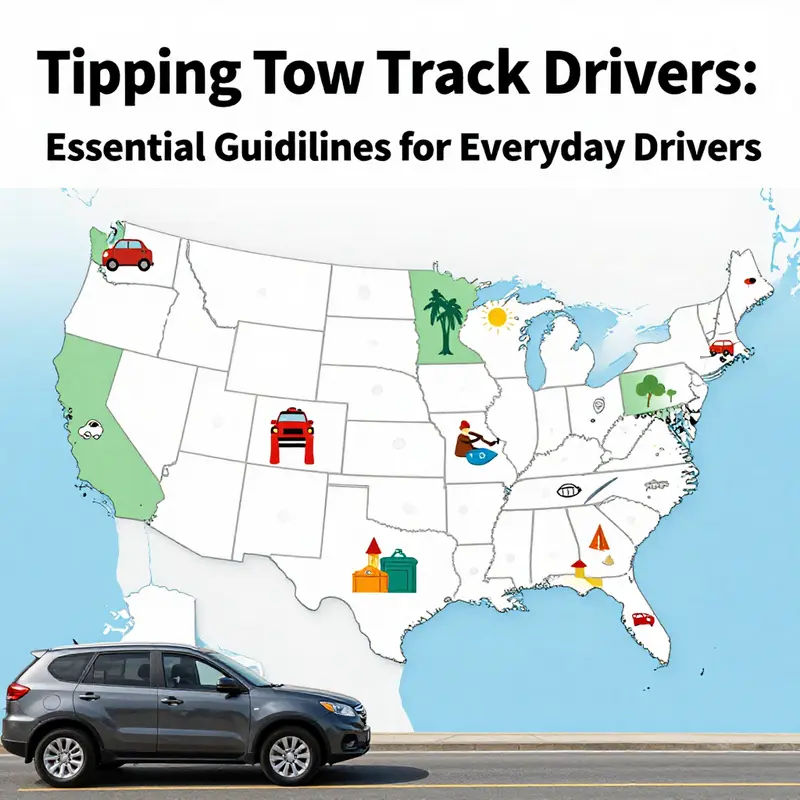
There are also important policy and regulatory considerations that can shape tipping behavior. Some regions and some companies treat gratuities as separate from the posted price, while others include a built-in gratuity or employ pricing structures designed to minimize or even discourage tips. In certain jurisdictions, tipping can be discouraged or viewed as undermining pricing transparency, particularly where regulations tightly govern the pricing of emergency or roadside services. California, for instance, is often cited in discussions about tipping tow truck operators because the prevailing view in some professional contexts is that drivers are already compensated for their work, and tipping could be seen as complicating pricing clarity. In such environments, a tip may still be offered, but its appropriateness is a matter of personal judgment and alignment with local norms. The key takeaway is that tipping is not universally expected, and a driver might even decline a tip if company policy restricts gratuities or if the service was priced to include all necessary costs.
Amid these nuances, it helps to anchor your decision in the quality of the encounter. When a driver arrives promptly, handles the vehicle with care, provides clear explanations about the tow plan, and remains courteous and professional even under pressure, that set of behaviors is exactly what tip-worthiness tends to reward. When the job involves more complexity—say, a long-distance tow, a rural stretch with limited access, or hazardous weather conditions—the level of effort and risk increases, and the gesture of a tip can be a more meaningful acknowledgement. It is in these moments that a tip becomes a tangible thank-you to someone who has navigated not only a mechanical task but also the pressures of timing, safety, and customer communication.
An important practical step, to avoid awkwardness or misunderstanding, is to check with the towing company or the dispatcher about tipping norms before or at the outset of service. Some companies explicitly state whether tipping is expected, discouraged, or irrelevant given the pricing structure. A quick call or a glance at the company’s policies can spare you a moment of uncertainty at a time when nerves may already be frayed. If you prefer to err on the side of caution, you can phrase your inquiry to express appreciation for good service while keeping the financial decision flexible. This approach respects both the driver and the business model that governs the service you’re receiving.
In the broader landscape of public conversation about tipping, it can be useful to cross-check regional expectations with accessible guidance from trusted sources. For instance, national road-safety or automotive associations often publish practical tips for roadside assistance and towing services. These resources provide a clear warrant for thinking about tipping as a discretionary gesture rather than a fixed obligation. They emphasize that a tip should reflect your satisfaction with the service and the conditions under which it was performed. In practice, your tipping choice might also be influenced by your day’s broader context—a single event on a long journey, a tense moment on a busy highway, or a remote location where the driver’s diligence mitigates risk and eases a difficult situation. In such cases, the tip can serve as a meaningful expression of relief and gratitude.
To further support readers who want to navigate this terrain with confidence, consider a compact mental checklist when you’re determining a tip: assess the accuracy and speed of the tow, the driver’s communication and professionalism, and the conditions of the environment. If the driver went beyond the bare minimum—taking extra care to secure the vehicle, offering helpful safety guidance, or accommodating a tricky pickup location—that may justify tipping toward the higher end of the range. If the service was straightforward and efficient, a modest tip suffices. If the driver was unfriendly, unprofessional, or negligent, you may choose to withhold a tip and instead provide feedback to the company, or you may decide that tipping is inappropriate in the absence of improvement in service. The point is not punitive; it is about aligning your gesture with the quality of service and the context, while recognizing that tipping remains a voluntary act.
For readers seeking practical context, it can be useful to translate these ideas into a simple, adaptable framework. A typical approach is to think in terms of three tiers: modest, fair, and premium. A modest tip—roughly $5 to $10—acknowledges a standard tow in ordinary conditions where speed, accuracy, and safety are satisfied. A fair tip—$10 to $20—aligns with a tow that was more complex or lengthy, or where the driver demonstrated notable professionalism. A premium tip, exceeding $20 or a percentage of the cost for especially challenging circumstances, commends exceptional service, such as heroic assistance during extreme weather or a dangerous stretch of road. Remember that these ranges are flexible and contingent on local norms and your own financial capacity. Above all, tipping remains voluntary, and your final choice should reflect your satisfaction and the norms of the region in which the service was performed.
When we step back to look at the bigger picture, tipping tow truck drivers emerges as a practice shaped by human factors as much as by price lists. It’s a small act that carries weight in a tense moment. It signals appreciation for a professional who has saved you time, reduced risk, or simply offered reassurance when a breakdown or accident disrupts your plans. It also serves as a channel through which the public can recognize the value of roadside workers who perform essential services under demanding conditions. Yet it is important to remember that a driver’s willingness to accept tips can depend on the company’s policies, the local legal landscape, and the specifics of the service request. With that awareness, you can navigate tipping with a sense of fairness, regional awareness, and personal gratitude.
For readers who want to explore related guidance or see real-world examples of tipping norms in practice, a quick step into the broader conversation can be informative. A concise overview from a reputable industry resource highlights the variability of expectations and the discretionary nature of gratitude in these scenarios. It reinforces the core idea that tipping should be a voluntary gesture based on satisfaction, rather than a price of admission to fair service. It also underscores the importance of respecting local regulations and company policies, which can differ substantially from one jurisdiction to another. If you want to read more on the subject, you can consult the linked guidance that discusses how tipping is approached in different regions and under various conditions. If you want a direct pointer to regional etiquette and practical examples, the following internal reference can be a helpful starting point: tip-tow-truck-driver. And for a broader, external perspective on tipping behavior and towing services, see the national guidance provided by AAA, which offers practical tips for evaluating towing scenarios and deciding when to tip based on service quality and context: https://www.aaa.com/automotive/towing-services/tips-for-towing-services.
Beyond the Call: Reading the Etiquette of Tipping Tow Truck Drivers in Emergencies and Extraordinary Situations
When a tow truck rolls into view in the middle of a crisis, the scene often feels like a blend of urgency and human courtesy. The driver steps out, surveys what’s happened, and begins the practical work of securing a vehicle, ensuring safety, and coordinating the next steps. In those moments, tipping can slip into the conversation as a quiet, unspoken sign of appreciation. Yet the etiquette around tipping tow truck drivers becomes nuanced precisely because the circumstances stretch beyond a routine roadside service. The core idea remains straightforward: tipping is not always expected, but when a driver goes above and beyond under challenging conditions, a tip can be a meaningful gesture. The real question is how to navigate that gesture with sensitivity to policy, practicality, and local norms, so that the act reinforces valued professionalism rather than creating awkward pressure on either side of the transaction.
For many tow services in the United States, the standard towing fee already compensates the driver and the company for time, equipment, and expertise. In ordinary tow scenarios—single vehicle, standard load, within familiar conditions—tipping is not a strict expectation. Some companies even include gratuities in service charges or establish policies that discourage tips, to maintain consistency and reduce complexity for customers. In practice, this means that if you’re dealing with a straightforward tow from a parking lot to a nearby lot, you should not feel obligated to add extra money beyond the stated fee. The same is true in jurisdictions with regulated or built-in pricing structures, where tipping can be discouraged or restricted by policy or law. It’s always wise to verify any tipping guidance with the company or its dispatcher before assuming it is appropriate.
But the more a driver demonstrates exceptional service in the face of difficulty, the more tipping becomes a personal choice that can reflect gratitude for specific actions. Late-night arrivals, severely inclement weather, or a rescue that required specialized skill all shift the balance. A driver who extricates a vehicle from a ditch, stabilizes the scene to prevent further danger, or assists with tasks that extend beyond the literal scope of a tow may deserve more than the standard courtesy. In those moments, a tip signals recognition of effort, risk, and the professional judgment shown under pressure. It also reinforces a relationship of trust: you’re acknowledging not just the mechanical outcome but the thoughtful way the driver managed a tense, potentially hazardous situation.
When considering a tip in special circumstances, it helps to keep a few practical guidelines in view. First, evaluate the severity of the situation and the impact of the driver’s actions. If the driver arrived quickly in a dangerous setting and stayed to ensure everyone’s safety, a larger tip may be appropriate. If the tow involved complex maneuvers—pulling a vehicle from an unstable position, providing light rescue support, or coordinating with other responders—the value of the extra effort rises. In such cases, a tip in the range of twenty to fifty dollars can be a reasonable reflection of the extra mile the driver went. The specific amount, of course, should feel proportional to the circumstances. A simple, routine tow does not warrant a premium tip, while a high-stakes rescue can justify a more substantial gesture. It is not uncommon for a highly challenging job to call for a tip on the higher end of that range, or even beyond, if the driver faced extraordinary risk or extended the duration of service to ensure safety and successful resolution.
Second, consider timing and method. Cash remains the most straightforward way to convey gratitude in the field, avoiding any confusion about payment channels or company policies. If cash isn’t convenient, or if the driver works for a company that discourages cash tips, ask the dispatcher about acceptable alternatives. Some operators use digital payment methods or offer gratuity through the company’s own process. The key is to deliver the tip discreetly and directly to the driver, ideally after the service has been completed and the scene has been cleared. A brief, respectful exchange—such as “Thank you for your help tonight” with a discreet handover of cash—conveys appreciation without interrupting safety-critical work.
Third, align the gesture with local norms and company guidelines. Tipping etiquette can vary by region, and in some locales, tipping a tow driver is less common or even discouraged by policy or law. If you’re unsure, a quick inquiry to the dispatcher or a glance at the company’s published guidance can save awkwardness. It’s also worth noting that a tip should never be expected to compensate for substandard service. If a driver’s performance was safe, courteous, and professional, the tip is a separate acknowledgment of their conduct rather than a corrective measure for any shortfall in service.
Beyond the mechanics of tipping, there is a broader cultural frame to consider: a tip is a voluntary expression of gratitude for service that requires skill, quick judgment, and physical effort under stress. It is not a fee for a specific outcome, nor a payment to guarantee a certain level of service in the future. In emergencies, a tip can feel like a small, human acknowledgment that the driver’s work mattered at a moment of real tension. For families stranded on a dark shoulder, or for drivers who stood between risk and safety while carrying out a hazardous maneuver, that gesture can carry more weight than a standard transaction would suggest. The best tipping decisions are thoughtful, not reflexive; they reflect the actual contour of the service delivered rather than a blanket rule.
In crafting a response to tipping in special circumstances, it is also useful to acknowledge the limits of gratuity. A tip cannot and should not be used as a substitute for unsafe or reckless practices, poor professional conduct, or neglect of safety procedures. If a driver demonstrates competence and care, a tip is a natural extension of that behavior. If, however, the service fails on basic standards—such as professional communication, proper safety measures, or timely response—letting the consumer sentiment fill those gaps with a larger tip would be misguided. The tipping practice, then, becomes a feedback loop: it should reward excellence, not compensate for inadequacy. This nuance helps keep tipping aligned with ethics and professional standards within the broader ecosystem of roadside assistance.
To readers navigating a moment of crisis, the practical takeaway is straightforward. If you encounter a tow truck operator who arrives during a late hour, deals with an unexpected hazard, or leads a complex maneuver with calm competence, a tip in the twenty to fifty dollar range is a reasonable acknowledgment. If the situation is exceptionally demanding, or the driver has provided a level of service that exceeded ordinary expectations, you may adjust toward the upper end of that spectrum or even beyond, as your judgment and resources permit. The emphasis remains on proportionality and sincerity: the amount should reflect the effort and risk involved, not the mere fact of the tow itself.
In this chapter, the goal has been to illuminate the subtle balance between courtesy and policy in tipping tow truck drivers under special circumstances. It is possible to honor good service without pressing the boundaries of policy or social norms. One practical approach is to treat tipping as a separate, optional act—an extension of gratitude after the service has concluded and your immediate safety concerns have been resolved. If you choose to proceed, consider a brief textual note of appreciation to accompany the tip. A simple expression such as, “I really appreciate how you handled that in tough conditions,” can reinforce the meaning of the gesture beyond the monetary amount. The gratitude is in the acknowledgment of skill and care, not in the tip alone.
For readers who want a concise reference on etiquette that extends into emergency services, the guidance in this chapter resonates with broader practices. As a supplementary resource, you can explore broader tipping guidelines that address emergency responders and related services through reputable etiquette sources, which offer nuanced perspectives on when and how to tip in high-stakes contexts. For readers seeking a quick primer on etiquette and household manners that still applies to roadside assistance, a trusted external reference provides accessible guidance that complements these considerations. tip tow truck driver is a concise waypoint to a more targeted discussion within this site, offering practical tips that align with the themes discussed here. In the end, tipping remains a personal choice guided by circumstance, fairness, and respect for the professional effort that goes into keeping you safe when help is needed most.
If you want to broaden your understanding of how gratuities fit into the broader spectrum of emergency and roadside assistance, you may also find value in consulting resources that examine etiquette in emergency services more generally. External guidance emphasizes that tips, when offered, should be modest, timely, and appropriate to the level of service provided, reinforcing the dignity of the worker and the seriousness of the situation. It is not about wealth or showmanship; it is about acknowledging competence, empathy, and the additional miles a professional goes in a moment when every choice matters. For a deeper dive into the ethics and manners surrounding such gestures, you can refer to articles that discuss tipping etiquette in emergency contexts, which offer further relevance to the decisions you make during a high-stakes tow.
External resource: The Spruce’s tipping etiquette for emergency services provides a thoughtful framework for understanding when tips are appropriate and how to deliver them gracefully in tense moments. https://www.thespruce.com/tipping-etiquette-for-emergency-services-4137986
null
null
Tipping Tow Truck Drivers: Reading the Moment
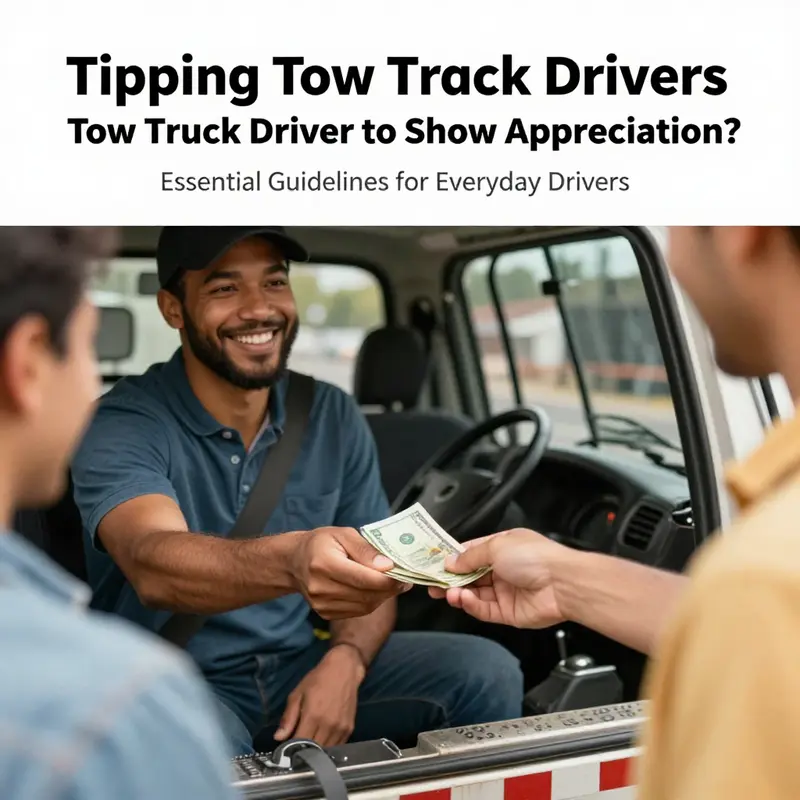
When a tow truck arrives on a roadside, the moment is more than a transaction. It’s a brief exchange shaped by timing, safety, fatigue, and relief. The driver’s goal is to restore order quickly and safely, and a tip can be a meaningful sign of appreciation—but it isn’t a universal obligation. The best approach is to understand what tipping signifies, what the local norms are, and how to calibrate your gesture to the service you received.
A common starting point for many people is a percentage of the towing fee, often suggested as 5% to 20%. This mirrors tipping in other service contexts, where the tip signals satisfaction with value delivered. Towing services complicate that simple rule because fees may include or exclude gratuities, and local regulations or company policies may apply. In practice, many drivers do not depend on tips to make a living; some companies pay a standard wage and discourage tips, while others welcome or encourage them after extra effort. If you’re unsure, ask a dispatcher or the driver what is customary in that area or company.
For a straightforward tow—the car is disabled, the vehicle is moved a short distance, and service is prompt with a courteous attitude—a tip in the range of $5 to $15 is common for a small job. If the distance is longer, the work is more complex, or risks are higher, you may consider tipping toward the higher end. If the policy prohibits tipping, or you simply don’t feel the service warrants a tip, a sincere thank you and a positive review can still convey appreciation.
There are situations that are not routine—long-distance tow, difficult recovery, or high-stress conditions. In those cases, a tip of $20 to $50 may be appropriate to acknowledge extra time, skill, and risk. Always align your tip with local norms and company policy, and respect any rules that prohibit tipping. If tipping isn’t possible, a written note of thanks or a positive review can be a meaningful alternative.
Beyond money, there are non-monetary ways to show appreciation when tipping isn’t feasible. A quick word of thanks, a calm and respectful demeanor, and guidance about next steps can leave a positive impression. If you do tip, consider the method of payment—cash remains the simplest option, but many drivers now accept card or digital tips for convenience in hectic roadside conditions.
In the end, tipping should reflect the service quality, the driver’s conduct, and local norms, not pressure or obligation. When in doubt, a brief question to the dispatcher or driver about what is customary in that company or area can prevent awkward moments later, while a thoughtful tip—when allowed—can reinforce respectful, high-quality service.
Final thoughts
Understanding the protocols surrounding tips for tow truck drivers not only elevates the customer experience but also fosters a sense of community and respect within the service industry. By assessing the nature of the service provided, the driver’s regional norms, and specific circumstances or policies, you can ensure you are tipping appropriately and with gratitude. Remember, a thoughtful gesture goes a long way in recognizing the hard work and professionalism that drivers put forth daily.