
Tow services are a necessity for drivers, property managers, and automotive professionals alike, but the sticker price is rarely a single figure. Pricing hinges on a core structure: a base service fee (often called a hook or dispatch fee) and a per-mile charge that scales with distance. Yet the final bill can vary widely based on location, vehicle type, time of day, and the provider’s policies. This article dissects the mechanics behind the per-mile math, explains how regional and regulatory factors affect the bottom line, and highlights practical steps to get clear estimates. Each chapter builds on the central idea that understanding base fees, per-mile rates, and the surrounding market landscape helps everyday drivers, fleet managers, auto shops, and property managers anticipate costs, compare quotes, and protect themselves from surprise charges. We also point to consumer protections and best practices for obtaining transparent estimates before service begins. By the end, readers will recognize not only the typical price bands but also the drivers that push those numbers up or down and how to navigate pricing in a way that aligns with budget and scheduling needs.
From Dispatch to Destination: Unraveling How Tow Trucks Price Each Mile and What It Means for Your Tow
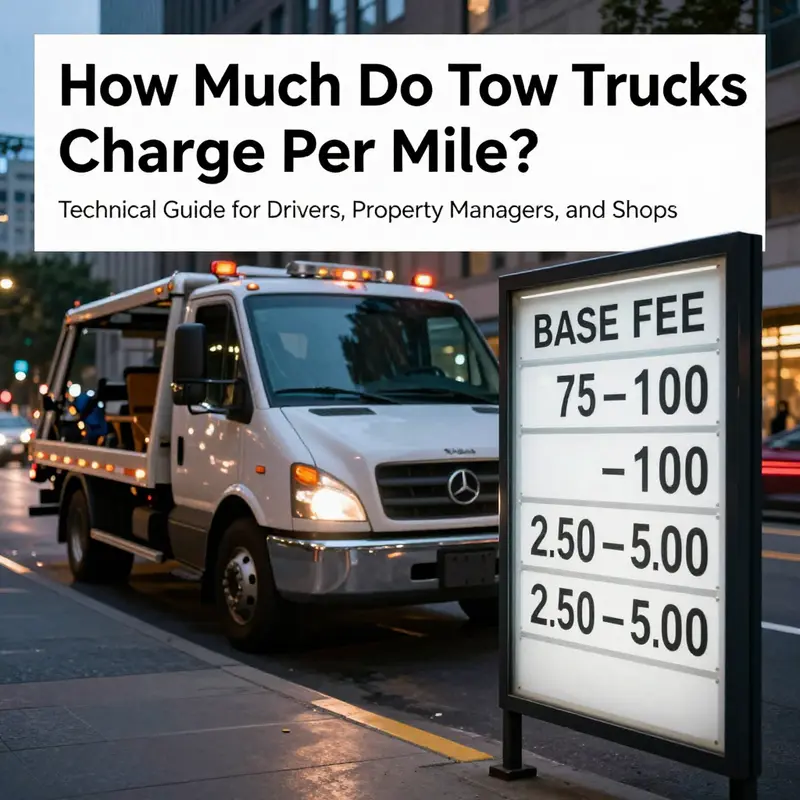
When a vehicle breaks down or a car gets stranded, most people only notice the moment the tow truck arrives and the car begins its slow, careful journey toward safety. What often goes unseen is the math that turns that journey into a bill you will want to understand before the driver ever flips on the hazards. Tow truck pricing generally follows a simple logic: a base fee that covers the dispatch and mobilization, plus a per-mile charge that accrues for each mile the vehicle travels after that initial hookup. But the details—the exact base, the per-mile rate, and the extra charges—vary with location, time, vehicle type, and even the nature of the tow itself. Getting clear on these pieces helps you predict costs more accurately and avoid sticker shock when the bill lands. It also explains why two tows that look similar on the surface can end up with quite different totals once the odometer starts ticking.\n\nThe base fee, sometimes called a hook-up or dispatch fee, is the entry price of the service. In the United States, most providers set this base somewhere in the broad band of seventy-five to one hundred twenty-five dollars. That amount is designed to cover the initial response, the arrival at the scene, and the mobilization of the tow truck and equipment. It’s not a flat price for the entire trip, but it creates a predictable starting point that reflects the labor, truck wear, fuel, and scheduling costs involved in getting a tow truck from a yard to your location and ready to operate. In some cases, especially in urban markets or in special circumstances, the base fee can be higher, but the same general principle applies: you pay something upfront to initiate the service.\n\nOnce the hook-up is complete and the vehicle is connected to the tow rig, the distance you need to travel beyond that initial hookup determines the per-mile charges. The per-mile rate is where the variability truly shows up. Industry data commonly place this rate in a broad range, often cited as roughly two fifty to seven dollars per mile. The exact figure within that range is shaped by a handful of real-world factors. Urban centers, with higher labor costs, greater traffic, and more stringent safety requirements, tend to push the per-mile rate toward the upper end of the spectrum. Rural routes, with cheaper operating costs but longer travel distances, can skew the economics in different directions. The type of tow also matters. A routine wheel-lift tow might carry a different per-mile cost than a flatbed tow, partly because the equipment, preparation time, and potential need for specialized loading procedures differ.\n\nThe trajectory of the cost also depends on how far you need to go. Short tows within a city block or two may stay close to the base fee plus a modest per-mile addition. Longer journeys—hundreds of miles, or towed to a facility far from the starting point—bring the per-mile charges into a larger sum, and many providers add capping rules or minimums that can affect the bottom line. For long-distance tows, the total can escalate quickly. It is not unusual to see long-haul tows into the hundreds of dollars, sometimes reaching three hundred, five hundred, or more, particularly if specialized equipment is necessary or if the destination involves a heavy vehicle or a complex loading scenario. Some quotes separate the rate by distance brackets, others apply a flat per-mile rate for the entire trip, and a few layer in surcharges for the terrain, the time of day, or the need for after-hours dispatch.\n\nBeyond the basic base and per-mile figure, several ancillary factors can tug at the total. After-hours and weekend calls may carry a surcharge that compensates for the inconvenience and the higher costs of staffing a crew on a holiday or late at night. Emergency situations frequently demand rapid dispatch, faster response times, and faster mobilization, all of which can tilt the price higher. The vehicle being towed also matters. Specialty vehicles—low-slung sports cars, oversized pickups, or heavy-duty trucks—often require different equipment and handling protocols. A flatbed may be necessary for certain vehicles to minimize risk of damage during loading, and that equipment comes at a premium. Even the weight distribution and the possibility of extra labor, such as winching, rigging, or the need for additional personnel on site, can shape the final figure. In short, the same basic formula—base fee plus per-mile charge—plays out through a landscape of policies, regulations, and practical constraints that can vary from town to town and hour to hour.\n\nA practical way to think about the pricing is to picture two scenarios that illustrate the range without getting lost in the jargon. In a busy urban market, a tow might begin with a base in the mid-range, say around eighty to one hundred dollars, and then climb by a per-mile rate that could sit toward the higher end of the scale, perhaps three to five dollars per mile, especially if the tow requires careful loading or the vehicle sits in a congested area during the move. In a rural setting, the base fee might be similar, but the per-mile rate could lean toward the lower end, and the overall bill would depend heavily on distance. If you need to move a vehicle that’s far from the tow company’s hub, the distance is a primary driver of cost, and the total can stretch into long-haul territory. In some cases, the price calculation is even more nuanced: certain providers apply tiered pricing, using different per-mile amounts for short versus longer legs, or they may offer a single flat rate per mile regardless of distance. Either approach has its logic, and the choice often reflects the company’s operating model and regional market dynamics.\n\nBecause of these variations, obtaining a detailed estimate before the tow begins is essential. The best practitioners will provide a written, itemized quote that separates the base fee, the per-mile rate, and any surcharges or minimums. This upfront transparency is not merely courteous; many states require that towing fees be disclosed and documented in advance, so the customer can review what they are paying for and why. A reliable quote may also spell out what happens if the actual distance ends up being longer than anticipated, or what adjustments occur if, during the tow, the vehicle’s position, destination, or mounting method changes. The careful reader will recognize that the price is not a single number but a careful accounting of response, mobilization, distance, and the logistical realities that govern every roadside recovery.\n\nFor those who want to compare options across providers, the challenge is not simply the base and per-mile numbers but the total package: what are the minimum charges, what are the exact per-mile rates, are there after-hours surcharges, is a flatbed or other special equipment required, and what is the expected travel distance along with any potential detours or delays? A thoughtful approach is to request an estimate that includes the anticipated miles and the corresponding rate, then add the possible surcharges to understand the potential ceiling. When you read the numbers, you can see how a seemingly modest increase in the per-mile rate or a modest surcharge can compound into a noticeable difference in the final bill. To help with transparency and comparison, consider also the availability of online resources or guides that summarize typical pricing trends in your area and explain how to interpret the line items on a tow ticket. For a concise overview of how these components fit together, you can consult a dedicated pricing guide on tow-truck costs and pricing. This resource lays out the common base fees, the mileage brackets, and the way regional factors influence the final sticker price, providing a solid framework for understanding your own quote and for negotiating if you need to.\n\nThe practical takeaway is straightforward. If you can, secure a written estimate before the tow, and keep it handy so you can review it against the actual invoice when the job completes. Know that an itemized bill should separate the base fee, the mileage charges, and any additional fees for after-hours service, heavy equipment, or destination-specific requirements. If a provider cannot offer a clear estimate, or if the quote seems inconsistent with the distance towed or the level of service, it is reasonable to seek another option. In this business, as in many others, clarity and precision are the best protection for the consumer and the most reliable way to avoid disputes after the keys have been handed over.\n\nFor readers who want a starting point in understanding and comparing these costs, a visit to the internal resource on tow-truck costs and pricing can be helpful. It presents the typical fee structure, the rationale behind the base fee, and how per-mile charges aggregate as the tow distance grows. This knowledge turns a confusing quote into a transparent set of numbers you can analyze in real time and use to decide which service best fits your needs. tow-truck costs pricing\n\nExternally, the broader industry context supports these insights with regional data and updated pricing ranges. If you’re seeking a more general yardstick that reflects nationwide trends, consult an established roadside costs guide that aggregates and updates regional estimates. Such guides confirm that while the exact figures shift from city to city, the foundational model remains the same: a base dispatch fee plus a per-mile charge that scales with distance and circumstance. This combination explains why two tows that look similar on the surface can diverge in total cost, and it reinforces the value of requesting a detailed estimate before committing to the service. For a broader, authoritative reference, see the external resource on towing costs and pricing, which offers updated regional estimates and practical guidance for interpreting charges in context. https://www.roadside.com/towing-costs
Tow by the Mile: Navigating Regional Variations and the Urban–Rural Cost Divide
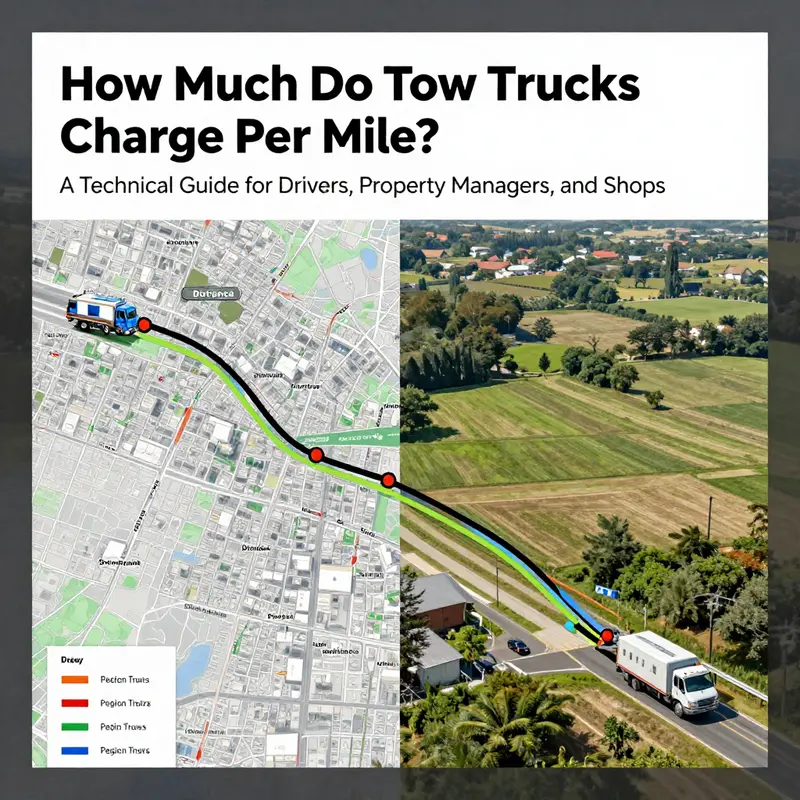
Tow costs are not a fixed price you see on a single meter. They are a mosaic shaped by geography, traffic patterns, vehicle weight, and the logistics of getting a disabled car from the roadside to a shop or yard. When people ask how much tow trucks charge per mile, the best answer is that the price is a moving target, with a common structure that combines an initial service fee with a variable per-mile rate. Across the industry, you’ll typically encounter a base hookup or dispatch fee, followed by a per-mile charge that scales with distance. The most widely cited ranges place base fees roughly in the mid to upper hundreds and per-mile rates in the range of a couple of dollars to five dollars, depending on the market and the specifics of the call. In practice, this means you could see a tow billed as a base fee of about $75 to $100 before any mileage is added, then a per-mile charge of roughly $2.50 to $5.00 for each mile towed. Those numbers reflect a blend of industry norms and regional realities, not a single national standard. The nuance matters, because the same miles can cost differently if you’re in a dense city versus a rural corridor with longer travel times between the accident scene and the repair shop. The takeaway for most consumers is simple: always ask for an itemized estimate before the tow begins, and verify whether the quote is all-inclusive or if there are additional charges lurking in the fine print. In the current landscape, a quick look at regional patterns helps to anchor expectations. Urban areas, with their higher operating costs, demand greater base fees and steeper per-mile rates. Rural areas, by contrast, often feature lower per-mile charges but longer transport distances that can keep the final tally high, especially when the tow has to cover 30, 40, or more miles to reach a service facility or storage lot. Within this framework, a key dynamic emerges: surcharges and time-of-day adjustments frequently shape the final price. After-hours, weekend, and rush-service calls tend to carry additional costs that compound the base and mileage charges. Those surcharges are not arbitrary; they reflect labor constraints, the need to mobilize specialized equipment, and the logistical challenges of meeting urgent roadside commitments. For heavier vehicles—minivans, SUVs, light-duty trucks, or commercial vans—the cost structure tilts upward, since heavier loads require larger tow rigs, more rigging, and often longer handling times. Even the same mile can feel pricier when specialty equipment is involved. Some companies implement tiered pricing by distance, others opt for a flat per-mile rate regardless of how far the tow travels. Either way, the essential idea remains: the longer the journey, the more miles accumulate on the clock, and with that mileage come costs that reflect labor, fuel, maintenance, and wear on the tow equipment. To visualize the regional divide, consider three broad patterns commonly cited by regional guides and consumer advisories. In high-cost urban centers, per-mile rates frequently hover around $3 to $5, with base hook fees exceeding $100 before any miles are counted. Surcharges for after-hours or weekend service can push the total by another $50 to $100 in many cases, making even a relatively short tow a notable expense. In mid-sized metros and smaller cities, you’ll often see per-mile rates closer to $2 to $4, with base fees typically in the $75 to $100 range. Off-hours surcharges may occur but are less universal than in megacities, and when they appear, they tend to be in the same ballpark as urban adjustments. Rural and sparsely populated areas push the per-mile rate downward, commonly to about $1 to $2, but the total cost climbs if the distance to be towed stretches, for example, to 40 or 50 miles or more. In very long rural routes, even a modest per-mile charge can accumulate into a substantial bill if the final destination lies miles away from the pickup point. For a concrete sense of how this translates into real dollars, imagine a 50-mile tow in a rural setting at a $2 per-mile rate. That alone would amount to about $100 in mileage costs, not counting the base hookup and any after-hours or equipment fees. Add a base fee of $75 to $100 and you are already into a $175–$200 range before you include possible surcharges or storage costs. When the distance shortens, the miles don’t vanish; they simply cost more per mile in a dense market due to the higher fixed costs a company must recover. Conversely, long rural transports may seem economical on a per-mile basis but can end up costing more overall as the journey lengthens. It’s a reminder that the math of towing is not a simple multiplication of miles by a single rate. It’s a layered calculation where base fees, mileage, vehicle weight, equipment needs, and time-of-day adjustments intersect with regional economics. The practical upshot is clear for motorists facing a tow: insist on an itemized estimate before any hook is set. A robust quote will separate out the base hookup fee, the per-mile charge, and any surcharges or extra fees such as storage, winching, or specialized equipment. If you have roadside assistance coverage, review its terms—distance limits, incident caps, and exclusions—to anticipate what you will owe beyond the provider’s assistance. When you’re in a region with several towing options, a quick price check across a few reputable shops can illuminate the local band for pricing. Even a brief comparison can reveal whether one shop is applying a larger base fee but a lower per-mile rate, or vice versa. The point is to avoid surprises and to understand how a given mile will contribute to the bottom line in your specific situation. For readers who want a concise thread of context to anchor these observations, a quick reference to regional rate guides and consumer insights can prove invaluable. You can explore regional estimates and updated cost patterns in reputable guides that summarize how urban density, labor costs, and regulatory environments shape pricing. And for a broader sense of national and regional trends, an external resource that aggregates and analyzes towing costs can provide a useful cross-check against local quotes. If you’re curious about a practical example that aligns with this approach, consider the internal resource tied to how much a tow truck costs in general: How much is a tow truck?. Its focus on price structure can help you translate the per-mile figure into an anticipated total bill in your area. For a broader, region-wide benchmark, you can consult the industry’s regional cost summaries published by AAA’s towing-rate compilations. These sources, updated regularly, underscore how geography, urban density, and local regulations influence the final numbers you’ll encounter on your bill. In sum, the per-mile charge is a meaningful component of the cost equation, but it cannot be read in isolation. The urban–rural divide, the base hookup fee, the service type, and the time of day all color the final total. Preparation matters. When you’re stranded, having a clear sense of how to read a tow quote—and how to ask for a thorough line-item breakdown—will save you from sticker shock and ensure you’re comparing apples to apples. As with most essential services, transparency is the ally you want on the roadside. External resource: AAA Towing Rates & Costs – AAA Northeast, updated January 2026, which provides regional context and updated expectations for urban, suburban, and rural markets. Link: https://www.aaane.com/automotive/towing-rates/
Tow Fees by the Mile: Navigating Regulation, Transparency, and Consumer Protections in Roadside Towing
When a tow truck arrives, the numbers on the bill can feel like a moving target. A base dispatch fee carries you from the moment the driver takes your call, but the real variation appears in the per-mile charge that follows. Across the country, the common framework is straightforward in theory: a fixed service fee, then a variable cost for each mile the vehicle travels to the destination. In practice, however, location, vehicle type, and timing can tilt the final total in surprising directions. The familiar rule of thumb—roughly a base fee of $75 to $100, followed by $2.50 to $5.00 per mile—still holds as a rough guide, but what you actually pay is shaped by a constellation of local rules, market dynamics, and the specifics of your situation. In dense urban cores, the price per mile can climb quickly as traffic, demand, and the cost of doing business collide. In rural settings, long distances can inflate the total cost even when the per-mile rate is modest, especially if the tow covers a longer stretch through less competitive markets. The most prudent approach, before any vehicle begins moving, is to seek a clear, written estimate that lays out every piece of the charge. Some companies employ tiered mileage pricing—think a higher rate for the first few miles, with a lower rate for additional miles—while others charge a flat per-mile rate no matter how far the tow goes. Either way, the dispatch fee still anchors the bill, and the distance dressed in miles becomes the slow but steady drumbeat of the final price.
Regulation enters this landscape as a guardrail that keeps the ride from becoming unpredictable. In many states, tow rates and practices are not left entirely to market whims; instead, regulators set boundaries to protect consumers from surprise charges and deceptive practices. These rules can manifest as caps on mileage rates, mandates for written estimates, or requirements that certain fees be itemized and disclosed up front. Some jurisdictions also regulate ancillary charges—hook-up fees, storage charges, and even the timing of additional fees tied to delays caused by the tow. The aim is to reduce the possibility that a driver might spring a large, opaque charge once the vehicle has been hooked and ready to move. For the consumer, this means a more predictable pathway to a fair bill, but it also means that pricing can look quite different from one state to the next, or even from one city to another within the same state. Keeping track of local regulations helps explain why your neighbors report different experiences with the same basic service.
Transparency is the practical companion to regulation. A reputable tow operator should be able to provide a clear, itemized invoice that breaks down the work performed, the distance towed, and the time involved. You want to see a line for the base or dispatch fee, a line for each mile towed, any tolls or road charges, and lines for any optional services such as winching, special equipment, or recovery from a difficult location. In some cases, additional lines account for storage if your vehicle remains at a lot after the tow. The more precise the breakdown, the easier it is for you to understand exactly what you’re paying for and to compare quotes from different providers without guessing where the numbers came from. A note of caution: even within states with strong consumer protections, inconsistencies can creep in. Always ask for a written estimate before the truck arrives, and request confirmation that the estimate reflects your specific vehicle and the anticipated route. If a company hesitates to commit in writing, that hesitation itself can be a red flag.
The consumer protection framework that underpins these practices is not limited to the states. At the federal level, agencies dedicated to fair trade and consumer rights keep a watchful eye on towing practices, particularly to prevent deception and hidden charges. The Federal Trade Commission has issued guidance on avoiding towing scams and recognizing transparent pricing practices. This guidance complements state and local rules by highlighting how a legitimate operator should communicate charges, what rights consumers have when a dispute arises, and how to pursue an independent review if the bill seems excessive or unclear. The FTC guidance also helps explain why it is wise to verify a tow company’s license and insurance status, and why it is important that rates are publicly accessible or, at minimum, clearly disclosed to the consumer before any car is moved. In short, regulation and transparency work together to keep the cost visible, the service professional, and the consumer protected.
For the person facing a tow, practical steps can bridge the gap between expectation and reality. First, ask for an upfront estimate that delineates the base fee, the per-mile rate, and any potential extras tied to the specific vehicle or location. If the distance is substantial, ask whether any mileage tiering will apply and how that tiering would affect the total. If the driver cannot provide a written estimate on the spot, request one by email or text to review later. It is also prudent to confirm who pays for the tow and whether you may choose your own repair shop or storage facility, should you wish to compare costs or explore alternative options. Keeping in mind that a tow can involve more than distance alone—time spent on scene, the complexity of hooking or unhooking, and the availability of specialized equipment—helps you recalibrate expectations without signaling distrust. A useful way to frame the inquiry is to ask the operator to itemize each component of the bill, including any potential charges that could apply if the tow is delayed by weather, road closures, or the need to recover from a precarious position.
The pricing landscape is also influenced by the kind of vehicle being towed. Light-duty passenger cars typically incur lower baseline fees and per-mile charges than larger, heavier vehicles, such as SUVs with all-wheel drive, vans, or light trucks. Heavy-duty tows may require special equipment, longer towing distances, or more labor on site, all of which can elevate both base fees and per-mile rates. Distance alone does not tell the whole story: a short, technically challenging tow from a physically difficult location—perhaps a hillside driveway or a cluttered parking lot—can push the total cost above a longer, straightforward move because of the additional effort and time involved. In urban centers, the friction of traffic and parking restrictions can translate into higher dispatch and wait-time charges, while in rural areas, longer drives can accumulate mileage that makes the final fee appear steep even when the per-mile rate remains within a modest range. When you combine these factors with potential tolls, securement or winching needs, and any required storage, the final figure becomes a mosaic rather than a single digit.
The best defense against sticker shock is proactive communication and comparability. If you need to decide between two or three providers, ask for a side-by-side comparison that includes base fees, per-mile rates, and all potential add-ons. Request a clear statement of which charges are standard and which are contingent on circumstances under your control, such as waiting time or the need for additional equipment. A reputable operator will also confirm the licensing status and insurance coverage, since these elements tie directly to consumer protections and accountability in the event of damage or dispute. You can also consult broader resources that synthesize regional pricing patterns, but remember that local context—urban density, road access, and the presence of competing providers—will color the numbers you actually see on the bill. For readers seeking a consolidated view of the pricing ecosystem, a useful reference point is the broader discussion of tow-truck costs and pricing, which helps situate the numbers you’re quoted within a larger market framework.
(Internal link) For a deeper look at how the landscape shapes the numbers you’re quoted, explore the overview of tow-truck costs and pricing and how it relates to the actual calls you place in the moment of need. This contextual frame can help you parse the fine print when an operator presents a bill that folds in mileage, time, and a handful of discretionary charges.
In the end, the mileage charge is a meaningful dial on the price tag, but it is not the only dial at play. The regulatory environment and the transparency culture that regulators and professional associations cultivate around towing help shape that dial toward fairness and predictability. Consumers who walk away with a firm grasp of the possible structure, a written estimate, and a clear invoice are less likely to encounter surprise costs and better prepared to respond if a bill still feels off. And while the numbers will always vary from place to place and from one vehicle to another, the underlying principle remains constant: informed choices, backed by transparent pricing, empower accountability on both sides of the tow.
External resources can also offer guidance on how to approach disputes or misbilling. As you navigate questions of price and service, refer to reputable consumer protection guidance that highlights the best practices for avoiding scams and recognizing legitimate pricing. A trusted external resource provides a safety net, reminding you that you have recourse if a bill seems inaccurate or opaque. The conversation about price, law, and ethics in towing is ongoing, but with careful preparation and a clear line of communication, you can reduce the risk of an uncomfortable surprise after a roadside emergency.
External resource: https://www.ftc.gov/tips-advice/business-center/guidance/avoiding-towing-scams
Tow by the Mile: Decoding Mileage Charges, Dispatch Fees, and the Hidden Costs Behind Every Tow
When a vehicle breaks down or is involved in a roadside incident, the question that lands first is not just how far a tow will go, but how much it will cost per mile along the way. Prices in the towing world are built from several moving parts, and a mile is rarely a simple, uniform figure. The most recognizable pieces are the base dispatch fee and the per-mile rate that follows, but the true total often hides additional charges that can surprise the unprepared. In many shops and regions, the standard model starts with a base fee, sometimes called a hook fee or dispatch fee, and then adds a mileage charge for each mile the tow truck travels with your vehicle in tow. Typical industry ranges cushion this basic framework with local variations: a base in the ballpark of seventy-five to one hundred dollars, paired with a per-mile spread that can hover between roughly two dollars and fifty cents and five dollars. Those numbers are not absolutes, but they do reflect a common rhythm you’ll see in many urban and suburban markets.
That rhythm matters because the distance you need to cover with the tow car does a lot of the heavy lifting in the final bill. A short, five-mile tow can land around the base fee plus a handful of miles, pushing the total into a range near seventy-five dollars. A longer haul of fifty miles, on the other hand, may climb well past three hundred dollars as the per-mile charges accumulate and the base fee remains in play. The math gets more nuanced when you factor in variations in pricing models. Some companies employ a straightforward flat rate per mile, while others keep a tiered pricing structure that changes with distance brackets. You might see something like a fixed higher rate for the first portion of travel, then a lower rate for additional miles, or vice versa. Occasionally, a business will offer a compact, “hook and roll” arrangement: a fixed amount to hook up the vehicle, followed by a per-mile rate for the miles towed. This means the overall experience of the bill can hinge on which pricing approach your local shop uses, how many miles you actually need, and whether any discounts apply at certain distance thresholds.
The distance itself is not the only factor, of course. The type and weight of the vehicle to be towed has a direct and tangible impact on the bottom line. A compact sedan or small car requires less heavy equipment, lighter tow gear, and less fuel, which translates into lower costs. Heavier vehicles—such as full-size pickup trucks, SUVs, or larger vans—demand larger tow trucks, specialized hardware, and more labor. Each extra ton or extra axle can tighten the margin in the shop’s favor, and the presence of more complex towing rigs may necessitate additional crew time or specialized handling. In practical terms, this means a five-mile tow of a compact car might cost substantially less than a fifty-mile haul of a heavy SUV, even if the distance alone would suggest similar pricing on a flat-per-mile model. The reality is that weight and equipment needs are often the hidden gears behind the visible per-mile rate.
Geography adds another layer of complexity. Urban settings can push prices higher on certain trips due to traffic, parking constraints, and higher hourly labor rates, even when the actual distance is relatively short. In contrast, rural areas frequently feature longer travel distances between service windows or repair options, which can stretch the total mileage charge into unfamiliar territory. Both scenarios illustrate a simple truth: the mile is not just length, but labor, fuel, and logistics folded into a single line item.
Given this variability, a key takeaway for drivers and passengers is not just to know the numbers but to understand the structure behind them. It is common for towing providers to present a price that looks like a single sum, but the most meaningful understanding comes from a detailed breakdown. A legitimate estimate will typically separate the base dispatch or hook fee from the per-mile charges and itemize any additional costs that could appear as the service progresses. Fuel surcharges may be tacked on when fuel prices swing, and after-hours or weekend calls can carry premium rates. If the vehicle is kept at an impound lot or requires specialized equipment, those fees might also sneak into the final tally. The important practice is to ask for the breakdown up front and to confirm what is included in the base fee and what might be added as the distance and circumstances change.
Transparency in pricing is not just good business; it’s a practical safeguard for fairness and informed decision-making. Many states regulate towing fees and require clear disclosure so customers can see exactly what they’re paying for. In addition, national resources and consumer guidance—such as those offered by roadside assistance organizations—can provide regional estimates that help set expectations before service begins. When you’re standing on the shoulder of the road, it helps to know that a well-constructed quote should spell out the hook fee, the distance-based charges, and the potential extras before any hands are laid on your vehicle. If you want a general frame of reference and to compare regions, resources like AAA’s towing cost guide can be a helpful starting point for estimating typical regional ranges while you shop around.
As you prepare for a tow, one practical step is to request a detailed estimate before the tow begins. A clear estimate will help you understand how much you’ll owe and what factors might push the total higher or lower. It also creates a natural moment to confirm payment timing. Some providers require payment at the time of service, particularly for non-emergency tows or those not covered by insurance. Others may bill a third party or require payment after the service is completed. Acceptable payment methods can vary—many shops accept credit cards, while others prefer cash or have limited electronic options. Clear communication about when and how to pay helps prevent last-minute surprises and can make the overall process smoother.
For those who want to explore the spectrum of costs without dialing into every shop, a broader board of guidance exists. Local providers are the best source for precise quotes, but regional cost guides and consumer resources can help you calibrate expectations. If you’re curious about the general framework and want a sense of typical ranges, you can explore a practical reference like the internal guidance found on the page linked as a practical overview of tow costs. And if you’re curious about a commonly asked question—“how much is a tow truck?”—a concise overview from a regional provider can illuminate the practical realities behind the numbers. For quick context, consider reviewing the linked resource that discusses the basic structure of base fees and per-mile charges, and the factors that influence the final bill.
In the broader picture, the miles you need to cover and the circumstances around the tow shape the final figure more than any single factor. A short, light-duty tow can be far more economical than a long-distance haul of a heavier vehicle, but that isn’t a guarantee, because the rate card varies by location and by the shop’s pricing philosophy. Some customers may encounter tiered mileage pricing that effectively gives a little more value for shorter trips while charging steadily for longer ones, whereas others may rely on a simpler model with a consistent per-mile rate regardless of distance. Either way, the practical path to fair pricing is the same: request a transparent estimate, ask for a line-by-line breakdown, and verify any add-ons before agreeing to service.
To ease the process of gathering information, you can use the following approach: first, identify the vehicle’s weight and the approximate distance; second, ask for a fixed hook fee plus the per-mile rate; third, request potential surcharges or after-hours fees; and fourth, confirm payment timing and accepted methods. If you’re wheelchair-accessible and need a tow in an urban corridor near a busy highway, the differences between an urban-to-rural split and the type of tow rig used can become quite pronounced. The key is to keep the lines of communication open and to insist on a written estimate that captures all expected components of the bill.
For readers seeking a targeted, practical touchstone, consider checking a detailed, location-specific estimate from a reputable source. You can learn more about the broader landscape at the linked page that discusses the cost structure and the factors that commonly influence the final tally. And if you’d like a direct, internal reference to a general consumer-friendly inquiry about tow costs, you can consult a concise overview that explains how the base fee and mileage charges interact in everyday practice. This blend of price structure, regional variation, and clear disclosure provides the backbone for understanding what you’ll pay per mile and how to prepare for it.
Anchor for deeper exploration: How much is a tow truck? offers insight into the basic question of base fees and mileage in a real-world context, while keeping the discussion anchored to common industry practices. The goal is not to lock you into a specific price, but to empower you with a framework that helps you read a quote, compare apples to apples, and avoid sticker shock when the final bill lands. The mile matters, but it matters most when it’s part of a transparent, breakdown-friendly estimate that leaves no hidden corners in the pricing maze.
External resource: BBB Towing Costs Guide
Tow Rates Decoded: Understanding the Base Fee and Per-mile Charge
Tow rates work as a base fee plus a distance charge. The base fee covers mobilization, dispatch work, and the initial hook-up of the vehicle. The per-mile rate translates fuel burn, wear, and driver time into a cost per mile, and it can vary by vehicle type, market, and time of day. Some providers use tiered pricing, with different per-mile rates for 0-10 miles, 10-25 miles, and beyond, while others keep a single flat rate. Additional surcharges for after-hours, emergency service, storage, or multi-stop trips may apply. For customers, the key is a transparent, itemized quote that names the base fee, the mileage rate, and any surcharges so you can compare apples to apples. Example: base fee $75 with a per-mile rate of $2.75 for a 12-mile tow yields $75 + (12 * 2.75) = $108. In another market, a heavier vehicle or after-hours demand could push the per-mile rate higher, increasing the total even for the same distance. The practical takeaway: always request a written estimate that breaks out base, mileage, and surcharges before approving the tow.
Final thoughts
Understanding how tow trucks charge per mile requires assembling several moving parts: a predictable base fee, a per-mile charge that scales with distance, and regional or regulatory factors that can push prices higher or lower. By examining pricing structures, recognizing regional dynamics, and demanding clear estimates with itemized disclosures, drivers, fleet operators, repair shops, and property managers can forecast costs more accurately and compare quotes with confidence. The most reliable approach is to request a detailed estimate before service begins, ask for any fuel surcharges or access fees, consider distance and vehicle type, and review local protections that ensure transparency. When combined, these practices empower stakeholders to manage tow-related expenses proactively and minimize the risk of surprise charges.