
Towing capability is a crucial aspect for truck owners, particularly for those involved in hauling cargo, trailers, or equipment. Determining how much your truck can tow using its Vehicle Identification Number (VIN) not only maximizes performance but enhances safety on the road. This article explores the steps to leverage your VIN for accurate towing capacity information, delves into various factors that impact those ratings, and outlines accessible tools for retrieving necessary data. Whether you drive a pickup for work or recreation, understanding these aspects can lead to better decision-making and safer towing practices.
null
null
Vin to Tow: Decoding How a Vehicle Identification Number Relates to Real-World Tow Power
When someone asks how much their truck can tow by VIN, the instinct is to expect a neat, single-number answer tucked inside a 17-character code. In practice, the truth is more nuanced. The VIN is an irreplaceable, universal identifier. It confirms who built the truck, when it left the factory, and how it was equipped at the time of manufacture. It does not, by itself, carry a ready-made towing specification. Towing capacity is a product of engineering choices that live in the spec sheets and the physical build of the truck—engine, transmission, axle gear, suspension, frame, and the optional packages the factory designed to support pulling heavy loads. To understand what a given VIN implies about towing power, you must move from identification to specification, and then to the practical limits you must respect when you hitch up a trailer.
The journey from VIN to tow capacity begins with recognizing what the VIN actually encodes. A standard 17-character sequence encodes information about the vehicle’s manufacturer, the vehicle model, the engine type, transmission, place of manufacture, and the model year. It is a map of origin and configuration, not a towing ledger. This distinction matters because the towing capacity a driver can safely tow is determined by engineering that may or may not reflect every nuance that a VIN reveals about the vehicle’s identity. The VIN can point you to the right build, but the actual towing rating is typically published in a separate, specific place: the manufacturer’s documentation, the door jamb placard, or the official vehicle information returned by trusted sources when you decode the VIN.
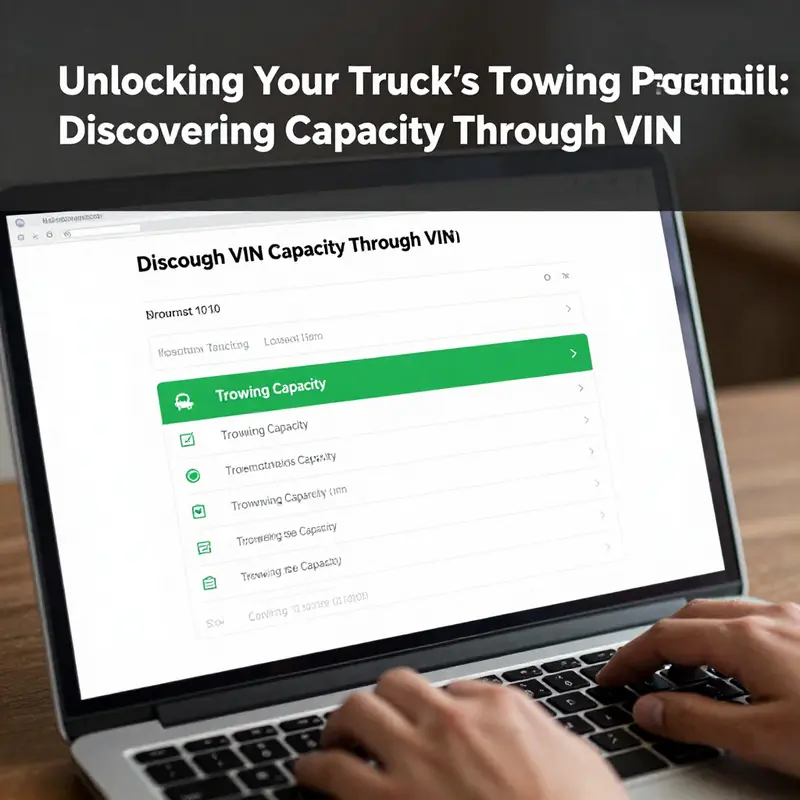
For most owners, the fastest route to a clear number is to use an official VIN decoder that sources its data from manufacturers and government-aligned databases. The National Highway Traffic Safety Administration (NHTSA) maintains a VIN decoding tool that is widely recommended for its reliability and accessibility. This tool provides a wealth of vehicle information, including the “Trailer Tow Rating” or “Maximum Trailer Weight” when that data is available from the manufacturer. It is important to view these numbers in the context of the manufacturer’s documented guidance, not as a guess about what the vehicle can handle in the real world. If the NHTSA tool does not show a straightforward towing rating for a particular VIN, the next steps involve cross-checking the other official sources—your vehicle’s owner’s manual and the door jamb placard—as well as contacting the manufacturer or a dealer for confirmation.
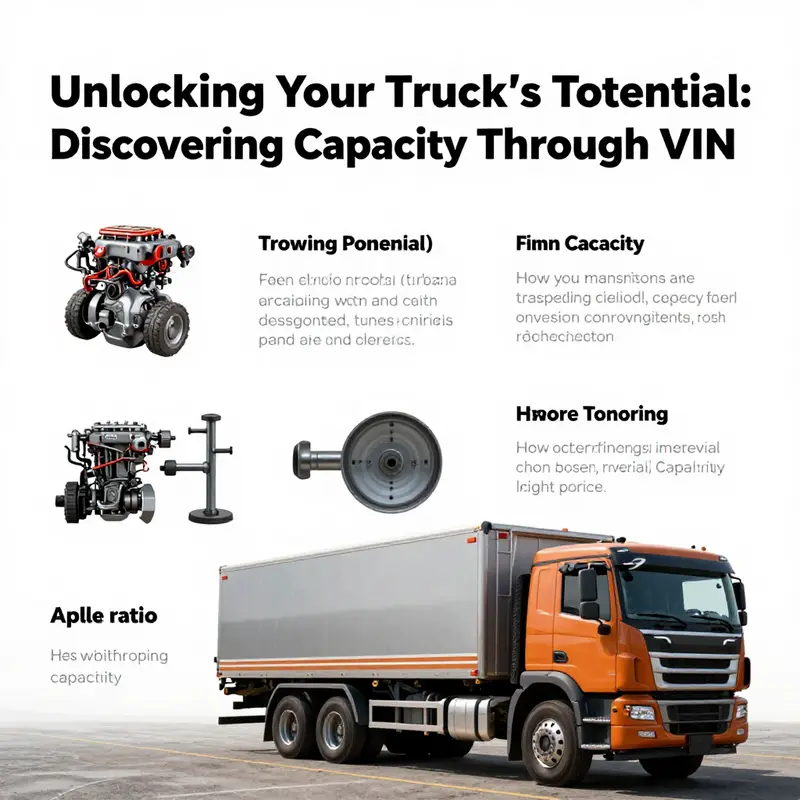
Beyond the VIN itself, there are several other essential pieces of the puzzle. The towing capacity is not a single fixed number across all configurations of a given model. Vehicle power for towing depends on the engine’s power and torque, the transmission’s behavior and gearing, the axle ratio and drivetrain layout, and the suspension and frame design that hold up under load. The towing package that a vehicle might have installed at the factory can dramatically change the maximum weight the truck can safely pull. A mid-cycle refresh, a different axle ratio, or a different transmission tuning can also shift the ratings. In other words, two trucks that share the same model name and VIN family might have different towing capacities because of their distinct option sheets and production specifics. The VIN can guide you to the correct configuration, but the exact towing figure arrives from the combination of engineered components and the documented limits the manufacturer assigns to that particular build.
To illustrate how these factors accumulate, imagine a truck that rolls off the line with a robust engine and a strong transmission paired to an appropriate axle ratio and a factory towing package. That configuration will have a higher factory-rated towing capacity than a nearly identical truck without the towing package or with a less aggressive axle gear. Even when two trucks share the same base engine and transmission, subtle differences in suspension tune, exhaust routing, cooling capacity, and brake sizing can influence how much weight they can pull safely, particularly on grades or in hot conditions. This is why the towing rating is rarely a single, universal figure for every truck of a given make and model. It is a product of the exact combination of hardware and software that the factory built into that unit.
Taking the VIN as a starting point, the most reliable approach is a layered one. First, use an official VIN decoder to pull the vehicle’s basic identity and the closest towing references that the manufacturer publishes. Then, verify the numbers found against the owner’s manual and the door jamb placard. The placard typically lists the Gross Vehicle Weight Rating (GVWR), the Gross Combined Weight Rating (GCWR), and the maximum towing capacity. GVWR anchors the weight of the vehicle itself, while GCWR combines the vehicle with its typical trailer load. The maximum towing capacity is the limit you should not exceed when hitching a trailer, and it is the number most people mean when they ask, “What can I tow with this truck?” Importantly, these figures assume standard equipment and a fully functioning braking system, lights, and other safety-critical components. It’s not a license to exceed the vehicle’s limits under any circumstances, and it should be interpreted in the context of the entire towing system, including hitch, wiring, brakes on the trailer, and the trailer’s own insurance and registration constraints.
When one considers the practicalities of towing, the VIN’s role is best seen as a doorway to the correct set of official numbers rather than a standalone specification. The “trailers” a truck can pull are not determined by the color of the VIN alone but by the engineered capabilities described in the manufacturer’s documentation. If you want to confirm towing power quickly and with official backing, you can enter the full 17-digit VIN into the primary government-backed decoder and navigate to the “Trailer Tow Rating” section in the generated report. This is the most reliable, real-time method to extract the manufacturer’s single most important towing figure for your exact build. If the decoder’s results aren’t crystal clear, don’t press your luck with assumptions. Instead, cross-check the numbers with the owner’s manual or contact the manufacturer directly. The human element—an informed technician or a customer-service representative—often provides the nuance that a page of numbers cannot fully convey.
The discussion naturally invites a broader perspective. Tow power is a product of the same fundamental engineering principles that govern any heavy-pulling scenario, whether it is a road-going pickup or a ground-support vehicle on a busy airfield. In fact, the same line of reasoning about engine torque, transmission gearing, and drive configuration applies to specialized equipment such as aircraft tow tractors. In those machines, the capacity to move heavy loads is built into the design and documented in the manufacturer’s specifications, and those numbers are not simply derived from a VIN. For those curious about how capacity is defined across different domains, the analogies hold steady: the capacity is a function of power, transmission, gearing, and structural robustness. The FAA’s authoritative certification framework discusses how equipment built for airfields is engineered to meet precise standards, including performance criteria and safety margins. This broader context underlines a simple but powerful idea: you cannot reliably translate a VIN into a tow rating without consulting the actual specifications that accompany the build and its intended use.
To make this practical, consider the following approach. First, identify the exact build from the VIN using an official decoder. Second, locate the vehicle’s owner’s manual and the door jamb placard to confirm GVWR, GCWR, and the maximum towing capacity. Third, compare these numbers with the conditions under which you plan to tow: the trailer’s weight, the terrain, the ambient temperature, the altitude, and the state of the braking and electrical systems on both the truck and the trailer. And finally, remember that the rating is a ceiling, not a target. You should operate well within those limits to preserve safety, handling, and long-term reliability.
With this framework in mind, it’s worth noting that the research landscape around VINs and towing emphasizes the same practical discipline. The VIN does not reveal towing capacity in a straightforward, universal way; instead, it points you to the exact configuration and the set of manufacturer-verified numbers that define safe operation. If you want a quick, actionable path to confirming your truck’s towing power, you can follow the practical guide embedded in this chapter and, when in doubt, consult the manufacturer directly for the most precise data. For readers seeking a concise reference that translates to everyday use, you can turn to the broader article on how much your truck can tow, which offers a step-by-step approach and tools that help ensure you stay within safe limits while planning trips that involve trailers.
For readers who want to continue exploring this topic in a practical, real-world context, consider this link: How much can my truck tow. It provides a focused discussion on calculating towing potential and understanding how the various specifications come together in everyday towing scenarios.
As part of building a complete picture, it’s useful to reference the official, external standards that frame how towing capacities are defined in specialized equipment as well. The U.S. Federal Aviation Administration’s Aircraft Certification resources offer a vantage point on how manufacturers document and certify towing and maneuvering capacities in equipment designed for heavy-duty operations, illustrating the same engineering discipline in a different domain. For readers who want a broader, standards-based look at how capacity is established and verified in complex machinery, the FAA’s certification resources provide authoritative context. External reading: FAA Aircraft Certification. https://www.faa.gov/aircraft/aircraft_certification/
In sum, the journey from VIN to tow power is less about extracting a single number from a code and more about using the VIN to unlock the exact configuration details, then validating those details against the manufacturer’s published limits. The process respects that towing capacity is not universal but specific to the build, dependent on the interplay of engine, transmission, gearing, chassis, and packages. It also respects the fact that safe towing requires consideration of the entire system—the truck, the trailer, the hitch, the brakes, the lights, and the surrounding road and weather conditions. By following a disciplined method—verify with a trusted VIN decoder, confirm with the owner’s manual and placard, and, when necessary, consult the manufacturer—you can translate a VIN into a reliable understanding of your truck’s towing capabilities and its safe operating envelope.
null
null
Final thoughts
Determining your truck’s towing capacity using its VIN is essential for optimal performance and safety on the road. With the right tools and knowledge of the influencing factors, truck owners can make informed decisions about their towing capabilities. By thoroughly understanding and utilizing your truck’s VIN, you can ensure that you’re operating within safe limits while maximizing efficiency. As you venture into your next hauling task, remember that informed towing leads to successful journeys.