
Towing with a U-Haul truck is a practical solution for residents, businesses, and everyday drivers facing moving or transporting needs. Understanding the towing capacity of different U-Haul models is crucial for selecting the right vehicle for your haul. This article will delve into comprehensive chapters outlining the towing capacities of various U-Haul trucks, go into safety considerations and best practices to follow, and emphasize the importance of adhering to towing limits. By the end, you will be well-equipped to make informed decisions about your towing requirements.
Tow Truths: A Cohesive Guide to How Much a U-Haul Truck Can Safely Tow
Whether you’re moving across town or staging a weekend haul that includes a trailer or even a second vehicle, the question of tow capacity sits at the center of planning. A rental truck often feels sturdy enough to handle most loads, but the numbers behind the hitch tell a different story. The towing capacity of a U-Haul truck isn’t a single figure slapped on the door. It varies by model, size, and build, and it must be understood in tandem with the truck’s payload capacity and the weight of whatever you’re pulling behind it. When you ignore these limits, you risk not only the safety of your cargo and other road users but also the possibility of damage to the truck’s drivetrain and braking system, or worse still, a traffic violation tied to an overloaded vehicle. The practical takeaway is clear: know the model, know the limits, and plan your load accordingly so every mile of your move stays within the realm of safe, controlled towing.
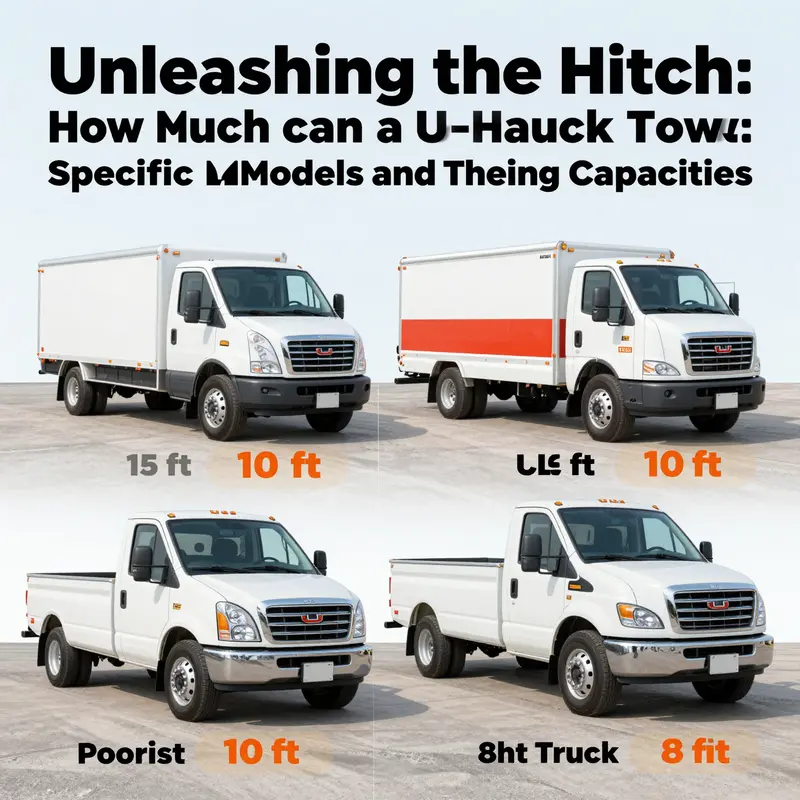
Across the common U-Haul fleet, capacities are spread over a few representative sizes to meet varying moving and hauling needs. The 10‑foot moving truck stands as the smallest of the typical cargo box fleet used for smaller moves. Its towing capacity tops out at 6,000 pounds. That’s a solid ceiling for light trailers, small boats, or a motorcycle in a trailer, but it also highlights why a longer truck isn’t simply a bigger hauling machine by default. The 15‑foot moving truck, designed for larger household moves or heavier loads, can tow up to 10,000 pounds. This increase reflects not just more robust towing hardware but also a chassis and hitch design intended to bear greater trailing mass while maintaining road manners with a larger payload inside the body.
Interestingly, the 26‑foot moving truck doubles down on capacity in ways that matter for big relocations. It is rated to tow up to 10,000 pounds as well, underscoring that the jump in box size doesn’t automatically yield a higher trailer cap for every setup, but it does provide a more versatile platform for moving bulky furniture and heavier loads while still offering the option to tow a trailer or even a separate vehicle if needed. The pickup truck, the most maneuverable option in the line, also carries a 6,000‑pound towing limit, making it a practical choice for light to mid‑weight towing tasks like towing a boat, a second car, or a motorcycle behind a compact, easily driven vehicle. Each model’s maximum tow weight is a ceiling, not a target; the real task is matching this ceiling to the actual weight of your trailer and its contents.
One of the most important frameworks to keep in mind is the distinction between towing capacity and payload capacity. The towing capacity refers to how much weight the hitch and the drivetrain are engineered to pull behind the truck. Payload capacity, on the other hand, is the maximum weight that can be carried inside the truck itself—people, gear, boxes, and any other cargo taking up space in the truck bed or cargo area. The two capacities are related, but they constrain different aspects of a move. For instance, the 10‑foot truck, while it can tow up to 6,000 pounds, also has an internal payload limit of about 2,850 pounds. The 26‑foot truck can carry up to 12,859 pounds inside. Those internal limits matter because the combined weight of what you carry inside and what you tow behind the truck must stay within the truck’s overall weight ratings and the limits of the road they travel on.
That separation between towing and payload becomes especially meaningful when you’re planning a haul that involves large items. Imagine loading the 10‑foot truck to near its 2,850‑pound payload and then attaching a trailer loaded with a heavy vehicle or a large boat. If you were to push toward the maximum tow rating of 6,000 pounds while also filling the cabin and bed, you’d be flirting with the combined weight limits that govern braking, suspension, steering responsiveness, and overall stability. The practical guidance is to treat the two limits as two lanes on the same highway rather than a single, interchangeable measure. You want both lanes to be comfortable and within the posted rules of safe operation.
To make these ideas concrete, consider how to approach a real-world loading plan. If you’re using a 15‑foot truck, and you know you’ll tow a trailer with a total trailer weight of, say, 9,000 pounds, you are already approaching the tow limit. If your plan also involves loading the truck interior with heavier items—furniture, boxes, and appliances—you’ll need to budget how much of the payload capacity you can devote to interior cargo while leaving enough headroom to keep braking and handling predictable under load. In the same scenario, using a 26‑foot truck, which shares a similar tow limit (up to 10,000 pounds), benefits from a much larger internal payload margin, but you should not assume that the extra space inside the truck automatically translates to being able to tow more or carry more without recalculating weight distribution and braking needs. The aim is to ensure that the total mass on wheels—the sum of the tow vehicle, the trailer, and everything inside the truck—remains within safe, certified limits.
A practical approach to planning is to assemble the numbers before you start loading. Obtain the actual empty weight of the truck (the curb weight) and the GVWR—the gross vehicle weight rating—from the rental agreement or the vehicle’s placard. Add your anticipated payload to estimate the total weight of the truck with cargo. Separately, determine the weight of the trailer and its cargo. The sum of these figures should be compared against the towing capacity and the payload rating. If that total nears the towing limit, reconfigure the load to reduce trailer weight or reduce interior cargo. If the total weight approaches the payload limit, shift items to a different vehicle or lighten the interior by removing nonessential items. This careful arithmetic is the difference between a smooth, controlled move and a day that becomes a struggle of braking, swerving, and anxiety on the highway.
The nature of your load also matters. Heavier, irregularly shaped items can shift during transport, changing hitch weight and dynamic stability. When you’re towing a trailer, weight distribution matters just as much as total mass. A trailer with substantial tongue weight can affect steering and braking forces, especially on hills and curves. For that reason, many operators advise keeping the tongue weight within a recommended percentage of the trailer’s gross weight—enough to keep the trailer stable without loading the tow hitch excessively. In practice, this means you may need to adjust how you distribute weight between the trailer and the truck’s bed to maintain balance and control. It’s not only a matter of staying within the numbers; it’s about maintaining predictable handling and reliable stopping power under varying road conditions.
Throughout planning, it’s essential to verify the latest specifications directly from the rental provider. Capacities can vary with the exact truck build, production year, and options installed. The most accurate and up-to-date information comes from checking the official truck details at the time of rental. When you’re finalizing a move, take the extra few minutes to confirm the exact towing and payload ratings for the specific truck you’ll be using. If you want to explore broader questions about your own vehicle’s towing capabilities, you can consult a dedicated guide that dives into the nuances of how much a given truck can tow, which can help you make an informed choice about equipment and load strategy. how much can my truck tow.
In addition to the numbers, there are practical, everyday checks that support safe towing with any rental truck. Confirm that the hitch and trailer connection are secure and that safety chains are properly crossed and attached. Ensure the trailer brakes are functioning if your trailer has them, and test the electrical connections for tail lights and brake signals. Check tires for proper inflation and tread, as overload and heat can accelerate damage and reduce control. Keep in mind that towing heavier loads will increase stopping distances; allow extra space for braking, and adjust speed accordingly, especially on grades and in adverse weather. Road handling is also a factor; a heavier load behind a large truck can amplify wind sensitivity and require steadier steering inputs. By combining precise weight calculations with a disciplined driving pace, you’ll reduce the risk of sway or instability and keep your move safely on track.
The entries above are designed as a framework for staying within safe and legal limits while achieving the goal of a successful move. They are not a substitute for the specific instructions and ratings provided by the vehicle’s manufacturer and the rental agency. Always refer to the official documentation and, if in doubt, ask for a supervisor or an experienced staff member to confirm that your planned load is compatible with the exact truck you’ll use. The aim is to carry your belongings without exceeding what the truck’s hitch and chassis can safely manage, while also respecting the payload inside the cab and bed. For many readers, this means choosing the right truck size for the job, calculating weights carefully, and leaving a margin for safety. If you want a concise refresher on how these pieces fit together, you can revisit the broader guidance on towing capacities and how to interpret them for different moving scenarios, ensuring your next move stays on solid ground.
External resource: https://www.uhaul.com/rentals/moving-trucks/
null
null
Tow Limits Unveiled: How a Common Rental Truck Balances Power, Safety, and Practical Hauling
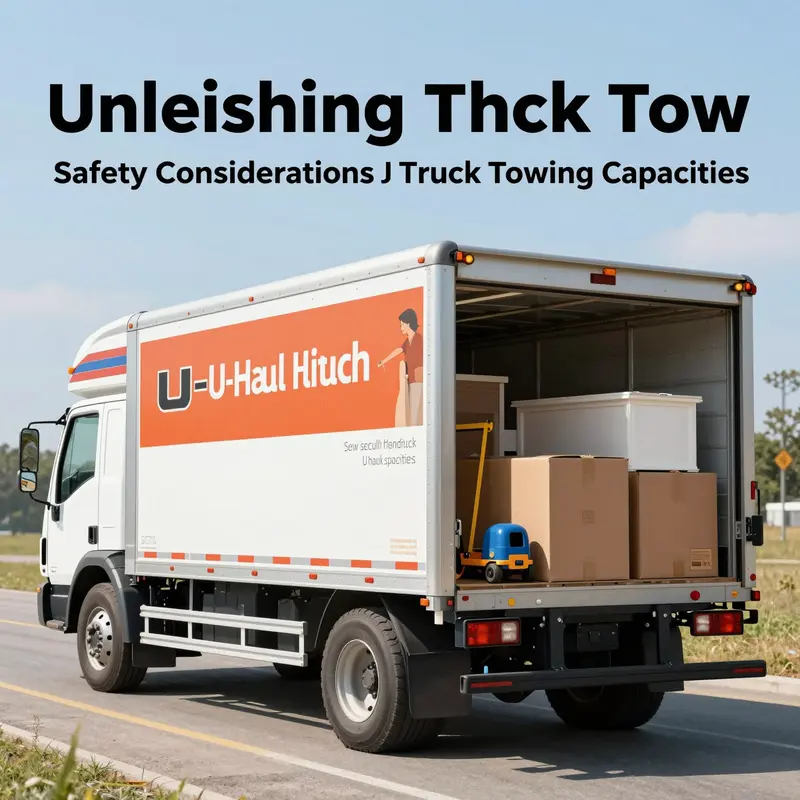
When you start planning a move or a haul with a rental truck, the key question is not simply how much it can pull, but how safely and predictably it can handle the task. Towing capacity is a ceiling defined by the model, configuration, and the weight already aboard. The official figures are useful guidelines that set the upper boundary, not a target to chase on every trip. In practice you must account for payload, ballast, and the trailer weight, because the GCWR combines the truck, passengers, cargo in the cab, the trailer, and its load into a single weight limit. Plan to stay well under that limit to maintain braking efficiency, steering response, and tire life. The three intertwined ideas are towing capacity, payload capacity, and GCWR. Towing capacity covers what the truck can pull behind its rear wheels; payload covers what the truck itself carries in the cab and on its axles. If payload is high, you may reach GCWR with a lighter trailer, so avoid packing the cab with people or gear when you intend to tow heavy loads. Before backing toward the ramp, inventory weights: trailer weight, cargo in the cab, and expected occupants. Subtract the trailer weight and its payload from the GCWR and compare to the truck’s actual towing capability. Real-world limits arise from braking, steering geometry, heat generation, and tire performance, not from a single number. A conservative approach uses a comfortable margin between the actual weight and GCWR, especially in wind, on grades, or when turning with a load. Safety guidance often pinches the plan to a maximum safe speed—many guides recommend around 55 mph while towing—to preserve control and allow for longer stopping distances. When maneuvering with a trailer, avoid abrupt steering inputs, keep turns gentle, and plan routes that minimize tight spaces and heavy traffic. Regular inspections of hitch connections, lights, brakes, and tires prevent mid-journey failures. Short trips or longer hauls both benefit from routine checks, proper trailer tongue weight, and balanced load distribution. The bottom line is that towing capacity is not a fixed, magical number; it is a ceiling that must be respected in concert with payload, trailer weight, and the GCWR. With careful planning, you can achieve safer, smoother moves by staying within limits, maintaining margins, and performing due diligence before every tow.
Tow Boundaries: Demystifying How Much a U-Haul Truck Can Tow and Why Safe Limits Matter
When people plan a move, one recurring question rises above the rest: how much can a U-Haul truck tow? The answer isn’t a single number you can memorize once and rely on forever. It fluctuates with the truck’s size, its drivetrain, the hitch system, and the trailer you plan to haul. The core idea remains simple and essential: towing capacity is the maximum weight the truck can handle safely under ideal conditions, and that limit is a ceiling, not a target. Respecting it protects you, your load, and everyone on the road. In practice, the towing capacity you’ll rely on varies by model. U-Haul’s fleet spans a range—from compact moving options to larger workhorses—and each model has its own specified limit. For commonly rented boxes, the numbers can appear straightforward at first glance: a 15-foot moving truck can tow up to about 10,000 pounds, a 10-foot moving truck up to 6,000 pounds, and an 8-foot pickup-style unit also around 6,000 pounds. These figures reflect the vehicle’s chassis, engine, transmission, braking system, and, crucially, the hitch and suspension designed to handle a trailer and its contents. Yet those numbers are not universal across all configurations. The same general principle applies to the larger, more capable 26-foot moving truck, where the official specification often marks a towing capacity up to 10,000 pounds. That limit represents what the chassis and drivetrain can manage safely when everything lines up as planned: weights distributed properly, tires properly inflated, and the trailer’s own brakes and lights functioning correctly. It is a reminder that the stated capacity is a ceiling, not a free pass to haul heavier than you should.
Beyond the numbers, the subtleties of towing with a rental truck come into sharper focus when you recognize how many variables converge at the moment you hitch a trailer. The curb weight of the truck, the exact rating of the hitch, and the trailer’s own weight—all these factors determine how much you can tow with confidence. A hitch rated for 3,500 pounds, for instance, might be paired with a trailer that pushes the practical limit well below that figure due to tongue weight, trailer braking requirements, or the distribution of weight along the trailer’s axis. This is where the practical, real-world approach matters: you don’t just sum up the numbers on a spec sheet. You build a load plan that accounts for the trailer’s gross vehicle weight rating, the trailer’s tongue weight, and how the load shifts during acceleration, braking, and cornering.
A crucial takeaway is that the trailer itself imposes a significant constraint. If the trailer has heavy tongue weight or inadequate braking, it can overwhelm the truck’s ability to stop or steer safely, even if the combined weight seems to stay within the truck’s nominal towing limit. Proper equipment matters: a weight-distribution hitch, properly functioning trailer brakes, and correctly inflated tires on both vehicle and trailer all contribute to stable handling. On the road, conditions change rapidly. A strong headwind, a long uphill grade, or a sudden lane change can alter the dynamic balance of the towing setup. The smooth, straight-line performance you might expect in a controlled environment can quickly give way to surge, sway, or unexpected braking demands when real-world factors come into play. In other words, the published towing capacity is the ceiling under near-ideal conditions, not a guarantee under any and all circumstances.
With that understanding, the practical question becomes: how do you determine the actual towing capacity for your specific U-Haul truck and trailer combination? The safest path starts with the vehicle manufacturer’s specifications and the information provided at the time of rental. The truck’s owner’s manual or the rental agreement typically includes the precise towing rating for that vehicle, reflecting both the hitch configuration and the model’s inherent capabilities. It is essential to compare that rating to the trailer’s weight, including all cargo and additional ballast. You may also need to consider the trailer’s own braking requirements and whether it has electric brakes that affect distribution of load and the truck’s braking performance. If the trailer’s gross weight exceeds the trailer’s own specifications, or if your hitch arrangement imposes lower limits than the truck’s rating, you must honor the most restrictive figure. There is no shortcut here; accuracy matters because miscalculations can translate into hazardous turning radii, longer stopping distances, or overheating of braking systems and engines. And while it may be tempting to rely on a rough rule of thumb, the prudent approach is to calculate using the exact numbers from your rental documentation and, if in doubt, opt for a lighter load or a different vehicle configuration.
The process of calculating a safe tow starts with a clear inventory of what you intend to haul and a careful assessment of how that load will be distributed. The trailer’s gross weight includes the weight of the trailer itself plus its cargo. Tongue weight, which is the portion of the load that sits on the hitch, often accounts for roughly 10 to 15 percent of the trailer’s gross weight in general configurations, though this can vary with trailer design and load placement. A trailer with excessive tongue weight can destabilize steering, while too little tongue weight can cause trailer sway. Both extremes reduce control and increase the risk of a loss of control on slippery or uneven surfaces. Therefore, the plan should ensure the tongue weight remains within the hitch’s rating and the truck’s overall towing limit. The hitch rating is a hard gatekeeper; even if the truck’s engine and transmission could potentially manage a heavier load, the hitch or drivetrain protections might cap the permitted tow weight far lower.
To bring this into a concrete frame, imagine a typical moving scenario: a large 26-foot U-Haul truck with a heavy appliance-laden trailer. If the manufacturer sets a towing capacity of 10,000 pounds for that truck, you still must verify the trailer’s gross weight does not exceed the trailer’s own rating and that the tongue weight stays within the hitch’s capacity. If your trailer weighs 9,000 pounds when loaded, the tongue weight could easily exceed 1,000 pounds, depending on how the weight is distributed. That value must be cross-checked against the truck’s allowable tongue weight, including how the hitch is rated. If the tongue weight is too high, even though the trailer total is under the truck’s gross rating, the system can become unstable, producing dangerous steering behavior and reducing braking effectiveness. The opposite risk is also real: a trailer with insufficient tongue weight can cause sway, making steering imprecise and braking distances longer as the load shifts from side to side during turns or gusts of wind. In practice, the safe towing plan is a careful balance, aligning the trailer’s weight and tongue weight with the truck’s rating and the hitch’s limits.
The practical steps to ensure compliance and safety are straightforward, though they require attention to detail. First, check the exact towing rating for your specific U-Haul model from the rental agreement or the manufacturer’s specification sheet provided at the time of rental. Second, determine the trailer’s gross weight by weighing the trailer when empty and after loading, or by using the trailer’s own rating if weighing isn’t possible. Third, calculate tongue weight by estimating how much weight sits on the hitch when loaded. Fourth, compare these figures to the truck’s published towing limit and hitch rating; if any single component is underspecified, reduce the load accordingly. Fifth, verify that the trailer has functional brakes and lights, and ensure tires are properly inflated on both the truck and trailer. Finally, practice careful driving: accelerate gradually, maintain safe following distances, plan longer braking distances, and avoid abrupt maneuvers that can unsettle a load.
The practical implications extend beyond safety. Exceeding the towing capacity can not only compromise vehicle control but also affect legal compliance and insurance. Overloading a rental truck can void warranties or affect liability in the event of an accident. This is not simply a matter of being careful; it is about meeting the obligations that come with using a rental vehicle for potentially high-risk hauling tasks. In short, capacity isn’t a badge of permission; it is a protective boundary that protects you, your cargo, and others on the road. To stay within that boundary, rely on the official, model-specific specifications and the rental documentation, then tailor your trailer choice and cargo to align with those limits.
For readers who want to explore personal and situational nuances further, a practical reference point is the broader guidance around vehicle towing limits, which explains how manufacturers calculate tow ratings and what factors can affect them in real life. While numbers can be a helpful starting place, the real value comes from translating those numbers into a responsible plan—one that accounts for the trailer’s weight, tongue weight, and the conditions you’ll encounter on the road. If you’re curious to see how a specific truck-tow equation is derived, you can explore a detailed overview in the related resource that discusses “How Much Can My Truck Tow” and how that translates to safe hauling decisions.
In summary, the capacity a U-Haul truck can tow is a function of model, hitch, and trailer design, wrapped in the condition of the vehicle and the road. The cushion between the truck’s ceiling and the actual load is where safe, efficient towing lives. By treating the published limit as a ceiling rather than a target and by aligning tongue weight, trailer weight, and hitch capabilities with that ceiling, you lay the groundwork for a moving experience that is not only efficient but also safe and compliant. The goal is not to push the truck to its maximum but to honor the system’s balance, ensuring stable handling, reliable braking, and predictable performance from start to finish. This approach—combining accurate data, careful calculation, and disciplined execution—empowers you to move with confidence, knowing you have chosen the right configuration for your cargo and your route.
For additional context on towing limits and how they apply across different vehicle configurations, see the external resource detailing official weight-tow guidelines from manufacturers and moving experts. And to explore how a truck’s towing capacity is determined in practice, you can consult the dedicated discussion that focuses on the mechanics of towing and the risks of overloading. How Much Can My Truck Tow
External reference: For a comprehensive overview of official weight-tow guidelines from the moving-truck perspective, visit the Moving Insider resource that outlines how much weight a vehicle can tow and why that figure matters for safe hauling: https://www.uhaul.com/moving-insider/how-much-weight-can-my-vehicle-tow/
Final thoughts
Understanding the towing capacities of U-Haul trucks is essential for anyone looking to transport items safely and efficiently. From the 15 ft moving truck with a towing capacity of 10,000 lbs to the smaller options, knowing what your chosen model can handle helps prevent accidents and ensures compliance with regulations. Remember to prioritize safety by adhering to towing limits and following best practices while loading. This knowledge empowers you to embark on your towing journey with confidence.