
Understanding the towing capabilities of 3-4 ton trucks is vital for everyday drivers, vehicle owners, and business professionals alike. These medium-duty workhorses strike a balance between commercial efficiency and personal utility, making them ideal for a range of applications, from towing trailers to transporting equipment. This article explores the typical towing capacities of these trucks, the factors influencing their towing power, a comparative analysis of various models, and the importance of adhering to manufacturer specifications. Each section builds a comprehensive understanding of how much these trucks can tow, allowing readers to make informed decisions whether for personal use or business needs.
Beyond the Label: Reading Tow Capacities for 3/4-Ton Trucks in Real-World Use
Tow capacity is one of those terms that sounds simple at first glance. It’s a single number, a value you can compare at a glance when you’re shopping or planning a haul. But for a 3/4-ton truck, that number is not a standalone badge so much as a relationship. It reflects how the vehicle is built, how it’s equipped, and how the trailer will interact with the road, the hills, and the weather. The better you understand that relationship, the less likely you are to push a combination into a dangerous or costly situation. A medium-duty pickup, typically classified in the 4–6 ton range by weight classes in some markets, carries a gross vehicle weight rating that can span a wide spectrum—from roughly fourteen thousand pounds up to twenty-six thousand pounds. That GVWR is the ceiling for everything the truck can carry inside the frame, in the bed, and behind the hitch. Within that envelope, towing capacity emerges as the practical number you can pull, safely, with a properly matched trailer and a setup that honors the vehicle’s design priorities: strength, cooling, transmission behavior, braking, and stability. And while the math behind a given vehicle’s towing rating is expressed as a single figure, the reality of pulling a heavy trailer is about how all the pieces work together on the road, not about chasing a theoretical maximum on a spec sheet.
To start with, it’s essential to separate the ideas of GVWR, GCWR, payload, and towing capacity. GVWR is the maximum safe weight of the truck itself when fully loaded—people, fuel, tools, and cargo included. Gross Combined Weight Rating (GCWR) adds the trailer to that equation, representing the total that the vehicle and trailer can legally weigh together. Payload, meanwhile, is the weight the truck can carry inside its cabin and bed without exceeding GVWR. Towing capacity, often the figure most readers want, is the maximum weight the hitch can pull behind the truck. Those numbers are not interchangeable; towing capacity assumes a trailer that’s matched to the truck’s design, with the correct hitch class, braking, and weight distribution. In practice, the towing rating you see published for a given truck is contingent on how the vehicle is equipped and how the load is distributed.
What does this mean in real terms for a 3/4-ton, or 3 to 4-ton, class truck? In commonly used industry language, these trucks often present a broad, useful range for towing, partially because the models in this segment can vary widely in engine power, transmission type, cooling capacity, axle configuration, and whether they offer a heavy-duty tow package as an option. The typical towing capacity for many 3/4-ton configurations lands in a band roughly from seven thousand five hundred pounds up to ten thousand pounds when they are configured for straightforward, everyday work. That’s enough to handle substantial trailers, heavy utility equipment trailers, large campers, and sizeable toy haulers, as long as the payload and tongue weight are managed, the trailer is within spec, and the terrain remains within what the engine and cooling system are designed to handle.
Yet the same family of trucks sometimes shows more ambitious numbers. When a heavy-duty tow package is installed—engine tuning that favors torque delivery, a more robust transmission setup, enhanced cooling for the transmission and the engine, and a hitch system rated for heavier trailers—the hypothetical ceiling can extend toward twelve to fourteen thousand pounds, and in rare cases even higher. These elevated figures are not typical for “every truck,” and achieving them depends on exact configuration, including drivetrain choice (two-wheel drive vs. four-wheel drive) and how the trailer is balanced. It’s also true that some specialized or properly equipped configurations, designed to perform in demanding work contexts like construction or utility service, can approach or exceed fifteen thousand pounds under optimal conditions. The key word here is optimal. Real-world towing involves more than the raw number on the sticker; it depends on how the engine breathes under load, how the cooling system dissipates heat during a long pull, and how the brakes, suspension, and tires respond as the weight grows.
That distinction matters because many owners are surprised to learn that a higher-rated curb weight or a higher gross vehicle rating does not automatically translate into a higher, usable towing figure. A truck with a big engine and a stout transmission may still be limited by cooling capacity, brake sizing, or the way its frame handles wind resistance and road irregularities when a heavy trailer is connected. Conversely, a model with a lighter payload or a less aggressive tow package might deliver strong performance in typical, steady highway towing but will quickly show its limits when the grade steepens or the trailer demands sustained braking on a long descent. These dynamics illustrate why the manufacturer’s exact towing specification must be consulted for the specific vehicle you own or intend to buy. Exceeding that rating risks overheating, mechanical failure, poor handling, reduced braking efficiency, greater wear, warranty voiding, and in the worst cases, derailment of the trailer or the tow vehicle itself.
The variation also reflects the diversity within the 3/4-ton category. The drivetrain configuration, particularly 2WD versus 4WD, can significantly influence towing behavior. A 4WD setup may aid traction on slippery surfaces and uneven ground, but it also adds weight and a small efficiency penalty. More weight over the front axle, a longer wheelbase, and a robust hitch arrangement are all factors that help stabilize a heavy trailer on the move. However, those advantages must be weighed against the vehicle’s own mass and the trailer’s weight distribution. The tongue weight, or the portion of the trailer’s weight that rests on the hitch, is a critical measure. If tongue weight is too light, steering and stability degrade; if it’s too heavy, you strip away payload capacity and can stress the hitch and frame. The trailer’s own brakes and braking force interact with the truck’s braking system; wrong balance here can lead to excessive stopping distances or trailer sway.
Even within a single truck design, the actual towing experience depends on how you load the trailer. A trailer loaded with heavy equipment toward its tongue creates a different setback than a well-balanced load with most of the weight near the trailer’s middle or rear. The effect is not just about legal compliance; it affects how the vehicle accelerates, how it holds its line in crosswinds, and how quickly it can recover once the trailer begins to sway. For contractors, landscapers, or outdoor enthusiasts who frequently move heavy cargo or large trailers, this practical knowledge becomes a daily part of operation. It informs everything from route planning to choosing the right equipment hitch, from ensuring proper ballast to preparing the cooling system for hot, long pulls. In this sense, towing capacity is not a solitary figure but a performance envelope within which safe operation occurs.
To the point about compliance and safety: the only responsible way to tow is to match the trailer to the vehicle’s published rating. If you’re considering a heavy trailer, start with the manufacturer’s stated maximum, then work backward. Ensure your engine, transmission, brakes, and suspension are up to the task, and do not overlook the importance of tires and hitch hardware that meet the load requirements. If a trailer is near or at the upper end of the rating, you should also consider the impact on fuel economy, wear and tear, and maneuverability when maneuvering in tight spaces or on uneven ground. The longer the tow, the more important trailer brakes and proper weight distribution become, particularly on descent and in cornering where momentum can outpace the vehicle’s braking system.
All of this underscores a central practical point: the numbers you read on a data sheet are useful, but only when interpreted through the lens of the specific truck, the exact trailer, and the nature of the work. The vehicle’s engine torque, transmission gearing, and cooling capacity determine how well a heavy trailer can be launched from rest or maintained on a grade. The axle ratio, tire size, and brake sizing determine how the vehicle handles and stops when loaded to the limit. A more capable engine or a more robust tow package can push the usable maximum higher, but that same configuration might also demand higher maintenance discipline and careful operator training to preserve safety and reliability over time. For this reason, even when a truck appears mechanically capable of pulling a heavy trailer, the safest and most cost-effective approach is to plan around the published rating and to verify any load beyond a comfortable margin with the manufacturer’s technical data and, ideally, with a qualified dealer or service technician.
If you want to see how these considerations translate into accessible guidance, consider consulting the vehicle-specific towing resources that discuss what a given truck can pull. For readers who want to verify a particular figure or explore how a specific setup could alter the equation, there is a practical, vehicle-wide resource that explains how to interpret tow ratings and how to apply them to real-world scenarios. You can read more about this approach at how much can my truck tow. This reference helps bridge the gap between abstract numbers and concrete planning, emphasizing that the most reliable path to towing safety is to stay within the published limits and to respect the trailer’s own capacity and braking requirements.
Ultimately, the central message remains clear and simple: the typical range for towing with a 3/4-ton class pickup is broad, but practical limits are defined by the combination of truck design, equipment, and how the load is managed on the road. Expect seven thousand five hundred to ten thousand pounds as a usable baseline for many configurations, with the potential to reach higher numbers only when the truck is specifically configured for heavy-duty towing and when the trailer and load are carefully matched to the vehicle’s strengths. Always rely on the exact manufacturer’s data for the vehicle you own or plan to purchase, and remember that keeping within these limits is the best way to preserve safety, performance, and long-term reliability on every trip.
External reference: https://www.chevrolet.com/trucks/towing-capacity
Beyond the Numbers: How the Towing Power of a 3/4-Ton Truck is Shaped by Real-World Factors
When someone asks how much a 3/4-ton truck can tow, the instinct is to look for a single definitive figure. In truth, the answer rests on a careful reading of several interlocking specifications, the choice of drivetrain, and the conditions under which the tow will happen. A 3/4-ton truck sits in the gray zone between lighter workhorses and heavier medium-duty rigs. It is a vehicle designed to haul meaningful loads across job sites, highways, and through city streets, yet it remains bounded by design limits that are spelled out in the manufacturer’s data. The gross vehicle weight rating (GVWR) for these vehicles typically falls in the mid-to-high teens of thousands of pounds, and the gross combined weight rating (GCWR)—the maximum allowed weight of both truck and trailer—belongs to a similar rung on the ladder. This pairing of ratings is not a suggestion to push toward a ceiling; it is a map for safe, predictable performance. In practice, the towing capacity you can rely on is usually in the range of ten thousand to fifteen thousand pounds when you follow the rules, with some configurations capable of approaching eighteen thousand pounds under very favorable conditions. These are numbers built from heavy-duty engineering, not marketing bravado, and they reflect the need to manage heat, braking, stability, and fatigue on the road.
To understand why the figures shift so much from one truck to the next, it helps to start with the core ratings that govern every hitch and pull. The GCWR is the primary determinant—an expansive ceiling that combines the weight of the fully loaded vehicle and the trailer it is towing. This value is not a suggestion; it is a hard limit set by the manufacturer after testing on real roads and in controlled labs. Exceeding GCWR invites sagging brakes, reduced steering response, and a higher risk of tire failure or structural stress. Alongside GCWR sits GVWR, the maximum weight the truck can carry inside its frame—people, fuel, cargo, and the vehicle’s own mass all count toward this limit. If the vehicle goes over GVWR, even if the trailer remains within GCWR, the truck loses its intended stability, and the warranty may be compromised. A careful tow plan respects both numbers, using them to discipline the load rather than to chase a headline figure.
The engine and drivetrain are the next big influence. A higher-torque engine, a robust cooling system, a stout transmission, and a well-tuned exhaust setup all contribute to higher practical towing. Equally important are the drivetrain choices: a two-wheel drive configuration tends to use less weight and sometimes delivers better payload efficiency, but it trades stability in adverse conditions for fuel economy in flat, dry scenarios. Four-wheel drive, with its added traction and a more symmetrical weight balance, often improves control when you must start, stop, or maneuver with a heavy trailer on mixed terrain. Towing with a four-wheel-drive system may be safer in rain, snow, or loose gravel, yet it can also push the gross weight closer to the upper limits due to the added drivetrain mass. When the engine is paired with a heavy-duty cooling system, reinforced frame, and upgraded brakes, a 3/4-ton truck becomes more capable of maintaining resistance to heat buildup during longer pulls or in hot climates. The day you run a trailer up a steep grade, the difference between a standard cooling package and an enhanced cooling system becomes visible in the temperatures the engine must endure and the pace at which power can be sustained.
Even the towing hitch and trailer equipment deserve a place in the conversation. The hitch rating must align with the truck’s GCWR and the trailer’s weight; a mismatch here can undermine control and braking. The type of hitch, the quality of the hitch ball, the presence of a weight-distribution hitch, and the integrity of the trailer’s braking system all influence how the load behaves behind the truck. A properly rated hitch paired with a functional brakes-on-trailer system can dramatically improve stability and stopping distance, particularly with long or tall trailers. Tongue weight—the portion of the trailer’s weight that rests on the hitch—should be considered carefully. Placing roughly ten to fifteen percent of the trailer’s weight on the hitch helps keep the trailer aligned with the vehicle and reduces sway when accelerating or braking. Too little tongue weight can cause trailer sway; too much can overwhelm the hitch and rear suspension, diminishing steering feel and increasing wear. The overall towing experience is a delicate balance of force, counterforce, and precision in weight distribution.
Yet even with the best numbers on a spec sheet, real-world performance depends on the conditions you face. Driving conditions and terrain are not combinations you can calibrate away with a switch or a dial. Climbing a long hill will demand sustained engine power and effective cooling, and hot days magnify the role of thermal management. Wind, rain, and highway gusts add lateral forces that tug at the trailer’s back end, challenging stability. Elevation changes introduce air density and engine torque dynamics that can reduce available horsepower, further stressing the drivetrain. A well-calibrated driver uses a measured pace, patient acceleration, and a steady hand on the wheel to compensate for these factors. Tire condition and inflation pressure can transform a vehicle’s handling as much as the engine’s output, especially when pulling a heavy load. The moment you notice sway, overheating brakes, or a rubbing sound in the drivetrain, you should pause and reassess the configuration rather than pressing onward for speed or time.
Inside this framework of numbers and conditions, the typical expectation for a 3/4-ton medium-duty truck becomes clearer. For many configurations designed for towing and recovery work, the practical range sits in the ten- to fifteen-thousand-pound zone when the trailer is appropriately matched, loaded within its own rating, and paired with a hitch engineered for the job. There are cases where, under optimal conditions and with a trailer that is light for its length and dimension, a higher limit might be achievable—up to about eighteen thousand pounds. Those are not universal figures and should be treated as upper bounds only for trucks that are explicitly equipped for heavy towing, with the right brakes, suspension, cooling, transmission, and hitch setup in place. The key point remains essential: the exact number for your truck is written in the manufacturer’s specifications, and it will differ between models, years, and option packages. This is why the owner’s manual and the official data from the manufacturer are not just bureaucratic paperwork; they are the essential compass for safe, compliant towing.
A practical way to approach a tow plan starts with locating the GCWR and GVWR for the specific truck you are evaluating. If the GCWR is, say, 26,000 pounds and the GVWR is 9,500 pounds, you can see there is a built-in window that defines how heavy a trailer you can pull and still remain within safe limits. To translate that into a trailer figure, you must consider the weight of the truck itself (including passengers and cargo) and the potential payload it carries on a given day. Subtract the truck’s own weight and payload from the GCWR to arrive at a ceiling for the trailer’s gross vehicle weight. From there, ensure the trailer’s own weight, including any cargo, grills down to a figure well within that ceiling. It is also essential to not forget the tongue weight and the hitch’s rating, which work in concert with the trailer to determine how much weight can be safely distributed over the hitch while maintaining stable handling characteristics. This approach—grounded in the manufacturer’s numbers and reinforced by careful weight management—produces a consistent, predictable towing experience.
A good rule of thumb for real-world planning is to assume a comfortable operating range well inside the maximums. If your GCWR allows for a maximum combined weight around twenty-six thousand pounds, you might choose to tow a trailer whose loaded weight keeps the combined mass well below that threshold. This buffer helps account for variables such as cargo shifts, weather, road grade, and the added weight of fuel, fluids, and passengers. In practice, drivers who routinely tow heavy loads make it a habit to measure, calculate, and double-check before leaving the yard. They verify the trailer’s weight at the scale, confirm the tongue weight, inspect the hitch and braking system, and test the braking response through staged deceleration in a controlled environment. The intention is not merely to meet a quota of load but to guarantee a controlled, safe, and stable journey from start to finish. When a vehicle is loaded in this manner, the towing experience feels more like a managed process than a wheeled gamble, and that mindset is the foundation of responsible towing with a 3/4-ton class truck.
For those who want a model-specific answer, the path is straightforward: consult the official data for the exact vehicle you intend to use. The chapter of a truck’s life that covers towing is not a single line on a spec sheet; it is a composite of ratings, engineering choices, and the realities of the road. If you seek a practical starting point, consider a baseline where your trailer’s loaded weight stays within a broad, safe range well under the GCWR, and your hitch and trailer equipment are matched to that range. This approach reduces the risk of overloading components, preserves braking efficiency, and keeps handling predictable in everyday driving conditions. For a more nuanced, model-specific view, you can explore resources that discuss the nuanced calculations behind towing capacity, such as practical guides that translate ratings into actionable numbers for real-world use. For a model-specific understanding, see the resource that outlines how much a given truck can tow and what factors influence that figure: how much can my truck tow.
Beyond the numbers, the central lesson is clear: towing capacity is a safety attribute as much as a performance one. Respect the ratings, balance weight distribution carefully, and ensure that every piece of equipment—the hitch, the brakes, the tires, and the trailer wiring—meets or exceeds the demands of the task. The broader takeaway is not merely a limit to respect but a framework for planning, testing, and executing a tow with confidence. When you combine solid engineering, thoughtful load management, and disciplined driving, a 3/4-ton truck can perform as a capable partner on a job site or on the highway without stepping beyond the boundaries set by design and regulation. For broader context and a deeper dive into the mechanics that bridge figures and road performance, consult the manufacturer’s specifications and the practical guidance available through specialized resources that translate technical data into real-world decisions. External references, such as the official towing guide from a major manufacturer, provide a grounded basis for planning and execution as you align your trailer, hitch, and vehicle with the road ahead. For a widely referenced external resource on towing specifications, see: https://www.ford.com/trucks/f-150/specs/towing/.
Tow Limits in the 3-Ton to 4-Ton Range: Capacity, Safety, and Real-World Performance
The question of how much a 3-ton versus a 4-ton truck can tow sits at the crossroads of physics, engineering, and everyday operational reality. In the realm of medium-duty trucks, the weight classes commonly labeled as 3-ton and 4-ton sit within the broader umbrella of Class 4–6 vehicles, encompassing a wide spectrum of chassis stiffness, drivetrain configurations, and purpose-built towing capabilities. The numbers we rely on—GVWR ranges, typical towing capacities, and the limits imposed by trailers—are not mere abstractions. They translate into what fleets, emergency responders, construction crews, and service companies can move, recover, or reposition in the field. This chapter treats towing capacity as both a technical metric and a practical guideline, always anchored to the exact specifications published by manufacturers and cross-checked with the regulatory framework that governs heavy vehicles. In doing so, we keep the conversation anchored to reality rather than to rumor, ensuring that decisions about capacity reflect both potential and responsibility.
The core framework begins with the numbers most people associate with towing: for many well-equipped 3-ton to 4-ton medium-duty trucks, typical towing capacity sits in the broad band of 10,000 to 15,000 pounds when the vehicle is properly prepared and the trailer is appropriately matched. It is tempting to see these figures as a fixed ceiling, but the truth is more nuanced. A 3-ton truck may genuinely tow closer to the lower end of that range in daily urban service, while a 4-ton model—especially one fitted with robust heavy-haul packages—can stretch toward or even beyond the upper bound under the right conditions. In some cases, with the right hitch, the right braking system, and the right trailer configuration, capacities approaching 18,000 pounds can be achieved in a controlled setting. These numbers provide a practical guide, not a license to exceed manufacturer specifications, and they underscore why spec sheets and dealer guidance matter more than quick estimates alone.
To ground the discussion, consider the structural realities that drive these differences. A 4-ton truck often arrives with a reinforced chassis, heavier-duty suspension, larger brake components, and drivetrain components designed to sustain higher stress when the vehicle is under load. The added mass of the chassis and axle assemblies translates into better heat management, more predictable tire loading, and a greater ability to maintain control as trailer weight increases. Conversely, a 3-ton truck prioritizes nimbleness and efficiency for lighter commercial tasks, such as urban moves, smaller equipment transport, or routine fleet service. The result is a portfolio of capabilities that reflect not just weight ratings but a balance of handling, braking, and reliability across typical duty cycles. The observer will notice that the gap between 3-ton and 4-ton capacities is not merely a function of a larger number on the plate; it is a reflection of how the vehicle is engineered to endure sustained pull and stopping force, how its cooling system manages heat during extended towing, and how its transmission and torque curves respond when a heavy trailer settles behind the hitch.
A crucial concept that threads through this discussion is the distinction between towing capacity and the broader metric often labeled as GCWR—the gross combination weight rating. This figure captures the combined weight of the vehicle, the trailer, and everything loaded in the trailer, all while the vehicle operates on the road. Exceeding GCWR is not a mere miscalculation; it is a risk to braking performance, steering stability, tire integrity, and the overall durability of the drivetrain. It is a reminder that the “capacity” of a truck is not a single static number but a composite of how the truck and trailer interact under real-world driving conditions. In practice, a technician’s or operator’s job is to verify that the intended load remains below GCWR for the specific truck, trailer, hitch setup, and road conditions. This is where the manufacturer’s specifications, the vehicle’s actual configuration, and the operator’s professional judgment converge to define safety margins that cannot be safely bypassed.
The practical implications of the 3-ton versus 4-ton difference extend beyond raw weight. They ripple into dynamics, traction, and controllability. A 4-ton configuration, particularly when paired with a capable drivetrain such as a robust transfer case or a proven heavy-duty axle arrangement, tends to deliver more predictable braking response under heavier loads. The added mass in the front and the increased reserves in the braking system help resist fade during long descents or when stopping a loaded combination after a long pull. The driver’s sense of confidence can grow as the weight climbs, but so does the importance of attention to trailer tongue weight, weight distribution, and hitch integrity. Tongue weight, the downward force the trailer exerts on the hitch, becomes a critical factor in maintaining steering control and avoiding trailer sway. A misbalance can magnify any instability, particularly at highway speeds or in crosswinds. As such, the decision to push toward the upper limit of capacity should be accompanied by careful attention to trailer design, hitch rating, and load distribution protocols that keep the system within safe operating margins.
From an operational perspective, the 3-ton and 4-ton distinction also affects recovery capabilities. In recovery or emergency-wrecker roles, where the ability to tow or recover larger vehicles matters, the difference can dictate the choice of equipment. A 4-ton setup with a winch rated for higher loads—often in the ballpark of ten tons—affords a broader range of recovery scenarios. Such a configuration can handle SUVs, mid-size trucks, or other heavy assets that might require careful, controlled pulling or loading onto a service body. The 3-ton counterpart, while capable of handling substantial tasks, may encounter practical limits when the target approaches or slightly exceeds 6,000 pounds, especially if the recovery involves uneven terrain, winching disequilibrium, or additional resistance. In these contexts, the capacity gap translates into fewer compromises during critical operations and a more flexible response to real-world demands. Operators are thus wise to consider not only the weight of the towed load but the likelihood of encountering adverse conditions that demand reserve power and controlled restraint.
Beyond raw load and recovery specifics, the economics of choosing between a 3-ton and a 4-ton truck deserve attention. Heavier trucks naturally consume more fuel, incur higher maintenance costs, and require larger parts inventories and more specialized service. Yet the long-term calculus often tips in favor of the heavier option for businesses that experience frequent heavy-duty tasks. Fewer interruptions, lower downtime due to overworked equipment, and enhanced reliability under sustained use can offset higher purchase prices and ongoing operating expenses. The total cost of ownership, in this view, depends on the frequency and severity of heavy loads, the typical route conditions, and the predictability of service windows. A fleet that routinely meets or surpasses the lower end of the 10,000–15,000-pound range may discover that the 4-ton platform provides a more stable operating envelope, reducing the instances of near-limit performance or the need to pair with multiple trailers, additional tractors, or back-up units. Conversely, for lighter but high-volume urban work, a 3-ton configuration can deliver economical efficiency with adequate capacity for the majority of daily tasks.
The story above is not just about weight numbers; it is about how those numbers fit into a broader system of safety, efficiency, and regulatory compliance. The Federal Motor Carrier Safety Administration provides the official framework for classifying and weighing commercial vehicles in the United States, and the guidance there emphasizes that real-world performance must be anchored to the exact vehicle and trailer configurations in use. Operators and fleet managers should verify the precise GVWR, GCWR, and hitch ratings for their specific units. They should also assess the condition of brakes, tires, suspension, and steering—the critical interfaces between a loaded vehicle and its wheels. For any operator contemplating a higher-than-average load, a pre-operation check that includes weight distribution, hitch integrity, and trailer brake compatibility becomes not just prudent but essential. The aim is to preserve control, protect brake systems, and avoid escalating wear that could snowball into safety concerns or warranty disputes. In practice, this means treating capacity figures as a safe operating envelope rather than a hard ceiling, and tailoring decisions to the realities of day-to-day use rather than theoretical maximums.
In conversations with fleet managers and technicians, a common theme emerges: the choice between 3-ton and 4-ton is rarely about a single trip but about a pattern of work. If the majority of tasks involve heavy equipment, utility trailers, and multiple loads, the 4-ton platform often proves to be a wise investment. It provides headroom for heavier trailers, improved braking resilience, and a margin that supports safer operations in less-than-ideal conditions. Yet when the workload is dominated by urban moves, small machinery, furniture, or light payloads, the 3-ton model can offer substantial value in fuel efficiency, maneuverability, and lower upfront cost. The decision, therefore, becomes a balance between the frequency of heavy-duty tasks, the tolerance for risk at higher weights, and the strategic aim of minimizing downtime while maintaining reliability.
For readers seeking to translate these considerations into actionable planning, one practical step is to examine how a given truck would fare under typical transport scenarios. A straightforward approach is to assess the trailer’s gross weight, ensure compatible hitch ratings, and confirm that the combined load remains within the GCWR. This practice forms the backbone of safe operations, ensuring that the vehicle’s capacity is not merely theoretical but a real, enforceable parameter that protects drivers, infrastructure, and equipment. As you weigh the numbers, remember to account for dynamic factors such as road grade, wind, temperature, and payload distribution in the trailer. Each element can tilt the effective capacity by a meaningful margin, especially when cornering or braking is required on a slope or during a sudden stop. The upshot is clear: capacity is not a fixed ceiling carved in stone; it is a practical capability, shaped by how the truck, the trailer, and the environment interact under load.
To tie the discussion back to the core question—how much can a 3-ton truck tow compared with a 4-ton truck—the answer remains contextual. In purely numerical terms, a 3-ton truck often targets a safer, more economical range around 10,000 to 13,000 pounds for daily work, with maxima near 15,000 pounds under optimal conditions. A 4-ton truck generally extends the practical envelope toward 12,000 to 15,000 pounds, with potential peaks near 18,000 pounds when everything aligns perfectly, including hitch strength, trailer design, and road conditions. But the real value lies in understanding how these figures reflect the vehicle’s design philosophy, the operator’s needs, and the regulatory guardrails that safeguard every mile towed. The difference is not merely about pulling power; it’s about the confident ability to manage heavier loads with controlled handling and reliable stopping power, all while preserving equipment and ensuring compliance. For those seeking a concise reference that translates these ideas into an actionable towing plan, a dedicated resource on towing capacity can help illuminate the practical implications of the numbers. How Much Can My Truck Tow offers a focused lens on translating capacity into real-world decisions without compromising safety.
As the chapter closes, the takeaway centers on alignment. The right choice—whether 3-ton or 4-ton—depends on the frequency of heavy-duty tasks, the typical trailer size, and the environment in which the vehicle operates. It requires a disciplined approach to weight management, verification against manufacturer specifications, and a commitment to safety margins that protect people and assets alike. The conversation about tow limits is ongoing, evolving with advances in chassis design, braking technology, and trailer engineering. Yet the core principles remain stable: know the precise ratings, respect GCWR, distribute weight thoughtfully, maintain critical components, and never treat capacity as a mere maximum to flirt with. For those who want to pursue the topic further through regulatory context, the Federal Motor Carrier Safety Administration offers authoritative guidelines that help frame practical decisions within a national standard.
External resources can deepen understanding of how classifications inform everyday use. To explore the regulatory landscape and the official weight classifications that underpin these capacity discussions, consult the FMCSA guidelines at https://www.fmcsa.dot.gov.
Tow Limits in the 3–4 Ton Range: Reading Capacity, Real-World Performance, and What It Means for Heavy Towing
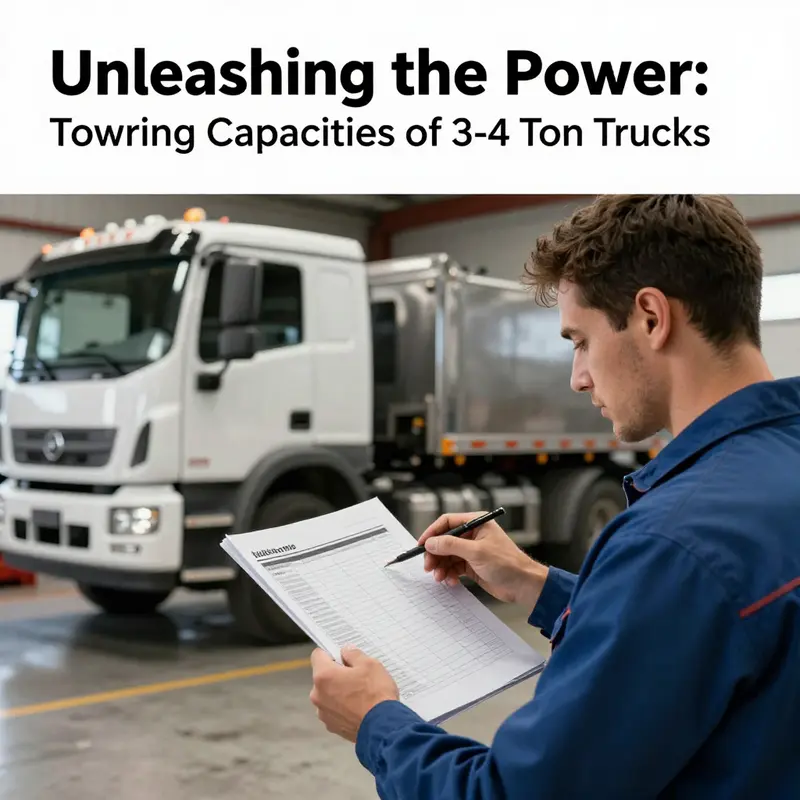
When people ask how much a 3–4 ton truck can tow, they are really asking about the edge of a very specific balance. These vehicles sit in the middle tier of commercial and heavy-duty capability, where a single vehicle can be pressed into service for highway towing, skid-steer recovery work, or on-site trailer transport, yet must still protect the integrity of the powertrain, chassis, and braking system. To answer this question clearly we must move beyond a single number and instead understand how the capacity is defined, how the number is derived, and what conditions push the towing limit toward or away from the edge of safety. The broad takeaway remains consistent: most medium-duty trucks in this class can tow substantial loads when properly equipped and when the task is within the manufacturer’s published specifications. However, the exact number is not a universal constant; it shifts with engine power, drivetrain layout, hitch configuration, and even the way the trailer is loaded and braked. That variability is not a flaw but a reflection of how these machines are designed to operate across a spectrum of heavy-duty tasks, from utility and construction to recovery and fleet service.
To begin, it helps to ground the discussion in what “3–4 ton” typically means in the context of towing capability. In many markets, the designation corresponds to vehicles with gross vehicle weight ratings that place them in the medium- to heavy-duty range of Class 4–6, with a GVWR often stretching from roughly 14,000 pounds up to around 26,000 pounds. This range mirrors the reality that a single model line can be configured for vastly different missions: a more road-focused setup with lighter payload, or a more robust configuration with heavy towing and recovery gear. The towing capacity published by the manufacturer takes into account the trailer’s weight, the hitch, and the mechanical limits of the drivetrain. Yet the published capacity is not a free-floating target; it is the maximum under controlled conditions that assume optimal engine heat management, proper ballast distribution, and a trailer that matches the truck’s braking and steering capabilities.
From a practical standpoint, a good rule of thumb is that medium-duty trucks in this category can tow roughly 10,000 to 15,000 pounds when properly equipped. In certain configurations, with upgraded cooling, reinforced suspensions, and specialized tow packages, that figure can edge toward 18,000 pounds under especially favorable conditions. While these numbers provide a useful frame, they must be interpreted with caution. Exceeding the published limit can compromise not just performance but safety and warranty coverage. The safest approach is to treat the manufacturer’s specification as a ceiling rather than a target, and then assess whether the requested trailer weight aligns with the vehicle’s actual capability given the planned operating conditions.
One of the most important distinctions to keep in mind is the difference between the truck’s towing capacity and its GCWR—the gross combined weight rating. The GCWR is the total allowed weight of the vehicle plus the trailer when they are connected and moving. The practical effect is clear: the more payload you carry in the truck itself, the less weight you can safely tow. This interplay is central to real-world towing. If the truck is carrying tools, equipment, or passengers, that payload is subtracted from what remains available for the trailer. For example, a truck with a generous payload capacity but a modest engine and gearing will shed some of its towing headroom to carry the extra mass of cargo and fuel. Conversely, a lighter payload and a strong drivetrain can deliver more towing headroom for a given trailer. The calculus also shifts depending on whether the vehicle uses a single rear axle configuration or a dual rear axle, a distinction that can materially affect both payload and towing performance.
Another layer of complexity comes from drivetrain layout. A four-wheel-drive configuration, common in work-oriented trucks, tends to reduce towing capacity slightly when the full range of power is directed toward traction rather than propulsion. However, four-wheel drive adds traction and control in challenging conditions—an essential attribute for off-road or slick-surface towing. The trade-off is not merely a loss in peak capacity; it is a gain in reliability and control that is often worth the trade for professional applications. The chassis, suspension, and braking system likewise influence the practical limit. Heavy-duty trailers require robust braking systems and properly matched tow packages that integrate with the vehicle’s electronics, transmission cooling, and axle lubrication strategies. If the trailer’s weight is near the upper limit, any deficiency in braking efficiency or heat dissipation becomes more pronounced, potentially compromising control during long descents or emergency maneuvers.
The human factor cannot be overlooked. Towing is as much about technique as it is about raw power. The distribution of weight on the trailer, known as tongue weight, shoulders a portion of the trailer’s mass on the hitch. Too little tongue weight can lead to trailer sway and a loss of control; too much can overload the hitch and the rear suspension. Ensuring correct weight distribution requires careful planning, a properly rated hitch, and, when necessary, auxiliary braking or coupling devices that can maintain stable steering and braking response. The alignment of the trailer’s axle configuration with the truck’s own axle layout also matters. A mismatched setup can reduce effective braking leverage and increase stopping distances, turning what might have been a straightforward highway tow into a more hazardous operation.
For those who want a concrete frame of reference, consider how numbers appear in typical industry practice. In many discussions of 3/4-ton class trucks—the vehicles most often compared in consumer guidance—the maximum towing capacity often falls in the 12,000 to 17,000-pound band when the engine, transmission, and hitch are matched to the task. This band can expand with optional packages that improve cooling, suspension, and towing electronics, but expansion has its limits. It is worth noting that the presence of a heavy-duty tow package can sometimes push a truck’s official rating higher, but only if the entire system—engine cooling, transmission, drivetrain cooling, and braking—can sustain the load over the duration of the trip. These details underscore a simple but critical point: the published maximum towing capacity is not an invitation to exceed it with impunity. It is a cap that depends on the rest of the system being in good condition and configured for heavy use.
To translate these guidelines into a practical planning process, begin with the trailer you intend to tow. Obtain the trailer’s GVWR and the gross vehicle weight rating for the trailer itself, so you know the total towed mass you are dealing with. Then compare this figure to the truck’s GCWR and towing capacity for the chosen engine and drivetrain configuration. If you plan to operate near the upper end of the capacity, verify that the trailer’s braking system is proportional to its mass and that the towing setup includes a hitch rated for the load plus any required commercial-grade coupling devices. A fundamental step is to consult the owner’s manual or the manufacturer’s official towing guide. These sources lay out precise limits for each configuration and explain how different options affect overall capability. For readers seeking configuration-specific guidance, practical resources like how-much-can-my-truck-tow can help translate the numbers on a spec sheet into ground-truth estimates for a particular vehicle and trailer combination.
Beyond the numbers, there is a broader operational perspective. The question of how much can a 3–4 ton truck tow also depends on the mission profile. If the aim is to move heavy loads over long distances, the emphasis is on reliability, heat management, and safety margins rather than sheer peak capacity. The cooling system for the transmission and engine, the stability of the suspension under load, and the quality of the braking system all come into play. For short-range tasks, precise alignment and adequate tongue weight might take precedence, and the same truck that can perform a 12,000-pound tow in steady highway conditions could excel at a lower, safer weight within the same configuration if you anticipate frequent stops, inclines, or variable roadway conditions. The takeaway is that capacity is a function of context: the specific truck, its configuration, the trailer, and the environment all interact to determine what can be accomplished without compromising safety or durability.
In the end, the most reliable path to understanding a particular truck’s towing capability is to start with the numbers on the manufacturer’s spec sheet and then validate them against the realities of your intended application. The spec sheet provides the official ceiling, the conditions under which that ceiling is applicable, and any caveats about payload and GCWR. Your own use case—payload in the bed or cab, the drivetrain options, the presence of a tow package, the type and condition of the trailer, and the terrain—will determine how close you come to that ceiling. It is a spectrum rather than a single fixed value, and the best approach blends a cautious planning mindset with precise equipment choices to ensure the operation remains within safe and sustainable limits. When in doubt, opt for a smaller trailer, a more conservative load, or a configuration with enhanced cooling and braking systems. This conservative approach preserves the longevity of the vehicle and preserves the safety margins essential for any heavy-tow operation.
For readers building a mental model of what is feasible, think of the towing capacity as a target that must be matched to the overall system’s health: engine torque, transmission integrity, brake performance, and payload allowance. The question of “how much can a 3–4 ton truck tow?” becomes a question about the system’s ability to sustain a given load under real conditions, rather than a simple arithmetic exercise. The most practical answer is: it depends, but with the right configuration and prudent planning, a vehicle in this class can tow substantial loads—well into the range often seen in heavy-duty work, recovery, or fleet operations—without compromising safety or reliability. As a rule of thumb, aim to stay within the mid-range of published capacities and always verify with the exact vehicle’s official documentation before pulling any trailer near the upper limits.
External resource: For authoritative numbers and configuration-specific guidance, consult the manufacturer’s towing guide. See https://www.ford.com/trucks/f-250-super-duty/ for an example of how a major manufacturer presents these specifications and options, understood here as a general reference rather than a recommendation for any single model.
Final thoughts
In summation, understanding the towing capacities of 3-4 ton trucks is crucial for optimal utility, safety, and efficiency. Whether you’re considering these trucks for personal use or business purposes, knowledge of their capabilities, influenced by various factors, ensures the selection of the right vehicle. Always consulting manufacturer specifications enhances safety and performance, enabling drivers to tow responsibly and effectively. Recognizing the right truck for your needs not only amplifies your capabilities but also secures your investments with reliability in towing operations.