
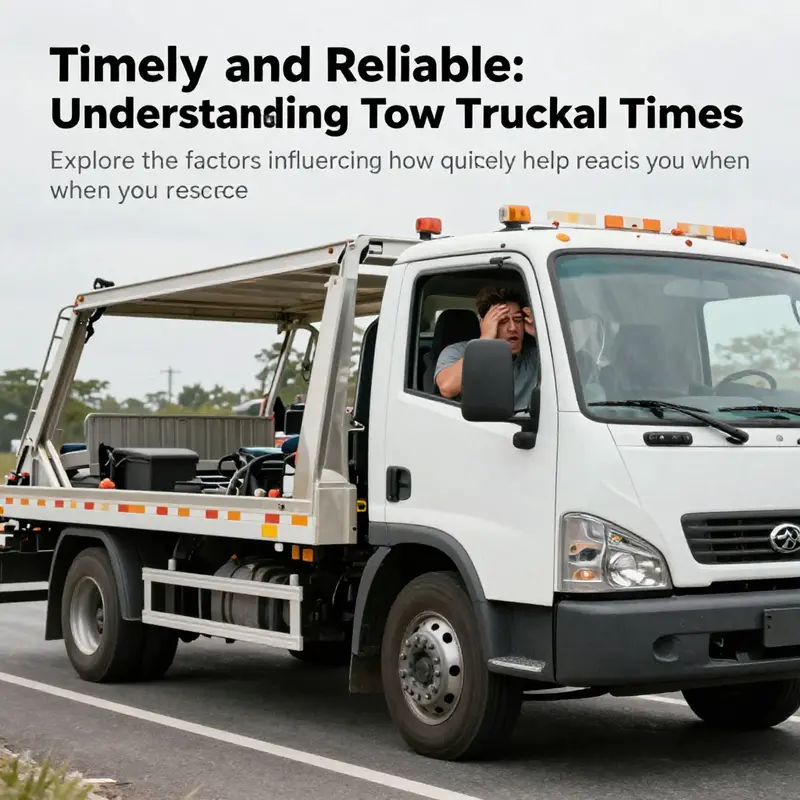
Understanding how long it takes for a tow truck to arrive is crucial for everyday drivers, residents, truck owners, and property managers alike. This knowledge can alleviate stress during roadside emergencies and expedite vehicle recovery, making it highly applicable across a range of scenarios from minor breakdowns to major accidents. The time it takes for a tow truck to arrive varies, influenced by factors such as the surrounding environment, geographical location, and the technological tools available to service providers. This article will delve into these differing aspects, beginning with how arrival times differ in urban, suburban, and rural settings before examining the specific factors affecting response times. We will also explore how location can affect the speed of service, and finally, we’ll review how technology enhances the process, ensuring a quicker and more efficient response when you find yourself in need of towing services.
Across Cities, Suburbs, and Countryside: Interpreting Tow Truck Arrival Times in Different Environments
When a vehicle breaks down, the clock becomes a quiet adversary. The minutes stretch as you wait on the roadside, lights blinking in the rearview mirror, gravel crunching beneath tires, and no clear sense of when help will arrive. In moments like these, arrival time is not just a statistic but a lifeline. It informs decisions, shapes plans for the rest of the day, and frames your sense of safety. The reality behind those ETA figures is more nuanced than a single number; it depends on where you are, what kind of incident you’re facing, and how dispatch systems interpret the map in front of them. In practice, most roadside services provide an estimated time of arrival based on the nearest available provider and real-time traffic data. The logic is straightforward on the surface: dispatch the closest, available driver, route them along the fastest path, and adjust as conditions change. Yet the actual experience of that ETA can look very different depending on location and circumstance, even when the same underlying process is at work.
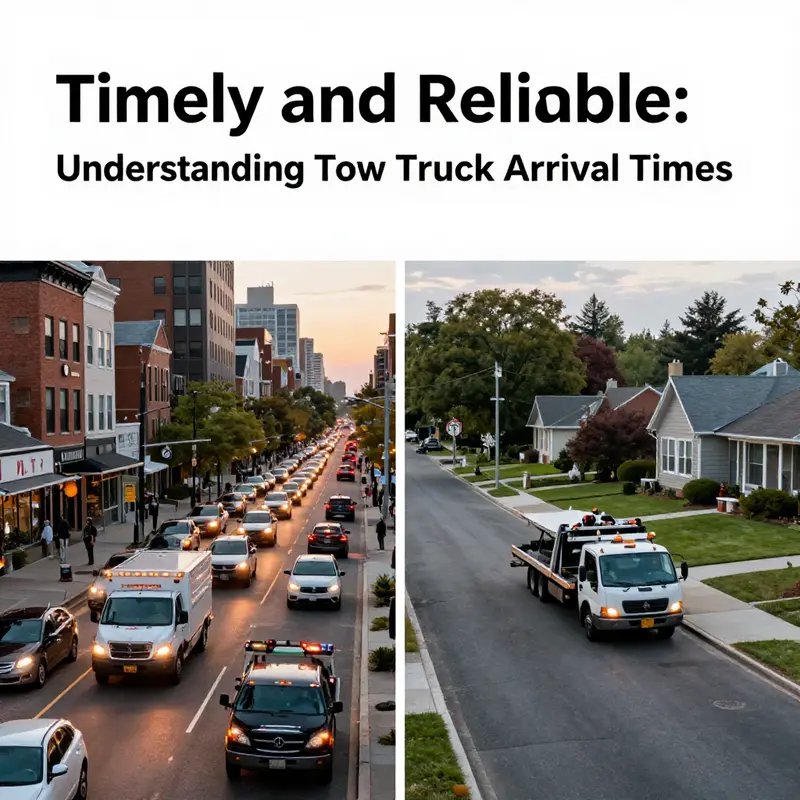
Urban spaces offer a different rhythm of towing requests than rural landscapes. In cities, a typical arrival window often lands somewhere between 15 and 30 minutes, though that range is not a guarantee. The reasons are practical. A dense network of towing companies, quick access to major corridors, and a high concentration of emergency responders mean more drivers are nearby and ready to respond. Drivers familiar with intricate street layouts, one-way streets, and frequent traffic pattern changes can maneuver through congestion more efficiently. When a call comes in, the dispatcher can pull from a larger pool of nearby units, so a tow can shift from a distant option to a nearby pickup in a matter of minutes. The advantage of urban proximity is compounded when the incident is straightforward—minor breakdowns, accessible vehicles, and flat terrain—where a straightforward tow can be executed with minimal detour and rapid dispatch. In practice, the urban window can compress further during peak demand times, when the sheer volume of calls strains even robust networks, but even then the density of service providers often keeps the average within a relatively tight band.
In suburban zones, the countdown to arrival tends to sit somewhere between urban speed and rural patience. Typical windows of 30 to 60 minutes reflect a transitional landscape: the infrastructure and service density are present, but the geography stretches out enough to introduce meaningful variability. Suburban areas sit at the intersection of residential road networks and commercial corridors. The same practical advantages that speed urban responses—multiple nearby service options and drivers familiar with the area—still apply, but the distance from the dispatch center to the incident site can be longer. Suburban neighborhoods often present a mix of street configurations, from grid-like patterns to winding cul-de-sacs, which can influence navigation efficiency. If the breakdown occurs on a major road near a commercial hub, the arrival can hover toward the lower end of the range; if it happens deeper in a housing development or on a slower connector road, the ETA may drift toward the higher end. In many communities, the goal is to balance quick response with the safety considerations of leaving a vehicle on a busy roadway or on a shoulder, which can add a few extra minutes in the interest of caution.
Rural and remote areas introduce a different arithmetic altogether. Here the typical response time can stretch to 45 minutes or more, and sometimes beyond an hour, depending on the terrain, weather, and the distribution of service providers. The landscape itself shapes the timing: longer travel distances, sparser fleets, and fewer nearby depots all contribute to longer waits. A tow that travels in from a distant town must contend with winding backroads, limited daylight hours in winter, and the possibility of obstructed routes due to weather or road conditions. In these conditions, the dispatcher’s job becomes a matter of prioritization and logistics as much as a matter of proximity. If an incident involves an emergency or hazardous placement, such as a vehicle in a dangerous position or on a steep slope, the response is elevated, and the ETA may reflect the added precautions and staging required. Routine breakdowns in rural areas, though, can result in longer lead times simply because the available pool of tow trucks is smaller and the drive from the depot to the site covers more ground.
The times above are not arbitrary numbers carved in stone. They are educated estimates derived from what the dispatch system knows at the moment of booking and what it infers from the current road network. The process begins the moment you tap to request roadside assistance. A signal travels to the dispatch platform, which marks your location, considers the device’s last known coordinates, and calculates the quickest path for the nearest eligible tow truck. The calculation weighs the vehicle’s current position, travel time to your location, and the expected time to secure the vehicle and complete the tow. Real-time traffic data plays a pivotal role, as gridlock, accidents, or road closures can throw a wrench in the works and push the ETA forward. Modern dispatch ecosystems increasingly provide live tracking so you can watch the tow unit move toward you, receiving updates as the driver makes progress. The ability to visualize the journey not only cultivates a sense of transparency but also helps you plan safety steps in the meantime—parking away from flowing traffic, staying visible with hazard lights, and keeping children and pets safely staged away from the roadway.
The availability and speed of a tow response are also shaped by the type of vehicle and the nature of the breakdown. An urgent towing situation—such as a vehicle that has come to rest in a dangerous position after an accident or a vehicle on a steep slope that could pose risks to nearby traffic—receives top priority in most networks. In such cases, responders are dispatched with a sense of immediacy, sometimes bypassing routine queues to ensure the hazard is mitigated quickly. In contrast, a routine mechanical failure on a quiet rural road may be queued with longer wait times, as the dispatcher balances resource allocation with safety and efficiency. This prioritization explains why the same app-based ETA can feel differently appropriate in separate call contexts. The system doesn’t simply move the nearest tow truck to your curb; it also makes decisions about safety, access, and the best way to protect people on or near the roadway.
Another layer of nuance comes from weather and environmental conditions. It is not merely the driver’s skill or the GPS path that determines arrival, but also the road conditions that engineers and meteorologists predict will shape travel. Heavy snowfall, ice, flooding, or landslides can render certain routes impassable or dangerous. In such circumstances, even a well-positioned tow truck can be forced to reroute, wait for plow clearance, or deploy a different vehicle type better suited to the terrain. Mountainous terrain adds another variable: switchbacks, steep grades, and reduced visibility can extend travel time and require cautious, slower driving. In flat, dry urban core areas, even a few minutes of delay can become noticeable when a driver must navigate a dense grid; on the other hand, in washed-out rural lanes, every mile becomes a careful calculation, and a longer ETA may simply reflect prudent caution rather than inefficiency.
The role of technology in shaping expectations cannot be overstated. GPS-enabled dispatch, live-tracking features, and dynamic ETA recalculation have transformed roadside assistance from a hopeful promise into a measurable, observable process. While the core logic remains rooted in proximity and available resources, real-time data streams make the ETA a live narrative rather than a fixed timestamp. Drivers can be redirected mid-route if a quicker option emerges, and the system can reallocate capacity in response to sudden demand spikes. Yet even with this sophistication, the ETA is only as accurate as the data feeding it. Traffic conditions can abruptly shift, a driver might encounter an unexpected roadblock, or a unit may be diverted to a more critical incident. For the person waiting on the shoulder, the ETA remains a best estimate, a directional compass rather than an exact clock. The experience thus blends technology, geography, and human judgment into a single, evolving timeline. To appreciate the full picture, it helps to consider the different dimensions of the waiting experience—the environment you are in, the nature of the breakdown, and the moment-to-moment updates that arrive through the app or platform you’ve used to request help.
What does this mean for someone who wants to be prepared? The practical takeaway is simple: treat the ETA as a guide rather than a guarantee, and use it to plan your immediate actions. If you’re in an urban area with a tight ETA window, position yourself safely away from traffic, keep the vehicle’s hazard lights on, and have a charged phone ready to receive updates. If you’re in a suburban setting, you might still be within reach of a quick response, but you should be mindful of the potential for detours around local congestion or construction. In rural ground, where the ETA may lengthen, it makes sense to carry a small emergency kit, stay alert to weather advisories, and have a backup plan for shelter or assistance if you’re stranded for longer than expected. Acknowledge that the arrival time is a collaborative estimate among the driver, the dispatcher, and the evolving road conditions; the more information you provide about your situation—such as whether the vehicle is blocking a lane, whether there are injuries, or whether you have children or pets with you—the more the system can optimize the response.
Beyond the numbers, there is a human dimension to the waiting experience. The dispatcher personifies coordination, balancing multiple incidents while keeping you informed. The tow driver embodies expertise, reading road signs, navigating unfamiliar streets, and executing the maneuver that will bring your vehicle back into service or safely off the shoulder. In this dance of timing, the environment becomes a partner, shaping each move with its own rhythms. A clear understanding of how arrival times differ by environment can ease anxiety and help you respond in ways that protect your safety and that of others around you. It also invites a more measured expectation: the ETA is a direction, not a verdict. The more you know about the factors that influence it, the more you can anticipate the possibilities and stay prepared for the journey ahead.
As you prepare to share the road with tow services, consider the digital tools that accompany modern dispatch. If you encounter a delay courtesy of traffic or weather, you may see a shift in the ETA, a reflected change on the live-tracking display, and a new update from the system. The transparency is valuable, but it also places a responsibility on you, the stranded motorist, to remain calm, to follow safety guidelines, and to communicate clearly with the dispatcher if your needs change. In the long arc of an average roadside incident, the practical truth is that arrival times are shaped by location, demand, and environment as much as by the speed of the vehicle once it leaves the depot. The more you understand these dynamics, the better you can use the information you’re given to stay safe and to make well-timed decisions about your immediate steps and longer-term plans.
For those who want to explore the mechanics behind the dispatch architecture a little further, a useful window into the topic is available through resources that discuss the broader principles of GPS-enabled safety systems and the evolution of dispatch logistics. These discussions illuminate how proximity, traffic, and priority categories interact to produce the ETA you see on your screen. They also highlight why a single number can never tell the full story of a tow response, especially when environmental variables loom large. In the end, the goal is not to chase a perfect minute-by-minute forecast, but to navigate the uncertainty with clarity, safety, and the sense that help is near, even if it is still on its way.
Internal link to related technology and safety context can be helpful here for readers who want to dive deeper into how dispatch systems and driver workflows support faster, safer tow responses. See the discussion on Tow Truck Technology and Safety for a broader look at the tools and protocols that underlie modern roadside assistance.
External perspectives can also offer practical guidance on what to expect during a roadside call. A reputable external overview describes how callers can interpret and respond to ETA updates, what kinds of information to share with dispatch, and how to stay safe while waiting for assistance. For a broader understanding of roadside service expectations, you can consult the external resource at https://www.roadside.com/what-to-expect-when-you-call-a-tow-truck. This resource helps frame the waiting period as part of a coordinated system designed to minimize risk and restore mobility as efficiently as possible.
The Waiting Hourglass: How Proximity, Traffic, Weather, and Service Quality Shape Tow Truck Arrival Times
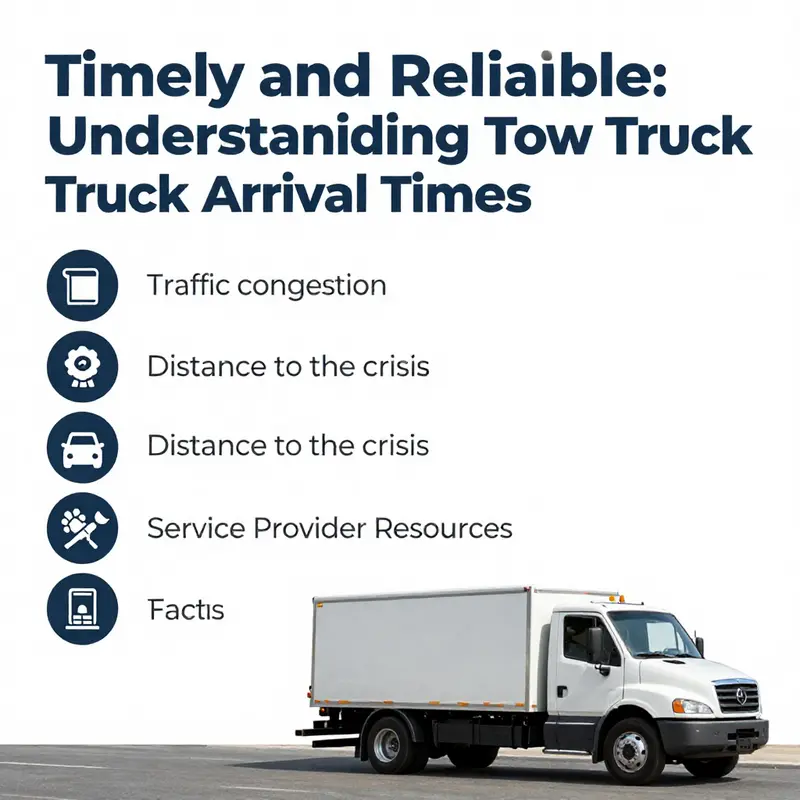
On the roadside, the moment you realize help is on the way is rarely the only thing you remember. The minutes stretch differently for every caller, not because someone is keeping score, but because the arrival time of a tow truck is a dynamic equation. It blends geography with real-time conditions and the operational capabilities of the service provider. The visible element is the ETA you receive after you request roadside assistance, but the reasons behind that ETA run far deeper than a single number. In modern systems, the ETA is calculated from the nearest available unit and the current flow of traffic, then adjusted for known contingencies. When the dispatcher taps into the live map, a unit is assigned not merely by distance but by the most efficient balance of distance, possible detours, and the likelihood of delays. The typical promise many reputable services make—an arrival within 30 to 60 minutes in most locations, with faster response in urban areas—reflects a broad consensus in the industry rather than a universal guarantee. Even so, those numbers are not blindly optimistic; they rest on a lattice of factors that can accelerate or slow a response by as little as a few minutes or as much as several hours. For travelers who depend on a clear sense of timing, this variability is both a practical reality and a manageable risk, especially when the service offers live tracking and timely notifications that help you stay oriented while you wait.
At the heart of the ETA is a simple truth: proximity matters, but it is not the only determinant. A tow truck’s closest station might be on a major roadway with a direct route to you, yet if traffic is snarled or weather turns adverse, that advantage can evaporate quickly. Conversely, a unit located a little farther away may still arrive promptly if it benefits from smoother traffic conditions and open roads. The underlying algorithm used by services like the XTowTruck platform emphasizes the nearest available service provider in real time, but it also factors in traffic conditions that can shift in a heartbeat. This is why, even within a brief window, you may see the ETA update as the map reflects new information—accidents, construction zones, or a sudden weather change can re-route the truck or throttle its speed. The result is an arrival time that is as much about space as it is about timing, and a reminder that the moment you request help is the moment you subscribe to a living forecast rather than a fixed moment in stone.
The practical impact of distance becomes immediately tangible once you consider how the landscape around you shapes the journey. In dense urban cores, the math often tilts toward faster arrivals, provided the driver can thread the needle between lanes, manage intersections, and avoid the occasional bottleneck that characterizes city streets. The density of rescue stations and dispatch centers in metropolitan areas gives you a higher probability that a nearby unit will be able to respond quickly, sometimes shaving minutes off the clock. In those settings, the industry has learned to couple a tight geographic footprint with a robust dispatch network, so the difference between a 20-minute response and a 40-minute one is often down to a matter of how smoothly the vehicle moves through traffic rather than the distance alone.
In contrast, remote stretches of highway or rural back roads introduce a different set of pressures. The nearest rescue point might still be relatively close on a map, but the terrain—long open stretches, switchbacks, or sections with limited cell service—can complicate the picture. A unit may have to travel over less-than-ideal roads, and detours may become necessary if weather or road conditions deteriorate. In those contexts, arrival times commonly extend beyond the 60-minute mark, especially if the incident involves a more complex mechanical issue or if there are multiple vehicles to assist. The app-based ETA attempts to buffer these uncertainties by pulling in data from multiple nearby units and projecting the most efficient path given current conditions. Still, the real-time nature of the operation means a traveler should expect variation and prepare accordingly.
Traffic, perhaps the most visible daily variable, often becomes the hinge upon which ETA swings. The rules of the road are stricter when a tow truck is chasing time, because safety remains paramount. During peak hours, the sheer density of vehicles can slow even priority responders who are given the right of way in principle. In such cases, the ETA can creep upward as the driver navigates merges, lane changes, and the occasional lane blockage due to an accident or spill. Holidays, weather-related events, and large public gatherings can intensify these dynamics, turning a typical urban arrival into a longer vigil. By contrast, late-night hours, when highways are more open and traffic is light, frequently yield noticeably shorter waits. The app’s ability to monitor live traffic conditions in real time becomes a crucial ally here, translating a broad urban trend into a moment-to-moment update that can reassure you even as you wait.
Weather, with its capricious mood, enters the scene as a corrective lens that can sharpen or blur the ETA. Heavy rain, sleet, snow, fog, or high winds impose a dual constraint: safety and speed. Reduced visibility and slick surfaces force drivers to slow and to size up routes with caution. Where weather is severe enough to trigger closures or detours, the ETA can lengthen abruptly, and the sequence of dispatches may shift as alternative routes are opened or closed. Even when weather does not close a road, the overall pace of the response slows. A storm can degrade a rescue team’s ability to perform roadside work safely, and that caution is reflected in both the assigned unit and the projected arrival time. The result is a sobering reminder that the ETA is a moving target, responsive to external forces that are beyond any single dispatcher’s control. In calm conditions, the same route might offer a near-linear journey; in a thunderstorm, that line becomes jagged and uncertain.
The chart of factors that shape arrival time is incomplete without acknowledging the operational muscle of the rescue service itself. A company with a larger fleet, more dispatch know-how, and better distribution of recovery assets can compress waiting periods, especially when demand spikes. The contrast between a well-resourced service and a smaller operator becomes most evident during busy periods, when a high volume of calls strains any system. On the insurance or roadside-assistance side of the business, the promise of arrival within a given window—such as 45 minutes in major cities and 60 minutes in smaller towns—reflects not only policy but the practical capacity to balance demand with supply. The efficiency of the dispatch network, the speed and reliability of the trucks, the maintenance of the fleet, and the ability to assemble the right equipment for the job all feed into the final ETA that reaches your screen. When the incident demands more than a single vehicle—say, a rescue with injuries or a scenario requiring a crane, winch, or specialized equipment—the clock ticks differently, and the arrival time becomes a function of coordination with other emergency services as well as the towing unit.
Then there is the complexity of the incident itself. A simple tire change or basic jump-start may be resolved by a single tow truck and can proceed with a clean, straightforward plan. A multi-vehicle collision, however, introduces a host of additional tasks: securing the scene, ensuring passenger safety, possibly coordinating with law enforcement, and sometimes deploying more specialized tools. Each added layer of complexity extends the time needed to reach and secure the situation. In these moments, the ETA reflects a careful balance between urgency and safety, with the dispatcher and the responding crew weighing the best combination of resources to protect lives while attending to property.
A central takeaway from this constellation of influences is that arrival time is not a single fact but a composite narrative shaped by distance, traffic, weather, provider capacity, and incident severity. This is why real-world guidance often emphasizes not just a number but a process: book the service, watch the ETA evolve with live updates, and listen for confirmations as the driver signals progress. The presence of live tracking—where you can see the tow truck’s location on a map in real time—and push notifications that announce arrivals transforms a potentially anxious experience into a transparent one. If you have the means, providing precise details about your surroundings—landmarks, gate codes, or access instructions—helps the driver move quickly once the vehicle is en route. A small preparatory effort on your end can translate into meaningful time savings for the responder and, more importantly, for your own safety and peace of mind.
For a deeper look into how technology underpins these operations and helps keep you and your crew safe, you can explore tow truck technology and safety. This shift from a purely mechanical task to a data-informed process is part of a broader trend in road assistance, where digital tools align with on-the-ground expertise to improve outcomes for drivers, passengers, and responders alike. While the chart of variables will always include the unpredictable, the industry’s aim is to tighten the gaps between expectation and reality, turning the waiting hourglass into a more predictable, safer, and more tolerable experience.
In the end, the arrival time hinges on a dynamic set of conditions that can shift as quickly as a weather front or a traffic jam does. Proximity matters, but it is only the opening move in a longer play. Real-time data, fleet capacity, weather, and the severity of the incident all join to determine when a tow truck will reach you. The guiding principle remains straightforward: there is no universal standard for an arrival time. Instead, there is a spectrum, with most calls resolving within a reasonable window, and occasional situations extending beyond it. Understanding this helps set expectations and keeps the focus on safety, service quality, and the practical steps you can take to facilitate a faster, smoother response when you need it most.
External reference: https://www.transportation.gov
Regional Realities of Tow Truck Arrival Times
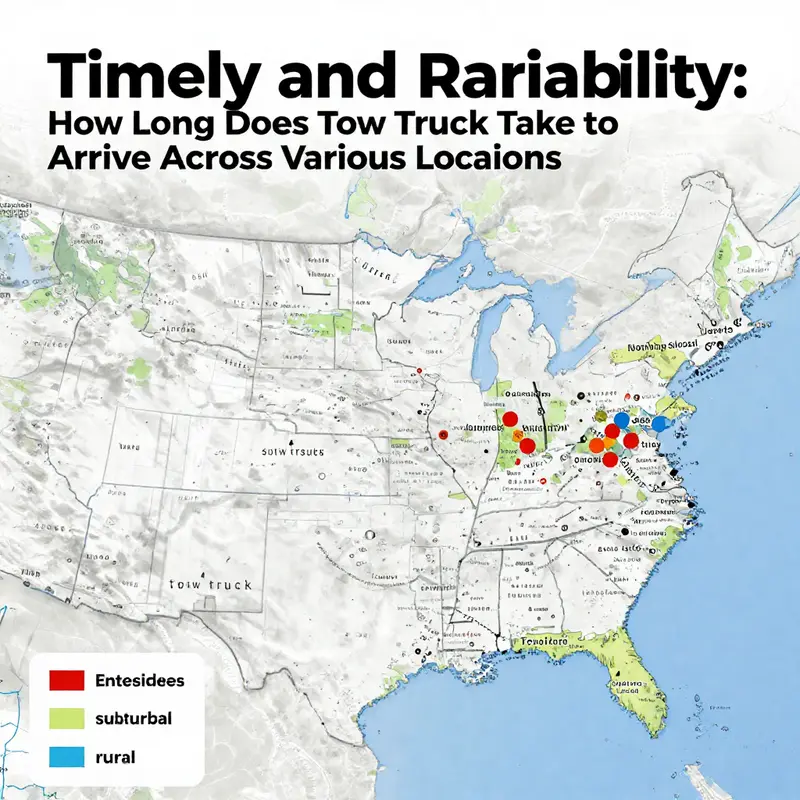
Tow truck arrival times vary by region, weather, and the density of local fleets. This chapter examines how these factors shape expectations for drivers in urban, suburban, and rural settings. It is not a single number but a moving estimate that adjusts in real time as conditions change.
In cities with dense provider networks and integrated dispatch, ETA windows can tighten, often falling within 15 to 30 minutes during peak hours when nearby trucks are ready to move. Proximity matters, but so does dispatch efficiency and coordination with traffic authorities. When resources are plentiful and the road network is well managed, customers can watch progress and receive updates that reduce uncertainty.
In rural areas, greater distances between providers tend to widen the window. The ETA might stretch toward 45 minutes or longer, especially if incidents occur on secondary roads or far from a main service center. Here, shared regional partnerships and cross-county arrangements help to improve access, but the geography itself remains a limiting factor.
Weather can stretch or shrink these estimates. Snow, ice, heavy rain, or fog slow travel and may trigger prioritization rules that affect queue length. In adverse conditions, even a nearby tow can take longer than usual as crews navigate hazards and maintain safety.
The most reliable expectation comes from real-time information. Many services offer live tracking and status updates, which help customers plan around the ETA and decide on safety steps while waiting. A clear line of communication—sharing location, conditions, and changes to the ETA—reduces frustration and improves the overall experience.
Riding the Clock: How Technology Accelerates Tow Truck Arrivals
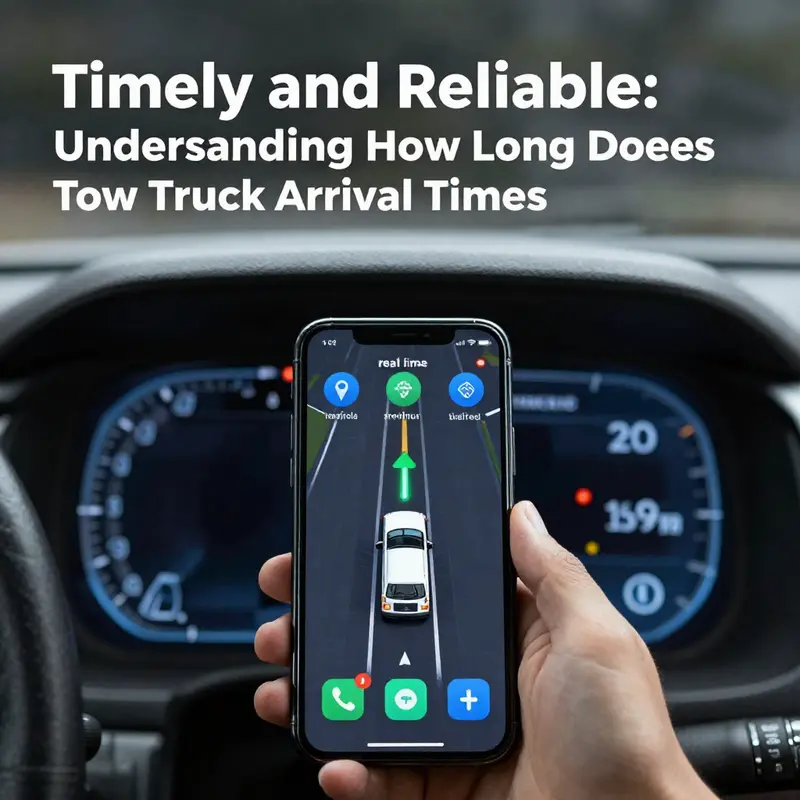
When a vehicle breaks down or is involved in an incident, every minute counts. From the moment a roadside assistance request is placed, a system blends human skill with digital precision. Historically, tow times depended on chance—the nearest driver, the road, the hour. Today technology reshapes the landscape, turning a potentially nerve wracking wait into a transparent, predictable process. The core promise is simple: get help quickly and reliably. Tech makes that promise real through data, location awareness, and smart decision making that starts when a request is placed and continues until the tow truck arrives.
The dispatch engine sits at the center of this shift. A service request triggers a search for the nearest qualified unit and an assessment of live road conditions. Proximity is not the only factor: driver availability, required equipment, and current job priorities matter. If two trucks are equally near, the one with fewer outstanding tasks or the one that can arrive with the least disruption may be chosen. This is a real time computation that adapts to traffic, weather, and incidents. The resulting ETA reflects a dynamic landscape rather than a fixed map. In dense urban fleets response times shrink because multiple options are weighed and a vehicle can be rerouted en route. In rural settings there are fewer choices and conditions can extend waits.
The ETA is an evidence based projection drawn from live traffic feeds, historical patterns, and the capabilities of the dispatched vehicle. It updates as roads close, weather shifts, or new information arrives. The model also accounts for service type, since a heavy tow or a winch out can affect arrival time and route. The forecast is a window that remains adaptable, balancing precision with the ability to adjust on the fly. Customers receive updates that are informative rather than ceremonial, helping them plan around the disruption.
Real time vehicle tracking gives you visibility. You can follow progress on a map, receive notifications as the unit nears, and know the corner where the driver will meet you. This visibility gives you agency in a stressful moment and supports accountability, as delays or detours feed back into the system to improve future ETAs. The live tracking also helps drivers by providing the fastest approach to the scene.
Intelligent dispatch goes beyond simple proximity. It weighs job type, equipment needs, traffic, and urgency to minimize wait times while preserving service quality. The result is a plan that balances speed with reliability and can reassign units if a more urgent call appears nearby. The upshot is a more predictable experience for customers and a slight but acceptable variance in earliest arrival when necessary.
The human element remains essential. Dispatchers and drivers are augmented by the system, not replaced by it. Local knowledge and unforeseen circumstances are still valuable, and the best systems preserve space for professional judgment. Real time updates and accurate ETAs reduce uncertainty and help customers adjust plans with confidence.
Transparency reshapes the relationship among drivers, dispatchers, and customers. Seeing the route, ETA window, and live location turns a tense moment into coordinated action. If delays occur, the system logs the reason and communicates it as an update to help customers adapt. This accountability and clarity matter when time is scarce.
As technology matures, the same data can be layered with weather, events, and resource planning to anticipate spikes in demand. While not universally deployed yet, the trend is toward smarter, proactive positioning of resources. Most customers still measure success by simple metrics: how soon is the tow arriving, can I see it on a map, and will I receive timely updates. The overarching promise remains steady: technology aids dispatch and navigation to shrink the gap between expectation and reality.
No approach eliminates delays entirely. Remote locations, severe weather, or complex incidents can stretch ETA windows. The strength of the system is how it communicates evolving status through a steady stream of updates and candid explanations. When people understand why delays occur, they stay engaged with the process rather than become frustrated by silence.
For deeper understanding, industry literature offers context on how technology changes towing response times and what practices help reduce delays. If you want to explore how the digital backbone translates into on the ground gains, you can read more about the general principles and evolving techniques in that overview.
In practice, to make the most of these advances, provide precise location details, including cross streets and landmarks, and a clear description of your vehicle position. If your surroundings are unusual, such as a gated community or a rural property, include access codes or gate instructions. If the ETA changes, share any new information about accessibility or hazards so the algorithm can refine routes and plans. Remember that the technology is there to support trusted professionals who secure the scene and complete the tow safely. Your patience, combined with data driven guidance, is what makes the difference between a frustrating wait and a smoothly coordinated recovery.
The intersection of technology and tow response times continues to mature as GPS accuracy, data fusion, and dispatch heuristics improve. The arrival experience is likely to become even more consistent, with tighter ETA windows and better live tracking. If you want to dive deeper, external resources provide broader perspective on the topic while internal resources offer context on safety and how these systems protect people and vehicles.
The goal remains simple: reduce waiting time without compromising safety, so you can get back on the road with confidence and clarity, even in the most inconvenient moments.
Final thoughts
In conclusion, understanding the time it takes for a tow truck to arrive is key for anyone who drives or manages properties. From urban centers to remote locations, recognizing the factors that influence response time can help drivers prepare for emergencies and make informed decisions about roadside assistance services. With advancements in technology making tracking and estimating arrival times more accurate, the future of towing looks promising. Drivers can feel more assured knowing they have access to reliable data and timely assistance when needed most.