
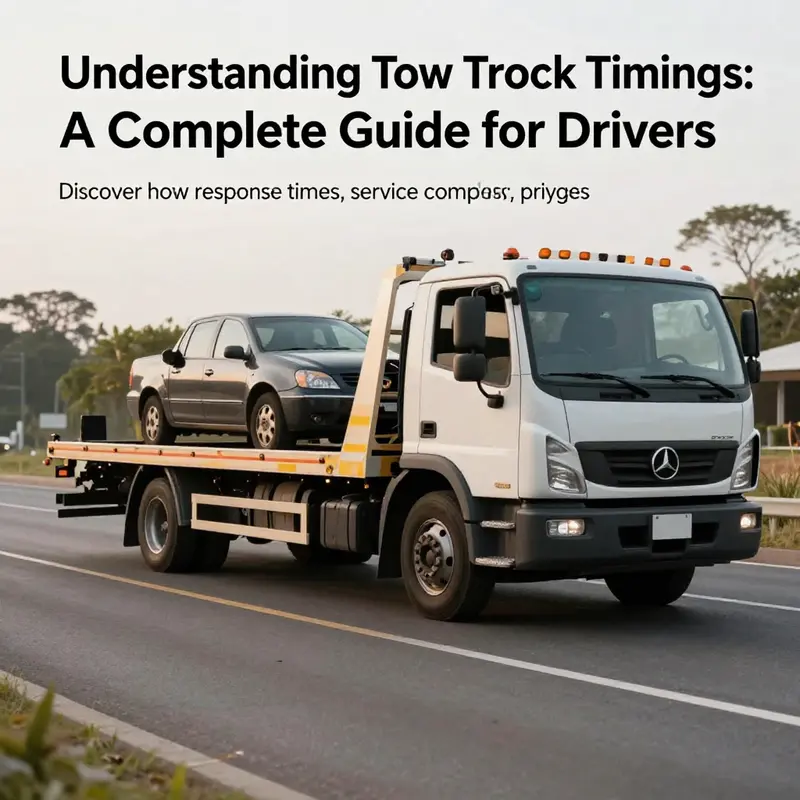
Tow trucks are essential services, especially when unexpected vehicle breakdowns occur. Every driver knows the sinking feeling of being stranded on the road, but how long can you expect to wait for help? The time it takes for a tow truck to arrive and tow your vehicle can fluctuate widely based on various factors. From urban density and the complexity of the towing job to the specific types of tow trucks and traffic conditions, understanding these elements will give you a clearer picture of waiting times. This guide delves into the intricacies of how long it takes for a tow truck to arrive and complete its job, outlining the critical aspects that every driver, vehicle owner, and property manager should know.
The Clock on the Road: Decoding Tow Truck Response Times and the Real Wait
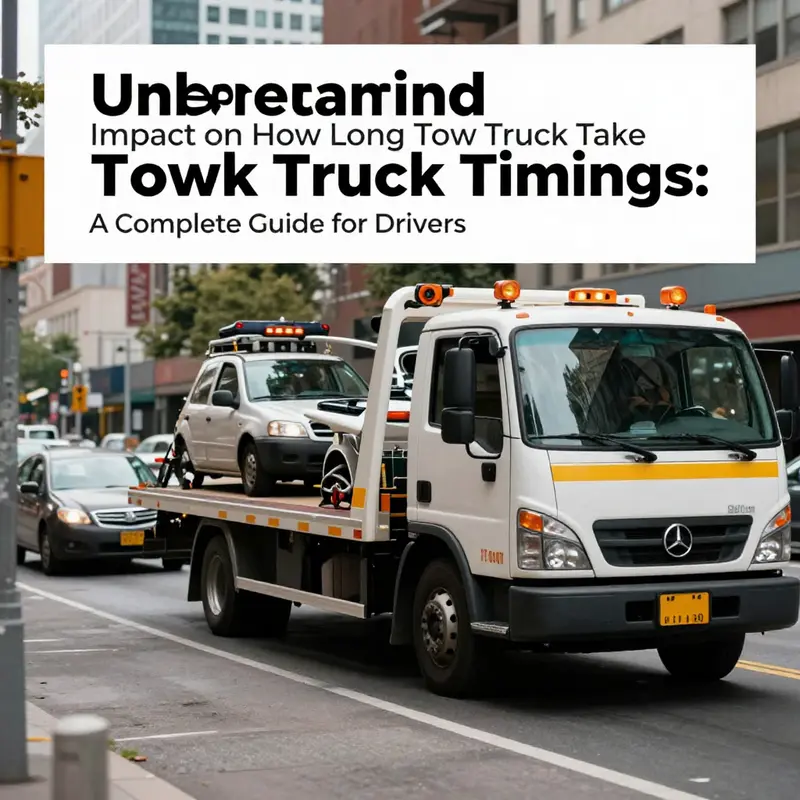
When you place a call to a tow service, you’re not just asking for a vehicle to move from one street to another. You’re entering a dynamic system where time is both an input and a constraint. The moment the dispatcher takes your information, a chain reaction begins: the nearest available unit is identified, a route is charted, and an expectation takes shape—an ETA that is as much a prediction as a promise. Yet the clock never stops ticking from that first ring. Response time, the primary moving target in towing, is influenced by a web of variables that shift with each mile and with the moment the call comes in. Understanding these factors helps you interpret the clock better, and it can also help you shape the conditions that reduce your waits where possible. In this sense, the timing of a tow is less about a fixed formula and more about a set of contingent realities that unfold once you reach out for help.
Location is the most visible driver of how long you will wait. In dense urban areas, where there are more trucks and more routes to take, the initial dispatch can be quick. A well-coordinated network can often place a unit on your curb in minutes—think of the many shops and independent operators that line bustling streets, ready to respond to sudden needs. Even so, urban response times are not guaranteed to be short. The very density that makes towing possible also creates competition for units during peak hours. When demand spikes—for example, during a storm, after a major accident, or during holiday travel surges—the time from call to arrival can stretch. In these moments, the clock might show 15 minutes, 30 minutes, or more, depending on how many incidents the area is juggling and how quickly drivers can be routed through traffic and around hazards.
Rural roads tell a different story. Narrow lanes, longer distances between service providers, and sparser dispatch footprints conspire to push response times higher. A single available unit miles away can translate into several more minutes, or even an hour, before a truck reaches you. The limitation is not only distance but also the number of nearby services with capacity to respond. When incidents cluster—perhaps on a long stretch of highway or in a remote corridor—resources are stretched thin, and those delays compound. The result is a simple truth: in less populated areas, you’re more likely to experience longer waits, especially if weather or road conditions further complicate travel.
Another layer comes from traffic conditions themselves. The road surface you see from the curb may be calm, but the route a tow driver must navigate can include heavy congestion, roadwork, or detours. Even a short distance can become a longer journey if an accident creates a bottleneck or if a storm closes several lanes. Weather magnifies this effect. Rain, sleet, snow, or ice not only slow the tow driver but can also make loading a vehicle more technically challenging, particularly if the vehicle is in a precarious position or if the ground is slick. In these cases, the same unit that could have arrived quickly ends up taking a bit more time to maneuver safely and complete the job without causing further risk.
Urgency itself is a formal variable that affects the speed of response. Calls classified as high priority—vehicles blocking traffic, hazards at intersections, or incidents with potential safety implications—tend to receive faster attention. Dispatch centers are oriented to minimize risk and maximize safety, and they will often reallocate units as the situation evolves. A vehicle left unattended in traffic or an obstruction that threatens pedestrian or driver safety will trigger a higher-priority response, potentially speeding up the arrival while also changing the routing and the time to complete the job once the unit arrives.
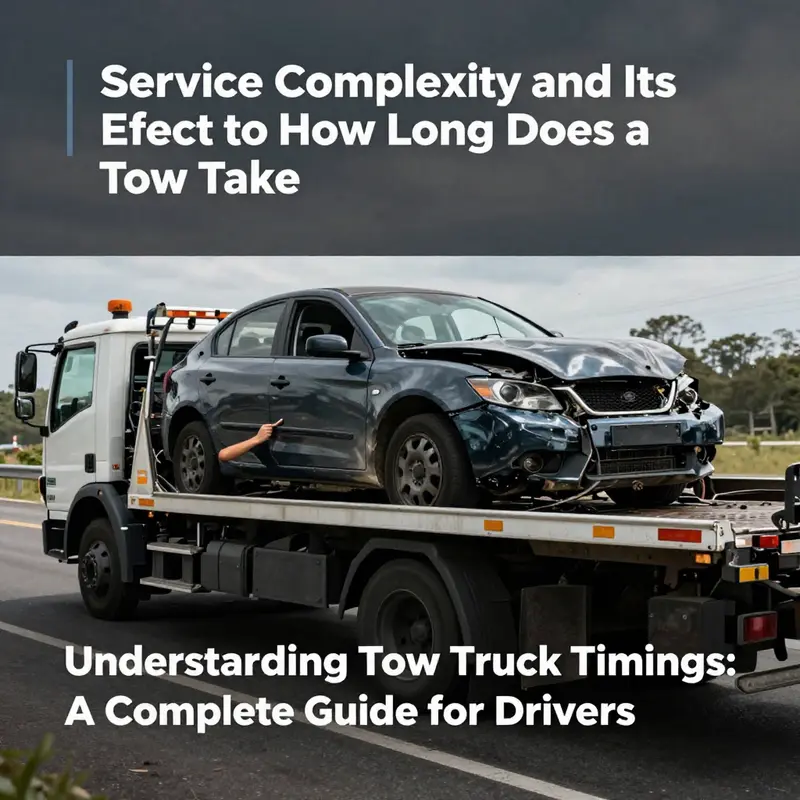
The type of service requested changes both the arrival time and the overall duration of the job. A simple roadside tow from the shoulder to a nearby repair shop is usually faster than a complex recovery. A wheel-lift or flatbed tow might be sufficient for a straightforward hitch and haul, but setting up the equipment, especially a flatbed that must be positioned, secured, and loaded, can add minutes to the process. More complicated recoveries—vehicles stuck in mud or snow, vehicles involved in an overturn, or instances requiring winching and careful stabilization—bring additional steps, risk management, and time requirements. Each added procedure, from securing the scene to stabilizing a tilt, adds up. In short, the more technical the job, the longer the total time from the moment you call to the moment you arrive at your destination.
Distance to the intended destination also shapes the timeline. A short tow from a roadside location to a nearby shop may take a single dispatch cycle, a brief drive, and a quick hookup. But a long-distance tow—say, several miles to a preferred facility—can multiply the time. The driver must account for fuel, rest breaks if needed, road restrictions, and potential stops along the way, all while maintaining safety standards. Even when the vehicle arrives quickly, the drive to the drop-off point can extend the overall time significantly. That is why a good operator provides both an arrival estimate and a separate projection of total duration given the distance involved and the nature of the tow.
Beyond the mechanics of the tow itself, the very act of dispatch shapes the numbers you’ll see on the clock. A dispatch system is a live map of availability, proximity, and anticipated traffic conditions. Some centers use GPS-based routing to optimize the nearest feasible unit and to propose the quickest path around congestion. Others rely on seasoned judgment honed by years of on-the-ground experience. Either way, the goal is the same: minimize dead time, maximize safety, and keep you informed with a realistic sense of when help will arrive and, later, when the job will be finished. That predictability matters as much as speed because it reduces anxiety and helps you plan the next steps after you’re back on the road.
An important distinction often overlooked is the difference between arrival time and total service time. You might see an ETA of 20 minutes and a note that the tow is “on the way.” That 20 minutes is only for the truck to reach you. The clock continues after the truck arrives, as the operator connects, secures, loads, and transports your vehicle to the destination. Even in the best cases, that post-arrival phase can take a meaningful chunk of time, especially if the destination is far or if the vehicle requires careful handling. The simplest tow could be completed within an hour once the unit arrives; a more complex recovery or a long haul can stretch into multiple hours if conditions demand.
This is where the user’s role matters. Providing precise location details, noting accessibility constraints, and sharing any hazards at the site can shave minutes off the dispatcher’s estimate. A stubborn parking cone, a muddy shoulder, a vehicle partially blocking a lane, or a vehicle with a damaged tire that must be stabilized before loading—all these factors can push a job’s duration beyond the initial expectation. Clear communication about the incident’s specifics helps the driver form an accurate plan before arriving. The better the pre-call information, the more realistic the ETA and the smoother the operation once the unit pulls in.
For readers curious about the mechanics behind dispatch and how to interpret the information you’re given, there is a broader conversation to be had about the role of technology in speed and safety. Dispatch software, real-time route optimization, and integrated status updates are not magic; they are optimized processes built to reduce idle time and to guide drivers through the safest, most efficient routes. The idea is to balance rapid arrival with careful handling, because rushing at the wrong moment can create additional hazards and costs. If you want to explore how these systems work in more depth, you can consult resources that discuss tow-truck technology and safety in greater detail, which delves into the way dispatch, routing, and on-scene protocols shape every tow.
In practical terms, the best way to set expectations is to seek clarity at the outset. Ask for an ETA to the curb and a separate estimate for the total job duration once the vehicle is in the carrier. If you’re in a situation where every minute matters—say you’re at the end of a workday, or you’re coordinating pickups for a fleet—note the distance to the destination and any constraints on where the vehicle can be loaded or parked. The more you know, the more you can plan around the clock that’s ticking.
If you want to investigate how dispatch tech and safety considerations influence response times in a more structured way, see the discussion linked here: tow-truck technology and safety.
As a practical takeaway, expect a quick arrival in many urban areas, but be prepared for longer waits in rural zones or during peak congestion. Understand that the total time to complete a tow is not fixed to the moment the truck arrives; it extends through loading, securing, transport, and unloading. When you call, provide your precise location, describe any hazards, indicate accessible entry points, and confirm the drop-off facility. If possible, consider having a preferred destination in mind, but remain flexible if the dispatcher suggests a closer, safer, or faster alternative. In this way, you and the tow operator work as a coordinated team, aligning your needs with the constraints of the road, the gear on the truck, and the reality of the clock.
For readers seeking a broader, external reference on the reliability of roadside assistance and how to interpret official guidelines, you can consult a well-established resource that outlines the infrastructure behind these services.
External resource for broader context: https://www.aaa.com/roadside-assistance
null
null
Timelines on the Roll: How Different Tow Trucks Shape Arrival and Towing Time
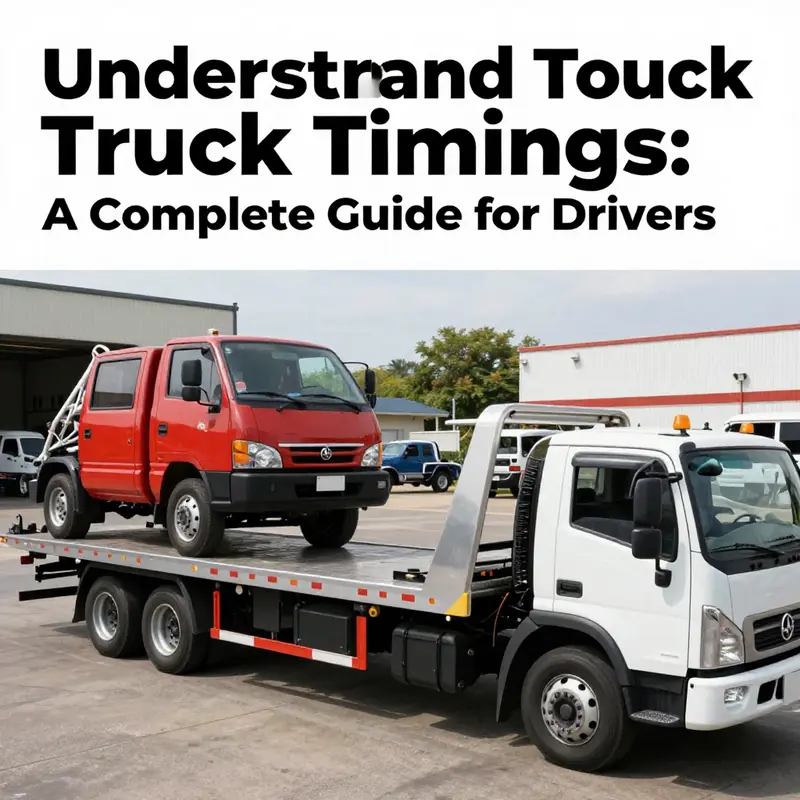
When a vehicle breaks down or is involved in an accident, the clock starts ticking the moment you place the call for a tow. Yet the seconds and minutes slide by with a stubborn variability that can feel almost personal. The time from dialing the number to watching the tow truck pull away with your vehicle in tow depends on a web of interlocking factors. The simplest way to think about it is to picture a logistics chain where the kind of tow truck is only one link among many. The type of service you request, the geography of your location, the traffic surrounding the scene, the vehicle’s condition, and the distance the tow crew must travel all converge to determine not only when help arrives but how long the entire operation will take. In practice, you may experience a brisk, hour-or-so turnaround in a dense urban area when the call center can dispatch a nearby unit with minimal delay. In rural settings, or during a major weather event that floods the roads with calls, the same task can stretch into several hours. Understanding why requires a closer look at the different tow truck configurations and the unique demands each one is built to meet. The goal is not to promise a precise minute but to illuminate how different setups influence the pace of rescue and recovery in real time. A practical rule of thumb emerges from the chatter of the field: a straightforward roadside tow to a nearby destination tends to be quicker than a complex recovery on a remote shoulder or a vehicle requiring transport over a long distance. This distinction—simple versus complex—often tracks the type of tow equipment involved and the additional precautions that job demands.
Flatbeds, wheel-lifts, hook-and-chain rigs, and the more specialized recovery machines each bring a different rhythm to the process, and the difference is not merely about the vehicle being towed. It is about the setup time, the risk calculus, and the mechanics of securing the load so that the trip to the destination proceeds without incident. A flatbed tow truck, for instance, is designed to place a whole vehicle onto a bed, which protects paint, frame, and alignment. But that protection comes at a price: the process of aligning the bed, lowering it to the ground, winching or driving the vehicle onto the platform, and then retracting the bed into position can add minutes—sometimes a chunk of minutes—before the vehicle is secured and ready for transport. In contrast, a wheel-lift or crane-style unit, which hoists a vehicle by its wheels, can be faster for operable cars with accessible wheels but may be limited by the vehicle’s weight, wheel configuration, or damage to run-flat components. The choice is not arbitrary; it is guided by the vehicle’s condition, the environment, and the goal of keeping damage to a minimum while ensuring safe recovery. As you read the road signs of time in the tow world, you begin to learn that the clock’s ticking is less about a stopwatch and more about a careful choreography.
The realities of response time—how quickly a dispatcher can locate a unit, how near the nearest available tow truck is, and how soon that unit can be dispatched—play a starring role in the early minutes of any incident. Urban landscapes tend to offer more options and shorter travel distances but can also deliver heavier demand. A well-equipped city with multiple fleets fighting for a limited share of the road can still experience delays if several high-priority incidents demand priority or if a single unit is diverted to a safety-critical rescue. Rural routes, by contrast, often require longer distances between a driver and the stranded vehicle. Even a single missed turn or a longer-than-expected detour can push the clock forward in a noticeable way. Dispatch practices matter, too. Some providers publish guaranteed response times—often framed as “within 45 minutes” or “within 60 minutes”—but those guarantees hinge on real-time fleet availability, weather, and traffic. When a vehicle must be cleared from a hazard, or when traffic must be diverted around an incident scene, the dispatcher may reallocate units, which can either hasten or delay the arrival depending on how the new routing unfolds. The to-and-fro between a stranded driver and a dispatcher can be a small but decisive factor in the overall time to departure.
Beyond arrival, the duration of the service itself tends to reflect two broad currents: the physical complexity of the job and the level of care required to move the vehicle safely. A simple roadside tow from a shoulder or a parking lane to a nearby repair shop or home driveway often unfolds quickly when the vehicle is operable and accessible. If the car is operable, a wheel-lift unit can slide in, lift a front or rear axle, and transport the car with safeguards in place to protect the tires and undercarriage. Yet even in these smoother cases, the time to secure the vehicle, attach safety chains or straps, perform a final inspection, and ensure proper balance on the bed can add to the total cycle. If the vehicle is not operable or is in a difficult location—perhaps on a grade, against a guardrail, or in soft ground—the crew may need to deploy winches, traction mats, or a combination of pulling and winching techniques, possibly using a recovery or winch truck. That recovery work is inherently more intricate: the operator must assess the terrain, establish a stable anchor point, test the winch line, monitor potential snags, and coordinate with spotters to protect bystanders. The more complex the rescue, the longer the on-site time; the more extensive the torque on the mechanism, the more cautious the crew must be, which translates into extended durations and, often, a higher total cost. The same dynamic holds for long-distance transports. A vehicle that must be moved across state lines or into a dealership facility will demand a longer staging, securement, and documentation process; the work spans from the initial hook to the final securement, the paperwork, and the transfer to the receiving facility.
From the customer’s perch, there are practical cues that help set expectations. If a tow is merely a hop to the nearest shop, you may experience a rapid handoff and a brisk, efficient chain of events. If the vehicle requires a thorough assessment, if the road is slick, or if a busy interchange requires waiting for a lull in traffic, the clock can stretch. The simplest formula for an accurate estimate—again, not a guarantee but a reasonable range—rests on three questions: where are you, where is the tow truck, and what is the job likely to require? A driver on the scene can offer a more precise ETA once they have landed near the vehicle, confirmed access, and evaluated the vehicle’s condition. If you can share key details up front—your location, any known hazards, whether the car can be driven to a safe spot, and the exact nature of the problem—the dispatcher can craft a plan that minimizes back-and-forth and speeds up the preparation work once the truck arrives. This is where the interplay between the type of tow truck and the specifics of the situation becomes most pronounced. The decision to send a flatbed versus a wheel-lift, for example, is not solely about the vehicle’s value or fragility. It is also about the environmental realities at the site, the target destination, and the necessity to minimize further damage during loading. A recovery contingency—when the driver anticipates mud, snow, or uneven terrain—can prompt the deployment of a winch-equipped unit, even if a simpler method might suffice in perfect conditions. The goal is a safe, efficient outcome rather than a fastest-possible outcome, and that emphasis on safety can temper expectations about times that seem too good to be true.
As you scan these dynamics, the advice for getting a reliable sense of timing becomes clearer. If you want a more concrete sense of how long a given tow might take, ask for two numbers from the dispatcher: the ETA for arrival and the estimated on-site duration. The arrival ETA reflects the initial response time, distance, and current load on the fleet, while the on-site duration factors in the complexity of loading, securing, and any additional maneuvering required for long-distance transport. Knowing both allows you to gauge the total window from call to finish and plan for the next steps—whether that means arranging a ride, coordinating with a repair shop, or waiting in a safe, sheltered location until help arrives.
The practical truth is that the answer to “how long does a tow take?” cannot be reduced to a single number that fits every situation. It evolves with the job, the equipment, and the conditions surrounding the roadside. One useful way to understand the spectrum is to think in terms of the reliability and predictability of the operation. In urban settings with steady demand, a well-run fleet can often deliver a relatively predictable cycle: a rapid dispatch, a reasonable travel time, quick assessment on site, and a streamlined loading sequence, followed by transport to the chosen destination. In rural settings or during peak weather events, the same cycle becomes a three-act play. The first act is the delay in reaching the scene. The second act is the on-site work, where complexity or terrain can lengthen the loading and securing process. The third act is the transport leg, which may be extended by distance, road restrictions, or the need to deliver to a specific facility. Each act contributes to the final duration in a way that is not always linear.
That is why the most trustworthy guidance you can receive comes from speaking directly with the towing service about your specific scenario. They can translate the generalities above into a tailored estimate anchored to your location, the vehicle’s condition, and the road network they must navigate. As a practical matter, a straightforward, roadside tow to a nearby shop may complete within an hour if a unit arrives promptly and the vehicle is ready for loading. A more involved operation—even with the same vehicle type—can extend the timeline by a few hours when terrain, weather, or safety requirements call for careful, deliberate steps. If the situation involves a longer move, a complex recovery, or a vehicle with significant damage, the total time can stretch into several hours, particularly if the responder must coordinate with multiple units or if an intervening incident diverts traffic and creates backlogs.
For readers who want to deepen their understanding beyond the immediate experience, a closer look at the technology and safety frameworks that underlie tow operations can be enlightening. The tools, training, and procedural standards that guide these crews are designed to balance speed with protection for people, property, and the vehicles involved. This perspective helps explain why some operations seem to take longer at first glance: the crew is not merely rushing to load a car but carefully executing a sequence of steps that preserves vehicle integrity, operator safety, and the integrity of the surrounding roadway. In this sense, the time spent is a form of safety investment, ensuring that the tow is performed correctly and that the next steps—whether a repair, a replacement, or a return to the road—are carried out with as little friction as possible. For a broader sense of the field’s evolving practices, you can explore the broader landscape of tow-truck technology and safety, which informs how crews approach the job and how dispatchers plan for efficiency while maintaining core safety standards. https://winchestertowtruck.com/tow-truck-technology-and-safety/
In sum, the timing of a tow is a composite of many moving parts, not a single clock error to be corrected. The arrival is a function of location, demand, and dispatch strategy; the on-site work is shaped by vehicle condition and terrain; and the transport leg is influenced by distance, road rules, and the need to safeguard the cargo. The best way to approach the process is to recognize that no one number can capture all the variables, while still seeking a reliable range from your service provider. The more precise your information and the more transparent the dialogue with the dispatcher, the closer you come to a realistic expectation. If you want to anchor your anticipation in a practical frame, consider the first 60 minutes after your call as your initial window for arrival in many urban contexts, with the understanding that areas with sparser coverage, severe weather, or more complex recoveries may push the finish time further. And as you prepare for the moment of arrival, keep in mind the ultimate aim of the operation: to return you and your vehicle to safety with the lowest risk of additional damage, while ensuring everyone on the scene remains secure.
External resource: For a concise overview of arrival times and the factors that influence them in roadside assistance scenarios, see an external overview here: https://www.roadside.com/faq/how-long-does-it-take-for-a-tow-truck-to-arrive
Where Help Comes From: Reading Tow Truck Timing Through Location and Traffic
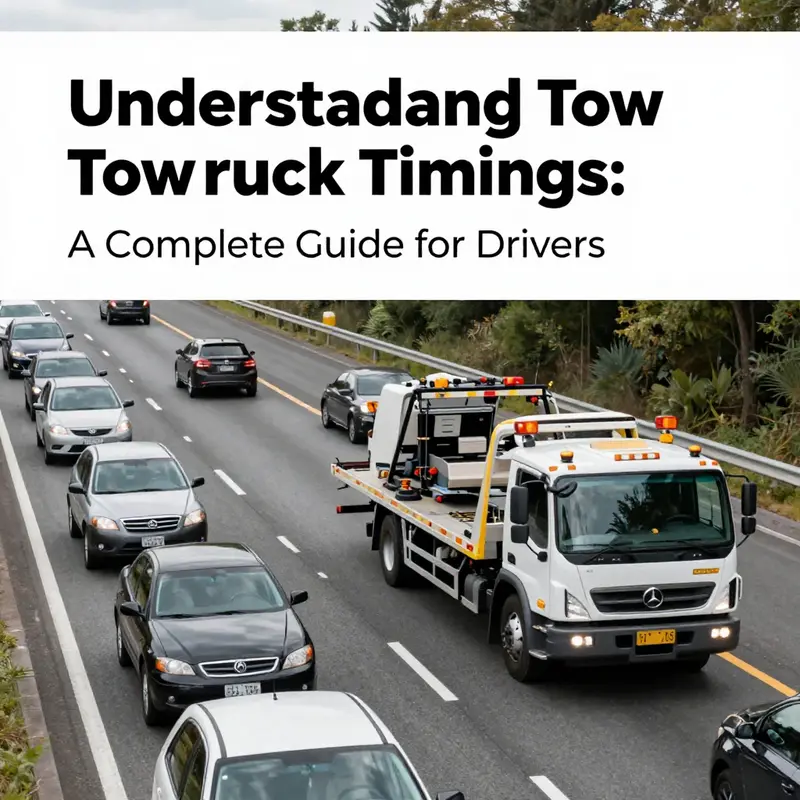
When you pull onto the shoulder or into a gas station lot with a tire that won’t hold air, the clock starts ticking in a way you can measure only by experience. The question on everyone’s mind is simple and urgent: how long will it take for help to arrive? The honest answer is that the timing hinges on a cluster of real-world constraints, most of them rooted in where you are and what the road looks like at that moment. Location and traffic aren’t abstract concepts here; they are the primary forces that shape dispatch decisions and, ultimately, how quickly a tow truck shows up. A handful of variables compress or stretch the window between call and recovery, and understanding them can make the waiting bearable and, in certain cases, even safer.\n\nLocation matters from the moment you place the call. If you’re in a bustling city, you may be part of a high-demand environment where fleets juggle multiple incidents at once. The density of vehicles, the number of towing outfits in the area, and the sheer volume of calls competing for limited trucks can push response times into the range of 15 to 30 minutes for a prompt arrival. Those numbers, though, are not guaranteed. They represent a best-case rhythm when the system is not overwhelmed. In practice, urban waits can stretch longer as drivers wind through congested corridors, negotiating traffic lights, construction zones, and the occasional accident that diverts or delays a tow. The situation shifts when you move into suburban or rural terrain. Fewer trucks exist in those pockets, even if traffic is light. A lone tow operator may be miles away, and the distance compounds the delay. In such places, the same call can arrive with a different tempo: the truck is closer but calls are rarer, or the truck is farther away but free to move immediately because there’s less competing demand. Either way, location translates directly into the probability of a faster or slower arrival, and that probability fluctuates with the hour, the weather, and the day of the week.\n\nTraffic, more than any other factor, hands the pace to the road itself. On a highway teeming with vehicles during rush hour, the path an arriving tow truck must take becomes a moving obstacle course. Gridlock can lock up lanes for miles, and a driver must thread through slow-moving queues, sometimes with a last-mile dash through shoulder-space or detours that add minutes to the plan. The impact isn’t merely the distance; it’s the time spent idling in slow traffic and the potential for congestion to change the route. A tow truck can be dispatched quickly, but if the route is clogged, the clock keeps ticking while the vehicle inches forward. Conversely, in a calm, dry late-night stretch, a truck might cover the same distance with ease, arriving sooner than the daytime average. The role of traffic is further complicated by the routing systems that fleets rely on. Modern dispatch centers don’t just call the nearest truck; they balance proximity with current road conditions, weather patterns, and the real-time status of other jobs on the board. The result is a dynamic equation where the same call could yield different arrival estimates depending on the moment the dispatcher schedules the job and the traffic picture at that exact point in time. There’s also the matter of specialized priorities. Emergency vehicles have routes that take precedence, and while non-emergency towing calls will be scheduled based on availability and proximity, the presence of an active incident on a major artery can push non-emergency assignments further down the line.\n\nThe average arrival time is a helpful guide, but it is not a pledge. In typical urban settings, you might expect a tow truck to show up within 15 minutes to an hour if the system is operating smoothly and demand is manageable. Those times begin to bend in the direction of hours when demand spikes or when weather creates additional hazards. In more remote areas, even with lighter traffic, the distance can stretch the arrival window, especially if a single operator is covering a broad region. The overall tempo is a function of supply and demand, which ebbs and flows with the weather, the time of day, and the scale of need on the road. This isn’t a fixed stopwatch; it’s a moving estimate that can improve or deteriorate in minutes depending on the evolving picture on the ground.\n\nBeyond the basic arrival, the nature of the job itself can add or shave minutes from the timeline. A straightforward roadside tow—a vehicle simply needing to be taken from the shoulder to a nearby shop or home driveway—tends to be quicker than a more complex recovery. Think of an upright vehicle that slid off a road, one that’s in a ditch, or one that must be recovered from mud or snow. In these cases, the dispatcher must allocate more resources, coordinate with additional personnel, or wait for weather to improve before a safe extraction occurs. The distance to the final destination also matters. A short haul to a nearby repair shop is often completed within a shorter window than a long-distance tow to a distant lot. The tow itself can be a seamless transition when transport is straightforward, or it can become a staged operation when the vehicle needs stabilization, extra recovery equipment, or time-consuming setup.\n\nThe type of tow truck deployed also shapes the timing in subtle but meaningful ways. A wheel-lift or hook-and-tow unit can get a car hooked up quickly and may be ideal for short moves or when the vehicle is accessible from the road. A flatbed tow truck, which lifts the entire vehicle onto a platform, offers better protection against damage and is preferred for certain makes and models or for cars with compromised frames. The setup time for a flatbed is typically longer, as the operator must align the platform with the vehicle, secure it, and ensure proper loading. In contrast, a wheel-lift unit can be faster to deploy for simple short-tow scenarios but may be unsuitable for some vehicles or road conditions. The choice between these truck types is not arbitrary; it’s guided by the vehicle’s condition, the environment of the incident, and safety considerations. A careful, safety-first approach can add minutes but prevent costs later in the process, underscoring that speed and safety are not mutually exclusive but tightly aligned.\n\nDistance and the geography of the incident also deserve attention. The “where” of the call isn’t only about city versus countryside; it’s about the interplay of the tow truck’s current location and where your vehicle is. Dispatch systems are designed to optimize this relationship, but the raw physics of travel persist. A truck parked at a depot on the edge of town may sprint to a highway exit and be with you in minutes if there is a clear route; conversely, a truck already en route to another call, or stuck in a construction zone, might arrive later than the clock suggests. The human element—the driver’s skill at navigating traffic, reading road conditions, and communicating with the caller—also influences the perceived speed. In some cases, a calm, informative conversation with the dispatcher can reveal a more accurate ETA and reduce the anxiety that accompanies the waiting process. Transparent, frequent updates help callers plan around the moment the tow arrives, whether they need to arrange transportation for themselves or make arrangements at a service location.\n\nTechnology plays a growing role in taming the uncertainty of arrival times. Many fleets now offer real-time tracking through mobile apps and online platforms, letting customers see the estimated arrival time of the nearest available tow truck and the live progress of the dispatch. This transparency is no longer a luxury but an expectation for many drivers who want to know when assistance is on the move and how quickly it will reach them. The presence of digital tracking doesn’t eliminate the volatility of the road, but it does turn a mystery into a measurable expectation. It also raises the bar for customer service, encouraging fleets to optimize their routes, anticipate delays, and communicate clearly about what factors might push ETA beyond the initial estimate. A closer look at dispatch technology and safety features sheds light on how fleets are reducing response times and increasing reliability over time. For a deeper exploration of how modern tow fleets leverage technology to improve efficiency and safety, see the overview of tow truck technology and safety. tow-truck-technology-and-safety.\n\nIn the end, the core message is practical and simple: there is no universal number that guarantees an exact moment when a tow truck will arrive. What can be offered is a clear framework for understanding why a delay happens, what factors might speed things up, and how to interpret the information you’re given. If you find yourself waiting, a few proactive steps can help you respond effectively. First, call the dispatcher with precise location details—landmarks, the nearest mile marker, and a description of the vehicle’s position on the road. Second, ask for an estimated arrival time and the estimated time for completion if the tow requires monitoring or a longer transport. Third, request a method to receive updates—whether through an app, SMS, or a phone call—and confirm the best number or contact person. Finally, if safety allows, move to a safer position nearby and keep your hazards on, especially in high-traffic environments where other drivers may not anticipate a stationary vehicle on the shoulder. These practices don’t shave minutes on the clock by magic, but they do reduce anxiety and make the process more predictable for everyone involved.\n\nAs you navigate a roadside incident, keep in mind that the reporting and dispatch system is designed to maximize safety, efficiency, and reliability, even when the road throws its worst at you. The same principles apply whether you’re in a dense urban corridor or a quiet rural stretch: location sets the potential speed, traffic tests that potential, and the type of task and equipment determines the actual work needed to reach your destination. The more you understand about these dynamics, the more empowered you’ll feel when you call for help, and the more accurate a picture you’ll have of what to expect as the tow truck advances toward you and your vehicle.\n\nFor those who want a practical reference point, it helps to know that real-time visibility and lean dispatching are increasingly common in the industry. The goal isn’t to promise a fixed minute-by-minute ETA but to provide a dependable sense of when a truck will be there and how soon the job can be wrapped up. If you’re curious about how fleets balance speed with safety in real-world conditions, you can explore more about the broader topic of tow-truck technology and safety. tow-truck-technology-and-safety.\n\nFor a broader, external resource on real-time estimates and route-tracking across roadside services, consult the following: AAA’s Roadside Assistance Tracker. This tool offers live guidance on expected arrival times in many regions, reflecting the same realities described here—location, traffic, and service type all intersect to shape how soon help arrives. The experience of waiting for a tow is, in essence, a study in how modern mobility systems respond to disruption: data-driven, transparent, and, at their best, reassuring as the miles shorten and the road returns to normal.
Final thoughts
Understanding the time it takes for a tow truck to arrive and complete its job can help ease the anxiety that comes with vehicle breakdowns. By recognizing the crucial factors such as response times based on location, the complexity of the towing service, the types of trucks used, and the impact of traffic conditions, drivers and vehicle owners can better prepare for these unexpected situations. Always remember, when in need, contacting a reliable towing service is the key to timely assistance and peace of mind.